Six Nations
Ireland survive Italian scare to claim unconvincing victory
Published
5 days agoon
Ireland survived an almighty scare to claim a hard-fought 20-13 victory over Italy at the Aviva Stadium, but this unconvincing performance will do little to silence the growing concerns surrounding Andy Farrell’s side ahead of next week’s trip to Twickenham.
Key moments:
11′ – YELLOW CARD ITALY: Louis Lynagh is shown yellow for a deliberate knock-on after flinging out a hopeful arm to intercept Sam Prendergast’s looping pass. James Lowe was unmarked behind him with a clear run to the line, making the decision straightforward for referee Hollie Davidson (Ireland 0-0 Italy)
17′ – TRY IRELAND: Jamie Osborne opens the scoring after patient phase play. Stuart McCloskey spins through contact and produces a sublime offload just before hitting the deck, finding the onrushing full-back who coasts over untouched. Prendergast inexplicably misses the conversion from directly in front of the posts (Ireland 5-0 Italy)
20′ – PENALTY ITALY: Paolo Garbisi gets the Azzurri on the board after Cormac Izuchukwu is penalised for hands in the air at a lineout. A cheap penalty to concede immediately after scoring (Ireland 5-3 Italy)
25′ – ITALY REPRIEVE: Lorenzo Pani demonstrates his attacking threat, chipping over the Irish defence and beating Sam Prendergast’s tackle before racing into the 22. His offload to the unmarked Michele Lamaro is fumbled with the try line begging — a moment that will haunt the Italian captain (Ireland 5-3 Italy)
32′ – YELLOW CARD IRELAND: Craig Casey is sin-binned for an upright tackle that results in head contact with Lorenzo Cannone. The diminutive scrum-half comes off worse in the collision, sporting a bloodied nose, but the letter of the law is applied. The bunker review confirms no upgrade to red (Ireland 5-3 Italy)
33′ – TRY ITALY: The Azzurri capitalise immediately on their numerical advantage. From the resulting lineout, Italy’s forwards establish a rumbling maul that Ireland simply cannot repel. Giacomo Nicotera breaks away from the back to touch down as Italian celebrations erupt. Garbisi converts from the touchline to give the visitors a deserved lead (Ireland 5-10 Italy)
40′ – SCRUM DOMINANCE: Italy win a thunderous scrum penalty on Ireland’s own put-in, the pack marching the hosts backwards with alarming ease. Simone Ferrari and the Italian front row celebrate wildly as tensions flare between the forwards. A statement of intent from Gonzalo Quesada’s men heading into the break
Half-time: Ireland 5-10 Italy
Ireland statistics: 40% possession, 45% territory. Italy: 226 tackles attempted (86% success), 3 scrum penalties won, dominant at set-piece. Ireland: 2 entries to Italian 22 without scoring, 2 missed conversions from Sam Prendergast.
43′ – TRY IRELAND: Ireland respond immediately after the restart. Andy Farrell’s half-time words have the desired effect as Prendergast kicks to the corner from a penalty. Jeremy Loughman is held up twice before Jack Conan spots a gap around the fringes and forces his way over from close range. Prendergast’s conversion drifts wide again — four points left on the tee (Ireland 10-10 Italy)
51′ – TRY DISALLOWED ITALY: Heartbreak for the Azzurri. Tommaso Menoncello produces a moment of magic, bursting through the Irish midfield with devastating footwork before floating a pass to Louis Lynagh on the right wing. The finish is emphatic, but TMO Ian Tempest correctly identifies that Menoncello’s pass drifted forward. The try is chalked off — a pivotal moment that shifts momentum decisively (Ireland 10-10 Italy)
56′ – CROWLEY ON: Jack Crowley replaces Sam Prendergast to the biggest roar of the afternoon. Whether relief at the change or enthusiasm for the Munster fly-half, opinions differ, but Ireland’s attacking tempo transforms almost immediately (Ireland 10-10 Italy)
58′ – TRY IRELAND: Robert Baloucoune marks his Six Nations debut in spectacular fashion. Ireland work overlaps on both flanks with Crowley orchestrating proceedings. Stuart McCloskey produces an outrageous basketball-style pass over the Italian defence, finding Baloucoune in space. The Ulster wing shows devastating acceleration, beating two defenders before stretching over in the corner. Crowley converts to give Ireland breathing room (Ireland 17-10 Italy)
63′ – PENALTY IRELAND: Crowley adds three more after Ireland’s patient phase play earns a penalty in front of the posts. The Munster fly-half is two from two since his introduction as Ireland establish a ten-point cushion (Ireland 20-10 Italy)
66′ – PENALTY ITALY: The Italian scrum continues to dominate as Tadhg Furlong is lifted clean off his feet by replacement loosehead Mirco Spagnolo — a sight rarely witnessed in the veteran prop’s illustrious career. Garbisi makes no mistake with the resulting kick to reduce the deficit to seven (Ireland 20-13 Italy)
70′ – DEBUT FOR EDOGBO: Edwin Edogbo enters the field to warm applause, becoming the first player from Cobh Pirates to represent Ireland. The Munster second row’s remarkable journey — through two ruptured Achilles tendons — reaches its destination with ten minutes remaining
77′ – ITALY AGONISINGLY CLOSE: Paolo Garbisi chips over the rushing Irish defence and Tommaso Menoncello is one bounce of the ball away from scoring under the posts. The ball bobbles agonisingly past his fingertips as Ireland survive another heart-stopping moment (Ireland 20-13 Italy)
83′ – LOWE INTERCEPT SEALS VICTORY: The match-winning moment arrives from Italian error. With the Azzurri camped on the edge of the Irish 22 and desperately seeking an equalising score, Monty Ioane inexplicably throws a pass straight into the arms of James Lowe. The Irish wing sprints 80 metres upfield to earn a penalty that would have set up a bonus-point opportunity (Ireland 20-13 Italy)
83′ – CROWLEY KICKS DEAD: An anticlimactic ending as Crowley, pointing to the corner in pursuit of a fourth try, misjudges his kick and sends the ball dead. The bonus point slips away, but Ireland have the victory. A fitting conclusion to a fitful afternoon (Ireland 20-13 Italy)
Full-time: Ireland 20-13 Italy
The hosts trailed 10-5 at half-time — Italy’s first ever Six Nations lead in Dublin — against opponents brimming with confidence following their opening-round victory over Scotland. It required the introduction of Jack Crowley and Jamison Gibson-Park from the bench to inject the tempo and precision that had been sorely lacking throughout a disjointed first-half display.
Robert Baloucoune marked his Six Nations debut with a try that proved decisive, while James Lowe’s intercept in the dying moments finally allowed Ireland’s supporters to exhale after 83 minutes of anxiety. Yet the manner of victory, achieved against opponents who have never won a championship match in Dublin, raised more questions than it answered about Ireland’s title credentials.
Italy, who made 226 tackles against Scotland last week, were even more ferocious in the Irish capital. Their scrum dominated Ireland’s vaunted pack throughout, with Simone Ferrari and the impressive front row earning three penalties and leaving even the legendary Tadhg Furlong struggling when he entered the fray. The Azzurri will rue the disallowed try for Louis Lynagh, chalked off for Menoncello’s forward pass, and Michele Lamaro’s fumbled offload when a try seemed certain in the first half.
Early exchanges promised much before familiar failings emerged
Ireland began with the intent that Andy Farrell had demanded, Robert Baloucoune claiming an early high ball with authority and James Lowe looking dangerous with ball in hand. The hosts won an early scrum penalty when Danilo Fischetti collapsed, and when Dan Sheehan attempted to power over from close range, it appeared Ireland would make their dominance count.
However, Ferrari’s thunderous hit on the hooker — who illegally leapt into contact — set the tone for Italian resistance that would define the afternoon. It was a portent of things to come; Ireland would repeatedly threaten the Italian 22 only to be repelled by desperate defending or undone by their own profligacy.
Louis Lynagh’s yellow card for a deliberate knock-on in the 11th minute, preventing what would have been a certain try for Lowe, should have opened the floodgates. Instead, Ireland laboured for six more minutes before Jamie Osborne finally crossed, the full-back timing his run perfectly to receive Stuart McCloskey’s offload after the Ulster centre had spun through contact.
Sam Prendergast’s missed conversion from directly in front of the posts proved emblematic of Ireland’s afternoon. The young fly-half, under intense scrutiny following his struggles in Paris, endured another difficult outing — his tactical kicking wayward, his defence exposed — before being replaced by Crowley midway through the second half.
Italy seize control as scrum dominance tells
Paolo Garbisi’s penalty reduced the deficit to two points before Italy truly found their rhythm. Lorenzo Pani, earning his first start in almost two years, demonstrated the kicking range that had earned him selection by threatening repeatedly from deep. His chip and chase in the 25th minute saw him beat Prendergast’s tackle and race into the Irish 22, only for Lamaro to fumble the offload with the try line beckoning.
The reprieve proved temporary. Craig Casey’s yellow card for an upright tackle on Lorenzo Cannone — the scrum-half coming off worse in a collision that left him with a bloodied nose — handed Italy the numerical advantage they craved. Within a minute, Giacomo Nicotera had crashed over from a driving maul that Ireland simply could not repel, Garbisi’s conversion giving the visitors a deserved 10-5 lead at the interval.
The Italian celebrations were raucous, their media contingent in the press box reportedly on their feet when Ferrari won a scrum penalty against Sheehan. They sensed history; they were 40 minutes from becoming the first Italian side to win a Six Nations match at the Aviva Stadium.
Farrell’s bench proves decisive as Ireland rally
Whatever Andy Farrell said at half-time had immediate effect. Tadhg Furlong’s introduction stabilised the scrum sufficiently for Ireland to win a penalty from which they kicked to the corner. c powered over from close range after Jeremy Loughman had been held up twice, though Prendergast’s second missed conversion from a kickable position kept Italy within touching distance.
The game’s pivotal moment arrived in the 51st minute. Menoncello, who had been outstanding throughout, burst through the Irish midfield with devastating footwork before floating a pass to Lynagh on the right wing. The finish was emphatic, but TMO Ian Tempest correctly identified that Menoncello’s pass had drifted forward. The try was disallowed, and the momentum shifted irrevocably.
Crowley’s introduction for Prendergast was greeted with the biggest roar of the afternoon. What proved undeniable was the transformation in Ireland’s attacking tempo. Gibson-Park’s arrival added further urgency, and within three minutes of entering the fray, Crowley had orchestrated the try that would seal victory.
McCloskey’s basketball-style pass over the Italian defence found Baloucoune in space, and the Ulster wing showed devastating acceleration to beat two defenders and stretch over in the corner. Crowley’s conversion and subsequent penalty stretched the lead to ten points, though Garbisi’s three-pointer from another dominant scrum ensured Italy remained within a converted try.
Nerve-shredding finale as Italy throw everything at Ireland
The final quarter was an exercise in anxiety management for Irish supporters. Italy’s scrum continued to dominate, with Furlong lifted clean off his feet by replacement loosehead Mirco Spagnolo — a sight rarely witnessed in the veteran prop’s illustrious career. Garbisi’s resulting penalty reduced the deficit to seven with 14 minutes remaining.
Italy threw everything at Ireland in the closing stages. Menoncello repeatedly found gaps in the Irish midfield, while Garbisi’s tactical kicking pinned the hosts deep in their own territory. In the 77th minute, the Italian fly-half chipped over the rush defence and Menoncello was agonisingly close to gathering a favourable bounce that would have put him clear under the posts.
Edwin Edogbo, the Munster second row, was introduced for his Ireland debut with ten minutes remaining, becoming the first player from Cobh Pirates to represent his country. His remarkable journey — through two ruptured Achilles tendons that sidelined him for two years — reached its destination at a moment when Ireland required fresh legs and renewed energy.
Gibson-Park’s box-kicking proved crucial in the final exchanges, repeatedly finding touch deep in Italian territory. But the decisive moment arrived from Italian error rather than Irish excellence.
With the Azzurri camped on the edge of the Irish 22 and desperately seeking the converted try that would level the scores, the ball was worked wide to Monty Ioane. The experienced wing inexplicably threw a pass straight into the arms of James Lowe, who sprinted 80 metres upfield to earn a penalty.
Ireland sensed an opportunity to claim a bonus point that had seemed unlikely for much of the afternoon. Crowley pointed to the corner, seeking one final assault on the Italian line. But his kick sailed too long, drifting into the in-goal area and out of play. The chance was gone, the bonus point squandered, but the victory secured.
“It’s not my fault it was a bad kick,” referee Hollie Davidson could be heard saying as Ireland players questioned why play wasn’t brought back. An unfortunate ending for Crowley, whose introduction had otherwise transformed Ireland’s fortunes.
Verdict: More questions than answers for Farrell
Captain Caelan Doris acknowledged the scale of Ireland’s struggles: “It was a proper battle the whole way through. That last ten-minute period, we defended quite a bit in our own 22, so I’m happy with some of the character we showed. Italy played some very good stuff and tested us throughout. I feel there’s some stuff we left out there, we weren’t clinical enough, some of our discipline was a little bit off.”
Man of the match Baloucoune reflected on a memorable Six Nations debut: “Even to get a chance to get into the Six Nations camp was unbelievable, but to get to play and score on my Six Nations debut has been unreal. Faz told me to go out there and express myself, and I feel like I’ve done that.”
For Italy, despite extending their winless run in Dublin, this was a performance that confirmed their opening victory over Scotland was no fluke. Gonzalo Quesada’s side were physically dominant for long periods, their scrum a revelation against vaunted opposition, and only a forward pass and a fumbled offload separated them from a historic triumph.
The statistics told a damning story for Ireland: physically dominated at the scrum, second best at the gainline on both sides of the ball, and reliant on their bench to rescue a performance that had drifted alarmingly off course. The return of Crowley and Gibson-Park proved decisive, raising inevitable questions about whether Farrell’s starting selections were correct.
Ireland now travel to Twickenham to face an England side who demolished Wales 48-7 earlier in the afternoon, Henry Arundell claiming a hat-trick as Steve Borthwick’s men ran riot. On this evidence, the visit represents a formidable challenge that will expose any recurring frailties. The scrum, in particular, requires urgent attention if Ireland are to avoid another chastening afternoon.
For Italy, a trip to Paris awaits against the defending champions. While victory seems unlikely, this performance suggests Quesada’s side will provide France with a far sterner examination than many might expect. The days of Italy being Six Nations whipping boys are emphatically over.
Ireland: Jamie Osborne; Robert Baloucoune, Garry Ringrose, Stuart McCloskey, James Lowe; Sam Prendergast (Jack Crowley 56), Craig Casey (Jamison Gibson-Park 53); Jeremy Loughman (Tom O’Toole 66), Dan Sheehan (Rónan Kelleher 53), Thomas Clarkson (Tadhg Furlong 40); Joe McCarthy (Tadhg Beirne 53), James Ryan (Edwin Edogbo 70); Cormac Izuchukwu (Nick Timoney 59), Caelan Doris (capt), Jack Conan.
Italy: Lorenzo Pani; Louis Lynagh, Leonardo Marin, Tommaso Menoncello, Monty Ioane; Paolo Garbisi, Alessandro Fusco (Alessandro Garbisi 70); Danilo Fischetti (Mirco Spagnolo 60), Giacomo Nicotera (Tommaso Di Bartolomeo 60), Simone Ferrari (Muhamed Hasa 60); Niccolò Cannone, Andrea Zambonin (Federico Ruzza 53); Michele Lamaro (capt), Manuel Zuliani (Riccardo Favretto 66), Lorenzo Cannone (David Odiase 70).
Replacements not used: Italy — Paolo Odogwu.
Referee: Hollie Davidson (SRU)
Share this:
You may like
-
Crowley recalled as Ireland axe Prendergast for England showdown
-
Pollock starts as Itoje set for England milestone against Ireland
-
Six things we learned from round 2 of the Guinness Six Nations
-
Eight-try France run riot over sorry Wales in Cardiff
-
Fired-up Scotland rip apart England in stunning Calcutta Cup win
-
2026 Guinness Six Nations preview: Wales v France
Six Nations
Crowley recalled as Ireland axe Prendergast for England showdown
Published
7 hours agoon
19th February 2026
Andy Farrell has made five changes to his starting XV for Saturday’s pivotal Guinness Six Nations clash against England at Allianz Stadium, recalling Jack Crowley at fly-half and dropping Sam Prendergast from the matchday squad altogether in the most significant selection call of this year’s championship. The decision brings to a head a fly-half debate that has simmered throughout the tournament and dominated Irish rugby discourse in recent weeks.
Key selection changes:
- Jack Crowley starts at fly-half with Sam Prendergast dropped from the matchday 23 entirely
- Jamison Gibson-Park returns at scrum-half in place of Craig Casey
- Tadhg Furlong, Tadhg Beirne and Josh van der Flier all recalled to the starting XV
- Captain Caelan Doris reverts to number eight with Beirne at blindside and van der Flier at openside
- Farrell switches to a 5-3 bench split with Ciaran Frawley providing fly-half cover
- Cormac Izuchukwu, Edwin Edogbo and Thomas Clarkson all drop out of the matchday squad
Crowley’s promotion is accompanied by the return of four British and Irish Lions to the starting line-up. Jamison Gibson-Park replaces Craig Casey at scrum-half, Tadhg Furlong comes in at tighthead prop, Tadhg Beirne starts at blindside flanker and Josh van der Flier is recalled at openside, with captain Caelan Doris reverting to his preferred number eight berth. It amounts to a significant strengthening of Ireland’s pack as Farrell looks to shore up a scrum that was put under severe pressure by Italy last weekend.
Prendergast pays the price for erratic form
The decision to omit Prendergast entirely – rather than simply demoting him to the bench – represents a bold call from Farrell. The 23-year-old Leinster playmaker had started Ireland’s last four Tests, including both championship fixtures this year, but struggled to impose himself in either outing. Against France in the opening round defeat in Paris, Prendergast looked overwhelmed by the occasion, while his performance against Italy in Dublin last Saturday was arguably worse: two missed conversions from straightforward positions, wayward tactical kicking and a general lack of composure that saw audible cheers greet his replacement by Crowley midway through the second half.
The transformation in Ireland’s attacking play after Crowley’s introduction against the Azzurri was striking. Within two minutes of his arrival, Robert Baloucoune had scored the try that ultimately decided the match. Crowley added the conversion and a penalty, finishing with a perfect five from five off the tee to steer Ireland to a 20-13 victory from a position of considerable peril.
Farrell, who last week hit out at “keyboard warriors” stoking the fly-half debate on social media, was diplomatic when explaining his decision. “Sam’s a fantastic international player and he’s on a journey and is learning and that will never stop,” the head coach said. “We have talked all along about the four lads competing with each other and the balance is right for the team this weekend.”
He added that the decision was partly about protecting his young playmaker. “Everyone gets feedback, we talk it through and use it in the right manner and see where we are going to go in the not too distant future. It is the same for everyone.”
Crowley seizes his chance to reclaim the jersey
For Crowley, Saturday represents the opportunity he has been waiting for since losing his place to Prendergast. The 26-year-old Munster fly-half was widely regarded as the heir to Johnny Sexton’s throne after playing every minute of Ireland’s triumphant 2024 Six Nations campaign, but found himself squeezed out as Farrell fast-tracked Prendergast into the starting side. Crowley started only one match in last year’s Six Nations and was preferred for just the one autumn international – the defeat to New Zealand in Chicago – before Prendergast was restored for the South Africa Test in Dublin.
This will be Crowley’s first start since that November outing in the United States, and he partners Gibson-Park in a half-back combination that Ireland’s coaching staff clearly believe offers greater control and precision than the Casey-Prendergast axis that started the opening two rounds. Crowley is regarded as the stronger of the two fly-halves defensively – a crucial consideration against an England back row likely to target the Irish ten channel – and his goal-kicking reliability addresses a glaring weakness from the Italy match.
Farrell explained his rationale by pointing to what he had observed in training. “Sometimes you see people come from the back and have nothing to lose, get over themselves and just rip in,” he said. “We have seen that not just with Jack but with someone as experienced as James Ryan, not selected to start in the first game and came on against France and had a storming game.”
Lions quartet bolster the pack for Twickenham test
Beyond the headline fly-half switch, Farrell’s other changes are geared towards injecting experience and physicality into a pack that was outmuscled by France and placed under serious pressure by Italy’s set piece. Furlong’s return at tighthead is the most significant of the forward changes. The 83-cap Lion came off the bench against the Azzurri and was himself lifted into the air by Italian loosehead Mirco Spagnolo, but his nous and scrummaging pedigree from the start are considered essential against an English scrum that has been one of Steve Borthwick’s side’s genuine strengths in this tournament.
Beirne’s inclusion at blindside sees Cormac Izuchukwu drop out of the squad entirely after starting against Italy on his Six Nations debut. The Munster lock-cum-flanker is a proven performer at the highest level and adds a lineout option that Ireland lacked in the opening two rounds. Van der Flier’s return is equally significant; the 2022 World Rugby Player of the Year was a surprising omission from last week’s matchday squad, but his breakdown expertise and defensive workrate are tailor-made for the intensity of an England-Ireland contest at Twickenham.
Farrell has also made a notable tactical shift by reverting to a 5-3 bench split after deploying a 6-2 configuration in the first two rounds. The versatile Frawley – Ireland’s drop-goal hero against South Africa in 2024 who can cover fly-half, centre and fullback – provides backline insurance alongside Casey and the recalled Tommy O’Brien. Farrell said Frawley was relishing his recall after a frustrating period on the sidelines. “He’s 100% excited. He has certainly been frustrated with his lack of game time, certainly in the autumn, but being able to give him a game with Ireland XV kept him ticking over and we have seen in training how sharp he is and how eager he is to get going.” It is a decision that carries some risk given England’s potent scrum, but signals Farrell’s intention to have more attacking options from the bench should the match remain tight in the final quarter.
McCloskey’s renaissance continues as backline holds firm
The back three of Jamie Osborne, Baloucoune and James Lowe is unchanged, as is the centre partnership of Stuart McCloskey and Garry Ringrose. McCloskey has been Ireland’s standout player of the tournament, topping the team’s statistics for try assists, offloads and turnovers won. The 33-year-old Ulster centre’s late-career renaissance – after years of being edged out by Ringrose, Robbie Henshaw and Bundee Aki – has been one of the feelgood stories of this year’s championship, and his power and distribution will be vital against an English midfield that now includes the physical Ollie Lawrence.
Baloucoune, who marked his Six Nations debut with a well-taken try against Italy, gives Ireland a much-needed injection of pace out wide to match the threat posed by England’s Henry Arundell and Tommy Freeman. Lowe, meanwhile, will relish the occasion having produced three try assists when these sides last met in Dublin twelve months ago.
Farrell braced for England backlash at Twickenham
The stakes could scarcely be higher. Both sides enter the match with one win and one defeat from their opening two fixtures, with France sitting ominously at the top of the table on 10 points after consecutive bonus-point victories. England are on five points, Ireland on four. A defeat for either side would all but end their championship aspirations with two rounds still to play.
Ireland’s recent record at Twickenham offers some encouragement; they won 32-15 in 2022 and were narrowly defeated 23-22 in 2024, a loss that ended their consecutive Grand Slam hopes. Last year’s fixture saw Ireland triumph 27-22 in Dublin, with Marcus Smith’s late heroics proving insufficient for England. The familiarity between the camps is deepened by the Lions connection, with Farrell having coached many of England’s current squad on last summer’s tour of Australia.
Farrell made clear in his press conference that he expects a ferocious response from the hosts after their Murrayfield humiliation, drawing parallels with a similar scenario from two years ago. “We have won pretty important games there and also lost there a few times recently, similar story to a couple of years ago with Scotland being England and England being told they had to have a reaction and they did and won,” he said. “We’re ready for anything being thrown at us and we expect England to have a reaction given what they have been saying. The Grand Slam is on but the competition is still there for them and I hope us as well.”
The Ireland head coach also acknowledged that England’s aerial game, which failed against Scotland, would present a particular challenge. “It’s an important part of the game, everyone knows that and a big part of England’s game, rightly so, they use it as a weapon and we have to be ready for that and what we want to impact the game with as well,” he said.
Edogbo absent after ‘disgusting’ racist abuse
One notable absentee from the matchday squad is debutant Edwin Edogbo, the Munster second row who came off the bench for his first cap against Italy. The Irish Rugby Football Union this week launched an investigation into what it described as “cowardly” racist abuse directed at the player on social media following his debut, with the governing body forced to turn off comments on a post congratulating him. Farrell addressed the matter with characteristic directness. “It’s disgusting. There is no need for it in society,” the head coach said. “As far as I’m concerned Edwin is fine, he is strong and he has been brought up in the right way.”
A calculated gamble with the title race still alive
“Games between the two sides have been nip and tuck over recent times and there’s great familiarity and respect across both camps,” Farrell said. “We know their strengths and our aim is to deliver the best version of ourselves to put us in a position to get the performance that we want. Backed by thousands of travelling Irish supporters who travel from all over the world whenever we play in Twickenham, it will be another special occasion and a challenge we’re excited to face.”
For Farrell, the selection represents a calculated gamble: strengthen the starting XV with proven Lions-calibre performers while trusting Crowley to provide the composure and accuracy at fly-half that Prendergast could not. If it works, it may mark a turning point in Ireland’s spluttering campaign. If it does not, the questions about this team’s direction – and the fly-half debate that simply refuses to go away – will only grow louder.
Ireland XV to face England
15 Jamie Osborne; 14 Robert Baloucoune, 13 Garry Ringrose, 12 Stuart McCloskey, 11 James Lowe; 10 Jack Crowley, 9 Jamison Gibson-Park; 1 Jeremy Loughman, 2 Dan Sheehan, 3 Tadhg Furlong; 4 Joe McCarthy, 5 James Ryan; 6 Tadhg Beirne, 7 Josh van der Flier, 8 Caelan Doris (capt).
Replacements: 16 Rónan Kelleher, 17 Tom O’Toole, 18 Finlay Bealham, 19 Nick Timoney, 20 Jack Conan, 21 Craig Casey, 22 Ciaran Frawley, 23 Tommy O’Brien.
Kick-off: Saturday 21 February, 2.10pm GMT, Allianz Stadium, Twickenham.
Share this:
Six Nations
Pollock starts as Itoje set for England milestone against Ireland
Published
1 day agoon
18th February 2026
Steve Borthwick has made three changes to his starting XV for Saturday’s pivotal Guinness Six Nations clash against Ireland at Allianz Stadium, handing a first Test start to the irrepressible Henry Pollock at number eight as England seek to salvage their championship campaign following last weekend’s chastening 31-20 defeat at Murrayfield. The selection reflects the management’s urgent desire for a gear change, with Tom Curry returning at blindside flanker and Ollie Lawrence recalled at outside centre in his first appearance of this year’s tournament.
Key points:
- Henry Pollock starts at No.8 for the first time in his Test career, with Ben Earl shifting to openside flanker
- Tom Curry recalled at blindside flanker; Guy Pepper and Sam Underhill drop to the bench
- Ollie Lawrence returns at outside centre for his first appearance of the 2026 championship; Tommy Freeman moves back to the right wing
- Marcus Smith and Jack van Poortvliet replace Fin Smith and Ben Spencer among the replacements on a 6-2 bench split
- Captain Maro Itoje wins his 100th cap, becoming only the ninth England player to reach the milestone
- Henry Arundell retained on the left wing after escaping a ban for his Murrayfield red card
The match carries enormous significance for both sides. England’s 12-match winning streak, built painstakingly over the past year, was comprehensively dismantled by a rampant Scotland in Edinburgh, where Henry Arundell’s two yellow cards – resulting in a 20-minute red – set the tone for a disastrous afternoon. Ireland, meanwhile, arrive at Twickenham having recovered from their own opening round defeat to France in Paris with a hard-fought 20-13 victory over Italy in Dublin. With France sitting comfortably atop the standings on 10 points after two bonus-point victories, both England and Ireland know that another defeat would effectively end their title aspirations.
Borthwick unleashes his ‘bundle of energy’
The most eye-catching selection is Pollock’s elevation from impact replacement to starter. The 21-year-old Northampton Saints back-rower has earned all seven of his previous caps from the bench, but his electric performances in that role – not least his influential cameo at Murrayfield, where he registered a crucial turnover near his own line and carried with more dynamism than most of those who had started – have made his promotion feel inevitable. His journey from teenage prospect to first-choice Test starter has been remarkably swift, encompassing a British and Irish Lions tour to Australia last summer and a growing reputation as one of the most exciting young forwards in world rugby.
Borthwick was typically effusive when discussing his latest selection gamble. “Henry’s full of energy, full of character and full of beans and he’s already achieved so much in a very short space of time,” the head coach said. “He’s larger than life and each new level you challenge him with, he seems to thrive. As a player, he gets people excited, he gets people jumping up and down with joy. He can bring a euphoria to people that not many players can.”
The head coach revealed that he first met Pollock during a visit to Franklin’s Gardens when the back-rower was barely out of school. “I was stood in the car park and this bundle of energy just bounced up to me. Typically when an 18-year-old meets the England head coach for the first time they are usually on the shy and retiring side. The first thing he said was: ‘How are you, mate?’ I thought: ‘Right, you’re different.’”
A reshaped back row built for pace and impact
Pollock’s promotion necessitates a reshaped back row, with the ever-reliable Ben Earl – England’s most consistent performer this championship – moving to openside flanker. Earl carried more than 20 times against Scotland, and Borthwick wants Pollock to match that ball-carrying intensity. Tom Curry, who like Pollock has featured as part of the “Pom Squad” off the bench in England’s first two matches, comes in at blindside, with Guy Pepper and Sam Underhill dropping to the replacements. The change means Borthwick persists with his blueprint of selecting three specialist sevens, though Pollock’s searing pace and poacher’s instinct give the combination a different dimension. In his past five starts for Northampton, all at number eight, Pollock has scored six tries – a record that underlines where in the back row he has the most impact.
Lawrence returns as Freeman experiment is paused
The other significant alteration comes in midfield, where Borthwick has paused the experiment of deploying the aerial specialist Freeman at outside centre. Lawrence, who missed the opening round through a knee injury, fills the 13 jersey after a standout performance against New Zealand in the autumn, with Freeman returning to the right wing in place of Tom Roebuck, who drops out of the squad entirely. The move addresses two weaknesses exposed at Murrayfield: England’s struggles in the air and the lack of midfield punch. Freeman’s ability to compete for the high ball – arguably England’s greatest aerial weapon – was sorely missed on the wing, while Lawrence’s powerful ball-carrying offers a direct running threat that the midfield lacked against Scotland.
Lawrence himself acknowledged the competitive nature of the selection battle. “It is tough. When I came in the autumn, Tommy moved to 13 and there was a bit of ‘that’s another person I am competing with,’” the Bath centre told BBC Rugby Union Weekly. “It’s not frustrating but it’s one of those things where you are knocking on the door and you have to wait your turn sometimes.”
Arundell reprieved as Borthwick backs underperformers
Arundell’s retention on the left wing will raise some eyebrows given his Murrayfield dismissal, where a first yellow card for failing to release was followed by a 20-minute red for a dangerous aerial challenge on Kyle Steyn. However, a disciplinary hearing on Tuesday determined that the sending off was sufficient punishment, clearing the 23-year-old to play. Borthwick made it clear he is backing those who underperformed in Edinburgh. “There are players in the team this week who are playing because I’m backing them to put in a performance that they’ll want to put in after last week,” he said, adding slightly ominously: “If the game had gone the way we wanted, perhaps I would have changed them as well.”
The bench also sees notable changes, with Marcus Smith and Jack van Poortvliet replacing Fin Smith and Ben Spencer as the back options on a 6-2 split. Smith’s recall is significant; the Harlequins playmaker has a taste for the big occasion against Ireland, having famously kicked a dramatic late drop goal to seal a 23-22 victory at Twickenham in the 2025 championship. Andy Farrell, now returned to the Ireland helm after his Lions secondment, will know exactly what Smith offers having coached several of England’s squad on that tour of Australia.
A century of caps for England’s towering presence
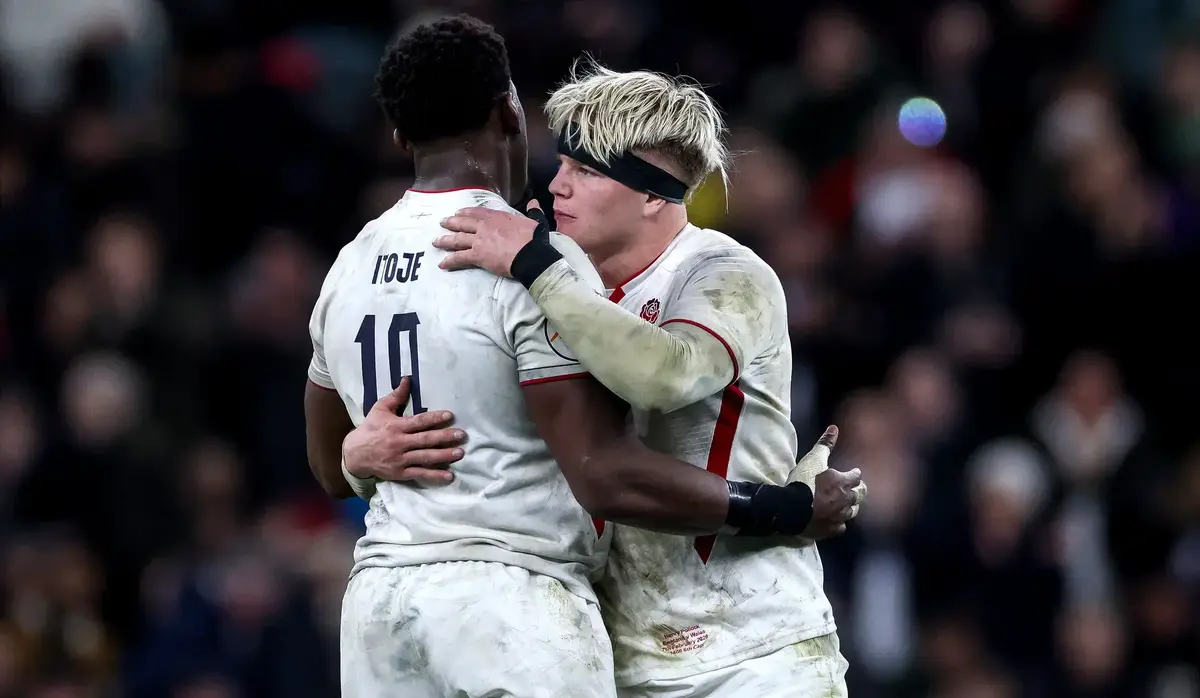
Saturday’s occasion will belong, first and foremost, to Maro Itoje. The Saracens lock will lead England out for his 100th cap, becoming only the ninth man to reach the milestone for his country. Itoje’s career has been a model of consistency: 95 of his previous 99 caps have been starts, while he has won more than twice as many turnovers as any England player since 2023. The 31-year-old missed the start of England’s training camp in Girona to attend his mother Florence’s funeral in Nigeria, lending further emotional weight to what promises to be a deeply personal afternoon.
“To reach 100 caps for England is a remarkable achievement and speaks volumes about Maro’s consistency and professionalism over many years,” said Borthwick. “He leads through his actions every day, sets the standard for others and cares deeply about representing his country. We’re all incredibly proud of what he has achieved, and I know it will be a special day for him and his family.”
A must-win fixture for both sides
The broader championship picture adds further intrigue. France lead the standings after two comprehensive victories – a 36-14 dismantling of Ireland in Paris on the tournament’s opening night and a 54-12 demolition of Wales in Cardiff – and appear to be the team to beat once more. Scotland sit second on six points after their triumph over England, with both England and Italy on five and Ireland languishing on just four points, having failed to secure bonus points in either of their opening two matches. Wales, winless and pointless, prop up the table.
For England, a defeat on Saturday would leave them with an almost impossible mountain to climb in the remaining two rounds. For Ireland, who looked a shadow of their former selves in losing to France and were unconvincing against Italy, the equation is similarly stark. It has the makings of a knockout fixture squeezed into the championship’s third week – and Borthwick’s selection suggests he has no intention of approaching it conservatively.
The question, ultimately, is whether Pollock’s boundless energy and Curry’s proven class can inject the dynamism England so desperately lacked in Edinburgh. Borthwick has placed his faith in youth, pace and ambition. As the head coach noted, channelling his inner Winnie-the-Pooh enthusiast when describing Pollock: “I will challenge him to express himself, be himself, while also bringing the self-sacrifice that a team sport needs. He does both wonderfully well.”
England XV to face Ireland
15 Freddie Steward; 14 Tommy Freeman, 13 Ollie Lawrence, 12 Fraser Dingwall, 11 Henry Arundell; 10 George Ford, 9 Alex Mitchell; 1 Ellis Genge, 2 Luke Cowan-Dickie, 3 Joe Heyes; 4 Maro Itoje (capt), 5 Ollie Chessum; 6 Tom Curry, 7 Ben Earl, 8 Henry Pollock.
Replacements: 16 Jamie George, 17 Bevan Rodd, 18 Trevor Davison, 19 Alex Coles, 20 Guy Pepper, 21 Sam Underhill, 22 Jack van Poortvliet, 23 Marcus Smith.
Kick-off: Saturday 21 February, 2.10pm GMT, Allianz Stadium, Twickenham.
Share this:
Six Nations
Six things we learned from round 2 of the Guinness Six Nations
Published
3 days agoon
16th February 2026
The second weekend of the 2026 Guinness Six Nations delivered drama, shocks and stunning reversals of fortune across three gripping fixtures. England’s seemingly unstoppable juggernaut came crashing to a halt at Murrayfield in the most emphatic fashion, while France continued their march towards glory with a record-breaking demolition of Wales in Cardiff. Ireland, meanwhile, were made to work harder than expected against an improving Italy side in Dublin. From Scotland’s redemption story to Wales’s ongoing crisis and England’s away-day demons returning to haunt them, the weekend provided plenty of evidence that this championship remains fascinatingly unpredictable.
Here, we examine six things learned from round two.
Scotland emphatically answer their critics
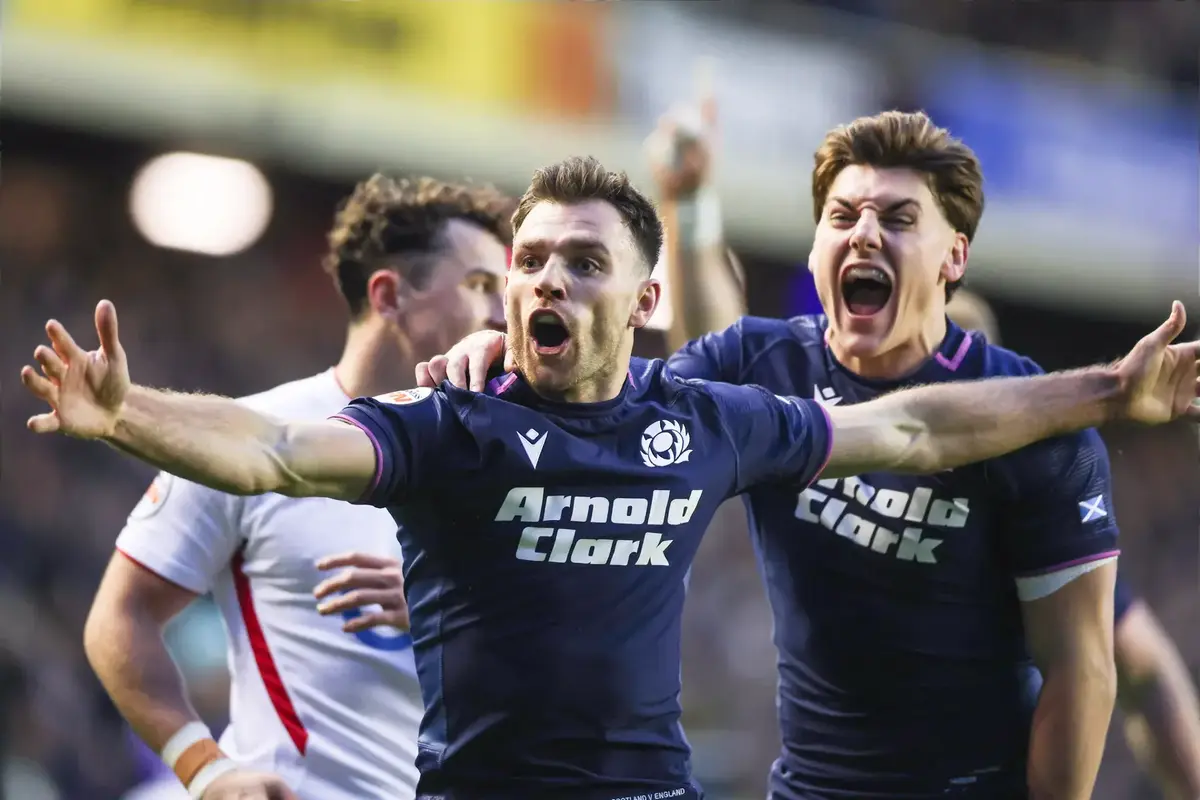
What a difference seven days makes. After the sodden humiliation in Rome, where everything that could go wrong did go wrong, Scotland produced perhaps their most complete Calcutta Cup performance in living memory to dismantle England 31-20. This wasn’t just about raising their game for the auld enemy – it was a statement of intent executed with ruthless precision. Finn Russell orchestrated proceedings magnificently, delivering the sort of masterclass that reminded everyone why he’s considered world class, while Huw Jones tormented England once more with two tries that took his tally against them to eight in the Six Nations era. The forwards matched their backs stride for stride, dominating everywhere except the scrum, and crucially, Scotland maintained their intensity for the full 80 minutes. After weeks of speculation about Gregor Townsend’s future, this performance silenced the doubters. The challenge now is consistency – can they back this up in Cardiff, or will it prove another false dawn?
England’s away-day curse strikes again
For all the talk of England’s evolution under Steve Borthwick, for all the confidence built through 12 consecutive victories, Murrayfield once again proved their kryptonite. This was a comprehensive dismantling that exposed familiar flaws: 20 missed tackles in the first half alone, handling errors at crucial moments, and a defence repeatedly sliced open by pace and precision. Henry Arundell’s 20-minute red card for two yellows compounded the misery, but the problems ran far deeper than one player’s indiscipline. Ellis Genge’s fumble that gifted Ben White a try, George Ford’s charged-down drop goal that led to Jones’s second score – these were unforced errors that champions simply cannot afford. Most tellingly, England averaged just 1.4 points per entry into Scotland’s 22, symptomatic of an attack that froze when confronted with real adversity. Until they can win consistently away from home against top-tier opposition, questions about their World Cup credentials will persist. The visit to Twickenham from Ireland suddenly looks pivotal rather than processional.
France are playing a different game to everyone else
If there were any lingering doubts about France’s credentials as overwhelming favourites, they were emphatically erased in Cardiff. The 54-12 demolition of Wales wasn’t just about the scoreline – it was the manner of it, the ruthless efficiency, the sheer joy with which Les Bleus played. Louis Bielle-Biarrey continued his record-breaking form with two more tries, taking him to 23 in 24 Tests, while debutant centre Fabien Brau-Boirie looked every inch the finished article on his first start. Most impressively, France blooded two new centres due to injury and barely missed a beat, such is the depth at Fabien Galthié’s disposal. The speed of thought, the offloading out of contact, the ability to score from anywhere – it all pointed to a team operating on a different level. With Antoine Dupont pulling the strings and Matthieu Jalibert providing the spark, France have now scored 90 points in two matches. The Grand Slam looks theirs to lose, and on this evidence, it’s hard to see who will stop them.
Ireland’s decline is genuine and concerning
Andy Farrell spoke of relief rather than satisfaction after Ireland’s stuttering 20-13 win over Italy, and rightly so. His side trailed at half-time for the first time in a Six Nations match in Dublin, struggled for fluency throughout, and were hanging on desperately at the death. While the bench – particularly Jack Crowley and Jamison Gibson-Park – provided crucial impact to turn the tide, the performance raised more questions than it answered. Sam Prendergast’s struggles and two missed conversions will fuel the debate over Ireland’s fly-half position, while the scrum woes that plagued them in Paris resurfaced alarmingly against the Azzurri. Italy should have won this game; they created enough chances and dominated for long periods. That they left empty-handed owed more to their own profligacy than Irish brilliance. With a trip to Twickenham looming and France still to face in Dublin, Ireland’s title defence looks increasingly fragile. The gap between them and the world’s elite is widening, not closing, and the 2027 World Cup timeline is becoming worryingly compressed.
Italy are no longer the Six Nations’ whipping boys
Forget the narrative of Italy as perennial strugglers – Gonzalo Quesada’s side have announced themselves as genuine contenders to finish in the top half of the table. After stunning Scotland in Rome, they pushed Ireland to the absolute limit in Dublin, leading at half-time and threatening a famous victory until the closing stages. Their scrum was dominant, their defence ferocious with 200-plus tackles, and their attacking ambition evident throughout. Giacomo Nicotera’s try from a driving maul showcased their forward power, while the backline created chances that on another day would have yielded tries. Paolo Garbisi controlled proceedings impressively, and only some wasteful finishing – Tommaso Menoncello’s fumble near the line a prime example – prevented a seismic upset. The Azzurri have now won four of their last six Six Nations matches and are no longer satisfied with merely being competitive. They believe they can win anywhere, and on this evidence, they’re right to think so. Their visit to France will be a fascinating test of just how far they’ve come.
Welsh rugby has reached a new nadir
If you thought things couldn’t get worse for Wales, think again. The 54-12 thrashing in Cardiff represented their 13th consecutive Six Nations defeat, their 10th straight home loss in the championship, and the most points France have ever scored against them. The attendance of 57,744 was their lowest for a Six Nations home game at the Principality Stadium, stark evidence that supporters are voting with their feet. Steve Tandy cut a forlorn figure afterwards, trying to identify “small wins” and “green shoots” in a performance that shipped eight tries and saw Wales reduced to chasing shadows for vast stretches. The problems run far deeper than coaching – the regional game is in disarray, the player pathway is broken, and a generation of talent has been lost. With Scotland visiting Cardiff next and then a trip to Dublin to follow, Wales could conceivably finish the championship without a single point. The question is no longer whether they can compete for titles, but whether they’ve become permanent residents at the foot of the table. For a proud rugby nation, these are the darkest of times.
Next up
Round three promises crucial encounters across the board. England host Ireland at Twickenham in what has become a must-win match for both sides if they harbour any title ambitions, with the hosts desperate to prove their home form can compensate for away-day struggles. Wales welcome Scotland to Cardiff in what looks, on paper, like their best chance of ending a losing streak that now stands at 13 matches, though Gregor Townsend’s rejuvenated side will fancy their chances of inflicting more misery. Meanwhile, France travel to Lille to face Italy, with the Azzurri buoyed by their performances in beating Scotland and pushing Ireland to the brink. Les Bleus will be overwhelming favourites, but Italy have shown they’re no longer easy pickings. After a weekend that turned the championship on its head, the third round could prove equally compelling.
Share this:
Trending
-
Men's Rugby World Cup 20272 weeks agoMen’s Rugby World Cup 2027 fixture details confirmed
-
Six Nations2 weeks agoPrendergast brothers to start for Ireland against France
-
Six Nations2 weeks ago2026 Guinness Six Nations preview: England v Wales
-
Six Nations2 weeks agoSix things we learned from round 1 of 2026 Guinness Six Nations
-
Six Nations1 week agoAndy Farrell makes six changes as Ireland seek Italian response
-
Six Nations2 weeks ago2026 Guinness Six Nations preview: Italy v Scotland
-
Super Rugby Pacific1 week agoSuper Rugby Pacific 2026: Round one preview
-
Six Nations2 weeks ago2026 Guinness Six Nations preview: France v Ireland