Connect with us

New Zealand

Scott Robertson sacked as head coach of All Blacks

Published

on

All Blacks Head Coach Scott Robertson looks on during the warm up ahead of the Wales v All Blacks match, Principality Stadium, Cardiff, Wales, Saturday, 22 November 2025. (Photo by Anthony Upton / action press)

In one of the most dramatic developments in All Blacks history, Scott Robertson has been sacked as head coach after just two years in charge, with New Zealand Rugby acting decisively following an internal review that painted a damning picture of the team’s direction and culture.

Key moments

  • Scott Robertson dismissed after just two years of four-year contract
  • Internal review reveals damning feedback from senior players on coaching environment
  • Record 43-10 defeat to South Africa proved watershed moment
  • Two assistant coaches departed during Robertson’s tenure
  • NZR chairman David Kirk cites lack of “trajectory” towards 2027 World Cup
  • Jamie Joseph emerges as frontrunner to replace Robertson
  • Decision leaves All Blacks searching for coach ahead of crucial 2026 schedule

The decision, announced on Thursday, sends shockwaves through world rugby and leaves the All Blacks scrambling to find a new leader with only 20 months remaining until the 2027 Rugby World Cup in Australia. For Robertson, the man who arrived with a golden reputation after guiding the Crusaders to seven consecutive Super Rugby titles, it represents a spectacular fall from grace in the job he had campaigned so vocally to secure.

NZR chairman David Kirk, addressing the media in Auckland, was unequivocal about the reasoning behind the brutal decision. “The All Blacks are not on track the way they need to be on track for the 2027 World Cup,” Kirk stated. “I think trajectory is a good word to apply, we just weren’t seeing the trajectory. Fans will probably have shared that… we were falling a bit short of the excellence that we’re looking for, it never really got addressed over the year.”

The timing is particularly striking given the challenges ahead. The All Blacks face one of their most demanding schedules in 2026, including a landmark four-Test series against world champions South Africa in the inaugural Greatest Rivalry tour, as well as Nations Championship fixtures against Ireland, France and Italy at home, followed by a northern tour featuring England, Scotland and Wales.

The cracks begin to show

Robertson’s tenure, which began with much fanfare following the 2023 Rugby World Cup, was marked by increasingly visible fractures both on and off the field. The first significant red flag emerged in August 2024 when assistant coach Leon MacDonald departed halfway through the Rugby Championship, just two months after being unveiled as part of Robertson’s coaching team. Sold publicly as a clash in coaching styles, the move raised eyebrows throughout New Zealand rugby circles.

“As coaches, we have differing views and both agreed it wasn’t working,” Robertson said at the time. However, it was understood MacDonald was unhappy taking a back seat to Scott Hansen, Robertson’s right-hand man from his Crusaders days.

The departure of Jason Holland, the set-piece attack and backs coach, in October compounded concerns about Robertson’s management style. That a coach would leave a coveted All Blacks position less than two years before a World Cup to return to the Hurricanes as an assistant raised serious questions about the environment Robertson had created.

Record defeat proves watershed

If there was a single moment that crystallised the All Blacks’ struggles under Robertson, it came on a miserable September evening in Wellington. The 43-10 demolition by South Africa represented New Zealand’s heaviest-ever defeat, surpassing even the 35-7 loss to the Springboks that had preceded the 2023 World Cup. More damning than the scoreline was the manner of capitulation – the All Blacks showed little fight as the Springboks ran in unanswered tries in the closing stages.

Robertson looked haunted in the aftermath, and whilst the All Blacks would win five of their remaining six tests in 2025, finishing with 10 victories from 13 matches, the lack of progress was glaring. Their attack remained dysfunctional, their structure appeared confused, and the excellence expected of the world’s most storied rugby nation seemed increasingly distant.

The 29-23 defeat to Argentina in Buenos Aires – New Zealand’s first loss to Los Pumas away from home – and the comprehensive 33-19 thrashing by England at Twickenham in November only reinforced the impression of a team drifting. It marked just the ninth time in 120 years of rivalry that England had beaten the All Blacks.

Player discontent emerges

Perhaps most damaging for Robertson were reports of widespread player dissatisfaction that emerged in December following the northern tour. The internal review, led by Kirk, NZR board member and former All Black Keven Mealamu, and former high performance manager Don Tricker, canvassed up to 20 senior players about the coaching set-up, environment and culture.

The feedback, according to sources, was scathing. Reports suggested star back-row forward Ardie Savea, the former captain, was so disillusioned he was exploring options to remain with Japanese club Kobe Steelers or sign for a European club rather than return to the All Blacks under Robertson’s coaching.

However, Kirk was at pains to dismiss suggestions of a player revolt. “There was definitely no revolt,” he insisted. “The players were very measured and thoughtful in their responses. It’s very unfair to say that Ardie somehow led something, not at all. He expressed public opinions. Some of those opinions were not agreed with by other players. Others would have been somewhat aligned with them.”

Kirk confirmed Savea remains contracted until the end of 2027 and is expected to feature in the All Blacks’ future, with the 32-year-old potentially in contention for the captaincy under a new coach.

The haka controversy during the Italy fixture on the northern tour provided another example of the disconnect within the squad. TJ Perenara slipped a message of support for Treaty of Waitangi protests into the traditional war dance, with some players later posing with a Tino Rangatiratanga flag. Whilst Robertson claimed Perenara had discussed the alteration with management, it was understood numerous players and coaches were unaware of the plan, creating tension within the group.

A dignified departure

In his statement, Robertson struck a dignified tone despite the bitter disappointment. “Coaching the All Blacks has been the honour of my life,” the 51-year-old said. “I am incredibly proud of what this team has achieved and of the progress we have made. We have brought through a talented group of young players, strengthened the depth across the squad, and set solid foundations for the years ahead.”

He continued: “Following the end of year review I have taken time to reflect on some of the feedback. My priority has always been the success of the All Blacks and, after discussions with New Zealand Rugby, I believe it is in the best interests of the team for me to step aside. As you can imagine, I am gutted by this outcome. I care deeply about this team.”

Kirk acknowledged Robertson’s broader contribution to New Zealand rugby, noting his passion as both player and coach was evident. “He has continued to put the All Blacks first and we respect that he has done the hard but right thing in agreeing to depart,” Kirk said. “His commitment to and involvement in rugby in New Zealand at every level over a long period is significant. We wish him well for the future.”

The search begins

NZR has confirmed the recruitment process for Robertson’s replacement will commence immediately, with Kirk stating they will “cast the net wide” for what he described as “the greatest rugby coaching role in the world.”

Jamie Joseph has emerged as the clear frontrunner, having been narrowly beaten by Robertson when Ian Foster’s contract was not renewed following the 2023 World Cup. The 56-year-old former All Black played 20 tests for New Zealand and earned plaudits for guiding Japan to their first World Cup quarter-final at the 2019 home tournament. Since 2024, he has been coaching Super Rugby franchise the Highlanders, positioning him well for a step up to the national team.

Former Wallabies coach Dave Rennie is another name being mentioned as a potential candidate, though Kirk insisted there were no preferred options at this stage.

Kirk acknowledged it was “highly likely” the new coach would want to appoint their own assistants, meaning Hansen, Jason Ryan and Tamati Ellison could all follow Robertson out the door. The priority, Kirk stressed, was ensuring the new coaching group had sufficient time to implement their vision before the 2027 tournament.

Historical context and implications

The decision to sack Robertson represents one of the rarest interventions in modern All Blacks history. John Mitchell departed in 2003 after losing the World Cup semi-final to Australia, though he refused to stand down and his contract was simply not renewed. Wayne Smith’s tenure ended similarly in 2001. Since then, Graham Henry, Steve Hansen and Ian Foster all departed at the conclusion of their contracts, with Henry and Hansen immortalised as World Cup-winning coaches.

Foster’s fate provides a particularly stark comparison. Though he endured fierce criticism and won just 69.6 per cent of his 46 tests – a lower win rate than Robertson’s 74 per cent from 27 matches – he was allowed to guide the team to the 2023 World Cup final, where they lost to South Africa by a single point.

The contrast highlights how significantly standards and expectations have shifted. Robertson’s record of 20 wins from 27 tests would be considered exemplary for most international coaches, but for the All Blacks – a team that won back-to-back World Cups in 2011 and 2015 and had claimed 10 of the 12 Rugby Championship titles preceding Robertson’s arrival – anything less than dominance is deemed insufficient.

The 50 per cent win rate against Argentina and 25 per cent against South Africa told a damning story. The Springboks have established themselves as rugby’s pre-eminent force, and the All Blacks’ inability to compete with them consistently represented an existential crisis for New Zealand Rugby.

For Robertson personally, the dismissal marks a tragic denouement to what should have been the pinnacle of his coaching career. Renowned for creating winning cultures and connecting with players at the Crusaders, he appeared tense and burdened from the moment he took the All Blacks job. The free-spirited visionary who had revolutionised Super Rugby struggled under the weight of expectation and the glare of international scrutiny.

The All Blacks have a training camp scheduled for Monday, where players will digest the news and await confirmation of who will lead them forward. Kirk confirmed he had spoken to the leadership group before the announcement, noting their reaction was measured and professional. “Players are players, you get on with it,” Kirk said, drawing on his experience as the halfback who captained New Zealand to their 1987 World Cup triumph. “You want to impress the coach, you want to be seen to be someone contributing.”

As New Zealand Rugby begins its search for Robertson’s successor, the challenge is immense. The new coach must quickly establish authority, unite a fractured squad, implement tactical improvements, and prepare the team for an unprecedented schedule that includes eight matches against South Africa across the Greatest Rivalry series and regular season fixtures.

Most pressingly, they must restore the aura of invincibility that has slipped away as the All Blacks have struggled to match South Africa’s recent dominance. With the 2027 World Cup pool draw potentially setting up a quarter-final against the Springboks, and a pool match against hosts Australia, there is no margin for error.

For now, Scott Robertson’s tenure will be remembered not for the promise it held but for the opportunities missed and the foundations that crumbled. In the unforgiving arena of All Blacks rugby, where excellence is expected and second-best is failure, two years proved too long to wait for a trajectory that never materialised.

Continue Reading
Click to comment

Leave a Reply

New Zealand

Mo’unga joins All Blacks in South Africa after three-year absence

Published

on

Mo’unga joins All Blacks in South Africa after three-year absence
Canterbury Richie Mo'unga during the Canterbury v Auckland, NPC Match, One NZ Stadium, Christchurch, New Zealand, Saturday, 1 August 2026. (Photo by Martin Hunter / action press)

Richie Mo’unga is on his way to South Africa. After weeks of speculation surrounding his omission and eligibility, New Zealand Rugby has confirmed the 56-cap first five-eighth will fly to Johannesburg on Thursday to join the All Blacks on the Greatest Rivalry Tour, replacing the injured Billy Proctor.

Mo’unga, 32, has not played for the All Blacks since the 2023 Rugby World Cup final against South Africa, a match the Springboks won by a single point. He spent three seasons with Japanese club Toshiba Brave Lupus before returning to New Zealand earlier this year and signing an 18-month contract with Canterbury, the Crusaders and New Zealand Rugby — a deal that runs through the 2027 World Cup in Australia.

“Richie is the obvious choice as a replacement,” head coach Dave Rennie said. “His job now is to get in and learn our systems, get his head around the detail and earn the right to play.”

The call-up follows Proctor’s tour-ending shoulder injury. The Hurricanes midfielder fractured his shoulder blade during the All Blacks’ 38-21 victory over the Stormers in Cape Town last Saturday and will fly home to New Zealand today alongside hooker George Bell, who was ruled out with a calf injury earlier in the tour. Proctor faces a 10-to-12-week recovery and will not require surgery.

“We really feel for Billy,” Rennie said. “He has had a great season so this is frustrating for him. It is the harsh reality of our game. We wish him all the best with his recovery and hope to see him fit and well in time for the end-of-year tour selection.”

Mo’unga’s path back to the All Blacks has been anything but straightforward. Under New Zealand Rugby’s eligibility criteria, players returning from overseas contracts must complete a domestic campaign before being selected for the national side. When Rennie named his original 44-man touring squad in late July, Mo’unga was deemed ineligible because he had not yet played in the NPC. That status changed when he ran out for Canterbury in the opening round against Auckland on 1 August, scoring the match-winning try in a 38-31 victory. He followed that up by guiding Canterbury to a Ranfurly Shield triumph over Otago last Sunday.

Once eligible, the door was only ever an injury away from opening. Rennie had initially hoped to take Mo’unga on tour and the playmaker attended a camp with the All Blacks prior to the Super Rugby Pacific final, but NZR did not grant the green light at the time of squad selection. With Proctor’s departure creating a vacancy, the exemption has now been granted.

Asked after the Sharks match on Wednesday whether Mo’unga could be the replacement, Rennie had smiled and said: “Yeah, well, we’ll work through that process.” That process has now concluded.

Mo’unga joins a playmaking group that already includes Ruben Love, Beauden Barrett, Damian McKenzie and the uncapped Josh Jacomb. Love is expected to start at first five-eighth in the four-Test series against the Springboks after an impressive Nations Championship and a kicking clinic against the Sharks. McKenzie, who sprained his ankle during the 54-0 rout of the Sharks in Durban, is expected to be fit for the first Test at Ellis Park on 23 August, though Rennie acknowledged his ankle was “ginger” after the knock.

Mo’unga’s arrival gives Rennie an embarrassment of riches at pivot but, crucially, it also brings a player with World Cup final experience and 464 Test points into the squad at a time when the tour is about to shift from franchise fixtures to the business end. Whether Mo’unga earns game time against the Springboks or is eased in more gradually remains to be seen — Rennie’s instruction to “earn the right to play” suggests nothing will be handed to the 56-cap veteran.

The All Blacks face the Bulls at Loftus Versfeld in Pretoria on Saturday evening in the final fixture before the first Test. Mo’unga is due to arrive in Johannesburg on Friday. The team to play the Bulls is expected to be named on Friday morning (NZT).

Continue Reading

New Zealand

All Blacks call up Bradley Slater as George Bell returns home

Published

on

All Blacks call up Bradley Slater as George Bell returns home
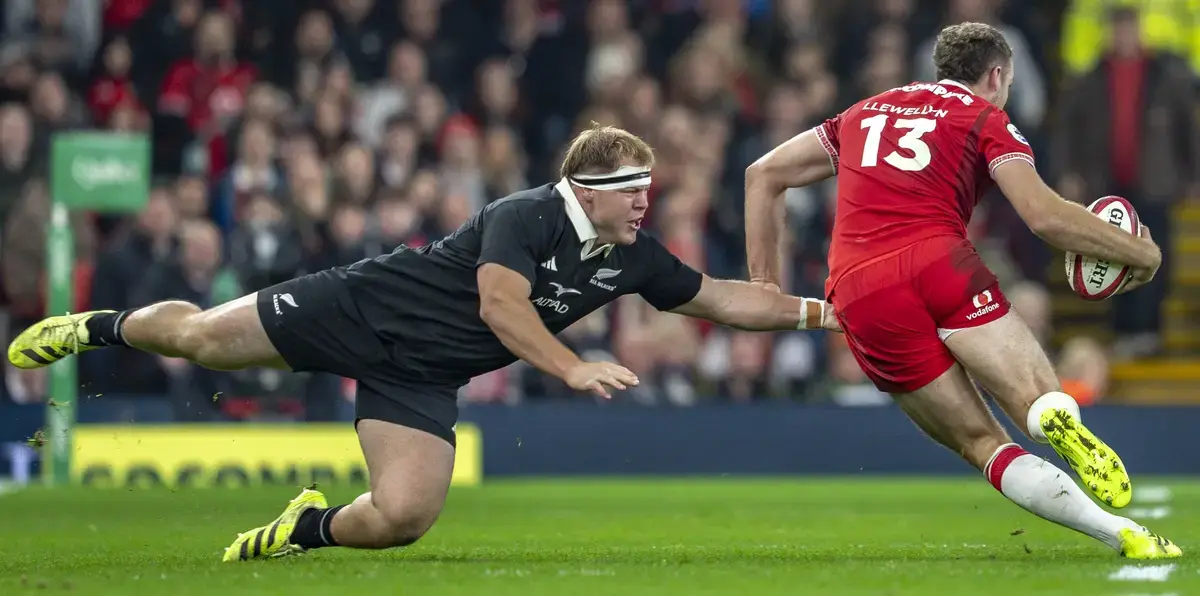
All Black George Bell tackles Max Llewellyn of Wales during the Wales v All Blacks match, Principality Stadium, Cardiff, Wales, Saturday, 22 November 2025. (Photo by Benjamin Gilbert / action press)

The All Blacks have suffered their first injury blow of the Greatest Rivalry Tour, with hooker George Bell ruled out after sustaining a calf strain during training in Cape Town on Sunday. The 24-year-old Crusaders rake will return home to New Zealand to rehabilitate, with his recovery timeline set at four to six weeks.

Key squad news:

  • George Bell suffers calf strain in training in Cape Town; ruled out for four to six weeks
  • Crusaders hooker will return home to New Zealand to rehabilitate
  • Uncapped Bradley Slater called up as replacement; due to arrive on Wednesday
  • Codie Taylor also nursing calf strain and unlikely to feature against the Stormers on Saturday

Bell, who earned four Test caps in 2024 and 2025, was one of ten additional players named in Dave Rennie’s expanded 44-man touring squad. He had been selected as the fourth-choice hooker behind Codie Taylor, Asafo Aumua and Samisoni Taukei’aho, but his tour is over before the opening fixture against the Stormers at DHL Stadium this Saturday.

“We are all gutted for George, to be ruled out of the tour so early,” All Blacks head coach Dave Rennie said from Cape Town. “He’s had a frustrating past few months with injury so it’s a real blow for him to have injured his calf again. We look forward to seeing him return via the NPC and put himself in a position to push for All Blacks selection later in the year.”

Taranaki and Blues hooker Bradley Slater has been called into the squad as Bell’s replacement and is due to arrive in South Africa on Wednesday. The 27-year-old is uncapped at Test level but brings considerable experience, having been part of both All Blacks XV campaigns in 2024 and 2025 and amassed more than 60 Super Rugby appearances across stints with the Chiefs and Blues.

Slater comes from distinguished rugby pedigree. His father Andy is a Taranaki rugby legend, while his uncle Gordon Slater played six matches for the All Blacks, including three Tests, in 1997 and 2000. The younger Slater made a name for himself at New Plymouth Boys’ High School before joining the Chiefs in 2019, where he spent six seasons prior to his move to the Blues this year. He represented Taranaki in the opening round of the NPC last weekend against Counties Manukau.

Slater’s call-up sees him leapfrog Canterbury and Chiefs hooker Brodie McAlister, who made his All Blacks debut in 2025 with two appearances off the bench against France and South Africa. All Blacks assistant coach and selector Neil Barnes is well acquainted with Slater’s abilities, having coached him at Taranaki.

The injury to Bell compounds a challenging hooking situation for the All Blacks ahead of the tour opener. Senior hooker Codie Taylor, who is serving as tour captain before Ardie Savea joins the squad ahead of the first Test against the Springboks, has been nursing a calf strain of his own and is not expected to feature against the Stormers. That scenario could see Slater thrust into action sooner than anticipated in the opening tour matches.

The All Blacks face the Stormers in Cape Town on Saturday before matches against the Sharks in Durban and the Bulls in Pretoria ahead of the first Test against the Springboks at Ellis Park on 23 August.

Continue Reading

New Zealand

Three debutants named in All Blacks squad for South Africa tour

Published

on

Three debutants named in All Blacks squad for South Africa tour
Moana Pasifika Semisi Tupou Ta'eiloa during the Chiefs v Moana Pasifika, Super Rugby Pacific match, FMG Stadium Waikato, Hamilton, New Zealand. Friday, 6 March 2026, (Photo by Mark Taylor / action press)

Dave Rennie has named three uncapped players in a 44-strong All Blacks squad for the inaugural Greatest Rivalry Tour of South Africa, a seven-week assignment the head coach has labelled “the toughest tour in rugby.” Hurricanes prop Siale Lauaki, Moana Pasifika loose forward Semisi Tupou Ta’eiloa and Chiefs first five-eighth Josh Jacomb are the new faces in a touring party that will face four United Rugby Championship franchise sides and world champions South Africa in a four-Test series beginning at Ellis Park on 23 August.

Key squad news:

  • Three uncapped players named: Hurricanes prop Siale Lauaki, Moana Pasifika loose forward Semisi Tupou Ta’eiloa and Chiefs first five-eighth Josh Jacomb
  • Captain Ardie Savea granted extended break; will miss franchise matches and join squad ahead of first Test
  • All 34 Nations Championship squad members retained; ten additions bolster touring party to 44
  • Fabian Holland returns after missing entire Super Rugby Pacific season with shoulder injury
  • Ethan Blackadder, Rieko Ioane, Ollie Norris, George Bell, Timoci Tavatavanawai and Emoni Narawa recalled
  • Du’Plessis Kirifi and Noah Hotham miss selection; Tamaiti Williams, Scott Barrett and Leicester Fainga’anuku unavailable through injury

All 34 players from the Nations Championship squad that recorded wins over France, Italy and Ireland earlier this month have been retained, with ten additions bolstering the group for eight matches across six weeks. Captain Ardie Savea has been granted an extended break and will not join the squad until the first Test, missing the non-Test fixtures against the Stormers, Sharks and Bulls.

“Ardie has carried a massive workload in the last couple of years and we think it is best for him to have an extended break so he can come back ready to lead us into the Test series,” Rennie said. “We have a number of excellent leaders in our squad who will embrace the chance to captain the side.”

Savea, who turns 32 during the tour, has played more than 18 months of virtually unbroken rugby after spending a season in Japan with Kobe Steelers — where he helped Rennie deliver the League One title — before returning directly into the All Blacks setup. His workload management reflects a broader eye on the 2027 Rugby World Cup in Australia, with Rennie keen to ensure his captain arrives in peak condition for the defining encounters.

Lauaki is the genuine bolter in the squad. The 23-year-old prop, who stands 194cm and weighs 125kg, made 13 appearances for the Super Rugby Pacific champion Hurricanes this season, mostly from the bench behind established All Blacks Tyrel Lomax, Pasilio Tosi and Xavier Numia. His ability to scrummage on both sides marks him out, and he represented the All Blacks XV under Jamie Joseph in 2025 before earning his step up to the full squad. He becomes the fourth Hurricanes prop selected. “We feel like he’s got a massive ceiling,” Hurricanes coach Clark Laidlaw said when Lauaki re-signed with the franchise last year.

Tupou Ta’eiloa, 22, is the youngest member of the touring party and arrives off the back of an impressive body of work with Moana Pasifika, having scored eleven tries in 25 appearances for the now-defunct franchise. Born in New Zealand and educated at Otago Boys’ High School, the back-rower plays for Southland in the NPC and remains contracted to New Zealand Rugby despite Moana Pasifika’s departure from Super Rugby Pacific.

Jacomb, 25, has emerged as a playmaking option through strong form with Taranaki and the Chiefs and joins Ruben Love, Damian McKenzie and veteran Beauden Barrett — who boasts 144 Test caps — in the first five-eighth group. Richie Mo’unga, who has returned from Japan, was deemed ineligible by New Zealand Rugby until he has played in the NPC, effectively ruling him out of touring contention.


Seven capped players have also been recalled. Crusaders flanker Ethan Blackadder returns to the fold having last worn the silver fern in 2024 under Scott Robertson. Chiefs prop Ollie Norris and Crusaders hooker George Bell add front-row depth, while World Rugby Men’s 15s Breakthrough Player of the Year Fabian Holland is passed fit after missing the entire Super Rugby Pacific season with a shoulder injury. The 23-year-old Highlanders lock had a hit-out for Otago against Mid Canterbury on Friday to prove his fitness.

Highlanders co-captain Timoci Tavatavanawai earns another squad call-up in the midfield, while Chiefs winger Emoni Narawa has recovered from a near season-long injury to take his place in the outside backs. Rieko Ioane, the 88-Test veteran who recently completed a stint with Leinster in Ireland, re-joins the group after linking up with the All Blacks as injury cover during the Nations Championship.

Among the notable absentees, Hurricanes co-captain Du’Plessis Kirifi has again been overlooked, with his lack of genuine size and positional versatility counting against him in a loose forward group that includes the likes of Luke Jacobson, Savea, Anton Segner and Blackadder, all of whom can cover multiple positions. Crusaders halfback Noah Hotham has also missed the cut, with Cameron Roigard, Cortez Ratima and Kyle Preston forming the scrumhalf trio. Tamaiti Williams, Scott Barrett and Leicester Fainga’anuku remain unavailable through injury.

“This tour will challenge us and demand the very best of us,” Rennie said. “We have selected a squad that we know is up to the challenge. It’s a balanced blend of experienced Test players and a cohort of younger players who will be keen to work hard and showcase their skillset on tour.

“We are thrilled for those players who will have the opportunity to pull on the All Blacks jersey for the first time, and welcome back those who are returning to the group.”

The tour begins against the Stormers in Cape Town on 8 August before fixtures against the Sharks in Durban and the Bulls in Pretoria. The first Test at Ellis Park follows on 23 August, with the Lions franchise fixture slotted between the first and second Tests at the same venue. The second and third Tests take place at DHL Stadium in Cape Town and FNB Stadium in Johannesburg respectively, before both teams travel to the United States for the fourth and final Test in Baltimore — the first time the two rivals have met on American soil.

“With eight matches in six weeks, including a four-Test series against the Springboks, this would have to be the toughest tour in rugby,” Rennie said. “Every player will be required to play their part across this tour, whether it’s preparing to play or helping their mates prepare.

“It will be an intense seven weeks of touring but an excellent opportunity for us to pit ourselves against the current benchmark team in world rugby, and to build connections with each other in a way that only a tour of this scale can do. What we learn about ourselves on and off-field will set us up well for the Rugby World Cup in 2027.”

New Zealand Rugby chief executive Steve Lancaster framed the tour in historical terms, noting it represents the first full-scale tour of its kind in 30 years, since Sean Fitzpatrick’s ‘Incomparables’ claimed the All Blacks’ maiden series victory in South Africa in 1996. Around 3,000 fans are expected to travel, the majority from New Zealand, with a reciprocal South African tour of New Zealand confirmed for 2030.

The Springboks, who also swept their Nations Championship opponents in Wales, Scotland and England, named a 43-man squad under Rassie Erasmus last week. Both sides enter the series in formidable form, setting the stage for what promises to be a defining chapter in the rivalry — and a crucial staging post on the road to the 2027 World Cup.

All Blacks squad — Greatest Rivalry Tour

Hookers: Asafo Aumua (Hurricanes, 22 caps), Codie Taylor (Crusaders, 109), Samisoni Taukei’aho (Chiefs, 44), George Bell (Crusaders, 4).

Props: Ethan de Groot (Highlanders, 43), George Bower (Crusaders, 26), Xavier Numia (Hurricanes, 2), Ollie Norris (Chiefs, 3), Tyrel Lomax (Hurricanes, 51), Fletcher Newell (Crusaders, 37), Pasilio Tosi (Hurricanes, 17), Siale Lauaki* (Hurricanes, 0).

Locks: Tupou Vaa’i (Chiefs, 47), Patrick Tuipulotu (Blues, 57), Josh Lord (Chiefs, 15), Sam Darry (Blues, 10), Fabian Holland (Highlanders, 12).

Loose forwards: Peter Lakai (Hurricanes, 10), Simon Parker (Chiefs, 8), Ethan Blackadder (Crusaders, 14), Luke Jacobson (Chiefs, 27), Anton Segner (Blues, 2), Ardie Savea (c) (Moana Pasifika, 109), Wallace Sititi (Chiefs, 21), Semisi Tupou Ta’eiloa* (Moana Pasifika, 0).

Halfbacks: Cameron Roigard (Hurricanes, 20), Cortez Ratima (Chiefs, 24), Kyle Preston (Crusaders, 1).

First five-eighths: Ruben Love (Hurricanes, 8), Beauden Barrett (Blues, 144), Damian McKenzie (Chiefs, 77), Josh Jacomb* (Chiefs, 0).

Midfielders: Jordie Barrett (Hurricanes, 81), Quinn Tupaea (Chiefs, 26), Billy Proctor (Hurricanes, 13), Anton Lienert-Brown (Chiefs, 90), Timoci Tavatavanawai (Highlanders, 2).

Outside backs: Caleb Clarke (Blues, 35), Fehi Fineanganofo (Hurricanes, 1), Leroy Carter (Chiefs, 7), Josh Moorby (Hurricanes, 2), Will Jordan (Crusaders, 57), Rieko Ioane (Blues, 88), Emoni Narawa (Chiefs, 4).

*denotes uncapped

Unavailable due to injury: Tamaiti Williams, Scott Barrett, Leicester Fainga’anuku.

Greatest Rivalry Tour fixtures

Saturday 8 August: All Blacks v Stormers, DHL Stadium, Cape Town
Wednesday 12 August: All Blacks v Sharks, Hollywoodbets Kings Park, Durban
Sunday 16 August: All Blacks v Bulls, Loftus Versfeld, Pretoria
Sunday 23 August: All Blacks v Springboks, Ellis Park, Johannesburg (first Test)
Wednesday 26 August: All Blacks v Lions, Ellis Park, Johannesburg
Sunday 30 August: All Blacks v Springboks, DHL Stadium, Cape Town (second Test)
Sunday 6 September: All Blacks v Springboks, FNB Stadium, Johannesburg (third Test)
Sunday 13 September: All Blacks v Springboks, M&T Bank Stadium, Baltimore (fourth Test)

Continue Reading

Trending

Discover more from Rugby News, Results, and Analysis | Rugby is the Game

Subscribe now to keep reading and get access to the full archive.

Continue reading