Connect with us

Gallagher Premiership

George Hendy’s late double crowns Saints as Premiership champions

George Hendy scored twice in three minutes as Northampton beat Exeter 26-17 to win the Gallagher Premiership Final at Twickenham for their third title.

Published

on

Northampton Saints celebrate winning he Gallagher PREM Final match Northampton Saints vs Exeter Chiefs at Allianz Stadium, Twickenham, United Kingdom on 20 June 2026. (Photo by Alex Williamson/News Images)

For 65 minutes of a sweltering afternoon at Twickenham, it looked as though Northampton Saints’ season of supremacy might end in the cruellest of fashion. Chance after chance had gone begging, Exeter Chiefs had clawed their way into the lead, and the side who had set the standard all year were staring at the prospect of finishing empty-handed. Then George Hendy happened.

Two tries in three breathless minutes from the flame-haired winger tore the Gallagher Premiership Final away from Exeter and delivered Saints a second title in three seasons, their third in total, confirming them as the dominant force in English club rugby. It was fitting that the day ended with departing captain George Furbank hoisting the trophy skywards in the south-west London sunshine — a fairytale finish to a decade of service at his boyhood club.

Key moments

2 mins – TRY NORTHAMPTON: Olly Woodburn and Immanuel Feyi-Waboso collided attempting to field McParland’s kick in behind, the ball popping loose for Tommy Freeman to stroll over unopposed. Fin Smith converted. (Northampton 7–0 Exeter)

10 mins – TRY EXETER: Len Ikitau robbed a loose Freeman offload, dummied brilliantly and fed Campbell Ridl, who sprinted over 40 metres to score. Henry Slade missed the conversion. (Northampton 7–5 Exeter)

12 mins – Exeter hooker Max Norey departed with an ankle injury, replaced by Joseph Dweba.

17 mins – Saints scrum-half McParland left the field with a knee injury. Alex Mitchell entered earlier than planned.

19 mins – George Furbank dropped a certain try after Hendy’s break down the touchline.

32 mins – TRY NORTHAMPTON: Curtis Langdon won the collision five metres out, Mitchell whipped the ball away and Smith beat Stephen Varney one-on-one to dive over. Smith converted. (Northampton 14–5 Exeter)

40 mins – TRY EXETER: Dweba’s lineout throw sailed over the jumpers to the back where Josh Iosefa-Scott showed superb hands and awareness to grab it and power over. Slade missed the conversion. (Northampton 14–10 Exeter)

Half-time: Northampton 14–10 Exeter. Saints had the better of the opening 40 minutes, beating 18 defenders to Exeter’s five and missing just five tackles compared to 18 from the Chiefs. But errors at key moments and Exeter’s courageous defence kept the underdogs within striking distance. Slade’s two missed conversions loomed large.

47 mins – Rory Hutchinson appeared to score in the corner, but the TMO spotted a knock-on from Tom Litchfield in the build-up. Try disallowed.

51 mins – YELLOW CARD NORTHAMPTON: Josh Kemeny shown yellow for a head clash on Exeter skipper Dafydd Jenkins.

52 mins – TRY EXETER: Jenkins powered over after Feyi-Waboso made a strong break and the ball was spun wide right. Slade nailed the conversion — his first of the day. Exeter led for the first time. (Northampton 14–17 Exeter)

57 mins – YELLOW CARD EXETER: Jenkins shown yellow for a high shoulder on George Furbank. Both sides reduced to 14 men until Kemeny’s return gave Saints a one-man advantage.

57 mins – Mitchell appeared to have scored after a sparkling break from Alex Coles, but lost the ball in the act of grounding under Ridl’s tackle.

65 mins – TRY NORTHAMPTON: Saints laid siege to the Chiefs line with their extra man and Hendy squeezed over in the corner, just staying in the field of play. TMO confirmed the try. Smith missed the conversion from the touchline. (Northampton 19–17 Exeter)

68 mins – TRY NORTHAMPTON: Smith dabbed a perfect grubber kick just inside the right corner flag and with no Exeter defender behind the line, Hendy ran through for his second try in three minutes. Smith converted. (Northampton 26–17 Exeter)

70 mins – Henry Pollock’s collision on Ridl checked by the TMO but ruled a rugby collision by referee Carley.

77 mins – After 25 phases of Exeter possession that barely moved beyond halfway, Saints won a crucial turnover. Smith’s subsequent penalty attempt fell short but critically milked the shot clock.

Full-time: Northampton 26–17 Exeter

Player of the match: Henry Pollock (Northampton) — 16 carries, 15 tackles.

A frantic opening sets the tone

The final began at a pace that would have been unsustainable on a cooler day, let alone in the 26-degree heat that enveloped Twickenham. Inside 108 seconds, Saints were ahead. Archie McParland’s speculative chip behind the Exeter defence caused carnage as Olly Woodburn and Immanuel Feyi-Waboso collided with one another attempting to field it, the ball popping free for Tommy Freeman to stroll over unopposed. Fin Smith converted and the table-toppers had the start they craved.

Henry Pollock immediately underlined his intent, ripping the ball from Tom Hooper and then powering towards the line from a five-metre lineout, only to be held up over a mass of Exeter defenders. But any sense that this would be a procession was swiftly dispelled.

From a speculative Freeman offload that should never have been thrown, Len Ikitau pounced, produced a devastating dummy that wrong-footed the Saints defence, and fed Campbell Ridl, who had the pace to sprint 40 metres down the left wing for a superb try. Henry Slade missed the conversion — the first of two costly misses in the opening half — but Exeter were right back in it at 7-5.

The chaos continued. McParland’s afternoon ended prematurely with a knee injury sustained in his desperate attempt to deny Ridl, ushering Alex Mitchell on far earlier than planned. Exeter’s hooker Max Norey had already departed with an ankle injury, a blow that would compromise the Chiefs’ lineout for the remainder of the contest. Despite those setbacks, neither side showed any inclination to take a breath. Slade was agonisingly close to grounding a grubber ahead of him, while Freeman tracked back superbly to haul down Stephen Varney when a second Exeter try looked certain. At the other end, Furbank dropped a pass with the line at his mercy after Hendy had done the hard work down the touchline — the sort of chance Saints had been converting all season.

Smith strikes, but Exeter hit back

A hydration break on 20 minutes offered a much-needed reset, and it was Saints who emerged the sharper. Alex Coles’ galloping break through a Harvey Skinner tackle shifted the momentum and, after several phases of relentless pressure inside the 22, Curtis Langdon got within a metre of the line before Smith accepted Mitchell’s pass and drove past Varney to score. Smith’s conversion stretched the lead to 14-5 and, briefly, the final looked to be going the way of the league leaders.

Exeter had other ideas. On the stroke of half-time, with a penalty kicked to the corner, Joseph Dweba’s lineout throw sailed over its intended target — but the ball fell perfectly into the arms of the unmarked Josh Iosefa-Scott, who grabbed it with superb awareness and powered over. Slade’s conversion again drifted wide, a miss so frustrating that the England centre stayed out after the whistle to practise his kicking while his team-mates headed for the dressing rooms. At 14-10, Exeter were very much alive.

Jenkins takes centre stage

The second half opened with Saints laying siege to the Exeter line for the best part of ten minutes, but the Chiefs’ defensive resolve was extraordinary. Rory Hutchinson spilled the ball five metres out, then had a try ruled out when Tom Litchfield’s pass in the build-up was adjudged forward. Two gilt-edged chances spurned.

The game turned decisively on the 51st minute when Josh Kemeny was sin-binned for a head-on-head collision with Dafydd Jenkins, a decision that divided opinion among pundits. The Exeter skipper, blood streaming from his nose, dusted himself off and scored within minutes, crashing over after Feyi-Waboso’s powerful carry had punched a hole in the Saints defence. This time Slade — his confidence restored by that half-time practice — nailed the conversion. Exeter led 17-14 for the first time in the match, and the 82,000 inside Twickenham sensed an upset.

Saints threw everything at Exeter’s line. JJ van der Mescht’s thundering carry almost broke through, and Mitchell looked certain to score after Coles put him away, but Ridl produced a sensational last-ditch tackle that dislodged the ball just as the scrum-half dived for the line. Yet in the chaos of that passage, Jenkins caught Furbank high with a shoulder, and the Welsh lock joined Kemeny in the sin-bin. It was a yellow card that would prove catastrophic for Exeter’s hopes.

Hendy’s moment of destiny

When Kemeny returned to give Saints a five-minute window with 15 men against 14, they seized it with both hands. Freeman burst through the midfield, riding a tackle to keep the move alive, and when the ball was worked wide, Hendy squeezed over in the right corner under intense pressure from Ridl. The TMO checked whether the winger had been forced into touch or lost the ball, but confirmed the score. Smith missed the conversion from the touchline, but Saints led 19-17.

Three minutes later, the game was effectively over. Pollock evaded a tackle to put Exeter on the back foot inside their own 22, and Smith — the man who had endured a testing afternoon of his own — produced the moment of quality that defined the final. One glance up, one delicious grubber in behind the rushing Exeter defence, and Hendy was through to dot down in almost the identical position. This time Smith nailed the touchline conversion to push the lead to nine points with ten minutes remaining.

Exeter, to their immense credit, kept coming. But after 25 phases of possession that barely progressed beyond halfway, Pollock won the turnover penalty that effectively sealed the title. The 21-year-old — named man of the match for his 16 carries and 15 tackles — celebrated as though the final whistle had already sounded. He was not far wrong.

A tale of two farewells

For Smith, the match-sealing grubber was the culmination of a long and sometimes difficult season in which he admitted his confidence had wavered. “I probably lost a bit of confidence,” the 24-year-old fly-half said afterwards. “I had to really tap into that mental side of it and really try to get myself up for games at times. I was probably feeling like I had to fake it a little bit, but that is the job of being a sportsman — you have the highs, you have the lows.”

Yet when it mattered most, Smith found something. “This time two years ago, I probably would’ve gone into my shell and not made any more mistakes,” he reflected. “But with a bit more experience, working a lot more with Vesty, speaking with Jonny a lot, just trying to take each moment as it comes and not dwell on what’s been — getting out of my own head and letting my body take over — that’s been my message all year.”

Smith’s most revealing words, though, were reserved for his departing captain. “It feels weird saying this but every night when I went to bed and closed my eyes I had that image of Furbs lifting that trophy just running around my head,” he said. “It came to life. That was pretty special.”

Furbank himself struggled to articulate what the moment meant. “I said to the boys I don’t really know how to feel after the final whistle,” the 29-year-old said. “It was a mix of relief, happiness, sadness, all merged into one.”

Pollock, the youngest man ever to claim the final’s man-of-the-match award, was rather more straightforward: “It’s my boyhood club. I’m just so happy. It’s what you dream of as a little kid, these moments playing on big stages.”

Exeter’s pride in defeat

For Exeter, who finished ninth in the Premiership last season and suffered a record 79-17 defeat at Gloucester barely 14 months ago, reaching a final and leading it deep into the second half represented a remarkable renaissance under Rob Baxter’s renewed intensity.

Jenkins, the 23-year-old Wales lock who had scored the try to put his side ahead and then been sin-binned in the same passage of the match, captured the mood with characteristic dignity. “I’m gutted but proud of the boys,” he said. “It’s the biggest privilege I could have is being in this group. We played a lot of big games in a row, but we turned up emotionally for each other.”

Baxter, ever the pragmatist, offered a characteristically shrewd assessment. “You look and go, ‘well, we forced Northampton to score 12 points with two relatively speculative kicks through’ — that’s a pretty good performance from us,” he said, before adding with a knowing nod towards the Saints: “The first thing you have to do in a final is congratulate the opposition.”

Dowson, Saints’ director of rugby, was similarly understated in victory. “We were outstanding throughout the season,” he said. “It’s nice now to be able to put a full stop on it with a big tin cup and say ‘we were the best side in the league’. That was a proper final where it was nip and tuck.”

What it means

With 14 academy graduates in their 23-man squad and the spine of Smith, Pollock, Freeman and Hendy all aged 24 or under, Northampton’s dynasty shows no sign of slowing down. For Exeter, who had new American investment on the horizon and a squad brimming with young talent, this felt less like an ending and more like the beginning of another chapter — just one game too many in a season that had already exceeded all expectations.

For now, though, the trophy belongs to the Saints. As the gold streamers settled on the Twickenham turf and Furbank made his way towards the adoring fans one final time, Smith’s words lingered: “We always speak about our super strengths as a team, how much we get on with each other and how much we care about each other. I think on the biggest stages, when it gets a bit squeaky-bum time, that counts for a lot.”

On a stiflingly hot afternoon in south-west London, it counted for everything.


Match details

Northampton Saints 26 (Tries: Freeman 2, Smith 32, Hendy 65 68; Conversions: Smith 3/4)
Exeter Chiefs 17 (Tries: Ridl 10, Iosefa-Scott 40, Jenkins 52; Conversions: Slade 1/3)
Half-time: 14–10

Yellow cards: Kemeny (Northampton, 51), Jenkins (Exeter, 57)

Venue: Allianz Stadium, Twickenham
Attendance: 81,126
Referee: Matthew Carley (England)
Man of the match: Henry Pollock (Northampton)

Teams

Northampton Saints: 15 George Furbank (capt), 14 Tommy Freeman, 13 Tom Litchfield (Dingwall 59), 12 Rory Hutchinson, 11 George Hendy, 10 Fin Smith, 9 Archie McParland (Mitchell 11); 1 Emmanuel Iyogun (Fischetti 48), 2 Curtis Langdon (Wright 48), 3 Elliot Millar-Mills (Green 48), 4 Alex Coles, 5 Ed Prowse (Van der Mescht 52), 6 Josh Kemeny (Lockett 77), 7 Tom Pearson (Chick 57), 8 Henry Pollock.

Exeter Chiefs: 15 Olly Woodburn, 14 Immanuel Feyi-Waboso, 13 Henry Slade, 12 Len Ikitau, 11 Campbell Ridl (Haydon-Wood 77), 10 Harvey Skinner, 9 Stephen Varney; 1 Scott Sio (Burger 45), 2 Max Norey (Dweba 8), 3 Josh Iosefa-Scott (Tchumbadze 45), 4 Dafydd Jenkins (capt; Vintcent 68), 5 Andrea Zambonin, 6 Tom Hooper, 7 Ethan Roots (Tshiunza 47), 8 Greg Fisilau (James 77).

Continue Reading
Click to comment

Leave a Reply

Gallagher Premiership

Former All Black signs for Newcastle as England switch looms

Published

on

Former All Black signs for Newcastle as England switch looms
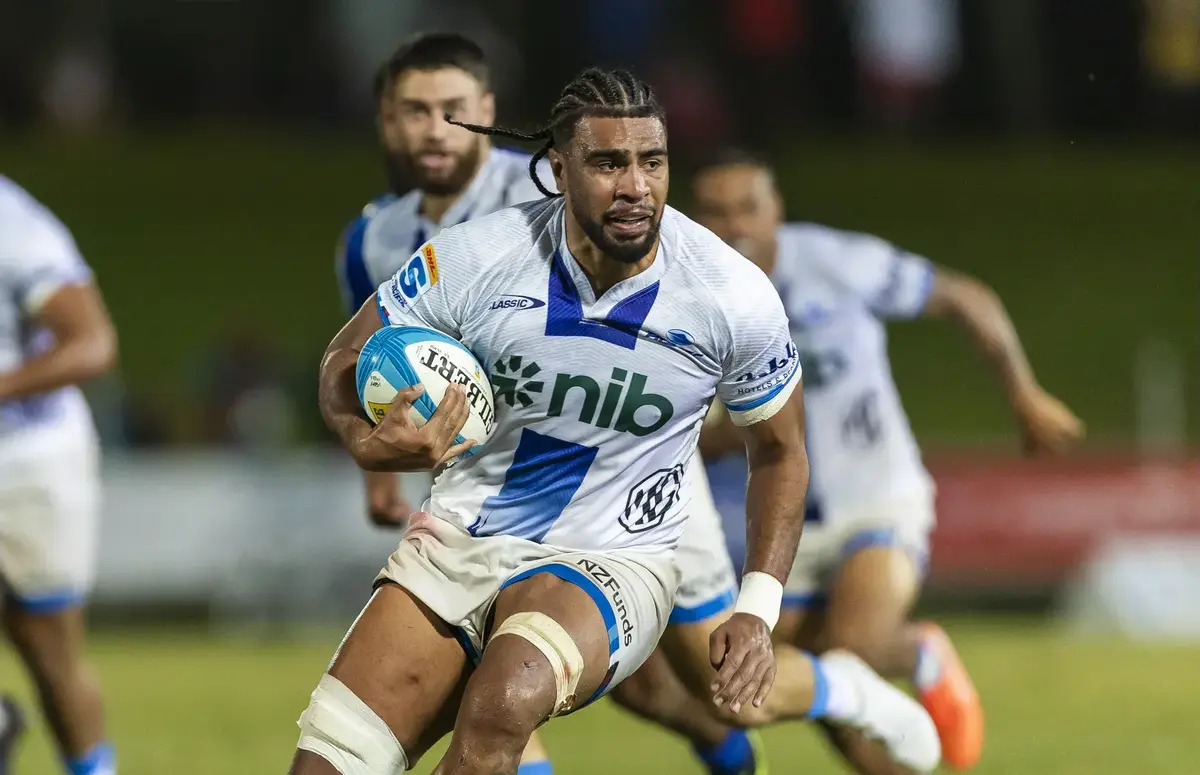
Blues Hoskins Sotutu,Centre, during the Fijian Drua v Blues, Super Rugby Pacific match, HFC Bank Stadium, Suva, Fiji. Friday, 9 May 2025, (Photo by Kirk Corrie / action press)

Newcastle Red Bulls have secured one of the most significant signings in their history, confirming the capture of New Zealand international Hoskins Sotutu on a three-year deal that will commence following the 2026 Super Rugby season.

  • Former All Black Hoskins Sotutu agrees three-year deal with Newcastle Red Bulls
  • 2024 Super Rugby MVP to join after completing 2026 Blues campaign
  • Move opens door for unprecedented England allegiance switch
  • 27-year-old brings 31 tries in 80 Super Rugby appearances
  • Signing follows Newcastle’s recruitment of Crusaders’ Tom Christie

The blockbusting number eight, who was crowned Super Rugby Pacific’s player of the year in 2024, represents a major statement of intent from the newly rebranded club as they seek to transform their fortunes in the Gallagher Premiership. Currently winless after seven matches this campaign, Newcastle’s ambitious recruitment drive signals a determination to compete at the top end of both domestic and European rugby.

Sotutu, who has earned 14 caps for the All Blacks but has not featured for New Zealand since a 25-25 draw with England at Twickenham in November 2022, brings proven international pedigree to the North East. The 6-foot-4 forward has amassed 31 tries in his 79 appearances for the Blues since making his Super Rugby debut in 2019, establishing himself as one of the southern hemisphere’s most dynamic loose forwards.

His move to Kingston Park carries particular intrigue given his eligibility for England through his mother Adelita, whilst he also qualifies for Fiji through his father Waisake, a former international. With World Rugby’s three-year stand-down period now complete, Sotutu could become the first player to represent England at senior level having previously worn another nation’s jersey in the modern era.

“I am excited to be committing to Newcastle Red Bulls’ project moving forward, and coming to compete in the Gallagher PREM week in, week out,” Sotutu said in a statement released by the club. “The club made it clear to me how ambitious they are, and I am looking forward to getting started. I have enjoyed my time at the Blues and am looking to finish on a high before hitting the ground running in the North East of England.”

The signing represents a significant coup for Newcastle, who reportedly fended off interest from multiple clubs to secure the services of a player renowned for his offloading ability, devastating attacking instincts and exceptional athleticism. Sotutu’s capture follows the recent arrival of former Crusaders flanker Tom Christie, who made his Red Bulls debut last month, underlining the club’s determination to build a squad capable of challenging the Premiership’s established powers.

Neil McIlroy, Newcastle’s sporting general manager, made no attempt to downplay the significance of the acquisition. “This is a huge signing which brings major firepower into the club, and sends a message around the league,” he declared. “Hoskins is a player who was very much in demand from other teams, but he has seen what is being planned at Newcastle Red Bulls and wants to be part of it. He’s an X-factor player who will make a big impact on the field, and the way he plays will get people off their seats.”

McIlroy continued: “The profile of the club and the Gallagher PREM as a whole will grow massively as a result of him joining us, and this is a signing which shows we really mean business.”

For the Blues, Sotutu’s departure marks the end of a highly successful association. Since his debut six years ago, the powerhouse forward has been instrumental in Auckland’s resurgence, playing a pivotal role in their 2024 Super Rugby Pacific triumph—their first major title in 21 years. That season saw Sotutu crowned the competition’s most valuable player, a recognition that made his subsequent omission from Scott Robertson’s first All Blacks squad all the more surprising.

Robertson’s decision not to select Sotutu, despite his stellar domestic form, appears to have accelerated the forward’s decision to seek opportunities elsewhere. His last appearance in the black jersey came under Ian Foster’s tenure, and the lack of further international opportunities under the current coaching regime has effectively ended his All Blacks career.

Blues general manager of rugby Murray Williams paid tribute to Sotutu’s contribution whilst confirming his full commitment to the franchise for the upcoming campaign. “He’s a world-class player and a leader within our environment,” Williams said. “Newcastle are gaining a high-quality professional, and we’re pleased to have Hoskins fully committed to the Blues for another full season. He’ll continue to set the standard for us in 2026.”

Sotutu echoed that sentiment, expressing his gratitude to the Blues organisation and supporters. “This club means a lot to me. The Blues has been my home for a long time and I’m proud of what we’ve achieved,” he reflected. “I’m grateful to the coaching staff, teammates and our fans for the support over the years and look forward to one more season with the boys.”

The exact timing of Sotutu’s arrival in England remains to be determined, as players completing their final season with New Zealand Rugby often participate in the National Provincial Championship, which runs until October. With the English season commencing in September, negotiations around release dates may yet need to be finalised.

Should Sotutu pursue the England pathway, he would face significant competition for a back-row berth. Steve Borthwick’s side have enjoyed a remarkable 2025, winning 11 consecutive Tests and recording a commanding 33-19 victory over the All Blacks at Twickenham. England’s current loose forward options are considerable, meaning Sotutu would need to make an immediate impact at club level to force his way into international contention.

Nevertheless, his attributes—powerful carrying, exceptional handling skills, try-scoring prowess and game-breaking ability—make him an enticing proposition for any international side. At 27, he arrives in England at what should be the peak years of his career, with the 2027 Rugby World Cup in Australia providing a clear target should he choose to pursue Test rugby with the Red Rose.

For Newcastle, the signing represents far more than simply adding quality to their squad. Backed by Red Bull’s considerable financial resources, the club has embarked on an ambitious rebuilding project following years of struggle in the Premiership. Their current winless start to the campaign underlines the scale of the challenge facing them, but the recruitment of players of Sotutu and Christie’s calibre demonstrates a long-term vision that extends beyond immediate results.

Continue Reading

Gallagher Premiership

Bristol sign Wales wing Louis Rees-Zammit after NFL dream ends

Published

on

Bristol sign Wales wing Louis Rees-Zammit after NFL dream ends
August 22, 2024: former Kansas City Chiefs running back Louis Rees Zammit (9) warms up before a preseason game against the Chicago Bears at GEHA Field at Arrowhead Stadium in Kansas City, MO. CSM Kansas City United States of America. (IMAGO / ZUMA Press Wire)

Louis Rees-Zammit’s remarkable journey from rugby union stardom to NFL hopeful and back again reached its conclusion at Ashton Gate yesterday, as Bristol Bears secured the signature of one of world rugby’s most electrifying talents on a deal that takes effect immediately.

  • Louis Rees-Zammit signs for Bristol Bears after 18-month NFL adventure ends
  • Wales international returns “bigger and faster” following stint with Kansas City Chiefs and Jacksonville Jaguars
  • 24-year-old could make debut in Premiership Cup against Sale Sharks on 13 September
  • Bristol beat rivals including Newcastle, Cardiff and former club Gloucester to signature
  • Wales coach Steve Tandy hints at autumn international recall for British & Irish Lion

The 24-year-old Welsh flyer’s return to the 15-man code represents one of the most significant signings in recent Premiership history, bringing to an end an 18-month American football odyssey that saw him train with both the Kansas City Chiefs and Jacksonville Jaguars without making a single regular-season appearance.

Rees-Zammit’s decision to join Pat Lam’s side ahead of several rival suitors, including his former club Gloucester and ambitious Newcastle Falcons, reflects both Bristol’s growing reputation as English rugby’s most entertaining outfit and the player’s burning desire to recapture the form that made him a British & Irish Lion at just 22.

The announcement, delivered via the Bears’ social media channels with characteristic flair, sent shockwaves through the rugby world and immediately elevated Bristol’s title credentials for the upcoming campaign. With 95 tries scored last season – the joint-highest tally in the Premiership – the Bears have established themselves as the division’s premier attacking force, a philosophy that proved irresistible to a player whose pace and finishing ability has terrorised defences across two continents.

“Bristol Bears was the obvious choice for me,” declared Rees-Zammit, whose beaming smile during yesterday’s unveiling suggested a man relieved to be returning to familiar territory. “The style of rugby the team play – all about entertaining the fans and growing the game – perfectly aligns to how I want to play and how I express myself on and off the field.”

The Wales international’s journey to this moment began in January 2024, when he stunned the rugby world by announcing his immediate departure from Gloucester to pursue an NFL career through the league’s International Player Pathway Programme. Having scored 42 tries in 77 appearances for the Cherry and Whites, alongside 14 tries in 32 Test appearances for Wales, Rees-Zammit seemed destined for rugby greatness before his dramatic career pivot.

His time in American football, whilst ultimately unsuccessful in terms of game time, appears to have enhanced rather than diminished his physical capabilities. Speaking at yesterday’s press conference, Rees-Zammit revealed the transformative impact of his NFL experience: “I’ve learnt a lot, not just on the field but off the field. My size has got a lot bigger, my speed is a lot faster and just learning about myself and about my body, that’s been one of the biggest things over the last 18 months and I’m raring to go.”

The player’s initial signing with the four-time Super Bowl champions Kansas City Chiefs generated considerable excitement, but his release in August 2024 represented the first setback in what had been a meteoric rise through rugby’s ranks. A subsequent move to Jacksonville Jaguars offered renewed hope, yet despite featuring in pre-season training camps, regular-season opportunities remained elusive.

Bristol director of rugby Pat Lam, whose attacking philosophy has revolutionised the Bears’ approach since his arrival from Connacht, expressed his delight at securing a player he believes can elevate the club to new heights. “Louis is a world-class player, and we’re thrilled to welcome him back to rugby union and to the Bears this season,” enthused the former Ireland captain.

“Although we have a small squad, we’ve been building quality depth and experience across the team, bringing in players who can cover multiple positions to help us take that next step in the PREM and in Europe. Louis offers exactly that to our dynamic back three, with his ability and desire to play both full back and wing for the Bears.”
Lam’s comments hint at the versatility that made Rees-Zammit such an attractive proposition for multiple suitors.

Newcastle Falcons, buoyed by their recent takeover by energy drinks giant, had publicly courted the player before confirming earlier this week that he would not be joining their revolution. Cardiff Blues, representing a homecoming option for the Welsh star, also expressed interest but were ultimately unable to compete with the financial packages available in England’s top flight.

Perhaps most intriguingly, Gloucester were understood to have held first refusal rights under the terms of Rees-Zammit’s original departure, yet the player’s desire for a fresh challenge and Bristol’s compelling vision ultimately proved decisive factors.

The timing of Rees-Zammit’s return could hardly be more fortuitous for both club and country. Bristol’s opening Premiership Cup fixture against Sale Sharks on 13 September presents an immediate opportunity for integration, with the more significant prospect of a potential debut against his former employers Gloucester at Kingsholm looming on 20 September.

From an international perspective, Wales’ new head coach Steve Tandy has already hinted at a swift recall for the British & Irish Lions tourist, despite his 18-month absence from competitive rugby. “Him being available is a massive addition to the squad,” observed Tandy during his recent media briefing. “You know he’ll be in brilliant shape, he’ll be fit, and he’s an instinctive rugby player who does things really naturally.”

The implications of this signing extend far beyond individual brilliance. Bristol’s commitment to securing world-class talent despite operating with what Lam describes as “a small squad” demonstrates the club’s serious intent to challenge for major honours. Their statistics from last season – 635 points scored, 10,458 metres made, and 567 defenders beaten – already marked them as the Premiership’s most potent attacking force.

Rees-Zammit’s integration into this system promises to unlock new dimensions of pace and power that could prove decisive in tight encounters. His trademark ability to find space through both footwork and raw speed, combined with the analytical approach he has developed during his NFL experience, suggests a player returning with enhanced tools rather than diminished appetite.

The financial implications, whilst undisclosed, represent a significant statement of intent from Bristol’s ownership. In an era of salary cap scrutiny and economic uncertainty, securing a player of Rees-Zammit’s calibre demonstrates both ambition and shrewd recruitment strategy.

The question now is not whether he can rediscover his devastating form, but rather how much more dangerous this new, improved version might prove to be.

Continue Reading

Gallagher Premiership

Saracens confirm Owen Farrell’s return to Saracens from Racing 92

Published

on

Saracens confirm Owen Farrell’s return to Saracens from Racing 92
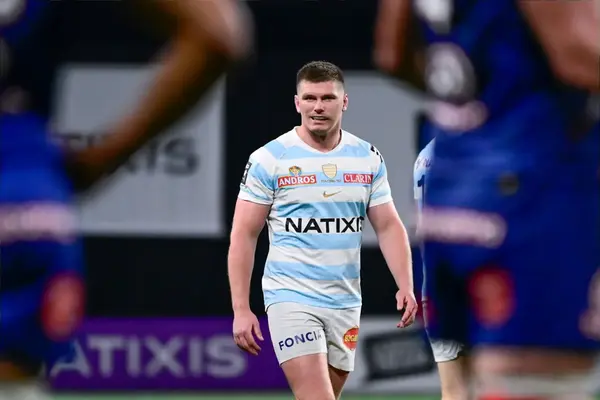
Owen FARRELL ( 10 - Racing 92 ) during the Top 14 match between Racing 92 and Stade Francais Paris at Paris La Defense Arena on April 27, 2025 in Nanterre, France. ( Photo by Dante Badano PsnewZ ) - NanterreFrance

The former England captain has agreed a two-year deal to rejoin Saracens, cutting short his Racing 92 contract after an injury-plagued season in Paris.

Key moments:

  • Farrell agrees two-year deal to return to Saracens for 2025/26 season
  • Racing 92 and Saracens reach compromise on transfer fee after negotiations
  • 33-year-old made just 17 appearances for French side due to injuries
  • Return makes him eligible for England selection ahead of Argentina tour
  • Saracens secure dispensation cover for injured Alex Lozowski

Owen Farrell’s homecoming to Saracens represents one of the most significant moves in English rugby’s summer transfer window, with the former England captain cutting short his French adventure to rejoin the club where his professional journey began nearly two decades ago. After just one season at Racing 92, the 33-year-old fly-half has agreed a two-year deal that sees him swap the glamour of Paris for the familiar surroundings of North London’s StoneX Stadium.

The move concludes what can only be described as a disappointing chapter in Farrell’s illustrious career. Having left Saracens as their greatest-ever points scorer and a multiple title winner, his stint in the Top 14 was plagued by injury setbacks and underwhelming performances that bore little resemblance to the player who dominated European rugby for over a decade.

Farrell’s departure from Saracens last summer had seemed permanent, with Racing 92 paying £500,000 to secure his services on what was initially a two-year contract worth £685,000 per season. The move represented a fresh challenge for a player who had achieved everything possible in English rugby, but the reality proved far different from the expectation.

Limited to just 17 appearances across all competitions, Farrell’s time in Paris was punctuated by a persistent hip problem before a season-ending concussion in Racing’s European Challenge Cup semi-final defeat to Lyon effectively ended his campaign prematurely. His statistics—one try and 41 points kicked—paint a picture of a player struggling to find his rhythm in unfamiliar surroundings.

The path back to North London required delicate negotiations between the two clubs. Racing 92 initially sought €250,000 (£211,500) to release Farrell from the final year of his contract, while Saracens were prepared to offer only €200,000 (£177,000). The eventual compromise, reached earlier this month, allowed both parties to draw a line under what had become an increasingly unsatisfactory arrangement.

For Saracens, the timing proved fortuitous. The injury to Alex Lozowski provided salary cap dispensation that made Farrell’s return financially viable, even if it means the fly-half will earn significantly less than his French wages under the Premiership’s tighter financial restrictions.

Farrell’s own words upon his return reveal the emotional pull of his boyhood club. “Saracens is my home and the opportunity to come back is one that excites me enormously,” he said. “Having watched from afar this season, it is clear to see that the club has incredible potential, and I can’t wait to get back in the mix for the 2025/26 season.”

Director of Rugby Mark McCall was equally effusive in his welcome. “Owen has Saracens in his DNA; his competitive spirit is woven into the fabric of this club, and we are delighted he has chosen to come home. He returns to a young group full of potential, players eager to learn, play and push for success.”

The statistics of Farrell’s first stint at Saracens tell the story of one of English rugby’s most successful careers. Making his debut just 11 days after his 17th birthday in 2008, he accumulated 256 appearances while helping the club secure six Premiership titles and three European Champions Cups. His loyalty during the club’s salary cap-induced relegation in 2021, when many stars departed, exemplified the bond that has now drawn him back.

At international level, Farrell’s 112 England caps and six British & Irish Lions Test appearances cement his status as one of the game’s elite performers. His absence from Andy Farrell’s Lions squad for this summer’s Australia tour—coached by his own father—underlines how his career has stalled since stepping away from international rugby following the 2023 World Cup.

Farrell’s return to English rugby immediately makes him eligible for national selection, a development that will intrigue head coach Steve Borthwick ahead of the upcoming Argentina tour. While Farrell has not represented his country since the 2023 World Cup bronze medal match, his experience and game management skills remain invaluable assets for a team still seeking consistency at fly-half.

The question of whether Farrell can rediscover his best form after a season of struggles will define his second Saracens chapter. At 33, time is not on his side, but his intimate knowledge of the club’s systems and culture could prove decisive in fast-tracking his return to peak performance.

Continue Reading

Trending

Discover more from Rugby News, Results, and Analysis | Rugby is the Game

Subscribe now to keep reading and get access to the full archive.

Continue reading