Connect with us

New Zealand

All Blacks secure Tony Brown from Springboks after 2027 World Cup

Published

on

All Blacks secure Tony Brown from Springboks after 2027 World Cup
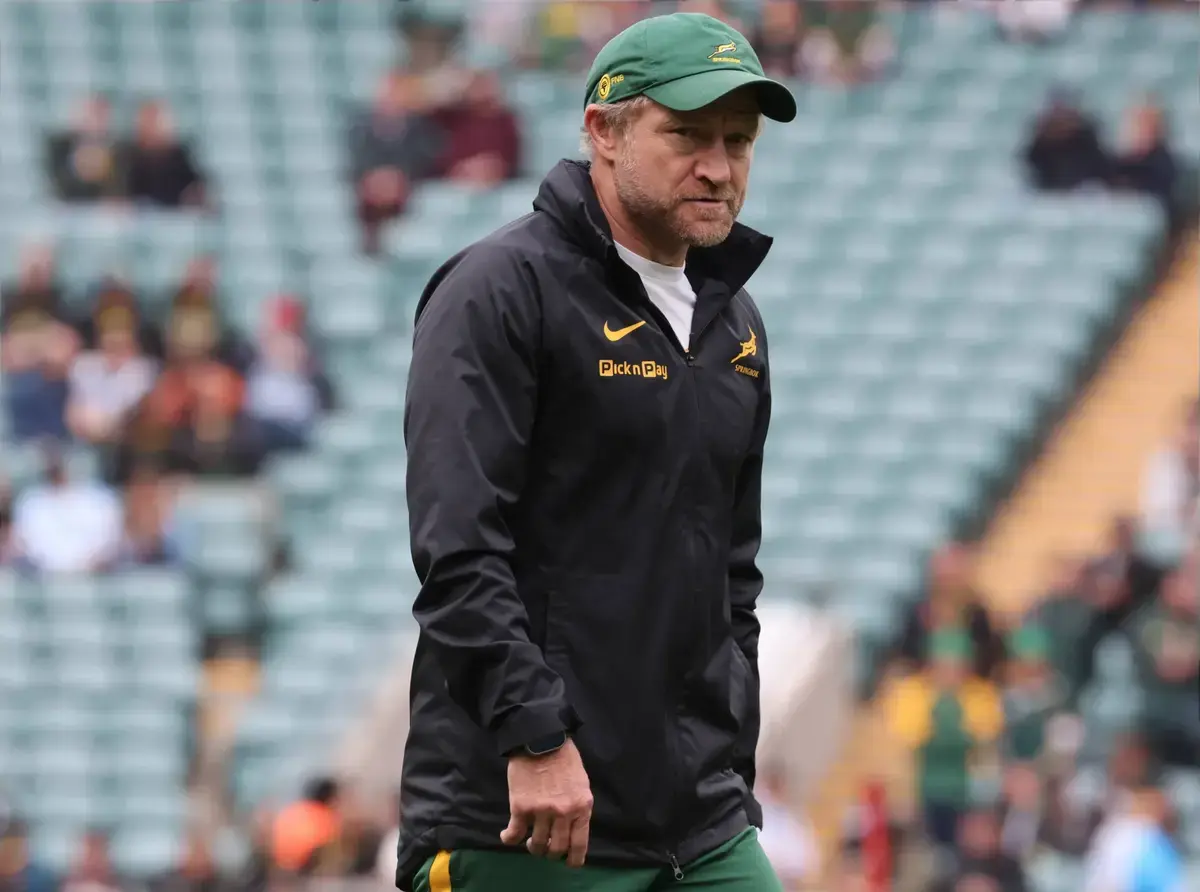
South Africa v Argentina - The Rugby Championship Tony Brown serves as the attack coach for South Africa during The Rugby Championship match between Argentina and South Africa at Allianz Stadium in Twickenham, London, on October 4, 2025. London England United Kingdom Copyright: Action Foto Sport (IMAGO / NurPhoto)

New Zealand Rugby has moved decisively to secure one of the most sought-after coaching minds in world rugby, signing Springboks assistant coach Tony Brown on a two-year contract from 2028.

The 51-year-old, who has been widely credited with transforming South Africa’s attack since joining Rassie Erasmus’s coaching staff in 2024, will leave the world champions after the 2027 Rugby World Cup in Australia to take up a role with the All Blacks. It is a bold and unusual appointment — not least because New Zealand Rugby does not yet have a head coach contracted beyond that tournament.

Brown is a former All Blacks flyhalf whose coaching reputation was forged during a transformative stint with Japan, where he was instrumental in guiding the Brave Blossoms to a first-ever World Cup quarter-final on home soil in 2019. He returned to New Zealand club rugby with the Highlanders before being recruited by Erasmus in 2024, and his influence on the Springbok backline has been a talking point ever since.

NZR chief executive Steve Lancaster framed the move as essential forward planning in an increasingly competitive international coaching market. “Tony is a world-class coach who is highly regarded and consistently sought after by head coaches and teams around the world,” Lancaster said. “We know Tony is available after the 2027 Rugby World Cup and he’s made it clear he would love to be part of the All Blacks. This decision is simple, it’s about ensuring the best coaches return to New Zealand.”

The timing of the announcement, some 18 months before Brown’s NZR contract begins, reflects a broader arms race in international coaching recruitment. Andy Farrell recently committed to Ireland through to 2031, while Erasmus is also contracted with South Africa until the same year. Lancaster was blunt about the need to act. “There are a small number of coaches that are highly sought after around the world, and you have to move when the time is right,” he said. “Otherwise they might not be available to you when you do want them. We have just seen Andy Farrell commit to Ireland through to 2031 and Rassie Erasmus is also committed through to ’31. So if you sit on your hands, you ultimately might have less options.”

The decision to sign Brown was led by incoming NZR high performance director Don Tricker, who does not begin his role on a permanent basis until November. Current All Blacks head coach Dave Rennie — the former Australia and Glasgow Warriors boss who was appointed earlier this year after NZ Rugby parted ways with Scott Robertson two years into a four-year deal — was engaged throughout the process and is understood to be supportive.

That support is notable given the circumstances. Brown is widely expected to take on the attack coaching portfolio from 2028, a role currently filled by former Scotland international Mike Blair. Blair was one of Rennie’s own appointments when he named his coaching staff in March alongside Neil Barnes, Jason Ryan and Tana Umaga.

Lancaster also revealed that NZ Rugby had sounded out other coaches before making the commitment. “What we do know, though, from dialogue with other coaches, with previous head coaches and potential head coaches, is that everybody would have Tony Brown in their team,” he said. “So we are really confident making this move now.”

The elephant in the room remains the All Blacks head coaching position beyond the 2027 World Cup. Lancaster confirmed that a process for that role would begin no later than the conclusion of the 2027 Rugby Championship. “For now, Dave and his coaching team are absolutely focused on what’s in front of them and we look forward to challenging ourselves against Tony and the Springboks in the coming months,” he said.

New Zealand Rugby’s recent history with coaching transitions makes this territory sensitive. In 2023, then-head coach Ian Foster took exception when NZR invited applications for the role beyond that season, a process that was seen as undermining a coach still in the job. Foster refused to apply, and Robertson was appointed ahead of Jamie Joseph. The fallout was widely regarded as messy. Lancaster insisted this situation was different. “Securing Tony beyond 2027 is very different to the wholesale change of a coaching group,” he said. “This is about securing a world-class coach to coach in New Zealand.”

From a South African perspective, the loss of Brown will be felt keenly. Since his arrival, the Springboks have added a more fluid, expansive dimension to their traditionally forward-dominated game. The results have been emphatic: back-to-back Rugby Championship titles in 2024 and 2025, and a largely dominant run that included a record 43-10 defeat of the All Blacks in Wellington last September — New Zealand’s heaviest home loss. The All Blacks have won just one of their last six encounters against South Africa, with that lone victory at Eden Park quickly overshadowed by the Wellington thrashing a week later.

Brown himself played down any suggestion of divided loyalties. “My contract with New Zealand Rugby only begins in 2028, so there is still a long road ahead before that comes into play,” he said. “Right now, I am fully committed to the Springboks. What we are building and trying to achieve as a team over the next two years is my only focus.”

Erasmus, for his part, gave his blessing to the move and praised Brown’s contribution. “Tony has made a remarkable difference, both on and off the field, and he has always been upfront with us about wanting to be closer to his family and about the All Blacks holding a special place in his heart, and we are genuinely delighted for him,” the Springboks head coach said. “We’ve made the mistake in the past of negotiating contracts in a RWC year, and this clarity will allow us all to go full steam ahead with our preparations for this and next season.”

The announcement adds an intriguing layer to the upcoming international calendar. The All Blacks are set to play three tests against the Springboks in South Africa and one in Baltimore as part of the inaugural Rugby’s Greatest Rivalry tour later this year. Brown will be in the opposition coaching box for all four encounters, plotting against the very team he will soon join.

Before that, Rennie faces his first assignment as All Blacks head coach, with a squad expected at the conclusion of the Super Rugby Pacific season for the Nations Championship tests against France, Italy and Ireland in July.

In an interview with New Zealand media earlier this year, Brown described Robertson’s departure from the All Blacks as “bizarre” and revealed he had been in talks to join Robertson’s coaching team before opting to honour his Springbok commitments. He also indicated he would have been keen to apply for the head coaching role that ultimately went to Rennie, had he not been tied to South Africa.

For the global game, the signing underlines a growing trend: the top coaching talent in world rugby is now the subject of the same kind of long-range recruitment and contract manoeuvring once reserved for players. Whether Brown’s presence on the All Blacks ticket from 2028 also signals a longer-term vision for who will lead New Zealand beyond the next World Cup remains to be seen. But it is a significant piece of a puzzle that is still very much being assembled.

Continue Reading
Click to comment

Leave a Reply

New Zealand

Carter calls on All Blacks contenders to seize number 10 jersey

Dan Carter says the All Blacks number 10 jersey is there for the taking ahead of the 2027 World Cup, with depth at first-five but no clear owner yet.

Published

on

Carter calls on All Blacks contenders to seize number 10 jersey
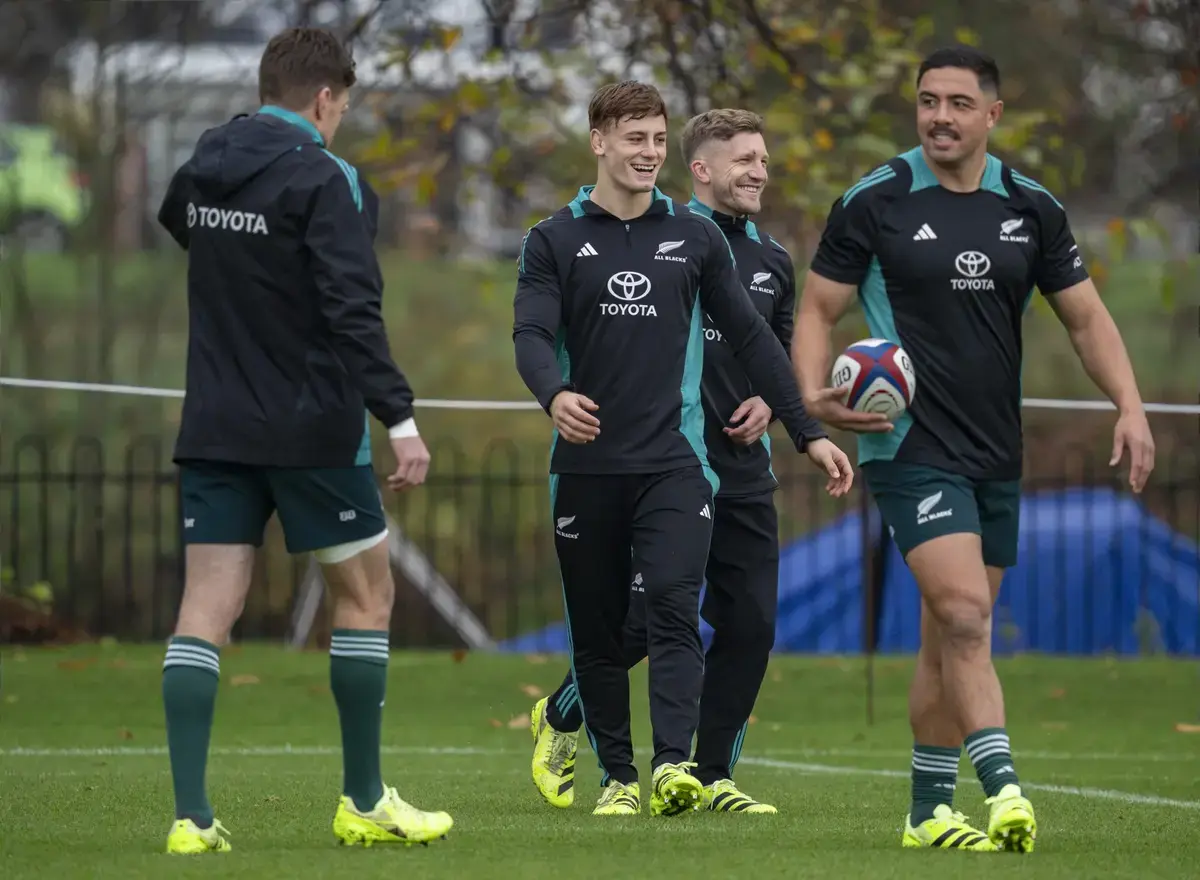
All Black Ruben Love with All Blacks Anton Lienert-Brown, Scott Barrett and Damian McKenzie during the All Blacks Captain’s Run, London, England, Friday, 14 November 2025. (Photo by Benjamin Gilbert / action press)

Dan Carter believes the All Blacks have enviable depth at first-five but says the time has come for one player to step forward and make the number 10 jersey their own ahead of the 2027 Rugby World Cup.

Speaking to DSPN during Super Rugby Super Round in Christchurch, the most capped first-five in All Blacks history said New Zealand is “really lucky” with its options at number 10 but identified a lack of clear ownership as the position’s defining issue.

“I think we’re really lucky. We’ve got some great depth,” Carter said. “I guess the challenge is who’s going to put their hand up and really take that role over the next couple of years.”

Carter pointed to the period since Richie Mo’unga’s departure to Japan as one in which the jersey has been shared rather than seized. With Damian McKenzie, Beauden Barrett, and emerging talent such as Ruben Love all in the mix — and Mo’unga potentially available again — Carter said it represented a significant opportunity.

“It’s been shared a little bit,” he said. “Which one of those three, four players is going to really put their hand up and go, this is my position?”

“I don’t think we can answer that question of who’s going to be playing at the World Cup just yet because there’s still a lot of test matches and a lot of footy to be played before then. But I think it’s an amazing opportunity for one of them to go, right, that number 10 jersey’s mine.”

Carter drew on his own experience of being blooded as a young first-five on the 2003 All Blacks end-of-year tour, when Carlos Spencer and Andrew Mehrtens were left at home and he was thrown into the starting role.

“I was just sitting there learning from two absolute masters of the 10 jersey, two very different players,” he recalled. “They threw me into the mix — a very young squad — and I just had to learn as we went. It was probably one of the biggest things for me, actually being thrown in the deep end. You either sink or swim.”

His message to the current All Blacks selectors was clear: at some point, commitment to a player is required.

“When they show the capabilities of what they’re capable of doing and they’ve been in the environment, there’s a time that you’ve got to just really show belief and faith in that person and continue to back them,” Carter said.

Carter was speaking during Super Round in Christchurch, a weekend he described as special for a city that has rebuilt itself in the 15 years since the devastating 2011 earthquake. He recalled being in the old changing rooms at Rugby Park when the earthquake struck, bolting onto the field in whatever state of dress the players happened to be in.

“We were in that changing room behind us, this old rickety grandstand, and we quickly bolted out into the middle of this rugby field,” Carter said. “The stadium solidifies that the city is well and truly back.”

Carter was in Christchurch as an ambassador for UNICEF, promoting the DC10 Fund — a partnership between his personal foundation and UNICEF that provides clean and safe drinking water to children across the Pacific Islands. The fund has delivered water infrastructure to schools and medical centres in Vanuatu, Kiribati and Fiji, where a lack of safe drinking water remains one of the leading causes of childhood illness and death.

“One of the leading causes for death in children in the Pacific was the lack of clean and safe drinking water,” Carter said. “The fact that we can help deliver something so simple that we take for granted here in New Zealand — just to see the impact we were having almost immediately was incredible.”

The fund supports WASH (Water, Sanitation and Hygiene) programmes in Pacific schools, where senior students are trained as WASH club members to teach younger children about hand hygiene, dental care and safe water practices.

“Every child deserves the right to play,” Carter said. “Unfortunately, in parts of the world like certain parts of the Pacific, those children can’t. We’re trying to bridge that gap because it’s just a simple child’s right.”

Dan Carter was speaking to DSPN during Super Rugby Super Round in Christchurch. The full episode is available on YouTube. More information about the DC10 Fund and UNICEF’s work in the Pacific can be found at unicef.org.nz.

Continue Reading

New Zealand

Scottish legend confirmed as All Blacks first foreign coach

Published

on

Scottish legend confirmed as All Blacks first foreign coach
British and Irish Lions Training Session 26/5/2009 Mike Blair Mandatory Credit ©INPHO/Dan Sheridan

Dave Rennie has confirmed a sweeping overhaul of the All Blacks coaching staff, bringing in trusted lieutenants from his title-winning past while retaining just one assistant from Scott Robertson’s regime ahead of a pivotal two-year cycle through to the 2027 Rugby World Cup.

  • Mike Blair becomes the first foreign assistant in All Blacks history as attack coach
  • Tana Umaga appointed defence coach, returning to the team he captained to 74 Test caps
  • Neil Barnes named senior assistant coach, reuniting with Rennie after their Chiefs title-winning partnership
  • Jason Ryan the sole survivor from Scott Robertson’s regime, retained as forwards coach
  • Phil Healey appointed head of performance, replacing Nic Gill who has joined NFL’s Baltimore Ravens
  • Tamati Ellison moved to Māori All Blacks head coach for June fixtures against Japan
  • Scott Hansen and Bryn Evans depart the All Blacks set-up

The appointments, announced on Tuesday, see All Blacks great Tana Umaga return to the environment where he earned 74 Test caps as defence coach, while long-time Rennie collaborator Neil Barnes takes on the senior assistant role. Jason Ryan remains as forwards coach — the sole survivor from Robertson’s tenure — while Scotsman Mike Blair arrives as attack coach, becoming the first foreign assistant in All Blacks history.

Read: Former Wallabies boss Rennie wins race to be next All Blacks coach

The changes mark a decisive break from the Robertson era, with Scott Hansen, Tamati Ellison and Bryn Evans all departing the All Blacks coaching group. NZR interim CEO Steve Lancaster paid tribute to the outgoing coaches while confirming Ellison would be retained within the wider New Zealand Rugby system.

“I want to pay tribute to the service that Scott Hansen, Tamati Ellison and Bryn Evans have given to the black jersey,” Lancaster said. “They have each made important contributions to the team and I know they have all got a lot more to give as world-class coaches. The way they have conducted themselves throughout is testament to the outstanding professionals and good people they all are.”

Umaga returns with ‘immense mana’

The appointment of Umaga carries significant weight both symbolically and practically. The 52-year-old was the first All Blacks captain of Pasifika heritage, leading the side in 21 Tests from 2004 to 2005 with an 18-win record. He famously introduced the Kapa o Pango haka during his captaincy.

Umaga’s connection with Rennie dates back to the early 2000s, when he was a player under Rennie at Wellington during their NPC title-winning campaign in 2000 and subsequently at the Hurricanes. His coaching career has since taken him to Toulon in France, Counties Manukau — where he won the Championship Division and the province’s first Ranfurly Shield — the Blues and most recently Moana Pasifika.

He has also served as defence coach for Manu Samoa since 2021 and was assistant coach for the First Nations & Pasifika Invitational XV against the British & Irish Lions in 2025.

“Just to be in the conversation — to have a role with the All Blacks again is pretty big,” Umaga said. “I’ve got to make sure that I do well with Moana Pasifika and respect the time that I’ve got here. I’ll apply the same things I learned when I was an All Black in terms of ‘am I going to leave Moana in a better place?’ I’m here until the end of the season and we’ve still got things we want to achieve before then.”

Umaga will join the All Blacks at the conclusion of Moana Pasifika’s Super Rugby Pacific campaign.

Barnes brings lineout expertise and title-winning pedigree

Neil Barnes joins as senior assistant coach, reuniting with Rennie after their partnership delivered back-to-back Super Rugby titles with the Chiefs in 2012 and 2013. Barnes brings expertise in lineout work and forwards coaching, having spent time on the international scene with Canada, Fiji and Italy before assuming charge of Taranaki in the NPC.

Under Barnes, Taranaki produced an unbeaten season in 2021 to claim the NPC title, followed by a second title in 2023. He re-signed with Taranaki for the 2026 season in January, making his departure bittersweet.

“I’m under no illusions at the size of the challenge, and the responsibility and pressure that comes with it,” Barnes said. “Along with the buzz of making it to All Blacks level, comes a level of sadness that I can’t carry on coaching the Yarrows Taranaki Bulls and trying every day to make our province proud. I consider myself very fortunate to have been allowed the privilege of coaching our province over this period, a task I’ve given my all to, and hopefully leaving in a position of strength.”

Barnes shot to wider prominence during Netflix’s Six Nations: Full Contact documentary, where his unfiltered approach — featuring a stream of colourful language — saw him described as the “breakout star” during his time as Italy’s assistant coach.

Ryan retained for continuity

Jason Ryan is now in his fourth year with the All Blacks, having been first appointed to the coaching team under Ian Foster in 2022. He was reportedly “hand-picked” by players at the time and has since served under both Foster and Robertson, playing a key role in guiding the team to the 2023 Rugby World Cup Final.

Ryan’s background includes more than 180 senior games for Christchurch club Sydenham before moving into coaching. He helped Canterbury to three NPC titles in four years as assistant coach before enjoying similar success at the Crusaders, winning the Super Rugby title in each of his six seasons there.

“I’m incredibly honoured to be reappointed to the All Blacks coaching team,” Ryan said. “I’ve really appreciated the support and trust from Renns, the players, management and NZR. There’s a clear sense of purpose around this group and I’m excited to keep contributing, growing, and helping the team push toward its goals.”

Blair makes history as foreign assistant

Mike Blair becomes the first foreign assistant coach in All Blacks history. The former Scotland captain and British & Irish Lion is Scotland’s most capped halfback of all time and was a World Player of the Year nominee during his playing career.

Blair turned to coaching with Glasgow Warriors in 2016, where he worked as an assistant under Rennie and helped the club to Pro14 semi-finals and the Grand Final in 2018 and 2019, as well as Champions Cup quarter-finals in 2017 and 2019. He was recruited into the Scotland national side in 2016 as a skills and attack coach before taking his first head coach role at Edinburgh, where he had previously amassed 169 caps as a player.

He is currently attack coach under Rennie at the Kobelco Kobe Steelers and will complete the Japan Rugby League One season before moving to New Zealand, subject to the granting of a work visa.

Blair will bring what Rennie described as an “innovative approach and attention to detail” to the All Blacks’ attack — an area that struggled under Robertson’s tenure.

Healey replaces Gill as head of performance

Phil Healey has been appointed head of performance, replacing the long-serving Nic Gill, who departed for the NFL’s Baltimore Ravens after more than 240 Tests with the All Blacks.

Healey has worked extensively with Rennie, including at the Chiefs during their back-to-back title wins in 2012 and 2013, at Glasgow Warriors, and currently at the Kobe Steelers. He also worked with the Blues during their Super Rugby Trans-Tasman title in 2021 and was part of the All Blacks XV management for the 2022 Northern Tour.

“As a Kiwi working in high performance sport, there is no greater honour than joining the All Blacks,” Healey said. “I look forward to contributing to an environment that constantly strives for excellence by supporting the players and management to perform at their best.”

Ellison takes Māori All Blacks role

Tamati Ellison, who departs the All Blacks coaching group, has been appointed Māori All Blacks head coach for the Lipovitan D Challenge Cup in June, where they will face a Japan XV at Paloma Mizuho Stadium in Nagoya.

Ellison, a former New Zealand Māori co-captain, was All Black #1099 and brings deep understanding of the pride and legacy associated with the team.

“I’m grateful for the opportunity to lead my people,” Ellison said. “This team means everything to our whānau, and I’ll give it my all. I’d also like to congratulate the new All Blacks coaching group and look forward to working with and supporting them in my new role.”

Rennie’s trusted team takes shape

The appointments reflect Rennie’s stated intention to surround himself with coaches he knows and trusts. Barnes, Blair and Healey have all worked extensively with the new head coach, while Umaga’s connection dates back to Rennie’s early coaching career in Wellington.

“This is a very experienced and highly skilled coaching team,” Rennie said. “Each of these men has a track record of getting the best out of the players and teams they coach, and they are each hugely motivated to get stuck in and deliver the same success with the All Blacks.

“Neil provides outstanding leadership and strategic support; Jase has proven himself as one of the best forwards coaches in the game; Tana brings immense mana and defensive insight; and Mike will bring his innovative approach and attention to detail to our attack. I know this group will challenge and support both me and our players to bring the best out of us all.”

Rennie acknowledged the professionalism of the outgoing coaches: “This has been a thorough appointment process that included conversations with each of the former All Blacks assistant coaches. I want to acknowledge those men, who have all contributed so positively and professionally to this process and to the legacy of the All Blacks. They are each excellent coaches in their own right, who I know will go on to achieve further success in their careers.”

The coaching group will assemble ahead of the All Blacks’ July home series against France, Italy and Ireland as part of the inaugural Nations Championship.

The All Blacks face France, Italy and Ireland in July before embarking on the four-Test “Rugby’s Greatest Rivalry” tour against South Africa.

Continue Reading

New Zealand

The former teacher now tasked with reviving the All Blacks

Published

on

The former teacher now tasked with reviving the All Blacks
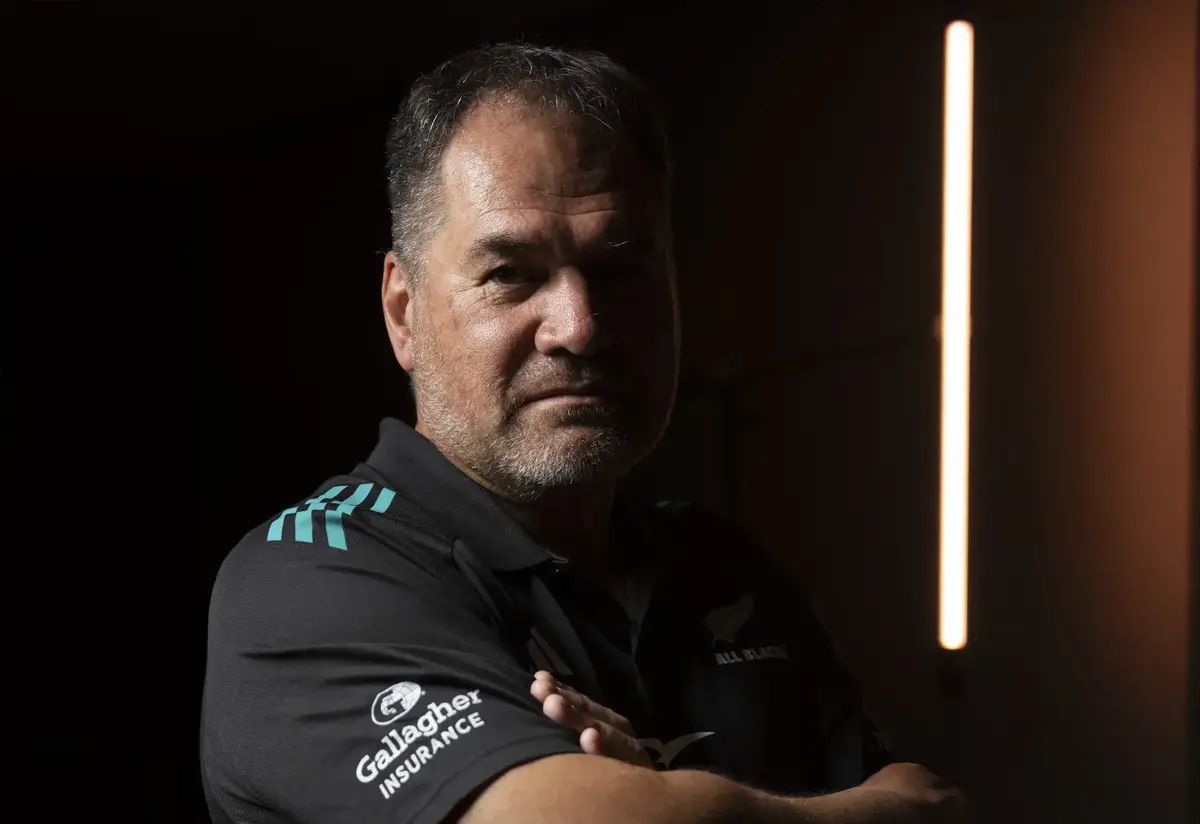
Dave Rennie, new All Blacks Head Coach, Auckland, New Zealand, Wednesday, 04 March 2026. (Photo by NZR / action press)

When New Zealand Rugby announced Dave Rennie as the 28th All Blacks head coach on Wednesday, it marked the culmination of a 25-year coaching journey that began not in professional rugby, but in the classrooms of an Upper Hutt intermediate school.

Key points:

  • Born in Upper Hutt on 22 November 1963, Rennie is of Cook Islands descent through his mother
  • A trained school teacher who transitioned to coaching after a shoulder injury ended his playing career at 27
  • Led the Chiefs to back-to-back Super Rugby titles (2012-13) and the New Zealand U20s to three consecutive Junior World Championships (2008-10)
  • Coached the Wallabies from 2020 to 2023 with a 38 per cent win rate before being replaced by Eddie Jones
  • Known for a direct, breakdown-focused style of rugby described as “high-skill, high-speed mixed with brutality”

Rennie, 62, becomes the first All Blacks head coach with Pasifika heritage — his mother, Ngametua, hails from Titikaveka in Rarotonga — and takes charge of a team in turmoil following the dramatic sacking of Scott Robertson in January. But the man now tasked with restoring the All Blacks to their former glory has always been something of an unconventional figure in the coaching ranks.

Read: Former Wallabies boss Rennie wins race to be next All Blacks coach

From classroom to coaching box

David Noel Rennie was born in Upper Hutt on 22 November 1963 and educated at Heretaunga College. He played his club rugby for Upper Hutt RFC and represented Wellington as a centre, making 58 appearances for the province and winning the NPC title in 1986. In 1990, his Cook Islands heritage saw him selected for a non-test match for a Cook Islands XV — his only international playing appearance.

A recurring shoulder injury forced Rennie to retire from playing at just 27, and he turned to teaching, taking up a position at an intermediate school in Upper Hutt working with 12 and 13-year-olds. It’s a background that shaped his coaching philosophy.

“Teaching, coaching, it’s the same thing,” Rennie once observed. “The children are somewhat larger.”

He began coaching at Upper Hutt RFC while continuing to teach, before Graham Mourie invited him to join the Wellington Lions as assistant coach in 1999. When Mourie moved to concentrate on the Hurricanes, Rennie stepped up as head coach in 2000 — and promptly led Wellington to their first NPC title since 1986, the year he had won it as a player.

That Wellington side was stacked with All Blacks talent: Jonah Lomu, Christian Cullen, Tana Umaga, Jerry Collins and Rodney So’oialo among them. But critics who suggested anyone could have coached such a squad overlooked the fact they beat an equally talented Canterbury side to lift the trophy.

Building from the ground up

After three seasons with Wellington, Rennie moved to the Hurricanes as Under-23 head coach before becoming an assistant coach. He also worked with the New Zealand international academy before taking charge of the Manawatu Turbos in 2006.

The Manawatu role was emblematic of Rennie’s willingness to take on rebuilding projects. The Turbos were perennial strugglers in the NPC, operating with limited resources. His first season yielded no wins from nine matches. Progress was slow — just two wins in 2007, one in 2008 — but Rennie persisted, focusing on player development and foundational skills.

By 2011, the patience had paid off: Manawatu reached the NPC Championship final, a remarkable achievement for a province of their size.

The golden era: Under-20s and Chiefs

It was during his time at Manawatu that Rennie received the appointment that would transform his reputation. In 2008, he was handed the New Zealand Under-20s — and proceeded to deliver three consecutive Junior World Championships from 2008 to 2010.

The players who came through that system read like a who’s who of the next generation of All Blacks: Aaron Smith, Sam Whitelock, Julian Savea. Rennie’s ability to develop young talent into world-class performers was firmly established.

In 2012, he was given the Chiefs — a franchise that had never won Super Rugby — and delivered an inaugural title in his debut season. In doing so, Rennie became the first first-year Super Rugby head coach to win the competition. The 2012 final itself proved eventful: as Rennie guided the Chiefs to a 37-6 demolition of the Sharks, his house was robbed.

The following year, the Chiefs went back-to-back, beating the Brumbies to retain the title. The squad included Aaron Cruden, Brodie Retallick, Liam Messam and Sam Cane — players who would form the backbone of All Blacks teams for years to come. Rennie spent six seasons with the Chiefs in total, reaching the finals in each.

Scotland and the Wallabies

In 2017, Rennie made the move to Scotland to coach Glasgow Warriors, replacing Gregor Townsend. He guided the Warriors to the Pro14 semi-finals in his first season and the final in 2018-19 — played before a record crowd at Celtic Park — though they fell to Leinster. He continued to develop young talent, particularly fly-half Finn Russell.


In November 2019, Rugby Australia announced Rennie would replace Michael Cheika as Wallabies head coach — a role he took up in 2020. His tenure with Australia yielded mixed results. The Wallabies won the Rugby Championship in 2021, but overall Rennie finished with a 38 per cent win rate, the lowest of any Wallabies coach with a minimum of 30 tests.

Australia’s 2022 tour included a historic first loss to Italy. In January 2023, Rugby Australia replaced Rennie with Eddie Jones — a decision that would prove disastrous when Jones departed in October following a pool-stage exit at the Rugby World Cup. Rennie, vindicated in some eyes, moved to Japan to coach the Kobelco Kobe Steelers.

The coaching philosophy

Those who have worked with Rennie describe him as “hard-nosed, doesn’t tolerate fools, is astute and has a deep rugby intelligence.” Former All Black James Parsons recently broke down Rennie’s coaching style on the Aotearoa Rugby Pod, noting his unrelenting commitment to breakdown dominance.

“Dave Rennie is all about the breakdown, both sides of the ball,” Parsons explained. “Defensively, all about the breakdown. Attacking-wise, all about the breakdown. Low offloads, low turnover count; ‘I’m going through you’ is Dave Rennie’s attitude.”

Rennie himself has described his approach as “high-skill, high-speed type of game hopefully mixed with some rugby smarts and a bit of brutality.” During his time at the Chiefs, players spoke of a concept called “napalm” — the brutal ruck-clearing that characterised their style.

His teams have historically achieved near 70 per cent gain-line success rates, though critics point to high penalty counts that can result when the aggressive breakdown approach goes wrong.

The challenge ahead

At 62, Rennie is older than any All Blacks head coach in recent memory, and his two-year contract through to the 2027 Rugby World Cup offers limited time to implement change. His immediate challenge is formidable: the inaugural Nations Championship, a July home series against France, Italy and Ireland, and a four-Test “Rugby’s Greatest Rivalry” tour against the Springboks.

The All Blacks Rennie inherits are in disarray following Robertson’s tenure, which featured a record defeat to South Africa, a first loss to Argentina in Buenos Aires, and reported rifts within the playing group. Notably, star flanker Ardie Savea — one of the key figures said to have provided unfavourable feedback on Robertson — is currently playing under Rennie at Kobe.

Whether Rennie can draw on his experience of rebuilding programmes at Wellington, Manawatu, the Chiefs and Glasgow to restore the All Blacks remains to be seen. But few coaches in world rugby have demonstrated such consistent ability to develop talent and create winning cultures — even if his Wallabies tenure ended in disappointment.

“Coaching the All Blacks is an incredible honour,” Rennie said upon his appointment. “I’m really clear on the way I want the All Blacks to play.”

For New Zealand rugby, the hope is that clarity translates into silverware.

Continue Reading

Trending

Discover more from Rugby News, Results, and Analysis | Rugby is the Game

Subscribe now to keep reading and get access to the full archive.

Continue reading