Womens Six Nations
Fran McGhie try seals last-gasp win for Scotland over Ireland
Published
11 months agoon
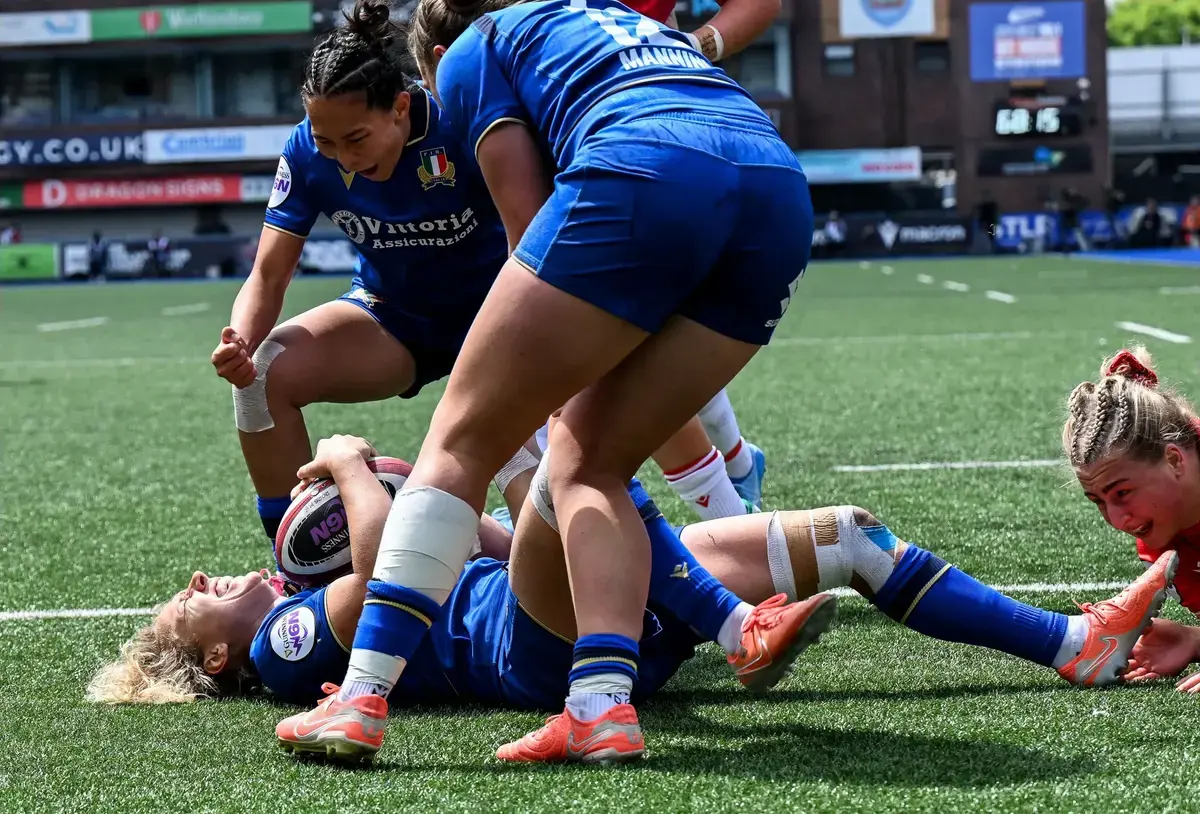
Scotland produced a stirring final-day performance to snatch a dramatic 26-19 victory over Ireland in the Women’s Six Nations at Edinburgh’s Hive Stadium, with Francesca McGhie’s try in the dying seconds providing a thrilling climax to their campaign.
Key Moments:
10′ – Amee-Leigh Costigan try after Molly Scuffil-McCabe break, Dannah O’Brien conversion (Scotland 0-7 Ireland)
25′ – Lana Skeldon try from unstoppable rolling maul, conversion missed (Scotland 5-7 Ireland)
42′ – Emma Orr breaks through defensive line after Sarah Bonar interception, Helen Nelson conversion (Scotland 12-7 Ireland)
48′ – Linda Djougang powers over after Ruth Campbell line-break, conversion missed (Scotland 12-12 Ireland)
58′ – Rachel McLachlan scores in corner from Chloe Rollie offload, Helen Nelson conversion (Scotland 19-12 Ireland)
72′ – Emily Lane darts through gap for her first international try, Dannah O’Brien conversion (Scotland 19-19 Ireland)
81′ – Francesca McGhie seals dramatic victory in final play, Helen Nelson conversion (Scotland 26-19 Ireland)
Despite having less possession and territory for much of the contest, Bryan Easson’s side demonstrated remarkable defensive resilience and clinical finishing to overcome an Irish team that had been looking to secure three away wins in the championship for the first time since 2017.
Late drama at the Hive and it's Scotland who come away with the win 🤩💪#GuinnessW6N pic.twitter.com/dBfGK7IAum
— Guinness Women's Six Nations (@Womens6Nations) April 26, 2025
Ireland arrived in Edinburgh with momentum following victories against Italy and Wales, and started the brighter of the two sides. The visitors dominated the early exchanges, controlling possession and territory as they camped in the Scottish 22. Their pressure was rewarded in the 10th minute when scrum-half Molly Scuffil-McCabe exploited a gap in the fringe defence, accelerating through before releasing winger Amee-Leigh Costigan who finished expertly in the left corner. Dannah O’Brien added a superb touchline conversion to give Ireland a 7-0 lead.
The setback galvanised Scotland, who had struggled initially to gain a foothold in the match. Their response came in the 25th minute through a well-executed set-piece move. After winning a penalty, Scotland opted for a lineout five metres from the Irish line, and the resulting maul proved unstoppable as hooker Lana Skeldon emerged with her 19th international try. Helen Nelson’s conversion attempt drifted wide, leaving Ireland with a narrow 7-5 advantage.
Ireland’s afternoon was further complicated when influential back-row Dorothy Wall was forced off with what appeared to be a serious non-contact injury – a potentially significant concern ahead of this summer’s Rugby World Cup.
As half-time approached, Ireland intensified their pressure, with prop Linda Djougang twice being held up over the line in quick succession. The visitors appeared certain to extend their lead, only for the momentum to shift dramatically in first-half stoppage time. Scotland lock Sarah Bonar produced a crucial interception in her own 22 and, spotting space ahead, kicked downfield to relieve pressure. When Ireland failed to find touch with the clearing kick, Scotland capitalised ruthlessly as centre Emma Orr scythed through the defensive line to score under the posts. Nelson’s conversion gave the hosts an unexpected 12-7 half-time lead despite Ireland having dominated possession statistics with over 70% of the ball.
Ireland regrouped after the interval and levelled the match in the 48th minute. After Ruth Campbell’s impressive line break created forward momentum, Djougang – having been denied twice earlier – finally forced her way over the line for a try confirmed after TMO review. The score came with an additional advantage for Ireland as Scottish winger Rhona Lloyd was shown a yellow card for a head-on-head tackle on Costigan during the build-up. O’Brien’s conversion attempt missed, leaving the scores tied at 12-12.
Despite being reduced to 14 players, Scotland produced arguably their most impressive passage of play just before the hour mark. After sustained pressure, full-back Chloe Rollie created space with a brilliant offload out of contact to flanker Rachel McLachlan, who crossed in the left corner. Nelson landed a magnificent conversion from the touchline to restore Scotland’s seven-point advantage at 19-12.
The contest continued to ebb and flow as Ireland threw everything at Scotland in search of an equaliser. The pressure eventually told as Scottish fly-half Nelson was sin-binned for killing the ball close to her own line. Ireland immediately capitalised on their numerical advantage, with replacement scrum-half Emily Lane darting through a gap to score her first international try. O’Brien’s conversion levelled the scores at 19-19 with just seven minutes remaining.
With momentum seemingly shifting towards the visitors, many expected Ireland to complete their comeback in the closing stages. However, it was Scotland who summoned one final effort as the clock ticked into the red. After securing an attacking lineout five metres out, they executed a perfect switch of play to the left wing where McGhie displayed remarkable composure to dive over in the corner and spark wild celebrations. Nelson, back from her yellow card, added the extras to seal a memorable 26-19 victory.
Scotland’s defensive effort was epitomised by flanker Rachel McLachlan, who was deservedly named player of the match after an all-action display that included 62 metres carried and a crucial try. Number eight Evie Gallagher was equally impressive, securing several vital turnovers at critical moments.
For Ireland, Amee-Leigh Costigan continued her fine tournament form with another try, while Molly Scuffil-McCabe provided spark from scrum-half. Prop Linda Djougang showed remarkable persistence to finally score after being held up twice earlier in the match.
Scotland head coach Bryan Easson was emotional after the final whistle: “It was extremely emotional. I don’t know what the possession stats were, but we had to fight for everything we got. Defensively, we were absolutely outstanding, some of the turnovers… Then to have the skill to score. We deserved everything we got today because of the fight and heart in that team performance.”
McLachlan echoed her coach’s sentiments: “Proud, so proud. There’s been some down bits in this campaign for us. We wanted to come out and show heart and pride in the jersey at home, and I think we did exactly that. We came into this game with belief and we continued to believe throughout. We picked ourselves up and just kept going. We knew we had it in us.”
The statistics highlighted Scotland’s efficiency, with the hosts winning despite having just 38% possession compared to Ireland’s 62%. Ireland’s territorial dominance was even more pronounced, yet Scotland’s clinical attack and resolute defence proved decisive.
The victory secured a fourth-place finish for Scotland in the final Six Nations standings, having also defeated Wales in their opening fixture. Ireland’s losing bonus point was enough to secure third place behind champions England and runners-up France, but they will rue missing the opportunity to record three away wins in a single championship for the first time in eight years.
Both teams will now turn their attention to preparation for the Rugby World Cup, which begins in August. Ireland’s campaign starts against Japan in Northampton on August 24th, while Scotland will hope to build on this performance as they finalise their tournament preparations.
The dramatic nature of Scotland’s victory, snatching success with the final play after defending heroically for long periods, will provide a significant psychological boost ahead of the World Cup. For Ireland, the disappointment of this defeat will be compounded by injury concerns surrounding Dorothy Wall, though their overall Six Nations campaign still represents progress under head coach Scott Bemand.
You may like
-
Jones to captain England as Mitchell names seven uncapped players
-
Fukofuka recalls McMillan from exile for Scotland training squad
-
Ireland name nine uncapped players in Women’s Six Nations squad
-
World Cup-winning coach Mitchell extends contract with Red Roses
-
Red Roses blow away Scotland to reach World Cup semi-finals
-
France stage stunning comeback to break Irish hearts at World Cup
Womens Six Nations
Jones to captain England as Mitchell names seven uncapped players
Published
2 weeks agoon
20th March 2026
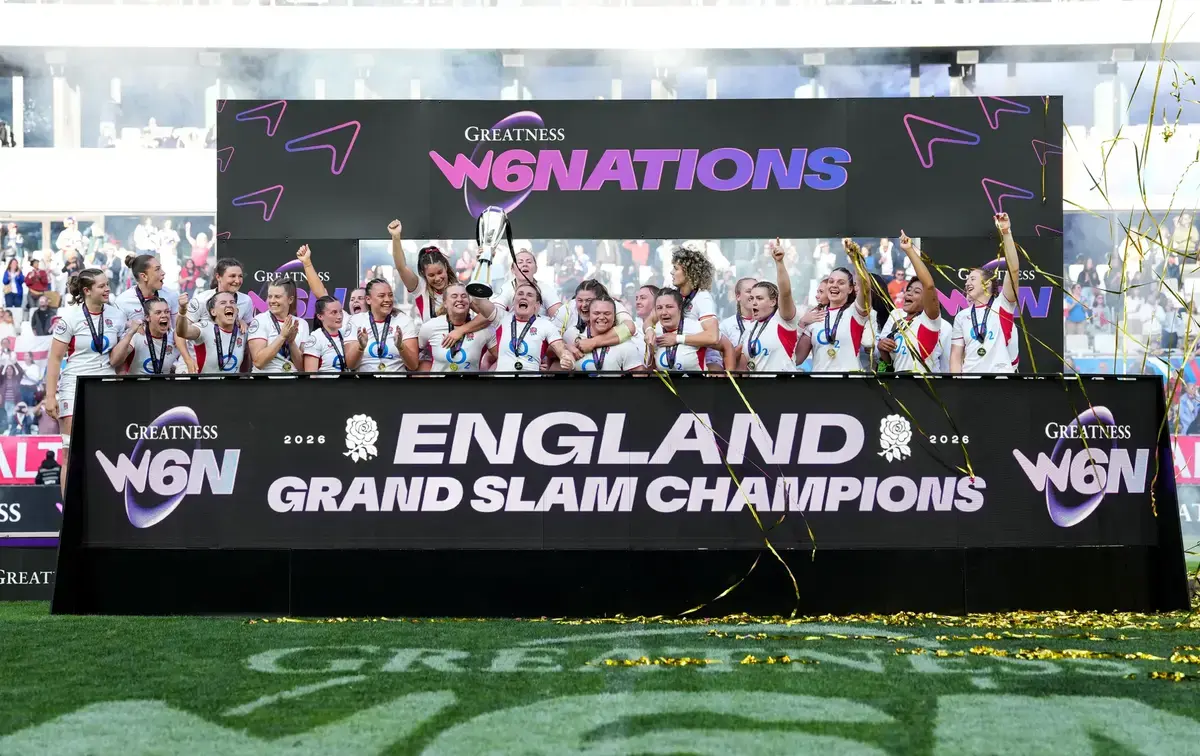
John Mitchell has named seven uncapped players in a 38-strong England squad for the 2026 Guinness Women’s Six Nations as the world champions begin a new era under captain Megan Jones. The Red Roses, who have won 33 consecutive matches dating back to 2023, will open their title defence against Ireland at Allianz Stadium on Saturday, 11 April in front of a tournament-record crowd expected to exceed 67,000.
Key squad news:
- Megan Jones named captain in absence of pregnant Zoe Stratford, with Amy Cokayne and Alex Matthews as vice-captains
- Seven uncapped players included: Christiana Balogun, Millie David, Haineala Lutui, Annabel Meta, Sarah Parry, Demelza Short and Jodie Verghese
- Lark Atkin-Davies and Abbie Ward also unavailable due to pregnancy
- Emily Scarratt and Abby Dow have retired since World Cup triumph
- Squad boasts 1,143 combined caps and includes 25 World Cup winners
- England seek eighth consecutive Six Nations title and 34th straight victory
Jones, 29, steps up from her role as vice-captain to lead a squad containing 25 players who lifted the World Cup at Twickenham last September. The centre was one of England’s standout performers during their run to glory, earning a nomination for World Rugby Player of the Year despite playing through the grief of losing both parents within four months of each other in 2024.
Speaking about her appointment, Jones said: “Firstly, I’m really excited for Zoe and wish her and Strats every happiness on their news. It’s a huge honour to have been named captain of the Red Roses. Mitch and I have built a strong relationship over the past three years and it’s a great feeling to have his trust to lead the group along with a tight leadership team.
“I’m buzzing to get back in camp with the girls for the Six Nations. I’ll just be the same old Meg and know I’ll have great support from Zoe, the leaders and the whole squad.”
Mitchell, who signed a contract extension in January taking him through to the 2029 World Cup in Australia, explained his choice of captain. “Meg reflects our values,” he said. “Her personality, capabilities and leadership are hugely valuable to the Red Roses squad. She brings an infectious energy that lifts those around her and has had a huge influence on our culture and connections over the past three years.
“Not only is Meg highly respected, but she also consistently produces high-level performances and leads by example every time she takes to the field.”
The seven uncapped players represent a significant injection of youth into a squad that boasts 1,143 combined international caps. Bristol Bears wing Millie David finished joint-top of the Premiership Women’s Rugby try-scoring charts last season and is the highest-ranked English-qualified back in those standings this campaign. Harlequins centre Sarah Parry, who is Welsh-born but qualifies through her English mother, and Loughborough Lightning number eight Haineala Lutui – daughter of former Tonga, Worcester and Gloucester hooker Aleki – are other exciting prospects.
Lutui has been in outstanding domestic form, leading the PWR standings for carries and metres in contact despite Loughborough’s indifferent season. Trailfinders’ Annabel Meta, a 20-year-old who only made her front-line loosehead prop debut in December having switched from the back row, completes the uncapped contingent alongside Bristol duo Demelza Short and Christiana Balogun, and Saracens lock Jodie Verghese.
Balogun’s inclusion is particularly poignant. The 28-year-old flanker was diagnosed with Burkitt lymphoma in 2022 and spent 16 months out of the game battling cancer before returning to become a consistent PWR performer. She has been part of previous England training squads without making her full debut.
The absences through pregnancy have created opportunities in key positions. Stratford, who led England to World Cup glory, announced she is expecting her first child, while hooker Lark Atkin-Davies and lock Abbie Ward are also unavailable. Mitchell has promoted Short and Balogun, both of whom can cover second row and back row, along with Verghese to bolster his lock stocks, with Lilli Ives Campion likely to step up alongside Morwenna Talling.
Mitchell spoke warmly about the players starting families. “It’s a real fulfilling conversation,” he told BBC Sport. “It’s a beautiful, beautiful situation and all of those girls will make great mums. They are driven to return, but motherhood has its ways as well. They must enjoy that, not put themselves under pressure to return.
“For us, it presents an opportunity for somebody else. Should all factors work, then we all come back together at some point in two years’ time and we will be better for motherhood and players getting Test minutes that they wouldn’t possibly normally get.”
The retirements of wing Abby Dow and centre Emily Scarratt since the World Cup have left opportunities in the backline. Scarratt has moved onto Mitchell’s coaching staff as attack and backs coach, with former Australia head coach Jo Yapp set to join as head of women’s pathway in July. Bo Westcombe-Evans and Mia Venner, both with two caps, are options to replace Dow.
Locks Rosie Galligan and Cath O’Donnell were not considered for selection, while centre Jade Shekells and scrum-half Ella Wyrwas are absent through hamstring and knee injuries respectively, though both may return before the tournament concludes.
Mitchell outlined his ambitions for this squad and beyond. “We talked about what’s unfinished,” he said. “They recognise there’s unfinished athletes. They recognise there’s an unfinished team. They recognise that there’s an unfinished inaugural Lions and there’s also the unfinished opportunity to potentially become one of the greatest sporting teams ever.
“We are the standard-bearers, and I don’t say that arrogantly, I just say that we are the movement that can generate equality and growth in the game. We are the forefront of it. We are the flagship.”
On the tournament ahead, Mitchell added: “It’s great to be back together, ready to earn the right again following the Rugby World Cup. The impact of the tournament across the country has been outstanding, and it’s reflected in the incredible ticket sales – not just for our matches at Allianz Stadium and Ashton Gate, but across the Six Nations as a whole.
“As Red Roses, what comes next is a fresh start. The Six Nations is hugely important to us, and we know success in this competition has to be earned every time. We’re excited by the energy the younger players will bring into the squad, and alongside our experienced players.
“What is important to me is to stay open-minded about player combinations and I will observe how people compete against each other and deal with that type of pressure. It’s just down to who is going to take the handbrake off, attack it, and expresses themselves in our game.”
The squad will assemble at the England Rugby Performance Centre at Pennyhill Park on Monday, 23 March. England’s opening fixture against Ireland has already moved over 67,000 tickets – a tournament record – and the Allianz Stadium’s top tier will be open for the first time for a Women’s Six Nations match.
Should England seal an eighth successive Six Nations grand slam, they would surpass the sequence of Italy’s men’s football team, who went 37 games unbeaten between 2018 and 2021. Their last defeat came in the 2022 World Cup final against New Zealand, and their last Six Nations loss was to France in 2018.
England squad for 2026 Guinness Women’s Six Nations:
Forwards (22): Christiana Balogun (Bristol Bears, uncapped), Sarah Bern (Bristol Bears, 79 caps), Hannah Botterman (Bristol Bears, 62 caps), Abi Burton (Trailfinders Women, 4 caps), May Campbell (Saracens, 5 caps), Mackenzie Carson (Gloucester-Hartpury, 23 caps), Kelsey Clifford (Saracens, 21 caps), Amy Cokayne (Sale Sharks, 89 caps) – vice-captain, Maddie Feaunati (Exeter Chiefs, 23 caps), Liz Hanlon (Harlequins, 1 cap), Daisy Hibbert-Jones (Loughborough Lightning, 1 cap), Lilli Ives Campion (Loughborough Lightning, 5 caps), Sadia Kabeya (Loughborough Lightning, 28 caps), Haineala Lutui (Loughborough Lightning, uncapped), Alex Matthews (Gloucester-Hartpury, 81 caps) – vice-captain, Annabel Meta (Trailfinders Women, uncapped), Maud Muir (Gloucester-Hartpury, 48 caps), Marlie Packer (Saracens, 112 caps), Connie Powell (Harlequins, 19 caps), Demelza Short (Bristol Bears, uncapped), Morwenna Talling (Sale Sharks, 28 caps), Jodie Verghese (Saracens, uncapped).
Backs (16): Holly Aitchison (Sale Sharks, 44 caps), Jess Breach (Saracens, 53 caps), Millie David (Bristol Bears, uncapped), Zoe Harrison (Saracens, 65 caps), Tatyana Heard (Gloucester-Hartpury, 36 caps), Natasha Hunt (Gloucester-Hartpury, 88 caps), Megan Jones (Trailfinders Women, 33 caps) – captain, Ellie Kildunne (Harlequins, 57 caps), Claudia Moloney-MacDonald (Exeter Chiefs, 36 caps), Lucy Packer (Harlequins, 38 caps), Sarah Parry (Harlequins, uncapped), Flo Robinson (Exeter Chiefs, 1 cap), Helena Rowland (Loughborough Lightning, 46 caps), Emma Sing (Gloucester-Hartpury, 13 caps), Mia Venner (Gloucester-Hartpury, 2 caps), Bo Westcombe-Evans (Loughborough Lightning, 2 caps).
Unavailable for selection: Lark Atkin-Davies, Rosie Galligan, Cath O’Donnell, Jade Shekells, Zoe Stratford, Abbie Ward, Ella Wyrwas.
England fixtures – 2026 Guinness Women’s Six Nations:
Saturday, 11 April: England v Ireland, Allianz Stadium, Twickenham, 2.45pm GMT
Saturday, 18 April: Scotland v England, Scottish Gas Murrayfield, Edinburgh
Saturday, 25 April: England v Wales, Ashton Gate, Bristol
Saturday, 9 May: Italy v England, Stadio Sergio Lanfranchi, Parma
Saturday, 17 May: France v England, Stade Jean-Bouin, Paris
Womens Six Nations
Fukofuka recalls McMillan from exile for Scotland training squad
Published
2 weeks agoon
19th March 2026
Sione Fukofuka has named a 38-player training squad for the 2026 Guinness Women’s Six Nations in his first selection as Scotland head coach, recalling Louise McMillan from international exile and welcoming back fly-half Meryl Smith following her recovery from a serious knee injury. Captain Rachel Malcolm will lead the group into an opening fixture against Wales in Cardiff on Saturday, 11 April.
Key squad news:
- Louise McMillan recalled after missing World Cup selection, having recently captained Saracens to PWR Cup title
- Meryl Smith returns after ACL injury, topping PWR charts for carries and goal-kicking
- Shona Campbell back in fold for first time since 2024 after scoring seven tries for Sale Sharks
- Lisa Thomson (foot) and Sarah Bonar (back) unavailable as they continue rehabilitation
- Seven development players included from Glasgow Warriors’ Celtic Challenge squad
- 24 players retained from Scotland’s 2025 World Cup quarter-final squad
The Australian, who replaced Bryan Easson as head coach in December, has selected 31 core players and seven development prospects as Scotland seek their first top-half finish since 2005. Of the senior group, 24 featured in Scotland’s run to the World Cup quarter-finals last September, where they were eliminated by eventual champions England, providing strong continuity heading into the spring campaign.
McMillan’s inclusion represents a significant change in direction. The 28-year-old Saracens lock, who won her 53rd cap against Australia in WXV2 in late 2024, was omitted from the World Cup squad under Easson and appeared to be heading towards the international wilderness. When she missed selection last year, McMillan said: “I hope this isn’t the end, but I’m also self-aware to read the writing on the wall.”
Selected. Ready. Locked-in 🔒
Your Scotland Women's squad for the @Womens6Nations 🏴#AsOne | #GuinnessW6N pic.twitter.com/RxtqDCKRv8
— Scottish Rugby (@Scotlandteam) March 18, 2026
However, with Fukofuka at the helm and McMillan in outstanding form for Saracens – she recently captained the club to the PWR Cup title – the experienced second row has been handed a lifeline. Speaking about her recall, Fukofuka said: “I think if you know Louise then you know that she’s pretty passionate about Scotland. We wanted to explore all players that have represented Scotland over the last 12 to 18 months.
“With Louise in particular the opportunity to have a conversation with her and explore whether or not she would be open to being considered for selection was a really positive one. We’ve been tracking her performances with Saracens and we’re pretty confident that she’s going to add value to the squad.”
He added: “What we’ve seen in Louise is an experienced operator with a level of physicality that we feel can have an impact within the game. The fact that lock is a pretty important position when it comes to our set piece is another element that we’re really looking for her to add value in.”
Smith’s return is equally significant. The Bristol Bears playmaker suffered an ACL injury at the end of 2024 and missed the entire World Cup campaign, but has returned to action in scintillating form, leading the PWR statistics for both carries and goal-kicking. Her versatility – she can cover fly-half and inside centre – adds tactical flexibility to Fukofuka’s backline options.
Fukofuka explained: “We’re excited to see Meryl back out there. She provides a number of different options for us – she can play 10, she can play 12, she has a level of versatility that we feel will allow her to express herself within the system that we want to play. We want to play with a lot of width and we want the ball to move, and Meryl’s a player that provides us the opportunity to do that.”
Winger Shona Campbell completes the trio of high-profile returnees. The Sale Sharks back has been in electric form domestically, scoring seven tries in the PWR this season, and returns to the international fold for the first time since the 2024 Six Nations. Her finishing ability on the wing gives Scotland an additional strike weapon in the wide channels.
The injury list means Scotland will be without two senior figures for at least the opening rounds. Full-back Lisa Thomson, who has 75 caps, continues her rehabilitation from a foot injury, while experienced back row Sarah Bonar is recovering from a back problem. Both remain unavailable for selection, though Thomson may return before the tournament concludes.
Several other players, including Francesca McGhie, Elis Martin and Leia Brebner-Holden, are also making their returns from injury, but Fukofuka appears confident they will be available for the Wales opener. “They’re on track to be available for selection through the tournament,” he confirmed.
The seven development players have all impressed for Glasgow Warriors in this season’s Celtic Challenge and featured in the Under-20 Six Nations Summer Series. Forwards Holland Bogan, Emily Coubrough, Poppy Fletcher, Imogen Spence and Aicha Sutcliffe join backs Ceitidh Ainsworth and Rianna Darroch in training with the senior squad, while remaining eligible for the Scotland Under-21 Six Nations Series.
These prospects, along with Alex Stewart, Aila Ronald, Hannah Walker and Hannah Ramsay, are all supported through Scottish Rugby’s newly established Central Programme based at Oriam, the national performance centre. The dual-registration system allows Fukofuka to expose young talent to senior rugby while maintaining their development pathway.
Four players have retired from international rugby since the World Cup – Christine Belisle, Lisa Cockburn, Jade Konkel and Caity Mattinson – while lock Adelle Ferrie and utility front row Molly Wright, both members of the World Cup squad, have been omitted.
Fukofuka explained: “Molly Wright hadn’t played, so that was the initial part of the conversation. I think there will be some more information coming out in the next little bit around that, but I’ll leave that for Molly to share. Adelle plays in one of the positions where we have a lot of depth, so that was a performance selection.”
The squad will assemble at Oriam on Tuesday, 31 March as preparations intensify ahead of the championship. Scotland open away to Wales before hosting defending champions England at Scottish Gas Murrayfield on 18 April – a fixture that broke the Scottish women’s sporting attendance record when the sides met in the men’s Six Nations last month.
After travelling to Parma to face Italy on 25 April, a fallow week precedes the visit of France to Edinburgh on 9 May. The championship concludes at the Aviva Stadium in Dublin on 17 May against Ireland.
Fukofuka’s ambitions are clear. Scotland have not finished in the top half of the Six Nations since 2005, ending second from bottom last year with nine points from five fixtures. “Everything that we’ve spoken about is around accelerating,” he said. “How do we help improve the programme from where it was to where it could be?”
Scotland training squad for 2026 Guinness Women’s Six Nations:
Forwards (21): Leah Bartlett (Sale Sharks, 49 caps), Holland Bogan* (Glasgow Warriors/Stirling County, uncapped), Becky Boyd (Loughborough Lightning, 3), Elliann Clarke (Bristol Bears, 24), Emily Coubrough* (Glasgow Warriors/University of Edinburgh, uncapped), Hollie Cunningham (Bristol Bears, 2), Eva Donaldson (Sale Sharks, 21), Poppy Fletcher* (Glasgow Warriors/University of Edinburgh, uncapped), Evie Gallagher (Bristol Bears, 40), Rachel Malcolm (Trailfinders Women, 61) – captain, Elis Martin (Loughborough Lightning, 26), Rachel McLachlan (Montpellier, 56), Louise McMillan (Saracens, 53), Molly Poolman (Edinburgh Rugby/Watsonian FC, 7), Aila Ronald (Edinburgh Rugby/University of Edinburgh, uncapped), Lana Skeldon (Bristol Bears, 84), Imogen Spence* (Glasgow Warriors/University of Edinburgh, uncapped), Alex Stewart (Edinburgh Rugby, 17), Aicha Sutcliffe* (Glasgow Warriors/Stirling County, uncapped), Emma Wassell (Trailfinders Women, 72), Anne Young (Loughborough Lightning, 22).
Backs (17): Ceitidh Ainsworth* (Glasgow Warriors/Stirling County, uncapped), Leia Brebner-Holden (Loughborough Lightning, 15), Shona Campbell (Sale Sharks, 9), Rhea Clarke (Bristol Bears, 2), Rianna Darroch* (Glasgow Warriors/Hillhead Jordanhill, uncapped), Coreen Grant (Harlequins, 17), Rhona Lloyd (Sale Sharks, 62), Francesca McGhie (Trailfinders Women, 26), Helen Nelson (Loughborough Lightning, 75), Emma Orr (Bristol Bears, 34), Rachel Philipps (Sale Sharks, 1), Hannah Ramsay (Edinburgh Rugby/Watsonian FC, 2), Chloe Rollie (Toulon Provence Méditerranée, 81), Lucia Scott (Loughborough Lightning, 7), Meryl Smith (Bristol Bears, 22), Hannah Walker (Edinburgh Rugby/University of Edinburgh, uncapped), Evie Wills (Sale Sharks, 8).
*denotes development player
Scotland fixtures – 2026 Guinness Women’s Six Nations:
Saturday, 11 April: Wales v Scotland, Principality Stadium, Cardiff
Saturday, 18 April: Scotland v England, Scottish Gas Murrayfield, Edinburgh
Saturday, 25 April: Italy v Scotland, Stadio Sergio Lanfranchi, Parma
Saturday, 9 May: Scotland v France, Scottish Gas Murrayfield, Edinburgh
Sunday, 17 May: Ireland v Scotland, Aviva Stadium, Dublin
Womens Six Nations
Ireland name nine uncapped players in Women’s Six Nations squad
Published
2 weeks agoon
19th March 2026
Scott Bemand has named nine uncapped players in his 36-strong Ireland squad for the 2026 Guinness Women’s Six Nations, signalling a significant refresh as the squad embarks on a new World Cup cycle under the continued guidance of the recently re-signed head coach. Captain Erin King, the 2024 World Rugby Breakthrough Player of the Year, will lead the group into a daunting opening fixture against world champions England at Allianz Stadium, Twickenham on Saturday, 11 April.
Key squad news:
- Nine uncapped players included, highlighting strength of Irish pathways
- Erin King named captain following her return from knee injury that ruled her out of the World Cup
- Dorothy Wall returns after missing the World Cup through achilles injury
- Amee-Leigh Costigan unavailable after announcing pregnancy with twins
- Former co-captain Edel McMahon ruled out for the season with knee injury
- Aoife Wafer, 2025 Six Nations Player of the Championship, returns after injury-hit World Cup
The announcement, made at the Aon Ireland headquarters in Dublin, comes just a day after Bemand confirmed a contract extension that will keep him at the helm through to the 2029 World Cup in Australia. Speaking about his decision to continue, the head coach said: “It was very quick. I’m really proud of the work that we’ve done in the last three years. The Irish players and public have embraced me coming over the water, and I am grateful for the sense of connection that I’ve got from coming in.”
The Englishman has overseen a remarkable transformation since taking charge in August 2023, when Ireland sat tenth in the world rankings having just finished bottom of that year’s Six Nations. They now occupy fifth place globally and are the third-highest ranked European side, with the gap to fourth-placed France narrowing from 18.53 rating points to just 5.4.
The uncapped contingent reflects the depth emerging through Ireland’s developmental pathways, with many having impressed in the Celtic Challenge competition. Forwards Beth Buttimer, Jemima Adams Verling, Eilís Cahill, Aoibheann McGrath and Sophie Barrett join a forward pack that has been a cornerstone of Ireland’s recent progress, while backs Alana McInerney, Caitríona Finn, Niamh Gallagher and Robyn O’Connor add fresh options in the backline.
Our squad for the Guinness Women's Six Nations. pic.twitter.com/Pq0wOwrP7C
— Irish Rugby (@IrishRugby) March 18, 2026
Speaking at the squad announcement, Bemand said: “We’re really excited to announce our squad for the 2026 Guinness Women’s Six Nations. Following on from last year’s Rugby World Cup, we’ve got a strong core of experienced players who have been central to the journey we have been on as a squad, alongside some emerging talent that have come through the pathways and underage system.”
He added: “We had a positive three-day camp in January to lay the foundations for what’s ahead and the group – both players and staff – are excited to come back together now to narrow the focus on the challenges ahead. We have a number of exciting opportunities in front of us and there is a real sense of belief, purpose and determination within the group to continue the hard work and progress our game further over the weeks and months ahead.”
Among the newcomers, 20-year-old hooker Buttimer was part of Bemand’s World Cup squad last year without earning a cap, while Cahill, the reigning Energia All-Ireland League Player of the Year, arrives as a powerful scrummaging presence. Ballincollig second row Aoibheann McGrath has been particularly impressive for the Clovers, finishing as joint-top try scorer in the Celtic Challenge with five tries. In the backs, Robyn O’Connor has emerged as a genuine prospect, having starred for the Ireland Under-20s in last summer’s Six Nations series and scored four tries for the Wolfhounds in the current Celtic Challenge campaign.
The experienced core that took Ireland to the World Cup quarter-finals last September remains intact. Last year’s Player of the Championship Aoife Wafer returns after an injury-plagued campaign that saw her miss most of the World Cup before a broken collarbone and ruptured medial collateral ligament sustained in the France defeat delayed her Harlequins debut until December. Eve Higgins, Stacey Flood, Béibhinn Parsons and Neve Jones bring considerable international experience, while the return of Dorothy Wall bolsters a back row that will be crucial to Ireland’s ambitions.
King’s appointment as captain represents a statement of intent from Bemand. The 22-year-old flanker missed the World Cup after tearing cartilage in her knee last April but has made an impressive return to fitness. She takes over sole captaincy duties from Sam Monaghan and McMahon, who had shared the armband, though Monaghan remains in the squad as a key figure in the leadership group.
Bemand drew comparisons with Sam Warburton’s early appointment as Wales captain when discussing King’s elevation. He explained: “Erin is leading the group with as much energy as I’ve ever seen anybody take a field with. She embodies the Ireland player and she role models certain behaviours that we think people would want to get behind. I know I do.”
The head coach added: “I saw it in the men’s game with Sam Warburton, when Wales named a young captain and they said, ‘We’ve got time here for you to grow’. So you don’t have to come in as a perfect leader. You have to have perfect intentions to get better. And that’s all we’re after.” Bemand noted that a leadership triangle has been established around her, with experienced voices providing support as she develops her own style.
The absences are notable. Costigan, who captained Ireland for the opening game of last year’s Six Nations and scored two tries at the World Cup, will miss the tournament after announcing she is expecting twins.
Speaking about Costigan, Bemand said: “We’re delighted with Amee-Leigh’s news, starting a family. It’s really apt for where we are in the story that we’re writing, that female athletes can have a family, and there are a few supporting her. She’s still in training – appropriate training – with us. She’s a big voice, a big character around the group in terms of her leadership and experiences that she’s had. We’re using Amee-Leigh to support Erin’s growth in the captaincy. She’s very much involved.”
McMahon’s knee surgery has ended her season, while Claire Boles and Ivana Kiripati are also unavailable through injury. Retired pair Eimear Corri-Fallon and Nicole Fowley have moved on from the international scene.
Several players who featured at the World Cup have missed selection entirely. Méabh Deely, Siobhán McCarthy and Molly Scuffil-McCabe, the latter based in New Zealand, were all available but were not included, though Bemand indicated they remain players of interest. The depth of competition for places represents a marked shift from previous years.
Bemand noted: “The depth and breadth of the playing group that we now have is significantly different from what it was. There’s a lot more contenders, the squad is eminently more competitive to get into. You’ll notice that we’ve left out some very good players, and they will continue to stay ready should anything happen.”
Ireland’s campaign opens against England, who have won seven consecutive Six Nations titles and have not lost a match since 2018. The fixture at Twickenham is on course to attract a crowd exceeding 80,000, with over 60,000 tickets already sold. It will be Ireland’s first return to the venue since England lifted the World Cup there last September.
The championship then moves to historic ground for Irish women’s rugby. The Round 2 fixture against Italy at Dexcom Stadium on 18 April will be the first Women’s Six Nations match held in Galway, a significant milestone for the sport in the west of Ireland. Bemand’s squad then faces a crunch rematch against France in Clermont on 25 April, reprising last year’s World Cup quarter-final encounter that ended in agonising 18-13 defeat.
The tournament concludes with back-to-back home fixtures that promise landmark occasions. Wales visit the Affidea Stadium in Belfast on 9 May before Scotland come to the Aviva Stadium on 17 May for what will be the first standalone women’s international at the Home of Irish Rugby. More than 15,000 tickets have already been sold for the Dublin finale, underlining the growing appetite for the women’s game in Ireland.
Bemand has set clear targets for improvement. Having won only two matches in each of the past two Six Nations despite finishing third on both occasions, Ireland need more victories this year. The head coach identified converting chances into points as a key area of focus, referencing missed opportunities against New Zealand and France at the World Cup when Ireland visited the opposition 22 without scoring. Against the Black Ferns, Ireland had the first chance in New Zealand’s 22 and came away scoreless – a pattern that proved costly.
The integration of the Under-21 programme with the senior squad offers additional depth, with a three-round Under-21 tournament running concurrently with the Six Nations. Five players from the age-grade setup have been named in the senior squad, with the understanding that if not required for matchday duties, they will represent the Under-21s. The curtain-raiser before the Italy fixture in Galway will be an Under-21 international between the countries.
Looking further ahead, Bemand’s ambitions stretch to Australia 2029. The head coach stated: “In three and a half years’ time, we want to be at a point in the story that we’re writing, that we go over to Australia with a chance of winning the thing. We know what we want to do when we get there. We know some milestones we’ve got to achieve in that journey towards it. We’ve got the personnel, we’ve got the players coming through.”
Ireland squad for 2026 Guinness Women’s Six Nations:
Forwards (21): Jemima Adams Verling (Galwegians RFC/Connacht)*, Sophie Barrett (Enniskillen RFC/Cooke RFC/Ulster)*, Beth Buttimer (UL Bohemian RFC/Munster)*, Eilís Cahill (UL Bohemian RFC/Munster)*, Ruth Campbell (Old Belvedere RFC/Leinster), Jane Clohessy (UL Bohemian RFC/Munster), Linda Djougang (Old Belvedere RFC/Leinster), Brittany Hogan (Sale Sharks/Ulster), Neve Jones (Gloucester-Hartpury), Erin King (Old Belvedere RFC/Leinster) – captain, Aoibheann McGrath (Ballincollig RFC/Munster)*, Sadhbh McGrath (Cooke RFC/Ulster), Cliodhna Moloney-MacDonald (Exeter Chiefs), Sam Monaghan (Gloucester-Hartpury/IQ Rugby), Grace Moore (Trailfinders Women/IQ Rugby), Niamh O’Dowd (Gloucester-Hartpury/Leinster), Ellena Perry (Gloucester-Hartpury/IQ Rugby), Ailish Quinn (Galwegians RFC/Connacht), Fiona Tuite (Old Belvedere RFC/Ulster), Aoife Wafer (Harlequins/Leinster), Dorothy Wall (Exeter Chiefs/Munster).
Backs (15): Alana McInerney (UL Bohemian RFC/Munster)*, Anna McGann (Railway Union RFC/Connacht), Aoibheann Reilly (Blackrock College RFC/Connacht), Aoife Dalton (Old Belvedere RFC/Leinster), Béibhinn Parsons (Blackrock College RFC/Connacht), Caitríona Finn (UL Bohemian RFC/Munster)*, Dannah O’Brien (Old Belvedere RFC/Leinster), Emily Lane (Blackrock College RFC/Munster), Enya Breen (Blackrock College RFC/Munster), Eve Higgins (Railway Union RFC/Leinster), Nancy McGillivray (Exeter Chiefs/IQ Rugby), Niamh Gallagher (Trailfinders Women/IQ Rugby)*, Robyn O’Connor (Old Belvedere RFC/Leinster)*, Stacey Flood (Railway Union RFC/Leinster), Vicky Elmes Kinlan (Wicklow RFC/Leinster).
*denotes uncapped player
Ireland fixtures – 2026 Guinness Women’s Six Nations:
Saturday, 11 April: England v Ireland, Allianz Stadium, Twickenham, 2.45pm GMT
Saturday, 18 April: Ireland v Italy, Dexcom Stadium, Galway, 5.40pm IST
Saturday, 25 April: France v Ireland, Stade Marcel Michelin, Clermont, 9.10pm local/8.10pm IST
Saturday, 9 May: Ireland v Wales, Affidea Stadium, Belfast, 6.30pm IST
Sunday, 17 May: Ireland v Scotland, Aviva Stadium, Dublin, 2.30pm IST
Trending
-
Ireland2 weeks agoFour key Irish players sign new deals ahead of 2027 World Cup
-
New Zealand2 weeks agoScottish legend confirmed as All Blacks first foreign coach
-
Super Rugby Pacific2 weeks agoSuper Rugby Pacific 2026: Round 6 preview
-
Six Nations3 weeks agoRamos the hero as France win Six Nations title with last kick
-
International2 weeks agoCruel blow for Baloucoune as Ireland star out for three months
-
United Rugby Championship2 weeks agoBKT United Rugby Championship Round 13 preview
-
Six Nations3 weeks ago2026 Guinness Six Nations preview: France v England
-
Super Rugby Pacific2 weeks agoSlipper’s milestone night ends in glory as Brumbies stun Chiefs