England
Civil war in RFU as Bill Beaumont confirmed as interim chairman
Published
1 year agoon
Sir Bill Beaumont has been appointed as the interim chairman of the Rugby Football Union (RFU) following the resignation of Tom Ilube amid growing controversy over executive bonuses and record financial losses. Ilube’s departure comes after weeks of outcry from grassroots clubs and council members, who accused the RFU leadership of damaging the sport’s reputation and called for reform.
The @RFU announces Sir Bill Beaumont as the new interim board chair
Read more 👇
— England Rugby (@EnglandRugby) December 20, 2024
The backlash centred on the revelation that RFU chief executive Bill Sweeney had been paid a total of £1.1m, including a £358,000 bonus via a long-term incentive plan (LTIP), while five other executives shared nearly £1m in bonuses. Critics argued that the payments were inappropriate for a sports governing body, particularly during a period of financial hardship.
In response to the growing rebellion, the RFU Council commissioned an immediate independent review of the LTIP scheme, acknowledging the reputational damage caused to the sport. However, tensions within the council have boiled over, with a group of co-opted members accusing others of “bullying, entitlement and elitism” in their treatment of Ilube. In a scathing email sent to the Council’s full membership on Friday, as reported by the BBC, they claimed the game had “lost a champion of our sport and importantly for us all, a leader in diversity of thought and lived experience”.
The appointment of Beaumont, a former England captain who recently completed an eight-year stint as chair of World Rugby, is seen as an attempt to stabilise the organisation. “I am honoured to be taking on the role on an interim basis and would like to pay tribute to the great work and passion of Tom Ilube,” said Beaumont. “We now must look forward and I hope I can help to unite the game and drive forward the game of rugby in England at both an international level and in the community game.”
However, Beaumont’s appointment has not quelled the grassroots rebellion, with the Rugby Football Referees’ Union and Championship clubs vowing to press ahead with calls for a special general meeting and a vote on dismissing Sweeney. The rebels argue that the problems in English rugby’s governance run deeper than the chairmanship and that reform is urgently needed.
As the civil war within the RFU intensifies, the organisation faces a challenging task in rebuilding trust and unity across the sport. With Beaumont at the helm on an interim basis, the search for a permanent chair will commence, while the findings of the independent review into executive pay are eagerly awaited. The coming months will be crucial in determining whether English rugby can overcome this crisis and chart a new course for the future.
Share this:
You may like
-
Ireland reborn as ruthless display blows away rudderless England
-
2026 Guinness Six Nations preview: England v Ireland
-
Pollock starts as Itoje set for England milestone against Ireland
-
Six things we learned from round 2 of the Guinness Six Nations
-
Fired-up Scotland rip apart England in stunning Calcutta Cup win
-
2026 Guinness Six Nations preview: Scotland v England
England
Greg Fisilau among new faces named in England’s Six Nations squad
Published
1 month agoon
24th January 2026
Steve Borthwick has challenged his England squad to inspire supporters to flood across the Channel to Paris for a potential championship-deciding finale, as he named a 36-man selection for the 2026 Guinness Six Nations that blends proven experience with emerging talent.
Riding an 11-match winning streak that represents their finest sustained form in over a decade, England enter the tournament as genuine title contenders for the first time since their Covid-disrupted triumph in 2020. Maro Itoje will captain the side, with centurions Jamie George and George Ford providing the experienced spine around which Borthwick hopes to build a championship challenge.
The squad announcement, made at Twickenham on Friday, revealed three uncapped players: Exeter Chiefs number eight Greg Fisilau, Bath tighthead prop Vilikesa “Billy” Sela, and Northampton Saints loosehead Emmanuel Iyogun. All three are products of England’s pathway system and have impressed at age-grade and England A level.
New faces emerge from injury crisis
The inclusion of the uncapped trio owes much to necessity as well as merit, with injuries decimating England’s front-row resources. Will Stuart, who earned British and Irish Lions selection last summer, is ruled out of the entire championship with a ruptured Achilles, while Sale’s Asher Opoku-Fordjour is similarly unavailable due to a shoulder injury.
Sela, at just 20 years old, is the youngest member of the squad but his 116kg frame makes him every bit as physically imposing as his front-row colleagues. A former back row who converted to prop, the Bath youngster was part of England’s Junior World Championship-winning squad in 2024 alongside Henry Pollock and the injured Opoku-Fordjour.
“I’m really pleased for Billy Sela – his first time in the senior squad – he’s a player of exceptional talent and potential,” said Borthwick. “His point of difference is his remarkable mobility, which he has displayed at both Premiership and international level.”
Fisilau’s selection rewards a blockbuster season with Exeter Chiefs, where his explosive carrying ability has been central to their resurgence under Rob Baxter. The 22-year-old, whose father Keni was a hard-hitting centre for Plymouth Albion and Tonga, ranks third in the Premiership for carries this season and fourth for tackles.
“Exeter have been outstanding and Greg’s work-rate is absolutely exceptional,” Borthwick explained. “The number of carries he makes and his ability to win the gainline and carry tight and wide. He has that athleticism and skill-set. He also has great hands, linking very well.”
Injury clouds gather over key personnel
A quintet of players will travel to the squad’s pre-tournament training camp in Girona for rehabilitation rather than full preparation. Fly-half Fin Smith (calf), centre Ollie Lawrence (knee), wing Tom Roebuck (toe), flanker Ben Curry (hamstring) and loosehead prop Fin Baxter (foot) all face races against time to be fit for the opening fixture against Wales on 7 February.
Lawrence and Baxter are not expected to be available for that Twickenham Test, while Smith’s absence would leave Marcus Smith and George Ford as the only specialist fly-halves in the matchday squad. The injury disruption threatens to blunt the impact of England’s “Pom Squad” – the wave of fresh forwards deployed to devastating effect during the autumn internationals.
“Regarding the props, would we want all the props fit and available that we had playing in the autumn? Yes. Is it the disruption we asked for? No. But have we planned for this? Yes,” Borthwick said. “We have always known the depth chart, always known which players were on it, and we know who is ready to come in.”
Caluori misses out despite prolific form
Perhaps the most eye-catching omission is Saracens wing Noah Caluori, who burst onto the scene with five tries on his Premiership debut earlier in the season and was drafted into the senior squad during the autumn as a training body to replicate Australia’s aerial threat Joseph-Aukuso Suaalii.
The 19-year-old, who stands 6ft 5in and possesses remarkable catching ability, underlined his credentials just 24 hours after the squad announcement by scoring four tries in Saracens’ 73-14 demolition of Newcastle. However, Borthwick has opted to allow him to develop further with England Under-20s during the Six Nations window.
Saracens director of rugby Mark McCall, who is stepping down at the end of the season after 15 years in charge, offered a measured assessment of his prodigy: “There are a lot of good England wingers and there are parts of Noah’s game that are very, very high level and there are parts that require a bit of work.”
Other notable absentees include Northampton pair George Hendy and Ollie Sleightholme, with Bath speedster Henry Arundell, Harlequins’ Cadan Murley and the experienced Elliot Daly preferred in the back three. Second row Nick Isiekwe and back-row Jack Kenningham have also been squeezed out amid fierce competition for places.
Eyes on Paris
Borthwick, who was part of the England squad that reached the 2007 Rugby World Cup final in Paris, is embracing the elevated expectations surrounding his side rather than seeking to dampen them.
“We know it’s tight, we know there’s lots of good teams in it,” he said. “We also know the last seven Six Nations Championships have gone down to the last round of fixtures.
“On 14 March in Paris, we want to be in a position entering that game where we can achieve what we’re all aiming to achieve. That’s what we want. We want England fans flooding across the Channel to Paris to come and watch the team in a massive encounter in the final round with the opportunity to achieve what we want.”
England’s last Six Nations title came in the Covid-disrupted 2020 championship, while their most recent Grand Slam was achieved in 2016 – also clinched at the Stade de France under Eddie Jones. The 11-match winning streak, which includes summer victories over Argentina and the USA plus autumn triumphs against Australia, Fiji, New Zealand and Argentina, represents their best sustained run since that golden period.
Depth in key positions
Despite the injury concerns, Borthwick is selecting from a position of relative strength compared to recent years. The back row, in particular, bristles with options: Ben Earl, Tom Curry, Chandler Cunningham-South, Sam Underhill, Henry Pollock, Guy Pepper and now Fisilau will compete for three starting spots.
The midfield, once a persistent problem area, now offers genuine depth. Tommy Freeman has transitioned to centre and will compete with Lawrence, Max Ojomoh, Henry Slade, Fraser Dingwall and Seb Atkinson for the inside and outside centre berths.
George Furbank, recalled despite playing only seven matches in the past eight injury-plagued months, provides additional cover at full-back and fly-half. The Northampton man has not added to his 14 caps since November 2024 after suffering two broken arms, a concussion and a niggling calf problem.
“George is back on the grass and will be involved in some game-time for Northampton this weekend,” said Borthwick. “It’s been a while since he was in the squad but he’s a super player, a 15 who also offers 10 cover. His ability to see space, process what is the right thing to do and execute it as quickly and as accurately as he can is a huge strength.”
Lessons from the Red Arrows
Borthwick revealed he spent time with the Red Arrows last month, drawing inspiration from the elite aerobatic team’s approach to selection and performance.
“The lead pilot basically said: ‘Every one of these pilots is a great pilot. What we’re going to select on is the character of these people.’ I thought how great that is and how consistent that is with what we do,” he said.
“I think this team has the potential to be an outstanding team. We have players in there with huge amounts of talent, and whilst we’re still reasonably low on experience at Test level, as they get used to Test rugby their growth is going to be enormous.”
Wales challenge awaits
England open their campaign against Wales at Twickenham on 7 February, facing a side in transition under new head coach Steve Tandy. The Welsh have endured a torrid 18 months, extending their losing streak to 18 Test matches before finally beating Japan last summer.
Borthwick predicts Wales will launch an aerial assault on his side: “The biggest thing, the thing that’s core to their game is that contestable kick game. I reckon they’re probably going to kick maybe 50 contestable kicks here at Allianz Stadium. We’re going to be prepared for that.”
The fixture evokes painful memories for Wales, who suffered a record 68-14 defeat in Cardiff last March. That humiliation – England’s biggest winning margin and most points scored in the Welsh capital – contributed to their second consecutive wooden spoon.
Looking ahead
Following the Wales fixture, England travel to Murrayfield for the Calcutta Cup on 14 February before hosting Ireland at Twickenham on 21 February in what could prove a pivotal encounter. Trips to Rome to face Italy and Paris to meet defending champions France complete a challenging schedule.
France, who romped to the 2025 title with Louis Bielle-Biarrey breaking the individual try-scoring record with eight touchdowns, will be boosted by the return of Antoine Dupont after the captain missed the latter stages of last year’s championship with a knee injury. The Stade de France finale on 14 March could yet decide the destination of the trophy.
“I’m really pleased at how the players are embracing how we want to play and taking the game on,” Borthwick concluded. “I want them to attack this tournament, come in with a mindset to play brave and attack. We’re nowhere near maxing out the potential.”
The squad gathers at Pennyhill Park on Tuesday before travelling to Girona for a warm-weather training camp. By the time they return, Borthwick will hope his injury concerns have eased and his side are ready to launch their most serious title bid in six years.
England Six Nations Squad
Forwards (20): Ollie Chessum (Leicester Tigers, 30 caps), Arthur Clark (Gloucester Rugby, 1 cap), Alex Coles (Northampton Saints, 14 caps), Luke Cowan-Dickie (Sale Sharks, 53 caps), Chandler Cunningham-South (Harlequins, 20 caps), Tom Curry (Sale Sharks, 65 caps), Theo Dan (Saracens, 20 caps), Trevor Davison (Northampton Saints, 3 caps), Ben Earl (Saracens, 46 caps), Greg Fisilau (Exeter Chiefs, uncapped), Ellis Genge (Bristol Bears, 75 caps), Jamie George (Saracens, 105 caps), Joe Heyes (Leicester Tigers, 17 caps), Maro Itoje (Saracens, 97 caps, captain), Emmanuel Iyogun (Northampton Saints, uncapped), Guy Pepper (Bath Rugby, 7 caps), Henry Pollock (Northampton Saints, 5 caps), Bevan Rodd (Sale Sharks, 10 caps), Vilikesa Sela (Bath Rugby, uncapped), Sam Underhill (Bath Rugby, 45 caps)
Backs (16): Henry Arundell (Bath Rugby, 11 caps), Seb Atkinson (Gloucester Rugby, 2 caps), Elliot Daly (Saracens, 74 caps), Fraser Dingwall (Northampton Saints, 7 caps), Immanuel Feyi-Waboso (Exeter Chiefs, 13 caps), George Ford (Sale Sharks, 105 caps), Tommy Freeman (Northampton Saints, 22 caps), George Furbank (Northampton Saints, 14 caps), Alex Mitchell (Northampton Saints, 27 caps), Cadan Murley (Harlequins, 4 caps), Max Ojomoh (Bath Rugby, 2 caps), Henry Slade (Exeter Chiefs, 74 caps), Marcus Smith (Harlequins, 46 caps), Ben Spencer (Bath Rugby, 14 caps), Freddie Steward (Leicester Tigers, 41 caps), Jack van Poortvliet (Leicester Tigers, 21 caps)
Rehabilitation in Girona: Fin Baxter (Harlequins), Ben Curry (Sale Sharks), Ollie Lawrence (Bath Rugby), Tom Roebuck (Sale Sharks), Fin Smith (Northampton Saints)
Share this:
England
World Cup winner Lewis Moody diagnosed with motor neurone disease
Published
5 months agoon
6th October 2025
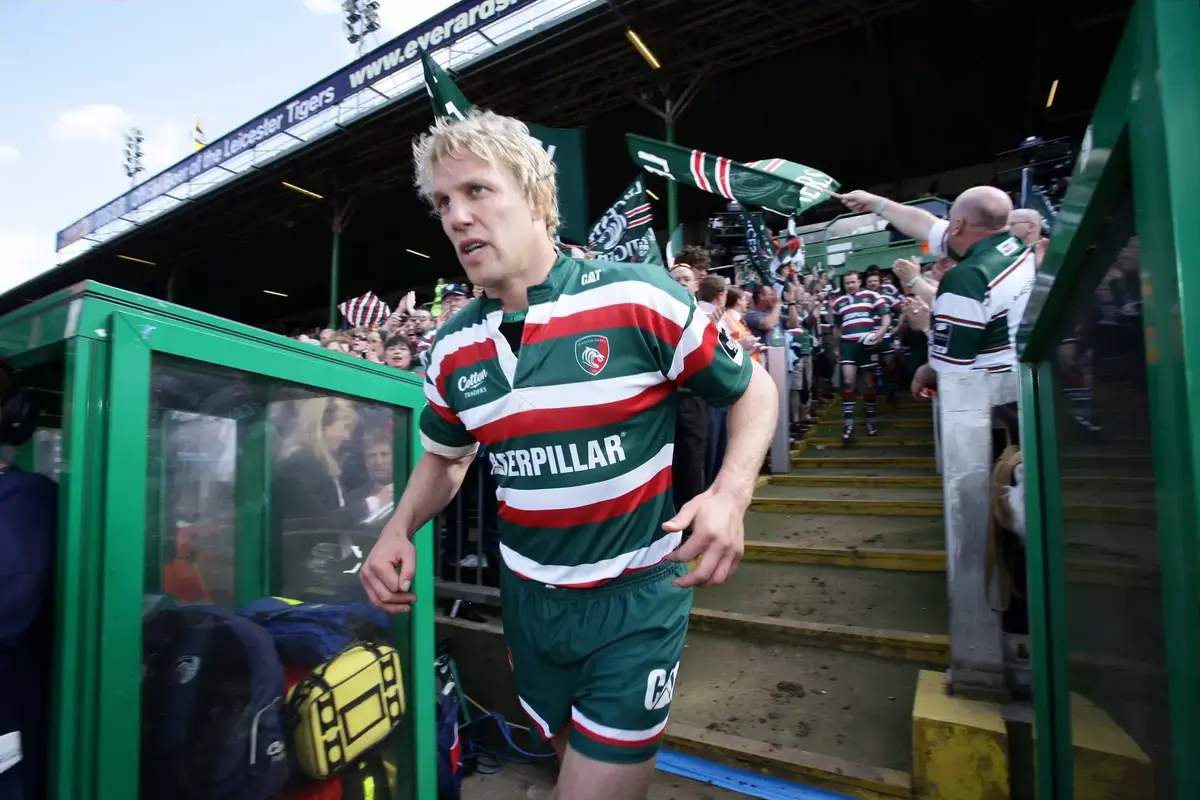
Lewis Moody, the former England captain and 2003 Rugby World Cup winner, has revealed he has been diagnosed with motor neurone disease, becoming the latest high-profile rugby figure to be affected by the devastating condition.
- Lewis Moody, 47, diagnosed with motor neurone disease two weeks before public announcement
- Former England captain discovered condition after noticing shoulder weakness during gym training
- Moody won 2003 Rugby World Cup and seven Premiership titles with Leicester Tigers
- Rugby community launches fundraising initiatives to support Moody family and MND research
- Latest in concerning trend of elite rugby players diagnosed with degenerative condition
The 47-year-old, who lifted multiple English and European titles with Leicester Tigers during a glittering 16-year playing career, disclosed his diagnosis in an emotional interview two weeks after receiving the news. Speaking candidly about his reluctance to fully process the implications of living with MND, Moody emphasised his determination to focus on the present whilst making necessary preparations for an uncertain future.
Sharing some news ❤️ pic.twitter.com/9YIMucQh6l
— Lewis Moody (@LewisMoody7) October 6, 2025
The diagnosis
Moody first noticed something amiss whilst training in the gym, when he experienced weakness in his shoulder. After physiotherapy failed to resolve the issue, further medical investigation revealed the stark reality. Scans showed that nerves in his brain and spinal cord had been damaged by MND, the progressive disease that attacks the motor neurones controlling movement, speech, swallowing and breathing.
“There’s something about looking the future in the face and not wanting to really process that at the minute,” Moody told BBC Breakfast alongside his wife Annie. “It’s not that I don’t understand where it’s going. We understand that. But there is absolutely a reluctance to look the future in the face for now.”
The disconnect between diagnosis and physical reality has proved particularly difficult to reconcile. Moody described feeling emotionally affected by the news whilst simultaneously feeling as though nothing was wrong, with only minor muscle wasting in his hand and shoulder. “I don’t feel ill. I don’t feel unwell,” he explained. “I’m still capable of doing anything and everything. And hopefully that will continue for as long as is possible.”
A glittering rugby career
Moody’s diagnosis represents another cruel blow for the rugby community. The former flanker made 223 appearances for Leicester Tigers between 1996 and 2010, winning seven Premiership titles and two European Cups. His fearless, relentless approach to the game earned him the nickname ‘Mad Dog’ amongst teammates and supporters.
Moody won 71 England caps between 2001 and 2010, captaining his country 12 times, and toured New Zealand with the British and Irish Lions in 2005, where he appeared in all three Tests and scored a try in the final Test. His defining moment came as part of England’s 2003 Rugby World Cup triumph, when he came on as a replacement in the final against Australia. In the decisive passage of play, Moody claimed a ball at the back of the line-out, setting the platform for Matt Dawson to snipe and Jonny Wilkinson to kick the match-winning drop goal.
Stories of his commitment to the cause are legendary – he once played through a stress fracture in his leg and sparked a training-ground scuffle with teammate Martin Johnson when, frustrated, he abandoned a tackle pad and started throwing himself into tackles. Such dedication earned him an MBE for services to rugby in 2004.
The hardest conversations
Whilst Moody has adopted a pragmatic approach to his own situation, the emotional toll of informing loved ones has proved overwhelming. Telling his two sons – 17-year-old Dylan, a goalkeeper for Southampton and England Under-18s, and 15-year-old Ethan – was described as “the hardest thing I’ve ever had to do”.
“They are two brilliant boys and that was pretty heartbreaking,” Moody recalled. “We sat on the couch in tears, Ethan and Dylan both wrapped up in each other, then the dog jumped over and started licking the tears off our faces, which was rather silly.”
The diagnosis also carries particular poignancy for his mother. “It’s never me that I feel sad for,” Moody said. “It’s the sadness around having to tell my mum – as an only child – and the implications that has for her.”
Living in the present
Motor neurone disease can progress rapidly, with the MND Association noting that the condition kills a third of people within a year and more than half within two years of diagnosis, as swallowing and breathing become increasingly difficult. Treatment can only slow deterioration, with no cure currently available.
Faced with such stark realities, the Moody family has chosen to embrace the present. “There is no cure and that is why you have to be so militantly focused on just embracing and enjoying everything now,” he explained. “As Annie said, we’ve been really lucky that the only real decision I made when I retired from playing was to spend as much time with the kids as possible. We don’t get those years back.”
In a statement, Moody emphasised his intention to continue living life fully: “I feel fit and well in myself and I’m focused on staying positive, living life and dealing with the changes I will experience as they come”.
Rugby’s MND crisis
Moody’s diagnosis adds his name to a distressing roll call of rugby players affected by motor neurone disease. Fellow players Doddie Weir and Rob Burrow both died from the illness in recent years, whilst former Leicester and Gloucester second row Ed Slater also lives with the disease and is now in a wheelchair, struggling to speak without the help of a computer programme.
A knee problem had prevented Moody from participating in the inaugural 745 Game last autumn, a fundraising cross-code match created by Burrow and Slater. Burrow died in June 2024. Now Moody finds himself part of the cause rather than a supporter. “I feel slightly selfish in a way that I’ve been reluctant to reach out to anyone, to Ed,” Moody admitted. “But there will be a time when I can. And I would like to as well. If they’re watching – I’m not ready yet, but I absolutely will [be].”
Elite athletes are disproportionately affected by MND, with research on Italian footballers suggesting the disease rate is up to six times higher than in the general population. The prevailing theory suggests that regular strenuous exercise, by limiting oxygen availability and damaging motor neurone cells, can trigger the disease in those already genetically susceptible.
Heartfelt tributes pour in
The rugby family has immediately rallied behind one of its most beloved figures, with moving tributes highlighting both Moody’s on-field brilliance and his character off the pitch.
British and Irish Lions Chair Ieuan Evans paid an emotional tribute to Lion #723, saying: “We are all greatly saddened to hear the news of Lewis Moody’s diagnosis. Lewis has given rugby so much throughout his excellent career.
“As a player Lewis inspired so many fans during a glittering career that included his club spells with Leicester Tigers and Bath Rugby, a memorable time with his country England – where he played such a big part in their unforgettable 2003 Rugby World Cup win – as well as wearing the famous red Lions jersey including scoring a try in the final Test against New Zealand in 2005.
“On behalf of everyone at The British & Irish Lions we are all thinking of Lewis and his family at this difficult time.”
Leicester Tigers, where Moody enjoyed the most successful period of his career, released a deeply personal statement reflecting on their former star’s impact both on and off the field. Chief Executive Andrea Pinchen said: “The figures, trophies and awards tell you what an incredible player Lewis was, but that is only half the story.
“As an individual, his commitment to his club along with his warmth and passion shone through, which endeared him to teammates, staff and supporters alike. Always looking to help others, Lewis together with Annie have worked tirelessly through the Lewis Moody Foundation, supporting research into brain tumours and helping affected families.
“I know everyone connected with the club will want to pass on their best wishes and support to Lewis and his family in any way they can.”]
The Tigers statement concluded: “I know the Tigers Family will join me in letting Lewis, Annie and their family know that our thoughts and support are with them always.”
Former Leicester teammates Leon Lloyd and Geordan Murphy have launched a GoFundMe page to support the Moody family and associated charities, with the club encouraging supporters to contribute.
Rugby Football Union CEO Bill Sweeney described Moody as “one of the toughest and most fearless players ever to don a backrow shirt in the game, earning the respect and admiration of teammates, opponents, and supporters alike all over the world.”
Sweeney added: “His contribution to rugby, both on and off the field, reflects the very best of our sport’s values. Our thoughts are with Lewis and his family and friends at this very difficult time as they come to terms with this diagnosis and I know the entire rugby community stands with them and will support them.”
Looking ahead
Moody and his wife Annie have raised over £2m for brain tumour research through the Lewis Moody Foundation over the past 12 years. He now intends to continue that charitable work whilst also supporting causes closer to his current situation, though he has asked for space to determine what form that will take.
“I am being well supported by my family, friends and medical professionals and I’m truly grateful to those who, in their time, helped progress research to support others, like me, living with this disease,” Moody said in his statement.
Moody has already informed close friends including Martin Johnson about his diagnosis, but many former teammates will be learning the news alongside the public. “There will be a time when we’ll need to lean on their support but, at the minute, just having that sort of love and acknowledgment that people are there is all that matters,” he said.
“Rugby is such a great community. I said to the kids the other day, I’ve had an incredible life. Even if it ended now, I’ve enjoyed all of it and embraced all of it and got to do it with unbelievable people. When you get to call your passion your career, it’s one of the greatest privileges. To have done it for so long with the teams that I did it with was a pleasure. And I know they will want to support in whatever way they can and I look forward to having those conversations.”
As rugby confronts yet another devastating MND diagnosis amongst its alumni, Moody’s courage in sharing his story and determination to focus on living – rather than dwelling on an uncertain future – provides both inspiration and a sobering reminder of the price some pay for sporting glory. The outpouring of support from across the rugby world demonstrates the deep affection and respect in which he is held, ensuring that whatever lies ahead, he will not face it alone.
Share this:
England
Owen Farrell left out as England name squad for training camp
Published
5 months agoon
16th September 2025
Steve Borthwick has delivered a clear signal about England’s direction by omitting Owen Farrell from his 36-man squad for the autumn internationals, despite the former captain’s return to Saracens making him eligible for selection once again.
- Owen Farrell omitted from 36-man training squad despite Saracens return
- Captain Maro Itoje to rehab concussion but won’t train during camp
- Ollie Lawrence returns after six-month Achilles injury layoff
- Three fly-halves selected: George Ford, Fin Smith and Marcus Smith
- England face Australia, Fiji, New Zealand and Argentina in November
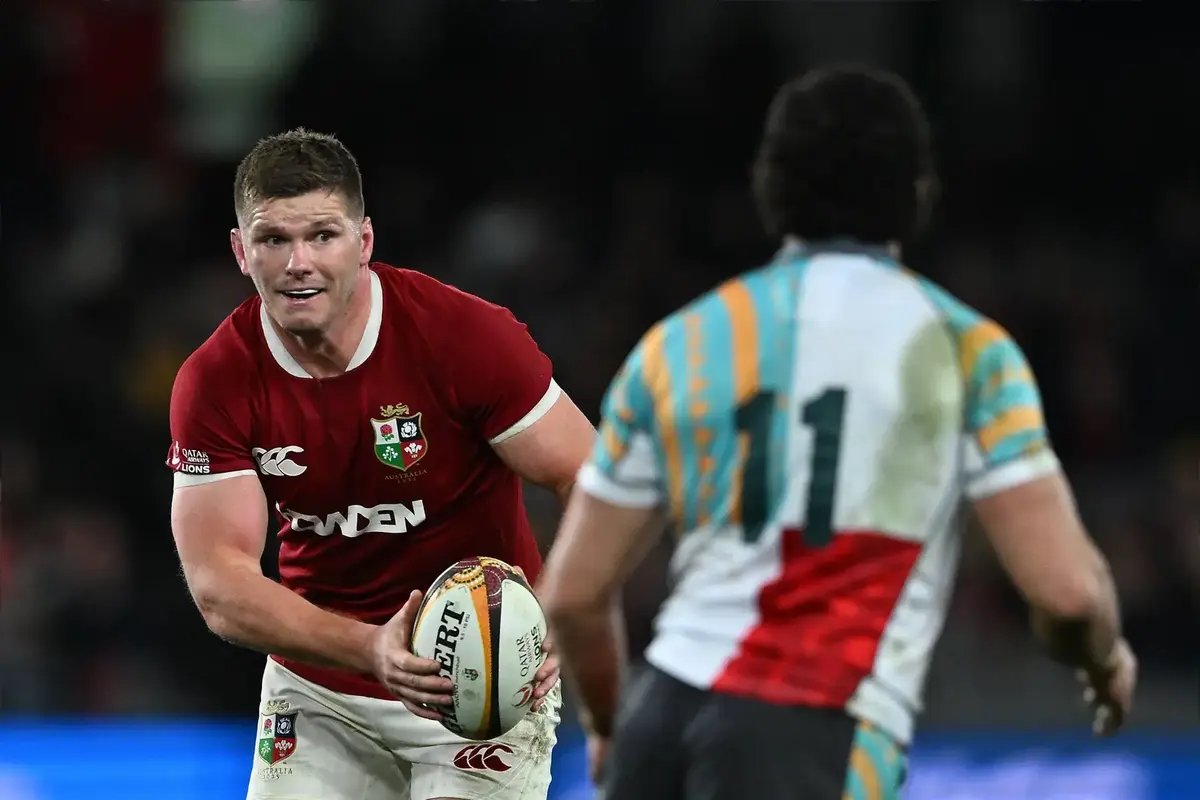
The most striking absence from the squad announced on Sunday was that of Farrell, whose international future remains shrouded in uncertainty. The 33-year-old fly-half has not featured for England since the 2023 World Cup, having taken a sabbatical from international rugby before his stint with Racing 92 in Paris. Although he proved his fitness during a late call-up to the British and Irish Lions tour of Australia this summer, Borthwick has chosen to look elsewhere for his playmaking options.
<blockquote class=”twitter-tweet”><p lang=”en” dir=”ltr”>Back in camp 🏕️<br><br>Steve Borthwick has named a 36-player squad for a three-day training camp ahead of the forthcoming <a href=”https://twitter.com/QuilterNations?ref_src=twsrc%5Etfw”>@QuilterNations</a>.<a href=”https://twitter.com/O2?ref_src=twsrc%5Etfw”>@O2</a> | <a href=”https://twitter.com/hashtag/WearTheRose?src=hash&ref_src=twsrc%5Etfw”>#WearTheRose</a> <a href=”https://t.co/XZJWFZlw7G”>pic.twitter.com/XZJWFZlw7G</a></p>— England Rugby (@EnglandRugby) <a href=”https://twitter.com/EnglandRugby/status/1967166436293632391?ref_src=twsrc%5Etfw”>September 14, 2025</a></blockquote> <script async src=”https://platform.twitter.com/widgets.js” charset=”utf-8″></script>
Instead, the England head coach has selected George Ford, Fin Smith and Marcus Smith as his fly-halves, signalling a competitive battle for the number 10 jersey ahead of a challenging November schedule that includes Tests against Australia, Fiji, New Zealand and Argentina.
The most encouraging news for England comes with the return of Ollie Lawrence, who has made a remarkably swift recovery from the serious Achilles injury that ended his Six Nations campaign and dashed his hopes of making the Lions tour. The Bath centre, who has documented his rehabilitation journey on social media including time spent in a hyperbaric oxygen chamber, returned to action as a substitute in Bath’s pre-season friendly against Munster on Friday.
Lawrence’s recovery timeline has exceeded all expectations, with the 25-year-old initially feared to be sidelined for the entire 2025-26 season. His inclusion provides Borthwick with crucial experience in the midfield, alongside inside centre options Seb Atkinson and Fraser Dingwall.
Captain Maro Itoje will be present at England’s three-day training camp in Surrey but will not participate in any on-field activities as he continues his rehabilitation from the concussion sustained during the final Lions Test against Australia on August 2. The 30-year-old lock failed a Head Injury Assessment after just 27 minutes of that match and has been carefully managed in his return to rugby activities.
Saracens have granted Itoje an additional week off beyond the mandatory post-Lions tour rest period, reflecting the serious nature of head injuries in modern rugby. While there are currently no concerns about his availability for the autumn series, Borthwick is taking no chances with his captain’s wellbeing.
Four other Lions tourists will use the camp for rehabilitation rather than full training. Tom Curry, Elliot Daly, Will Stuart and Immanuel Feyi-Waboso all join Itoje in the medical room, with various complaints keeping them from full participation. Feyi-Waboso, in particular, has endured an injury-disrupted year after missing most of the latter half of last season with a shoulder problem.
The Exeter Chiefs wing’s inclusion demonstrates Borthwick’s faith in the promising talent, despite his limited game time in recent months. Similarly, the presence of the Curry twins and Daly underlines their continued importance to England’s plans, even as they work back to full fitness.
Beyond Farrell’s high-profile absence, several other established names have been overlooked. Harlequins number eight Alex Dombrandt, Bath centre Max Ojomoh and Bristol scrum-half Harry Randall have all missed out, suggesting Borthwick is satisfied with his current depth in those positions.
The hooker situation has seen a significant change, with Theo Dan losing his central contract over the summer and being overlooked entirely. Leicester’s Jamie Blamire has been preferred alongside the experienced duo of Luke Cowan-Dickie and Jamie George.
In the second row, George Martin’s continued absence due to knee and shoulder injuries dating back to February leaves England light on experience, though the presence of Ollie Chessum and Charlie Ewels provides some reassurance.
The squad represents Borthwick’s ongoing philosophy of blending youth with experience. Newcomers Guy Pepper and Seb Atkinson, who impressed during the summer tour victories over Argentina, retain their places alongside returning Lions stars Tommy Freeman, Alex Mitchell and Henry Pollock.
The back three selection offers particular excitement, with George Furbank, Tommy Freeman and Tom Roebuck competing alongside rehabilitation cases Feyi-Waboso and Daly. The inclusion of Oscar Beard and Will Muir suggests Borthwick is keen to develop depth across the backline.
Speaking about the contracts announced in August, Borthwick had emphasised the importance of building towards future success: “These contracts, together with our strong relationship with the Prem clubs, will continue to play an important role in the ongoing development of England Rugby.”
That development will face its sternest test when England begin their autumn campaign against Australia on November 1, before facing Fiji, New Zealand and Argentina. The absence of Farrell, whether temporary or permanent, marks the end of an era for a player who captained England to a World Cup final just two years ago.
England’s 36-player squad
Forwards
Fin Baxter (Harlequins), Jamie Blamire (Leicester), Ollie Chessum (Leicester), Alex Coles (Northampton), Luke Cowan-Dickie (Sale), Chandler Cunningham-South (Harlequins), Ben Curry (Sale), Ben Earl (Saracens), Charlie Ewels (Bath), Ellis Genge (Bristol), Jamie George (Saracens), Joe Heyes (Leicester), Ted Hill (Bath), Asher Opoku-Fordjour (Sale), Guy Pepper (Bath), Henry Pollock (Northampton), Bevan Rodd (Sale), Sam Underhill (Bath), Tom Willis (Saracens).
Backs
Seb Atkinson (Gloucester), Oscar Beard (Harlequins), Fraser Dingwall (Northampton), George Ford (Sale), Tommy Freeman (Northampton), George Furbank (Northampton), Ollie Lawrence (Bath), Alex Mitchell (Northampton), Will Muir (Bath), Cadan Murley (Harlequins), Tom Roebuck (Sale), Henry Slade (Exeter), Fin Smith (Northampton), Marcus Smith (Harlequins), Ben Spencer (Bath), Freddie Steward (Leicester), Jack van Poortvliet (Leicester).
Share this:
Trending
-
Six Nations2 weeks ago2026 Guinness Six Nations preview: England v Wales
-
Six Nations5 days agoCrowley recalled as Ireland axe Prendergast for England showdown
-
Six Nations2 weeks agoSix things we learned from round 1 of 2026 Guinness Six Nations
-
Six Nations2 weeks agoAndy Farrell makes six changes as Ireland seek Italian response
-
Six Nations1 week agoIreland survive Italian scare to claim unconvincing victory
-
Super Rugby Pacific2 weeks agoSuper Rugby Pacific 2026: Round one preview
-
Six Nations2 weeks ago2026 Guinness Six Nations preview: Italy v Scotland
-
Six Nations2 weeks ago2026 Guinness Six Nations preview: Scotland v England