Connect with us

Super Rugby Pacific

Six things we learnt from the semi-finals in Super Rugby Pacific

Published

on

The Super Rugby Pacific semi-finals delivered high-stakes drama and captivating rugby as the Blues and Chiefs booked their spots in the final with contrasting victories. The Chiefs stunned the table-topping Hurricanes 30-19 in Wellington, racing out to an early lead and holding off a spirited fightback. The Blues were too powerful for the Brumbies in Auckland, running in five tries to two in a 34-20 triumph.

It will be a final of redemption

Both the Blues and Chiefs have tasted the bitter disappointment of losing finals in recent years. The Blues fell agonizingly short against the Crusaders in the 2022 decider, while the Chiefs suffered the same fate last year. This year’s showpiece offers a shot at redemption for both sides as they look to finally get their hands on the trophy after lengthy droughts.

The Blues haven’t won a Super Rugby title since 2003, the Chiefs since 2013. The stage is set for an epic battle between two highly motivated outfits desperate to end their title droughts and exorcise the demons of past finals defeats.

Teams can’t afford a slow start in finals rugby

The Hurricanes found out the hard way that a sluggish opening can be fatal in knockout games. The Chiefs blitzed them with two tries in the first six minutes and raced out to a 17-0 lead. Despite a valiant fightback, the Hurricanes couldn’t recover from that early deficit.

Similarly, the Brumbies were on the back foot immediately against the Blues when conceding an AJ Lam try in the 2nd minute. In high-stakes finals matches, teams must start with intensity and physicality from the opening whistle or risk being blown away early.

The Blues will be favourites in the final

The Blues will host the final at their Eden Park fortress, where they are undefeated this season. Their dominant 14-point victory over the in-form Brumbies in the semi-final was a statement of intent. The Blues forward pack, marshalled by All Blacks Dalton Papalii, Hoskins Sotutu and Akira Ioane, will provide a formidable platform.

With threats across the backline in Rieko Ioane, Mark Telea, and Caleb Clarke, the Blues are well-placed to deliver a championship in front of their adoring home fans. Their clinical efficiency in the opposition 22 and resolute defence have been hallmarks of their stellar campaign.

Wallace Sititi has burst into All Blacks contention

Chiefs No.8 Wallace Sititi produced a coming-of-age performance in the semi-final win over the Hurricanes. The 21-year-old was immense, making 17 carries for 146 metres, 12 tackles and a match-defining intercept. Sititi has been a revelation this season with his dynamic ball-carrying and skilful offloading.

On the form he showed in Wellington, he must be firmly in the frame for an All Blacks call-up to face England in July. A mouth-watering match-up with the Blues’ Hoskins Sotutu in the final could be an All Blacks trial in itself.

Damian McKenzie has been the form flyhalf of the competition

The diminutive Chiefs playmaker has had a brilliant season and was again influential in the semi-final. He kicked 15 points, managed the game superbly and constantly threatened with his running and distribution skills. After being in and out of the All Blacks in recent years, McKenzie has consolidated his spot as the country’s premier No.10 in 2023.

His consistency and big-match temperament could be vital in earning the Chiefs their first title in a decade. McKenzie’s ability to unlock defences and control the game’s tempo will be crucial in the pressure-cooker atmosphere of a final.

The Brumbies sorely missed James Slipper

Embed from Getty Images

The late withdrawal of veteran Wallabies prop James Slipper with a calf injury was a hammer blow for the Brumbies. Slipper’s leadership, scrummaging nous, and experience were a huge loss, especially against a Blues pack that has bullied teams all year. Replacement Rhys van Nek toiled manfully, but the Brumbies scrum struggled, conceding several penalties.

The 94-test veteran’s ability to produce under pressure was sorely missed as the Brumbies fell short of a maiden Super Rugby Pacific final. Slipper’s absence disrupted the Brumbies’ preparations and robbed them of a pillar of their forward pack.

The semi-finals delivered compelling rugby and set the stage for a blockbuster final. Can the Blues deliver a long-awaited title in front of their home fans? Or will the Chiefs ride their late-season momentum to an upset? One thing is certain – both teams will leave everything on the field in pursuit of Super Rugby Pacific glory.

Continue Reading
Click to comment

Leave a Reply

Super Rugby Pacific

Super Rugby confirms expanded 2027 season with new finals system

Published

on

Super Rugby confirms expanded 2027 season with new finals system
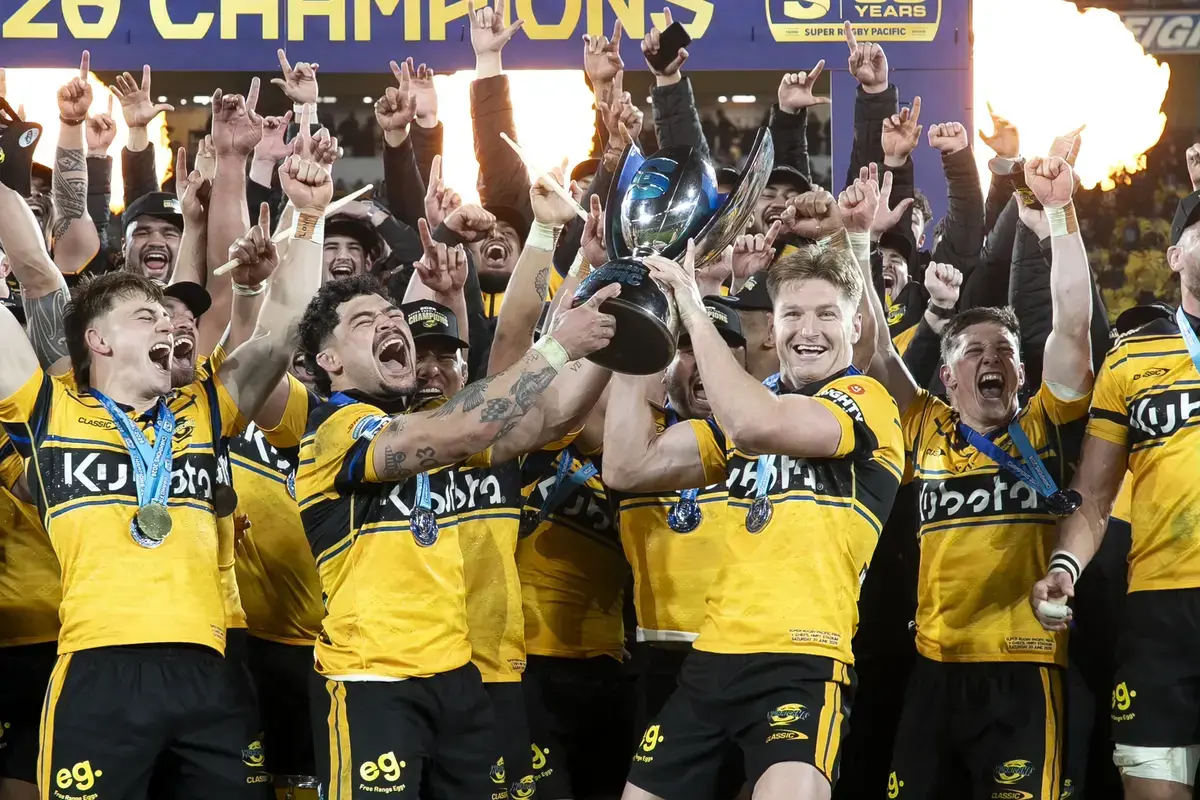
Hurricanes Co-Captains Du'Plessis Kirifi, left and Jordie Barrett hold the Super Rugby Trophy during the Hurricanes v Chiefs, Super Rugby Pacific Grand Final match, Hnry Stadium, Wellington, New Zealand. Saturday, 20 June 2026, (Photo by Marty Melville / action press)

Super Rugby Pacific has announced a revamped competition structure for 2027, featuring an expanded regular season, a redesigned finals series, and the introduction of the first-ever Anzac Day Bledisloe Cup Test.

The 2027 season will kick off on Friday 12 February, with ten teams competing across a 17-week regular season. Each side will play 16 matches – two more than in 2026 – after the number of bye weeks is reduced from two to one. The Grand Final is scheduled for Saturday 26 June.

The shift to ten teams follows Moana Pasifika’s departure from the competition at the end of the 2026 season, after New Zealand Rugby confirmed that none of the bids to rescue the franchise could demonstrate the committed funding required to meet financial and operational requirements.

Finals series overhaul

The most significant structural change comes in the finals series, which eliminates the controversial “lucky loser” system used over the past two seasons. Under the previous format, the highest-seeded losing team from the qualifying round could still progress to the semi-finals. That concept is now gone.

The top six teams will still qualify for the post-season, but teams finishing first and second will receive a bye week and advance directly to the semi-finals. Teams ranked third and fourth will host sudden-death elimination finals against the fifth and sixth-placed sides respectively. The winners of those elimination finals progress as away teams in the semi-final round.

The full finals structure is as follows:

Week One – Elimination Finals: 3 vs 6; 4 vs 5

Week Two – Semi-Finals: 1 vs lowest-seeded EF winner; 2 vs highest-seeded EF winner

Week Three – Grand Final: Highest-seeded SF winner vs lowest-seeded SF winner

Super Rugby Pacific CEO Jack Mesley said the refreshed format had been designed to maximise the 20-week competition window while delivering higher stakes throughout the finals.

“We’re delighted to have developed a structure that pushes the limits of our competition window to deliver more games and give every fan more opportunities to see their favourite teams in action,” Mesley said.

“At the same time our new-look Finals Series ensures teams will be more desperate than ever to finish in the top two to secure a week off, and the top four to host a home Final, while every Finals game will be a genuine do-or-die contest on the road to the championship.”

Anzac Day Bledisloe adds international dimension

A standout addition to the 2027 calendar is the Anzac Day Bledisloe Cup Test, with squads to be named following Round 9. That effectively transforms the opening two months of the Super Rugby season into a selection trial for international honours.

“The introduction of the Anzac Bledisloe to our calendar will help ensure every match means more, with Test jerseys up for grabs from the moment we kick off in February,” Mesley said.

New Zealand Rugby chief executive Steve Lancaster has previously confirmed that players selected for the Bledisloe Test will miss the preceding round of Super Rugby, with the Anzac weekend serving as a full bye round. Players will be released back to their franchises immediately after the Test.

Mesley also confirmed that organisers are working to retain the Super Round concept following its successful staging in 2026.

“Off the back of the success of Super Round in 2026, we are working diligently to confirm it remains an integral part of our calendar next year,” he said.

“We’re already looking forward to the storylines, drama and excitement that this new structure will help deliver for Super Rugby Pacific in 2027.”

Further details regarding the 2027 draw will be announced in the coming weeks.

Continue Reading

Super Rugby Pacific

McKellar resigns as Waratahs head coach, effective immediately

Published

on

McKellar resigns as Waratahs head coach, effective immediately
Dan McKellar during the Chiefs v Waratahs, Super Rugby Pacific match, FMG Stadium Waikato, Hamilton, New Zealand. Saturday, 4 April 2026, (Photo by Aaron Gillions / action press)

Dan McKellar has resigned as head coach of the NSW Waratahs with immediate effect, ending a two-year tenure that saw the Sydney-based franchise finish eighth in Super Rugby Pacific in both seasons under his leadership.

  • McKellar cited personal reasons for his departure, despite having one year remaining on his contract
  • The Waratahs won 11 matches across the 2025 and 2026 Super Rugby Pacific seasons under McKellar
  • The club finished eighth in both campaigns, the lowest-placed Australian side in 2026 after winning five of 14 matches
  • Assistant coaches Dan Palmer (forwards) and Lachie McCaffrey (defence) remain at the club
  • The Waratahs have begun the recruitment process to appoint a new head coach

McKellar addressed the playing group and coaching staff on Monday morning before the club confirmed his departure in an official statement. The 49-year-old, who joined the Waratahs at the end of 2024 after stints with Leicester Tigers in the English Premiership and as a Wallabies assistant coach, walked away with 12 months still to run on his deal.

“I have decided to step away from my role as Head Coach of the NSW Waratahs for personal reasons,” McKellar said.

“I step away knowing I have given my all to help turn the Waratahs’ fortunes around over the last two seasons. As a coaching group, we have all worked incredibly hard to drive positive and necessary change.”

The departure follows what has been reported as a difficult fortnight for McKellar, with the coach understood to have been required to present to the Waratahs board and Rugby Australia high performance director Peter Horne on Friday in what amounted to a review of his tenure. His exit also comes in the wake of attack coach Mike Catt’s recent departure from the club, leaving the Waratahs searching for both a head coach and an attack coach ahead of the 2027 season.

McKellar oversaw a significant overhaul of the Waratahs’ playing roster during his time in charge. Fewer than 10 players remain on the books from the squad he inherited, and he oversaw the introduction of several promising young players including Rookie of the Year Sid Harvey, Clem Halaholo, and Jamie Adamson. The former Brumbies head coach won six matches in 2025 – narrowly missing the finals – before a five-win campaign in 2026 left the Waratahs at the bottom of the Australian conference.

McKellar thanked his coaching staff and skipper Matt Philip as he departed.

“I’d like to thank Dan Palmer, Locky McCaffrey, Mike Catt and Tom Carter for their hard work and support. I’d also like to thank captain Matt Philip for his support,” he said.

“As this journey for the Waratahs continues, I wish all the players and staff the very best for the future.”

Waratahs chairman Tony Crawford acknowledged McKellar’s contribution to the club despite the results not matching ambitions on the field.

“On behalf of the board, players and staff at the Waratahs, I would like to thank Dan for his significant contribution to the club,” Crawford said.

“Dan has made a massive impact on the club since joining, both on and off the field. His work ethic and commitment to deliver his coaching program were second to none and he always put the Waratahs first.”

Director of High Performance BJ Mather echoed those sentiments, noting that McKellar had made a broader impact beyond match results.

“Dan achieved some landmark results on the field and reignited support for the Waratahs in the NSW rugby community,” Mather said.

“We wish him well in the next stage of his coaching career. He and his family will always be part of the Waratahs and we wish them all the best for the future.”

McKellar’s exit marks the sixth head coaching change at the Waratahs in nine years since Daryl Gibson departed at the end of 2019, underlining the instability that has plagued the once-proud franchise. Palmer and McCaffrey remain on staff, with McCaffrey expected to lead the side during the short Super Rugby AUS season later this year while the club searches for a permanent appointment.

The Waratahs have confirmed the recruitment process for a new head coach is already under way.

Continue Reading

Super Rugby Pacific

NZR confirm Moana Pasifika cut from Super Rugby Pacific in 2027

Published

on

NZR confirm Moana Pasifika cut from Super Rugby Pacific in 2027
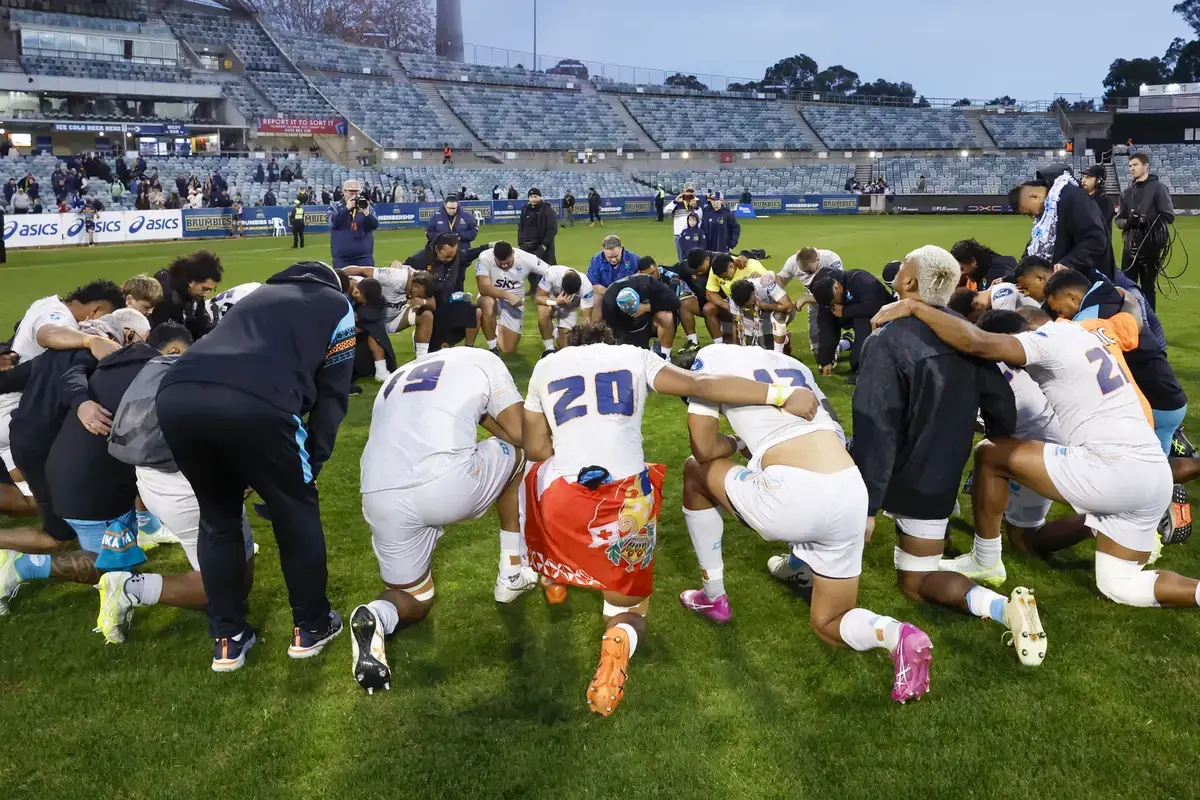
The Moana Pasifika team huddle in prayer after victory during the Brumbies v Moana Pasifika, Super Rugby Pacific match, Gio Stadium, Canberra, Australia. Saturday, 30 May 2026, (Photo by Mark Evans / action press)

Moana Pasifika’s Super Rugby Pacific chapter has officially ended after New Zealand Rugby confirmed they will not transfer the franchise’s licence to any new party for the 2027 season.

Despite multiple interested parties exploring options to save the embattled franchise, NZR announced on Wednesday that none could satisfy the financial and commercial requirements necessary to secure the licence.

“NZR explored every possibility for a long-term solution with several interested parties, including allowing multiple extensions to the 15 May deadline,” the governing body’s statement read. “None of the parties were able to satisfy both the capital and business plan requirements necessary to secure the licence.”

The decision means Super Rugby Pacific will contract to 10 teams from 2027, with the competition set to confirm the new format in the coming weeks.

Financial requirements prove insurmountable

NZR chief financial officer Chris Kinraid outlined the significant capital requirements that proved beyond the reach of all prospective bidders.

“A competitive and sustainable team needs commercial revenue of more than NZ$10 million, in addition to broadcast revenue; and at least NZ$15 million in committed capital to support its business plan and maintain appropriate cash reserves,” Kinraid said.

The Kanaloa Consortium, which included several former All Blacks with Pasifika heritage and had secured the support of the rugby unions of Tonga, Samoa, Cook Islands and Niue, was among those whose bid fell short.

Consortium chief executive Tracy Atiga said they were “disappointed” not to have been considered to take over the licence, with the group planning to respond fully after reviewing NZR’s decision.

A joint proposal from the Samoan and Tongan Governments, co-ordinated by former Moana Pasifika chief executive Pelenato Sakalia and supported by the New Zealand Rugby Players Association, was also rejected. The two governments had proposed to jointly inject up to $12 million over three years using aid and development funding, but NZR reportedly had concerns about the funding gap in the first year and the club’s ability to build sufficient commercial income.

Door remains open for future Pacific team

While the Moana Pasifika licence will not be transferred, Kinraid indicated that NZR remains committed to the concept of Pacific representation in Super Rugby.

“We want to be clear, the door remains open beyond 2027,” he said. “We firmly believe a team can be based in the Pacific Islands and that a sustainable long-term solution can be found in the future. We remain open and willing to engage with anyone who can meet the financial and commercial requirements.

“We also acknowledge the engagement of Minister Winston Peters and the New Zealand Ministry of Foreign Affairs and Trade for the recognition of the role rugby can play in the Pacific region.”

Kinraid noted that NZR had also received interest in potential future expansion opportunities beyond 2027, which he described as “an encouraging sign for the future of the competition”.

However, he stressed that this process was specifically for a team representing Moana Pasifika as a pathway for Tonga and Samoa from 2027, not to establish a new team or enter a new market.

“Any future expansion of Super Rugby Pacific would need to be considered in partnership with Rugby Australia, Super Rugby Pacific and as part of a broader competition strategy,” Kinraid added.

Peters expresses disappointment

New Zealand First leader and Minister of Foreign Affairs Winston Peters issued a statement expressing his disappointment at the outcome.

“Today’s announcement will be felt strongly by players, their families and supporters. It will also be disappointing to many people in the Pacific who have got in behind the team,” Peters said.

“Less than a month ago, we were approached by a number of parties and rugby lovers seeking our support to put Moana Pasifika on a financially sustainable footing. It would have been helpful if Moana Pasifika had come to us earlier about their financial situation.

“Achieving a result in three weeks to facilitate Moana Pasifika being part of the 2027 season was always going to be a bridge too far. We had hoped NZ Rugby would grant us more time, but they decided they had to move ahead.”

Tongan PM laments ‘sad day’

Tonga Rugby Union president Lord Fakafanua, who is also the country’s prime minister, described it as “a sad day to see Moana Pasifika dying out after so much promise”.

The TRU indicated they would respond fully after discussing the issue further.

Competition pays tribute

Super Rugby Pacific acknowledged the decision in a statement, recognising the disappointment felt by all connected with the club.

“Since joining Super Rugby Pacific in 2022, Moana Pasifika has made a significant contribution to the fabric of our competition and we extend our gratitude to everyone who played a part in that journey,” the statement read.

“There can be no doubt the Pasifika community has been a fundamental part of our competition for the last 30 years, and our commitment to recognising and celebrating that community remains.”

Moana Pasifika finished their final season bottom of the standings with two wins from 14 matches, signing off with a 21–19 victory over the Brumbies in Canberra. The franchise’s players and staff, who have endured months of uncertainty at their North Harbour Stadium base, must now search for employment elsewhere.

The franchise was put into liquidation after majority owners Pasifika Medical Association announced in April they could no longer fund the club beyond the 2026 season. NZR had stepped in with financial backing to ensure Moana could complete their final campaign.

Continue Reading

Trending

Discover more from Rugby News, Results, and Analysis | Rugby is the Game

Subscribe now to keep reading and get access to the full archive.

Continue reading