Connect with us

International

The Sheriff hangs up his boots with immediate effect

Published

on

Wales’ most capped hooker and Scarlets legend, Ken Owens, has announced his retirement from rugby with immediate effect. After a storied career spanning over two decades, Owens made the difficult decision to follow medical advice and bring an end to his time on the field.

In an official statement released by the Welsh Rugby Union (WRU), Owens expressed his mixed emotions about stepping away from the game he loves. He stated,

“Reluctantly, I am announcing my retirement from rugby. Not playing has been challenging, but the time is right to follow medical advice and hang up my boots.”

Owens, affectionately known as “The Sheriff,” began his rugby journey at Carmarthen Athletic before making his mark with the Scarlets, where he amassed an impressive 274 appearances over two decades. He captained the Scarlets for seven seasons, breaking records and becoming a revered figure on and off the field.

His international career was equally illustrious, with Owens earning 91 caps for Wales and representing the British and Irish Lions on two tours. He debuted for Wales at the 2011 Rugby World Cup and went on to captain his country during the 2023 Six Nations Championship.

Despite the challenges of injuries, including a back problem that sidelined him for almost a year, Owens leaves a legacy of leadership and dedication. His influence extended beyond the pitch, with WRU CEO Abi Tierney acknowledging his role as a role model for aspiring rugby players.

“Ken Owens has not only been a wonderful player for the Scarlets, Wales and British & Irish Lions over the course of a stellar career but he has also been a consummate role model for youngsters up and down the country developing their love for the game. The fact that he has captained all of those senior sides in succession shows just what a talismanic leader he is.”

Warren Gatland, the Wales head coach, paid tribute to Owens: “Ken has had an incredible rugby career and been a brilliant ambassador for the game in Wales,” said Gatland. “I’ve enjoyed being able to coach him with Wales and the Lions.

“Ken is an incredibly passionate Welshman. I know it meant a lot to him to play for Wales and you could see that every single time he wore the red jersey. He was also very proud to represent Carmarthen Athletic and the Scarlets.”

Scarlets head coach Dwayne Peel said on the Scarlets website: “Ken is undoubtedly one of the greatest players to have worn the Scarlets jersey.

“I can’t speak highly enough of him as a player and a person. He is someone who wears his heart on his sleeve, has been a warrior on the field and has always led by example.

“He epitomises all the core values of our great club, a proud west Walian, a family man with his heart firmly in his community.

“If ever the young players at the club wanted a role model for their professional career, they should look to Ken Owens.”

Continue Reading
Click to comment

Leave a Reply

International

World Rugby confirms lower tackle height for grassroots game

Published

on

World Rugby confirms lower tackle height for grassroots game
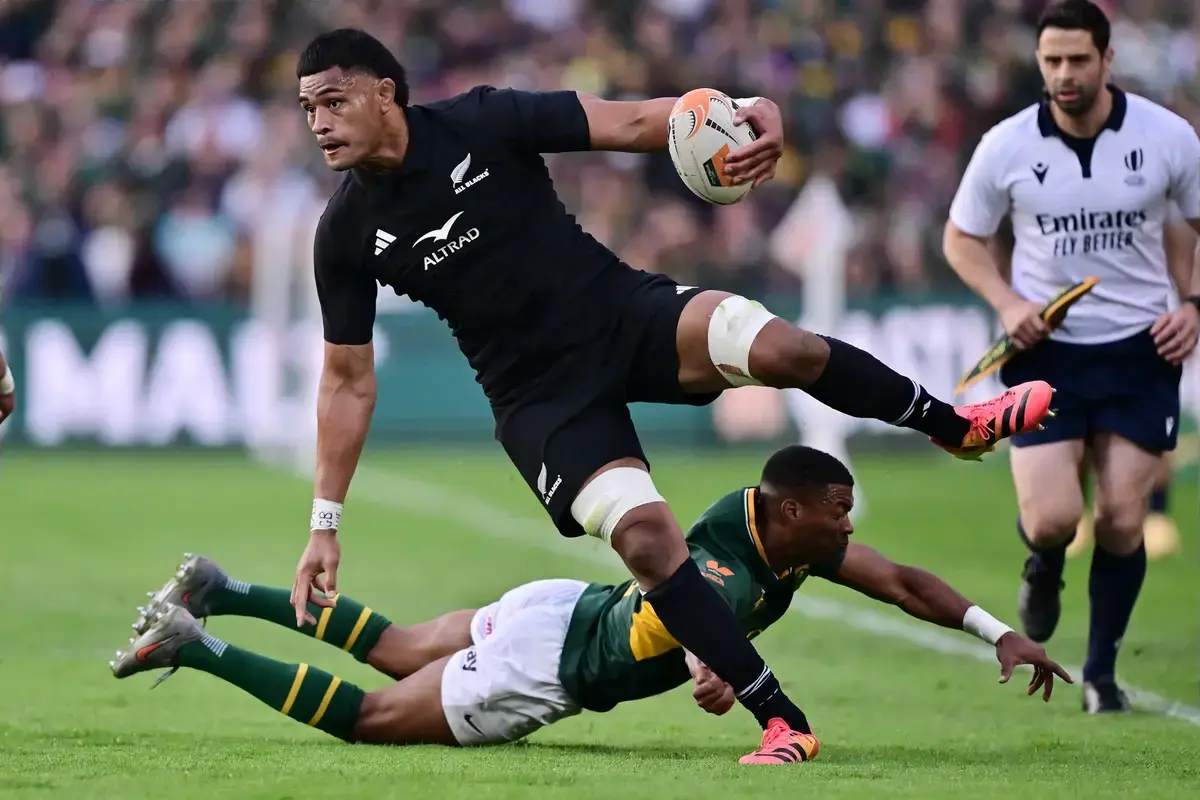
Lautasi Etuale evades a tackle down the wing - 29th September 2025 - Australian U18’s vs New Zealand Schools

World Rugby has confirmed that the legal tackle height in community rugby will be permanently lowered from 1 July, marking the most significant law change to the grassroots game in years.

The World Rugby Council, meeting in Dublin, voted to adopt the lower tackle height into full law following two years of global trials involving more than 150,000 studied tackles across 10 national unions. Under the new law, unions will have the choice of setting either the waist or the base of the sternum as the upper legal limit for tacklers.

The change will mean little practical difference for community rugby in England, Wales, Scotland and Ireland, all of which have been operating under the trial laws since the 2023/24 season. However, it now locks the lower tackle height into the global law book, ensuring consistency across all community rugby worldwide.

World Rugby Chairman Brett Robinson said the decision was driven by player welfare. “I welcome the adoption of a lower tackle height into community law,” Robinson said. “I would like to thank all the unions and academics and most importantly players and referees who took part in the trials that have helped us to reach this point. The trials from around the world show that this is the right thing to do to make our game safer and more enjoyable for community players who are the lifeblood of our sport.”

The governing body’s trials demonstrated that a lower legal tackle height was effective in reducing the number of upright tackles, which are considered the most likely to cause avoidable head impacts. A landmark study conducted by the IRFU and the University of Limerick, published in the Journal of Science and Medicine in Sport, provided some of the most compelling evidence in favour of the change. The research analysed more than 86,000 hours of match play across men’s, women’s and schoolboy rugby in Ireland, comparing several seasons under the traditional armpit-height tackle law with two seasons under the lower sternum-height rule.

The results were striking. In men’s All-Ireland League matches, concussions from tackle events fell by 38 per cent during the trial period, while overall match injuries dropped by 18 per cent. The women’s game saw even more pronounced improvements, with tackle-related concussion rates falling by 63 per cent and overall injuries decreasing by 30 per cent.

The findings carry particular significance for the women’s game, which has experienced rapid growth in Ireland and internationally in recent years. However, the study also revealed a more complex picture in the schoolboy game, where tackle-related concussion rates rose slightly, though researchers stressed the increase was not statistically significant. Overall injury rates among schoolboy players did fall by 19 per cent during the trial.

Dr Lauren Guilfoyle, one of the study’s lead authors, described it as “the first study in community rugby worldwide to report such positive findings.” She added: “While other studies have indicated that lowering the legal tackle height can change player behaviour, this is the first study to report a significantly positive impact on concussion and overall injury rates.”

Dr Guilfoyle, who previously worked with the Irish Rugby Injury Surveillance project at the University of Limerick and is now based at the University of Edinburgh, suggested that adult players’ greater technical ability and quicker adaptation to rule changes may explain the difference in outcomes between the adult and schoolboy game. The physical development of growing teenage players could also be a factor.

“Lowering the tackle height aimed to influence tackling behaviour and reduce risk of head impacts, but it does not address other factors linked to injury risk — such as strength or joint stability, which can vary more widely in younger players,” she said.

The rollout of the lower tackle height has not been without controversy. The introduction in England in 2023 was initially botched, with the RFU first announcing that tackles would be limited to waist and below before revising the mandate to the base of the sternum following an outcry from clubs. Unions will retain the ability to use World Rugby’s Game On community law variations to adapt secondary laws in areas such as pick and go and double tackles, providing some flexibility in how the law is applied at ground level.

The decision also signals the direction of travel for the professional game. Initial trials of a lower legal tackle height at elite level will take place at the World Rugby Junior World Championship in Georgia, which runs from 27 June to 18 July. World Rugby Vice-Chair Jonathan Webb said in December that if the trials proved successful, the governing body would face an “all or nothing” decision about whether to implement the change across the professional game.

Alongside the tackle height change, the World Rugby Council also voted to adopt several other successful trial laws. The scrum brake foot, which reduces axial loading and pressure on heads and necks in the scrum, has been made permanent. Restrictions on water carriers entering the field of play have been formalised, the Television Match Official has been confirmed as a formal part of the officiating team, and elite competitions will retain the option of using 20-minute red cards if they choose.

Robinson struck a bullish tone on rugby’s approach to player safety. “Rugby has always led the way when it comes to making considered changes to improve the welfare of our players,” he said. “Alongside provisions such as smart mouthguards in the elite game, we’ve shown time and again that we’ll make the big calls and that we’re getting them right, backed by the evidence.”

All amendments come into force from 1 July 2026 for seasons beginning after that date.

Continue Reading

International

TJ Perenara leads star-studded Barbarians against Springboks

TJ Perenara captains a star-studded Barbarians side featuring 19 internationals from 11 nations to face the Springboks in the YesPlay Cup in Gqeberha on Saturday.

Published

on

TJ Perenara leads star-studded Barbarians against Springboks
Black Rams TJ Perenara during the 2025-26 Japan Rugby League One match between Ricoh Black Rams Tokyo and Toyota Verblitz at Prince Chichibu Memorial Stadium in Tokyo, Japan on April 26, 2026. (IMAGO / AFLOSPORT)

Former All Blacks scrum-half TJ Perenara will captain a Barbarians side packed with international pedigree when Scott Robertson’s men take on the world champion Springboks in the YesPlay Cup at the Nelson Mandela Bay Stadium in Gqeberha on Saturday. The 89-cap halfback, who last donned the famous black and white jersey in a victory over Fiji at Twickenham in 2013, leads a squad featuring 19 internationals drawn from 11 different nations — a selection that embodies the invitational club’s cosmopolitan traditions while carrying enough quality to test Rassie Erasmus’s charges in front of a home crowd.

Key team news:

  • TJ Perenara (89 caps, All Blacks) captains the side in his second Barbarians appearance
  • Former Springbok Warrick Gelant starts at fullback against his countrymen, reuniting with former Outeniqua High School teammate Duhan van der Merwe
  • France international Virimi Vakatawa (32 caps) and Munster’s Alex Nankivell form a powerful midfield combination
  • Argentina fly-half Tomás Albornoz partners Perenara at half-back
  • Samoan number eight Miracle Fai’ilagi earns a starting berth in a multinational forward pack
  • Scott Robertson, the former All Blacks head coach, takes charge of the Barbarians for the fixture
  • Strong South American presence on the bench with Argentina’s Leonel Oviedo and Pedro Delgado alongside Uruguay’s Santiago Arata

The headline selection story sits in the back three, where former Springbok fullback Warrick Gelant will line up against the country of his birth. The 31-year-old Stormers back, who won 11 caps for South Africa between 2017 and 2022 and was part of the 2019 Rugby World Cup-winning squad, has always been a player whose instinct for counter-attack and willingness to chance his arm align perfectly with the Barbarians ethos. Gelant’s selection adds a layer of personal narrative to the occasion, not least because he will be reunited with Duhan van der Merwe, his former schoolmate at Outeniqua High School in George. Van der Merwe, who has since carved out a distinguished career with Scotland and the British & Irish Lions, will patrol the left wing, while Wallabies flyer Andrew Kellaway completes an all-international back three brimming with finishing ability.

Inside them, the midfield pairing of Alex Nankivell and Virimi Vakatawa promises to be one of the most intriguing match-ups of the afternoon. New Zealander Nankivell made 20 appearances for Munster during the 2025/26 season and was a key figure in the Irish province’s run to the URC play-offs, bringing abrasive carrying and slick distribution in equal measure. Vakatawa, the New Zealand-born Fijian who earned 32 Test caps for France during a prolific international career, has been plying his trade with the Fijian Drua in Super Rugby Pacific this season and retains the power and offloading ability that made him one of European rugby’s most destructive centres at his peak.

Springbok centre Andre Esterhuizen, who will line up in direct opposition alongside Jesse Kriel, was respectful of the challenge the Barbarians’ midfield duo will present.

“It’s a powerhouse centre pairing,” said Esterhuizen. “Alex Nankivell is a strong, abrasive runner with good offloading skills and good distribution. And we’ve all seen Virimi Vakatawa play for France. He’s a very experienced centre who’s been around for a long time. He’s also a strong ball-carrier. So it’s going to be a good battle in the centres.”

At half-back, Perenara will partner Toulon and Argentina fly-half Tomás Albornoz, a combination that blends the veteran scrum-half’s nous and tempo control with the Puma playmaker’s range of kicking and running threat. It will be Perenara’s first appearance in the famous jersey in 13 years, and the 34-year-old will be keen to leave his mark on the captaincy in what shapes as one of the invitational club’s most high-profile fixtures in recent memory.

The forward pack, while perhaps lacking the sheer star power of the backline, carries considerable international experience. The front row is an entirely multinational affair: Gloucester’s Argentine loosehead Mayco Vivas scrummages alongside Dragons and Wales hooker Elliot Dee and Edinburgh and Scotland tighthead D’Arcy Rae. It is a unit that will need to hold its own against a Springbok scrum anchored by Ox Nche and the uncapped Carlu Sadie if the Barbarians’ dangerous backs are to see enough quality ball.

The second row pairs Western Force and Los Pumas lock Franco Molina with Bayonne’s Alex Moon, the sole Englishman in the starting XV, in a towering engine room combination. In the back row, Harlequins and Argentina stalwart Guido Petti — who has represented Los Pumas across multiple Rugby World Cups — lines up at blindside flanker, with Panasonic Wild Knights openside Lachlan Boshier adding New Zealand breakdown expertise on the other flank. The number eight jersey goes to Samoa’s Miracle Fai’ilagi, whose explosive carrying and athletic lineout work have marked him out as one of the Pacific Islands’ most exciting emerging talents.

Robertson, the former All Blacks head coach who guided New Zealand through the 2025 international season, struck an enthusiastic tone when naming his squad. The Barbarians lost 54-7 to the Springboks in Cape Town last year in the invitational side’s first-ever fixture on South African soil, and Robertson is determined to produce a more competitive showing this time around.

“We are all really excited for Saturday afternoon. To play against the world champions in South Africa is an awesome opportunity,” said Robertson. “We have embraced the Barbarians spirit and tradition this week, coming together as a group and enjoying each other’s company in Cape Town.”

“It’s a team packed with talent, guys who have come from all over the world and have a great chance to showcase their ability in Port Elizabeth. We want to express ourselves and do the famous black and white jersey proud.”

The replacements bench carries a distinctly South American flavour. Los Pumas hooker Leonel Oviedo and tighthead Pedro Delgado are joined by Uruguay’s exciting scrum-half Santiago Arata, adding Tier Two representation to the squad. Elsewhere among the substitutes, Scotland-capped Stormers loosehead Oli Kebble provides set-piece depth, Australian lock Izack Rodda offers second-row cover, Scotland’s Liam McConnell adds back-row options, and New Zealand fly-half Harry Plummer gives Robertson a second playmaking option from the bench. The final replacement slot goes to Fijian Tuidraki Samusamuvodre, whose selection adds a further injection of Pacific Islands flair to the group.

The challenge facing Robertson’s hastily assembled squad is considerable. The Springboks, even in a non-cap fixture, have named a matchday 23 containing 18 capped internationals, with Siya Kolisi captaining a side that includes the likes of Cheslin Kolbe, Pieter-Steph du Toit and Jasper Wiese. But the Barbarians have never been a side defined by preparation time or familiarity — their tradition is built on instinct, adventure and the chemistry that emerges when talented players from different rugby cultures come together with freedom to express themselves.

For Gelant in particular, the occasion carries a personal edge. The chance to play against the Springbok jersey he once wore, alongside the schoolmate who chose a different international path, is the sort of storyline the Barbarians were made for. Whether the visitors can translate that narrative into something more competitive than last year’s heavy defeat in Cape Town remains to be seen, but with Perenara marshalling proceedings and a backline loaded with X-factor, they will not lack for ambition.

Barbarians team to face the Springboks:

15. Warrick Gelant (DHL Stormers / South Africa, 11 caps)
14. Andrew Kellaway (Australia)
13. Virimi Vakatawa (Fijian Drua / France, 32 caps)
12. Alex Nankivell (Munster / New Zealand)
11. Duhan van der Merwe (Scotland / British & Irish Lions)
10. Tomás Albornoz (Toulon / Argentina)
9. TJ Perenara (captain / New Zealand, 89 caps)
8. Miracle Fai’ilagi (Samoa)
7. Lachlan Boshier (Panasonic Wild Knights / New Zealand)
6. Guido Petti (Harlequins / Argentina)
5. Alex Moon (Bayonne / England)
4. Franco Molina (Western Force / Argentina)
3. D’Arcy Rae (Edinburgh / Scotland)
2. Elliot Dee (Dragons RFC / Wales)
1. Mayco Vivas (Gloucester / Argentina)

Replacements:
16. Leonel Oviedo (Argentina)
17. Oli Kebble (DHL Stormers / Scotland)
18. Pedro Delgado (Argentina)
19. Izack Rodda (Australia)
20. Liam McConnell (Scotland)
21. Santiago Arata (Uruguay)
22. Harry Plummer (New Zealand)
23. Tuidraki Samusamuvodre (Fiji)

Match details: Barbarians v South Africa (YesPlay Cup), Nelson Mandela Bay Stadium, Gqeberha. Saturday 20 June, 15:00 (SAST) / 13:00 (GMT). Live on SuperSport.

Continue Reading

International

Erasmus springs fly-half surprise for Boks against Barbarians

Rassie Erasmus names Quan Horn at fly-half and hands Junior Bok captain Riley Norton a start as Springboks open their 2026 season against the Barbarians in Gqeberha.

Published

on

Erasmus springs fly-half surprise for Boks against Barbarians
May 9, 2026, Dublin, IRELAND: Quan HORN (15) of Lions and Diarmuid MANGAN (19) of Leinster during the BKT United Rugby Championship match between Leinster and FidelitySecureDrive Lions at Aviva Stadium in Dublin, Ireland. Leinster beat Lions 31:7. (Credit Image: © David G. McIntyre/ZUMA Press Wire)

Rassie Erasmus has wasted no time setting the tone for the Springboks’ 2026 campaign, naming Lions fullback Quan Horn as his starting fly-half for Saturday’s season-opening clash against the Barbarians at the Nelson Mandela Bay Stadium in Gqeberha. The selection of the 24-year-old, who has a single cap to his name from the 2024 Test against Portugal, is the headline talking point from a matchday 23 that blends established Test experience with a wave of emerging talent. Siya Kolisi will captain the side, which features 18 capped internationals alongside five uncapped players, as the four-time world champions begin preparations for a demanding season that includes the inaugural Nations Championship and the Greatest Rivalry Series against the All Blacks.

Key team news:

  • Quan Horn, primarily a fullback with the Lions, handed a surprise start at fly-half
  • Junior Bok captain Riley Norton and Bordeaux-Bègles prop Carlu Sadie are the two uncapped players in the starting XV
  • Manie Libbok available but held back to protect him ahead of the Nations Championship
  • Sacha Feinberg-Mngomezulu sidelined with an ankle injury; Handré Pollard unavailable due to the URC final
  • Faf de Klerk returns to the Springbok setup from the bench after an extended absence
  • Three further uncapped players named among the replacements: JJ Kotze, Paul de Villiers and Vusi Moyo

The fly-half gambit is born partly of necessity and partly of curiosity. Sacha Feinberg-Mngomezulu, the Springboks’ first-choice pivot, is sidelined with an ankle injury that is expected to keep him out for several weeks. Handré Pollard is unavailable as his Vodacom Bulls prepare for the URC final against Leinster, while Damian Willemse is absent from both the Springbok and SA ‘A’ squads, understood to have been given a rest period after a gruelling season with the DHL Stormers.

That leaves Manie Libbok as the most experienced fly-half at Erasmus’s disposal, but the head coach has opted to wrap the 28-year-old in cotton wool rather than risk an injury in a non-cap fixture. Erasmus was candid about the reasoning behind the decision, pointing to a painful lesson from last year’s season opener.

“I think Manie has played a lot of rugby in Japan,” Erasmus said. “We must see, does Handré get through the game this weekend without an injury? I think we’ve learned our lessons last year when we played Japan and we got an injury to Ox Nche and we didn’t really have to play Ox in that specific game because he was match fit and everything. Then Jan-Hendrik got suspended and then eventually we had to go with Boan and Gerhard, who did really well. So we’re trying just to avoid that with Manie.”

The move to Horn at fly-half, then, serves a dual purpose. It protects Libbok for the Nations Championship opener against England at Ellis Park on 4 July, while simultaneously exploring whether Horn’s running game and distribution can translate into a genuine option at pivot. Erasmus sees a player whose skill set at first receiver for the Lions already mirrors much of what is required of a fly-half at international level, and the potential to operate across the back three and at number ten could prove invaluable when it comes to bench composition.

“We want to see Quan Horn, can he play 10 and 15? Hopefully, in the future that will help with 6-2 splits, because we know he can play wing, we know he can play 15,” Erasmus explained. “The assistant coaches, all of us, really see something special in him when it comes to 10.”

Horn will be partnered at half-back by Grant Williams, the Sharks scrum-half who is working his way back to full fitness after an injury-disrupted period. Behind the half-backs, the midfield pairing of Andre Esterhuizen and Jesse Kriel brings physicality and experience in equal measure, while the back three of Aphelele Fassi, Cheslin Kolbe and Edwill van der Merwe offers pace and finishing quality across the board. Fassi is another returning from a period on the sidelines, and this match provides a valuable opportunity to sharpen his match fitness before the Tests that matter.

The forward pack carries a familiar look in the loose trio, where Kolisi is flanked by Pieter-Steph du Toit at openside and Jasper Wiese at number eight — a combination that has been at the heart of the Springboks’ recent dominance. The second row, however, provides the most eye-catching selection after the fly-half call. Riley Norton, the 20-year-old who captained the Junior Springboks to World Rugby U20 Championship glory in 2025 and led them to U20 Rugby Championship success last month, will pack down alongside the vastly experienced Franco Mostert. Norton’s inclusion is a significant statement of faith from Erasmus, particularly given that lock depth has been flagged as an area of concern following injury clouds over Salmaan Moerat and others this season.

In the front row, Bordeaux-Bègles tighthead Carlu Sadie joins Norton as the second uncapped player in the run-on side. Sadie, a Champions Cup winner with the French club, will scrummage alongside hooker Andre-Hugo Venter and the returning Ox Nche.

The replacements bench carries a six-two forward-back split, with three uncapped players among the substitutes. Stormers hooker JJ Kotze, Stormers loose forward Paul de Villiers and Sharks fly-half Vusi Moyo — the 19-year-old SA U20 playmaker — will each await their opportunity to make a first impression in Springbok colours. Moyo, in particular, has caught the eye of the coaching staff during the two-week training camp.

“Then Vusi on the bench, I must say he’s one of the guys that really caught the eye in this two weeks,” Erasmus said. “We think the two of them can do the job for us.”

Providing experience from the bench alongside the newcomers are front-rowers Ntuthuko Mchunu and Zachary Porthen, forwards Ben-Jason Dixon and Evan Roos, and the returning Faf de Klerk. The 34-year-old scrum-half, who will join the Cheetahs next season, has not featured in a Springbok matchday squad since the 2025 win over Georgia, and his inclusion adds a welcome dose of streetwise composure to the replacement options.

It is worth noting that this fixture does not carry official Test status, meaning no caps will be awarded. However, players selected do receive their Springbok colours, making it a landmark occasion for the five uncapped men in the squad.

Erasmus struck a positive tone about the balance of his squad, acknowledging that injuries and player management had forced adjustments but expressing satisfaction with how the newer faces had integrated.

“We said from the outset that we wanted to give a few players returning from injury and others who have been playing overseas game time in this match, while at the same time exposing some of the younger players on our radar to top-class international rugby, and we believe this squad reflects those objectives,” Erasmus said.

The Barbarians, for their part, are expected to provide a stern examination. Their squad includes South Africa-born Scotland wing Duhan van der Merwe and former All Blacks scrum-half TJ Perenara among a group assembled from leagues across the globe. The invitational side lost 54-7 to the Springboks in their first-ever fixture on South African soil in Cape Town last year, and they will be determined to produce a more competitive showing this time around.

“They have a group of exciting and experienced players in their squad, and they’ll come out guns blazing and try to produce an entertaining style of rugby, which will serve as a good test for us,” Erasmus warned. “They are always a tough side to analyse because they have players from all around the world, and a quality coaching team, who will set high standards for them.”

With the Nations Championship squad set to be announced the following day, Saturday’s double-header in Gqeberha — which also features an SA ‘A’ match against Zimbabwe in the curtain-raiser — represents a final audition for several players on the fringes of Erasmus’s plans. The stakes may not be reflected in the record books, but for Norton, Sadie, Moyo and their fellow uncapped teammates, the opportunity is anything but a friendly.

Springbok team to face the Barbarians:

15. Aphelele Fassi (Hollywoodbets Sharks)
14. Cheslin Kolbe (Tokyo Sungoliath)
13. Jesse Kriel (Canon Eagles)
12. Andre Esterhuizen (Hollywoodbets Sharks)
11. Edwill van der Merwe (Hollywoodbets Sharks)
10. Quan Horn (Lions)
9. Grant Williams (Hollywoodbets Sharks)
8. Jasper Wiese
7. Pieter-Steph du Toit
6. Siya Kolisi (captain, Hollywoodbets Sharks)
5. Franco Mostert
4. Riley Norton (DHL Stormers) uncapped
3. Carlu Sadie (Bordeaux-Bègles) uncapped
2. Andre-Hugo Venter
1. Ox Nche (Hollywoodbets Sharks)

Replacements:
16. JJ Kotze (DHL Stormers) uncapped
17. Ntuthuko Mchunu (Hollywoodbets Sharks)
18. Zachary Porthen (DHL Stormers)
19. Ben-Jason Dixon (DHL Stormers)
20. Paul de Villiers (DHL Stormers) uncapped
21. Evan Roos (DHL Stormers)
22. Faf de Klerk (Canon Eagles)
23. Vusi Moyo (Hollywoodbets Sharks) uncapped

Match details: South Africa v Barbarians, Nelson Mandela Bay Stadium, Gqeberha. Saturday 20 June, 15:00 (SAST) / 13:00 (GMT). Live on SuperSport. Referee: Morné Ferreira (South Africa).

Continue Reading

Trending

Discover more from Rugby News, Results, and Analysis | Rugby is the Game

Subscribe now to keep reading and get access to the full archive.

Continue reading