Connect with us

Nations Championship

Jock Campbell recalled to Wallabies team to face Ireland

Published

on

Reds Jock Campbell during the Moana Pasifika v Reds, Super Rugby Pacific match, North Harbour Stadium, Auckland, New Zealand. Saturday, 23 May 2026, (Photo by Blake Armstrong / action press)

Joe Schmidt has recalled fullback Jock Campbell for his first Test in 1,316 days as the Wallabies head coach named his side for Saturday’s Nations Championship opener against Ireland at a sold-out Allianz Stadium in Sydney (kick-off 8pm AEST). In what is shaping as Schmidt’s final home campaign before handing over the reins to Les Kiss, the 59-year-old has balanced experience with emerging talent, handing a potential debut to Brumbies lock Lachlan Shaw while welcoming back several players from European club stints.

Key team news:

  • Jock Campbell starts at fullback for his first Test in 1,316 days, replacing Max Jorgensen at 15
  • Lachlan Shaw named on the bench for a potential Test debut as Wallaby number 996
  • Ryan Lonergan earns his first Test start at scrum-half alongside Carter Gordon
  • Josh Canham makes his first Test start in the second row
  • James Slipper comes out of retirement to be named among the replacements
  • Angus Bell returns from his Ulster sabbatical to start at loosehead prop

Campbell’s selection is the headline. The 31-year-old Queensland Reds fullback last wore the gold jersey in Australia’s win over Wales in Cardiff in November 2022 under then-coach Dave Rennie, and was subsequently overlooked by both Eddie Jones and Schmidt across two full seasons of Test rugby. His 1,316-day wait between Tests places him 11th on the all-time Wallabies list in the professional era, and remarkably matches the exact same gap endured by George Smith before his famous third Lions Test recall in 2013.

Despite consistently strong form at Super Rugby level, Campbell never received a look-in until now. His outstanding 2026 campaign with the Reds — during which he was named in the Super Rugby Pacific Team of the Tournament — has finally forced Schmidt’s hand. The Inverell junior was preferred to both Tom Wright, who is still returning from a ruptured ACL sustained nine months ago, and Max Jorgensen, who shifts to the right wing where Schmidt considers him more impactful.

Schmidt made clear his reasoning at Thursday’s press conference. “I think Jock has had a really good season for the Reds,” the Wallabies coach said. “He’s a player that we’ve had discussions over the last two years about him not being far away.” Schmidt pointed to Campbell’s aerial game and kicking as key factors, calling him “a good solution for us at fullback.”

Campbell himself acknowledged the emotions of the occasion when named in the wider squad last month. “It’s definitely a sort of first-day-of-school type of vibe,” he said. “Just excited to rip in.” The fullback conceded he had harboured doubts during his long absence, but praised Schmidt’s communication throughout. “I guess you always have a little bit of doubt,” Campbell admitted. “But you can only do one thing and that’s get on with it.”

He will square off against Ireland’s Hugo Keenan, who has endured his own extended absence from Test rugby and possesses a similarly well-rounded game at the back.

In the halves, Schmidt has opted for an entirely new starting partnership, pairing Brumbies captain Ryan Lonergan with Reds fly-half Carter Gordon. The pair have never played minutes together at any level — a notable gamble against the world’s third-ranked side. Lonergan earns his first Test start after being named in the Super Rugby Pacific Team of the Year, displacing Tate McDermott, who is still finding his feet following a long-term injury. Schmidt was measured in his explanation: “We just felt one player had a little bit more game time, was a little bit more in his game rhythm,” he said. Lonergan’s goal-kicking ability was also cited as a factor, with Schmidt noting it provides “the security of another kicker in the team.”

McDermott will instead provide impact from the bench, alongside the versatile Ben Donaldson, who rounds out the matchday 23 as playmaking cover.

The tight five features several notable inclusions. Angus Bell returns from his sabbatical season with Ulster to start at loosehead prop — and will now line up against a number of his Belfast team-mates. Bell has won 50 Test caps and completes a front row with hooker Josh Nasser and the highly experienced Allan Alaalatoa, who has 88 Tests to his name. Reds lock Josh Canham earns his first Test start in the second row alongside Western Force captain Jeremy Williams, having made just two previous appearances from the bench. Nasser backed his Queensland team-mate to deliver on the occasion. “He’s a very skilful, intelligent lock,” the hooker said. “He was very dominant” on his return from injury at the end of the Super Rugby season.

The back row is the most settled unit in the side. Two-time John Eales Medallist Rob Valetini starts at blindside flanker, Reds skipper Fraser McReight is at openside, and Harry Wilson captains the side from number eight — a familiar and combative loose trio that has been central to Australia’s improvements under Schmidt.

In midfield, 2026 John Eales Medallist Len Ikitau returns from his sabbatical at Exeter Chiefs to start at inside centre, reconnecting with Joseph-Aukuso Suaalii for the 14th time in the Wallabies’ last 19 Tests. Wiradjuri man Dylan Pietsch completes the back three on the left wing alongside Jorgensen and Campbell.

On the bench, the most eye-catching inclusion is Lachlan Shaw, the 23-year-old Brumbies lock who is in line to become Wallaby number 996. Shaw entered the year with just six Super Rugby starts to his name but was a revelation in 2026, starting 13 of his 14 appearances as the Brumbies reached the playoffs. He finished third in the competition for lineout steals, behind only Williams and Japan captain Warner Dearns. Schmidt described Shaw as “a high-volume player” who is “lean and athletic,” praising his ability to contest in the air and play close to the ground despite his size. “He’s a young man that’s really driven to be where he is and to go even further,” the coach added.

Valetini, Shaw’s Brumbies team-mate, endorsed the selection, calling him “a great lineout option” who is “quick off the ground and very light to lift.” Shaw himself described the prospect of earning a cap as fulfilling a childhood dream. “I’ve aspired to be a Wallaby forever since I started playing rugby when I was little,” he said last month.

Shaw’s potential debut adds to the sense of renewal on the Wallabies bench, which also features the remarkable James Slipper. Australia’s most-capped player, with 151 Test appearances, has come out of retirement after initially farewelling the game following last year’s Bledisloe Cup. He is joined by the experienced Brandon Paenga-Amosa and Paris-based Taniela Tupou in a powerful replacement front row. Exeter-based Tom Hooper provides back-row cover, while Wright and McDermott complete the bench as the two players returning from long-term injuries.

Schmidt acknowledged the scale of the challenge his side faces. “The group has reconnected quickly and we’ve worked hard over the past week to prepare as best we can,” the coach said, noting his team had managed just four training sessions together over the past fortnight. Ireland, ranked third in the world, arrive in Sydney with close to a dozen players returning from last year’s Lions series victory over Australia.

Asked whether he wished to continue coaching beyond this campaign, Schmidt was unequivocal. “No. I didn’t really plan to be here still,” he said, explaining that his extended tenure was simply about providing continuity until Kiss’s arrival. “We need to start getting some performances that are consistent enough to provide results. We know that these next three games are a pressure point for us.”

The Wallabies face France in Brisbane and Italy in Perth in the following two rounds before a two-Test series against Japan in August, the Rugby Championship, and a demanding end-of-year tour to England, Scotland and Wales.


Australia:

15. Jock Campbell (Queensland Reds, 4 caps)
14. Max Jorgensen (NSW Waratahs, 20 caps)
13. Joseph-Aukuso Suaalii (NSW Waratahs, 18 caps)
12. Len Ikitau (ACT Brumbies, 50 caps)
11. Dylan Pietsch (Western Force, 9 caps)
10. Carter Gordon (Queensland Reds, 9 caps)
9. Ryan Lonergan (ACT Brumbies, 5 caps)
1. Angus Bell (NSW Waratahs, 50 caps)
2. Josh Nasser (Queensland Reds, 11 caps)
3. Allan Alaalatoa (ACT Brumbies, 88 caps)
4. Jeremy Williams (Western Force, 25 caps)
5. Josh Canham (Queensland Reds, 2 caps)
6. Rob Valetini (ACT Brumbies, 62 caps)
7. Fraser McReight (Queensland Reds, 39 caps)
8. Harry Wilson (Queensland Reds, 36 caps) — captain

Replacements:

16. Brandon Paenga-Amosa (Western Force, 25 caps)
17. James Slipper (Queensland Reds, 151 caps)
18. Taniela Tupou (Queensland Reds, 68 caps)
19. Lachlan Shaw (ACT Brumbies, uncapped)
20. Tom Hooper (Exeter Chiefs, 22 caps)
21. Tate McDermott (Queensland Reds, 50 caps)
22. Ben Donaldson (Western Force, 19 caps)
23. Tom Wright (ACT Brumbies, 43 caps)

Match details: Australia v Ireland, Allianz Stadium, Sydney. Saturday 4 July, 8pm AEST/11.10am Irish time. Live on Stan Sport.

Referee: Ben O’Keeffe (NZRU)

Continue Reading
1 Comment

1 Comment

  1. djenkinson1963

    3rd July 2026 at 8:48 am

    If opposition defenses have no idea how to contain him at left wing, how on earth will they be able to at fullback which is Jorgensen’s natural position.

Leave a Reply

Nations Championship

England survive second-half meltdown to edge Argentina

Feyi-Waboso’s solo try proves decisive as England survive four yellow cards to beat Argentina 31-24 in a dramatic Nations Championship clash.

Published

on

England survive second-half meltdown to edge Argentina
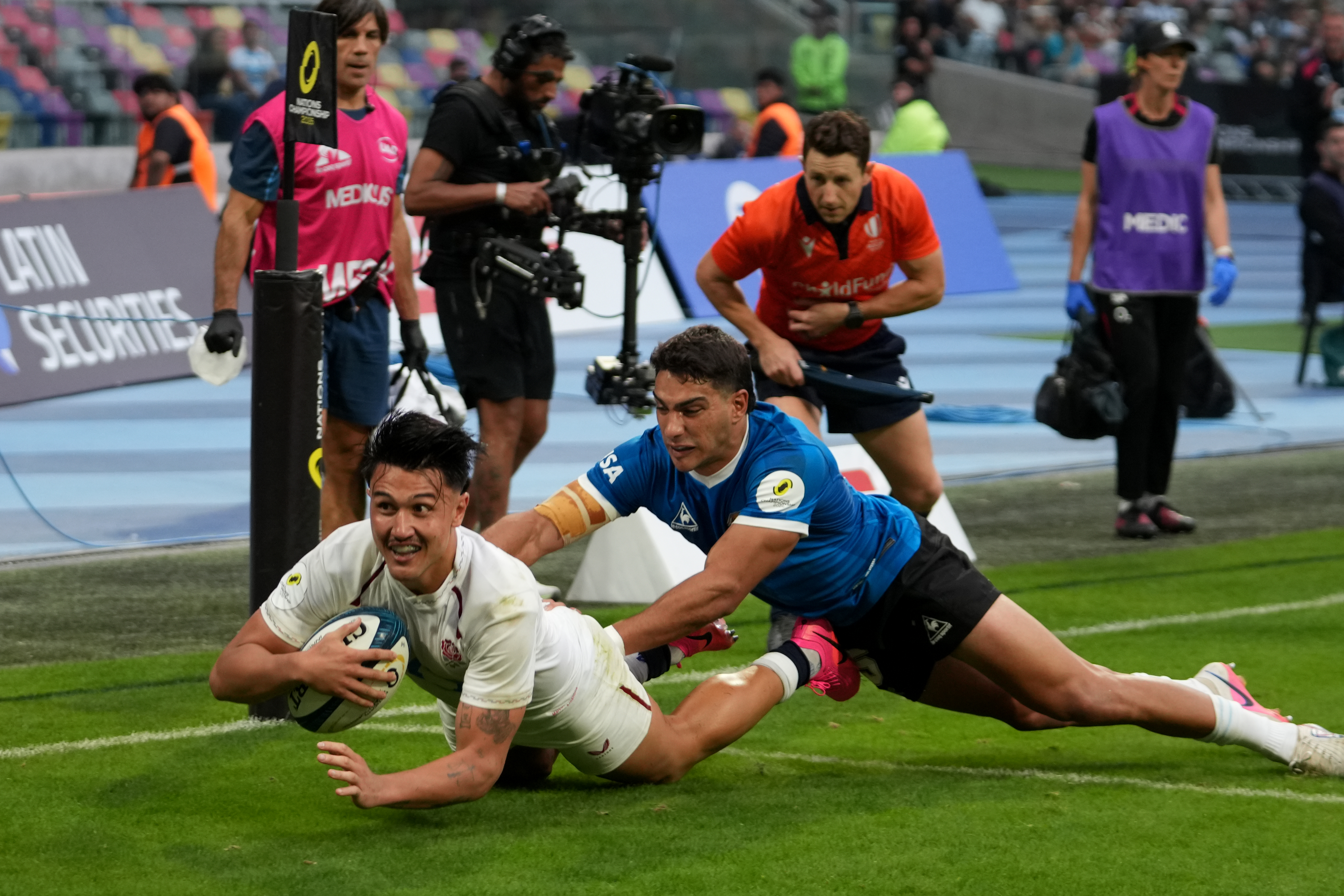
SANTIAGO DEL ESTERO, ARGENTINA - JULY 18: Marcus Smith of England dives in to score his teams fourth try as he is tackled by Santiago Carreras of Argentina during the 2026 Nations Championship match between Argentina and England at Estadio Unico Madre de Ciudades on July 18, 2026 in Santiago del Estero, Argentina. (Photo by Nations Championship/Getty Images)

England survived a chaotic second half featuring seven yellow cards, a penalty try and a dramatic last-minute TMO decision to beat Argentina 31-24 in Santiago del Estero and finish their summer tour with back-to-back victories.

Key moments

4 mins – TRY ENGLAND: Fin Smith floats a perfect cross-kick to the right wing, where Tommy Freeman wins the aerial contest over Santiago Carreras and touches down in the corner. Fin Smith misses the conversion. (Argentina 0-5 England)

24 mins – TRY ENGLAND: Joe Heyes wins a loose ball and Immanuel Feyi-Waboso bursts through two tacklers to break into the 22, finding Ben Earl in support on his right shoulder. Earl holds off Tomas Albornoz to score. Fin Smith converts. (Argentina 0-12 England)

24 mins – YELLOW CARD ARGENTINA: Mateo Carreras shown yellow for head contact on Tommy Freeman. Referred by TMO Brett Cronan.

30 mins – PENALTY ARGENTINA: Tomas Albornoz slots from right of the posts after Jamie George penalised for obstruction. (Argentina 3-12 England)

33 mins – TRY ENGLAND: England’s scrum demolishes the Argentine pack, walking them back over their own try line. Earl controls at the base and dots down for his second. Fin Smith converts. (Argentina 3-19 England)

Half-time: Argentina 3-19 England. A dominant first-half display from England, who matched ambition with a statement set piece. Immanuel Feyi-Waboso was electric with ball in hand, while Ben Earl crossed twice. Argentina’s only points came via an Albornoz penalty, with the hosts struggling for any cohesion in attack.

43 mins – TRY ARGENTINA: Argentina maul close to the line, Gonzalo Garcia bursts for the try line and is stopped just short. Mateo Carreras, fresh from the sin bin, drives through Fin Smith to score. Albornoz converts. (Argentina 10-19 England)

50 mins – YELLOW CARD ENGLAND: Jack van Poortvliet shown yellow for deliberate knock-on, slapping down an Albornoz pass inside the 22.

55 mins – PENALTY TRY ARGENTINA / YELLOW CARD ENGLAND: Tomas Albornoz bursts through and is brought down two metres short. As he offloads, Alex Coles swipes the ball away with Pablo Matera in close support. Penalty try awarded and Coles sent to the sin bin. England reduced to 13. (Argentina 17-19 England)

60 mins – YELLOW CARD ARGENTINA: Joaquin Oviedo shown yellow for a dangerous cleanout on Guy Pepper.

62 mins – TRY ENGLAND: Jack van Poortvliet, just back from the sin bin, fires a sharp pass wide to Marcus Smith, who dives over in the right corner. Santiago Carreras attempted to intercept but couldn’t prevent the score. Fin Smith converts superbly from the touchline. (Argentina 17-26 England)

63 mins – YELLOW CARD ARGENTINA: Santiago Carreras shown yellow for the deliberate knock-on attempt on van Poortvliet’s pass.

69 mins – TRY ENGLAND: Argentina’s lineout is overthrown and England seize possession. Van Poortvliet sends the ball left and Feyi-Waboso slices through two defenders from 30 metres out for a stunning solo try. Fin Smith misses the conversion. (Argentina 17-31 England)

73 mins – YELLOW CARD ENGLAND: Henry Pollock sent to the sin bin for repeated team offsides.

77 mins – YELLOW CARD ENGLAND: Emmanuel Iyogun, on debut, shown yellow for cynical offside. England reduced to 13 for the closing minutes.

79 mins – INJURY: Benhard Janse van Rensburg knocked unconscious making a tackle and stretchered from the field.

80 mins – TRY ARGENTINA: Justo Piccardo bursts through a gap and runs to the posts. Albornoz converts with a quick drop-goal style kick. (Argentina 24-31 England)

83 mins – NO TRY (TMO): Bautista Delguy dives for the right corner under pressure from Noah Caluori and Henry Slade. Referee Angus Gardner gives try on field but TMO Brett Cronan rules the ball was grounded on the intersection of the sideline and the try line simultaneously. No try. Argentina denied the chance to convert and draw the match. Full-time whistle follows.

Full-time: Argentina 24-31 England


Match report

It had been a big week already for international sport between these two nations, and this was a contest that delivered drama to match anything that preceded it. Three days after England’s footballers suffered World Cup semi-final heartbreak at Argentina’s hands, Steve Borthwick’s rugby side came through their own ordeal in Santiago del Estero, surviving a second-half disciplinary meltdown to complete an eventful five-try victory.

Argentina had set the tone before a ball was kicked by taking the field in replica shirts from the 1986 World Cup, the dark blue kit synonymous with Diego Maradona’s infamous Hand of God goal against England. The Estadio Unico Madre de Ciudades, where a statue of Maradona stands outside the ground, was rocking before kick-off as the nationalist anthem La Cuarta Estrella rang around the stands. Tears streamed down the faces of the Argentine players during their national anthem, underlining the emotional intensity of the occasion.

England, though, refused to be rattled. Inside four minutes, Fin Smith executed an inch-perfect cross-kick to the right wing and Tommy Freeman rose superbly above Santiago Carreras to claim the ball and touch down in the corner. There were immediate handbags in the in-goal area, with Ollie Chessum penalised for charging in from distance, but the early statement had been made.

From there, the visitors grew in authority. Immanuel Feyi-Waboso was electric every time he touched the ball, repeatedly punching holes in the Argentine defensive line. His surge through three defenders in midfield on 24 minutes created the opportunity for Ben Earl, who took the offload in support and used his considerable strength to power over. Fin Smith converted, and when Mateo Carreras was shown a yellow card for a high tackle on Freeman moments later, England’s grip on the contest tightened further.

Argentina could find no answers. Their attack was pedestrian, with players static and running the wrong channels. England’s defence, marshalled superbly by Henry Slade in the 13 channel, strangled every Pumas foray. The dominance was emphatically underlined on 33 minutes when England’s scrum, with Joe Heyes and Ellis Genge both prominent, splintered their Argentine counterparts and walked them back over their own try line for Earl to dot down unopposed. Smith converted and at 19-3, the contest appeared all but settled.

The second half, however, was a different match entirely. Argentina came out transformed after the interval, with fly-half Tomas Albornoz the chief catalyst. His chip and chase through midfield on the first attacking play set the tone, and within four minutes the Pumas had their first try as Carreras, back from the sin bin, drove through Fin Smith to finish off strong mauling work. Albornoz converted and the gap was down to nine.

Then England’s discipline, which has been a recurring theme throughout 2026, unravelled spectacularly. Van Poortvliet was shown yellow on 50 minutes for slapping down an Albornoz pass with one hand, and five minutes later Coles was sent to join him after swiping at a pop pass near the line with Matera in close support. Gardner had no option but to award a penalty try and brandish the yellow card. At 17-19, with England temporarily reduced to 13 men and Marcus Smith filling in at scrum-half after Fin Smith had been removed for a head injury assessment, the visitors were in genuine crisis.

The home crowd sensed blood, roaring their side forward. But England’s remaining players dug in with remarkable resolve. Chessum, who had assumed the captaincy after Jamie George’s departure, organised the defensive effort superbly. A crucial lineout steal from Chessum, reading the call of his former Leicester teammate Julian Montoya, relieved the pressure at a critical moment.

Then came the turning point. Oviedo was shown yellow for a dangerous cleanout on Pepper on the hour mark, and within two minutes the returned van Poortvliet had fired a long pass to Marcus Smith for a try in the right corner. Fin Smith, back from his HIA, converted superbly from the touchline. Santiago Carreras was then also sin-binned for a deliberate knock-on on the pass that created Smith’s try, and England had breathing room once more.

Feyi-Waboso’s try on 69 minutes was the moment that effectively sealed the victory, and arguably the score of the match. Argentina overthrew their lineout and England pounced. The ball was moved left and Feyi-Waboso, cutting a gorgeous angle, sliced through two defenders from 30 metres to score a try of the highest quality. At 31-17, surely England were safe.

They were not. Yellow cards for Pollock and debutant Iyogun reduced England to 13 for the closing minutes, and Piccardo’s 80th-minute try brought Argentina back to within seven. The restart was gathered by Argentina and what followed was three minutes of pure theatre. The Pumas worked through more than 20 phases before the ball was shipped wide to Delguy on the right wing. He dived for the corner and Gardner gave the try on field, only for TMO Cronan to overrule him, judging the ball had been grounded on the intersection of the sideline and the try line. Slade’s covering tackle had been the decisive intervention. Argentina’s players were furious. Gardner was surrounded. The whistle finally blew.

“It was a tough fought match that went right to the end,” said player of the match Feyi-Waboso. “Argentina, the passion, the fans, the atmosphere was amazing. Our discipline wasn’t great but we managed to hold on at the end. I don’t know how many cards there were in that game, but it is too many. You can’t be finishing games with 13 men.”

Captain George, who had led the side through a gruelling three-week tour spanning three continents, was proud but honest about the failings. “The way that we rallied, the way that we got around each other, the way that we fought when we went down to 13 twice was brilliant,” he said. “We made life so hard for ourselves again in terms of dropping down to 13. I think a lot of it goes down to the amount of pressure that Argentina put us under. They’re a brilliant team. Winning here in Argentina is very, very difficult.”

Borthwick dismissed his critics in typically combative fashion. “I’m delighted for the players. They showed incredible spirit,” he said. “It’s almost unfair to pull out one example but Henry Slade’s tackle at the end was incredible. It shows the fight that’s in this group of players, as well as their togetherness and connection.”

The head coach was less receptive to questions about England’s discipline, which now stands at 14 yellow cards and one red in eight matches in 2026. “I don’t think now is the time to be digging into that,” he said. “This team has done really, really well. It was a tough Test match, a fantastic Test match, we scored some wonderful tries and as ever you guys concentrate on the negativity. You’re like the negativity committee so it’s lovely coming and talking to you again.”

There was a spicy postscript as Argentina head coach Felipe Contepomi cut his post-match press conference short, taking exception to the music and celebrations audible from England’s dressing room next door and accusing them of showing a “lack of respect”. Argentina captain Julian Montoya took a more measured approach. “We always respect the ref. It’s part of our values,” he said. “We respect the decision. Of course I’m a bit frustrated but it is what it is.”

The victory extends England’s winning run against Argentina to six matches under Borthwick and moves them up to third in the Nations Championship Northern Hemisphere table, behind France and Scotland. They return to action in November with home fixtures against Australia, New Zealand and Japan at Allianz Stadium. For now, after 25,000 air miles in three weeks, Borthwick’s squad have earned their summer break – though the discipline question will follow them all the way to the World Cup.


Teams

Argentina: 15 Santiago Carreras, 14 Bautista Delguy, 13 Matias Moroni, 12 Justo Piccardo, 11 Mateo Carreras, 10 Tomas Albornoz, 9 Gonzalo Garcia, 8 Joaquin Oviedo, 7 Marcos Kremer, 6 Santiago Grondona, 5 Matias Alemanno, 4 Guido Petti, 3 Tomas Rapetti, 2 Julian Montoya (captain), 1 Mayco Vivas.
Replacements: 16 Ignacio Ruiz, 17 Boris Wenger, 18 Pedro Delgado, 19 Efrain Elias, 20 Pablo Matera, 21 Joaquin Moro, 22 Simon Benitez Cruz, 23 Lucio Cinti.

England: 15 Marcus Smith, 14 Tommy Freeman, 13 Henry Slade, 12 Seb Atkinson, 11 Immanuel Feyi-Waboso, 10 Fin Smith, 9 Jack van Poortvliet, 8 Ben Earl, 7 Guy Pepper, 6 Ollie Chessum, 5 George Martin, 4 Alex Coles, 3 Joe Heyes, 2 Jamie George (captain), 1 Ellis Genge.
Replacements: 16 Luke Cowan-Dickie, 17 Emmanuel Iyogun, 18 George Kloska, 19 Tom Curry, 20 Henry Pollock, 21 Ben Spencer, 22 Benhard Janse van Rensburg, 23 Noah Caluori.

Match details

Argentina 24 (Tries: M. Carreras, Penalty Try, Piccardo; Conversions: Albornoz 2/2; Penalties: Albornoz 1/1)
England 31 (Tries: Freeman, Earl 2, M. Smith, Feyi-Waboso; Conversions: F. Smith 3/5)
Half-time: 3-19

Venue: Estadio Unico Madre de Ciudades, Santiago del Estero
Referee: Angus Gardner (Australia)

Continue Reading

Nations Championship

Seven-try Springboks crush Wales to top southern hemisphere table

Paul de Villiers earns man of the match as South Africa score seven tries to blank Wales 43-0 and complete a Nations Championship clean sweep at Kings Park.

Published

on

Seven-try Springboks crush Wales to top southern hemisphere table
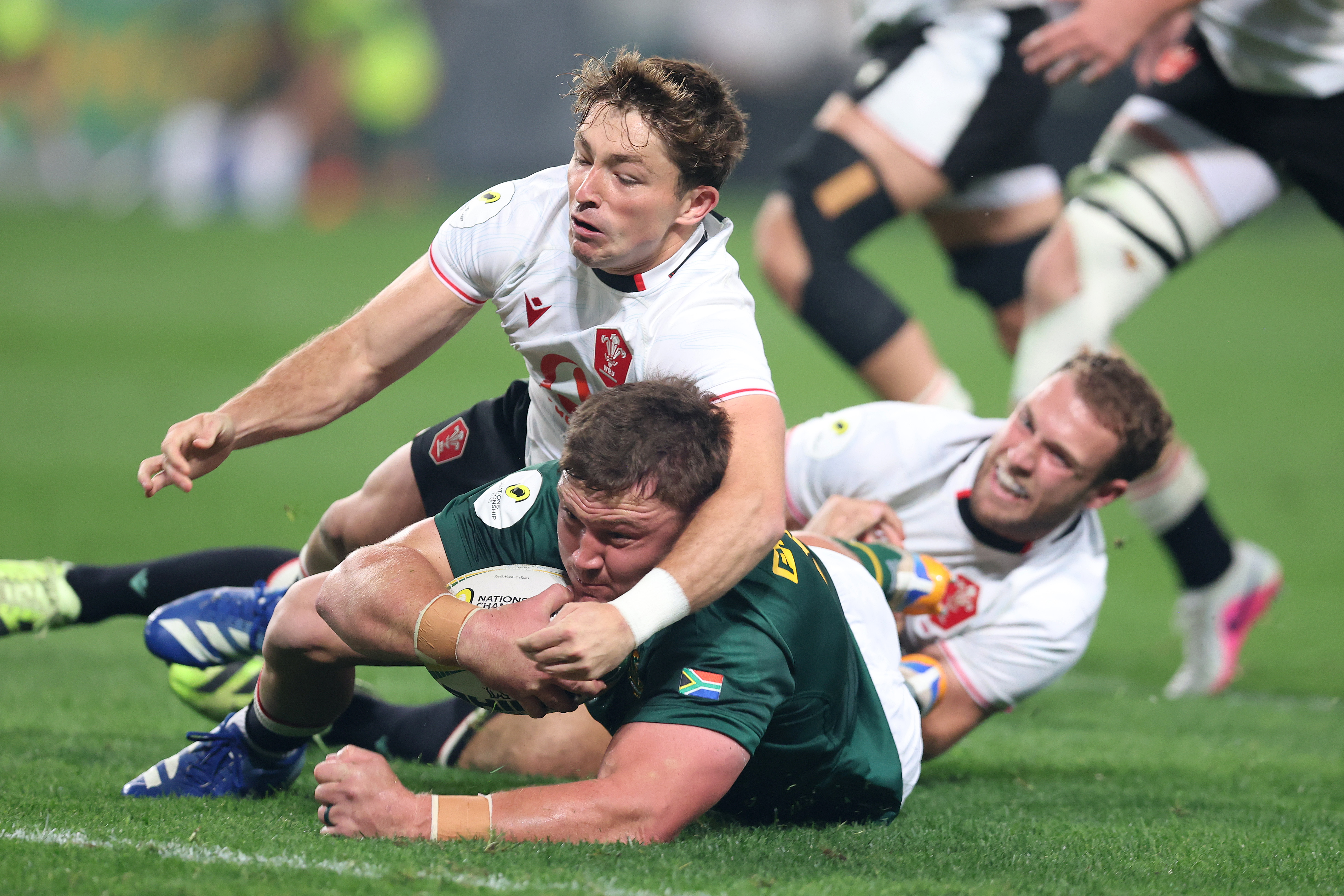
DURBAN, SOUTH AFRICA - JULY 18: Jasper Wiese of South Africa scores his teams first try during the 2026 Nations Championship match between South Africa and Wales at Kings Park Stadium on July 18, 2026 in Durban, South Africa. (Photo by Steve Haag - Nations Championship/Nations Championship via Getty Images)

South Africa scored seven tries to record a comprehensive 43–0 victory over Wales at Kings Park in Durban, extending their winning streak to 11 Tests and completing a clean sweep of the Nations Championship’s opening block with maximum log points.

Key moments

5 mins – TRY SOUTH AFRICA: Cobus Wiese surged forward before Damian de Allende carried into the 22. Cobus Reinach dished a short pass to Jasper Wiese, who exploded through the front line to score to the left of the posts. Vusi Moyo converts. (South Africa 7–0 Wales)

14 mins – TRY SOUTH AFRICA: The Springbok pack obliterated the Welsh scrum on the 5m line. From the ensuing scrum, Reinach picked from the base, slipped through Tomos Williams’ tackle and sliced through to score. Moyo converts. (South Africa 14–0 Wales)

40 mins – TRY SOUTH AFRICA: Under penalty advantage, Pieter-Steph du Toit carried on the left before Moyo put in a pinpoint cross-field kick to the right. Jaco Williams and Tomos Williams contested in the air as the ball spilled backwards to Jesse Kriel, who scooped it up to score in the corner. Moyo misses the conversion. (South Africa 19–0 Wales)

Half-time: South Africa 19–0 Wales. The Springboks dominated territory and possession throughout the first half but were let down by their own execution as elementary handling errors prevented a bigger lead. Wales had virtually no attacking opportunities, with their scrum coming under relentless pressure. Vusi Moyo showed composure on debut at fly-half, while Paul de Villiers was outstanding at the breakdown.

41 mins – TRY SOUTH AFRICA: Straight from the restart, a weak Welsh clearance kick was tapped back by Ellis Mee. The ball spilled to Reinach, who offloaded to Cobus Wiese, who pushed a pass to Jaco Williams to streak 22m and score on debut in the right corner. Moyo converts. (South Africa 26–0 Wales)

63 mins – TRY SOUTH AFRICA: Damian Willemse stepped through a defender and fed Williams on the right wing. Williams streaked down the flank and popped a slick return pass inside for Herschel Jantjies to score. Manie Libbok misses the conversion. (South Africa 31–0 Wales)

64 mins – YELLOW CARD WALES: Ben Warren shown yellow for a high tackle on Marco van Staden following a TMO review. Contact was deemed indirect but met the foul play threshold.

69 mins – TRY SOUTH AFRICA: The forwards softened up the Welsh defence before Libbok fired a cracking long pass out wide to Kurt-Lee Arendse, who raced over in the corner. Libbok misses the conversion. (South Africa 36–0 Wales)

79 mins – TRY SOUTH AFRICA: South Africa claimed clean lineout possession and drove their maul over the line. Paul de Villiers was at the back to dot down for his first Test try on his third cap. Libbok converts. (South Africa 43–0 Wales)

Full-time: South Africa 43–0 Wales


The Springboks were far from their clinical best but their physical superiority was so comprehensive that Wales never came close to troubling the scoreboard, as South Africa made it three bonus-point victories from three in the Nations Championship to sit atop the southern hemisphere standings alongside New Zealand on 15 points.

For the second time in less than a year, Wales were held scoreless by the world champions, taking the aggregate across the two meetings to a damning 116–0 over 160 minutes of rugby. Where last November’s 73-0 in Cardiff was an 11-try humiliation played outside World Rugby’s official window, this was a more controlled affair in humid, greasy conditions that made handling treacherous for both sides. But the outcome was never in doubt from the moment Jasper Wiese crashed through ineffective Welsh tackling inside the opening five minutes.

A fine break from fullback Aphelele Fassi set the tone before Cobus Wiese carried powerfully through the Welsh defence. When Jasper Wiese received the ball from Cobus Reinach’s short pass, there were not enough defenders in front of him to impede his progress and the number eight powered over for his fourth Test try. Debutant fly-half Vusi Moyo, at 20 years and 27 days the youngest number 10 in Springbok history, settled his nerves by splitting the uprights for his first points in international rugby.

The Springbok scrum then took control in devastating fashion. After the Welsh pack was driven backwards on their own line, Reinach sniped around the fringes from the resulting set-piece to score his 20th Test try and bring up 100 career Test points in the green and gold. Moyo converted and at 14-0 after just 14 minutes, it was a point a minute.

Wales were pinned in their own half for extended periods but showed considerable defensive resolve to keep the Springboks scoreless for the remainder of the first half until the stroke of half-time. The hosts’ territorial dominance was undermined by a succession of handling errors in the humid conditions, with both Fassi and the forwards guilty of spilling the ball in promising positions. Captain Pieter-Steph du Toit thought he had scored only for referee Andrew Brace to spot obstruction, and the Welsh scrum, while outmatched, managed to get the ball away quickly enough to relieve pressure on several occasions.

It took a moment of individual brilliance from Moyo to extend the lead before the break. Under penalty advantage, the debutant delivered a pinpoint cross-field kick that Jaco Williams contested in the air against Tomos Williams, with the ball spilling backwards for Jesse Kriel to gather and score his third try in as many Tests this month.

“We had to grind, it was 14-0 for nearly 30 minutes,” Erasmus said afterwards. “It was really slippery, so it was going to be tough to play an expansive, pretty game of rugby. We are satisfied with 43 points and keeping them to zero.”

Whatever Steve Tandy said to his players during the interval – he made four changes at the break, introducing Ryan Elias, Nicky Smith, James Botham and Joe Hawkins – it was rendered irrelevant within 45 seconds. A weak Welsh clearance from the restart was tapped back by Ellis Mee, the ball fell to Reinach, who offloaded to Cobus Wiese, and the lock’s pass sent debutant wing Williams streaking 22 metres to score in the corner. Moyo converted and at 26-0, the Springboks had their bonus point.

Wales then enjoyed their most sustained period of pressure, winning a succession of penalties around the Springbok 22 and opting for quick taps. Mee came agonisingly close to crossing in the corner but was adjudged to have knocked on in the act of scoring, and the visitors could not capitalise on a period where South Africa were repeatedly penalised for offside. The man who did most to repel the Welsh was flanker Paul de Villiers, who produced a crucial turnover penalty to snuff out the danger and was later named man of the match.

“I think you can see in our faces we wanted to bring our physicality,” De Villiers said. “We did in the set pieces, in the carries, and in our defence. The ball was a bit wet which cost us in our execution.”

Normal service was resumed when Williams produced an electric burst down the right before feeding replacement scrum-half Herschel Jantjies, who cantered over for his first Test try since 2023 on his 25th cap. To compound Welsh misery, the TMO intervened to identify a high tackle by replacement prop Ben Warren on Marco van Staden in the build-up, and the Ospreys front-rower was sent to the sin bin.

South Africa duly capitalised on the numerical advantage. Libbok, who had replaced Moyo at fly-half at the 47-minute mark, floated a sumptuous long pass to Kurt-Lee Arendse, who raced over in the corner for the sixth try. De Villiers then crowned his outstanding afternoon by being driven over from a lineout maul in the final minute, with Libbok adding the conversion to seal a 43-0 victory in front of 40,299 spectators.

Erasmus was complimentary of Moyo’s debut but acknowledged the youngster had tired. “He definitely played well. You could see there were nerves,” the Springbok coach said. “I thought he handled it extremely well. But I’ve been there; in your first or second test you’re tried because of the nerves and I thought his tyres were a little pap in the second half when we took him off.”

On the broader performance, Erasmus pointed to improvements in set-piece work despite the rotation. “We didn’t lose a lineout ball and, while we weren’t on our game in the scrums last week, we were good today. Our maul stopping and mauling itself was good.”

For Tandy, it was a bitterly disappointing end to his first season in charge, which finishes with a record of three wins and nine defeats from 12 Tests. “I am bitterly disappointed with the scoreline,” the Wales head coach said. “I commend the team around the effort, they stayed in the fight for large parts of the game. There’s massive pride in our players, how hard they work and the effort they put in, up against the world champions.”

Wales captain Dewi Lake struck a more defiant tone despite the result. “I’m massively proud of the boys, some people might be shocked with me saying that with the scoreboard looking as it does, but for me there is a lot of improvement in that,” he said. “You compare that performance to the performance in the autumn against the Boks. We’re not happy with the nil on the scoreboard, we’re not happy with losing, there’s a lot for us to improve on, but we’ve had growth.”

South Africa now turn their attention to a one-off Test against Argentina in Buenos Aires on 8 August before the Greatest Rivalry Series against New Zealand begins later that month, with Erasmus set to split his squad between those two assignments. Wales will not be in action again until November, when they host Japan, New Zealand and Australia at Principality Stadium in the second block of Nations Championship fixtures.


Teams

South Africa: 15 Aphelele Fassi, 14 Jaco Williams, 13 Jesse Kriel, 12 Damian de Allende, 11 Kurt-Lee Arendse, 10 Vusi Moyo, 9 Cobus Reinach, 8 Jasper Wiese, 7 Pieter-Steph du Toit (c), 6 Paul de Villiers, 5 Ruben van Heerden, 4 Cobus Wiese, 3 Carlu Sadie, 2 Malcolm Marx, 1 Gerhard Steenekamp.
Replacements: 16 Andre-Hugo Venter, 17 Jan-Hendrik Wessels, 18 Wilco Louw, 19 Ben-Jason Dixon, 20 Marco van Staden, 21 Herschel Jantjies, 22 Manie Libbok, 23 Damian Willemse.

Wales: 15 Blair Murray, 14 Louis Rees-Zammit, 13 Max Llewellyn, 12 Ben Thomas, 11 Ellis Mee, 10 Dan Edwards, 9 Tomos Williams, 8 Aaron Wainwright, 7 Jac Morgan, 6 Alex Mann, 5 Adam Beard, 4 Teddy Williams, 3 Dillon Lewis, 2 Dewi Lake (c), 1 Rhys Carre.
Replacements: 16 Ryan Elias, 17 Nicky Smith, 18 Ben Warren, 19 Freddie Thomas, 20 Tommy Reffell, 21 James Botham, 22 Reuben Morgan-Williams, 23 Joe Hawkins.

Match details

South Africa 43 (Tries: J. Wiese, Reinach, Kriel, J. Williams, Jantjies, Arendse, De Villiers; Conversions: Moyo 3/4, Libbok 1/3)
Wales 0
Half-time: 19–0

Venue: Kings Park, Durban | Attendance: 40,299
Referee: Andrew Brace (Ireland)
Assistant referees: Pierre Brousset (France), James Doleman (New Zealand)
TMO: Olly Hodges (Ireland)

Continue Reading

Nations Championship

Scotland rally to overpower spirited Fiji at Murrayfield

Scotland score 26 unanswered second-half points to beat Fiji 33-17 in the Nations Championship at Murrayfield, with Jamie Dobie scoring twice off the bench.

Published

on

Scotland rally to overpower spirited Fiji at Murrayfield
EDINBURGH, SCOTLAND - JULY 18: Josh Bayliss of Scotland is tackled by Lekima Tagitagivalu of Fiji during the 2026 Nations Championship match between Fiji and Scotland at Scottish Gas Murrayfield on July 18, 2026 in Edinburgh, Scotland. (Photo by Liam Chester - Nations Championship/Nations Championship via Getty Images)

Scotland recovered from a 17-7 half-time deficit to score 26 unanswered points in the second half and beat Fiji 33-17 at Scottish Gas Murrayfield, with Gregor Townsend’s bench making a decisive impact in a bonus-point victory that rounds off an encouraging summer campaign.

Key moments

14 mins – TRY SCOTLAND: Ollie Smith makes a clean break from inside the Fiji half and offloads to George Horne, who is tackled 5m out. Scotland work through the phases and Jonny Gray barges over on the left. Horne converts. (Fiji 0-7 Scotland)

16 mins – TRY FIJI: Fiji win the lineout from the restart and drive the maul. Captain Tevita Ikanivere stretches over from close range. Isaiah Armstrong-Ravula misses the conversion. (Fiji 5-7 Scotland)

19 mins – TRY FIJI: Sensational length-of-the-field try. Jiuta Wainiqolo collects a grubber inside his own 22 and burns past Duhan van der Merwe. Fiji switch right and Josua Tuisova breaks clear before offloading to Selestino Ravutaumada, who kicks ahead, regathers his own grubber and dives over. Armstrong-Ravula misses. (Fiji 10-7 Scotland)

27 mins – YELLOW CARD FIJI: Lekima Tagitagivalu is shown a yellow card for a cynical clean-out on scrum-half Horne at the breakdown.

34 mins – TRY FIJI: Despite being a man down, Fiji are clinical. With a penalty advantage, Elia Canakaivata spots a gap around the fringes and sprints through from 5m, finishing with an acrobatic swan dive under the posts. Armstrong-Ravula converts. (Fiji 17-7 Scotland)

Half-time: Fiji 17-7 Scotland. Fiji were outstanding, defending the maul superbly and striking with clinical counter-attacking tries. Scotland dominated territory and possession but repeatedly wasted entries into the Fiji 22, failing to convert pressure into points.

54 mins – TRY SCOTLAND: Jamie Dobie sends Stafford McDowall surging towards the 5m line with a powerful carry. A quick recycle finds Pierre Schoeman, who rumbles over under the posts. Fergus Burke converts. (Fiji 17-14 Scotland)

58 mins – Josh Bayliss knocks on over the try line with the line at his mercy after a strong carry by van der Merwe.

61 mins – TRY SCOTLAND: Sione Tuipulotu burrows towards the line before Dobie picks and goes from close range. Referee Matthew Carley awards the try on-field and the TMO finds insufficient evidence to overturn despite questions over the grounding. Burke converts. (Fiji 17-21 Scotland)

74 mins – TRY SCOTLAND: Zander Fagerson dishes a short pass to Scott Cummings, who powers over just to the left of the posts. TMO confirms the grounding after a brief check. Burke converts. (Fiji 17-28 Scotland)

77 mins – TRY SCOTLAND: Van der Merwe takes a high kick near the Fiji 22 and charges towards the corner. Forced close to touch, he offloads inside to Bayliss, who in turn feeds Dobie. The scrum-half scoops the ball brilliantly off his bootlaces to score in the corner for his second try. Burke misses the conversion. (Fiji 17-33 Scotland)

Full-time: Fiji 17-33 Scotland


A record Fiji “home” crowd of 55,215 basked in Edinburgh sunshine for an occasion that brought a South Pacific atmosphere to EH12, complete with traditional warrior dancers, a Fijian choir and the ritual Cibi before kick-off. The pre-match build-up also paused to remember the late Scott Hastings, with outside centre Ollie Smith wearing a special jersey in tribute to the former Scotland international who passed away in May at the age of 61.

When the action began, it was Scotland who seized the early initiative. Townsend’s side went through 16 phases deep inside the Fiji 22 within the opening minutes, with Tom Jordan’s dexterity in retrieving a pass marginally behind him keeping the move alive. From a penalty in front of the posts, Scotland opted for a scrum rather than the three points, a statement of intent that initially went unrewarded as Fiji’s maul defence held firm.

The breakthrough came in the 14th minute when Smith, wearing that commemorative number 13 jersey, produced a sumptuous break from inside the Fiji half before finding Horne on a trademark support line. Scotland recycled and Gray crashed over for his fifth international try. Horne converted from the left touchline.

What followed was a masterclass in clinical finishing from a Fiji side that bore little resemblance to the team humiliated 73-8 by England a week earlier. From the restart, Gregor Brown was penalised for a second movement on the ground and within moments Ikanivere had driven over from a lineout maul for 5-7. Three minutes later came one of the tries of the Nations Championship. Darcy Graham stabbed through a grubber for van der Merwe to chase, but Wainiqolo gathered audaciously and sparked a thrilling counter-attack down the right. Tuisova, the devastating Fiji centre, broke the line with a cat-flap offload that left the Scottish defence grasping at thin air, and Ravutaumada measured a delightful chip ahead before racing on to gather and score. Two chances, two tries.

Scotland’s frustration deepened when Tagitagivalu was sent to the sin bin in the 27th minute for a cynical hit on Horne at a ruck. Yet the numerical advantage yielded nothing. Scotland’s maul was repeatedly repelled by fierce Fijian resistance, handling errors crept in, and the home crowd grew increasingly restless. Remarkably, it was Fiji who extended their lead while down to 14, Canakaivata picking up from the base of a breakdown and waltzing through a gap vacated by Gray and D’arcy Rae before launching himself between the posts with an acrobatic swan dive. Armstrong-Ravula converted and Fiji had won the sin-bin period 7-0.

The half-time statistics told a damning story for Scotland: 65 per cent possession, 95 carries to Fiji’s 45, and yet trailing by 10 points. Fiji had made a staggering 109 tackles to Scotland’s 50 in those opening 40 minutes.

“I said to the squad at half-time, it’s a great test for us,” Townsend said afterwards. “We want tests of not just how we change things tactically or stick with what we’re doing, we want tests where we have to come back. It’s easy in hindsight when you win. But that’s what I felt at half-time.”

Townsend wasted little time going to his well-stocked bench. Schoeman, Fagerson, Bradbury and Dobie were all introduced within the first ten minutes of the second half, with Cummings following shortly after when Gray failed a head injury assessment. The impact was immediate and transformative.

From a Burke penalty to touch, Dobie sent McDowall on a textbook hard carry that broke the gain line. Quick ball followed and Schoeman powered over despite three defenders hanging off him, dotting down for his ninth Scotland try. Burke converted and suddenly the deficit was just three.

Scotland’s momentum was briefly checked when Bayliss knocked on over the line after a powerful van der Merwe carry had brought them within touching distance. But with Tuipulotu now on the field and pulling the strings in midfield, there was a conviction and tempo to Scotland’s play that had been absent in the first half.

Dobie put Scotland ahead for the first time since the opening quarter, burrowing over from close range after a typically pugnacious thrust from Tuipulotu. Referee Carley awarded the try on-field and the TMO found insufficient evidence to overturn, though questions lingered about the grounding. Burke’s conversion made it 21-17.

Fiji briefly threatened through their forwards as they won a penalty and kicked to the corner, but Scotland’s defensive resolve in the final quarter was immense. “There was a period in that final 10-15 minutes, probably the best we’ve defended over the last three weeks,” Townsend said. “Defensive set after defensive set, coming up with line speed, coming up with big tackles, forcing Fiji into touch against one of the most dangerous attacking sides in the world.”

Cummings sealed the bonus point in the 74th minute, taking a short pass from Fagerson to power over, before the best try of the match arrived two minutes later. From Dobie’s own high kick, van der Merwe pouched the ball near the Fiji 22 and charged for the corner. Forced close to touch, he managed an offload inside to Bayliss, who fed Dobie for a superlative pick-up off his bootlaces to complete his double.

Scotland captain McDowall, named player of the match, summed up the afternoon. “I’m really proud of the boys,” he said. “We got loose and let Fiji into the game but we responded and the bench had a really big impact. We had to stick to what we have done all year.”

Townsend was equally satisfied with what the fightback revealed about his squad’s depth. “It shows we’ve got good depth and we made 14 changes this week,” he said. “We’ve gone up against a really good Test side who played their best rugby of the campaign. It’s a team that beat us last year, but also knowing that we’ve got players that can make a difference on the bench is reassuring.”

The victory ensures Scotland finish the summer phase of the Nations Championship with two wins from three, sitting second in the Northern Conference behind France. Three further fixtures await in November, with New Zealand, Australia and Japan all due at Murrayfield before north-versus-south play-offs conclude the inaugural tournament at Twickenham.


Teams

Fiji: 15 Isaiah Armstrong-Ravula, 14 Selestino Ravutaumada, 13 Virimi Vakatawa, 12 Josua Tuisova, 11 Jiuta Wainiqolo, 10 Caleb Muntz, 9 Frank Lomani, 1 Eroni Mawi, 2 Tevita Ikanivere (c), 3 Mesake Doge, 4 Isoa Nasilasila, 5 Temo Mayanavanua, 6 Pita Gus Sowakula, 7 Lekima Tagitagivalu, 8 Elia Canakaivata.
Replacements: 16 Sam Matavesi, 17 Livai Natave, 18 Peni Ravai, 19 Mesake Vocevoce, 20 Kitione Salawa, 21 Sam Wye, 22 Isikeli Rabitu, 23 Salesi Rayasi.

Scotland: 15 Tom Jordan, 14 Darcy Graham, 13 Ollie Smith, 12 Stafford McDowall (c), 11 Duhan van der Merwe, 10 Fergus Burke, 9 George Horne, 1 Rory Sutherland, 2 Gregor Hiddleston, 3 D’Arcy Rae, 4 Jonny Gray, 5 Max Williamson, 6 Josh Bayliss, 7 Freddy Douglas, 8 Gregor Brown.
Replacements: 16 Seb Stephen, 17 Pierre Schoeman, 18 Zander Fagerson, 19 Scott Cummings, 20 Magnus Bradbury, 21 Liam McConnell, 22 Jamie Dobie, 23 Sione Tuipulotu.

Match details

Fiji 17 (Tries: Ikanivere, Ravutaumada, Canakaivata; Conversions: Armstrong-Ravula 1/3)
Scotland 33 (Tries: Gray, Schoeman, Dobie 2, Cummings; Conversions: Horne 1/1, Burke 3/4)
Half-time: 17-7

Venue: Scottish Gas Murrayfield, Edinburgh
Attendance: 55,215
Referee: Matthew Carley (England). Assistant referees: Eoghan Cross (Ireland), Anthony Woodthorpe (England). TMO: Tual Trainini (France).
Player of the match: Stafford McDowall (Scotland)

Continue Reading

Trending

Discover more from Rugby News, Results, and Analysis | Rugby is the Game

Subscribe now to keep reading and get access to the full archive.

Continue reading