Connect with us

Super Rugby Pacific

Hurricanes demolish Brumbies to book home semi-final berth

Published

on

Hurricanes Ngane Punivai, right, celebrates a try with team mates Billy Proctor, left and Jone Rova during the Hurricanes v Brumbies, Super Rugby Pacific Qualifying Final match, Hnry Stadium, Wellington, New Zealand. Friday, 5 June 2026, (Photo by Marty Melville / action press)

The Hurricanes produced the most devastating performance in Super Rugby Pacific finals history, demolishing the Brumbies 66–12 on a wet and windswept night at Hnry Stadium to storm into a home semi-final and inflict the heaviest playoff defeat ever suffered by an Australian side. Replacement winger Ngane Punivai scored a second-half hat-trick after entering the match in the 54th minute, while Ruben Love finished with a perfect 10 from 10 off the tee as the top-seeded hosts extended Australian misery in New Zealand finals to 0-from-22.

Key moments

7 mins – TRY HURRICANES: Luke Reimer dropped a pass cold and Peter Lakai swooped on the loose ball. The Hurricanes swung it wide right from their own 10-metre line, with Billy Proctor finding Callum Harkin on his outside. Harkin returned it to Proctor, who then found Caleb Delany charging through the middle to gallop away and score his first of the season. Ruben Love converted from the right in a tricky breeze. (Hurricanes 7–0)

10 mins – TRY HURRICANES: Warner Dearns claimed the lineout, and it was into midfield with Lakai on the crash. It swung back towards the point of the lineout, with Asafo Aumua crashing through Ryan Lonergan’s tackle before flicking a brilliant offload to Harkin off his shoulder. Harkin was scragged from behind by Charlie Cale but popped a pass back inside to send Cam Roigard away for the finish. Love converted from the right. (Hurricanes 14–0)

15 mins – PENALTY HURRICANES: Lachlan Lonergan was penalised for offside after the ball spilled forward in contact. Love slotted the kick from just left of the posts. (Hurricanes 17–0)

28 mins – TRY HURRICANES: The Hurricanes swung to the left from 40 metres out, with Delany finding Love on his outside. Love dummied and burst through a yawning gap before finding Kini Naholo on the wing. Naholo ghosted past one defender with a show of the ball, then found Proctor back on the inside for the finish. Love converted from the left sideline. (Hurricanes 24–0)

32 mins – TRY HURRICANES: Delany shaped to play out the back to the backline but instead delivered a no-look short pass to his locking partner. Dearns burst clean through from 18 metres out and galloped in under the posts. Love converted. (Hurricanes 31–0)

35 mins – TRY BRUMBIES: A clever change in tactic from Ryan Lonergan, who shaped to pass to Corey Toole on the right of the ruck, only to pop a kick over the top. Toole charged through to claim and raced away to score. Lonergan converted. (Hurricanes 31–7)

39 mins – TRY HURRICANES: From a ruck five metres out, Roigard headed laterally from the base shaping to feed a ball carrier. He went himself instead, shrugging away from Lachlan Shaw to score under the posts. Love converted. (Hurricanes 38–7)

Half-time: Hurricanes 38–7 Brumbies. An absolute clinic from the Hurricanes, with the wet and windy conditions proving no obstacle to their slick attacking play. Backs and forwards ran wild, the handling was immaculate, and the scoreline in no way flattered the hosts. The Brumbies’ errors at crucial moments compounded the damage, with Toole’s try a rare highlight in a half that was comprehensively dominated by the home side.

48 mins – TRY HURRICANES: After 23 patient phases hammering at the Brumbies’ line, Dearns picked up from the base of the ruck with Xavier Numia on his shoulder and powered over under the posts for his second. Love converted. (Hurricanes 45–7)

52 mins – TRY BRUMBIES: Billy Pollard’s run got the Brumbies on the front foot, and under penalty advantage for offside, Tane Edmed brought them left. Toole burst past Dearns with his footwork on halfway and found Ryan Lonergan in support. He charged into the 22 and popped a pass for Edmed to finish near the left corner. Lonergan’s conversion missed. (Hurricanes 45–12)

60 mins – TRY HURRICANES: Shortly after Shaw had snaffled a loose pass, another wayward Brumbies pass wasn’t claimed by Andy Muirhead and Ngane Punivai pounced on the loose ball on halfway. The replacement wing had just enough pace to get to the line despite a valiant chase from Tom Wright. Love converted. (Hurricanes 52–12)

63 mins – TRY DISALLOWED BRUMBIES: Billy Pollard appeared to have scored in the corner after Toole’s incisive burst into the 22, but the TMO spotted a foot in touch earlier in the move.

71 mins – TRY HURRICANES: The Hurricanes won the lineout 20 metres out at the front. Raymond Tuputupu peeled around to the open side, and Punivai charged onto a flat pass to burst clean through and score under the posts for his second. Love converted. (Hurricanes 59–12)

78 mins – TRY HURRICANES: The Hurricanes tapped a penalty and drove into the 22, with Lakai making inroads on the left edge. They hammered towards the line before Love spotted the opportunity for a cross kick to the right wing. Toole couldn’t locate the ball, and Punivai claimed and dotted down for the hat-trick. Love converted his tenth from the right sideline — a perfect night off the tee. (Hurricanes 66–12)

Full-time: Hurricanes 66–12 Brumbies

Match report

Any questions over whether the Hurricanes were the real deal in 2026 were answered in emphatic fashion on a filthy Wellington night. Rain lashed Hnry Stadium and a biting northerly swirled around the ground, but the conditions that were supposed to be the great leveller proved no obstacle to a side playing with a point to prove. The Brumbies had beaten the Hurricanes in three of the past four playoffs — all in Canberra — and arrived in Wellington with the scalps of four New Zealand teams this season. What they encountered was a category five storm in black and gold.

The opening exchanges were cagey as both sides looked to navigate the conditions, and it was the Brumbies who pinned the Hurricanes back with better kicking in the first five minutes. But it would be the visitors’ last meaningful period of dominance. Trapped on their own goal line, the Hurricanes managed a clearing kick, and when Luke Reimer dropped a pass cold near halfway, Peter Lakai swooped on the loose ball and the hosts were away. Quick hands from Proctor and Harkin sent lock Caleb Delany galloping through the middle to open the scoring in the seventh minute — the first of five first-half tries that would leave the Brumbies reeling.

Four minutes later it was 14–0, Aumua crashing through Ryan Lonergan’s tackle before flicking a remarkable offload to Harkin off his shoulder. Harkin was dragged down by Cale but managed to pop a pass inside to Roigard, who finished with the precision of a player who had been back from a calf injury for barely a game. Love then slotted a penalty after Lachlan Lonergan was caught offside, and at 17–0 after 15 minutes, the Hurricanes were going at a point a minute.

The pattern was clear and punishing. Every time the Brumbies tried to build, an error or a piece of Hurricanes defence would turn the ball over, and the hosts would launch counter-attacks that tore apart the visiting defence. The right-side attack was particularly devastating, with Jordie Barrett evasive in the midfield and Roigard’s play back inside causing havoc. Love pulled the strings from fly-half with growing authority, and when he dummied through a yawning gap in the 28th minute before finding Naholo on the wing, the resulting try to Proctor — back on the inside — was a thing of beauty. Love’s conversion from the left sideline in the swirling wind was almost as impressive.

Dearns made it 31–0 in the 32nd minute after Delany fooled the Brumbies’ defence with a no-look short pass to his locking partner, who burst clean through from 18 metres and galloped under the posts. The Brumbies’ lineout, usually a strength, misfired badly — they lost five of their own throws across the match — and their attack was clunky, with Ryan Lonergan often watching flat-footed team-mates reaching for passes they could only get a finger to.

Toole provided the Brumbies’ one moment of genuine quality in the first half, collecting a Ryan Lonergan chip kick on the full and racing away to score in the 35th minute. But any hopes of a rally were extinguished before the break when Roigard grabbed his second, shrugging away from Shaw after shaping to pass from the base of a ruck five metres out. The half-time scoreboard read 38–7 — the most points the Brumbies had ever conceded in a first half.

Head coach Clark Laidlaw managed his squad astutely in the second period. Aumua and co-captain Du’Plessis Kirifi were withdrawn early, followed by Delany, Numia and Tosi, as the bench was emptied with an eye on next week’s semi-final. Dearns powered over for his second from close range in the 48th minute after 23 patient phases, before the Brumbies struck back through a well-worked try to replacement fly-half Tane Edmed, set up by Toole’s footwork and Lonergan’s support play.

But it was the introduction of Punivai that turned a comprehensive victory into a record-breaking one. The replacement wing pounced on a loose Brumbies pass on halfway in the 60th minute and had just enough pace to beat Tom Wright’s chase. His second came from a brilliant set-piece lineout move in the 71st minute, Tuputupu peeling around to the open side and Punivai charging onto a flat pass to burst through untouched. The hat-trick arrived in the 78th minute when Love delivered a picture-perfect cross kick to the right corner and Punivai rose above Toole to claim and dot down. Love’s conversion from the right sideline — his tenth successful kick from ten attempts — completed a perfect night off the tee.

Roigard departed to a standing ovation after 59 minutes, having underlined his importance to this side with two tries and sharp game management in just his second match back from injury. The platform was laid by a Hurricanes pack that dominated the first scrum, held a clear edge at lineout time, and showed remarkable skills in the loose for a forward unit playing in those conditions. The tight five were all excellent, while the loose forwards — Lakai, Kirifi and Brad Shields — set a ferocious tempo before Brayden Iose continued it off the bench.

For the Brumbies, Wright showed glimpses of his best to break tackles and create momentum in an encouraging sign ahead of next month’s Wallabies Tests, while Pollard and Edmed tried to rally them from the bench. But it was all rather forlorn.

“We’re delighted,” Laidlaw said. “We prepared all week with the intensity that a quarterfinal deserves and gave the Brumbies a whole heap of respect for what they’ve done to us over the past few years at this stage in the competition. To start the way we did and get on top on the scoreboard early in those conditions, I thought it was really important. Once we got to 17-0 it felt we didn’t look back from there.”

Brumbies coach Stephen Larkham was blunt in his assessment. “It’s embarrassing,” he said. “It was frustrating and disappointing and all the adjectives you’d like to use. It seemed like the harder we tried the worse things got out there.”

The 66-point haul surpassed the Hurricanes’ previous highest scores against the Brumbies — 56–7 in 2009 and 56–12 in 2017 — and handed the visitors their heaviest-ever defeat. It was only the fifth time the Brumbies had conceded more than 50 points, and it extended the Australian finals drought in New Zealand to 0-from-22 across 30 years of Super Rugby.

Teams

Hurricanes: 15 Callum Harkin, 14 Josh Moorby, 13 Billy Proctor, 12 Jordie Barrett (co-c), 11 Kini Naholo, 10 Ruben Love, 9 Cam Roigard, 8 Peter Lakai, 7 Du’Plessis Kirifi (co-c), 6 Brad Shields, 5 Warner Dearns, 4 Caleb Delany, 3 Pasilio Tosi, 2 Asafo Aumua, 1 Xavier Numia.
Replacements: 16 Raymond Tuputupu, 17 Pouri Rakete-Stones, 18 Tyrel Lomax, 19 Isaia Walker-Leawere, 20 Brayden Iose, 21 Ereatara Enari, 22 Jone Rova, 23 Ngane Punivai.

Brumbies: 15 Tom Wright, 14 Andy Muirhead, 13 Hudson Creighton, 12 David Feliuai, 11 Corey Toole, 10 Declan Meredith, 9 Ryan Lonergan, 8 Charlie Cale, 7 Luke Reimer, 6 Rob Valetini, 5 Cadeyrn Neville, 4 Lachlan Shaw, 3 Allan Alaalatoa (c), 2 Lachlan Lonergan, 1 James Slipper.
Replacements: 16 Billy Pollard, 17 Blake Schoupp, 18 Rhys van Nek, 19 Nick Frost, 20 Rory Scott, 21 Klayton Thorn, 22 Tane Edmed, 23 Ollie Sapsford.

Match details

Hurricanes 66 (Tries: Delany 7’, Roigard 10’ 39’, Proctor 28’, Dearns 32’ 48’, Punivai 60’ 71’ 78’; Conversions: Love 9/9; Penalties: Love 1/1)
Brumbies 12 (Tries: Toole 35’, Edmed 52’; Conversions: R. Lonergan 1/2)
Half-time: 38–7

Venue: Hnry Stadium, Wellington
Referee: Ben O’Keeffe (New Zealand). Assistant referees: Todd Petries, Warwick Lahmert. TMO: Richard Kelly.

What’s next

The Hurricanes will host the lucky loser in a semi-final at Hnry Stadium next Saturday. The identity of their opponents depends on the results of Saturday’s qualifying finals in Christchurch (Crusaders v Blues) and Hamilton (Chiefs v Reds). The Brumbies’ season is over.

Super Rugby Pacific

Michael Cheika confirmed as Waratahs Head Coach for 2027 season

Published

on

Michael Cheika confirmed as Waratahs Head Coach for 2027 season
Head Coach Michael Cheika of Leicester Tigers during the warm up before the Gallagher Premiership Rugby Final match between Bath Rugby and Leicester Tigers at Allianz Stadium, Twickenham, United Kingdom on 14 June 2025.

Michael Cheika has been confirmed as the NSW Waratahs’ new head coach for the 2027 Super Rugby Pacific season, returning to the franchise more than a decade after leading them to their maiden championship title in 2014.

  • Cheika, 59, will formally commence in November ahead of the 2027 season with an option for 2028
  • The former World Rugby Coach of the Year guided the Waratahs to their only Super Rugby title in 2014
  • He replaces Dan McKellar, who departed in June after two underwhelming seasons
  • Cheika’s assistant coach will be announced in due course
  • The Waratahs have not made the Super Rugby finals in three consecutive seasons
  • Bernard Foley, Nick Phipps and Angus Crichton have also signed for 2027

The appointment represents one of the most significant coaching moves in Australian rugby in recent years, with Cheika tasked with revitalising a franchise that has struggled badly since his departure at the end of the 2015 season. The Waratahs have reached the semi-finals just once in the 11 years since he left, and Rugby Australia chief executive Phil Waugh is understood to have been the driving force behind bringing Cheika back to the club.

Cheika’s CV since leaving the Waratahs reads as a remarkable coaching odyssey. He took over as Wallabies head coach at the end of 2014 and within a year had captured Australia’s inaugural Rugby Championship title and guided the side to the 2015 Rugby World Cup final in England, earning the World Rugby Coach of the Year award in the process. He remained in charge of the Wallabies through to the 2019 World Cup, stepping down after a quarter-final exit in Japan.

A move to Argentina followed, initially as an assistant in 2021 before taking charge as head coach in 2022. Under Cheika, Los Pumas achieved their first-ever victory over the All Blacks in New Zealand and went on to reach the semi-finals of the 2023 Rugby World Cup in France. He then took over at Leicester Tigers in the English Premiership – replacing McKellar, in a curious coincidence – and led the club to the Premiership final in 2025 after they had finished third from bottom the previous season.

“The NSW Waratahs have always occupied a special place for me – it’s my home state and I feel ready to return as their Head Coach ahead of an important year for the Waratahs and also for Australian Rugby in the lead up to the home Rugby World Cup,” Cheika said.

“Being involved in the NSW squad that lifted the Super Rugby trophy in 2014 is something I will never forget, especially the passion and energy of our supporters. This is a new time, a different time and I am looking forward to being able to enjoy those same kinds of feelings and more with players, their families and all the fans in this new adventure.”

The 2027 season carries enormous significance for the Waratahs and Australian rugby more broadly, with the Rugby World Cup to be hosted on home soil later that year. Cheika will be expected to raise the competitive standard of the Sydney-based franchise while helping to re-engage a supporter base that has drifted away during lean years. His track record of rebuilding underperforming sides – most recently demonstrated at Leicester – will be central to that mission.

Cheika is currently serving as an assistant coach at NRL club the Sydney Roosters and is expected to lead Lebanon at the Rugby League World Cup later this year before turning his full attention to the Waratahs in November. He was clear that his immediate focus remains on his current commitments.

“Before all of that I want to give my all to my rugby league club, the Sydney Roosters, to help achieve our goal for this season, to pay them back for the trust and belief they have always shown in me,” he said.

NSW Waratahs Director of Performance B-J Mather expressed his delight at the appointment.

“Michael is a proven leader with an exceptional record across many years building and preparing teams to compete on rugby’s biggest stages,” Mather said. “His coaching achievements speak for themselves but equally important is his sincere passion for our club and what it represents.

“We believe Michael is the right person to now lead the next chapter for the Waratahs and we are delighted to welcome him home.”

Cheika will not be short of familiar faces when he arrives. Bernard Foley, whose late penalty sealed the 33–32 victory over the Crusaders in the 2014 Super Rugby final, has signed for the 2027 season along with former Wallabies halfback Nick Phipps. Roosters backrower Angus Crichton is also crossing codes to join the Waratahs, while former Waratahs player Stephen Hoiles is expected to join the coaching staff.

Defence coach Lachie McCaffrey has been confirmed as the Waratahs’ coach for the upcoming Super Rugby AUS competition, with recently retired Jack Debreczeni and injured Wallabies halfback Jake Gordon serving as his assistants alongside scrum coach Dan Palmer.

Cheika’s broader coaching journey began at Randwick, where he played more than 300 games and won seven premierships before leading the club to a Shute Shield title in 2004. International club appointments with Leinster – where he won the Heineken Cup in 2009 – Stade Francais and Japan’s Green Rockets Tokatsu followed before his first stint with the Waratahs.

Continue Reading

Super Rugby Pacific

Super Rugby confirms expanded 2027 season with new finals system

Published

on

Super Rugby confirms expanded 2027 season with new finals system
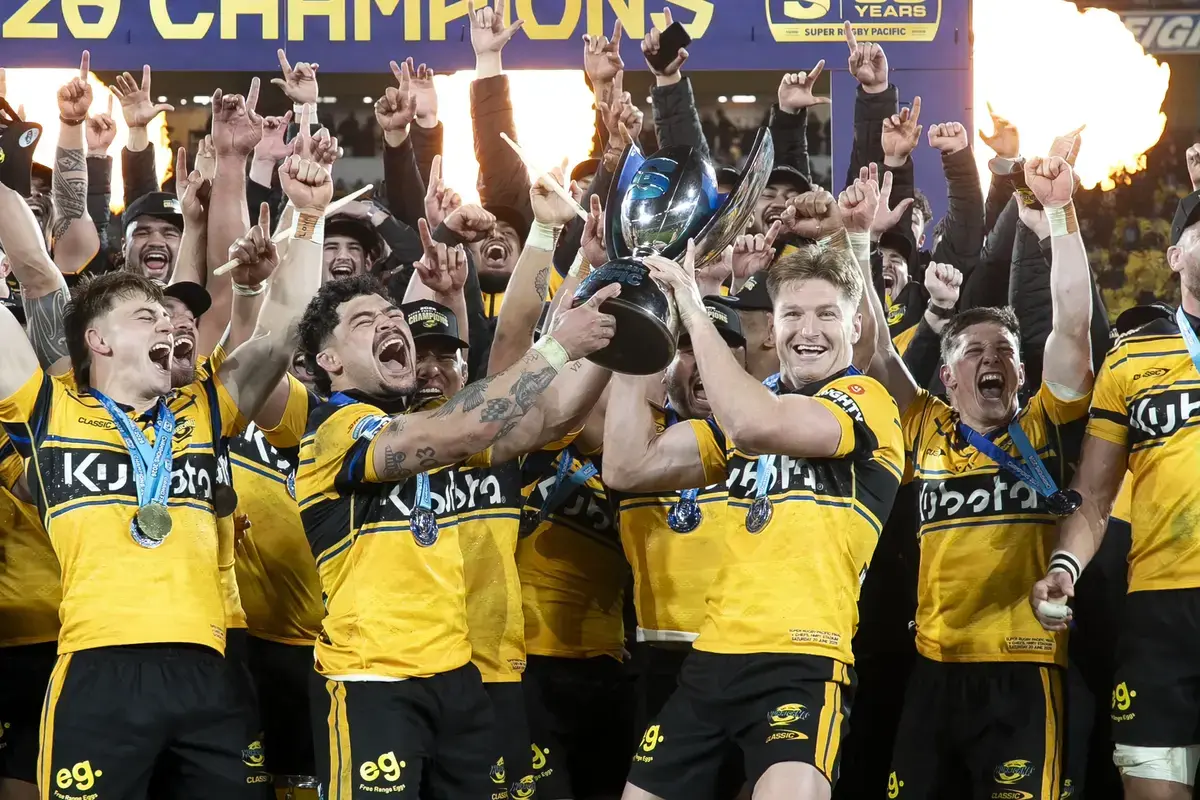
Hurricanes Co-Captains Du'Plessis Kirifi, left and Jordie Barrett hold the Super Rugby Trophy during the Hurricanes v Chiefs, Super Rugby Pacific Grand Final match, Hnry Stadium, Wellington, New Zealand. Saturday, 20 June 2026, (Photo by Marty Melville / action press)

Super Rugby Pacific has announced a revamped competition structure for 2027, featuring an expanded regular season, a redesigned finals series, and the introduction of the first-ever Anzac Day Bledisloe Cup Test.

The 2027 season will kick off on Friday 12 February, with ten teams competing across a 17-week regular season. Each side will play 16 matches – two more than in 2026 – after the number of bye weeks is reduced from two to one. The Grand Final is scheduled for Saturday 26 June.

The shift to ten teams follows Moana Pasifika’s departure from the competition at the end of the 2026 season, after New Zealand Rugby confirmed that none of the bids to rescue the franchise could demonstrate the committed funding required to meet financial and operational requirements.

Finals series overhaul

The most significant structural change comes in the finals series, which eliminates the controversial “lucky loser” system used over the past two seasons. Under the previous format, the highest-seeded losing team from the qualifying round could still progress to the semi-finals. That concept is now gone.

The top six teams will still qualify for the post-season, but teams finishing first and second will receive a bye week and advance directly to the semi-finals. Teams ranked third and fourth will host sudden-death elimination finals against the fifth and sixth-placed sides respectively. The winners of those elimination finals progress as away teams in the semi-final round.

The full finals structure is as follows:

Week One – Elimination Finals: 3 vs 6; 4 vs 5

Week Two – Semi-Finals: 1 vs lowest-seeded EF winner; 2 vs highest-seeded EF winner

Week Three – Grand Final: Highest-seeded SF winner vs lowest-seeded SF winner

Super Rugby Pacific CEO Jack Mesley said the refreshed format had been designed to maximise the 20-week competition window while delivering higher stakes throughout the finals.

“We’re delighted to have developed a structure that pushes the limits of our competition window to deliver more games and give every fan more opportunities to see their favourite teams in action,” Mesley said.

“At the same time our new-look Finals Series ensures teams will be more desperate than ever to finish in the top two to secure a week off, and the top four to host a home Final, while every Finals game will be a genuine do-or-die contest on the road to the championship.”

Anzac Day Bledisloe adds international dimension

A standout addition to the 2027 calendar is the Anzac Day Bledisloe Cup Test, with squads to be named following Round 9. That effectively transforms the opening two months of the Super Rugby season into a selection trial for international honours.

“The introduction of the Anzac Bledisloe to our calendar will help ensure every match means more, with Test jerseys up for grabs from the moment we kick off in February,” Mesley said.

New Zealand Rugby chief executive Steve Lancaster has previously confirmed that players selected for the Bledisloe Test will miss the preceding round of Super Rugby, with the Anzac weekend serving as a full bye round. Players will be released back to their franchises immediately after the Test.

Mesley also confirmed that organisers are working to retain the Super Round concept following its successful staging in 2026.

“Off the back of the success of Super Round in 2026, we are working diligently to confirm it remains an integral part of our calendar next year,” he said.

“We’re already looking forward to the storylines, drama and excitement that this new structure will help deliver for Super Rugby Pacific in 2027.”

Further details regarding the 2027 draw will be announced in the coming weeks.

Continue Reading

Super Rugby Pacific

McKellar resigns as Waratahs head coach, effective immediately

Published

on

McKellar resigns as Waratahs head coach, effective immediately
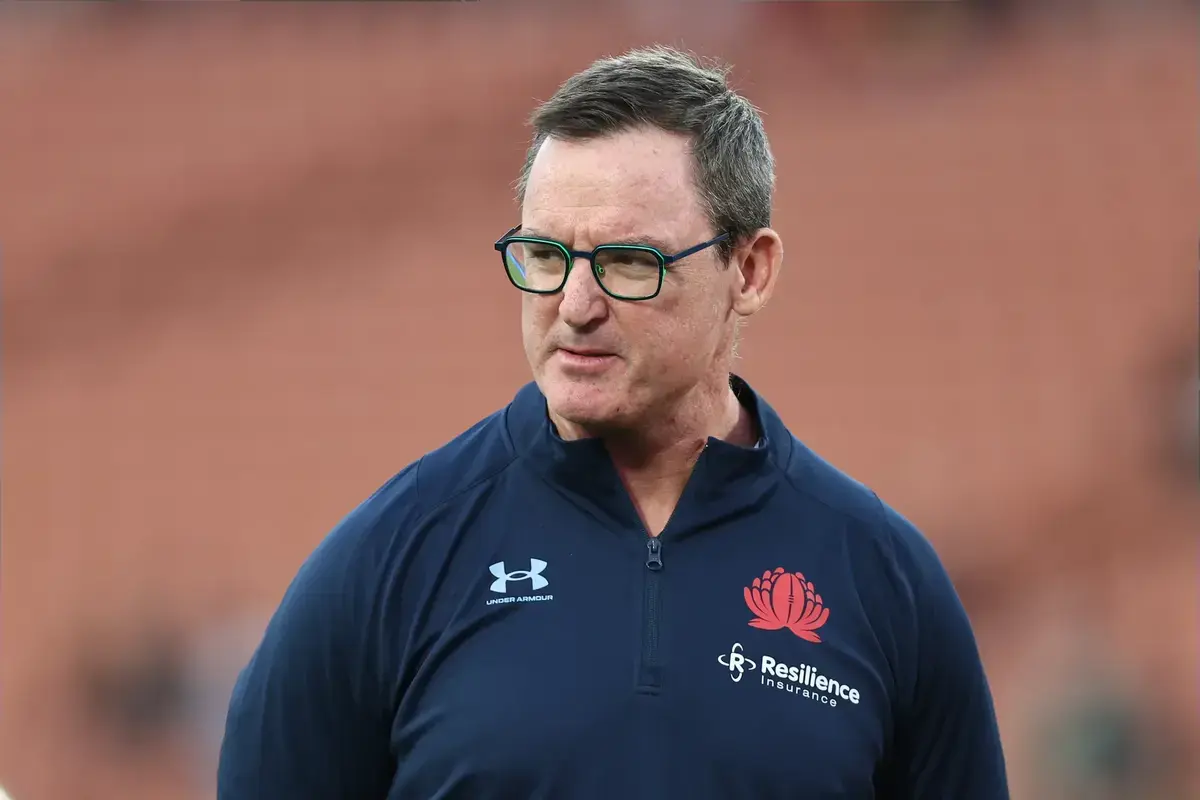
Dan McKellar during the Chiefs v Waratahs, Super Rugby Pacific match, FMG Stadium Waikato, Hamilton, New Zealand. Saturday, 4 April 2026, (Photo by Aaron Gillions / action press)

Dan McKellar has resigned as head coach of the NSW Waratahs with immediate effect, ending a two-year tenure that saw the Sydney-based franchise finish eighth in Super Rugby Pacific in both seasons under his leadership.

  • McKellar cited personal reasons for his departure, despite having one year remaining on his contract
  • The Waratahs won 11 matches across the 2025 and 2026 Super Rugby Pacific seasons under McKellar
  • The club finished eighth in both campaigns, the lowest-placed Australian side in 2026 after winning five of 14 matches
  • Assistant coaches Dan Palmer (forwards) and Lachie McCaffrey (defence) remain at the club
  • The Waratahs have begun the recruitment process to appoint a new head coach

McKellar addressed the playing group and coaching staff on Monday morning before the club confirmed his departure in an official statement. The 49-year-old, who joined the Waratahs at the end of 2024 after stints with Leicester Tigers in the English Premiership and as a Wallabies assistant coach, walked away with 12 months still to run on his deal.

“I have decided to step away from my role as Head Coach of the NSW Waratahs for personal reasons,” McKellar said.

“I step away knowing I have given my all to help turn the Waratahs’ fortunes around over the last two seasons. As a coaching group, we have all worked incredibly hard to drive positive and necessary change.”

The departure follows what has been reported as a difficult fortnight for McKellar, with the coach understood to have been required to present to the Waratahs board and Rugby Australia high performance director Peter Horne on Friday in what amounted to a review of his tenure. His exit also comes in the wake of attack coach Mike Catt’s recent departure from the club, leaving the Waratahs searching for both a head coach and an attack coach ahead of the 2027 season.

McKellar oversaw a significant overhaul of the Waratahs’ playing roster during his time in charge. Fewer than 10 players remain on the books from the squad he inherited, and he oversaw the introduction of several promising young players including Rookie of the Year Sid Harvey, Clem Halaholo, and Jamie Adamson. The former Brumbies head coach won six matches in 2025 – narrowly missing the finals – before a five-win campaign in 2026 left the Waratahs at the bottom of the Australian conference.

McKellar thanked his coaching staff and skipper Matt Philip as he departed.

“I’d like to thank Dan Palmer, Locky McCaffrey, Mike Catt and Tom Carter for their hard work and support. I’d also like to thank captain Matt Philip for his support,” he said.

“As this journey for the Waratahs continues, I wish all the players and staff the very best for the future.”

Waratahs chairman Tony Crawford acknowledged McKellar’s contribution to the club despite the results not matching ambitions on the field.

“On behalf of the board, players and staff at the Waratahs, I would like to thank Dan for his significant contribution to the club,” Crawford said.

“Dan has made a massive impact on the club since joining, both on and off the field. His work ethic and commitment to deliver his coaching program were second to none and he always put the Waratahs first.”

Director of High Performance BJ Mather echoed those sentiments, noting that McKellar had made a broader impact beyond match results.

“Dan achieved some landmark results on the field and reignited support for the Waratahs in the NSW rugby community,” Mather said.

“We wish him well in the next stage of his coaching career. He and his family will always be part of the Waratahs and we wish them all the best for the future.”

McKellar’s exit marks the sixth head coaching change at the Waratahs in nine years since Daryl Gibson departed at the end of 2019, underlining the instability that has plagued the once-proud franchise. Palmer and McCaffrey remain on staff, with McCaffrey expected to lead the side during the short Super Rugby AUS season later this year while the club searches for a permanent appointment.

The Waratahs have confirmed the recruitment process for a new head coach is already under way.

Continue Reading

Trending

Discover more from Rugby News, Results, and Analysis | Rugby is the Game

Subscribe now to keep reading and get access to the full archive.

Continue reading