When a World Cup-winning coach stands in front of the cameras and wonders aloud whether anyone wants him, the story stops being about a rugby match. Jacques Nienaber arrived at Leinster as the man who had just lifted the Webb Ellis Cup; this week he sounded like a man counting down his own departure. On the eve of a United Rugby Championship (URC) semi-final against the DHL Stormers, the question hanging over the Aviva Stadium is no longer simply who reaches the final — it is whether Nienaber’s Leinster future survives the weekend at all.
His record: one trophy, three European wounds
Nienaber joined Leinster in 2023 as Stuart Lancaster’s replacement, fresh from steering South Africa to the 2023 Rugby World Cup title. The brief was simple and brutal in its clarity: turn one of Europe’s wealthiest, deepest squads into champions of Europe. On that measure, the record reads as a series of near-misses.
In the Champions Cup, the wounds have stacked up. There was the 2024 final defeat to Toulouse, 31–22 in London. There was the 2025 semi-final loss to Northampton, 37–34, a result that still defies easy explanation. And then, most painfully, the 2026 final in Bilbao on 23 May, when Bordeaux-Bègles took Leinster apart 41–19. Three seasons, three chances at the continental prize, three failures.
The counterweight is real, and it matters: Leinster won the URC title in 2025, and they arrive at this semi-final as defending champions chasing back-to-back crowns. Silverware is silverware. But at a club whose entire identity has been built around European supremacy, a domestic title can feel like consolation rather than coronation — and that, more than anything, frames the pressure Nienaber now faces.
The blitz defence debate
The tactical argument has rumbled beneath the results all along. Nienaber’s signature is the blitz defence — the aggressive, line-speed system that strangled attacks at international level with the Springboks. Several former Irish internationals have questioned whether a method built for Test rugby, with its bespoke preparation windows, transfers cleanly to the relentless week-to-week grind of provincial club rugby.
It is a debate about more than line speed. It is about identity, about whether Leinster have traded the fluency that once defined them for a system that demands everything and, at the decisive moments, has not delivered the European return it promised. The Bilbao scoreline gave the critics their loudest evidence yet.
Not everyone is convinced the blame sits solely with the coaching staff. Writing in the Irish Times on 3 June, Gordon D’Arcy was direct: “Jacques Nienaber deserves a fairer hearing too. He has become the lightning rod for the season’s frustrations, but the criticism lacks context.” D’Arcy argued that Leo Cullen’s achievements should not be quietly written out of the story, and that the constraints placed on Leinster’s operation deserve proper acknowledgment.
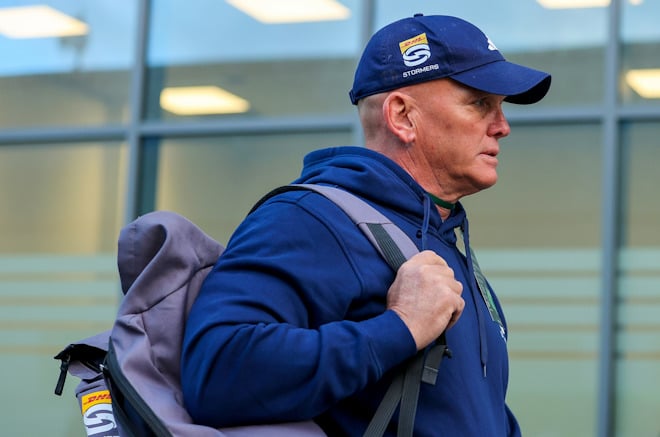
What gives the debate its edge now is that Nienaber himself has chosen to make it personal. In his press conference on 1 June, he left little ambiguity about where he stands. “Currently I’m not sure, to be honest,” he said when asked about his future. “I don’t think people value me here.” He then turned his fire on the media, explaining his theory of how coaches lose their jobs: “Who fires you? Do you know who fires you? The public, the media, they fire you. Not the CEO, not Shane Nolan. He doesn’t fire me, but you guys fire us.” He even acted out the scenario he believes is playing out around him: “The board member has dinner with his mates and his friends, and they go: ‘Sheesh, you signed a deal with the devil, man. You need to get rid of that devil, he’s killing Irish rugby.’ Then he goes: ‘Maybe they’re right’ — and that’s how you get fired.” The “deal with the devil” reference was pointed. It was a phrase used by journalist Rúaidhrí O’Connor of the Irish Independent in January 2025 to describe Leinster’s appointment of the South African coach. Asked whether he was really that bad, Nienaber’s response was blunt: “Am I that s***?”
It is worth noting that Leinster have been without a permanent Head of Communications since Marcus Ó Buachalla departed for Dublin GAA in December 2025, having served in the role for 12 years. His absence has left a structural gap at a time when the club’s messaging has never needed more careful management — and while it is not the root cause of the current tensions, a senior communications figure in post might at least have ensured Monday’s press conference was better handled.
His contract runs until the end of the 2026/27 season. On paper, then, this is a man with time. In tone, he sounded like a man already halfway out the door.
What Saturday means: referendum, lifeline or farewell
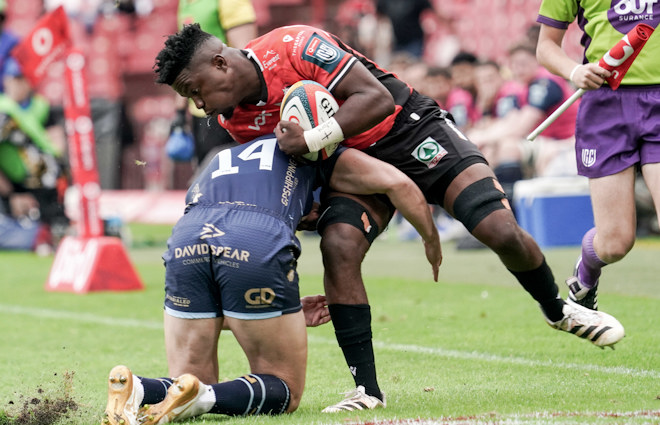
Leinster face the Stormers at the Aviva Stadium on Saturday 6 June, kick-off 7:30pm. The fixture carries an uncomfortable history: the Stormers won the Round 1 meeting this season 35–0, a result that would sting at the best of times and reads as a warning now.
There are mitigating factors on both sides. The Stormers are without Sacha Feinberg-Mngomezulu, ruled out by a serious ankle injury — a significant loss to their attacking spine. Leinster, meanwhile, carry a long list of concerns. Dan Sheehan, Joe McCarthy, Tadhg Furlong, Garry Ringrose, Rónan Kelleher, Tommy O’Brien and Jordan Larmour are all being monitored, while Ryan Baird, RG Snyman and Will Connors are confirmed out.
The mood inside the camp is candid. “We were gutted, I was gutted,” Hugo Keenan told RTÉ. “It means a lot to us, to the group. We’ve got lads leaving at the end of the year — the likes of Luke McGrath, Will Connors, Ciárán Frawley — these lads who we wanted to do it for.” He was equally clear-eyed about what will be required on Saturday: “It’s still something we’re hugely motivated to get our hands on, that URC trophy.”
So which is it? A referendum on Nienaber, where defeat hardens an already restless mood? A lifeline, where a statement win buys him the credit to see out his deal? Or a farewell, the last act before a parting that suddenly feels closer than the calendar suggests? The truth is that all three readings are live, and Saturday will tip the balance one way or another.
What comes next
Whatever the scoreline, Leinster face a reckoning that runs deeper than 80 minutes against the Stormers. If Nienaber stays, the club must repair a relationship that has been aired in public and find a way to convert his defensive certainties into the European trophy that still eludes them. If he goes, they must decide what kind of Leinster they want to be next — and whether the answer lies in his methods, in Cullen’s institutional knowledge, or in something new entirely.
A coach who wins a World Cup does not suddenly forget how to coach. But a partnership only works when both sides believe in it, and this week Nienaber told the world that he is no longer sure they do. Saturday will not settle everything. It will, however, tell us which conversation Leinster are about to have.