Connect with us

New Zealand

The former teacher now tasked with reviving the All Blacks

Published

on

Dave Rennie, new All Blacks Head Coach, Auckland, New Zealand, Wednesday, 04 March 2026. (Photo by NZR / action press)

When New Zealand Rugby announced Dave Rennie as the 28th All Blacks head coach on Wednesday, it marked the culmination of a 25-year coaching journey that began not in professional rugby, but in the classrooms of an Upper Hutt intermediate school.

Key points:

  • Born in Upper Hutt on 22 November 1963, Rennie is of Cook Islands descent through his mother
  • A trained school teacher who transitioned to coaching after a shoulder injury ended his playing career at 27
  • Led the Chiefs to back-to-back Super Rugby titles (2012-13) and the New Zealand U20s to three consecutive Junior World Championships (2008-10)
  • Coached the Wallabies from 2020 to 2023 with a 38 per cent win rate before being replaced by Eddie Jones
  • Known for a direct, breakdown-focused style of rugby described as “high-skill, high-speed mixed with brutality”

Rennie, 62, becomes the first All Blacks head coach with Pasifika heritage — his mother, Ngametua, hails from Titikaveka in Rarotonga — and takes charge of a team in turmoil following the dramatic sacking of Scott Robertson in January. But the man now tasked with restoring the All Blacks to their former glory has always been something of an unconventional figure in the coaching ranks.

Read: Former Wallabies boss Rennie wins race to be next All Blacks coach

From classroom to coaching box

David Noel Rennie was born in Upper Hutt on 22 November 1963 and educated at Heretaunga College. He played his club rugby for Upper Hutt RFC and represented Wellington as a centre, making 58 appearances for the province and winning the NPC title in 1986. In 1990, his Cook Islands heritage saw him selected for a non-test match for a Cook Islands XV — his only international playing appearance.

A recurring shoulder injury forced Rennie to retire from playing at just 27, and he turned to teaching, taking up a position at an intermediate school in Upper Hutt working with 12 and 13-year-olds. It’s a background that shaped his coaching philosophy.

“Teaching, coaching, it’s the same thing,” Rennie once observed. “The children are somewhat larger.”

He began coaching at Upper Hutt RFC while continuing to teach, before Graham Mourie invited him to join the Wellington Lions as assistant coach in 1999. When Mourie moved to concentrate on the Hurricanes, Rennie stepped up as head coach in 2000 — and promptly led Wellington to their first NPC title since 1986, the year he had won it as a player.

That Wellington side was stacked with All Blacks talent: Jonah Lomu, Christian Cullen, Tana Umaga, Jerry Collins and Rodney So’oialo among them. But critics who suggested anyone could have coached such a squad overlooked the fact they beat an equally talented Canterbury side to lift the trophy.

Building from the ground up

After three seasons with Wellington, Rennie moved to the Hurricanes as Under-23 head coach before becoming an assistant coach. He also worked with the New Zealand international academy before taking charge of the Manawatu Turbos in 2006.

The Manawatu role was emblematic of Rennie’s willingness to take on rebuilding projects. The Turbos were perennial strugglers in the NPC, operating with limited resources. His first season yielded no wins from nine matches. Progress was slow — just two wins in 2007, one in 2008 — but Rennie persisted, focusing on player development and foundational skills.

By 2011, the patience had paid off: Manawatu reached the NPC Championship final, a remarkable achievement for a province of their size.

The golden era: Under-20s and Chiefs

It was during his time at Manawatu that Rennie received the appointment that would transform his reputation. In 2008, he was handed the New Zealand Under-20s — and proceeded to deliver three consecutive Junior World Championships from 2008 to 2010.

The players who came through that system read like a who’s who of the next generation of All Blacks: Aaron Smith, Sam Whitelock, Julian Savea. Rennie’s ability to develop young talent into world-class performers was firmly established.

In 2012, he was given the Chiefs — a franchise that had never won Super Rugby — and delivered an inaugural title in his debut season. In doing so, Rennie became the first first-year Super Rugby head coach to win the competition. The 2012 final itself proved eventful: as Rennie guided the Chiefs to a 37-6 demolition of the Sharks, his house was robbed.

The following year, the Chiefs went back-to-back, beating the Brumbies to retain the title. The squad included Aaron Cruden, Brodie Retallick, Liam Messam and Sam Cane — players who would form the backbone of All Blacks teams for years to come. Rennie spent six seasons with the Chiefs in total, reaching the finals in each.

Scotland and the Wallabies

In 2017, Rennie made the move to Scotland to coach Glasgow Warriors, replacing Gregor Townsend. He guided the Warriors to the Pro14 semi-finals in his first season and the final in 2018-19 — played before a record crowd at Celtic Park — though they fell to Leinster. He continued to develop young talent, particularly fly-half Finn Russell.


In November 2019, Rugby Australia announced Rennie would replace Michael Cheika as Wallabies head coach — a role he took up in 2020. His tenure with Australia yielded mixed results. The Wallabies won the Rugby Championship in 2021, but overall Rennie finished with a 38 per cent win rate, the lowest of any Wallabies coach with a minimum of 30 tests.

Australia’s 2022 tour included a historic first loss to Italy. In January 2023, Rugby Australia replaced Rennie with Eddie Jones — a decision that would prove disastrous when Jones departed in October following a pool-stage exit at the Rugby World Cup. Rennie, vindicated in some eyes, moved to Japan to coach the Kobelco Kobe Steelers.

The coaching philosophy

Those who have worked with Rennie describe him as “hard-nosed, doesn’t tolerate fools, is astute and has a deep rugby intelligence.” Former All Black James Parsons recently broke down Rennie’s coaching style on the Aotearoa Rugby Pod, noting his unrelenting commitment to breakdown dominance.

“Dave Rennie is all about the breakdown, both sides of the ball,” Parsons explained. “Defensively, all about the breakdown. Attacking-wise, all about the breakdown. Low offloads, low turnover count; ‘I’m going through you’ is Dave Rennie’s attitude.”

Rennie himself has described his approach as “high-skill, high-speed type of game hopefully mixed with some rugby smarts and a bit of brutality.” During his time at the Chiefs, players spoke of a concept called “napalm” — the brutal ruck-clearing that characterised their style.

His teams have historically achieved near 70 per cent gain-line success rates, though critics point to high penalty counts that can result when the aggressive breakdown approach goes wrong.

The challenge ahead

At 62, Rennie is older than any All Blacks head coach in recent memory, and his two-year contract through to the 2027 Rugby World Cup offers limited time to implement change. His immediate challenge is formidable: the inaugural Nations Championship, a July home series against France, Italy and Ireland, and a four-Test “Rugby’s Greatest Rivalry” tour against the Springboks.

The All Blacks Rennie inherits are in disarray following Robertson’s tenure, which featured a record defeat to South Africa, a first loss to Argentina in Buenos Aires, and reported rifts within the playing group. Notably, star flanker Ardie Savea — one of the key figures said to have provided unfavourable feedback on Robertson — is currently playing under Rennie at Kobe.

Whether Rennie can draw on his experience of rebuilding programmes at Wellington, Manawatu, the Chiefs and Glasgow to restore the All Blacks remains to be seen. But few coaches in world rugby have demonstrated such consistent ability to develop talent and create winning cultures — even if his Wallabies tenure ended in disappointment.

“Coaching the All Blacks is an incredible honour,” Rennie said upon his appointment. “I’m really clear on the way I want the All Blacks to play.”

For New Zealand rugby, the hope is that clarity translates into silverware.

Continue Reading
Click to comment

Leave a Reply

New Zealand

Former Wallabies boss wins race to be next All Blacks coach

Published

on

Former Wallabies boss wins race to be next All Blacks coach
Dave Rennie (Steelers), MAY 24, 2025 - Rugby : 2024-25 Japan Rugby League One Play-off Tournament Semi-final match between TOSHIBA Brave Lupus Tokyo 31-3 KOBELCO Kobe Steelers at Prince Chichibu Memorial Stadium in Tokyo, Japan. (IMAGO / AFLOSPORT)

New Zealand Rugby has turned to Dave Rennie to lead the All Blacks, appointing the 62-year-old as head coach through to the 2027 Rugby World Cup in Australia.

Key points
  • Dave Rennie appointed All Blacks head coach through to the 2027 Rugby World Cup
  • The 62-year-old becomes the first head coach with Pasifika heritage in All Blacks history
  • Rennie replaces Scott Robertson, who was sacked in January after less than two years in charge
  • Former Wallabies coach beat Jamie Joseph in a two-man race for the role
  • Will complete Japan commitments before taking charge ahead of July Tests against France, Italy and Ireland

The appointment, announced on Wednesday, brings to an end a near-50-day search that followed the dramatic sacking of Scott Robertson in mid-January. Rennie beat Jamie Joseph in what became a two-man race for arguably the most scrutinised coaching role in world rugby.

Rennie, who is of Cook Islands descent through his mother from Titikaveka, Rarotonga, becomes the first All Blacks head coach with Pasifika heritage — a historic milestone, though one that arrives amid considerable turbulence within New Zealand Rugby.

“Coaching the All Blacks is an incredible honour,” Rennie said. “I’m extremely proud to have been entrusted with this role and understand the expectations that come with it.”

Questions over the appointment

While Rennie’s credentials within New Zealand rugby are substantial — back-to-back Super Rugby titles with the Chiefs in 2012 and 2013, three consecutive Junior World Championships with the Under-20s — his more recent record invites scrutiny.

His tenure as Wallabies coach from 2020 to 2023 yielded mixed results. Australia won just 40 per cent of their matches under his guidance and failed to trouble New Zealand or South Africa consistently in the Rugby Championship. He departed with Australian rugby in a state of flux, his contract not renewed after a disappointing 2023 Rugby World Cup campaign that saw the Wallabies exit at the group stage.

The decision to appoint a coach who struggled to turn around one southern hemisphere giant to now rescue another raises legitimate questions. At 62, Rennie is also older than any All Blacks head coach in recent memory, and his two-year contract offers limited runway to implement meaningful change before the World Cup.

NZR Chair David Kirk defended the process, calling it the most thorough the organisation has undertaken for an All Blacks head coach.

“Dave understands what it means to coach the All Blacks and play a style of rugby that reflects who we are as New Zealanders,” Kirk said. “He has a deep understanding of rugby in New Zealand and the role the All Blacks play in shaping our national identity and bringing communities together.”

A team in crisis?

Rennie inherits an All Blacks side in disarray. Robertson’s dismissal after just 18 months — following a tenure marked by inconsistent performances and reported rifts within the playing group — represents one of the most dramatic interventions in New Zealand rugby history. The fact that NZR moved so decisively suggests problems ran deeper than results alone.

The new head coach faces an immediate and formidable challenge. The inaugural Nations Championship looms, as does a home series in July against France, Italy and Ireland — three of the northern hemisphere’s most competitive sides. Ireland, in particular, have had the measure of the All Blacks in recent years, winning three of their last four encounters.

Rennie will honour his commitments with Kobelco Kobe Steelers in Japan before returning to New Zealand ahead of those July fixtures, leaving him limited preparation time with his new squad. NZR has indicated it will work with Rennie to confirm the wider coaching team in coming weeks — a process that will be closely watched given the reported dysfunction under Robertson’s tenure.

The Wallabies factor

Rennie’s appointment carries an intriguing subplot. His intimate knowledge of Australian rugby — its systems, its players, its vulnerabilities — could prove valuable with a World Cup on Australian soil in 2027. Equally, his inability to achieve consistent success with the Wallabies may concern those who wonder whether he can extract more from New Zealand’s playing stocks.

“I’m really clear on the way I want the All Blacks to play,” Rennie said. “We have a lot of talent here and we will be working extremely hard to make the country proud.”

Talent has never been New Zealand’s problem. The All Blacks remain stacked with world-class players across virtually every position. The question is whether Rennie — a coach whose last major assignment ended in disappointment — can harness that talent more effectively than his predecessors.

What lies ahead

Kirk acknowledged the significance of the road ahead: “The All Blacks are set for a challenging and exciting two seasons ahead and it’s critical we followed a thorough process to find the right head coach.”

Yet some will question whether NZR’s “thorough process” has delivered the bold appointment the situation demanded. Joe Schmidt, the mastermind behind Ireland’s recent dominance, was reportedly unavailable. Vern Cotter, Andy Farrell, and other high-profile names were apparently not pursued or not interested.

In the end, New Zealand has turned to a familiar face — a coach with deep roots in the country’s rugby system but whose recent track record suggests the task ahead is anything but straightforward. Rennie has two years to prove the doubters wrong, with a World Cup on enemy soil as the ultimate test.

For New Zealand rugby, desperate for stability after years of underperformance against the sport’s elite, the appointment is a calculated gamble. Whether it pays off will determine not just Rennie’s legacy, but the trajectory of the All Blacks for a generation.

Dave Rennie will take charge of the All Blacks ahead of their July home series against France, Italy and Ireland.

Continue Reading

New Zealand

Scott Robertson sacked as head coach of All Blacks

Published

on

Scott Robertson sacked as head coach of All Blacks
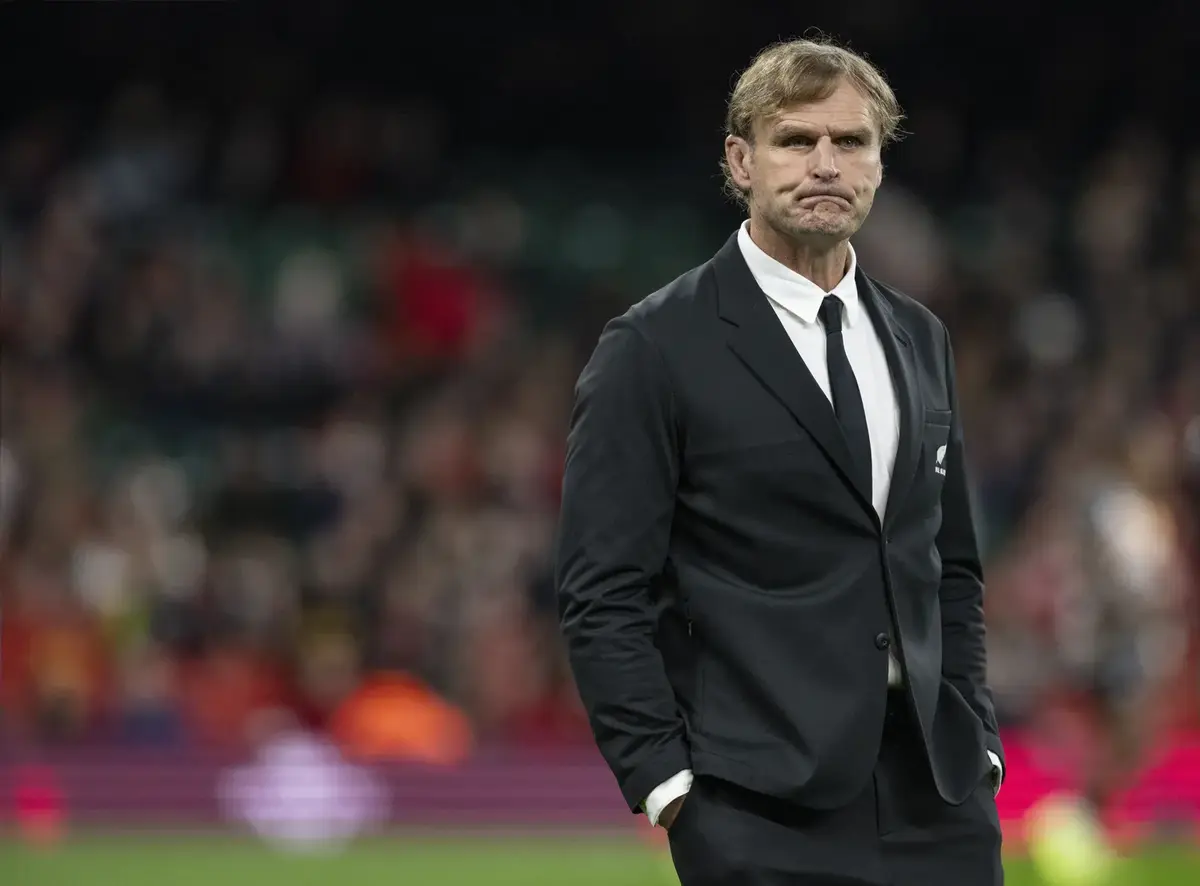
All Blacks Head Coach Scott Robertson looks on during the warm up ahead of the Wales v All Blacks match, Principality Stadium, Cardiff, Wales, Saturday, 22 November 2025. (Photo by Anthony Upton / action press)

In one of the most dramatic developments in All Blacks history, Scott Robertson has been sacked as head coach after just two years in charge, with New Zealand Rugby acting decisively following an internal review that painted a damning picture of the team’s direction and culture.

Key moments

  • Scott Robertson dismissed after just two years of four-year contract
  • Internal review reveals damning feedback from senior players on coaching environment
  • Record 43-10 defeat to South Africa proved watershed moment
  • Two assistant coaches departed during Robertson’s tenure
  • NZR chairman David Kirk cites lack of “trajectory” towards 2027 World Cup
  • Jamie Joseph emerges as frontrunner to replace Robertson
  • Decision leaves All Blacks searching for coach ahead of crucial 2026 schedule

The decision, announced on Thursday, sends shockwaves through world rugby and leaves the All Blacks scrambling to find a new leader with only 20 months remaining until the 2027 Rugby World Cup in Australia. For Robertson, the man who arrived with a golden reputation after guiding the Crusaders to seven consecutive Super Rugby titles, it represents a spectacular fall from grace in the job he had campaigned so vocally to secure.

NZR chairman David Kirk, addressing the media in Auckland, was unequivocal about the reasoning behind the brutal decision. “The All Blacks are not on track the way they need to be on track for the 2027 World Cup,” Kirk stated. “I think trajectory is a good word to apply, we just weren’t seeing the trajectory. Fans will probably have shared that… we were falling a bit short of the excellence that we’re looking for, it never really got addressed over the year.”

The timing is particularly striking given the challenges ahead. The All Blacks face one of their most demanding schedules in 2026, including a landmark four-Test series against world champions South Africa in the inaugural Greatest Rivalry tour, as well as Nations Championship fixtures against Ireland, France and Italy at home, followed by a northern tour featuring England, Scotland and Wales.

The cracks begin to show

Robertson’s tenure, which began with much fanfare following the 2023 Rugby World Cup, was marked by increasingly visible fractures both on and off the field. The first significant red flag emerged in August 2024 when assistant coach Leon MacDonald departed halfway through the Rugby Championship, just two months after being unveiled as part of Robertson’s coaching team. Sold publicly as a clash in coaching styles, the move raised eyebrows throughout New Zealand rugby circles.

“As coaches, we have differing views and both agreed it wasn’t working,” Robertson said at the time. However, it was understood MacDonald was unhappy taking a back seat to Scott Hansen, Robertson’s right-hand man from his Crusaders days.

The departure of Jason Holland, the set-piece attack and backs coach, in October compounded concerns about Robertson’s management style. That a coach would leave a coveted All Blacks position less than two years before a World Cup to return to the Hurricanes as an assistant raised serious questions about the environment Robertson had created.

Record defeat proves watershed

If there was a single moment that crystallised the All Blacks’ struggles under Robertson, it came on a miserable September evening in Wellington. The 43-10 demolition by South Africa represented New Zealand’s heaviest-ever defeat, surpassing even the 35-7 loss to the Springboks that had preceded the 2023 World Cup. More damning than the scoreline was the manner of capitulation – the All Blacks showed little fight as the Springboks ran in unanswered tries in the closing stages.

Robertson looked haunted in the aftermath, and whilst the All Blacks would win five of their remaining six tests in 2025, finishing with 10 victories from 13 matches, the lack of progress was glaring. Their attack remained dysfunctional, their structure appeared confused, and the excellence expected of the world’s most storied rugby nation seemed increasingly distant.

The 29-23 defeat to Argentina in Buenos Aires – New Zealand’s first loss to Los Pumas away from home – and the comprehensive 33-19 thrashing by England at Twickenham in November only reinforced the impression of a team drifting. It marked just the ninth time in 120 years of rivalry that England had beaten the All Blacks.

Player discontent emerges

Perhaps most damaging for Robertson were reports of widespread player dissatisfaction that emerged in December following the northern tour. The internal review, led by Kirk, NZR board member and former All Black Keven Mealamu, and former high performance manager Don Tricker, canvassed up to 20 senior players about the coaching set-up, environment and culture.

The feedback, according to sources, was scathing. Reports suggested star back-row forward Ardie Savea, the former captain, was so disillusioned he was exploring options to remain with Japanese club Kobe Steelers or sign for a European club rather than return to the All Blacks under Robertson’s coaching.

However, Kirk was at pains to dismiss suggestions of a player revolt. “There was definitely no revolt,” he insisted. “The players were very measured and thoughtful in their responses. It’s very unfair to say that Ardie somehow led something, not at all. He expressed public opinions. Some of those opinions were not agreed with by other players. Others would have been somewhat aligned with them.”

Kirk confirmed Savea remains contracted until the end of 2027 and is expected to feature in the All Blacks’ future, with the 32-year-old potentially in contention for the captaincy under a new coach.

The haka controversy during the Italy fixture on the northern tour provided another example of the disconnect within the squad. TJ Perenara slipped a message of support for Treaty of Waitangi protests into the traditional war dance, with some players later posing with a Tino Rangatiratanga flag. Whilst Robertson claimed Perenara had discussed the alteration with management, it was understood numerous players and coaches were unaware of the plan, creating tension within the group.

A dignified departure

In his statement, Robertson struck a dignified tone despite the bitter disappointment. “Coaching the All Blacks has been the honour of my life,” the 51-year-old said. “I am incredibly proud of what this team has achieved and of the progress we have made. We have brought through a talented group of young players, strengthened the depth across the squad, and set solid foundations for the years ahead.”

He continued: “Following the end of year review I have taken time to reflect on some of the feedback. My priority has always been the success of the All Blacks and, after discussions with New Zealand Rugby, I believe it is in the best interests of the team for me to step aside. As you can imagine, I am gutted by this outcome. I care deeply about this team.”

Kirk acknowledged Robertson’s broader contribution to New Zealand rugby, noting his passion as both player and coach was evident. “He has continued to put the All Blacks first and we respect that he has done the hard but right thing in agreeing to depart,” Kirk said. “His commitment to and involvement in rugby in New Zealand at every level over a long period is significant. We wish him well for the future.”

The search begins

NZR has confirmed the recruitment process for Robertson’s replacement will commence immediately, with Kirk stating they will “cast the net wide” for what he described as “the greatest rugby coaching role in the world.”

Jamie Joseph has emerged as the clear frontrunner, having been narrowly beaten by Robertson when Ian Foster’s contract was not renewed following the 2023 World Cup. The 56-year-old former All Black played 20 tests for New Zealand and earned plaudits for guiding Japan to their first World Cup quarter-final at the 2019 home tournament. Since 2024, he has been coaching Super Rugby franchise the Highlanders, positioning him well for a step up to the national team.

Former Wallabies coach Dave Rennie is another name being mentioned as a potential candidate, though Kirk insisted there were no preferred options at this stage.

Kirk acknowledged it was “highly likely” the new coach would want to appoint their own assistants, meaning Hansen, Jason Ryan and Tamati Ellison could all follow Robertson out the door. The priority, Kirk stressed, was ensuring the new coaching group had sufficient time to implement their vision before the 2027 tournament.

Historical context and implications

The decision to sack Robertson represents one of the rarest interventions in modern All Blacks history. John Mitchell departed in 2003 after losing the World Cup semi-final to Australia, though he refused to stand down and his contract was simply not renewed. Wayne Smith’s tenure ended similarly in 2001. Since then, Graham Henry, Steve Hansen and Ian Foster all departed at the conclusion of their contracts, with Henry and Hansen immortalised as World Cup-winning coaches.

Foster’s fate provides a particularly stark comparison. Though he endured fierce criticism and won just 69.6 per cent of his 46 tests – a lower win rate than Robertson’s 74 per cent from 27 matches – he was allowed to guide the team to the 2023 World Cup final, where they lost to South Africa by a single point.

The contrast highlights how significantly standards and expectations have shifted. Robertson’s record of 20 wins from 27 tests would be considered exemplary for most international coaches, but for the All Blacks – a team that won back-to-back World Cups in 2011 and 2015 and had claimed 10 of the 12 Rugby Championship titles preceding Robertson’s arrival – anything less than dominance is deemed insufficient.

The 50 per cent win rate against Argentina and 25 per cent against South Africa told a damning story. The Springboks have established themselves as rugby’s pre-eminent force, and the All Blacks’ inability to compete with them consistently represented an existential crisis for New Zealand Rugby.

For Robertson personally, the dismissal marks a tragic denouement to what should have been the pinnacle of his coaching career. Renowned for creating winning cultures and connecting with players at the Crusaders, he appeared tense and burdened from the moment he took the All Blacks job. The free-spirited visionary who had revolutionised Super Rugby struggled under the weight of expectation and the glare of international scrutiny.

The All Blacks have a training camp scheduled for Monday, where players will digest the news and await confirmation of who will lead them forward. Kirk confirmed he had spoken to the leadership group before the announcement, noting their reaction was measured and professional. “Players are players, you get on with it,” Kirk said, drawing on his experience as the halfback who captained New Zealand to their 1987 World Cup triumph. “You want to impress the coach, you want to be seen to be someone contributing.”

As New Zealand Rugby begins its search for Robertson’s successor, the challenge is immense. The new coach must quickly establish authority, unite a fractured squad, implement tactical improvements, and prepare the team for an unprecedented schedule that includes eight matches against South Africa across the Greatest Rivalry series and regular season fixtures.

Most pressingly, they must restore the aura of invincibility that has slipped away as the All Blacks have struggled to match South Africa’s recent dominance. With the 2027 World Cup pool draw potentially setting up a quarter-final against the Springboks, and a pool match against hosts Australia, there is no margin for error.

For now, Scott Robertson’s tenure will be remembered not for the promise it held but for the opportunities missed and the foundations that crumbled. In the unforgiving arena of All Blacks rugby, where excellence is expected and second-best is failure, two years proved too long to wait for a trajectory that never materialised.

Continue Reading

New Zealand

Joseph appointed All Blacks XV head coach for next two years

Published

on

Joseph appointed All Blacks XV head coach for next two years
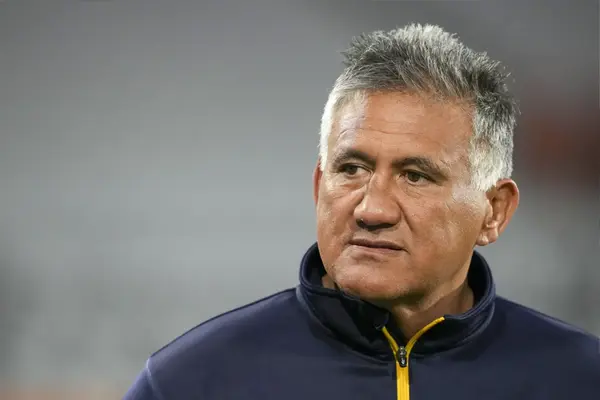
Highlanders Jamie Joseph during the Highlanders v Fijian Drua, Super Rugby Pacific match, Forsyth Barr Stadium, Dunedin, New Zealand. Saturday, 12 April 2025, (Photo by Michael Thomas / action press)

Highlanders coach Jamie Joseph has been named head coach of the All Blacks XV for the 2025 and 2026 seasons, marking his return to international rugby after a distinguished eight-year tenure with Japan.

New Zealand Rugby confirmed the appointment on Tuesday, with Joseph succeeding Clayton McMillan in the role and retaining the existing coaching group of Jamie Mackintosh, David Hill, and Cory Jane ahead of three overseas fixtures in November.

The 55-year-old’s appointment is seen as a clear signal that he remains firmly in New Zealand Rugby’s thinking for the top job, having previously been overlooked for the All Blacks head coach position in favour of Scott Robertson prior to the 2023 Rugby World Cup.

Joseph returned to New Zealand in 2024 to take up a director of rugby role with the Highlanders before returning to the position of head coach for the 2025 Super Rugby Pacific season. Despite the Dunedin-based franchise’s struggles this year, his vast international experience made him the standout candidate for the All Blacks XV position.

“It’s been great coming home to New Zealand after such a long time away, but being part of a team wearing a black jersey will always be special,” Joseph said. “For the players selected it’s an opportunity to represent their country, themselves and their whānau on the world stage.

“My job is to create an environment that challenges the players and prepares them to win on the world stage and put their hands up for higher honours. It’s an exciting schedule that will put the group under pressure and expose them to different playing styles on big stages.”

Joseph’s credentials for the role are exceptional. A 20-Test All Blacks loose forward between 1992 and 1995, he also represented the Māori All Blacks and Japan as a player before retiring in 2001. His coaching career has been nothing short of distinguished, highlighted by 51 Tests as Japan’s head coach between 2016 and 2023, during which he elevated the Brave Blossoms to unprecedented heights in international rugby.

Before his Japan tenure, Joseph led the Highlanders to their maiden Super Rugby title in 2015 after six years at the helm, and guided the Māori All Blacks to five wins from six matches between 2010 and 2012.

Speaking to media, Joseph admitted he had been missing the international arena. “I think it is a real privilege to get involved with this level of rugby again,” he said. “I’m missing that level of rugby to be honest after being involved with the Japanese team for eight years. You miss that level of footy and this is an opportunity to get better.”

NZR Head of Professional Rugby & Performance Chris Lendrum emphasised that Joseph’s vast experience would be invaluable to the All Blacks XV programme, which serves as a vital development pathway for aspiring All Blacks.
“Jamie has coached and played at every level of the game and has a deep understanding, both as a player and coach, of what it takes to prepare players for international rugby and to win on the global stage,” Lendrum said. “He’s a proven leader who knows how to get the best out of his players and build a strong team identity and culture. The All Blacks XV is a vital part of the men’s pathway, and we know Jamie will make his mark on the team and the programme.”

The All Blacks XV will embark on their fourth November tour with three fixtures in England. They will face the Barbarians at Gtech Community Stadium in Brentford on 2 November (kick-off 1.15am NZT, 13:15 GMT), followed by a clash with England A at The Recreational Ground in Bath on 9 November (kick-off 1.15am NZT, 13:15 GMT). A third match on 16 November is yet to be confirmed, though it is understood to be against Georgia.

The squad will be announced on 14 October and assemble on 24 October before departing for England. Players involved in the Bunnings Warehouse NPC final will join the group and travel following that match.

The All Blacks XV has already proven to be an effective launching pad for players aspiring to full international honours, with Fabian Holland, Du’Plessis Kirifi, and Simon Parker among those who have progressed through the programme into the All Blacks.

Highlanders CEO Roger Clark described Joseph’s appointment as “a proud moment for the Highlanders.”
“His legacy here speaks volumes about his leadership and vision,” Clark said. “We know he’ll bring the same passion and excellence to the national setup, and we’re excited to see him shape the future of New Zealand rugby.”

Joseph has made no secret of his ambition to one day coach the All Blacks, and this appointment keeps him squarely in the frame for the top job should Robertson not be reappointed following the 2027 Rugby World Cup. The All Blacks XV role will allow Joseph to work alongside the All Blacks coaching staff in terms of selection whilst putting his own stamp on the development side.

Players throughout New Zealand will now be under no illusion that performing for Joseph could be their ticket to higher honours, whilst the Highlanders stand to benefit indirectly from having a coach so prominently positioned within the national programme.

In 2024, the All Blacks XV recorded victories over Munster and Georgia under McMillan’s guidance, establishing a strong foundation for Joseph to build upon as he returns to the international stage.

Continue Reading

Trending

Discover more from Rugby News, Results, and Analysis | Rugby is the Game

Subscribe now to keep reading and get access to the full archive.

Continue reading