
Six Nations
France make Six Nations statement with emphatic win over Ireland

Published
9 months agoon
France announced their intention to retain the Six Nations crown with a devastating first-half performance that left Ireland chasing shadows in the Parisian rain. The defending champions, inspired by the returning Antoine Dupont, raced to a 22-0 half-time lead before eventually running in five tries to secure a bonus-point victory that sends an ominous message to their championship rivals.
The 36-14 scoreline represents France’s largest victory over Ireland since 2010, when Les Bleus triumphed 33-10 in Paris. It also marks Ireland’s heaviest Six Nations defeat in 16 years, extending France’s remarkable home record to eight consecutive Stade de France victories in the championship.
Key moments
2′ – CLOSE CALL FRANCE: Louis Bielle-Biarrey produces electric footwork down the left before executing his trademark chip-and-chase, but Charles Ollivon fumbles with the tryline at his mercy as the ball skids forward off his hands. Ireland survive early warning shot
5′ – 50:22 IRELAND: Jamie Osborne thumps mammoth kick from deep inside his own half — described afterwards as “almost a 22:22” — to earn attacking lineout in French 22, but the opportunity is squandered when Josh van der Flier knocks on attempting to gather Sam Prendergast’s offload
13′ – TRY FRANCE: Louis Bielle-Biarrey opens the scoring with a moment of individual brilliance. After Sam Prendergast volleys the ball soccer-style back into play to prevent a 50:22, quick hands from Yoram Moefana find the wing in a pocket of space on the left touchline where Jamison Gibson-Park has afforded him too much room. Bielle-Biarrey slips through Gibson-Park’s tackle, rides Prendergast’s tap tackle, springs back to his feet and ghosts past Jacob Stockdale on the outside to finish in the corner. Thomas Ramos converts (France 7-0 Ireland)
21′ – POOR IRELAND PASS: Sam Prendergast intercepts Nicolas Depoortère’s pass with the tryline beckoning, but his panicked clearance under pressure forces Tommy O’Brien to dot down in his own in-goal, conceding a five-metre scrum
22′ – TRY FRANCE: Matthieu Jalibert marks his first international appearance since last year’s Six Nations with a well-taken score. From the five-metre scrum, the pack nudges towards the blindside and Antoine Dupont breaks, slipping a simple pass to Jalibert who coasts through a tame tackle attempt from Prendergast to cross. Thomas Ramos conversion strikes the post (France 12-0 Ireland)
28′ – PENALTY FRANCE: Joe McCarthy penalised for a mindless infringement, coming in from the side at the breakdown while France attack inside the Irish 22. Thomas Ramos slots the straightforward kick to extend the lead to 15 points (France 15-0 Ireland)
31′ – IRELAND PRESSURE: Sam Prendergast and Jamie Osborne combine with clever grubber kicks to pin France under their own posts, but Thomas Ramos recovers to clear the danger. Prendergast subsequently penalised for impeding Ramos while chasing the loose ball
34′ – TRY FRANCE: The standout moment of the first half as France produce stunning close-quarters handling. Matthieu Jalibert chips ahead and the ball bounces kindly, allowing him to regather. The ball moves through François Cros to Jean-Baptiste Gros, who finds Mickaël Guillard surging into the line. The Lyon lock’s sumptuous inside offload releases Charles Ollivon to sprint 15 metres and slide over despite Caelan Doris’s despairing tackle. Thomas Ramos converts (France 22-0 Ireland)
Half-time: France 22-0 Ireland
France statistics: 62% possession, 68% territory, zero penalties conceded, 11 of 12 contestable kicks won. Ireland: 19 missed tackles, 0 penalties won.
45′ – SCRUM PENALTY IRELAND: Dorian Aldegheri penalised for losing his footing as Ireland’s makeshift front row earns a rare set-piece success — their first penalty won of the entire match
47′ – TRY FRANCE (BONUS POINT): A piece of rugby artistry secures the bonus point. Antoine Dupont spots space behind the Irish defence and chips over a ruck. Thomas Ramos reacts quickest to the bouncing ball, producing an outrageous volley with the outside of his left boot that perfectly finds Louis Bielle-Biarrey in stride. The wing races in unopposed for his second try — his tenth in six consecutive Six Nations matches, extending a record-breaking sequence. Thomas Ramos converts (France 29-0 Ireland)
50′ – REPLACEMENTS IRELAND: Andy Farrell empties his bench in search of a response, introducing James Ryan, Jack Conan, Nick Timoney and Jack Crowley simultaneously
50′ – FRANCE BENCH ARRIVES: Fabien Galthié deploys his “bomb squad” with wholesale changes — Peato Mauvaka, Rodrigue Neti, Régis Montagne, Hugo Auradou, Emmanuel Meafou and Kalvin Gourgues all enter the fray
56′ – INTERCEPTION CHANCE FRANCE: Sam Prendergast’s loose pass is picked off by Théo Attissogbe who produces a brilliant one-handed offload to Hugo Auradou, but the ball goes forward in the subsequent attack. Ireland survive
59′ – TRY IRELAND: Ireland finally find the breakthrough through their Ulster contingent. Playing with penalty advantage after Tadhg Beirne’s excellent jackal turnover, Sam Prendergast delays his pass to put Stuart McCloskey through a narrow gap. The centre shows awareness to slip an inside ball to his provincial teammate Nick Timoney, who storms through to score under the posts. Sam Prendergast converts to register Ireland’s first points (France 29-7 Ireland)
61′ – DELIBERATE KNOCK-ON FRANCE: Antoine Dupont slaps the ball deliberately from Irish hands near the French 22. Referee Karl Dickson awards only a penalty despite covering defence being questionable — Dupont fortunate to escape a yellow card
62′ – TRY IRELAND: Michael Milne marks his Six Nations debut and his 27th birthday with a try. Sam Prendergast kicks to the corner from the penalty, and after the driving maul is halted, Ireland work through close-range phases with their forwards. Milne burrows over from close range, with the TMO confirming the grounding after a brief check for a possible fumble. Sam Prendergast converts (France 29-14 Ireland)
72′ – IRELAND PRESSURE: Ireland mount sustained attack in French 22, recycling through 17 phases as Doris and Conan drive towards the line, but Emmanuel Meafou produces a crucial turnover on Caelan Doris at the breakdown to end the threat
76′ – FRANCE HELD UP: Nicolas Depoortère is held up over the line by scrambling Irish defence after powering through initial contact. France denied a fifth try
79′ – CONTROVERSIAL MOMENT: James Ryan clatters Matthieu Jalibert after a kick in a late challenge that causes a minor scuffle. The crowd howls but referee Dickson waves play on, deeming Ryan was already committed to the tackle
80+1′ – TRY FRANCE: The final word belongs to the hosts as they finish with a flourish. Baptiste Serin snipes from the base of a ruck to make initial yards before quick hands through Matthieu Jalibert release Théo Attissogbe on the right wing. The Pau winger shows exceptional skill to get his feet around a lunging tackle and score acrobatically in the corner, putting the full stop on France’s dominance. Thomas Ramos converts superbly from the touchline (France 36-14 Ireland)
Full-time: France 36-14 Ireland
Match report
And so they said that Antoine Dupont and Matthieu Jalibert could not play together. Consider that notion most definitively dismissed.
On a night of genuine Gallic excellence, France laid down a Six Nations marker with a display of ambition and attacking skill to rival any produced during the recent restoration of French rugby’s monarchy. Led by their half-backs, the defending champions looked down on a fellow title contender and perhaps exiled them for good, leaving Ireland confronting the grim realities of what feels like a sharp decline.
“With Matthieu, we put ourselves at the service of the collective,” Dupont said afterwards. “We tried to make others play as best we could. I felt very good alongside him and I think it showed.”
The hypothesis had been that Dupont and Jalibert were an ill-matched half-back pairing, two of rugby’s premier talents never managing to find the symbiosis required at Test level. It was a theory backed up by the evidence of the last two times they had started in partnership: the quarter-final defeat to South Africa at the 2023 World Cup and the insouciant display against England last year. This felt like the first time both have truly clicked in the same French side, each bouncing with ideas and invention, with Jalibert accepting of his role as second fiddle.
The Thursday evening kick-off — the first in the Six Nations since France hosted Ireland at Stade Olympique de Colombes in 1948 — was necessitated to avoid clashing with the Winter Olympics opening ceremony in Milan. But the light show inside the Stade de France made it feel like a Friday night in everything but name, and the Marseillaise was sung with just as much gusto. When Dupont emerged from the tunnel for his first international appearance since rupturing his ACL against these same opponents last March, the roar threatened to lift the stadium’s distinctive roof.
Ireland, depleted by a crippling injury list that robbed them of their top three loosehead props plus first-choice tighthead Tadhg Furlong, alongside Hugo Keenan and Mack Hansen, knew they faced an almighty task. Back at the Stade de France for the first time since their agonising World Cup quarter-final exit to New Zealand in 2023, few predicted the comprehensive nature of their dismantling.
The visitors actually began with promise. Jamie Osborne launched what was described as “almost a 22:22” in the fifth minute — a mammoth kick from deep inside his own half to establish attacking position. But when Josh van der Flier fumbled Sam Prendergast’s offload, the tone was set for an evening of Irish frustration. France had been warned.
The first clear warning shot came inside two minutes when Bielle-Biarrey produced his trademark chip-and-chase down the left, only for Ollivon to fumble within touching distance. The wing soon took matters into his own hands.
The opening try arrived through a moment of individual brilliance from last year’s Player of the Championship. Prendergast, attempting to prevent a 50:22, volleyed the ball soccer-style back into play like a lower-league right-back clearing his lines — straight into French hands. Quick hands from Moefana put Bielle-Biarrey into a pocket of space on the left touchline where Gibson-Park had afforded him too much room. The Bordeaux-Bègles speedster slipped through the scrum-half’s tackle, rode Prendergast’s tap tackle, sprang back to his feet and ghosted past Jacob Stockdale to finish. It was outrageous, irresistible rugby — even if there was more than a hint of a forward pass from Depoortère to Moefana in the build-up that went unchecked.
Ireland’s only option was to dig deep and battle like mad for everything. Even that strategy was barely enough as France poured forward again, denied a second try only when Depoortère’s final pass with the line begging ended up in Prendergast’s hands rather than either of the two blue-shirted players outside him. But the fly-half’s wretched toss thereafter kept Ireland under pressure.
The second try showcased the Dupont-Jalibert axis that had prompted such pre-match debate. A five-metre scrum, won after O’Brien was forced to dot down behind his own line following a poor pass from Prendergast, provided the platform. The scrum nudged towards the blindside, Dupont broke and slipped a simple pass to Jalibert, and the fly-half coasted through a tame effort from Prendergast to cross. The mass rush to congratulate the Bordeaux playmaker said much about how his teammates view their number ten, regardless of his previously tepid relationship with head coach Fabien Galthié.
Thomas Ramos extended the lead to 15-0 from the tee after Joe McCarthy’s mindless intervention at the breakdown — the flanker coming in from the side while France attacked inside the Irish 22. There was a brief flicker of light for Ireland just before the half-hour mark when grubber kicks from Osborne and Prendergast pinned France under their own posts, but Ramos recovered to end the danger.
France then produced the standout moment of the half. Jalibert chipped ahead and, though the ball bounced kindly, the close-quarters passing that followed was sublime. The ball moved through François Cros to Jean-Baptiste Gros to Mickaël Guillard — outstanding throughout at lock — whose sumptuous inside offload sent Charles Ollivon sprinting through the final tackle to score from 15 metres. It was forward play of the highest order, and the mass celebration reflected France’s joy at their dominant display.
At 22-0 and with Ireland having missed 19 tackles in 40 minutes, the interval provided merciful respite for Andy Farrell’s shell-shocked side. The statistics painted a brutal picture: France had enjoyed 62% possession, 68% territory, won 11 of 12 contestable kicks, and conceded precisely zero penalties. It was the first time Ireland had been held to zero points in a Six Nations first half since 2020.
The second half began as the first had ended. Dupont spotted space behind Ireland and chipped over the top of a ruck. Ramos got a boot to the bouncing ball and then produced the moment of the match — an outrageous volley with the outside of his left foot that directed the ball perfectly into Bielle-Biarrey’s stride. The winger needed no second invitation, racing in unopposed for his second try and France’s bonus point. It was his tenth try in six consecutive Six Nations matches, extending a record-breaking sequence that sees him become only the second player in history to score in six consecutive championship matches, joining England’s Tommy Freeman.
At 29-0, the spectre of an historic humiliation loomed. France had won the aerial battle comprehensively, vindicating Galthié’s controversial decision to drop the aerially suspect Damian Penaud for Théo Attissogbe.
Yet Ireland, to their credit, finally showed signs of life. Farrell went to his bench en masse, introducing James Ryan, Nick Timoney, Jack Conan and Jack Crowley, and the latter pair made an instant impact. Playing with penalty advantage after Tadhg Beirne’s excellent jackal turnover, Prendergast delayed his pass to find Stuart McCloskey through a narrow gap. The Ulster centre showed awareness to slip an inside ball to his provincial teammate Timoney, who crashed over under the posts to finally register Ireland on the scoreboard.
“The bench made a good impact,” captain Caelan Doris acknowledged afterwards. “There was some good resolve in the second half. But we don’t want to be a team that’s chasing. We left ourselves too big a mountain to climb.”
Three minutes later, Milne — the replacement loosehead celebrating his 27th birthday — powered over from close range following a catch-and-drive to reduce the deficit further. The TMO confirmed the grounding after a brief check, and suddenly at 29-14, Ireland had something resembling a foothold.
France then coughed up penalties as their intensity dropped several gears, allowing Ireland to mount sustained pressure. They were into the French 22, recycling through 17 phases as Doris and Conan drove towards the line. But Emmanuel Meafou, one of France’s fresh-legged replacements, produced a crucial turnover on Doris at the breakdown to end the threat. It was the final punch Ireland threw.
The hosts had the final word as they finished how they had begun. Serin snipped from the base of a ruck, and quick hands through Jalibert released Attissogbe on the right. The Pau winger showed exceptional skill to get his feet around a lunging tackle and score acrobatically in the corner, underlining France’s superiority with the game’s final act. Ramos’ superb conversion from the touchline was fitting punctuation on a thoroughly dominant display.
For Ireland, the post-mortem will be painful. Their defensive statistics made for alarming reading: 35 missed tackles and a 67% completion rate. “Yeah, I don’t need to look at the stats,” Farrell interjected when presented with the numbers. “I watched the game.”
“Not only was it the missed tackles, but the amount of offloads we allowed them to get away through tackles,” Doris reflected. “We targeted dominant tackles because we know how good they can be when they get their hands free, and we allowed them to do that way too much.”
On the positive side, despite missing three looseheads and their first-choice tighthead, Ireland’s scrum held up well, as did the lineout where they won 16 of 17 throws. But despite employing a kicking-based game in the Parisian rain, this met with little reward — Ireland reclaimed only four of the 19 contestable kicks they launched.
Most concerning was the performance of Sam Prendergast, the young fly-half who had earned first crack at the number ten jersey. His hurried clearance led directly to France’s opening try, he panicked under pressure when Ireland were forced to ground the ball for their second, and his pass was intercepted by Attissogbe in the second half. The 22-year-old possesses undoubted talent, but this was not his night.
For France, the future gleams with possibility. Dupont, inevitably, was magnificent — his kicking from both feet, his sniping breaks, his distribution all functioning at the highest level despite 11 months away from Test rugby. Jalibert answered every question about his ability to partner the world’s best player. And the depth provided by a bench featuring Mauvaka, Meafou and the exciting young centre Kalvin Gourgues suggests Galthié’s squad possesses the resources to go all the way.
Ramos, meanwhile, passed a significant milestone. His 11 points on the night took him beyond 500 for France, cementing his status as one of the great fullback-kickers in Les Bleus’ history.
Man of the match Guillard, the 25-year-old Lyon lock who was a revelation throughout, will carry the trophy home with pride. His tireless carries — he topped the count on the night — his superb offloading ability and his relentless workrate epitomised France’s approach.
“Despite difficult conditions, we quickly found each other collectively,” Dupont said. “But beyond that, I think we delivered a very solid performance in the fundamentals. The defence was particularly effective, the set-piece was clean, and our work on the high balls was excellent. There are many positives to take from this match.”
The Solidarity Trophy, awarded for the first time to the winner of this fixture, now resides in French hands. On this evidence, it may stay there for some time yet. With England arriving at the Stade de France on the final weekend, and this performance fresh in the memory, Steve Borthwick now has a very clear idea of the levels his team must reach to deny France back-to-back titles.
Teams
France: Thomas Ramos; Théo Attissogbe, Nicolas Depoortère, Yoram Moefana, Louis Bielle-Biarrey; Matthieu Jalibert, Antoine Dupont (capt); Jean-Baptiste Gros, Julien Marchand, Dorian Aldegheri; Charles Ollivon, Mickaël Guillard; François Cros, Oscar Jégou, Anthony Jelonch.
Replacements: Peato Mauvaka (for Marchand, 50), Rodrigue Neti (for Gros, 50), Régis Montagne (for Aldegheri, 50), Hugo Auradou (for Ollivon, 50), Emmanuel Meafou (for Guillard, 50), Lenni Nouchi (for Cros, 63), Baptiste Serin (for Dupont, 74), Kalvin Gourgues (for Moefana, 50).
Ireland: Jamie Osborne; Tommy O’Brien, Garry Ringrose, Stuart McCloskey, Jacob Stockdale; Sam Prendergast, Jamison Gibson-Park; Jeremy Loughman, Dan Sheehan, Thomas Clarkson; Joe McCarthy, Tadhg Beirne; Cian Prendergast, Josh van der Flier, Caelan Doris (capt).
Replacements: Rónan Kelleher (for Sheehan, 63), Michael Milne (for Loughman, 59), Finlay Bealham (for Clarkson, 59), James Ryan (for McCarthy, 50), Jack Conan (for C. Prendergast, 50), Nick Timoney (for van der Flier, 50), Craig Casey (for Osborne, 73), Jack Crowley (for O’Brien, 50).
What they said
Antoine Dupont (France captain): “Despite difficult conditions, we quickly found each other collectively. I think we delivered a very solid performance in the fundamentals. The defence was particularly effective, our work on the high balls was excellent. With Matthieu, we put ourselves at the service of the collective. We tried to make others play as best we could.”
Caelan Doris (Ireland captain): “Definitely not how we hoped or foresaw the start of our campaign going. We left ourselves too tall a mountain to climb in the first half. We were lacking a bit of bite. Not only was it the missed tackles, but the amount of offloads we allowed them to get away through tackles. We targeted dominant tackles because we know how good they can be when they get their hands free, and we allowed them to do that way too much.”
Andy Farrell (Ireland head coach): “Obviously very disappointed. Something I never thought we’d be saying about this Irish team — we had a bit of a lack of intent in that first half. Missing tackles, winning the scraps on the floor or the fight in the air, it’s just intent. And if that’s lacking you’re not going to win any international game, never mind one in Paris. A hell of a lot of work to do.”
Shaun Edwards (France defence coach): “Very happy. Our attack in the first half was fantastic, we dominated territory and possession. When we are on our attack it’s a joy to watch. Louis Bielle-Biarrey is just getting better and that is because he wants to get better. He is a world-class superstar.”
What’s next
France travel to Cardiff to face Wales on Sunday, 15th February (16:10 GMT), looking to continue their title defence against a side seeking their first Six Nations victory in two years.
Ireland host Italy at the Aviva Stadium on Saturday, 14th February (14:10 GMT), with Farrell’s men desperate to respond following this chastening defeat — their first Six Nations opener loss since 2021.
Man of the Match: Mickaël Guillard (France)
Referee: Karl Dickson (RFU)
Assistant Referees: Angus Gardner (RA), Jordan Way (RA)
TMO: Ian Tempest (RFU)

You may like
-


Leinster loving life as champions return to new-look home
-


Zebo believes BKT URC is going from strength to strength
-


Toulouse confirms shock transfer of French full-back Thomas Ramos
-


Schmidt returns to Irish rugby with consultancy role at Ulster
-


Suntory Sungoliath confirm James Lowe signing on two-year deal
-


Six Nations team drop out of top 10 of Men’s World Rankings
Six Nations
Bielle-Biarrey crowned Six Nations Player of the Championship
Published
7 months agoon
2nd April 2026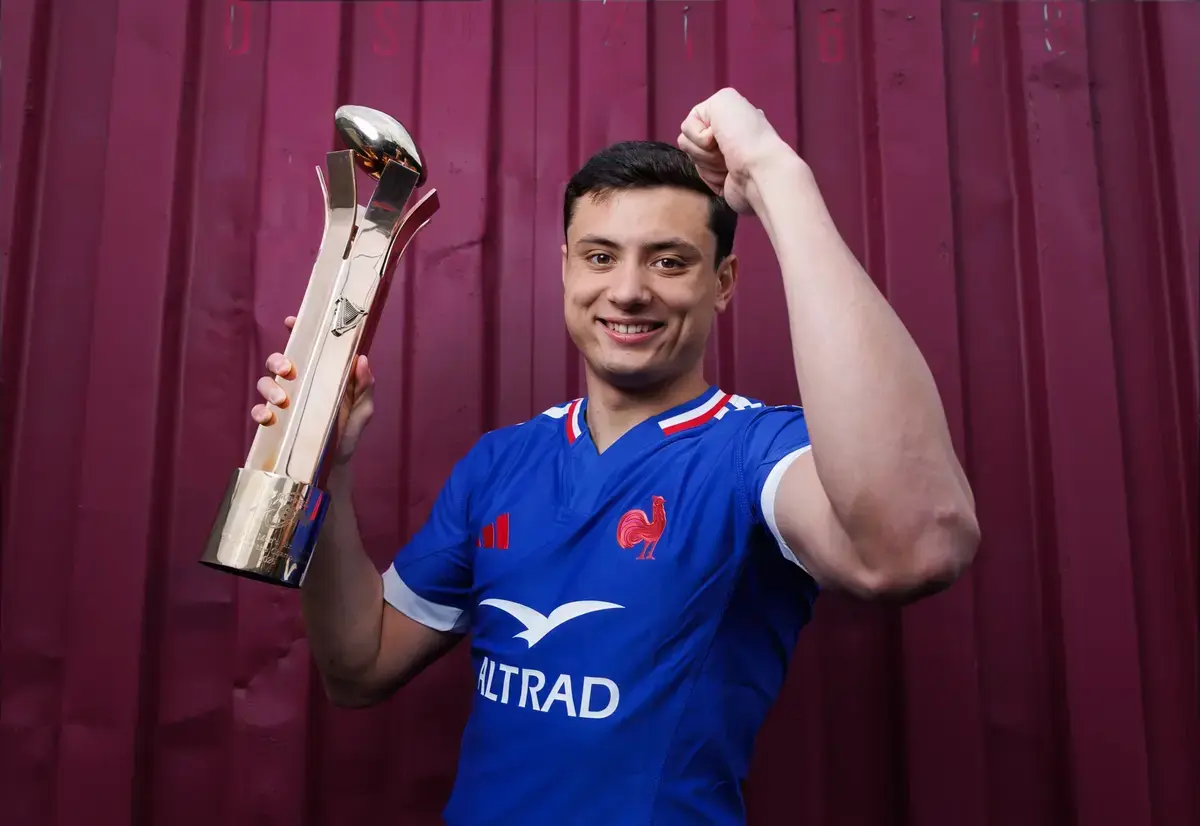
France’s record-breaking winger Louis Bielle-Biarrey has been named the 2026 Guinness Men’s Six Nations Player of the Championship, becoming only the fourth player in the award’s history to claim the accolade in consecutive years.
The 22-year-old secured 44 per cent of the fan vote in a record ballot that saw 151,525 supporters cast their verdict over a one-week voting period. Ireland centre Stuart McCloskey, Italy’s Tommaso Menoncello and Scotland wing Kyle Steyn were also shortlisted after standout campaigns of their own.
Bielle-Biarrey’s coronation caps a remarkable championship in which he scored nine tries across five matches, breaking his own record of eight set in 2025. That tally included a stunning four-try haul in the decisive final-round victory over England at the Stade de France, a performance that secured back-to-back titles for Fabien Galthié’s side.
“I’m just really happy, honestly,” Bielle-Biarrey said upon receiving his award in Bordeaux. “It’s yet another reward for the team’s hard work throughout the tournament. We were able to defend our title. Winning the tournament two years in a row is no small feat. We’re very happy to have done it.”
Following in Dupont’s footsteps
The Bordeaux Bègles wing joins an elite group of multiple winners that includes Brian O’Driscoll, Stuart Hogg and his France teammate Antoine Dupont, who achieved the same back-to-back feat in 2022 and 2023. Indeed, over the past five Six Nations editions, only Italy’s Menoncello in 2024 has broken French dominance of the individual award.
The symmetry with Dupont is particularly striking. Both players developed through France’s youth pathways before bursting onto the senior stage, and both have now received the ultimate individual recognition in consecutive campaigns. Galthié acknowledged as much after France’s title-clinching victory.
“He is following in Antoine’s footsteps,” the France head coach said. “The players inspire one another. It’s hard to find the right adjectives to talk about him right now, and last year too. He will surely become the top scorer of the tournament, I think.”
Record upon record
The statistics behind Bielle-Biarrey’s championship defy comprehension. His nine tries represent a single-tournament record for the Six Nations era, surpassing the mark of eight he shared with Cyril Lowe (1914) and Ian Smith (1925) after last year’s campaign.
More remarkably, the winger has now scored in ten consecutive Six Nations matches, another record he holds alone. Only Chris Ashton, with his four tries against Italy in 2011, had previously matched the four-try performance Bielle-Biarrey delivered against England.
With 18 tries in just 14 Six Nations appearances, he is already the highest-scoring French player in the championship’s modern era, having overtaken Damian Penaud despite playing in roughly half the number of fixtures. He sits fifth on the all-time scorers list and, at 22, has O’Driscoll’s record of 26 tries firmly in his sights.
Beyond the try-scoring, his attacking numbers were equally impressive: 311 metres gained, 13 defenders beaten, eight clean breaks and four try assists across the championship.
From Grenoble to greatness
Bielle-Biarrey’s trajectory reads like a rugby fairytale. Born in La Tronche in the Isère department with Réunionese heritage through his mother and Toulon roots through his father, he began playing rugby at five years old in Seyssins, a small commune near Grenoble with a population of just 8,000.
His early career saw him deployed at fly-half before coaches identified his devastating pace and moved him to the wing. That speed, clocked at 38 kilometres per hour when he famously beat former European 100m champion Christophe Lemaitre in a sprint earlier this year, has become his calling card.
His first senior start for Bordeaux Bègles in January 2022, at just 18 years old, was immediately marked by a hat-trick against the Scarlets. By August 2023, he had earned his first cap against Scotland, and within weeks he became the youngest French player to score a try at a Rugby World Cup during the tournament on home soil.
The red scrum cap, given to him by his father at age eight, has since become his trademark, instantly recognisable as he accelerates past defenders.
A championship to remember
Bielle-Biarrey’s award arrives after a Six Nations widely heralded as the greatest edition since the championship expanded to six teams in 2000. A record 111 tries were scored across the tournament, with the title ultimately decided by Thomas Ramos’s penalty in the dying seconds of the final match.
The French public certainly responded. Broadcast across France Télévisions and TF1, the 2026 championship attracted over 35.5 million average viewers throughout the five rounds, with 9.5 million tuning in for the title decider against England.
For Bielle-Biarrey, the individual recognition is secondary to collective success. But in a championship of extraordinary moments, his contribution stood apart.
“My parents signed me up for rugby when I was five years old,” he has previously reflected. “Straight away, I really liked it. It is a childhood dream today to be able to live my passion.”
At 22, with two Player of the Championship awards, a cabinet of try-scoring records and the trajectory to become France’s all-time leading scorer, Louis Bielle-Biarrey is living that dream in spectacular fashion.
Six Nations
Two former winners in shortlist for Player of Six Nations award
Published
7 months agoon
21st March 2026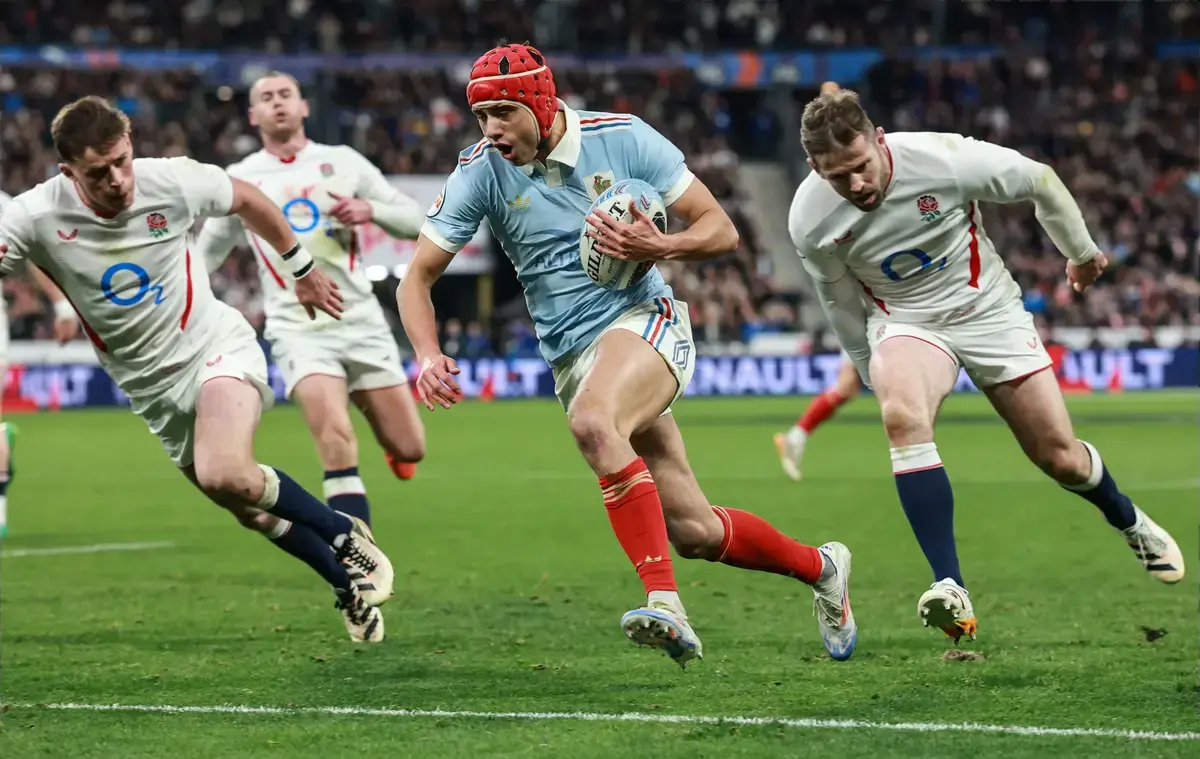
The shortlist for the 2026 Guinness Men’s Six Nations Player of the Championship has been announced, with four players recognised for performances that defined what was widely described as one of the most compelling tournaments in recent memory. Louis Bielle-Biarrey (France), Stuart McCloskey (Ireland), Kyle Steyn (Scotland) and Tommaso Menoncello (Italy) make up a quartet selected from those who topped the performance statistics charts and drew the highest share of fan votes in the Team of the Championship poll.
Voting is now open at sixnationsrugby.com and closes on Thursday 26 March at 09:00 GMT.
Key Points
- Louis Bielle-Biarrey (France) and Tommaso Menoncello (Italy) are the two former winners on the shortlist, having claimed the award in 2025 and 2024 respectively
- Bielle-Biarrey scored a record nine tries in five matches, breaking his own all-time Championship record set just twelve months earlier
- Menoncello is nominated for a third successive year, becoming only the third player — alongside Brian O’Driscoll and Antoine Dupont — to achieve three consecutive nominations
- Ireland’s Stuart McCloskey, 33, leads the tournament’s Oval Insights rankings with a score of 8.6/10, despite not scoring a single try
- Scotland’s Kyle Steyn equalled the all-time Championship record for defenders beaten, with 26 across the tournament
- McCloskey would become Ireland’s first winner since Jacob Stockdale in 2018 if he takes the award
- Steyn’s nomination is the first for a Glasgow Warriors player since 2017
- The winner is decided entirely by public vote, with fans able to vote at sixnationsrugby.com until 09:00 GMT on Thursday 26 March
Louis Bielle-Biarrey
If there is a frontrunner, it is hard to argue against the 22-year-old Bordeaux-Bègles and France wing. Bielle-Biarrey claimed the Player of the Championship award in 2025 and delivered an encore that left statisticians scrambling for superlatives. His nine tries across five matches broke his own all-time Championship record — he had set the previous mark of eight just twelve months earlier — and makes him the most prolific try-scorer in the history of the competition.
The highlight reel moment of his tournament came against England in a match that immediately entered rugby folklore. Bielle-Biarrey crossed for four tries in the Crunch, becoming only the second player ever to score a quadruple in a single Six Nations match, after Chris Ashton’s effort against Italy in 2011. He also scored in each of France’s five games, an achievement managed by only three other players since the tournament expanded to six nations in 2000.
His numbers elsewhere were just as striking. He led the Championship in clean breaks (19), initial breaks (14) and supported breaks (5), while his 366 metres carried ranked third overall. The Oval Insights algorithm placed him second in its rankings with a score of 8.5 out of 10. His efforts were central to France retaining the Championship title for a second successive year.
Key stats: 9 tries (Championship record), 19 clean breaks (1st), 366 metres carried (3rd), 8.5/10 Oval Insights (2nd)
Stuart McCloskey
At 33, Stuart McCloskey’s 2026 Six Nations campaign reads like a statement of defiance against the passage of time. The Ulster centre was one of only two Irish players — alongside captain Caelan Doris — to play every minute of Ireland’s five matches, and he did so while producing numbers that led not just his team but the entire tournament in several categories.
He did not score a try, yet his fingerprints were on Ireland’s attack at every turn. His six try assists tied for the joint-highest in the Championship, with multiple offloads producing scores for team-mates. He led the tournament in dominant contacts (18, at a remarkable 31% rate), turnovers won among backs (eight, joint-first overall) and tackle attempts among backs (79). His 20 defenders beaten ranked joint-second in the Championship.
The Oval Insights system placed McCloskey first among all players, awarding him 8.6 out of 10. His performances were instrumental in Ireland securing the Triple Crown and finishing as runners-up in the overall standings. Should he win, McCloskey would become Ireland’s first Player of the Championship since Jacob Stockdale in 2018.
Key stats: 6 try assists (joint 1st), 18 dominant contacts (1st), 8 turnovers won (joint 1st), 8.6/10 Oval Insights (1st)
Kyle Steyn
Kyle Steyn’s inclusion in the shortlist may owe more to moments of brilliance than the volume of a Bielle-Biarrey or the relentless consistency of a McCloskey, but few players left as large an impression on individual matches. The 32-year-old Glasgow Warriors winger was awarded Player of the Match twice during the tournament — against England and France — and was at the heart of two results that will be remembered long after the final standings are forgotten.
His 26 defenders beaten across the Championship ranked first in the competition, equalling the all-time record for the category. He scored three tries and covered 316 metres with ball in hand, ranking sixth overall. His Oval Insights score of 8.1 placed him seventh. Scotland’s two standout victories — a thumping win over England and the extraordinary 50-40 defeat of France at Murrayfield — each had Steyn’s footprints running through them.
It would be the first nomination for a Glasgow Warriors player since 2017. Hamish Watson was the last Scotsman to claim the award, in 2021.
Key stats: 26 defenders beaten (1st, joint record), 3 tries, 316 metres (6th), 8.1/10 Oval Insights (7th)
Tommaso Menoncello
At just 23 years old, Tommaso Menoncello is already becoming a fixture on this shortlist. This is his third consecutive nomination, and he arrives having won the award in 2024 before finishing runner-up to Bielle-Biarrey in 2025. His continued presence at the top of the tournament standings speaks to a player who has rapidly established himself as one of the finest centres in world rugby.
This year, Menoncello was central to Italy’s most memorable results — victories over Scotland and England — and was named Player of the Match in the latter. His 14 clean breaks ranked third in the Championship, his 363 metres carried ranked fourth, and his 11 initial breaks placed joint-third. He also matched McCloskey’s joint-second ranking for defenders beaten with 20, and his 36.7% dominant carry rate — 11 dominant carries from 42 attempts — underlined the physical impact he carries into contact.
Only Andrea Masi has previously won the Player of the Championship award as an Italian, making Menoncello’s repeated presence at the summit of the conversation a remarkable achievement for a player still in his early twenties.
Key stats: 14 clean breaks (3rd), 363 metres carried (4th), 20 defenders beaten (joint 2nd), 7.9/10 Oval Insights (8th)
The verdict
On pure statistics, the case for Bielle-Biarrey is compelling — nine tries, a broken record and a Championship winners’ medal make him the obvious choice for many. But with the award decided by public vote, McCloskey’s all-action, selfless game and the passionate Irish fanbase could prove decisive. Steyn’s two Player of the Match awards demonstrate his impact in the biggest moments, while Menoncello’s third successive nomination reinforces just how consistently brilliant he has been.
Fans have until Thursday 26 March at 09:00 GMT to have their say at sixnationsrugby.com.
Six Nations
Six things we learned from round 5 of the Guinness Six Nations
Published
7 months agoon
16th March 2026
Super Saturday 2026 delivered one of the greatest days in Six Nations history. France retained their championship with a last-gasp 48-46 victory over England in a Paris thriller that will be replayed for generations, as Thomas Ramos held his nerve with the final kick to break Irish and English hearts. Earlier in Dublin, Ireland secured their fourth Triple Crown in five years with a commanding 43-21 win over Scotland, while Wales ended 1,099 days of Six Nations misery by beating Italy 31-17 in Cardiff. Louis Bielle-Biarrey scored four tries to take his tournament tally to nine – a new record – while the championship produced 111 tries, the most since Italy joined the competition. England’s seven tries weren’t enough. Ireland’s six tries secured the Triple Crown but not the title. And Wales finally, mercifully, tasted victory again. Here are six things we learned from a finale that had absolutely everything.
France are deserved champions
Forget the script. Tear up the predictions. This wasn’t supposed to happen. England, who had lost four consecutive matches coming into Paris, weren’t meant to score 46 points and seven tries against the defending champions. France weren’t supposed to concede that many points and still win. And yet here we are, trying to process what might just be the greatest Six Nations match ever played. The 48-46 scoreline tells only part of the story of a game that swung violently from one team to the other across 82 breathless minutes. England led 27-17 at half-time despite Ellis Genge’s yellow card and a penalty try for France. They fell behind 38-27 early in the second half as Louis Bielle-Biarrey completed his hat-trick. They stormed back to lead 46-45 with three minutes remaining after Tommy Freeman’s brilliant finish. And then came the final twist. With the clock in the red, Trevor Davison and Maro Itoje were penalised at a ruck, giving Thomas Ramos a long-range penalty from 47 metres to win the championship. The Stade de France held its breath. Ramos, France’s nerveless full-back who had already become his country’s all-time leading points scorer earlier in the tournament, stepped up and bisected the posts. France were champions. England were heartbroken. Ireland, watching in Dublin, saw their title hopes evaporate with that single kick. “We’re very lucky that we have maybe the best kicker around,” said Fabien Galthié afterwards, and nobody could argue. Bielle-Biarrey’s four tries – taking him to nine for the championship, smashing the previous record – showcased France’s attacking brilliance. The 21-year-old now has 29 tries in just 27 Tests, an astonishing strike rate that surpasses even Damian Penaud. But it was Ramos’s composure under ultimate pressure that won the title. France finished with 30 tries across five matches, equalling their own record from 2025, and scored four-try bonus points in four of their five games. Their only defeat came against England at Twickenham in round two, but they bounced back with three consecutive bonus-point victories. This is back-to-back titles for the first time since 2006-07, and France’s eighth championship triumph since 2000 – more than any other nation in that period. “We’re very proud of our performance today and the spirit we showed,” said François Cros. “We had a tough first half where Scotland put us under pressure, but we came through that and in the second half, we were able to unleash our game.” The attacking rugby France have played throughout this tournament has set new standards. They are deserved champions, winners of the greatest Six Nations finale ever witnessed.
England regain pride but is that enough?
Where has this England been? Steve Borthwick’s side scored seven tries in Paris, ran France ragged for long periods, led at half-time despite playing 10 minutes with 14 men, and came within 90 seconds of one of the great Six Nations upsets. And yet they still lost. They still finish fifth in the table with just one win from five matches. They still have suffered their worst championship campaign in 50 years. The 48-46 defeat completes England’s most disappointing Six Nations since 1976, when they last lost four matches in a single campaign. The performance was everything Borthwick had demanded – attacking ambition, forward dominance, clinical finishing from Tom Roebuck, Cadan Murley, Ollie Chessum (twice), Alex Coles, Marcus Smith and Tommy Freeman. But the result tells the real story. England’s discipline, which has plagued them all championship, cost them again. Genge’s yellow card for collapsing a maul on the stroke of half-time, coupled with a penalty try for France, turned a 27-17 lead into 24-27 at the break. France then scored 14 more points while England were down to 14 men. That’s 21 points conceded in that crucial period. “When we keep 15 men on the field we look a very good team,” admitted Borthwick afterwards, and the statistics bear him out. England have received nine yellow cards across five matches – equalling Italy’s unwanted record from 2002 – and have conceded 63 points while a player off the pitch. Borthwick questioned referee Nika Amashukeli’s communication over the penalty advantage before Bielle-Biarrey’s fourth try, insisting “the players on the pitch were told it was a penalty advantage” when it had been changed to a knock-on advantage by the TMO. But complaints about refereeing cannot mask the bigger picture. England have lost to Scotland, Ireland and Italy in this championship. They beat Wales and pushed France to the wire, but consistency remains their biggest problem. “I believe I’m the right man to lead the team forward,” insisted Borthwick when asked about his future, and this performance in Paris – despite the heartbreaking defeat – might just have earned him more time. England showed character, attacking ambition and forward power that had been missing for much of the season. “I truly believe this team is going places,” insisted captain Itoje. “We showed the spirit of this team. In sport, you don’t want to go through the experiences that we went through over the last four games. But I truly believe this team’s going places.” Pride has been restored. The performance in Paris proved England can compete with the world’s best when they get their game right. But is that enough? Fifth place, four defeats, and another summer of questions about Borthwick’s methods suggest not.
Ireland have found their edge
The Fields of Athenry rang around the Aviva Stadium. Caelan Doris lifted the Triple Crown trophy. Six tries, 43 points, a 12th consecutive victory over Scotland. Everything about Ireland’s final-day performance screamed champions. Everything except the result in Paris that mattered most. Andy Farrell’s side did everything asked of them, delivering their best performance of the championship against a Scotland side who arrived in Dublin dreaming of their own title glory. Jamie Osborne’s fourth-minute try – his fourth of the championship – set the tone for a commanding display built on set-piece dominance and ruthless finishing. Dan Sheehan’s maul try, Robert Baloucoune’s searing pace, Darragh Murray’s bonus-point score on his Six Nations debut, and Tommy O’Brien’s late brace sealed a performance that had Farrell “proud as punch.” The statistics were extraordinary: 42.9 minutes of ball-in-play time in a game for the ages, Ireland’s red zone efficiency at 4.7 points per entry, and Stuart McCloskey delivering a fifth consecutive high-quality display that puts him “in the mix for player of the tournament.” “We had a ruthless edge to us in how we defended and converted in the 22,” said Farrell. “That was the story of the game really.” Ireland finish second, three points behind France, their three-year title reign over. The opening-night defeat in Paris – when Farrell publicly questioned his team’s “intent” – proved decisive. But the response has been remarkable. From the wreckage of that 36-14 hammering, Ireland have rebuilt themselves, winning four consecutive matches with increasing conviction. The 42-21 destruction of England at Twickenham was followed by grittier wins over Italy and Wales, before this commanding display against Scotland. Ireland used 35 players across this championship – more than any previous Farrell campaign – and the depth chart has been tested extensively. Tom O’Toole’s remarkable conversion to loosehead prop, where he delivered 20 tackles in 65 minutes against Scotland, was “amazing” according to Farrell. McCloskey’s consistency has been a revelation. Robert Baloucoune was named the tournament’s Rising Player despite being 28 years old. The Triple Crown – Ireland’s 15th, and ninth of the Six Nations era – represents their fourth in five years, a remarkable achievement. “It’s unique as an Irishman to be cheering them on,” Doris had said of supporting England in Paris, and the strangeness of that moment captured everything about Ireland’s championship. The title may have gone to France, but Ireland have rediscovered the edge, the hunger, and the ruthless efficiency that makes them one of world rugby’s most dangerous sides. The 18-month journey to the 2027 World Cup is officially on track.
Same old story for Scotland
Twelve years. Twelve consecutive defeats to Ireland. Twelve times Scotland have travelled to Dublin dreaming of glory, only to return home empty-handed and heartbroken. The 43-21 defeat wasn’t a hammering – Darcy Graham, Finn Russell and Rory Darge all scored tries – but it was comprehensive enough to end any lingering title hopes and expose the familiar failings that have haunted Gregor Townsend’s tenure. Scotland haven’t won in Dublin since 2010, when Dan Parks nailed a touchline penalty at Croke Park to scuttle Ireland’s Triple Crown voyage. They haven’t beaten Ireland anywhere since 2017. And on this evidence, the wait will continue. Ireland dominated the collisions, winning the breakdown battle and establishing set-piece superiority that Scotland couldn’t match. Jamie Osborne, Dan Sheehan and Robert Baloucoune scored in a devastating first 20 minutes that established a 19-7 half-time lead. Scotland fought back in the third quarter – Russell’s brilliant solo try and Rory Darge’s finish bringing them within five points at 26-21 – but Ireland’s response was ruthless. Darragh Murray’s bonus-point try, created by the bench’s immediate impact after Andy Farrell made six changes simultaneously, restored control before Tommy O’Brien’s late brace sealed the win. “Ireland played well – they always seem to play well against us,” said Townsend afterwards, and that admission tells you everything. The statistics told the story: Ireland made 232 tackles to Scotland’s significantly fewer, controlled territory for long periods, and converted their 22-metre entries with clinical efficiency. “We’d close the gap, and then we’d let them back in through mistackles or mistakes off the kick-off. They’re all our doings,” admitted captain Sione Tuipulotu. Scotland’s attacking rugby was often brilliant – that 19-phase move for Graham’s try showcased their ambition – but they couldn’t sustain it for 80 minutes. They finish third in the table with three wins from five, which represents progress from previous campaigns. But Townsend’s record in Dublin now stands at zero wins from 11 attempts, and Scotland’s inability to beat Ireland home or away remains one of rugby’s great puzzles. “I’m proud of how we stepped up in the second half,” said Tuipulotu. “But I’m gutted. We really set our sights on coming here and getting a result, but Ireland were too good today. Ireland are deserved winners today.” Former Scotland prop Peter Wright touched on deeper issues: “Physically we compete against England and France, but for some reason, we cannot against Ireland.” The same old story continues. Scotland can beat anyone on their day – witness that stunning 50-40 victory over France last week – but they cannot beat Ireland anywhere, anytime. Until that changes, title challenges will remain dreams rather than reality.
Welsh fans can dare to dream
The wait is over. After 1,099 days, 15 consecutive Six Nations defeats, and a three-year journey through rugby’s darkest valleys, Wales finally tasted victory again. The 31-17 triumph over Italy wasn’t just a win – it was a cathartic release of three years’ worth of frustration, disappointment and pain. Aaron Wainwright’s two tries, Dewi Lake’s score from a driving maul, and Dan Edwards’s brilliant 16-point haul (including a try and an audacious drop goal) gave Wales a 31-0 lead that had the Principality Stadium shaking with joy. “It’s everything for us,” said captain Lake afterwards, his voice hoarse with emotion, and you believed every word. This was Wales’s first Six Nations home win since February 2022 – 1,491 days ago – when they beat Scotland. It was their first championship victory of any kind since beating Italy in Rome on 11 March 2023. The relief was palpable. “We hope that we have restored some faith in the jersey and into what this group can do,” added Lake, and the performance suggested genuine progress under Steve Tandy’s guidance. The defensive intensity that had been building through narrow defeats to Scotland and Ireland was maintained throughout. The set-piece dominance – three tries from driving lineouts in the first half – showcased growing power and precision. Edwards, who had been dropped after the France game for Sam Costelow, responded with his finest performance in a Wales shirt, darting through a gaping hole for the bonus-point try before landing that stunning drop goal from 40 metres. “You’re probably thinking ‘what are you doing?’ And then he absolutely buries it,” laughed Tandy afterwards. “I am overwhelmed with pride by what this group delivered,” said Tandy, visibly emotional. “I’ve always said it’s never been a question of desire, physicality or work ethic in this group. It’s just getting them to understand how far they can go with the work ethic and physically they’ve got.” Italy fought back with tries from Tommaso Di Bartolomeo, Tommaso Allan and Paolo Garbisi, but Wales held firm, defending with the hunger and hardness that had been missing in those opening hammerings by England and France. They still finish with the wooden spoon – their third consecutive bottom-placed finish. But unlike the whitewashes of previous years, this campaign ended with a win, with pride restored, and with belief returning. “This group has gone through a lot of emotionally tough things recently, whether that is on the field or off it,” reflected Lake, and that context makes this victory all the more significant. Welsh rugby remains in crisis off the field, with the WRU facing an extraordinary general meeting and existential questions about professional structures. But on the field, Tandy has given Wales something to build on. The foundations are there. The forward pack dominated Italy physically. Young players like Eddie James and Ellis Mee have emerged as genuine Test-quality performers. The 1,099-day nightmare is over. Welsh fans can dare to dream again.
A match too far for Italy
Italy arrived in Cardiff seeking to create history. Victories over Scotland and England had put them on the brink of something never achieved before – three wins in a single Six Nations campaign. But the brave Azzurri, who had given everything to shock England seven days earlier, simply had nothing left in the tank. The 31-17 defeat was comprehensive, painful, and perhaps inevitable after the emotional and physical toll of their historic win in Rome. Gonzalo Quesada’s side looked flat from the opening exchanges, making mistakes in defence they hadn’t made all tournament, losing collisions they’d been winning for weeks, and struggling to find the rhythm that had made them such compelling viewing. Wales raced to a 21-0 half-time lead through Wainwright’s brace and Lake’s try, all from dominant set-piece play. By the time Edwards scored early in the second half to make it 31-0, Italy’s dreams were dust. “Their heart and physicality was bigger than ours in the first half,” admitted Quesada afterwards. “We saw a big improvement from Wales against Ireland and we knew they had the opportunity to put everything out there to get victory. It was a big game from Wales and they never gave up.” Italy did fight back with three second-half tries – and had two more ruled out by the TMO – but the damage had been done. The day of recovery advantage Wales enjoyed proved significant, but there were deeper issues at play. “We used many energies in a long tournament,” reflected captain Michele Lamaro. “The meta that hurts most is the one at the start of the second half because it made our hopes of getting back into the match vacillate.” The defeat means Italy finish fourth in the table with two wins from five, equalling their best-ever championship performance but falling short of the unprecedented third victory that would have represented genuine progress. Still, this was a tournament that exceeded expectations. Victories over Scotland and England – particularly that first-ever triumph against the English in Rome – represented seismic moments for Italian rugby. Tommaso Menoncello, Paolo Garbisi and Ange Capuozzo all showed flashes of world-class ability. But consistency remains the challenge. Italy were brilliant against England, poor against Wales, and somewhere in between against everyone else. “We are a good squad, in a true process of growth,” said Quesada. “We must do attention to what we say, to how we communicate: Wales has a beautiful squad, a quality staff, and all matches in the Six Nations are tough.” For Italy, one match too far. But also, a championship that showed how far they’ve come – and how far they still have to go. Sonnet 4.5Claude is AI and can make mistakes. Please double-check responses.


