Connect with us

Australia

Giteau Law scrapped leaving Wallabies free to pick strongest team

Published

on

RUGBY WALLABIES LIONS, Will Skelton of Australia (left) in action during the Second Test match between the Wallabies and the British and Irish Lions at Melbourne Cricket Ground in Melbourne, Saturday, July 26, 2025. (IMAGO / AAP)

In a seismic shift that could reshape Australian rugby’s international fortunes, Rugby Australia has effectively abolished the restrictive Giteau Law, granting Wallabies coach Joe Schmidt unprecedented freedom to select overseas-based players as the nation prepares for the Rugby Championship and a home World Cup in 2027.

  • Rugby Australia declares the controversial Giteau Law “redundant” after Lions series
  • Coach Joe Schmidt granted complete freedom to select overseas-based players
  • Previous restrictions limited overseas picks to players with 30+ caps and maximum three per series
  • Europe-bound stars Skelton, Tupou, Hooper and Gleeson now eligible without constraint
  • Policy shift comes ahead of Rugby Championship and 2027 World Cup preparations
  • RA maintains preference for domestic players of “equal calibre”
  • Decision represents major strategic pivot following talent exodus to European clubs

The dramatic policy reversal, announced in the aftermath of Australia’s hard-fought Lions series defeat, removes the shackles that have long constrained national selectors and opens the door for a potential influx of European-based talent into the gold jersey.

Speaking to reporters following the conclusion of the British & Irish Lions tour, Rugby Australia’s director of high performance Peter Horne delivered the news that will reverberate throughout the rugby world: “Joe’s got no impediment to select whoever he wants. The Giteau Law, it’s kind of redundant.”

The timing of the announcement carries particular significance, coming just days after Australia’s 22-12 victory in the third Test against the Lions in Sydney, where overseas-based lock Will Skelton and Europe-bound prop Taniela Tupou delivered commanding performances that underscored the value of offshore talent.

The Giteau Law, named after former Wallabies playmaker Matt Giteau who became its first beneficiary in 2015, was introduced as Australia grappled with a significant talent drain to lucrative European competitions. The policy required overseas-based players to have earned either 30 Test caps or completed five years of service to Australian rugby before becoming eligible for national selection, with a strict limit of three overseas picks per Test series.

What began as a pragmatic response to player exodus evolved into a controversial constraint that often forced selectors to choose between domestic loyalty and optimal team composition. The law underwent several iterations since its inception, initially requiring a prohibitive 60 Test caps and seven years in Super Rugby before being relaxed to more manageable thresholds.

“The reality is, if he wants to pick Josh Kemeny from Northampton, that’s his call,” Horne explained, referencing the young flanker who has earned just two Wallabies caps but could theoretically now be selected despite his minimal international experience.

The policy shift arrives at a crucial juncture for Australian rugby. A new wave of established players is heading overseas, including Tupou to Racing 92, third Test player of the match Tom Hooper to Exeter Chiefs, and back-row Langi Gleeson to Montpellier. Under the old system, their international careers would have faced immediate jeopardy.

Rugby Australia CEO Phil Waugh emphasised that the decision reflects strategic pragmatism rather than wholesale abandonment of domestic development. “Cohesion’s critically important, and so I think being quite overt around the fact that our preference is to pick players who are based locally, and there’s always the option when there’s a material difference between what we have locally and what’s available playing offshore.”

The nuanced approach suggests Schmidt will continue favouring domestic-based players when talent levels are comparable, maintaining investment in Australia’s Super Rugby Pacific franchises whilst acknowledging the reality of modern professional rugby’s global marketplace.

“We’ve also made a choice that we select domestically because if the player’s equal, or of that calibre, it’s important that we invest in our premier competition in Australia,” Horne stressed. “But there’s no impediment for Joe to select abroad, it hasn’t been from the start.”

This philosophical shift appears vindicated by recent performances. Skelton’s towering presence against the Lions, combined with strong showings from players like Japan-based trio Samu Kerevi, Marika Koroibete and Bernard Foley in previous campaigns, demonstrated the value of maintaining connections with overseas-based talent.

The policy change carries immediate consequences for Schmidt’s Rugby Championship squad selection, expected to be announced on Thursday before the Wallabies depart for South Africa on Saturday. Australia faces the formidable Springboks in consecutive Tests in Johannesburg (16 August) and Cape Town (23 August), matches that could define their tournament prospects.

Skelton, who will undergo medical screening alongside his teammates on Wednesday, remains a pivotal figure in Australia’s forward pack planning. Horne’s praise for the La Rochelle lock extended beyond his on-field contributions: “He’s a great player, a great person, and he really brings the boys together; he takes time, gets to know them.”

The removal of selection constraints also benefits incoming head coach Les Kiss, who assumes control after the Rugby Championship and will oversee Australia’s preparation for the 2027 World Cup on home soil. Kiss inherits a significantly expanded talent pool that could prove crucial in assembling a squad capable of challenging for rugby’s ultimate prize.

The policy revision represents a direct response to the continuing exodus of Australian talent to European competitions. Players like centre Len Ikitau and prop Angus Bell are embarking on sabbatical seasons with Exeter Chiefs and Ulster respectively, whilst others have committed to longer-term overseas deals.

This brain drain has particularly affected forward depth, an area where Australia has historically struggled to match the physicality of opponents like South Africa and England. The freedom to select European-based forwards could address long-standing deficiencies in set-piece power and breakdown effectiveness.

The decision also acknowledges modern rugby’s economic realities. With European clubs offering significantly higher salaries than their Australian counterparts, talented players face inevitable financial pressure to seek opportunities abroad. Rather than fighting this tide, Rugby Australia has chosen pragmatic acceptance.

Australia’s approach aligns with selection policies already employed by other major rugby nations. South Africa successfully integrates overseas-based players into World Cup-winning squads, whilst New Zealand maintains flexibility around offshore talent when required.

However, Australia’s unique geographical isolation presents distinct challenges. Unlike European nations where players can maintain closer connections with national programmes, Australian-based overseas players often face significant logistical hurdles in maintaining international involvement.

“Clearly, our geography makes it a little bit more challenging than other unions that our position gets compared to,” Waugh acknowledged, highlighting the complex dynamics that distinguish Australia’s situation from other rugby powers.

The Lions tour success, which exceeded Rugby Australia’s financial expectations and is predicted to generate over £60 million in revenue, provides the organisation with breathing room to implement strategic changes. This financial windfall helps service the £50 million debt facility taken out to safeguard Australian rugby during recent challenging periods.

“We’re working through how the funds are flowing through on the back of the tour now but it’s certainly exceeded expectations,” Waugh confirmed. “It’s been a good opportunity for us to reset the balance sheet.”

This improved financial position allows Rugby Australia to take calculated risks with selection policy, confident that short-term domestic competition impacts can be managed whilst pursuing international success.

The 2027 Rugby World Cup looms as the ultimate test of this strategic gambit. With the tournament set to unfold across Australian venues, the pressure to deliver a competitive Wallabies squad will be immense. The expanded selection pool provides coaches with greater flexibility in assembling a squad capable of challenging traditional powerhouses.

Historical precedent suggests home advantage can prove decisive in World Cup campaigns. England’s 2003 triumph and South Africa’s 1995 victory demonstrate the potential for host nations to exceed expectations when supported by passionate home crowds.

Continue Reading
Click to comment

Leave a Reply

Australia

Crichton the next NRL star to switch codes for World Cup tilt

Published

on

Crichton the next NRL star to switch codes for World Cup tilt
England v Australia The ABK Beer Rugby League Ashes 01 11 2025. 2nd test angus crichton during the The ABK Beer Rugby League Ashes match between England and Australia at Hill Dickinson Stadium, Liverpool, England on 1 November 2025. (IMAGO / Pro Sports Images)

Sydney Roosters and Kangaroos star Angus Crichton will return to rugby union in 2027, signing a two-year deal with the NSW Waratahs and Rugby Australia as he pursues his childhood dream of representing the Wallabies at the 2027 Rugby World Cup on home soil.

The 29-year-old backrower confirmed his code switch on Wednesday, becoming the latest high-profile NRL player to join the exodus to rugby union ahead of Australia’s hosting of the global tournament. Crichton will complete the 2026 NRL season with the Roosters before linking up with the Waratahs, where he will reunite with former teammate Joseph-Aukuso Suaalii.

The move represents a homecoming of sorts for Crichton, who starred in rugby union during his schoolboy years at Scots College, representing Australian Schoolboys in 2014 as a centre and number eight. His journey to this point has been circuitous – turning down a Waratahs academy contract to sign with South Sydney Rabbitohs in 2016, going on to play 198 NRL matches, winning a premiership with the Roosters in 2019, and establishing himself as an elite representative player with 17 State of Origin appearances for NSW and 11 Test caps for the Kangaroos.

Crichton’s decorated rugby league career includes winning the prestigious Wally Lewis Medal as State of Origin player of the series in 2024, whilst he also featured for Australia on their 2025 Ashes Tour. His consistent excellence at the highest level – maintaining above 90 per cent tackle efficiency in eight of his 10 seasons – has made him one of rugby league’s premier forwards.

“It’s incredibly exciting to be returning to the sport I played throughout my childhood,” Crichton said in a statement released by Rugby Australia. “Growing up in Young, I have great memories driving up on buses to Canberra with the other farmers and their families for the Tahs-Brumbies game every year. To have a chance to play in the same Waratahs jersey as Lote Tuqiri, my favourite rugby player as a kid, is something special. I grew up with a Wallabies jersey and poster on my wall and my dream was to one day represent them.”

The signing represents a significant coup for Rugby Australia, which has been strategically targeting rugby league players with previous union experience who can quickly adapt to the 15-man game. Crichton’s deal, reported to be worth approximately £325,000 per season, includes a get-out clause following the 2027 World Cup, providing flexibility for both player and organisation.

Rugby Australia chief executive Phil Waugh welcomed the acquisition enthusiastically. “We are thrilled to be bringing Angus back to rugby ahead of a momentous 2027 season, highlighted by a once-in-a-generation home Rugby World Cup,” Waugh stated. “Angus excelled as a rugby player through the schoolboy and junior ranks and we believe he will make a strong contribution to the performance and culture of Australian Rugby. He has developed into an elite talent and leader in rugby league and now has the opportunity to showcase his talent on the unique global platform that rugby provides.”

The tactical positioning of Crichton within the Wallabies structure presents intriguing possibilities. At 102 kilograms, the powerful ball-runner possesses the physical attributes and offloading ability that could translate effectively to inside centre, following the template established by Sonny Bill Williams when he successfully transitioned from rugby league backrower to union midfielder. Alternatively, Crichton could be deployed as a ball-carrying flanker or number eight, utilising his edge running skills developed in rugby league.

Waratahs head coach Dan McKellar expressed confidence in Crichton’s ability to adapt. “We’re pleased to add someone of Angus’ calibre to the Waratahs for 2027,” McKellar said. “He’s the ultimate professional who will bring a high level of physicality and edge to the group. With his rugby union background, I’m sure he’ll be able to adapt quickly and will be raring to go when he arrives.”

Should Crichton establish himself at inside centre, it could facilitate tactical flexibility for the Wallabies, potentially allowing John Eales medallist Len Ikitau to return to his preferred number 13 jersey, whilst freeing Suaalii to operate at fullback or wing where his exceptional aerial skills could be maximised.

However, Rugby Australia’s Director of High Performance Peter Horne will be mindful of the cautionary tale of Sam Burgess, whose ill-fated switch from rugby league prop to England’s inside centre for the 2015 Rugby World Cup ended with the hosts’ pool-stage elimination and Burgess’s swift return to league. The contrasting success of Ben Te’o, who thrived for Leinster and England after making a similar transition, demonstrates the unpredictability of such moves.

Peter Horne emphasised the strategic importance of the signing. “The signing of Angus is an important step as we continue to build depth across Australia’s Super Rugby Pacific squads and ensure internal competition for national selection,” he explained. “Angus has a deep connection with rugby union as a former Australian Schoolboys representative and has consistently played at the highest level in league. We’re looking forward to bringing him back to rugby and introducing his unique experiences and skillset into our environment from next season.”

Crichton’s return to rugby union comes during a significant period of cross-code movement. His Roosters teammate Mark Nawaqanitawase has signed to play in Japan’s League One competition in 2027, also positioning himself for World Cup selection, whilst speculation regarding Zac Lomax’s potential code switch appears to have cooled after Rugby Australia declined to offer substantial top-up payments. Lomax now seems likely to remain in the NRL with Melbourne Storm.

The 2027 Rugby World Cup on Australian soil represents a unique opportunity for Rugby Australia to capitalise on home advantage and national interest. The recruitment strategy focusing on players with rugby union backgrounds who can transition quickly reflects a pragmatic approach from Wallabies coach-in-waiting Les Kiss and current coach Joe Schmidt.

For Crichton, the decision represents the fulfilment of a long-held ambition. He came close to switching codes in 2023, nearly signing with the Western Force, and has maintained friendships within rugby circles. His attendance at Wallabies matches during their 2024 Spring Tour in Europe signalled his continuing interest in the 15-man game.

“I am pleased to have confirmed my plans for beyond this season and look forward to fully focusing on the campaign ahead with my teammates and family at the Roosters,” Crichton concluded, making clear his commitment to finishing his rugby league career strongly before embarking on his union adventure.

As Crichton prepares for his final NRL season, Australian rugby union supporters will eagerly anticipate his return to the code where he first made his mark, hopeful that his elite athleticism, big-game experience and rural roots – those bus trips from Young to Canberra – will translate into Wallabies success when it matters most in 2027.Claude is AI and can make mistakes. Please double-check responses.

Continue Reading

Australia

Wallabies dig deep to hold off Japan on start of northern tour

Published

on

Wallabies dig deep to hold off Japan on start of northern tour
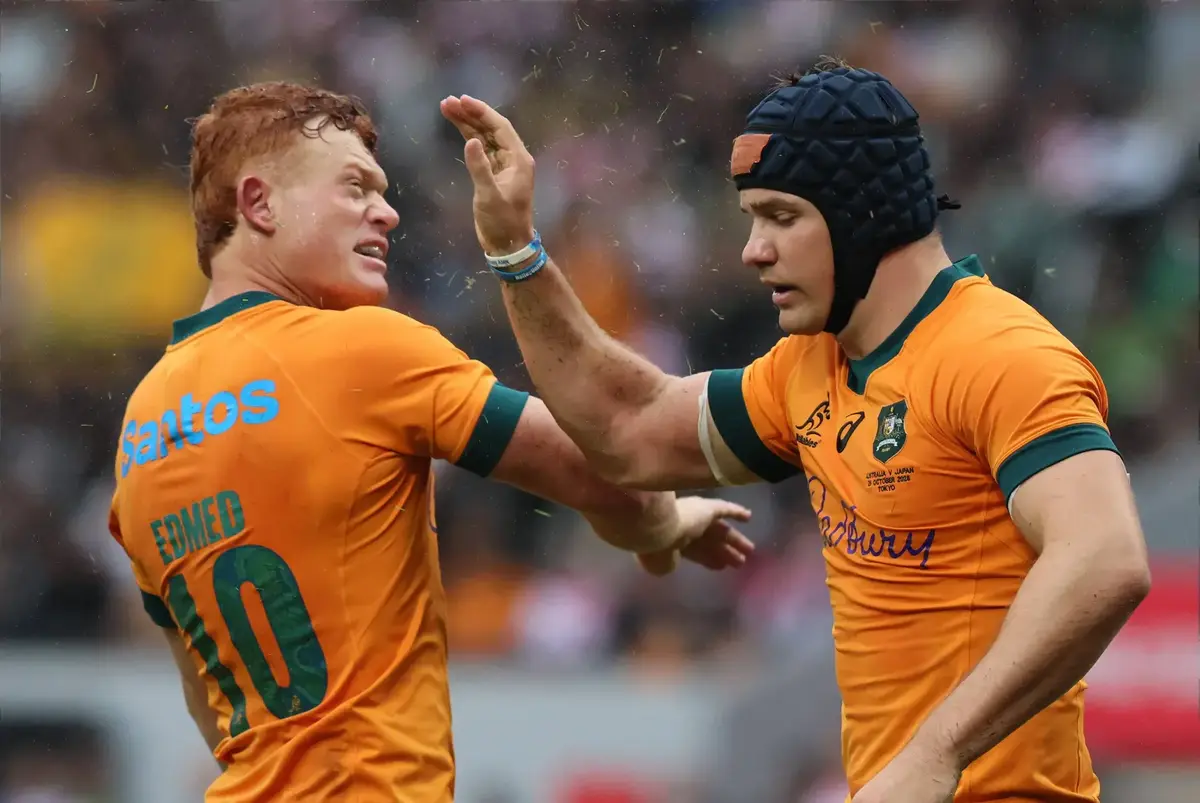
Australia s center Josh Flook R is celebrated by his teammate Tane Edmed L after he scored a try during the Ripovitan D Challenge Cup rugby match against Japan at Japan s national stadium in Tokyo on Saturday, October 25, 2025. Australia defeated Japan 19-15. photo by Yoshio Tsunoda. (IMAGO / AFLOSPORT)

Wallabies captain Nick Champion de Crespigny led a new-look Australian side to a hard-fought 19-15 victory over Japan at Tokyo’s National Stadium on Saturday, as the visitors were forced to show tremendous resilience in the opening match of their northern hemisphere tour.

Key moments

14′ – Nick Champion de Crespigny try after tap penalty, Tane Edmed converts (0-7)
29′ – Seungsin Lee penalty goal (3-7)
30′ – Josh Flook try from backline move, Tane Edmed converts (3-14)
Half-time: Japan 3-14 Wallabies
55′ – Shuhei Takeuchi try, conversion missed (8-14)
58′ – Carlo Tizzano try from rolling maul, conversion missed (8-19)
62′ – Ben Gunter try, Seungsin Lee converts (15-19)
Full-time: Japan 15-19 Wallabies

Joe Schmidt’s experimental side featuring 13 changes from their last outing against New Zealand began their five-Test tour with a gruelling battle against Eddie Jones’ determined Brave Blossoms in treacherous conditions at the National Stadium in Tokyo.

The match began in challenging weather, with humid, rainy conditions making ball handling difficult for both sides. Japan started stronger, with hooker Hayate Era landing several monster hits to rattle the visitors early. Within minutes, the Wallabies were forced into an early reshuffle when lock Lukhan Salakaia-Loto departed with a rib injury after just five minutes, bringing Josh Canham into the fray earlier than expected.

The Wallabies steadied and began to build pressure. Champion de Crespigny broke the deadlock in the 14th minute, burrowing over from close range after a botched Japanese lineout. The try came from intelligent decision-making by the new skipper, who opted for a quick tap penalty near the line. Tane Edmed added the conversion for a 7-0 lead.

Embed from Getty Images

Disaster struck for the Wallabies in the 22nd minute when replacement lock Canham was “knocked out cold” and forced from the field, leaving them desperately short in the second row. Champion de Crespigny found himself packing down in the second row as Jeremy Williams became “the last lock standing” in Schmidt’s words.

Japan looked threatening after a few passages in Australian territory, and a penalty to Seungsin Lee in the 29th minute got them on the board at 7-3. The Wallabies responded immediately through a well-worked backline move. Hunter Paisami broke the line with an angled charge and found Edmed inside. Fullback Andrew Kellaway then loomed on the angle and offloaded to Queensland centre Josh Flook who raced away to score under the posts in the 30th minute. Edmed’s conversion extended the lead to 14-3.

Embed from Getty Images

Despite dominating possession and territory for the remainder of the half, the Wallabies couldn’t extend their lead as Western Force flanker Carlo Tizzano was denied three separate try-scoring opportunities. The visitors took their 11-point advantage into the break.

Japan emerged from halftime with renewed purpose as rain continued to fall in Tokyo. Eddie Jones had clearly delivered one of his infamous half-time addresses, as the Brave Blossoms played with new vigour. The hosts dominated the third quarter and were rewarded when prop Shuhei Takeuchi crashed over in the 55th minute following a neat interchange at the back of a lineout, reducing the deficit to 14-8.

Embed from Getty Images

Carlo Tizzano finally got his reward for a persistent display three minutes later, the Western Force openside crossing from a powerful rolling maul to restore Australia’s 11-point cushion at 19-8. The conversion attempt from Edmed drifted wide in the difficult conditions.

Embed from Getty Images

Just as the Wallabies appeared to have secured control, Japan struck back through Queensland-born flanker Ben Gunter in the 62nd minute, with Lee’s conversion bringing the hosts within four points at 19-15. The try came moments after Aiden Ross entered the fray, becoming just the fifth player in history to represent both Australia and New Zealand at Test level after playing for the All Blacks in 2021.

Embed from Getty Images

The final quarter became a test of character for the depleted Wallabies as Japan threw everything at them in the pouring rain. Tom Robertson became the third Australian to leave the field through injury, further compounding Schmidt’s selection headaches with England looming next weekend.

With ten minutes remaining, Kippei Ishida broke clear, forcing desperate defence from the visitors. Japan could smell a boilover as they chased their first ever victory over Australia in seven Tests across 50 years. However, a crucial turnover by Hamish Stewart and Hunter Paisami with two minutes left allowed the Wallabies to wind down the clock and escape with a hard-earned four-point victory.

“I don’t think it needed to be that tense,” Schmidt reflected afterwards. “But sometimes that’s the way it goes and you’ve got to just work your way back and go again. I really admired the grit. We actually had to really roll our sleeves up and keep fighting for that one. In those conditions, it was just about what we managed to do.”

For Japan, captain Warner Dearns found some positives despite the defeat. “It was a very disappointing game but the scoreline was close and we should take pride in that,” he said. “I thought it was a good fight.”

Even Jones, facing the Wallabies for the first time since his controversial departure after the 2023 World Cup, offered praise for his former team’s resilience.

“I think it’s really good that Australia’s rising to become a world power again,” Jones said. “The big thing they’ve really developed, the young players, is their ability to stay in the game and keep fighting, not get disappointed with the game. And as a result, they’re in every game.”

The victory snaps a three-game losing streak for the Wallabies and maintains their perfect record against Japan. However, the win comes at a cost with Salakaia-Loto, Canham and Robertson all in doubt for next weekend’s clash with England at Twickenham.

Schmidt’s gamble to rest key personnel such as Fraser McReight, Joseph-Aukuso Suaalii and Max Jorgensen ultimately paid off, though the performance revealed both promising depth and concerning vulnerabilities in the Australian squad as they prepare for tougher assignments on their five-Test northern tour.

Continue Reading

Australia

Carter Gordon ends NRL stint to sign three-year deal with Reds

Published

on

Carter Gordon ends NRL stint to sign three-year deal with Reds
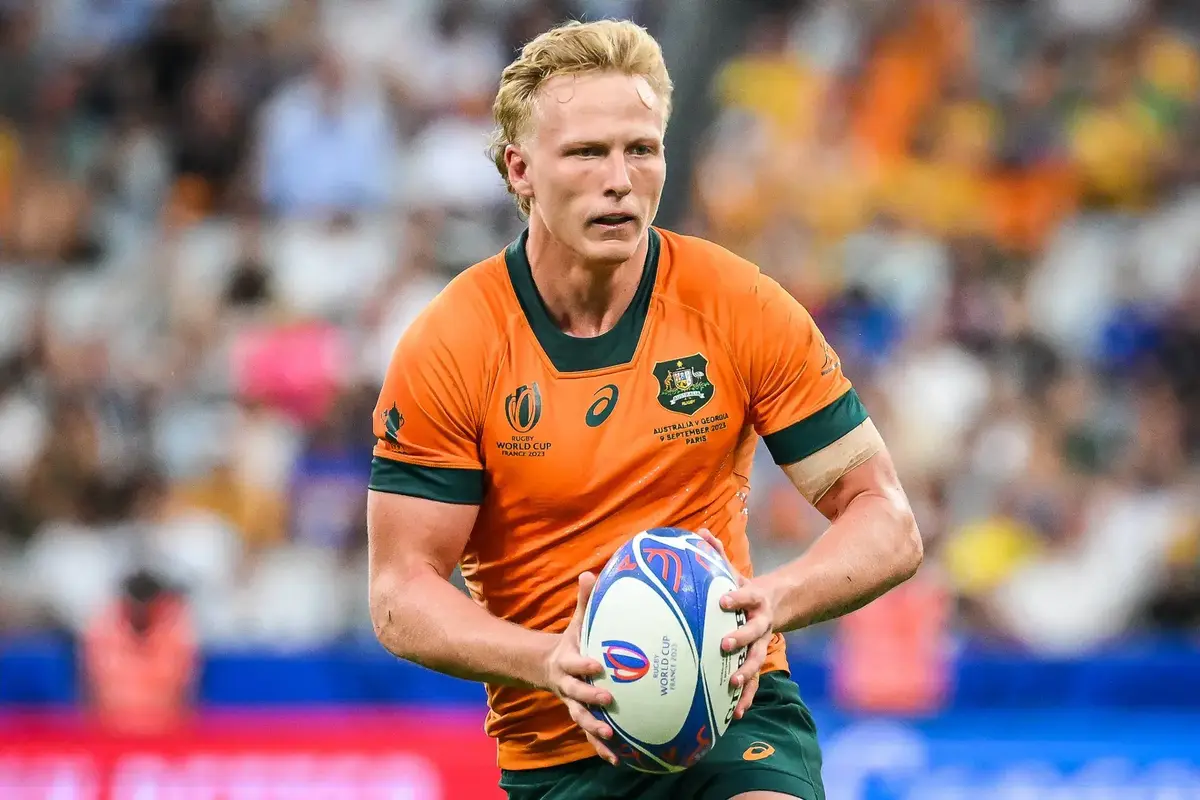
September 9, 2023, Saint-Denis, France, France: Carter GORDON of Australia during the World Cup 2023, Pool C match between Australia and Georgia at Stade de France on September 09, 2023 in Saint-Denis near Paris, France. (IMAGO / ZUMA Press Wire)

Carter Gordon’s brief foray into rugby league has come to an end, with Rugby Australia and the Queensland Reds announcing the return of the 2023 Wallabies flyhalf on a three-year contract that runs through to the end of 2028.

The signing, which was finalised in a matter of days according to Reds coach Les Kiss, sees Gordon immediately added to Joe Schmidt’s 34-man Wallabies squad for the upcoming Spring Tour of Japan and Europe. It marks a remarkable turnaround for a player who made just one NRL appearance after his high-profile code switch in 2024.

Gordon, who earned eight Test caps and played at the 2023 Rugby World Cup, left rugby union following the financial collapse of the Melbourne Rebels, for whom he had made 46 Super Rugby appearances. His departure was seen as a significant blow to Australian rugby at the time, with the talented playmaker choosing to sign a two-year deal with the Gold Coast Titans.

However, Rugby Australia chief executive Phil Waugh moved quickly to secure Gordon’s return, negotiating a release from the second year of his NRL contract. It’s understood RA was forced to pay a transfer fee to the Titans, with reports suggesting the deal is worth more than $500,000.

“We are pleased Carter is returning to rugby after excelling as a junior with Sunshine Coast Grammar, Brisbane Boys’ College and Wests in Brisbane before taking the step up to Super Rugby and Test arena at a young age,” Waugh said. “Carter’s signing will ensure additional healthy competition at the Reds and the Wallabies and provides him with a two-year runway to make his case for the 2027 Rugby World Cup in Australia.”

For Gordon, the move represents a return to his roots. The Nambour-born playmaker first signed with the Reds as a 17-year-old schoolboy in 2018 but never managed to break into the senior side during three injury-affected seasons. His move to the Rebels in 2021 provided the platform he needed, and he quickly established himself as one of Super Rugby Pacific’s most promising talents.

“I’m stoked to return to the game I grew up playing and loving as a kid, especially with the opportunity to represent the team I grew up supporting, the Queensland Reds,” Gordon said. “I’ve watched both Queensland and the Wallabies from afar over the past year or so, and the journey they’re on motivates me to want to work hard and contribute positively on and off the field.”

Gordon’s rugby league stint was hampered by a serious spinal injury that delayed his debut until the Titans’ final-round clash with the Wests Tigers in September, where he played in the centres. With limited opportunities ahead and a home Rugby World Cup just two years away, the timing proved right for a return. “I’d also like to thank the Gold Coast Titans for the opportunity to grow as a player and person at their club and for all their support for me and my family over the past 16 months,” Gordon added. “I wish the players and the staff all the best for what’s ahead.”

Speaking to reporters in Brisbane, Kiss revealed the speed at which the deal came together, describing the process as “absolutely rapid” and taking just four or five days to complete. “I think there was always something in Carter’s mind that he’d like to come back one day, but from my perspective, this just accelerated in the last four or five days,” Kiss explained. “It was a combined thing in terms of RA and Queensland, just getting it to a point to make things work. I wasn’t involved in that whole process, but as you can imagine, we’re very happy to have Carter coming back to the Reds.”

The Reds coach, who will succeed Schmidt as Wallabies coach following next year’s British & Irish Lions series, was quick to highlight Gordon’s physical attributes whilst also managing expectations around his immediate role. “The one thing about Carter is he’s got a good size about him – he’s got a good height, he’s robust, he’s physical, and he meets all those things to be able to play what is now a very, very challenging position in the game,” Kiss said. “Tens are targeted a lot, and he gives us another quality option to be able to play in that position and balance out how we want to play our game.”

Gordon’s arrival adds depth to the playmaking stocks at both the Reds and Wallabies level. At Ballymore, he joins Tom Lynagh, rising star Harry McLaughlin-Phillips and Fijian international Ben Volavola in the flyhalf pecking order. Lynagh, 22, has been omitted from the Wallabies’ Spring Tour squad due to a lingering hamstring issue that has prevented him from training and playing consistently since the British & Irish Lions series.

“He hasn’t had a lot of volume in running, a lot of volume getting over a ball, hasn’t had a lot of volume in his kicking, so we’ve got an opportunity in the next two weeks to just work on that,” Kiss said of Lynagh’s rehabilitation. “We’ve got a plan that we’re putting together with RA to make sure that we get that right. He’ll have a leave period, and then he’ll have a full pre-season with us, and I think that’ll be good for him as well.”

Kiss was careful to emphasise that Gordon faces genuine competition for the No. 10 jersey, particularly praising McLaughlin-Phillips’s attitude and development. “One thing you know about Harry, he’s a competitor and he’s young and learning at a rate of knots as well, so he’ll take this on in a positive way, and we’ve already spoken, and he knows that the challenge is there,” Kiss said. “He didn’t feel entitled to anything beforehand, Harry, so he just wants to fight hard and earn his position as well.”

Gordon has been named alongside Tane Edmed as Schmidt’s playmaking options for the Spring Tour, which begins with a Test against Japan in Tokyo on 25 October. The tour also includes matches against England, Italy, Ireland and France. It presents Gordon with the opportunity to reunite with some familiar faces, including working under Schmidt for the first time since the Wallabies coach took over from Eddie Jones. It was Jones who controversially selected Gordon to start at flyhalf during the 2023 World Cup campaign.

Gordon became Wallaby No. 967 when he debuted off the bench against the Springboks at Loftus Versfeld in 2023, making an immediate impression by grubber-kicking ahead, receiving a pass and running more than 60 metres to score a remarkable try. He went on to make three appearances at the World Cup, starting against Georgia and Fiji before coming off the bench against Wales.

However, the tournament proved difficult for both Gordon and the Wallabies. After Australia’s shock defeat to Fiji in Saint-Étienne, where Gordon spilt a box kick that led to Fiji’s only try, he was dropped to the bench and later joined the injury list before the team’s elimination in the pool stages.

Kiss was adamant that Gordon’s versatility will prove valuable for the Reds, noting that the playmaker can operate at flyhalf, inside centre and fullback – positions where all of Queensland’s options can also play. “If you look at all our tens, they give something different, and that’s a real plus for us as well, and they can all play 12, and they can all play 15, which is fantastic,” Kiss said. “In every Super Rugby Pacific season, there are challenges with how byes are placed and travel periods. Increasing depth across our squad is definitely helpful.”

For Waugh and Rugby Australia, Gordon’s return represents a significant coup in their strategic approach to the 2027 World Cup cycle. With the tournament to be hosted on home soil, having Gordon back in the system provides crucial depth and competition in the crucial flyhalf position. “Rugby Australia has taken a strategic approach to player contracting this World Cup cycle and we are delighted to bring Carter back into the system,” Waugh said.

Continue Reading

Trending

Discover more from Rugby News, Results, and Analysis | Rugby is the Game

Subscribe now to keep reading and get access to the full archive.

Continue reading