
British and Irish Lions
Wake-up call for Lions as Pumas claim famous victory in Dublin

Published
12 months agoon
The British and Irish Lions’ 2025 tour got off to the worst possible start as Argentina claimed their first-ever victory over the famous touring side with a thrilling 28-24 triumph at the Aviva Stadium, ending the Lions’ remarkable 54-year unbeaten run in opening fixtures and delivering a sobering reality check before they even board their flight to Australia.
Key moments
4′ – Tomás Albornoz penalty goal after Fin Smith holding on (0-3)
7′ – Luke Cowan-Dickie disallowed try – TMO rules knock-on in act of scoring
9′ – Fin Smith penalty goal levels the scores (3-3)
11′ – Ignacio Mendy scores after Santiago Carreras’ pop pass creates overlap (3-8)
18′ – Sione Tuipulotu disallowed try – clear knock-on in build-up
20′ – Bundee Aki crashes over after dominant scrum penalty, Fin Smith converts (10-8)
25′ – Albornoz penalty goal after Tom Curry holding on (10-11)
38′ – Albornoz penalty extends Argentina lead (10-14)
40′ – Albornoz scores stunning 80-metre counter-attack try and converts (10-21)
46′ – Penalty try awarded to Lions, Mayco Vivas yellow card for illegal maul (17-21)
53′ – Tadhg Beirne powers over after Ellis Genge’s monster carry, Smith converts (24-21)
59′ – Santiago Cordero finishes brilliant counter-attack, Albornoz converts (24-28)
72′ – Tommy Freeman spills lineout ball in promising Lions attack
77′ – Lions penalty reversed after Tadhg Beirne neck-roll infringement
82′ – Rodrigo Isgro turnover seals historic Argentina victory
On a sun-drenched evening in Dublin, with temperatures reaching 23 degrees and the stadium transformed into a “sea of red” by supporters who had travelled from across the four home nations, Felipe Contepomi’s side delivered a masterclass in clinical rugby that exposed significant flaws in Andy Farrell’s new-look Lions outfit and left the touring party facing uncomfortable questions about their readiness for the challenges ahead.
It's all over in Dublin.
Congratulations on the win @lospumas, that was some contest 🤝#Lions2025 pic.twitter.com/eHXUGCub5Y
— British & Irish Lions (@lionsofficial) June 20, 2025
The pre-match atmosphere had been electric, with Temple Bar, the Brazen Head and the Guinness Storehouse overflowing with jersey-wearing fans creating a carnival atmosphere that could easily have been mistaken for Cardiff’s Principality Stadium. The significance of the occasion – the Lions’ first-ever match on Irish soil as part of the IRFU’s 150th anniversary celebrations – added extra poignancy to what was supposed to be a triumphant send-off.
The scale of the Lions’ problems became evident from the opening exchanges, as both fly-half Fin Smith and full-back Marcus Smith struggled desperately under Argentina’s relentless aerial bombardment – a tactic that would prove devastatingly effective throughout the evening and provide a clear blueprint for Joe Schmidt’s Wallabies to follow. The opening three-and-a-half minutes set an ominous tone, with former sevens star Rodrigo Isgro demonstrating his aerial prowess by claiming Albornoz’s perfectly weighted up-and-under that had initially been gathered by Lucio Cinti.
“You can’t win a Test with that error rate,” admitted a visibly frustrated Farrell afterwards. “We lost enough balls in that game for a full tour, throwing balls that weren’t on. They were hungrier than us with the ball on the ground.”
Argentina’s game plan was brutally simple yet devastatingly effective: kick everything in their own half, target the diminutive Smiths under the high ball, win the aerial battles, and strike ruthlessly when opportunities arose. The execution was flawless, with Tomás Albornoz orchestrating proceedings with the composure of a seasoned Test veteran despite this being only his eighth international appearance.
The Benetton fly-half, who would finish with 18 points and a man-of-the-match performance, struck first with a fourth-minute penalty after the Lions strayed offside when Fin Smith was caught holding on at a ruck. It was a sign of things to come as Argentina’s tactical discipline contrasted sharply with the Lions’ growing frustration at their inability to execute their more ambitious attacking patterns.
The Lions’ response showcased both their potential and their problems in stark relief. Their scrum proved dominant throughout, with Ellis Genge, Luke Cowan-Dickie and Finlay Bealham – the Connacht prop who had only been called into the squad two weeks earlier – completely overpowering their Argentine counterparts to win four penalties from four scrums, providing a rare bright spot on a difficult evening.
However, their inability to capitalise on this dominance epitomised their night. An early rolling maul in the seventh minute that seemed certain to yield the opening try ended in controversy when Cowan-Dickie lost control of the ball while attempting to ground it over his head behind the try line. The England hooker was convinced he had scored, celebrating briefly before the TMO’s intervention correctly ruled it out, leaving the Lions to rue what would prove a costly missed opportunity.
The Lions’ attacking patterns began to show promise as the first quarter progressed, with the interplay between the two Smiths creating space and tempo that had been evident in training. Duhan van der Merwe made several powerful carries, almost bulldozing through a couple of tackles to take the Lions into the 22, while Jac Morgan nearly scampered in down the left wing before running out of room. Fin Smith’s cross-field kick that just missed Freeman showed the ambition that would characterise their approach throughout.
Argentina’s opening try on 11 minutes demonstrated the clinical efficiency that would define their performance and highlighted the defensive vulnerabilities that would plague the Lions all evening. The move began from a lineout 40 metres out, with Argentina’s neat routine creating the platform for Santiago Carreras to come charging into midfield. His perfectly timed pop pass eliminated three Lions defenders, allowing Carreras to create the crucial overlap for Ignacio Mendy to step inside van der Merwe’s desperate cover tackle and slide over with consummate ease.
The Lions’ response was immediate and impressive, showcasing the attacking potential that had excited observers during their training camps in Jersey and Portugal. The interplay between Fin Smith, Marcus Smith, Sione Tuipulotu and Bundee Aki created space and continuity that threatened to overwhelm Argentina’s defence. The move that led to their opening score began with quick hands from Marcus Smith at full-back, his skip pass finding Tuipulotu whose offload sent Fin Smith scampering into space before the ball reached Aki.
The Ireland centre had to check his run to gather a pass that was slightly behind him, momentarily losing forward momentum, but his ability to quickly rebuild a head of steam and power through three defenders from 10 metres out demonstrated exactly why Farrell had selected him in this experimental centre partnership. Fin Smith’s conversion gave the Lions their first lead of the match, though it would prove frustratingly brief.
Albornoz’s response was swift and assured, landing his second penalty after Tom Curry was caught holding on too long at the breakdown – a recurring theme as Argentina’s breakdown work proved consistently superior to their opponents’. The Lions’ problems were compounded by their failure to convert promising positions into points, with Sione Tuipulotu denied a try after a clear knock-on sequence that saw both teams lose control before the Glasgow centre finally grounded the ball.
The turning point that would shape the entire match came right on the stroke of half-time in a moment that perfectly encapsulated both teams’ contrasting approaches and ruthless efficiency. With the Lions pressing desperately for a score to take the lead into the break, they worked their way into Argentina’s 22 through patient phase play. Van der Merwe, eager to impress after some early struggles, carried into contact on the edge of the area but lost possession in the tackle.
What followed was a stunning demonstration of counter-attacking rugby that left the Lions’ defence in tatters and the crowd stunned into silence. Juan Martín González was first to the loose ball, immediately releasing it to Isgro whose awareness and skill under pressure proved crucial. The winger’s no-look inside pass found Carreras in stride, the full-back having already identified the space and opportunity that the Lions’ commitment to attack had created.
Carreras’ perfectly weighted pass sent Albornoz racing 80 metres upfield with only Marcus Smith to beat. The Lions full-back, caught out of position by the speed of the turnover, had no chance of preventing the score as Albornoz dived over under the posts before converting his own try to give Argentina a commanding 21-10 half-time lead that felt far more significant than the 11-point margin suggested.
The statistics told a damning story of the Lions’ first-half struggles and highlighted the gulf in clinical execution between the two sides. Despite enjoying 57 per cent of territory and creating 15 entries into Argentina’s 22-metre area, they managed just 1.4 points per visit – a woeful conversion rate that highlighted their execution problems and tendency to overplay in crucial moments. In stark contrast, Argentina scored 4.1 points from each of their six entries, demonstrating the clinical ruthlessness that separates good teams from great ones.
The Lions’ lineout had also begun to malfunction at crucial moments, with several overthrows from Cowan-Dickie undermining attacking positions and providing easy relief for Argentina. The set-piece that had been expected to provide a reliable foundation was proving as unreliable as their execution in the final third.
The Lions emerged from the interval with renewed purpose and tactical clarity, their pack immediately asserting the dominance that had been their most reliable weapon throughout the opening 40 minutes. Tuipulotu produced a brilliant 40-metre break down the right touchline that demonstrated his pace and power, putting Argentina on the back foot and forcing the penalty that allowed Itoje to urge Fin Smith to kick to the corner rather than take the three points.
The resulting rolling maul showcased everything that had made the Lions pack formidable in the scrum, with the eight forwards driving relentlessly towards the line. Argentina’s defence had no answer to the power and precision of the drive, leading to referee James Doleman awarding a penalty try when Mayco Vivas illegally brought down the maul just metres from the line. The Argentine prop’s yellow card gave the Lions a temporary numerical advantage that they were determined to exploit.
The momentum shift was palpable as Farrell introduced fresh legs in the form of Rónan Kelleher, Henry Pollock and Tomos Williams. The Welsh scrum-half’s injection of pace and accuracy from the base proved particularly influential, his service allowing the Lions to build phases more effectively and stretch Argentina’s increasingly stretched defence.
The try that gave the Lions the lead perfectly illustrated their potential when everything clicked into place. Genge’s carry through the middle was a thing of beauty – 30 metres of unstoppable power that split the Argentine defence and demonstrated why he had been selected ahead of several other contenders. The ball was recycled quickly and efficiently, with Williams showing his class by delivering a perfect skip pass that allowed Beirne to walk through a massive gap and score virtually unopposed.
Fin Smith’s conversion gave the Lions a 24-21 lead and for the first time in the match, it seemed they had found the composure and clinical edge that had deserted them in the first half. Their attacking patterns began to click with greater frequency, Freeman particularly impressive in his powerful running off his wing, repeatedly breaking the gainline and creating opportunities for others with his willingness to take the ball at pace in tight spaces.
However, Argentina’s response demonstrated exactly why they had risen to fifth in the world rankings and collected scalps against New Zealand, South Africa and Australia in recent months. Their capacity to score from anywhere was demonstrated once more through Santiago Cordero’s brilliant 59th-minute try that would prove decisive and showcase their ability to punish even the smallest defensive lapses.
The move began with Argentina under pressure in their own 22, but Albornoz’s vision and skill under pressure created the initial break. His dummy completely fooled Tom Curry, who had charged up expecting a clearance kick, allowing the fly-half to step inside and beat another defender before releasing the ball to Joaquín Oviedo. The flanker’s quick hands found Matías Moroni, whose perfectly weighted grubber kick into the space behind the Lions defence set up the decisive moment.
Cordero, the former Connacht winger whose pace and finishing ability had made him such a threat during his time in Ireland, found himself in a footrace with Marcus Smith. The Argentine’s superior acceleration proved crucial as he gathered the bouncing ball just ahead of the Lions full-back and dotted down in the corner for a try that silenced the travelling support and demonstrated Argentina’s clinical ability to punish defensive errors.
Albornoz’s conversion from the touchline was a thing of beauty, the ball sailing between the posts to give Argentina a 28-24 lead that felt significant despite the narrow four-point margin. The psychological impact was immediate, with the Lions forced to chase the game in the final 20 minutes while Argentina could revert to their preferred defensive approach.
The final quarter saw desperate Lions pressure as they sought the try that would salvage their tour opener and maintain their unbeaten record in opening fixtures. Wave after wave of attacks tested Argentina’s resolve, with multiple lineouts in dangerous positions presenting opportunities that the Lions simply could not convert.
Their lineout problems, which had been brewing throughout the match, came to a head at the crucial moments. Kelleher’s throwing, usually so reliable for Leinster and Ireland, became increasingly erratic under pressure, with several key throws sailing over everyone to provide easy relief for Argentina and perfectly encapsulate the Lions’ evening of frustration.
The most promising opportunity came with 10 minutes remaining when a series of powerful carries took the Lions to within five metres of the Argentine line. The crowd sensed victory as phase after phase built towards what seemed an inevitable score, but crucial handling errors and Argentine’s desperate defence combined to deny them. A knock-on from Tommy Freeman, who had been one of their better performers throughout, typified their inability to convert pressure into points when it mattered most.
The climactic moment came with three minutes remaining when the Lions earned a penalty just outside the Argentina 22. The decision to kick to the corner rather than attempt a long-range penalty goal demonstrated their commitment to securing the victory rather than settling for a draw, but once again their lineout let them down at the crucial moment.
The cruel irony was that Argentina then reversed the penalty after Beirne was penalised for a neck-roll at the subsequent ruck, having taken over the captaincy from the substituted Itoje. The reversal effectively ended the Lions’ hopes and demonstrated the fine margins that separate victory and defeat at international level.
A desperate final attack in the dying moments saw the Lions throw everything at Argentina’s defence, but Isgro’s turnover deep in his own 22 allowed Argentina to boot the ball into the stands and trigger wild celebrations among their small but vociferous group of supporters.
“It was a short week for us. We just had two training sessions on the pitch and I’m super proud of the team,” said Argentina captain Julián Montoya, who had backed up just six days after Leicester’s Premiership final defeat. “We spoke about leaving where we finished in November, trusting each other, and knowing that the game wasn’t going to be perfect. This is for Argentinian rugby because we’ve been doing things right.”
The defeat marks only the second time the Lions have lost their opening fixture since 1888, and the first since their 1971 tour to New Zealand – ironically the only Lions series victory in the southern hemisphere in the modern era. The historical parallel offers some hope, but the immediate reality is far more sobering for a Lions party that had expected to build confidence and momentum before facing the Wallabies.
For the Lions, the 19 turnovers they conceded – many from ambitious offloads that failed to stick when patience might have been the better option – highlighted the lack of cohesion that inevitably comes with bringing together players from four different rugby cultures for the first time. The contrast with Argentina, who had played just two training sessions together but operated with a clear, simple game plan executed to perfection, was stark and concerning.
“We made it a tough game,” admitted Farrell, who was taking charge of his first Lions match. “We need to be better than that. We ask a lot of them and maybe we put too much pressure on the side because it certainly looked like we were a bit disconnected at times.”
The performance did reveal some positives amidst the disappointment and frustration. Fin Smith’s composed passing and game management, despite early struggles under the high ball, suggested he could provide serious competition for Finn Russell’s Test jersey when the Bath fly-half joins the squad. The scrum’s complete dominance offers a potential weapon against Australia, while the glimpses of attacking fluency when the passing stuck showed the Lions’ considerable potential once they achieve greater familiarity and understanding.
However, the immediate concerns far outweigh any positives as the Lions prepare for their Australian adventure. The lineout requires urgent and comprehensive attention, with the throwing and calling both needing significant improvement. The final pass accuracy must improve dramatically if they are to convert the promising attacking positions they consistently created, while the defensive system needs reinforcement against the kind of rapid counter-attacking threats that Australia possess in abundance.
Most troubling for Farrell will be the realisation that Argentina achieved this historic victory without several of their biggest stars, who were committed to Top 14 semi-final duties with their French clubs. Players like Santiago Chocobares, Juan Cruz Mallia and Guido Petti would have strengthened an already impressive Argentine performance, suggesting the depth and tactical sophistication they demonstrated represents just a portion of their full capability.
As the Lions prepare for their flight to Perth this weekend, they do so with the uncomfortable knowledge that their first fixture has exposed vulnerabilities that will be ruthlessly exploited by a Wallabies side coached by the wily Joe Schmidt. The Australian media will have taken careful note of the aerial bombardment tactics that caused such problems for both Smiths, while the Lions’ lineout struggles and tendency to overplay in promising positions will be filed away for future reference.
The contrast between the two coaches’ post-match demeanour spoke volumes about the evening’s events. While Contepomi and his players celebrated a truly historic achievement with justifiable pride, Farrell was left to reflect on missed opportunities and tactical shortcomings that have provided Australia with a detailed scouting report of his team’s weaknesses.
“We’ll review what we said we were going to own and we need to make sure we get something positive from that because it’s all about how we move forward,” said Farrell, attempting to project confidence despite the evident disappointment and concern etched across his features.
The Lions’ 2025 tour has begun not with the roar of confidence they desperately sought, but with the sobering reality that no opponent can be taken lightly in modern international rugby. With the first Test against Australia just four weeks away and precious little time for the extensive remedial work required, Farrell and his coaching staff face their biggest challenge before they have even faced their primary opponents.
The 51,700 sell-out crowd had witnessed a genuinely historic moment in rugby history, but for all the wrong reasons from a Lions perspective. Argentina’s victory represents not just a famous first triumph over the Lions, but validation of their status as genuine tier-one contenders capable of matching the traditional powers when conditions align in their favour.

You may like
-


England edge Argentina in fiery contest to continue winning run
-


Ruthless Pumas maul Wales in record win as Tandy era begins
-


World Cup winner Lewis Moody diagnosed with motor neurone disease
-


Springboks survive Pumas scare to retain Rugby Championship title
-


Pumas ring the changes for Springboks rematch at Twickenham
-


Nche returns as Boks eye Rugby Championship title against Pumas
British and Irish Lions
Wallabies beat Lions in rain-soaked Sydney to avoid whitewash
Published
11 months agoon
2nd August 2025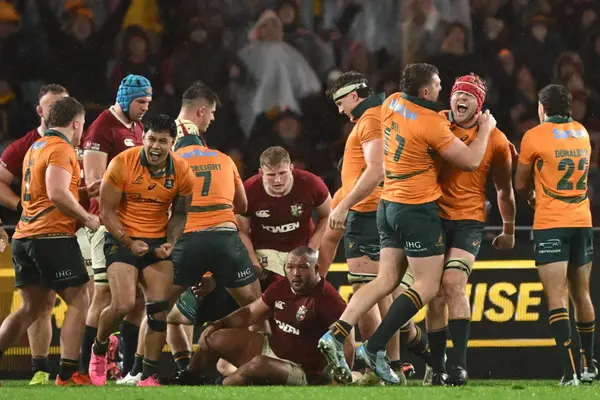
In the most treacherous conditions imaginable at a sold-out Accor Stadium, the Wallabies delivered a stirring performance to defeat the British and Irish Lions 22-12, denying Andy Farrell’s men a historic series whitewash in one of the most extraordinary Test matches ever played.
Key moments:
8′ – Dylan Pietsch scores opening try in corner after Joseph Suaali’i assist; Tom Lynagh misses conversion (5-0)
23′ – Multiple confrontations break out, Will Skelton penalized for escalation, Wallabies marched back 10 metres
27′ – Maro Itoje leaves field for HIA, replaced by Ollie Chessum
34′ – Tom Lynagh slots penalty goal from 15 metres (8-0)
35′ – Lynagh leaves for HIA after Dan Sheehan contact, Ben Donaldson comes on
37′ – Tommy Freeman forced off injured, Owen Farrell replaces him
43′ – James Ryan knocked unconscious in collision with Will Skelton’s knee, replaced by Jac Morgan
43′ – Play suspended for 38 minutes due to lightning strikes within vicinity
55′ – Max Jorgensen scores brilliant solo try after Lions handling error; Donaldson converts (15-0)
62′ – Jac Morgan scores Lions’ first try from close range; Russell converts (15-7)
69′ – Ronan Kelleher yellow card for repeated infringements
71′ – Tate McDermott scores crucial try from close range; Donaldson converts (22-7)
80′ – Will Stuart scores consolation try; Russell misses conversion (22-12)
With the series already secured 2-0, the Lions arrived in Sydney as overwhelming favourites to complete just the second 3-0 series sweep in Lions history since 1927. Instead, they found themselves outfought and outthought by a Wallabies side with nothing to lose and everything to prove in conditions that turned this decider into an epic of endurance.
Playing for you 💚💛
Thanks for an incredible Series, @lionsofficial, and congratulations on your win 🤝#Wallabies #LionsTour2025 pic.twitter.com/825xzshEr5
— Wallabies (@wallabies) August 2, 2025
The evening began with biblical rain lashing Stadium Australia, forcing groundsmen to repaint the pitch markings that had been washed away by the deluge. The atmosphere was electric despite the conditions, with 80,312 supporters creating a cauldron of noise that would only intensify as the drama unfolded.
The Wallabies struck first in the eighth minute through a moment of individual brilliance that perfectly encapsulated their renewed intensity. The try originated from Tom Wright’s perfectly weighted grubber kick that forced Hugo Keenan to carry the ball over his own line, gifting Australia a five-metre scrum in prime attacking territory.
From that platform, the Wallabies executed a masterclass in close-quarter rugby. Wave after wave of forwards crashed into the Lions defence, with Will Skelton and Taniela Tupou making crucial metres through the middle. The breakthrough came when the ball was spread left, where Joseph Suaali’i’s footballing intelligence shone through. The rugby league convert drew Tommy Freeman into no-man’s land with a perfectly timed skip to the outside before delivering a pinpoint pass to Dylan Pietsch, who acrobatically dove over in the corner despite the treacherous surface. Tom Lynagh’s conversion attempt from the touchline sailed wide in the swirling wind, but the statement had been made.
What followed was 30 minutes of the most compelling rugby seen in this Lions tour. The Wallabies, marshalled superbly by veteran scrum-half Nic White in his final international appearance, dominated both possession and territory with a kicking game perfectly suited to the conditions. White’s tactical acumen was matched by the physical presence of Skelton, whose confrontational approach perfectly captured Australia’s renewed aggression.
The Lions’ much-vaunted scrum, which had been a weapon throughout the tour, suddenly found itself under severe pressure. Tupou’s return to the starting XV proved crucial, with the powerful prop providing the anchor that had been missing from Australia’s previous performances. The psychological impact was immediate – where once the Lions had dominated set-piece battles, they now found themselves being pushed backwards and conceding penalties.
The first major flashpoint came in the 23rd minute when simmering tensions erupted into a full-scale melee. The catalyst was White’s characteristic gamesmanship, the veteran scrum-half delivering a provocative shove on Dan Sheehan after the Lions had won a penalty. The reaction was immediate and fierce, with players from both sides converging in a mass confrontation that perfectly captured the intensity of the occasion.
Skelton, true to form, escalated matters by grabbing James Ryan’s scrum cap and engaging in a sustained wrestling match with several Lions forwards. Georgian referee Nika Amashukeli took decisive action, marching the Wallabies back 10 metres and delivering a stern warning to Skelton that any further involvement in trouble would result in a sin-binning. Far from being chastened, the giant lock seemed to relish the spotlight, continuing to make his presence felt in every collision.
Individual performances told the story of contrasting fortunes. Lions captain Maro Itoje, whose leadership had been crucial in the previous two Tests, departed for a head injury assessment that he would subsequently fail. The sight of the talismanic lock trudging from the field with blood on his face was a major psychological blow for the tourists. Tommy Freeman followed soon after, his nose bloodied in a thunderous collision with Pietsch that epitomised the brutal nature of the contest.
Most controversially, Tom Lynagh was removed after what appeared to be a clear elbow to the head from Sheehan at a ruck. Television replays showed the Lions hooker, now elevated to captain in Itoje’s absence, charging into the breakdown with his arm tucked and making direct contact with Lynagh’s head. The incident was somehow missed by both the on-field officials and Television Match Official Marius Jonker, leading to accusations that the Lions had escaped with a red card offence.
Before departing, Lynagh extended the Wallabies’ advantage with a nerveless penalty goal from 15 metres, slotted despite the pressure and conditions. The 34th-minute kick summed up Australia’s clinical approach – when opportunities arose, they took them with both hands.
The second half began with the most distressing incident of the tour. Just two minutes after the restart, James Ryan was knocked unconscious in a sickening collision with Skelton’s knee while attempting a tackle. The sound of the impact was audible around the stadium, and Ryan immediately went limp before hitting the ground. As medical staff attended to the stricken Ireland lock, multiple skirmishes broke out around the pitch, with emotions threatening to boil over completely.
The sight of Ryan lying motionless sparked fury among the Lions players, with Andrew Porter leading the charge in a heated confrontation with Skelton. The irony was not lost that Porter was subsequently penalised for his reaction to what was clearly an accidental but devastating collision.
Then came the moment that will be remembered as one of the most bizarre in Lions history. With Ryan being carefully stretchered from the field – thankfully giving a thumbs up to acknowledge the crowd’s applause – referee Amashukeli received word that lightning strikes had been detected within 10 kilometres of the venue. World Rugby protocols demanded immediate suspension of play, creating unprecedented scenes as both teams were ordered from the field for their safety.
For 38 minutes, 80,000 supporters sheltered from the elements while players returned to dressing rooms in scenes never before witnessed in professional rugby. Television pictures provided surreal images of the delay’s impact: Lions players relaxing on bean bags while Finn Russell scrolled through his phone, Australian players receiving massages and staying loose on exercise bikes, and supporters huddled under cover as the storm raged overhead.
The extended break threatened to disrupt the Wallabies’ momentum, but when play eventually resumed following a 10-minute warm-up, they picked up exactly where they left off. If anything, the enforced rest had rejuvenated Skelton and the Australian pack, who continued to dominate the collision area with renewed vigour.
The decisive moment came in the 55th minute when the Lions’ attacking ambitions were punished in devastating fashion. Seeking to inject pace into their attack, Blair Kinghorn attempted an ambitious pass to Bundee Aki on the left wing. The pass was marginally behind the Irish centre, who over-ran the ball and fumbled possession near halfway. Max Jorgensen, lurking with the predatory instincts that had made him such a threat throughout the series, pounced on the loose ball with lightning reflexes.
What followed was a moment of pure class from the young winger. Despite the treacherous conditions, Jorgensen showed perfect ball control to gather cleanly before accelerating down the left touchline. Finn Russell, the only Lions player with a realistic chance of preventing the try, was left grasping at thin air as Jorgensen’s pace and power carried him clear. The winger’s dive over the line brought the biggest cheer of the night from the Australian supporters, and Ben Donaldson’s nerveless conversion from the touchline extended the lead to a seemingly unassailable 15-0.
For 42 years, no Lions team had been held scoreless in a Test match, and that unwanted record looked increasingly likely as the tourists struggled to create any meaningful attacking opportunities. Their kicking game, so effective in the first two Tests, was rendered ineffective by the conditions and Australia’s aggressive counter-attacking.
The breakthrough finally came in the 62nd minute through the Lions’ own bravery in adversity. After winning a scrum penalty, Ronan Kelleher opted for a quick tap-and-go rather than kicking for the corner. The decision sparked a series of pick-and-drive attacks that gradually wore down the Australian defence.
Ellis Genge led the charge with a thunderous carry that took the Lions to within five metres, before a succession of forwards took up the challenge. Ollie Chessum, Tadhg Beirne, and Tom Curry all made crucial contributions, but it was Jac Morgan who provided the finishing touch. The Welsh flanker, on for the injured Ryan, spotted a gap between two Australian defenders and powered through with the help of Chessum and Will Stuart, who provided crucial assistance in the final metre. Russell’s conversion was never in doubt, and suddenly the Lions had hope at 15-7.
However, their indiscipline in defence quickly extinguished any hopes of a miraculous comeback. As Australia poured forward seeking the killer blow, the Lions repeatedly found themselves on the wrong side of referee Amashukeli. The pressure finally told in the 69th minute when Kelleher was sin-binned for offside, becoming the unfortunate player to cross the line after multiple team warnings.
With a numerical advantage, Australia went for the jugular. Rather than take an easy three points, they opted for the attacking lineout, sensing the opportunity to put the match beyond doubt. The decision proved inspired as the Lions, now reduced to 14 men and emotionally drained by the night’s events, simply could not hold out.
The winning try was a thing of beauty in its simplicity. From the lineout drive, the ball was spread across the field through multiple phases, with each Australian player carrying with purpose and precision. The Lions defence, stretched to breaking point, began to fracture. Tate McDermott, who had replaced White on 58 minutes to another standing ovation, spotted the gap that all great scrum-halves instinctively find.
The young half-back dummied to his left, drawing two defenders, before sniping through a rapidly closing gap on the right. His acceleration over the final five metres left the Lions defence trailing in his wake, and his one-handed dive over the line secured not just the match but also redemption for Australian rugby. Donaldson’s conversion made it 22-7, effectively ending the contest with nine minutes remaining.
The Lions’ late consolation came in the 80th minute through Will Stuart, whose pick-and-drive from close range provided some respectability to the scoreline. The powerful prop showed typical front-row determination to bundle over from a metre out, despite being held up initially by the Australian defence. Russell’s attempted drop-goal conversion from wide on the left sailed harmlessly wide, providing a fitting end to a night when little went right for the tourists.
“I cannot wait to get into the changing rooms and say what I need to say to this group,” reflected a philosophical Andy Farrell in defeat. “I know we are disappointed but we should be unbelievably proud of what we achieved. Lions tours are tough and how we got the job done last week in that theatre will live with us forever. Australia thoroughly deserved to win, they played the conditions brilliantly and their set-piece was better today.”
For Australia captain Harry Wilson, the victory provided validation after last week’s heartbreak in Melbourne. “It’s crazy what can happen in a week. We were hurting, but a performance like that is something to be proud of. This means so much to us, with 83,000 supporting us and it’s great momentum going into The Rugby Championship. I’m so happy Nic White got to end his career like that – he’s a great competitor and has been so important to us.”
The statistical narrative painted a picture of Australian dominance throughout. They controlled 62% of possession and dominated territory for long periods, while their scrum provided a platform that the Lions simply could not match. The return of Tupou proved crucial, with the prop’s scrummaging dominance providing the foundation for Australia’s forward supremacy and allowing Skelton to wreak havoc in the loose.
Nic White’s farewell performance was particularly poignant, the veteran scrum-half conducting proceedings with masterful authority while adding his usual dose of niggle and gamesmanship. His tactical kicking was exemplary, consistently finding touch and turning the Lions around when they sought to play from deep. His replacement McDermott’s immediate impact with the match-sealing try provided a perfect passing of the torch for Australian rugby.
Will Skelton’s monstrous display encapsulated the Wallabies’ approach, the giant lock making his presence felt in every collision while somehow avoiding further sanction despite his constant provocations. His physical dominance was a constant theme, with Lions players visibly struggling to contain his power in contact. Tom Hooper, deputising for the injured Rob Valetini, was awarded man of the match honours for a performance that epitomised Australia’s renewed physicality and work-rate.
The injury toll proved enormous, with both Itoje and Freeman ruled out for the remainder of the match alongside Ryan, who thankfully was later confirmed to have avoided serious injury. The Lions’ 6-2 bench split, designed to provide late firepower, instead became a necessity as their resources were stretched to breaking point by the night’s casualties.
While the Lions can take satisfaction from a successful tour that yielded a 2-1 series victory and maintained their unbeaten record in Australia outside the Test arena, they will rue the missed opportunity to join the 1927 team as the only Lions side to achieve a clean sweep Down Under. The chance to create history slipped away in the Sydney rain, leaving them to reflect on what might have been.
For the Wallabies, this victory provides crucial momentum ahead of The Rugby Championship and proves that reports of their demise following the 2023 World Cup were greatly exaggerated. Joe Schmidt’s side had struggled for identity throughout this series, but in the most challenging conditions imaginable, they rediscovered the fighting spirit and forward power that has long defined Australian rugby.
The tour statistics tell their own story: nine matches played, eight won, one lost. Yet that single defeat, in the most challenging circumstances imaginable, serves as a reminder that rugby remains a game where anything can happen when passion and pride are on the line.
British and Irish Lions
Kinghorn and Ryan start as Farrell eyes Lions series sweep
Published
11 months agoon
31st July 2025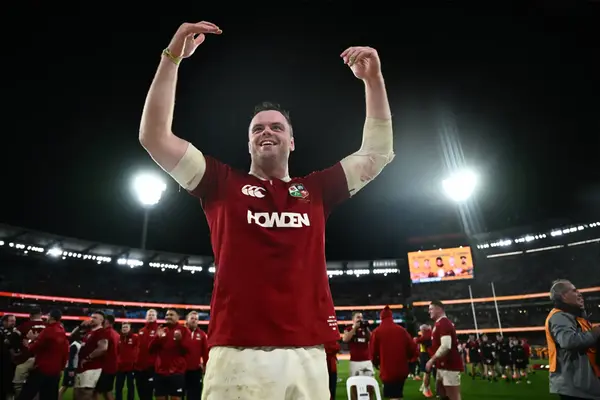
Andy Farrell has made just two changes to his British and Irish Lions team for Saturday’s series finale against Australia, promoting James Ryan and Blair Kinghorn as the head coach pursues a historic 3-0 whitewash that would mark the first clean sweep since 1927.
- James Ryan earns first Lions Test start after impressive Melbourne cameo
- Blair Kinghorn replaces James Lowe to add aerial prowess on left wing
- Tadhg Furlong poised to equal Alun Wyn Jones’ record of nine consecutive Lions Test starts
- World Player of the Year Josh van der Flier again overlooked despite series already secured
- 6-2 bench split signals Farrell’s determination to complete first 3-0 series win since 1927
- Lions pursue perfection with minimal changes from successful Melbourne team
The message from Farrell’s team selection for the Accor Stadium showdown could not be clearer: this Lions squad will not settle for merely winning a series when immortality remains within their grasp. The pursuit of a first 3-0 series victory since the 1927 tour of Argentina trumps all other considerations.
Our team for Saturday's third Test in Sydney! 🦁#Lions2025
— British & Irish Lions (@lionsofficial) July 31, 2025
Leading the charge is Tadhg Furlong, whose selection for his ninth consecutive Lions Test start will see him equal the record held by Welsh legend Alun Wyn Jones. The Leinster tighthead’s journey from the fringes of the 2017 squad to Lions legend status epitomises the tour’s transformative power.
“It isn’t just the performances that have been through the roof,” Farrell said of his talismanic prop. “It’s also his manner on a Lions tour as well. I’ve never seen him in such good spirits, so he’s ready to go again.”
The all-Leinster front row of Andrew Porter, Dan Sheehan and Furlong provides the foundation for what Farrell hopes will be a historic performance. Behind them, captain Maro Itoje will make his ninth consecutive Lions Test appearance – a feat achieved through eight starts and one substitute appearance dating back to New Zealand in 2017.
The promotion of James Ryan to the starting second row represents one of only two changes from the Melbourne victory, with Ollie Chessum dropping to the bench. Ryan’s elevation is a direct reward for his impact in the second Test, where his physicality and defensive line speed helped turn the momentum in the Lions’ favour.
The Leinster lock’s transformation throughout the tour has been remarkable. Having started as a ball-playing forward, Ryan has embraced a more confrontational role, focusing on the unglamorous work that provides the platform for others to shine.
“He’s seen his niche in his game and not trying to be somebody else,” Farrell explained. “He does all the unseen work, all the graft stuff and has done it with a bit of venom in his game. He’s not tried to be a ball-playing forward like some of the second rows have been, but he hits hard defensively, and hits rucks really well.”
Ryan’s crucial contributions in Melbourne – including three carries in the 13-phase attack that led to Tadhg Beirne’s try and the final carry before Hugo Keenan’s match-winner – have earned him the opportunity to start alongside Itoje in what promises to be a physically demanding encounter.
The other change sees Blair Kinghorn replace James Lowe on the left wing, a selection that prioritises aerial ability and unpredictability over experience. Kinghorn’s impressive cameo in Melbourne, combined with his natural fullback skills and emergency fly-half capabilities, has convinced Farrell that the Toulouse player offers more tactical flexibility.
“We thought that Blair is a great athlete but the unpredictability of his game makes him very dangerous,” Farrell noted. “The conditions that we’re expecting as far as the aerial game is concerned will be at its premium, so I think this game suits him.”
Lowe’s omission from the entire matchday squad represents a harsh verdict on the Ireland winger’s performances in the first two Tests, where his usually reliable left boot and finishing ability failed to meet Lions standards. For a player who has been a consistent performer for Ireland, missing out on what could be his final Lions opportunity will sting.
Perhaps the most telling aspect of Farrell’s selection is not who has been chosen, but who continues to be overlooked. Josh van der Flier, the 2022 World Player of the Year, remains on the outside looking in despite being widely regarded as one of the world’s finest opensides.
The 32-year-old’s omission is particularly poignant given this may represent his final opportunity to wear the Lions jersey. With the series already secured and his international pedigree beyond question, van der Flier’s continued absence speaks to Farrell’s unwavering commitment to combinations over individual brilliance.
“Josh has epitomised what it takes to be a Lions tourist,” Farrell acknowledged, revealing the difficulty of their conversation. “He knows exactly what we think of him and his response to all that has always been to train the house down and prepare the team as best he could. The other thing he said after his disappointment yesterday would have been that he has had the time of his life. It says everything about the man.”
The selection of two opensides – Jac Morgan and Ben Earl – on the bench ahead of van der Flier underlines Farrell’s tactical priorities and his belief that balance matters more than individual reputation.
Farrell’s decision to employ a 6-2 forward-back split on the bench represents both a concession to the physical toll of the series and a statement of intent. The selection of six forwards suggests the coach expects a war of attrition and wants maximum firepower available for the final push.
Ellis Genge retains his role as impact prop after his devastating contribution in Melbourne, while Will Stuart’s inclusion provides additional scrummaging power. The return of Ben Earl to the matchday squad offers Farrell tactical flexibility, with the Saracens back-rower capable of covering multiple positions.
Alex Mitchell’s presence on the bench is particularly noteworthy, as the Northampton scrum-half has now been named in all ten matchday squads throughout the tour – an extraordinary feat of consistency and reliability.
Owen Farrell’s selection as the primary back cover continues his unique role in this Lions setup, with the coach’s son providing options at fly-half and centre while adding his invaluable experience to crucial moments.
The statistical significance of Saturday’s encounter cannot be understated. Should the Lions prevail, they will become the first team of their kind to complete a 3-0 series victory since 1927 and the first to go unbeaten since Willie John McBride’s legendary 1974 side conquered South Africa.
“As you can imagine, it would mean the world to us [to win the series 3-0],” Farrell admitted. “It’s something that we promised ourselves we were going to chase after. What goes along with that is representing the jersey and the brand of the British and Irish Lions, so we have a big responsibility this week.”
The Wallabies, while dealt a significant blow by Rob Valetini’s injury withdrawal, remain a formidable obstacle to the Lions. The return of Taniela Tupou to the front row following his impressive showing for the First Nations & Pasifika XV adds considerable scrummaging power, while Nic White’s emotional farewell from international rugby provides additional motivation.
Joe Schmidt’s decision to rest Jake Gordon with one eye on the Rugby Championship demonstrates the delicate balance between immediate performance and future planning that the Lions have managed to avoid through their tour structure.
Farrell’s team selection represents the culmination of seven weeks of meticulous planning and ruthless decision-making. The retention of 11 players from the starting XV across all three Tests reflects the coach’s faith in his core group while the promotion of Ryan and Kinghorn rewards form over reputation.
The pursuit of a 3-0 series victory has override all other considerations, from rewarding fringe players to managing workloads. In Farrell’s eyes, the opportunity to create history justifies the hardest of selection decisions.
British and Irish Lions
Keenan the hero as Lions wrap up series in dramatic comeback
Published
11 months agoon
26th July 2025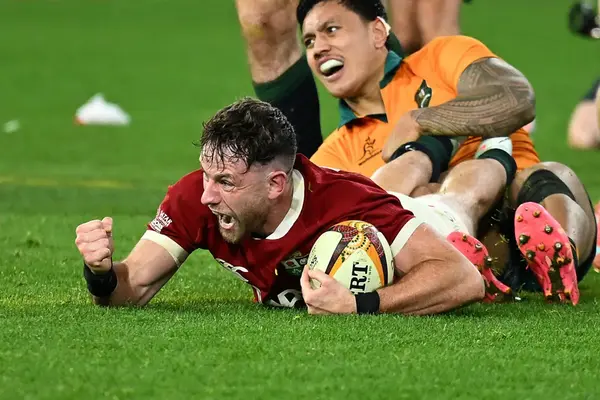
Irish full-back’s 79th-minute winner caps remarkable fightback from 18 points down as tourists seal series 2-0 with dramatic 29-26 victory.
The British & Irish Lions completed the greatest comeback in their 137-year history, overturning an 18-point deficit to defeat Australia 29-26 at the Melbourne Cricket Ground and secure their first series victory since 2013.
Key moments:
5′ – Tom Lynagh penalty gives Australia early 3-0 lead after Lions offside
10′ – Lynagh adds second penalty to extend Wallabies advantage (6-0)
16′ – Dan Sheehan dives over after quick tap; Russell hits post with conversion (6-5)
23′ – James Slipper powers over in corner; Tommy Freeman yellow card (11-5)
28′ – Jake Gordon snipes through gap from close range; Lynagh converts (18-5)
31′ – Tom Wright races clear after Joseph-Aukuso Suaalii break; Lynagh misses conversion (23-5)
35′ – Tom Curry scores in corner after Lions quick hands; Russell misses conversion (23-10)
38′ – Huw Jones crashes over near posts; Russell converts (23-17)
53′ – Lynagh penalty extends Australia lead after Lions error (26-17)
60′ – Tadhg Beirne powers over in corner after multi-phase attack; Russell converts (26-24)
79′ – Hugo Keenan scores series-clinching try after TMO review; Russell misses conversion (26-29)
Hugo Keenan’s try with 23 seconds remaining capped an extraordinary fightback that seemed impossible when the Wallabies led 23-5 after a devastating 10-minute spell in the first half. The Irish full-back’s score came after a prolonged multi-phase attack and survived an agonising TMO review for a controversial clearout by Jac Morgan on Carlo Tizzano.
An epic Test match W at the MCG! 🙌🦁#Lions2025 pic.twitter.com/IHskARRNyn
— British & Irish Lions (@lionsofficial) July 26, 2025
Before a record Lions crowd of 90,307, this instant classic began with an Australia side transformed from their disappointing Brisbane showing. The return of Will Skelton and Rob Valetini gave the Wallabies pack genuine intimidation factor, while Joe Schmidt’s tactical adjustments were immediately evident as the hosts dominated the early exchanges with renewed intensity.
Tom Lynagh opened the scoring with two penalties inside the first 10 minutes as the Lions struggled to match Australia’s ferocious start. The contrast with last week’s opening quarter could not have been starker – where previously the Wallabies had been bullied into submission, now they were winning the collisions and forcing the tourists onto the back foot. Valetini was already making his presence felt with thunderous carries, while the mountainous Skelton was causing havoc at the breakdown, testing referee Andrea Piardi’s patience with his aggressive tactics.
The Lions briefly responded when Dan Sheehan produced a moment of spectacular athleticism, taking a quick tap penalty five metres out and diving Superman-style over the top of converging Australian defenders. The hooker’s acrobatic finish drew furious protests from the home side, with captain Harry Wilson arguing that Sheehan had illegally jumped over tacklers. However, Piardi ruled the dive was in the act of scoring, allowing the try to stand. Russell’s conversion attempt struck the post, keeping Australia’s lead intact at 6-5.
What followed was a period of Australian dominance that threatened to blow the series wide open. The Wallabies’ breakthrough came through sustained pressure in the Lions’ 22, with Valetini and Skelton leading a relentless 15-phase assault on the visitors’ line. The hosts worked through multiple phases, with Skelton and Valetini making barnstorming carries that had the Lions defence scrambling. Eventually, veteran prop James Slipper found the gap he needed, barging over in the left corner for his fourth Test try in 68 appearances.
The Lions’ problems were compounded when Tommy Freeman was sin-binned for cynical play, referee Piardi finally losing patience with the tourists’ repeated infringements in their 22. The yellow card came after an official warning to captain Maro Itoje, with Freeman paying the price for the team’s collective indiscipline.
What followed was a two-try salvo in three minutes that sent the MCG into delirium and appeared to put the series beyond the Lions’ reach. First, from an Australian lineout on the Lions’ 22, the home side worked through several phases before Jake Gordon spotted a gaping hole around the fringes of the ruck. The scrum-half dummied beautifully before darting between Andrew Porter and Tadhg Furlong, who had both switched off momentarily, for a try that brought the house down. Lynagh’s conversion made it 18-5.
From the restart, Australia struck again with devastating effect. Max Jorgensen made good metres down the right wing before the ball was shifted infield to Joseph-Aukuso Suaalii. The former rugby league star, playing only his fourth Test, produced a moment of individual brilliance, stepping inside Bundee Aki’s tackle attempt and accelerating through the gap. As Lions defenders converged, Suaalii timed his pass perfectly to find Tom Wright in acres of space, the full-back sprinting 35 metres untouched to the posts for a try that had the crowd on their feet.
At 23-5, Australia held their largest ever lead against the Lions in Melbourne, and thoughts turned to a series decider in Sydney. The home crowd was in raptures, but this Lions squad had shown remarkable resilience throughout the tour, and they were about to prove their mettle once more.
The fightback began immediately when Freeman returned from the sin-bin. The Lions looked more threatening with a full complement, and their first score came from typically slick handling. Jamison Gibson-Park and Jack Conan combined brilliantly down the blindside before Conan’s perfectly-timed offload found Tom Curry lurking on the wing. The England flanker showed neat footwork to step inside Jake Gordon’s tackle attempt and dive over in the right corner. Russell’s conversion attempt drifted wide, but the Lions had their foothold back in the match.
Three minutes later, they struck again through more direct means. Russell’s pinpoint kick to the corner gave the Lions attacking lineout five metres out. After Maro Itoje and Sheehan had done the groundwork in close quarters, the ball was spun wide to Huw Jones, who showed his physical prowess by powering through weak tackle attempts from Max Jorgensen and emergency winger Tate McDermott. Russell’s conversion cut the gap to just six points at the break, transforming what had looked like a rout into a genuine contest.
“The simple message was we handed them a 23-5 lead through our ill-discipline and lack of control,” said Lions coach Andy Farrell. “It was clear and obvious to us how we needed to get back into the game.”
The second half began ominously for the Lions when Russell inexplicably kicked out on the full from just outside his own 22, gifting Australia field position. When Bundee Aki was then penalised for not releasing at the breakdown, Lynagh stepped up to extend the lead to nine points with his third penalty of the evening.
However, the momentum shifted decisively when Andy Farrell turned to his bench, with Ellis Genge, James Ryan and Jac Morgan all making immediate impact. The visitors began to assert their forward dominance, particularly at scrum time, where Genge’s arrival at loosehead prop gave them genuine supremacy.
The crucial score came on the hour mark and started with a moment of magic from Bundee Aki. The Irish centre burst through midfield from inside his own half, beating three defenders with a combination of power and footwork that took the Lions deep into Australian territory. The move gathered momentum as Genge and Itoje carried powerfully in successive phases, before the ball was worked wide to the left wing.
James Lowe, who had endured a difficult tour, showed why Andy Farrell had kept faith with him by taking the tackle of three defenders before producing a perfectly-timed offload to Tadhg Beirne. The Irish flanker still had work to do on the touchline, but he used his considerable frame to bulldoze through the attempts of three Australian defenders, staying in-field as he powered over the line. Russell’s touchline conversion was inch-perfect, reducing the gap to just two points and setting up a grandstand finish.
The final quarter was played at breathtaking intensity, with both sides creating and squandering golden opportunities. Australia’s discipline began to crack under relentless Lions pressure, with their scrum dominance becoming increasingly crucial in the tight exchanges. A scrum penalty in the 73rd minute gave the Lions crucial field position, but they couldn’t quite find the breakthrough they desperately needed.
As the clock ticked into the final minute, it seemed as though Australia would hold out for a famous victory. However, the Lions refused to accept defeat, working through phase after phase in the Wallabies’ 22. Will Stuart made a crucial carry to get within five metres of the line, before the ball was shipped right to Blair Kinghorn, who was tackled just short.
The decisive moment came when the ball was recycled left and found Hugo Keenan in the 13 channel. With three Australian defenders converging and the crowd on its feet, the Leinster full-back showed ice-cool composure under the most intense pressure. He stepped inside Len Ikitau’s desperate tackle attempt and dived over the line with 23 seconds remaining for one of the most dramatic finishes in Lions history.
The try was initially awarded but required TMO review after Australian captain Harry Wilson immediately appealed for a penalty. The controversy centred on Jac Morgan’s clearout of Carlo Tizzano at the preceding ruck, with the Welsh flanker making contact with the Australian’s neck area as both players competed for the ball. After lengthy deliberation and multiple replays, referee Piardi ruled that both players had arrived simultaneously and Morgan’s arms were wrapped around his opponent, making it a legal clearout despite the dramatic fashion in which Tizzano fell backwards.
“It feels a little surreal,” said Lions captain Maro Itoje. “Huge credit to the bench – the lads who came on made a massive difference. Our scrum got on top and our decision makers started playing the game.”
For Australia, this was a heartbreaking conclusion to their finest performance in years. Skelton and Valetini had brought the physical edge so obviously missing in Brisbane, transforming the Wallabies into a team that could match the Lions’ intensity. Their phase play was far more cohesive, their breakdown work more accurate, and their kicking game infinitely better than the previous week.
However, crucial substitutions proved costly. Both Skelton and Valetini were withdrawn during the game – Valetini at half-time as a precaution given his recent return from injury, and Skelton seven minutes into the second half as his energy levels waned. Their absence was felt keenly in the final quarter as the Lions’ fresher legs began to tell.
The controversial nature of the winning score will undoubtedly fuel debate for years to come, with Australian officials expressing fury at the decision. Wilson was particularly incensed, arguing that Morgan’s contact with Tizzano’s neck should have resulted in a penalty that would have ended the Lions’ attack. However, the tourists’ character in adversity was undeniable – they had trailed for 79 minutes and 37 seconds yet found a way to win when it mattered most.
“It’s a bit surreal, absolutely delighted,” said match-winner Keenan. “You don’t really think of these things, with my scoring record you don’t think about it. It was a pretty cool moment and one I’ll savour. We were down but we knew we had it in us.”
This victory means the Lions have won their first series since 2013 with a match to spare, joining an exclusive group of touring parties to achieve back-to-back series victories in Australia. More significantly, they have delivered one of the great Lions performances – a comeback that will be remembered alongside Jeremy Guscott’s drop goal in 1997 and other moments of touring legend.
“To win it like that is what top-level sport is all about,” reflected Farrell. “It’s cruel in so many ways for Australia but we stayed in the fight, and we got what we deserved. That’s the fairy tale that these lads have wished for since they were this high.”
The statistics tell the story of a match that ebbed and flowed dramatically. Australia dominated possession and territory for large periods, completing 41 defenders beaten to the Lions’ 20, while making 11 clean breaks to the tourists’ six. However, the Lions’ superior conditioning and bench strength proved decisive, with their 24 unanswered points in the final hour representing one of the great comebacks in rugby history.
With the series now secured, attention turns to next Saturday’s finale in Sydney, where the Lions will aim for a clean sweep while Australia seek to salvage pride and momentum ahead of The Rugby Championship. On this evidence, both sides possess the attacking firepower to deliver another classic encounter, though few could match the drama and emotion of this unforgettable night at the MCG.


Trending
-

 United Rugby Championship1 week ago
Bulls stun Glasgow Warriors with epic comeback in URC semi-final
-

 Ireland6 days ago
James Lowe confirms Leinster exit in emotional farewell
-

 United Rugby Championship1 week ago
URC Semifinal: Leinster v DHL Stormers preview
-

 New Zealand1 week ago
All Blacks secure Tony Brown from Springboks after 2027 World Cup
-

 International6 days ago
Maro Itoje rested for latest England training camp
-

 United Rugby Championship2 weeks ago
DHL Stormers 44–21 Cardiff Rugby – BKT United Rugby Championship quarter-final
-

 Super Rugby Pacific1 week ago
Chiefs surge past gutsy Reds to seal home Super Rugby semi-final
-

 Super Rugby Pacific2 weeks ago
Super Rugby Pacific 2026: Qualifying Finals preview