Connect with us

Super Rugby Pacific

Hurricanes extend Reds hoodoo to clinch Super Rugby finals place

Published

on

Hurricanes Cam Roigard celebrates scoring a try during the Reds v Hurricanes, Super Rugby Pacific match, Suncorp Stadium, Brisbane, Australia. Friday, 23 May 2025, (Photo by Pat Hoelscher / action press)

The Hurricanes have extended their remarkable hoodoo over Queensland to a decade and 10 matches, securing a vital 31-27 victory at Suncorp Stadium that propelled them into fourth position and left the Reds’ finals hopes hanging by a thread.

Key moments:

2′ – Ruben Love capitalises on fortuitous ricochet for early strike (0-7)
4′ – Tate McDermott responds immediately with trademark snipe (7-7)
9′ – Tom Lynagh breaks Reds’ season-long penalty drought (10-7)
29′ – Fatafehi Fineanganofo crashes over after Billy Proctor break (10-12)
34′ – Lynagh restores Reds advantage with 40-metre penalty (13-12)
36′ – Cam Roigard produces moment of magic with solo effort (13-19)
39′ – Proctor powers over on stroke of half-time (13-26)
42′ – McDermott crosses for second after Jock Campbell break (20-26)
56′ – Joe Brial’s brutal 20-phase try gives Reds the lead (27-26)
66′ – Fineanganofo’s spectacular corner finish proves decisive (27-31)
71′ – Du’Plessis Kirifi’s crucial turnover denies Reds late chance

In a warm Brisbane evening before a capacity crowd following the earlier Wallaroos match against Canada, this fourth-versus-fifth encounter delivered the drama its billing promised. The match began at breakneck pace, with both teams recognising the stakes involved in what could prove a season-defining encounter.

The Hurricanes struck within 90 seconds through a moment of pure fortune that perfectly encapsulated rugby’s unpredictable nature. Callum Harkin’s speculative grubber from a strong forward platform appeared to be drifting harmlessly towards the Reds defence until it struck a Queensland boot and ricocheted back towards the visitors’ attacking line. Love, demonstrating the spatial awareness that has made him such a threat at Super Rugby level, read the deflection perfectly and regathered the ball unmarked, racing the final 10 metres to dot down beside the posts with the Reds defence scrambling in vain.

Queensland’s response was swift and emphatic, demonstrating the character that has defined their campaign. From the restart, the hosts worked methodically upfield before earning a penalty deep in Hurricanes territory. Rather than opt for the lineout drive that had become their trademark throughout 2025, captain McDermott made the decisive call to kick for the corner. The ensuing lineout was executed to perfection, with Josh Canham delivering clean ball to the charging forwards.

What followed was vintage McDermott. As the Reds forwards recycled possession close to the line, the halfback loitered around the fringes before spotting the narrowest of gaps beside the ruck. His trademark dart took him between two covering defenders, and he stretched to plant the ball beneath the posts with Love and Roigard converging too late to prevent the score. Lynagh’s conversion levelled proceedings at 7-all with just four minutes elapsed.

The next pivotal moment carried significance far beyond its three-point value. After working their way methodically upfield through Lynagh’s tactical kicking, the Reds earned another penalty 22 metres from goal. For a team that had eschewed penalty goal attempts throughout the entire 2025 campaign – an astonishing drought stretching nearly 1,000 minutes of rugby – the decision to point to the posts represented a seismic shift in approach.

Lynagh stepped forward with the weight of expectation heavy on his shoulders. The 20-year-old’s technique was flawless, the ball sailing through the uprights to ignite Suncorp Stadium and end one of Super Rugby’s most remarkable statistical anomalies. The coaching box exchanged knowing smiles whilst the crowd erupted in appreciation of this tactical evolution.

The middle period of the first half belonged to the breakdown specialists, with Fraser McReight and Du’Plessis Kirifi engaging in a personal duel that exemplified everything compelling about openside play. McReight’s early pilfer on the Hurricanes’ 22-metre line demonstrated his reading of the game, whilst Kirifi responded with a thunderous tackle on Zane Nonggorr that left the prop in no doubt about the intensity levels required.

However, it was the final 10 minutes of the half that proved decisive, beginning with Billy Proctor’s moment of individual brilliance. The All Black centre’s acceleration through a narrow channel caught the Reds defence flat-footed, his powerful step taking him past Hunter Paisami before he drew covering defenders towards him. His perfectly-timed pass created a two-on-one overlap, allowing Fineanganofo to power through the final line of defence and slam the ball down in the left corner despite the desperate attentions of two Queensland defenders.

Lynagh’s response was immediate. From fully 42 metres and at a challenging angle, the young playmaker struck his penalty attempt with authority and precision, the ball splitting the uprights to restore Queensland’s lead and demonstrate the tactical maturity that has marked his breakthrough season.

Yet the Hurricanes reserved their most devastating blow for the 36th minute. As Queensland recycled possession deep in their own territory, Roigard spotted an opportunity that existed only in his peripheral vision. The All Blacks halfback’s chip kick from the base of the ruck was weighted to perfection, drifting over the advancing Reds defence before bouncing cruelly for fullback Jock Campbell.

Campbell, who had been solid under the high ball throughout the half, found himself wrong-footed by the bounce as the ball kicked sideways off the Suncorp Stadium turf. Roigard, following his kick with the anticipation of a natural predator, regathered possession before Campbell could recover his positioning and sprinted the final 15 metres untouched, diving beneath the posts to complete one of the tries of the season.

The psychological impact of Roigard’s brilliance was immediately apparent. As Queensland attempted to regroup from the restart, handling errors began to creep into their play. Peter Umaga-Jensen capitalised with a barnstorming 30-metre break that took the Hurricanes deep into home territory, setting the platform for the coup de grâce.

With Queensland’s defence scrambled and time running out in the half, the Hurricanes worked their way through the phases with clinical precision. Umaga-Jensen’s initial charge had created the space, and when the ball was recycled quickly to the left, Proctor spotted his opportunity. The centre’s low, driving run took him through two would-be tacklers before he spun out of a third attempt to ground the ball beside the posts with the half-time siren wailing across Suncorp Stadium.

The interval break appeared to galvanise Queensland, who emerged for the second half with renewed intensity and purpose. Within 90 seconds of the restart, they had reduced the deficit through a move of stunning simplicity and execution.

Campbell, having passed his HIA assessment during the break, immediately set about making amends for his first-half struggles with the high ball. The fullback’s angled run from deep inside his own half sliced through the Hurricanes’ defensive line like a knife through butter, his pace and timing causing confusion amongst the covering defenders.

As three Hurricanes converged on him, Campbell demonstrated the vision that has marked him as one of Queensland’s most dangerous attacking weapons. His inside pass to McDermott was perfectly weighted, allowing the halfback to glide through the gap and dot down beneath the posts untouched. Lynagh’s conversion made it 26-20, and suddenly the 13-point half-time deficit appeared far less insurmountable.

The momentum had shifted decisively, and Queensland seized upon it with relish. Their forward pack, led by the barnstorming runs of Harry Wilson and the tireless work of McReight at the breakdown, began to assert territorial dominance. Phase after phase followed as the Reds methodically worked their way upfield, testing the Hurricanes’ defensive resolve with each carry.

The breakthrough came in the 56th minute through a try that will be replayed for years to come. Starting from their own goal-line, the Reds embarked on a 20-phase odyssey that encompassed the full width of Suncorp Stadium and showcased everything compelling about modern rugby union.

Filipo Daugunu’s initial break down the left touchline had provided the spark, his footwork and acceleration taking him past two defenders before he was hauled down just inside the Hurricanes’ half. Jeffrey Toomaga-Allen continued the momentum with a powerful carry that drove Queensland deep into the visitors’ 22-metre area.

What followed was a masterclass in patient, structured attack. Pick-and-go followed pick-and-go as the Queensland forwards inched towards the line, each carry met by desperate Hurricanes defence. The decisive moment came when McDermott spotted Joe Brial lurking wide on the left, the ball spinning out to the back-rower just 15 metres from the try-line.

Brial’s finish was a thing of beauty and brute force combined. The Wallaby prospect powered through the initial contact before dragging three Hurricanes defenders with him as he crossed the chalk, his dive for the line reminiscent of the great number eights of previous generations. Lynagh’s conversion from the touchline was never in doubt, and Queensland had their first lead since the opening quarter at 27-26.

Suncorp Stadium erupted as the home faithful sensed a famous victory, but their celebrations proved premature. Within five minutes, a crucial lineout overthrow from Raymond Tuputupu had gifted Queensland possession in prime attacking territory. Josh Nasser, alert to the opportunity, gathered the wayward throw and set the Reds backline in motion with quick hands from left to right.

The two-on-one opportunity was there for the taking, with Hunter Paisami carrying into space with Tim Ryan and Lachie Anderson unmarked outside him. Yet as Paisami shaped to pass, Devan Flanders’ despairing tackle attempt succeeded in dislodging the ball, and suddenly the Hurricanes were streaming back upfield with Bailyn Sullivan leading the counter-attack.

The visitors’ response was swift and clinical. From the breakdown on halfway, they worked the overlap with precision passing that showcased their superior ball-handling skills under pressure. When the ball reached Flanders on the left wing, his perfectly-timed pass to the supporting Fineanganofo created the opportunity for the match-winning score.

Fineanganofo’s finish in the left corner was spectacular, his dive for the line with his body parallel to the ground ensuring he remained in touch as he grounded the ball. It was a try that combined athletic ability with technical precision, and it restored the Hurricanes’ lead at 31-27 with 14 minutes remaining.

The closing stages belonged to Kirifi, whose dominance at the breakdown ultimately decided the contest. The South African’s crucial intervention came in the 71st minute as Queensland mounted one final assault on the Hurricanes’ try-line.

Harry McLaughlin-Phillips, introduced as a second-half substitute, had appeared to create the breakthrough with a delightful step that took him through the first line of defence and set Tim Ryan racing towards the corner. Yet just as Queensland appeared poised to reclaim the lead, Kirifi struck with a textbook turnover that exemplified his reading of the game.

The penalty award stopped the Reds in their tracks, and despite their desperate attempts to regain possession in the dying minutes, the Hurricanes demonstrated the game management of a side accustomed to closing out tight victories. Ereatara Enari’s kick to touch as the final siren sounded confirmed a victory that felt both hard-earned and thoroughly deserved.

The victory elevated the Hurricanes to fourth position on the ladder and secured their place in the six-team finals series with a round to spare. Their superior head-to-head record against Queensland – now 14 wins from their past 15 encounters spanning 12 years – continues to defy logical explanation but speaks to their ability to rise to the occasion in pressure moments.

For Queensland, the defeat leaves their finals hopes in the balance. Sitting fifth on the table, just one point behind the Hurricanes, they must defeat the Fijian Drua in their final regular season match whilst hoping for favourable results elsewhere to secure a top-four berth that could prove crucial under the new finals format.

“We’re really disappointed with the result. We played heaps of good footy but went to sleep for 10 minutes before half time and couldn’t get back into it,” McDermott reflected post-match. “The forward pack’s been massive for us all year. The forwards are the heartbeat of the club at the moment and playing out of their skin – we’ve just got to give them a little bit more.”

The captain acknowledged that his side’s destiny was no longer entirely in their own hands. “Coming towards the pointy end, destiny’s out of our hands at the moment. We’ll see what happens next week and we’ve got a huge game against the Drua on Saturday.”

Reds coach Les Kiss chose not to criticise the officiating despite some contentious late decisions, instead focusing on his team’s overall effort and the areas that required improvement. “The boys really put in a shift, we just couldn’t get a break at the end there, in any form, to help us out,” Kiss said. “We’ll take responsibility for the little things that we didn’t get right in the first half. That little ten minute period was costly.”

Continue Reading
Click to comment

Leave a Reply

Super Rugby Pacific

Super Rugby confirms expanded 2027 season with new finals system

Published

on

Super Rugby confirms expanded 2027 season with new finals system
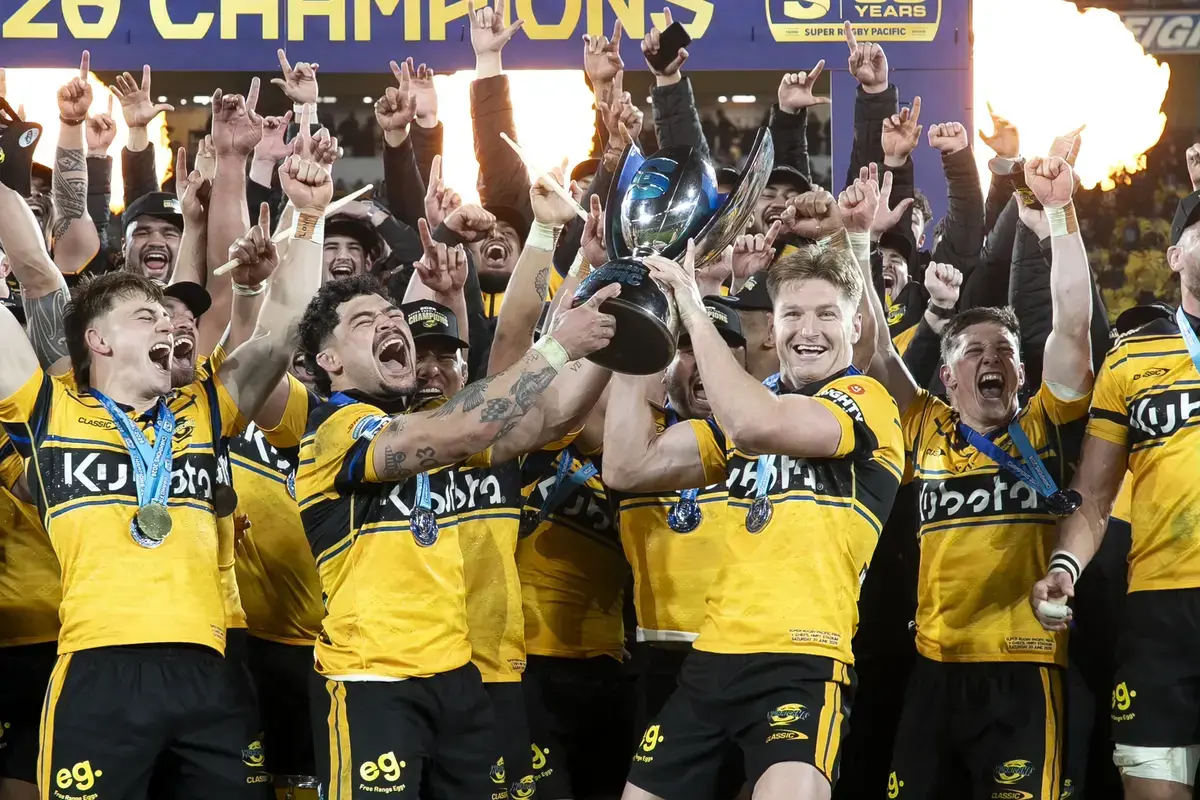
Hurricanes Co-Captains Du'Plessis Kirifi, left and Jordie Barrett hold the Super Rugby Trophy during the Hurricanes v Chiefs, Super Rugby Pacific Grand Final match, Hnry Stadium, Wellington, New Zealand. Saturday, 20 June 2026, (Photo by Marty Melville / action press)

Super Rugby Pacific has announced a revamped competition structure for 2027, featuring an expanded regular season, a redesigned finals series, and the introduction of the first-ever Anzac Day Bledisloe Cup Test.

The 2027 season will kick off on Friday 12 February, with ten teams competing across a 17-week regular season. Each side will play 16 matches – two more than in 2026 – after the number of bye weeks is reduced from two to one. The Grand Final is scheduled for Saturday 26 June.

The shift to ten teams follows Moana Pasifika’s departure from the competition at the end of the 2026 season, after New Zealand Rugby confirmed that none of the bids to rescue the franchise could demonstrate the committed funding required to meet financial and operational requirements.

Finals series overhaul

The most significant structural change comes in the finals series, which eliminates the controversial “lucky loser” system used over the past two seasons. Under the previous format, the highest-seeded losing team from the qualifying round could still progress to the semi-finals. That concept is now gone.

The top six teams will still qualify for the post-season, but teams finishing first and second will receive a bye week and advance directly to the semi-finals. Teams ranked third and fourth will host sudden-death elimination finals against the fifth and sixth-placed sides respectively. The winners of those elimination finals progress as away teams in the semi-final round.

The full finals structure is as follows:

Week One – Elimination Finals: 3 vs 6; 4 vs 5

Week Two – Semi-Finals: 1 vs lowest-seeded EF winner; 2 vs highest-seeded EF winner

Week Three – Grand Final: Highest-seeded SF winner vs lowest-seeded SF winner

Super Rugby Pacific CEO Jack Mesley said the refreshed format had been designed to maximise the 20-week competition window while delivering higher stakes throughout the finals.

“We’re delighted to have developed a structure that pushes the limits of our competition window to deliver more games and give every fan more opportunities to see their favourite teams in action,” Mesley said.

“At the same time our new-look Finals Series ensures teams will be more desperate than ever to finish in the top two to secure a week off, and the top four to host a home Final, while every Finals game will be a genuine do-or-die contest on the road to the championship.”

Anzac Day Bledisloe adds international dimension

A standout addition to the 2027 calendar is the Anzac Day Bledisloe Cup Test, with squads to be named following Round 9. That effectively transforms the opening two months of the Super Rugby season into a selection trial for international honours.

“The introduction of the Anzac Bledisloe to our calendar will help ensure every match means more, with Test jerseys up for grabs from the moment we kick off in February,” Mesley said.

New Zealand Rugby chief executive Steve Lancaster has previously confirmed that players selected for the Bledisloe Test will miss the preceding round of Super Rugby, with the Anzac weekend serving as a full bye round. Players will be released back to their franchises immediately after the Test.

Mesley also confirmed that organisers are working to retain the Super Round concept following its successful staging in 2026.

“Off the back of the success of Super Round in 2026, we are working diligently to confirm it remains an integral part of our calendar next year,” he said.

“We’re already looking forward to the storylines, drama and excitement that this new structure will help deliver for Super Rugby Pacific in 2027.”

Further details regarding the 2027 draw will be announced in the coming weeks.

Continue Reading

Super Rugby Pacific

McKellar resigns as Waratahs head coach, effective immediately

Published

on

McKellar resigns as Waratahs head coach, effective immediately
Dan McKellar during the Chiefs v Waratahs, Super Rugby Pacific match, FMG Stadium Waikato, Hamilton, New Zealand. Saturday, 4 April 2026, (Photo by Aaron Gillions / action press)

Dan McKellar has resigned as head coach of the NSW Waratahs with immediate effect, ending a two-year tenure that saw the Sydney-based franchise finish eighth in Super Rugby Pacific in both seasons under his leadership.

  • McKellar cited personal reasons for his departure, despite having one year remaining on his contract
  • The Waratahs won 11 matches across the 2025 and 2026 Super Rugby Pacific seasons under McKellar
  • The club finished eighth in both campaigns, the lowest-placed Australian side in 2026 after winning five of 14 matches
  • Assistant coaches Dan Palmer (forwards) and Lachie McCaffrey (defence) remain at the club
  • The Waratahs have begun the recruitment process to appoint a new head coach

McKellar addressed the playing group and coaching staff on Monday morning before the club confirmed his departure in an official statement. The 49-year-old, who joined the Waratahs at the end of 2024 after stints with Leicester Tigers in the English Premiership and as a Wallabies assistant coach, walked away with 12 months still to run on his deal.

“I have decided to step away from my role as Head Coach of the NSW Waratahs for personal reasons,” McKellar said.

“I step away knowing I have given my all to help turn the Waratahs’ fortunes around over the last two seasons. As a coaching group, we have all worked incredibly hard to drive positive and necessary change.”

The departure follows what has been reported as a difficult fortnight for McKellar, with the coach understood to have been required to present to the Waratahs board and Rugby Australia high performance director Peter Horne on Friday in what amounted to a review of his tenure. His exit also comes in the wake of attack coach Mike Catt’s recent departure from the club, leaving the Waratahs searching for both a head coach and an attack coach ahead of the 2027 season.

McKellar oversaw a significant overhaul of the Waratahs’ playing roster during his time in charge. Fewer than 10 players remain on the books from the squad he inherited, and he oversaw the introduction of several promising young players including Rookie of the Year Sid Harvey, Clem Halaholo, and Jamie Adamson. The former Brumbies head coach won six matches in 2025 – narrowly missing the finals – before a five-win campaign in 2026 left the Waratahs at the bottom of the Australian conference.

McKellar thanked his coaching staff and skipper Matt Philip as he departed.

“I’d like to thank Dan Palmer, Locky McCaffrey, Mike Catt and Tom Carter for their hard work and support. I’d also like to thank captain Matt Philip for his support,” he said.

“As this journey for the Waratahs continues, I wish all the players and staff the very best for the future.”

Waratahs chairman Tony Crawford acknowledged McKellar’s contribution to the club despite the results not matching ambitions on the field.

“On behalf of the board, players and staff at the Waratahs, I would like to thank Dan for his significant contribution to the club,” Crawford said.

“Dan has made a massive impact on the club since joining, both on and off the field. His work ethic and commitment to deliver his coaching program were second to none and he always put the Waratahs first.”

Director of High Performance BJ Mather echoed those sentiments, noting that McKellar had made a broader impact beyond match results.

“Dan achieved some landmark results on the field and reignited support for the Waratahs in the NSW rugby community,” Mather said.

“We wish him well in the next stage of his coaching career. He and his family will always be part of the Waratahs and we wish them all the best for the future.”

McKellar’s exit marks the sixth head coaching change at the Waratahs in nine years since Daryl Gibson departed at the end of 2019, underlining the instability that has plagued the once-proud franchise. Palmer and McCaffrey remain on staff, with McCaffrey expected to lead the side during the short Super Rugby AUS season later this year while the club searches for a permanent appointment.

The Waratahs have confirmed the recruitment process for a new head coach is already under way.

Continue Reading

Super Rugby Pacific

NZR confirm Moana Pasifika cut from Super Rugby Pacific in 2027

Published

on

NZR confirm Moana Pasifika cut from Super Rugby Pacific in 2027
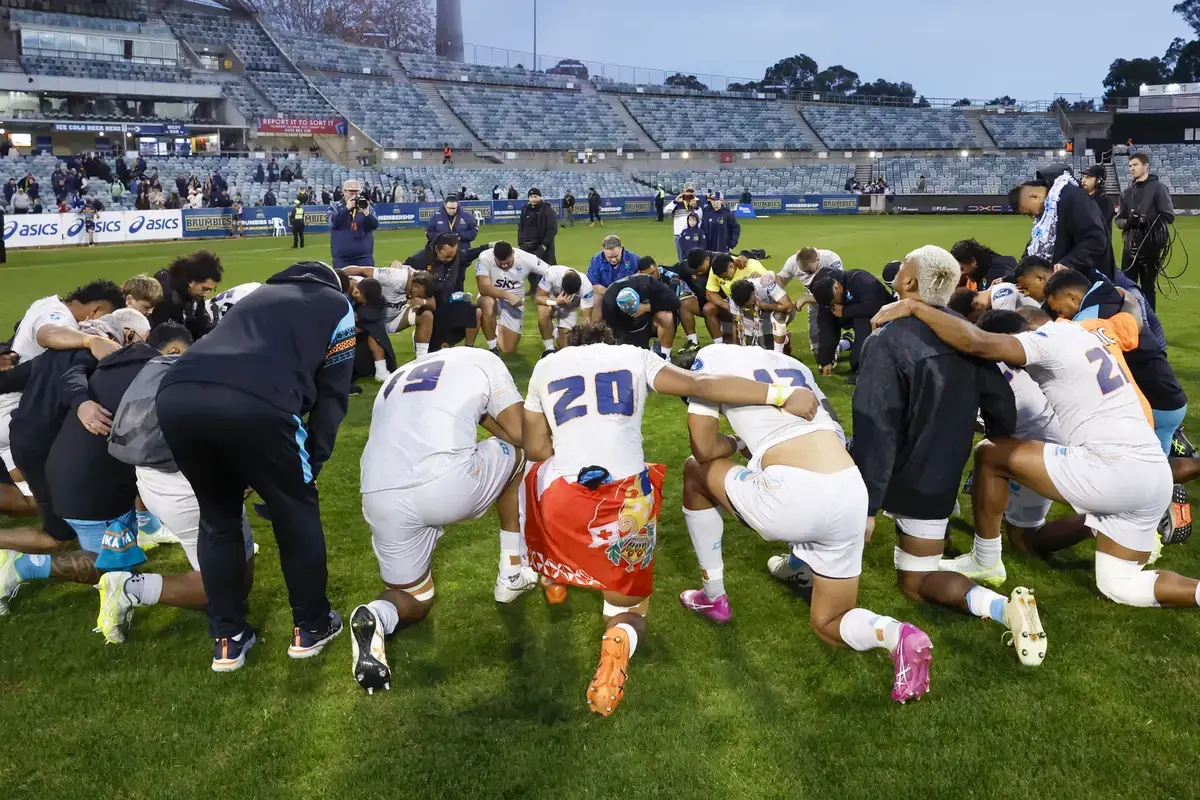
The Moana Pasifika team huddle in prayer after victory during the Brumbies v Moana Pasifika, Super Rugby Pacific match, Gio Stadium, Canberra, Australia. Saturday, 30 May 2026, (Photo by Mark Evans / action press)

Moana Pasifika’s Super Rugby Pacific chapter has officially ended after New Zealand Rugby confirmed they will not transfer the franchise’s licence to any new party for the 2027 season.

Despite multiple interested parties exploring options to save the embattled franchise, NZR announced on Wednesday that none could satisfy the financial and commercial requirements necessary to secure the licence.

“NZR explored every possibility for a long-term solution with several interested parties, including allowing multiple extensions to the 15 May deadline,” the governing body’s statement read. “None of the parties were able to satisfy both the capital and business plan requirements necessary to secure the licence.”

The decision means Super Rugby Pacific will contract to 10 teams from 2027, with the competition set to confirm the new format in the coming weeks.

Financial requirements prove insurmountable

NZR chief financial officer Chris Kinraid outlined the significant capital requirements that proved beyond the reach of all prospective bidders.

“A competitive and sustainable team needs commercial revenue of more than NZ$10 million, in addition to broadcast revenue; and at least NZ$15 million in committed capital to support its business plan and maintain appropriate cash reserves,” Kinraid said.

The Kanaloa Consortium, which included several former All Blacks with Pasifika heritage and had secured the support of the rugby unions of Tonga, Samoa, Cook Islands and Niue, was among those whose bid fell short.

Consortium chief executive Tracy Atiga said they were “disappointed” not to have been considered to take over the licence, with the group planning to respond fully after reviewing NZR’s decision.

A joint proposal from the Samoan and Tongan Governments, co-ordinated by former Moana Pasifika chief executive Pelenato Sakalia and supported by the New Zealand Rugby Players Association, was also rejected. The two governments had proposed to jointly inject up to $12 million over three years using aid and development funding, but NZR reportedly had concerns about the funding gap in the first year and the club’s ability to build sufficient commercial income.

Door remains open for future Pacific team

While the Moana Pasifika licence will not be transferred, Kinraid indicated that NZR remains committed to the concept of Pacific representation in Super Rugby.

“We want to be clear, the door remains open beyond 2027,” he said. “We firmly believe a team can be based in the Pacific Islands and that a sustainable long-term solution can be found in the future. We remain open and willing to engage with anyone who can meet the financial and commercial requirements.

“We also acknowledge the engagement of Minister Winston Peters and the New Zealand Ministry of Foreign Affairs and Trade for the recognition of the role rugby can play in the Pacific region.”

Kinraid noted that NZR had also received interest in potential future expansion opportunities beyond 2027, which he described as “an encouraging sign for the future of the competition”.

However, he stressed that this process was specifically for a team representing Moana Pasifika as a pathway for Tonga and Samoa from 2027, not to establish a new team or enter a new market.

“Any future expansion of Super Rugby Pacific would need to be considered in partnership with Rugby Australia, Super Rugby Pacific and as part of a broader competition strategy,” Kinraid added.

Peters expresses disappointment

New Zealand First leader and Minister of Foreign Affairs Winston Peters issued a statement expressing his disappointment at the outcome.

“Today’s announcement will be felt strongly by players, their families and supporters. It will also be disappointing to many people in the Pacific who have got in behind the team,” Peters said.

“Less than a month ago, we were approached by a number of parties and rugby lovers seeking our support to put Moana Pasifika on a financially sustainable footing. It would have been helpful if Moana Pasifika had come to us earlier about their financial situation.

“Achieving a result in three weeks to facilitate Moana Pasifika being part of the 2027 season was always going to be a bridge too far. We had hoped NZ Rugby would grant us more time, but they decided they had to move ahead.”

Tongan PM laments ‘sad day’

Tonga Rugby Union president Lord Fakafanua, who is also the country’s prime minister, described it as “a sad day to see Moana Pasifika dying out after so much promise”.

The TRU indicated they would respond fully after discussing the issue further.

Competition pays tribute

Super Rugby Pacific acknowledged the decision in a statement, recognising the disappointment felt by all connected with the club.

“Since joining Super Rugby Pacific in 2022, Moana Pasifika has made a significant contribution to the fabric of our competition and we extend our gratitude to everyone who played a part in that journey,” the statement read.

“There can be no doubt the Pasifika community has been a fundamental part of our competition for the last 30 years, and our commitment to recognising and celebrating that community remains.”

Moana Pasifika finished their final season bottom of the standings with two wins from 14 matches, signing off with a 21–19 victory over the Brumbies in Canberra. The franchise’s players and staff, who have endured months of uncertainty at their North Harbour Stadium base, must now search for employment elsewhere.

The franchise was put into liquidation after majority owners Pasifika Medical Association announced in April they could no longer fund the club beyond the 2026 season. NZR had stepped in with financial backing to ensure Moana could complete their final campaign.

Continue Reading

Trending

Discover more from Rugby News, Results, and Analysis | Rugby is the Game

Subscribe now to keep reading and get access to the full archive.

Continue reading