Connect with us

Super Rugby Pacific

Force into top four with come-from-behind win over Highlanders

Published

on

Carlo Tizzano of the Force is seen during the Super Rugby Pacific Round 8 match between the Western Force and the Highlanders at HBF Park in Perth, Saturday, April 5, 2025. ( IMAGO / AAP)

The Western Force produced a stirring fightback to secure a crucial 29-20 bonus-point victory over the Highlanders at HBF Park in Perth.

Key moments:

10′ – Sam Gilbert penalty (0-3)
14′ – Carlo Tizzano try, Ben Donaldson conversion (7-3)
17′ – Jona Nareki try, Sam Gilbert conversion (7-10)
20′ – Sam Gilbert try, Sam Gilbert conversion (7-17)
27′ – Sam Gilbert penalty (7-20)
37′ – Brandon Paenga-Amosa try, Ben Donaldson conversion (14-20)
42′ – Mac Grealy try (19-20)
47′ – Harry Potter try (24-20)
48′ – Sean Withy red card (knee to the head of Potter)
52′ – George Poolman try (29-20)
56′ – Sio Tomkinson yellow card (dangerous tackle)
66′ – Jona Nareki yellow card (repeated infringements)
80′ – Carlo Tizzano turnover secures bonus point

After trailing 20-7 midway through the first half, the Force scored 22 unanswered points to catapult themselves into the top four of the Super Rugby Pacific standings heading into their bye week. The victory—their fourth from eight matches—moves them ahead of both the Waratahs and Brumbies in what is becoming an increasingly competitive Australian conference.

In-form flanker Carlo Tizzano was once again at the heart of everything positive for the Force, scoring his 11th try of the season and pulling off a match-defining turnover in the dying seconds to preserve the bonus point. The 25-year-old, who reportedly has a lucrative overseas offer on the table but is expected to remain in Perth, continues to mount a compelling case for Wallabies selection with his all-action performances.

The Highlanders, seeking to arrest a three-match losing streak, started brightly with fullback Sam Gilbert opening the scoring with an early penalty after a strong scrum from the visitors. The Force responded almost immediately as Tizzano crashed over from a well-executed rolling maul in the 14th minute, with Ben Donaldson adding the extras.

The visitors enjoyed a dominant 10-minute spell which saw them race to a 20-7 lead. First, winger Jona Nareki showed impressive strength to bounce through two tacklers and score in the 17th minute. The dynamic winger powered his way through a pair of Force defenders before diving over the line with Gilbert converting.

Just three minutes later, Gilbert himself finished off a spectacular counter-attack that started deep in Highlanders territory. Thomas Umaga-Jensen made the initial break, bursting into open field before a series of well-timed passes found Gilbert in support who crossed for a try he then converted himself. Gilbert’s penalty in the 27th minute gave the Highlanders what appeared to be a commanding advantage.

However, the momentum shifted dramatically late in the first half. The Force began to impose themselves physically, working their way into Highlanders territory with a more direct approach. Hooker Brandon Paenga-Amosa reduced the deficit after the Force’s maul once again proved too powerful for the Highlanders’ defence. The former Wallaby drove over from close range in the 37th minute with Donaldson’s conversion cutting the deficit to six points.

On the stroke of half-time, the Force produced their most cohesive attack of the match. A patient multi-phase build-up stretched the Highlanders’ defence before fullback Mac Grealy spotted a gap and sliced through to score. Donaldson’s conversion attempt drifted wide, but the home side had reduced the Highlanders’ lead to just a single point at the interval.

The Force began the second half with renewed intensity and completed their comeback five minutes after the restart. Will Harris, freshly introduced from the bench, made an immediate impact with a powerful carry that created momentum. The ball was quickly recycled to Donaldson who sprinted clear into open space before drawing the last defender and sending Harry Potter away for a well-constructed try that gave the Force their first lead since the opening quarter.

The try was marred by controversy as Highlanders number eight Sean Withy slid into Potter with his knee, making contact with the winger’s head. Initially yellow-carded by referee Jordan Way, the sanction was upgraded to red upon review by TMO James Leckie, leaving the visitors a man down for the remainder of the match.

The numerical advantage told almost immediately as replacement George Poolman extended the Force’s lead following a scintillating break from Max Burey. The substitute fly-half, showing off his sevens pace, carved through the Highlanders’ defence before delivering a perfectly timed pass to Poolman who crossed for his first try of the season. The five-pointer gave the Force a bonus point and stretched their lead to nine points.

At 29-20, the home side appeared to be cruising, but a yellow card to Sio Tomkinson – playing his 50th Super Rugby match against his former club – for a dangerous tackle on Gilbert briefly evened the numbers. Tomkinson, perhaps over-eager to impress against his old teammates, was sent to the sin bin after dumping Gilbert dangerously in a ruck clearout.

The Highlanders sought to capitalise on the temporary numerical parity, launching several attacks into Force territory, but the home side’s defence held firm. The visitors’ cause wasn’t helped when winger Jona Nareki became the third player to be sent to the sin bin, receiving a yellow card in the 66th minute for repeated infringements as the Force maintained pressure through their rolling maul.

Despite being reduced to 13 men at one point, the Highlanders mounted a desperate late surge. Captain Timoci Tavatavanawai, who had been a constant threat throughout, nearly scored a spectacular solo try after breaking from his own half and charging 60 metres upfield. It took a heroic defensive effort from the Force, capped by Tizzano’s last-gasp turnover on his own try line, to secure all five points and send the home crowd into raptures.

The result marks the fourth consecutive defeat for the Highlanders, who now find themselves stranded in ninth place on the ladder with just two wins from seven matches. For Jamie Joseph’s men, who started the season with such promise after upsetting the champion Blues in round two, questions will need to be answered about their alarming slide.

“We probably didn’t start the way that we wanted to, but it shows the grit of the boys and we really bit down on the mouthguard,” said Force captain Jeremy Williams. “We managed to get the momentum back and kept coming and coming, and it’s a great win ahead of the bye.”

Highlanders skipper Timoci Tavatavanawai cut a frustrated figure after his side’s fourth straight loss. “We let them in, in the last ten minutes [of the first half] by our mistakes, giving away penalties and it hurt us in the end,” he said.

The Force’s victory was built on solid foundations. Marley Pearce was tireless in the tight, Williams dominated the lineout, and Will Harris made a significant impact off the bench. In the backline, Donaldson controlled proceedings well, while Grealy and Potter provided constant threats with ball in hand.

The Force also suffered an early setback with the loss of Wallabies winger Dylan Pietsch, who departed in just the seventh minute after appearing to aggravate his heavily-strapped left knee. His replacement, George Poolman, proved to be an effective substitute, scoring a crucial try and providing energy in both attack and defence.

For the Highlanders, Tavatavanawai was a standout performer with several powerful carries that consistently put the Force on the back foot. Thomas Umaga-Jensen also showed glimpses of his class in midfield, but the visitors were let down by poor ball handling and an inability to play the territory game effectively. Their scrum, anchored by the returning Ethan de Groot, started strongly but failed to maintain that dominance as the match progressed.

The Western Force will now enjoy a well-earned rest before facing a daunting schedule that includes three consecutive matches against New Zealand teams, including away fixtures against the Chiefs and Blues. For Simon Cron’s men, the victory provides the perfect platform as they look to secure a playoff berth in the business end of the season.

The Highlanders return home to face the Fijian Drua in Dunedin, with their season hanging by a thread. With Sean Withy likely facing a suspension after his red card, coach Jamie Joseph faces some significant selection challenges as he attempts to salvage his team’s faltering campaign.

Continue Reading
Click to comment

Leave a Reply

Super Rugby Pacific

Michael Cheika confirmed as Waratahs Head Coach for 2027 season

Published

on

Michael Cheika confirmed as Waratahs Head Coach for 2027 season
Head Coach Michael Cheika of Leicester Tigers during the warm up before the Gallagher Premiership Rugby Final match between Bath Rugby and Leicester Tigers at Allianz Stadium, Twickenham, United Kingdom on 14 June 2025.

Michael Cheika has been confirmed as the NSW Waratahs’ new head coach for the 2027 Super Rugby Pacific season, returning to the franchise more than a decade after leading them to their maiden championship title in 2014.

  • Cheika, 59, will formally commence in November ahead of the 2027 season with an option for 2028
  • The former World Rugby Coach of the Year guided the Waratahs to their only Super Rugby title in 2014
  • He replaces Dan McKellar, who departed in June after two underwhelming seasons
  • Cheika’s assistant coach will be announced in due course
  • The Waratahs have not made the Super Rugby finals in three consecutive seasons
  • Bernard Foley, Nick Phipps and Angus Crichton have also signed for 2027

The appointment represents one of the most significant coaching moves in Australian rugby in recent years, with Cheika tasked with revitalising a franchise that has struggled badly since his departure at the end of the 2015 season. The Waratahs have reached the semi-finals just once in the 11 years since he left, and Rugby Australia chief executive Phil Waugh is understood to have been the driving force behind bringing Cheika back to the club.

Cheika’s CV since leaving the Waratahs reads as a remarkable coaching odyssey. He took over as Wallabies head coach at the end of 2014 and within a year had captured Australia’s inaugural Rugby Championship title and guided the side to the 2015 Rugby World Cup final in England, earning the World Rugby Coach of the Year award in the process. He remained in charge of the Wallabies through to the 2019 World Cup, stepping down after a quarter-final exit in Japan.

A move to Argentina followed, initially as an assistant in 2021 before taking charge as head coach in 2022. Under Cheika, Los Pumas achieved their first-ever victory over the All Blacks in New Zealand and went on to reach the semi-finals of the 2023 Rugby World Cup in France. He then took over at Leicester Tigers in the English Premiership – replacing McKellar, in a curious coincidence – and led the club to the Premiership final in 2025 after they had finished third from bottom the previous season.

“The NSW Waratahs have always occupied a special place for me – it’s my home state and I feel ready to return as their Head Coach ahead of an important year for the Waratahs and also for Australian Rugby in the lead up to the home Rugby World Cup,” Cheika said.

“Being involved in the NSW squad that lifted the Super Rugby trophy in 2014 is something I will never forget, especially the passion and energy of our supporters. This is a new time, a different time and I am looking forward to being able to enjoy those same kinds of feelings and more with players, their families and all the fans in this new adventure.”

The 2027 season carries enormous significance for the Waratahs and Australian rugby more broadly, with the Rugby World Cup to be hosted on home soil later that year. Cheika will be expected to raise the competitive standard of the Sydney-based franchise while helping to re-engage a supporter base that has drifted away during lean years. His track record of rebuilding underperforming sides – most recently demonstrated at Leicester – will be central to that mission.

Cheika is currently serving as an assistant coach at NRL club the Sydney Roosters and is expected to lead Lebanon at the Rugby League World Cup later this year before turning his full attention to the Waratahs in November. He was clear that his immediate focus remains on his current commitments.

“Before all of that I want to give my all to my rugby league club, the Sydney Roosters, to help achieve our goal for this season, to pay them back for the trust and belief they have always shown in me,” he said.

NSW Waratahs Director of Performance B-J Mather expressed his delight at the appointment.

“Michael is a proven leader with an exceptional record across many years building and preparing teams to compete on rugby’s biggest stages,” Mather said. “His coaching achievements speak for themselves but equally important is his sincere passion for our club and what it represents.

“We believe Michael is the right person to now lead the next chapter for the Waratahs and we are delighted to welcome him home.”

Cheika will not be short of familiar faces when he arrives. Bernard Foley, whose late penalty sealed the 33–32 victory over the Crusaders in the 2014 Super Rugby final, has signed for the 2027 season along with former Wallabies halfback Nick Phipps. Roosters backrower Angus Crichton is also crossing codes to join the Waratahs, while former Waratahs player Stephen Hoiles is expected to join the coaching staff.

Defence coach Lachie McCaffrey has been confirmed as the Waratahs’ coach for the upcoming Super Rugby AUS competition, with recently retired Jack Debreczeni and injured Wallabies halfback Jake Gordon serving as his assistants alongside scrum coach Dan Palmer.

Cheika’s broader coaching journey began at Randwick, where he played more than 300 games and won seven premierships before leading the club to a Shute Shield title in 2004. International club appointments with Leinster – where he won the Heineken Cup in 2009 – Stade Francais and Japan’s Green Rockets Tokatsu followed before his first stint with the Waratahs.

Continue Reading

Super Rugby Pacific

Super Rugby confirms expanded 2027 season with new finals system

Published

on

Super Rugby confirms expanded 2027 season with new finals system
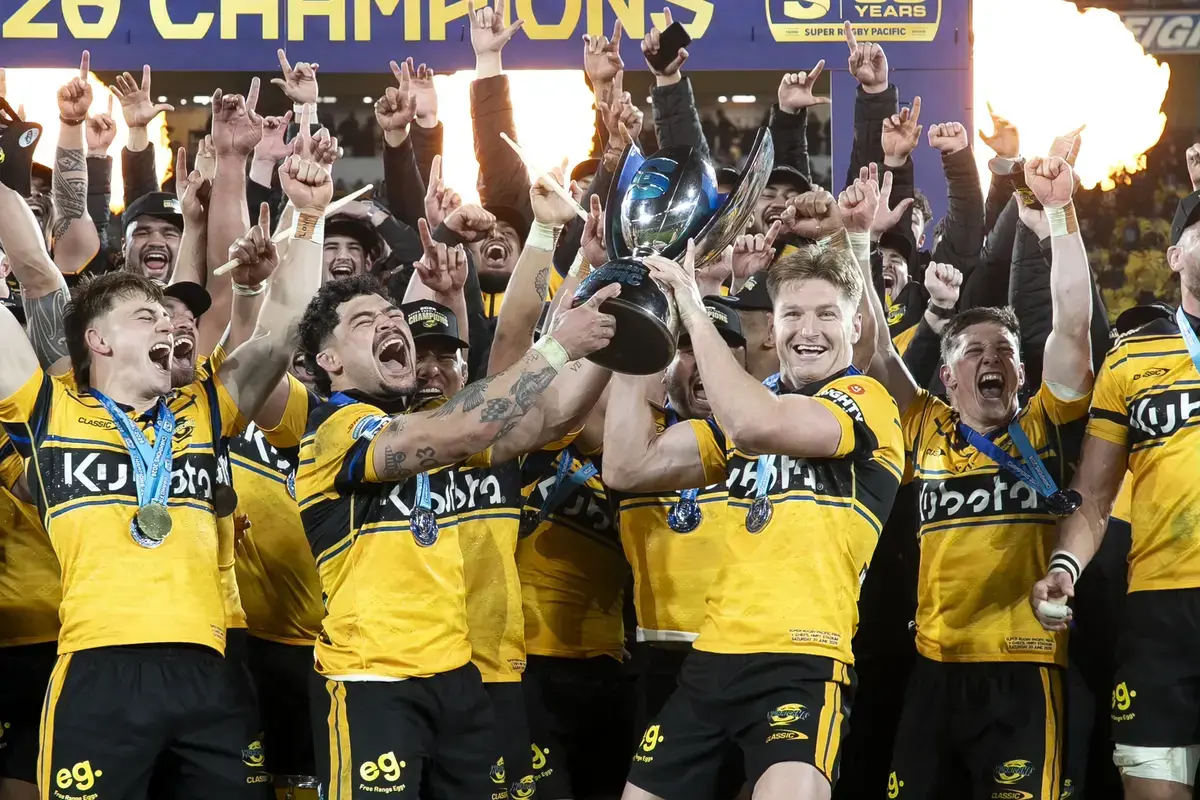
Hurricanes Co-Captains Du'Plessis Kirifi, left and Jordie Barrett hold the Super Rugby Trophy during the Hurricanes v Chiefs, Super Rugby Pacific Grand Final match, Hnry Stadium, Wellington, New Zealand. Saturday, 20 June 2026, (Photo by Marty Melville / action press)

Super Rugby Pacific has announced a revamped competition structure for 2027, featuring an expanded regular season, a redesigned finals series, and the introduction of the first-ever Anzac Day Bledisloe Cup Test.

The 2027 season will kick off on Friday 12 February, with ten teams competing across a 17-week regular season. Each side will play 16 matches – two more than in 2026 – after the number of bye weeks is reduced from two to one. The Grand Final is scheduled for Saturday 26 June.

The shift to ten teams follows Moana Pasifika’s departure from the competition at the end of the 2026 season, after New Zealand Rugby confirmed that none of the bids to rescue the franchise could demonstrate the committed funding required to meet financial and operational requirements.

Finals series overhaul

The most significant structural change comes in the finals series, which eliminates the controversial “lucky loser” system used over the past two seasons. Under the previous format, the highest-seeded losing team from the qualifying round could still progress to the semi-finals. That concept is now gone.

The top six teams will still qualify for the post-season, but teams finishing first and second will receive a bye week and advance directly to the semi-finals. Teams ranked third and fourth will host sudden-death elimination finals against the fifth and sixth-placed sides respectively. The winners of those elimination finals progress as away teams in the semi-final round.

The full finals structure is as follows:

Week One – Elimination Finals: 3 vs 6; 4 vs 5

Week Two – Semi-Finals: 1 vs lowest-seeded EF winner; 2 vs highest-seeded EF winner

Week Three – Grand Final: Highest-seeded SF winner vs lowest-seeded SF winner

Super Rugby Pacific CEO Jack Mesley said the refreshed format had been designed to maximise the 20-week competition window while delivering higher stakes throughout the finals.

“We’re delighted to have developed a structure that pushes the limits of our competition window to deliver more games and give every fan more opportunities to see their favourite teams in action,” Mesley said.

“At the same time our new-look Finals Series ensures teams will be more desperate than ever to finish in the top two to secure a week off, and the top four to host a home Final, while every Finals game will be a genuine do-or-die contest on the road to the championship.”

Anzac Day Bledisloe adds international dimension

A standout addition to the 2027 calendar is the Anzac Day Bledisloe Cup Test, with squads to be named following Round 9. That effectively transforms the opening two months of the Super Rugby season into a selection trial for international honours.

“The introduction of the Anzac Bledisloe to our calendar will help ensure every match means more, with Test jerseys up for grabs from the moment we kick off in February,” Mesley said.

New Zealand Rugby chief executive Steve Lancaster has previously confirmed that players selected for the Bledisloe Test will miss the preceding round of Super Rugby, with the Anzac weekend serving as a full bye round. Players will be released back to their franchises immediately after the Test.

Mesley also confirmed that organisers are working to retain the Super Round concept following its successful staging in 2026.

“Off the back of the success of Super Round in 2026, we are working diligently to confirm it remains an integral part of our calendar next year,” he said.

“We’re already looking forward to the storylines, drama and excitement that this new structure will help deliver for Super Rugby Pacific in 2027.”

Further details regarding the 2027 draw will be announced in the coming weeks.

Continue Reading

Super Rugby Pacific

McKellar resigns as Waratahs head coach, effective immediately

Published

on

McKellar resigns as Waratahs head coach, effective immediately
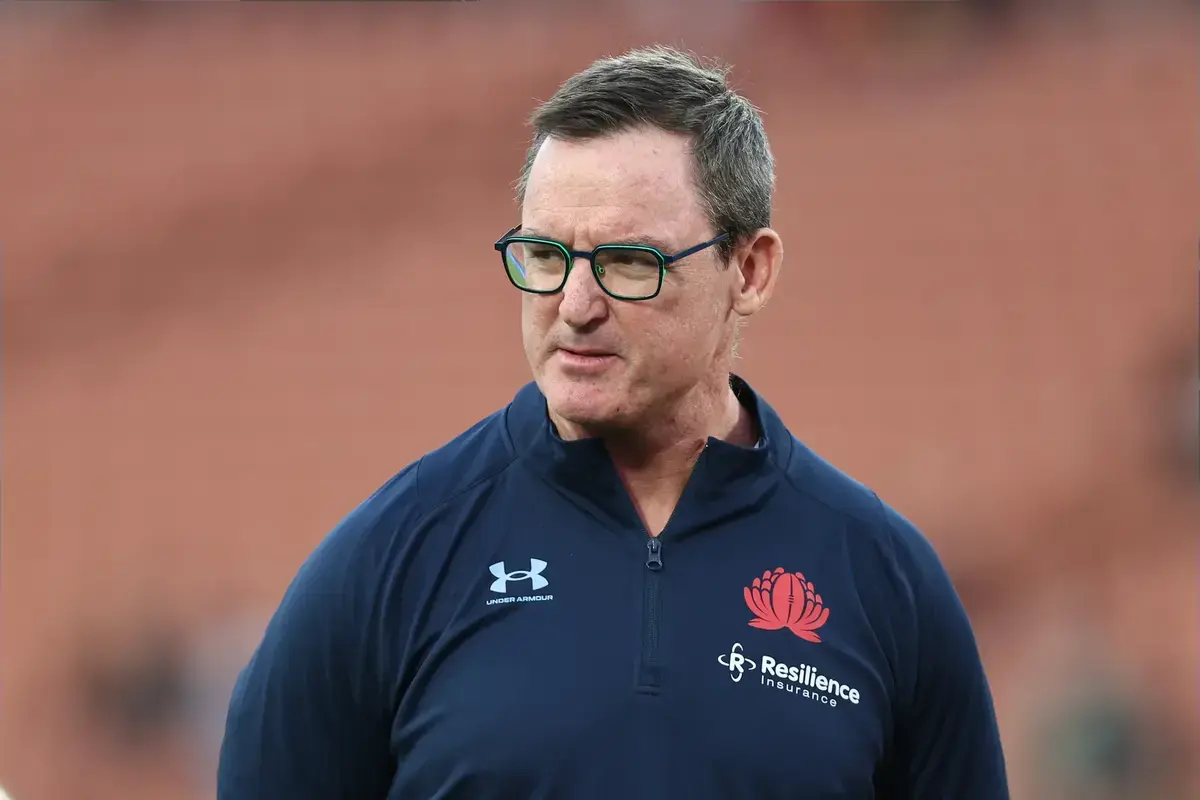
Dan McKellar during the Chiefs v Waratahs, Super Rugby Pacific match, FMG Stadium Waikato, Hamilton, New Zealand. Saturday, 4 April 2026, (Photo by Aaron Gillions / action press)

Dan McKellar has resigned as head coach of the NSW Waratahs with immediate effect, ending a two-year tenure that saw the Sydney-based franchise finish eighth in Super Rugby Pacific in both seasons under his leadership.

  • McKellar cited personal reasons for his departure, despite having one year remaining on his contract
  • The Waratahs won 11 matches across the 2025 and 2026 Super Rugby Pacific seasons under McKellar
  • The club finished eighth in both campaigns, the lowest-placed Australian side in 2026 after winning five of 14 matches
  • Assistant coaches Dan Palmer (forwards) and Lachie McCaffrey (defence) remain at the club
  • The Waratahs have begun the recruitment process to appoint a new head coach

McKellar addressed the playing group and coaching staff on Monday morning before the club confirmed his departure in an official statement. The 49-year-old, who joined the Waratahs at the end of 2024 after stints with Leicester Tigers in the English Premiership and as a Wallabies assistant coach, walked away with 12 months still to run on his deal.

“I have decided to step away from my role as Head Coach of the NSW Waratahs for personal reasons,” McKellar said.

“I step away knowing I have given my all to help turn the Waratahs’ fortunes around over the last two seasons. As a coaching group, we have all worked incredibly hard to drive positive and necessary change.”

The departure follows what has been reported as a difficult fortnight for McKellar, with the coach understood to have been required to present to the Waratahs board and Rugby Australia high performance director Peter Horne on Friday in what amounted to a review of his tenure. His exit also comes in the wake of attack coach Mike Catt’s recent departure from the club, leaving the Waratahs searching for both a head coach and an attack coach ahead of the 2027 season.

McKellar oversaw a significant overhaul of the Waratahs’ playing roster during his time in charge. Fewer than 10 players remain on the books from the squad he inherited, and he oversaw the introduction of several promising young players including Rookie of the Year Sid Harvey, Clem Halaholo, and Jamie Adamson. The former Brumbies head coach won six matches in 2025 – narrowly missing the finals – before a five-win campaign in 2026 left the Waratahs at the bottom of the Australian conference.

McKellar thanked his coaching staff and skipper Matt Philip as he departed.

“I’d like to thank Dan Palmer, Locky McCaffrey, Mike Catt and Tom Carter for their hard work and support. I’d also like to thank captain Matt Philip for his support,” he said.

“As this journey for the Waratahs continues, I wish all the players and staff the very best for the future.”

Waratahs chairman Tony Crawford acknowledged McKellar’s contribution to the club despite the results not matching ambitions on the field.

“On behalf of the board, players and staff at the Waratahs, I would like to thank Dan for his significant contribution to the club,” Crawford said.

“Dan has made a massive impact on the club since joining, both on and off the field. His work ethic and commitment to deliver his coaching program were second to none and he always put the Waratahs first.”

Director of High Performance BJ Mather echoed those sentiments, noting that McKellar had made a broader impact beyond match results.

“Dan achieved some landmark results on the field and reignited support for the Waratahs in the NSW rugby community,” Mather said.

“We wish him well in the next stage of his coaching career. He and his family will always be part of the Waratahs and we wish them all the best for the future.”

McKellar’s exit marks the sixth head coaching change at the Waratahs in nine years since Daryl Gibson departed at the end of 2019, underlining the instability that has plagued the once-proud franchise. Palmer and McCaffrey remain on staff, with McCaffrey expected to lead the side during the short Super Rugby AUS season later this year while the club searches for a permanent appointment.

The Waratahs have confirmed the recruitment process for a new head coach is already under way.

Continue Reading

Trending

Discover more from Rugby News, Results, and Analysis | Rugby is the Game

Subscribe now to keep reading and get access to the full archive.

Continue reading