Super Saturday 2026 delivered one of the greatest days in Six Nations history. France retained their championship with a last-gasp 48-46 victory over England in a Paris thriller that will be replayed for generations, as Thomas Ramos held his nerve with the final kick to break Irish and English hearts. Earlier in Dublin, Ireland secured their fourth Triple Crown in five years with a commanding 43-21 win over Scotland, while Wales ended 1,099 days of Six Nations misery by beating Italy 31-17 in Cardiff. Louis Bielle-Biarrey scored four tries to take his tournament tally to nine – a new record – while the championship produced 111 tries, the most since Italy joined the competition. England’s seven tries weren’t enough. Ireland’s six tries secured the Triple Crown but not the title. And Wales finally, mercifully, tasted victory again. Here are six things we learned from a finale that had absolutely everything.
France are deserved champions
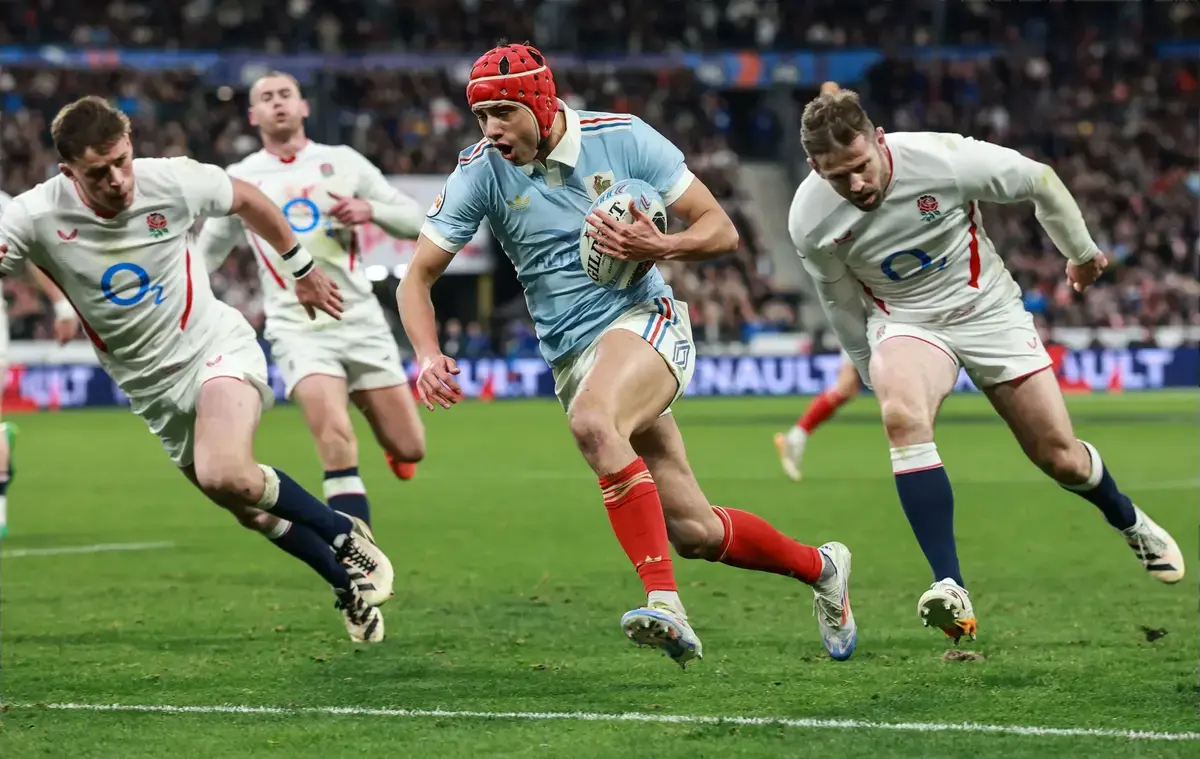
Forget the script. Tear up the predictions. This wasn’t supposed to happen. England, who had lost four consecutive matches coming into Paris, weren’t meant to score 46 points and seven tries against the defending champions. France weren’t supposed to concede that many points and still win. And yet here we are, trying to process what might just be the greatest Six Nations match ever played. The 48-46 scoreline tells only part of the story of a game that swung violently from one team to the other across 82 breathless minutes. England led 27-17 at half-time despite Ellis Genge’s yellow card and a penalty try for France. They fell behind 38-27 early in the second half as Louis Bielle-Biarrey completed his hat-trick. They stormed back to lead 46-45 with three minutes remaining after Tommy Freeman’s brilliant finish. And then came the final twist. With the clock in the red, Trevor Davison and Maro Itoje were penalised at a ruck, giving Thomas Ramos a long-range penalty from 47 metres to win the championship. The Stade de France held its breath. Ramos, France’s nerveless full-back who had already become his country’s all-time leading points scorer earlier in the tournament, stepped up and bisected the posts. France were champions. England were heartbroken. Ireland, watching in Dublin, saw their title hopes evaporate with that single kick. “We’re very lucky that we have maybe the best kicker around,” said Fabien Galthié afterwards, and nobody could argue. Bielle-Biarrey’s four tries – taking him to nine for the championship, smashing the previous record – showcased France’s attacking brilliance. The 21-year-old now has 29 tries in just 27 Tests, an astonishing strike rate that surpasses even Damian Penaud. But it was Ramos’s composure under ultimate pressure that won the title. France finished with 30 tries across five matches, equalling their own record from 2025, and scored four-try bonus points in four of their five games. Their only defeat came against England at Twickenham in round two, but they bounced back with three consecutive bonus-point victories. This is back-to-back titles for the first time since 2006-07, and France’s eighth championship triumph since 2000 – more than any other nation in that period. “We’re very proud of our performance today and the spirit we showed,” said François Cros. “We had a tough first half where Scotland put us under pressure, but we came through that and in the second half, we were able to unleash our game.” The attacking rugby France have played throughout this tournament has set new standards. They are deserved champions, winners of the greatest Six Nations finale ever witnessed.
England regain pride but is that enough?
Where has this England been? Steve Borthwick’s side scored seven tries in Paris, ran France ragged for long periods, led at half-time despite playing 10 minutes with 14 men, and came within 90 seconds of one of the great Six Nations upsets. And yet they still lost. They still finish fifth in the table with just one win from five matches. They still have suffered their worst championship campaign in 50 years. The 48-46 defeat completes England’s most disappointing Six Nations since 1976, when they last lost four matches in a single campaign. The performance was everything Borthwick had demanded – attacking ambition, forward dominance, clinical finishing from Tom Roebuck, Cadan Murley, Ollie Chessum (twice), Alex Coles, Marcus Smith and Tommy Freeman. But the result tells the real story. England’s discipline, which has plagued them all championship, cost them again. Genge’s yellow card for collapsing a maul on the stroke of half-time, coupled with a penalty try for France, turned a 27-17 lead into 24-27 at the break. France then scored 14 more points while England were down to 14 men. That’s 21 points conceded in that crucial period. “When we keep 15 men on the field we look a very good team,” admitted Borthwick afterwards, and the statistics bear him out. England have received nine yellow cards across five matches – equalling Italy’s unwanted record from 2002 – and have conceded 63 points while a player off the pitch. Borthwick questioned referee Nika Amashukeli’s communication over the penalty advantage before Bielle-Biarrey’s fourth try, insisting “the players on the pitch were told it was a penalty advantage” when it had been changed to a knock-on advantage by the TMO. But complaints about refereeing cannot mask the bigger picture. England have lost to Scotland, Ireland and Italy in this championship. They beat Wales and pushed France to the wire, but consistency remains their biggest problem. “I believe I’m the right man to lead the team forward,” insisted Borthwick when asked about his future, and this performance in Paris – despite the heartbreaking defeat – might just have earned him more time. England showed character, attacking ambition and forward power that had been missing for much of the season. “I truly believe this team is going places,” insisted captain Itoje. “We showed the spirit of this team. In sport, you don’t want to go through the experiences that we went through over the last four games. But I truly believe this team’s going places.” Pride has been restored. The performance in Paris proved England can compete with the world’s best when they get their game right. But is that enough? Fifth place, four defeats, and another summer of questions about Borthwick’s methods suggest not.
Ireland have found their edge
The Fields of Athenry rang around the Aviva Stadium. Caelan Doris lifted the Triple Crown trophy. Six tries, 43 points, a 12th consecutive victory over Scotland. Everything about Ireland’s final-day performance screamed champions. Everything except the result in Paris that mattered most. Andy Farrell’s side did everything asked of them, delivering their best performance of the championship against a Scotland side who arrived in Dublin dreaming of their own title glory. Jamie Osborne’s fourth-minute try – his fourth of the championship – set the tone for a commanding display built on set-piece dominance and ruthless finishing. Dan Sheehan’s maul try, Robert Baloucoune’s searing pace, Darragh Murray’s bonus-point score on his Six Nations debut, and Tommy O’Brien’s late brace sealed a performance that had Farrell “proud as punch.” The statistics were extraordinary: 42.9 minutes of ball-in-play time in a game for the ages, Ireland’s red zone efficiency at 4.7 points per entry, and Stuart McCloskey delivering a fifth consecutive high-quality display that puts him “in the mix for player of the tournament.” “We had a ruthless edge to us in how we defended and converted in the 22,” said Farrell. “That was the story of the game really.” Ireland finish second, three points behind France, their three-year title reign over. The opening-night defeat in Paris – when Farrell publicly questioned his team’s “intent” – proved decisive. But the response has been remarkable. From the wreckage of that 36-14 hammering, Ireland have rebuilt themselves, winning four consecutive matches with increasing conviction. The 42-21 destruction of England at Twickenham was followed by grittier wins over Italy and Wales, before this commanding display against Scotland. Ireland used 35 players across this championship – more than any previous Farrell campaign – and the depth chart has been tested extensively. Tom O’Toole’s remarkable conversion to loosehead prop, where he delivered 20 tackles in 65 minutes against Scotland, was “amazing” according to Farrell. McCloskey’s consistency has been a revelation. Robert Baloucoune was named the tournament’s Rising Player despite being 28 years old. The Triple Crown – Ireland’s 15th, and ninth of the Six Nations era – represents their fourth in five years, a remarkable achievement. “It’s unique as an Irishman to be cheering them on,” Doris had said of supporting England in Paris, and the strangeness of that moment captured everything about Ireland’s championship. The title may have gone to France, but Ireland have rediscovered the edge, the hunger, and the ruthless efficiency that makes them one of world rugby’s most dangerous sides. The 18-month journey to the 2027 World Cup is officially on track.
Same old story for Scotland
Twelve years. Twelve consecutive defeats to Ireland. Twelve times Scotland have travelled to Dublin dreaming of glory, only to return home empty-handed and heartbroken. The 43-21 defeat wasn’t a hammering – Darcy Graham, Finn Russell and Rory Darge all scored tries – but it was comprehensive enough to end any lingering title hopes and expose the familiar failings that have haunted Gregor Townsend’s tenure. Scotland haven’t won in Dublin since 2010, when Dan Parks nailed a touchline penalty at Croke Park to scuttle Ireland’s Triple Crown voyage. They haven’t beaten Ireland anywhere since 2017. And on this evidence, the wait will continue. Ireland dominated the collisions, winning the breakdown battle and establishing set-piece superiority that Scotland couldn’t match. Jamie Osborne, Dan Sheehan and Robert Baloucoune scored in a devastating first 20 minutes that established a 19-7 half-time lead. Scotland fought back in the third quarter – Russell’s brilliant solo try and Rory Darge’s finish bringing them within five points at 26-21 – but Ireland’s response was ruthless. Darragh Murray’s bonus-point try, created by the bench’s immediate impact after Andy Farrell made six changes simultaneously, restored control before Tommy O’Brien’s late brace sealed the win. “Ireland played well – they always seem to play well against us,” said Townsend afterwards, and that admission tells you everything. The statistics told the story: Ireland made 232 tackles to Scotland’s significantly fewer, controlled territory for long periods, and converted their 22-metre entries with clinical efficiency. “We’d close the gap, and then we’d let them back in through mistackles or mistakes off the kick-off. They’re all our doings,” admitted captain Sione Tuipulotu. Scotland’s attacking rugby was often brilliant – that 19-phase move for Graham’s try showcased their ambition – but they couldn’t sustain it for 80 minutes. They finish third in the table with three wins from five, which represents progress from previous campaigns. But Townsend’s record in Dublin now stands at zero wins from 11 attempts, and Scotland’s inability to beat Ireland home or away remains one of rugby’s great puzzles. “I’m proud of how we stepped up in the second half,” said Tuipulotu. “But I’m gutted. We really set our sights on coming here and getting a result, but Ireland were too good today. Ireland are deserved winners today.” Former Scotland prop Peter Wright touched on deeper issues: “Physically we compete against England and France, but for some reason, we cannot against Ireland.” The same old story continues. Scotland can beat anyone on their day – witness that stunning 50-40 victory over France last week – but they cannot beat Ireland anywhere, anytime. Until that changes, title challenges will remain dreams rather than reality.
Welsh fans can dare to dream
The wait is over. After 1,099 days, 15 consecutive Six Nations defeats, and a three-year journey through rugby’s darkest valleys, Wales finally tasted victory again. The 31-17 triumph over Italy wasn’t just a win – it was a cathartic release of three years’ worth of frustration, disappointment and pain. Aaron Wainwright’s two tries, Dewi Lake’s score from a driving maul, and Dan Edwards’s brilliant 16-point haul (including a try and an audacious drop goal) gave Wales a 31-0 lead that had the Principality Stadium shaking with joy. “It’s everything for us,” said captain Lake afterwards, his voice hoarse with emotion, and you believed every word. This was Wales’s first Six Nations home win since February 2022 – 1,491 days ago – when they beat Scotland. It was their first championship victory of any kind since beating Italy in Rome on 11 March 2023. The relief was palpable. “We hope that we have restored some faith in the jersey and into what this group can do,” added Lake, and the performance suggested genuine progress under Steve Tandy’s guidance. The defensive intensity that had been building through narrow defeats to Scotland and Ireland was maintained throughout. The set-piece dominance – three tries from driving lineouts in the first half – showcased growing power and precision. Edwards, who had been dropped after the France game for Sam Costelow, responded with his finest performance in a Wales shirt, darting through a gaping hole for the bonus-point try before landing that stunning drop goal from 40 metres. “You’re probably thinking ‘what are you doing?’ And then he absolutely buries it,” laughed Tandy afterwards. “I am overwhelmed with pride by what this group delivered,” said Tandy, visibly emotional. “I’ve always said it’s never been a question of desire, physicality or work ethic in this group. It’s just getting them to understand how far they can go with the work ethic and physically they’ve got.” Italy fought back with tries from Tommaso Di Bartolomeo, Tommaso Allan and Paolo Garbisi, but Wales held firm, defending with the hunger and hardness that had been missing in those opening hammerings by England and France. They still finish with the wooden spoon – their third consecutive bottom-placed finish. But unlike the whitewashes of previous years, this campaign ended with a win, with pride restored, and with belief returning. “This group has gone through a lot of emotionally tough things recently, whether that is on the field or off it,” reflected Lake, and that context makes this victory all the more significant. Welsh rugby remains in crisis off the field, with the WRU facing an extraordinary general meeting and existential questions about professional structures. But on the field, Tandy has given Wales something to build on. The foundations are there. The forward pack dominated Italy physically. Young players like Eddie James and Ellis Mee have emerged as genuine Test-quality performers. The 1,099-day nightmare is over. Welsh fans can dare to dream again.
A match too far for Italy
Italy arrived in Cardiff seeking to create history. Victories over Scotland and England had put them on the brink of something never achieved before – three wins in a single Six Nations campaign. But the brave Azzurri, who had given everything to shock England seven days earlier, simply had nothing left in the tank. The 31-17 defeat was comprehensive, painful, and perhaps inevitable after the emotional and physical toll of their historic win in Rome. Gonzalo Quesada’s side looked flat from the opening exchanges, making mistakes in defence they hadn’t made all tournament, losing collisions they’d been winning for weeks, and struggling to find the rhythm that had made them such compelling viewing. Wales raced to a 21-0 half-time lead through Wainwright’s brace and Lake’s try, all from dominant set-piece play. By the time Edwards scored early in the second half to make it 31-0, Italy’s dreams were dust. “Their heart and physicality was bigger than ours in the first half,” admitted Quesada afterwards. “We saw a big improvement from Wales against Ireland and we knew they had the opportunity to put everything out there to get victory. It was a big game from Wales and they never gave up.” Italy did fight back with three second-half tries – and had two more ruled out by the TMO – but the damage had been done. The day of recovery advantage Wales enjoyed proved significant, but there were deeper issues at play. “We used many energies in a long tournament,” reflected captain Michele Lamaro. “The meta that hurts most is the one at the start of the second half because it made our hopes of getting back into the match vacillate.” The defeat means Italy finish fourth in the table with two wins from five, equalling their best-ever championship performance but falling short of the unprecedented third victory that would have represented genuine progress. Still, this was a tournament that exceeded expectations. Victories over Scotland and England – particularly that first-ever triumph against the English in Rome – represented seismic moments for Italian rugby. Tommaso Menoncello, Paolo Garbisi and Ange Capuozzo all showed flashes of world-class ability. But consistency remains the challenge. Italy were brilliant against England, poor against Wales, and somewhere in between against everyone else. “We are a good squad, in a true process of growth,” said Quesada. “We must do attention to what we say, to how we communicate: Wales has a beautiful squad, a quality staff, and all matches in the Six Nations are tough.” For Italy, one match too far. But also, a championship that showed how far they’ve come – and how far they still have to go. Sonnet 4.5Claude is AI and can make mistakes. Please double-check responses.





 Nations Championship1 week ago
 Nations Championship2 weeks ago
 Nations Championship2 weeks ago
 Nations Championship2 weeks ago
 Nations Championship1 week ago
 Junior World Championship2 weeks ago
 Nations Championship1 week ago
 Nations Championship1 week ago