
Pacific Nations Cup
Fiji overpowers Japan in Pacific Nations Cup Final


Fiji showcased their dominance in the Pacific Nations Cup final on Saturday, overwhelming Japan with a second-half surge to secure a convincing 41-17 victory at Hanazono Rugby Stadium in Osaka. The win marks Fiji’s seventh title in the tournament’s history, further cementing their status as the most successful team in the competition.
What a performance 🔥@Fijirugby stay strong to claim the #PacificNationsCup#FIJvJPN pic.twitter.com/ZZI1vS5p0s
— World Rugby (@WorldRugby) September 21, 2024
The match began as a tightly contested affair, with both sides locked at 10-10 at half-time. Japan’s Dylan Riley ignited the crowd with a spectacular solo try midway through the first half, demonstrating his skill with a well-executed chip and chase. The centre ran at the Fiji defence before chipping the ball forward and collecting it to touch down for a brilliant individual score.
Fiji responded shortly after the half-hour mark when Vuate Karawalevu capitalised on a charged-down kick to score a counter-attacking try. The winger showcased his blistering pace as he galloped forward from deep inside his own half, outrunning the Japanese defence to level the scores.

HIGASHIOSAKA, JAPAN – SEPTEMBER 21: Dylan Riley of Japan scores the team’s first try during the World Rugby Pacific Nations Cup Final between Fiji and Japan at Hanazono Rugby Stadium on September 21, 2024 in Higashiosaka, Osaka, Japan. (Photo by Toru Hanai – World Rugby/World Rugby via Getty Images)
The second half, however, told a different story as Fiji’s superior physicality and pace came to the fore. Olympic silver medallist Ponipate Loganimasi, making his debut for the national team, made an immediate impact off the bench. The flying winger scored two tries, his first coming just minutes after entering the fray in the 59th minute. Fiji quickly spread the ball wide to the right, sending Loganimasi into space where he used his speed to outpace the Japanese defenders.

HIGASHIOSAKA, JAPAN – SEPTEMBER 21: Samu Tawake of Fiji is tackled by Epineri Rev. Uluiviti of Japan during the World Rugby Pacific Nations Cup Final between Fiji and Japan at Hanazono Rugby Stadium on September 21, 2024 in Higashiosaka, Osaka, Japan. (Photo by Toru Hanai – World Rugby/World Rugby via Getty Images)
Karawalevu added a second try to his tally, further demonstrating Fiji’s lethal finishing ability. The try came from another quick spread of the ball, exploiting gaps in the tiring Japanese defence.
Albert Tuisue, another impactful substitute, crossed the line in the 68th minute to put the result beyond doubt. The powerful forward’s try exemplified Fiji’s dominance in the latter stages of the game, as they consistently broke through Japan’s defensive line.
Fiji’s head coach Mick Byrne praised his team’s patience and strategy, saying, “We just knew the first 20 minutes was going to be a real battle, and the speed that the Japanese side play with was going to be a challenge. We just had to stay in there early, and I thought we set ourselves up really well for the second half.”
The victory was particularly sweet for Fiji, as they managed to maintain their impressive defensive record. Prior to Japan’s late consolation try by Malo Tuitama in the 78th minute, Fiji had not conceded a single second-half point in any of their four games in this year’s tournament. Tuitama’s try, while too late to affect the outcome, provided a small measure of consolation for the home crowd.
For Japan and their returning head coach Eddie Jones, the defeat served as a sobering reminder of the work ahead. Jones, who took over the reins at the start of the year, acknowledged Fiji’s superiority, stating, “We’ve got no excuses. Fiji are very deserving champions.” He also noted the learning experience for his young squad, adding, “A couple of our young guys today struggled with the occasion, and unfortunately, the only way to learn about that is to have it happen. But I’m sure they’re going to be better for it.”




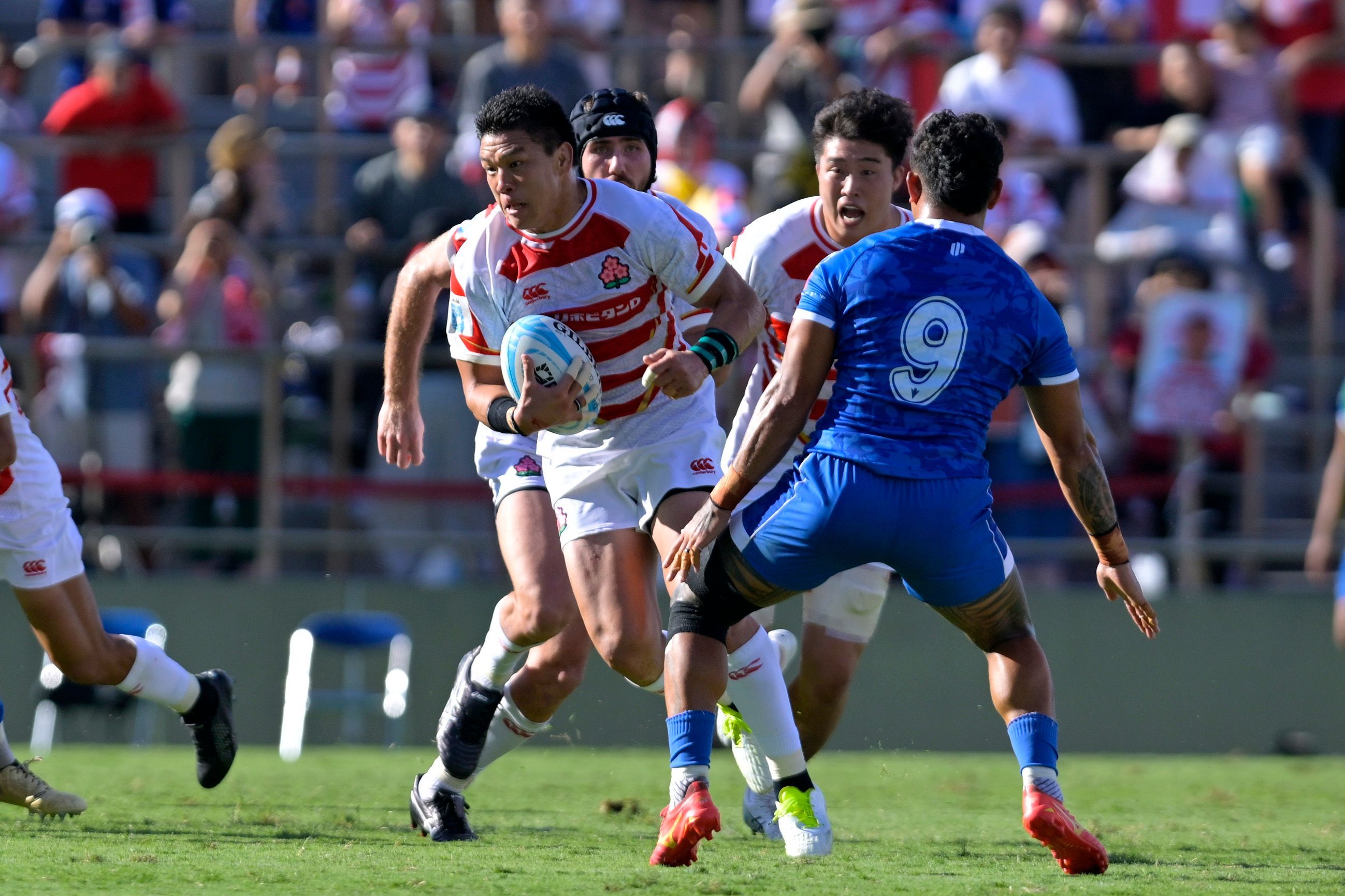
Japan booked their place in the Asahi Super Dry Pacific Nations Cup 2024 final with a scintillating 49-27 victory over Samoa in a high-octane semi-final at Prince Chichibu Memorial Stadium in Tokyo. The hosts, guided by the masterful performance of player-of-the-match Seungsin Lee, outscored their opponents six tries to three in an enthralling display of attacking rugby.
Japan get the win 🙌
They are through to the final 👏#PacificNationsCup | #JPNvSAM | @JRFURugby pic.twitter.com/OUuVDbbELA
— World Rugby (@WorldRugby) September 15, 2024
From the outset, Japan’s intent was clear as they applied relentless pressure on the Samoan defence. Their efforts bore fruit just five minutes in when Dylan Riley crossed the whitewash, capitalising on a clever grubber kick from Lee. The onslaught continued, and by the 9th minute, Samoa found themselves not only trailing but also a man down, as winger Elisapeta Alofipo was shown a yellow card for an illegal tackle that resulted in a penalty try for Japan.
The Brave Blossoms’ attacking flair was on full display as Tomoki Osada added a third try in the 16th minute, once again set up by Lee’s pinpoint kicking. Despite being under siege, Samoa showed their resilience when ex-sevens specialist Tuna Tuitama struck back with a try while his team was short-handed.
Japan, however, remained in control, with Lee capping off a stellar first-half performance by scoring a try of his own just before the break. Rodney Iona’s boot kept Samoa in touching distance with two penalties, but the hosts held a commanding 28-13 lead at halftime.
The second half began much like the first, with Japan’s Lee orchestrating another score. His clever kick and chase led to flanker Kanji Shimokawa crossing the line, further extending Japan’s lead. Samoa refused to capitulate, responding through scrum-half Melani Matavao to keep their hopes alive.
As fatigue set in, the game opened up even more. Shinobu Fujiwara added to Japan’s tally with a darting run from close range, before Samoa’s Lalomilo Lalomilo finished off a spectacular 80-metre counter-attack to keep the scoreboard ticking.
In the dying minutes, Japan demonstrated their depth and fitness, launching a multi-phase attack from halfway that culminated in Taichi Takahashi scoring their final try. Lee’s flawless kicking display continued, as he maintained his 100 percent record off the tee for the tournament.
Japan’s head coach Eddie Jones, while pleased with the victory, remained focused on improvement. “We’re still too loose around the ruck,” he noted post-match. “When we play the game, defensively, we’ve got to keep the pitch small.”
For Samoa, captain Theo McFarland pointed to discipline as a key factor in their defeat. “I don’t think it was a lack of effort,” he reflected. “It was our discipline in the first 20 – constantly making errors, handling errors especially. Our set piece let us down in the second half as well.”

TOKYO, JAPAN – SEPTEMBER 15: Theo McFarland of Samoa wins a line during the World Rugby Pacific Nations Cup Semi-Final between Samoa and Japan at Prince Chichibu Memorial Stadium on September 15, 2024 in Tokyo, Japan. (Photo by Koki Nagahama/Getty Images)
This emphatic victory sets up a tantalising final between Japan and five-time Pacific Nations Cup champions Fiji, who defeated the USA 22-3 in the other semi-final, in Osaka next Saturday. Meanwhile, Samoa will face the USA in the third-place play-off, with both teams looking to end their tournament on a high note.


-

 Nations Championship2 weeks ago
All Blacks punish sloppy Ireland to extend Eden Park unbeaten run
-

 Nations Championship3 weeks ago
Erasmus bloods four debutants in strong Springboks side for Wales
-

 Nations Championship2 weeks ago
Pollock left on bench as England name unchanged XV for Argentina
-

 Nations Championship2 weeks ago
Scotland rally to overpower spirited Fiji at Murrayfield
-

 Junior World Championship3 weeks ago
France and South Africa reach Junior World Championship final
-

 Nations Championship2 weeks ago
France’s forward dominance powers six-try win over Japan in Tokyo
-

 Nations Championship2 weeks ago
England survive second-half meltdown to edge Argentina
-

 Junior World Championship2 weeks ago
South Africa crowned Junior World Championship 2026 champions