Connect with us

Women

Wallaroos boosted by the return of Ashley Marsters for clash with Black Ferns

Published

on

The Wallaroos have received a significant boost ahead of their upcoming test against the Black Ferns, with experienced flanker Ashley Marsters returning to the starting lineup. Coach Jo Yapp has named an essentially unchanged squad for the clash at Ballymore Stadium in Brisbane on Sunday, with Marsters’ inclusion being the sole alteration to the team that impressively defeated Fijiana 64-5 in Sydney.

Marsters, who boasts 28 caps for Australia, has been sidelined since suffering an ankle injury against the USA in May. Her return adds valuable experience and skill to the Wallaroos’ pack as they face their toughest challenge of the year.

“Ash has worked extremely hard to return from injury and has been training really well. It is great to have her experience back in the side,” Yapp commented on Marsters’ comeback. Her inclusion sees Leilani Nathan move to the bench, while last week’s debutant Lydia Kavoa drops out of the matchday 23.

Embed from Getty Images

The rest of the starting XV remains unchanged, with captain Michaela Leonard leading a forward pack that includes the powerful Eva Karpani at tighthead prop and the dynamic Piper Duck at number eight. In the backline, the halfback pairing of Layne Morgan and Arabella McKenzie will look to build on their developing partnership, while the in-form Desiree Miller, who scored four tries against Fiji, starts on the wing.

This match holds special significance as part of NAIDOC week, with the Wallaroos set to wear their First Nations jersey. Fullback Lori Cramer, a proud Indigenous woman with ancestry from the Yiman people of central Queensland, spoke about the importance of this occasion and the NAIDOC theme Keep the fire burning: “For me, it represents having either comfortable conversations or keeping momentum. We’ve got momentum at the moment, and we’re building.”

Embed from Getty Images

The Wallaroos face a daunting challenge against a Black Ferns side that has never lost to Australia in 26 previous encounters. Their last meeting in May resulted in a commanding 67-19 victory for New Zealand. However, the Australian team enters this match with renewed confidence following their dominant win over Fiji.

Winger Desiree Miller encapsulated the team’s optimistic spirit: “We have nothing to lose and we know a win is coming. Each time we get better and pick apart more and identify more opportunities.”

Embed from Getty Images

Coach Yapp acknowledged the magnitude of the task ahead but emphasized the team’s readiness: “We know our final Test match of the year on home soil against the Black Ferns is a big challenge, but one we are looking forward to ahead of WXV 2 in September.”

As the Wallaroos continue their journey towards the 2029 World Cup on home soil, this match represents another crucial step in their development. With Marsters back in the fold, adding her experience and skill to a determined squad, the Wallaroos will be aiming to make history and secure their first-ever victory over the Black Ferns.

WALLAROOS TEAM LIST TO FACE NEW ZEALAND 

1. Brianna Hoy (Coffs Harbour Snappers) – 7 caps
2. Tania Naden (Uni-North Owls) – 14 caps
3. Eva Karpani (Onkaparinga) – 25 caps
4. Kaitlan Leaney (CSU Marlins) – 19 caps
5. Michaela Leonard (c) (Tuggeranong Vikings) – 26 caps
6. Atasi Lafai (Campbelltown Harlequins) – 13 caps
7. Ashley Marsters (Booroondarra) – 28 caps
8. Piper Duck (Tumut Bullettes) – 14 caps
9. Layne Morgan (Merewether Carlton) – 23 caps
10. Arabella McKenzie (Lightning Ridge Tigers) – 25 caps
11. Desiree Miller (Eastern Suburbs) – 6 caps
12. Cecilia Smith (Leeton Dianas) – 14 caps
13. Georgina Friedrichs (Wests Bulldogs) – 23 caps
14. Biola Dawa (Wagga Reddies) – 1 cap
15. Lori Cramer (University of Queensland) – 22 caps

Replacements

16. Tiarna Molloy (Inverell Highlanders) – 2 caps
17. Allana Sikimeti (North Eagles) – 1 cap
18. Bridie O’Gorman (Sydney University) – 21 caps
19. Leilani Nathan (Hamilton Hawks) – 6 caps
20. Siokapesi Palu (Rockdale Rangers) – 10 caps
21. Natalie Wright (Wests Bulldogs) – 1 cap
22. Trilleen Pomare (Wanneroo) – 28 caps
23. Faitala Moleka (Blacktown Scorpions) – 10 caps

* Denotes debutant

Continue Reading
Click to comment

Leave a Reply

Women

Miller eyes historic double as World Rugby reveals award nominees

Published

on

Miller eyes historic double as World Rugby reveals award nominees
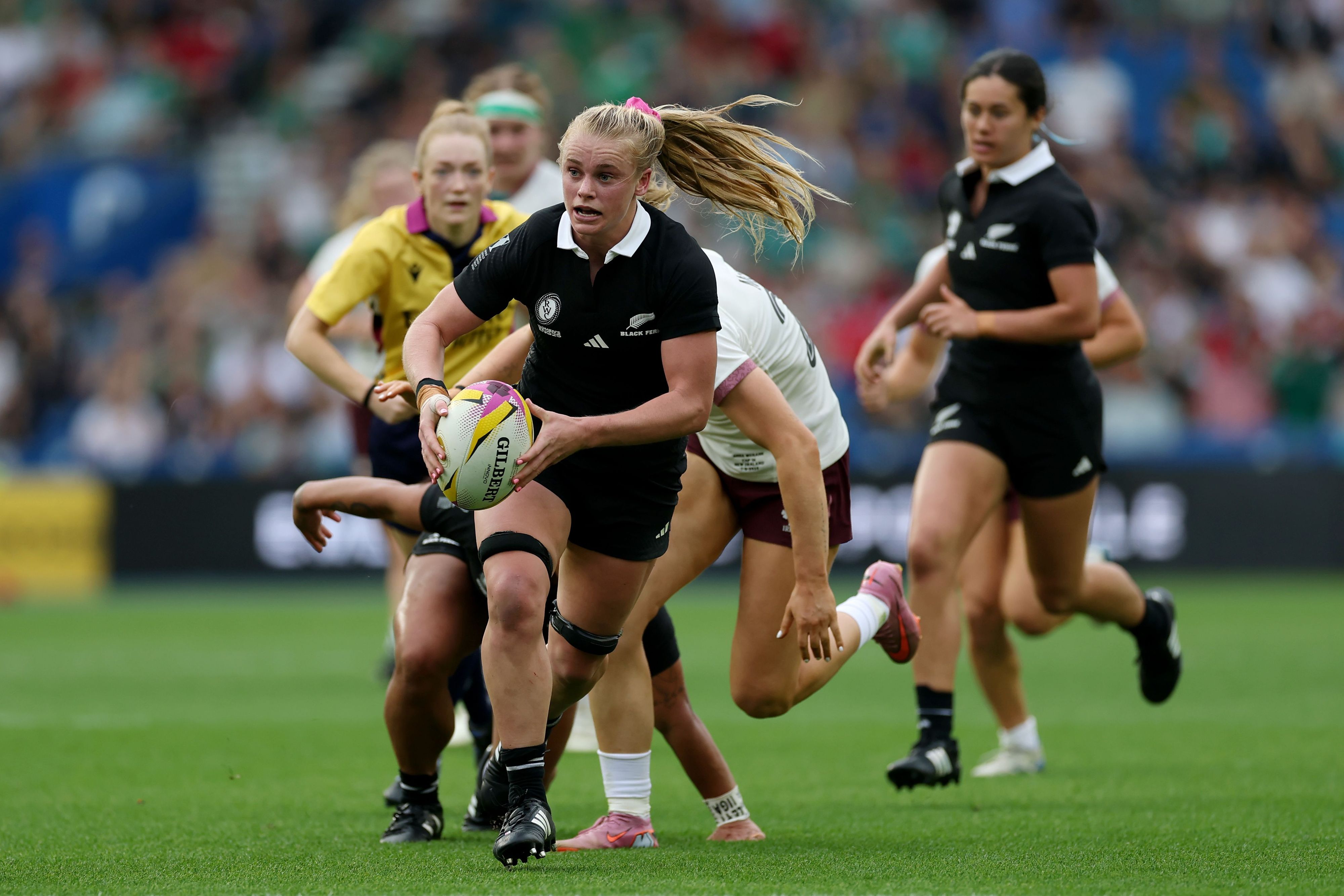
BRIGHTON, ENGLAND - SEPTEMBER 07: Jorja Miller of New Zealand runs with the ball during the Women's Rugby World Cup 2025 Pool C match between New Zealand and Ireland at Brighton & Hove Albion Stadium on September 07, 2025 in Brighton, England. (Photo by Alex Davidson - World Rugby/World Rugby via Getty Images)

New Zealand’s Jorja Miller could become first player to claim both sevens and 15s honours in same year as World Rugby unveils 2025 Player of the Year shortlists.

  • Miller nominated for both Player of the Year and Breakthrough Player awards
  • England’s Megan Jones leads Red Roses representation after stellar World Cup campaign
  • Canada’s Sophie de Goede recognised for remarkable comeback from ACL injury
  • 18-year-old Braxton Sorensen-McGee emerges as future Black Ferns star
  • Awards ceremony to take place during Saturday’s World Cup final at Twickenham

World Rugby has unveiled its nominees for two of the sport’s most prestigious individual honours, with New Zealand’s Jorja Miller positioned to make history as the first player to claim both sevens and 15s Player of the Year awards in the same calendar year.

The awards ceremony will form part of Saturday’s Women’s Rugby World Cup final presentation at Allianz Stadium, Twickenham, where a sold-out crowd will witness what promises to be a historic occasion for women’s sport. The winners will be crowned before a global audience on what World Rugby Chair Brett Robinson described as “an era-defining year for the sport.”

World Rugby Women’s 15s Player of the Year 2025 in partnership with HSBC

The Women’s 15s Player of the Year remains one of the most coveted individual awards in rugby, with particular significance given the recent English dominance. Four of the past five winners have represented the Red Roses, including current holder Ellie Kildunne, who was recognised for her exceptional 2024 campaign that inspired England to a flawless season of 10 wins from 10 matches.

This year’s shortlist features three outstanding candidates who have each demonstrated world-class performances throughout a remarkable season. The award carries extra weight given its timing during the World Cup final, where the winner will receive recognition on rugby’s biggest stage before a global television audience.

The nominees were selected by a distinguished panel of former players and experts including Fiona Coghlan, Lena Corson, Abby Gustaitis, Heather Moyse, Shannon Parry, Melodie Robinson, and Danielle Waterman, ensuring the shortlist reflects the genuine standout performers of the year.

2025 NOMINEES

Sophie de Goede (Canada)
Perhaps no nomination is more inspiring than that of Canada’s Sophie de Goede, who has returned from a year-long absence due to ACL injury to spearhead her nation’s charge to the World Cup final. Nominated for a second time in a World Cup year, de Goede has moved into the second row since her July return, yet her influence on matches remains unchanged.

The second-row’s statistical dominance tells the story of her importance to Canada’s campaign. She topped the charts for carries, offloads, and lineout takes heading into the final, whilst also contributing 55 points to Canada’s cause. Most remarkably, the majority of these points have come from the tee, making her a rarity as a goal-kicking forward.

De Goede’s ability to seamlessly transition positions whilst maintaining her elite level of performance demonstrates the rugby intelligence and adaptability that has marked her international career. Her journey back from serious injury to World Cup final protagonist embodies the resilience that defines elite sport.

Megan Jones (England)
England’s Megan Jones has emerged as the cornerstone of the Red Roses’ World Cup campaign, starting 11 of England’s 12 matches in 2025. The 28-year-old centre’s transition back to 15s rugby following the Paris 2024 Olympic Games has been seamless, with her rugby intelligence and physical presence proving invaluable.

Since returning to the 15s format, Jones hasn’t missed a beat, bringing her sevens expertise to the longer format with devastating effect. She crossed for a brace in England’s record victory over Samoa, but it’s her work around the pitch that makes her indispensable to the Red Roses setup.

Jones’ semi-final performance against France epitomised her influence, where she was responsible for four turnovers in a display that former New Zealand World Cup winner Ruby Tui described as “destructive.” Tui’s assessment of Jones as a “momentum controller” captures the centre’s ability to shift the tide of matches through crucial interventions.

“She rocks up – her entire team, the entire stadium, believe in what they are doing,” Tui observed. “I call her a momentum controller. I am so proud of Meg, we have watched her journey, an unreal leader in the sevens, she has come to the 15s and she has grown into this world-class human being.”

Jones herself has embraced the broader significance of this World Cup campaign: “This World Cup has meant more than just rugby. It’s about visibility, identity, and showing up fully on and off the pitch. We’ve earned the right to be here not just as a team, but as individuals who bring everything we are into this squad.”

Her three World Cup tries represent just part of her contribution, with her defensive work, line-breaking abilities, and leadership proving equally crucial to England’s run to Saturday’s final.

Jorja Miller (New Zealand)
Having already claimed the Women’s SVNS Player of the Year award in May following another stellar sevens campaign, Miller now stands on the brink of achieving something no player has managed before. Crowned sevens Player of the Year in partnership with HSBC earlier this year, she could become the first player to win both the 15s and sevens accolades in the same year.

Miller’s seamless transition from sevens to 15s rugby has been nothing short of remarkable. The flanker has made the switch to the 15s format with apparent ease, recording five tries in six Tests, including two doubles at RWC 2025. Her unique background in highland dancing, which she credits for her agility and footwork, has translated into an almost supernatural ability to find gaps in defensive lines.

Regarded by some as a “once in a generation talent,” Miller has brought her sevens dynamism to the 15s format with devastating effect. An explosive game-breaker who can change the complexion of matches in moments, her impact has been immediate and profound despite being new to the 15s international stage.

The versatile forward’s World Cup campaign was unfortunately curtailed by injury, forcing her to miss New Zealand’s semi-final defeat to Canada. The Black Ferns will face France in the bronze medal match on Saturday, providing Miller with one final opportunity to add to her tournament try tally before the awards ceremony.

Women’s 15s Breakthrough Player of the Year 2025

This award celebrates players who have made an outstanding impact in their debut international season and are set to shape the future of the game. Last year’s Women’s 15s Breakthrough Player of the Year was Erin King of Ireland, who made an immediate impact in the 15s game following her transition from sevens after the Olympic Games Paris 2024.

The 2025 nominees represent the next generation of talent that will define women’s rugby for years to come. Each has announced themselves on the international stage with performances that belie their relative inexperience, suggesting bright futures ahead.

Jorja Miller (New Zealand)
Miller’s inclusion in both categories reflects the extraordinary nature of her debut 15s season. Already established as a sevens star, her transition to the longer format has been seamless, bringing the explosive pace and game-breaking ability that made her a sevens sensation.

Her highland dancing background has provided the foundation for the agility and footwork that makes her so elusive in contact. This unique preparation, combined with her natural rugby instincts, has created a player capable of moments of individual brilliance that can change matches.

The fact that she’s competing for both awards in the same year speaks to the immediate impact she’s made in 15s rugby, suggesting that her influence will only grow as she gains more experience in the format.

Josifini Neihamu (Fiji)
Fiji’s Neihamu brings her own compelling narrative to the breakthrough category. Not the first member of her family to grace a Rugby World Cup – her brother Jone Naikabula represented Japan in the 2023 men’s tournament – she has carved out her own legacy with performances that have elevated Fijian women’s rugby.

The 21-year-old centre has left her mark with seven tries in six Tests, including a hat-trick on debut against Tonga in June that announced her arrival on the international stage. Her contribution to Fiji’s historic victory over Wales in Exeter was particularly significant, with two early tries helping to establish a platform for one of the tournament’s most memorable results.

Often seen bursting through defensive lines with pace and power, Neihamu embodies the attacking philosophy that has made Fiji such an entertaining team to watch. Her ability to find space and exploit defensive weaknesses has made her a key weapon in Fiji’s arsenal.

Her World Cup performances have not only enhanced her own reputation but have also raised the profile of Fijian women’s rugby, inspiring a new generation of players in the Pacific Islands.

Braxton Sorensen-McGee (New Zealand)
At just 18 years old, Sorensen-McGee represents the future of New Zealand rugby. Her emergence has been nothing short of spectacular, with 12 tries in just eight Tests including nine at the Women’s Rugby World Cup 2025, featuring two hat-tricks that announced her as a genuine star.

The teenager announced her arrival on the Test stage with characteristic flair, scoring twice in New Zealand’s Pacific Four Series opener against Australia in May. Since then, she hasn’t let up, consistently finding the try line with a frequency that has impressed even seasoned observers.

Allan Bunting, Black Ferns director of performance, has described Sorensen-McGee as “elusive” and “instinctive”, qualities that have made her equally comfortable at wing or fullback. Her versatility in New Zealand’s back three, already blessed with attacking prowess, adds another dimension to the Black Ferns’ tactical options.

Her youth and natural ability suggest that this breakthrough season represents just the beginning of what could be a remarkable international career. The combination of pace, instinct, and finishing ability that has characterised her debut year provides a tantalising glimpse of her potential impact on the game.

The ceremony on Saturday will not only crown the winners but will also complete what World Rugby Chair Brett Robinson described as recognition for “players, the stars of the show, who have not only been exceptional performers on the field, but who have forged an incredible bond with fans.”

Following the tournament’s conclusion, World Rugby will announce the Women’s 15s Dream Team of the Year in partnership with Asahi and International Rugby Player Women’s 15s Try of the Year, providing further opportunities to celebrate the exceptional talent that has defined this historic competition.

Continue Reading

Women

Woodman-Wickliffe hat-trick powers Black Ferns past Wallaroos

Published

on

Woodman-Wickliffe hat-trick powers Black Ferns past Wallaroos
Black Ferns Portia Woodman-Wickliffe and Katelyn Vahaakolo during the Black Ferns v Australia Women 2025 O’Reilly Cup Presented by Bupa, Sky Stadium Wellington, New Zealand, Saturday, 12 July 2025. (Photo by Paul Taylor / action press)

Birthday girl Portia Woodman-Wickliffe delivered a masterclass performance to lead the Black Ferns to an emphatic 37-12 victory over Australia at Wellington’s Sky Stadium, maintaining their perfect 29-0 record against the Wallaroos in their final home match before defending their World Cup crown. The 34-year-old wing legend scored a stunning hat-trick as New Zealand overcame a nervy first-half display to run riot after the interval, crossing for five second-half tries that showcased the ruthless efficiency expected of world champions.

Key moments:

1′ – Portia Woodman-Wickliffe opens scoring after Jorja Miller creates space on right wing; Renee Holmes misses conversion (5-0)
5′ – Charlotte Caslick responds for Australia, looping around stalled lineout maul; Faitala Moleka converts from touchline (5-7)
34′ – Woodman-Wickliffe scores second try after Australian clearance goes wrong; Holmes misses conversion (10-7)
46′ – Ruahei Demant powers through three defenders from close range; Holmes converts (15-7)
52′ – Jorja Miller produces spectacular solo try from 30 metres, breaking five tackles; Holmes misses conversion (20-7)
57′ – Woodman-Wickliffe completes hat-trick after turnover, beating defender one-on-one; Holmes misses conversion (25-7)
64′ – Sylvia Brunt crashes over after her own 50-22 kick creates opportunity; Kelly Brazier misses conversion (30-7)
67′ – Ruby Tui scores on return, chasing Iritana Hohaia’s box kick; Brazier misses conversion (35-7)
79′ – Lydia Kavoa gets consolation try for Australia after sustained pressure; Samantha Wood misses conversion (37-12)

The opening exchanges suggested this might be the day Australia finally broke their long-standing drought against their trans-Tasman rivals. Despite Woodman-Wickliffe striking within the opening minute – capitalising on some slick handling from sevens convert Jorja Miller to race 45 metres down the right touchline – the visitors refused to be intimidated by the early setback.

Charlotte Caslick, the sevens superstar playing her third different position in as many Tests, provided the perfect riposte just four minutes later. When Australia’s lineout maul stalled in promising territory, Caslick demonstrated her class by looping around the breakdown and bursting through tackles from Risi Pouri-Lane and Alana Bremner to level the scores. Faitala Moleka’s excellent touchline conversion put the Wallaroos ahead 7-5, a lead they would hold for the next 29 minutes.

The opening half belonged emphatically to Australia, who dominated both possession and territory in a manner rarely seen against the Black Ferns. Jo Yapp’s side controlled over 60% of the ball and pinned New Zealand deep in their own territory for extended periods, with the defending champions spending just five seconds inside Australia’s 22-metre zone during the opening 30 minutes.

The Wallaroos’ direct, combative approach troubled the Black Ferns considerably. Number eight Tabua Tuinakauvadra carried the ball with venom, whilst veteran flanker Ashley Marsters never shirked the physical exchanges. Their breakdown work was particularly impressive, forcing several turnovers as New Zealand struggled with uncharacteristic handling errors in the blustery Wellington conditions.

Australia’s only failing was their inability to convert sustained pressure into points. On multiple occasions they reached the Black Ferns’ five-metre line, only to be repelled by desperate defence or their own handling errors. The visitors’ best opportunity came in the 32nd minute when prop Chryss Viliko appeared certain to score from close range, but captain Siokapesi Palu’s heroic defence saw her hold up the powerful forward over the line.

The turning point arrived three minutes before half-time when Australia’s execution finally let them down at a crucial moment. A clearance kick from fly-half Tia Hinds sliced horribly off the side of her boot, travelling barely five metres and gifting New Zealand an attacking lineout. Quick hands through the backline found Woodman-Wickliffe in space 20 metres out, and the veteran’s experience told as she flirted with the touchline before diving over in the corner for her second try.

Holmes’ wayward conversion meant New Zealand held just a 10-7 lead at the interval, but whatever Black Ferns coach Allan Bunting said during the break proved inspirational. The second half belonged entirely to the world champions as they rediscovered the clinical edge that has made them so dominant.

Co-captain Ruahei Demant set the tone just one minute after the restart, displaying pure grit and determination as she took on three defenders and powered over from close range. Holmes finally found her range with the conversion, extending the lead to 15-7 and providing New Zealand with crucial breathing space.

The floodgates truly opened in the 52nd minute courtesy of Miller’s moment of individual brilliance. The 21-year-old flanker, playing just her second Test after transitioning from sevens, collected the ball from a goal-line dropout 30 metres from the line and proceeded to tear the Wallaroos defence apart. A devastating step inside her first defender created the initial gap, before she powered through two more tackles and fended off the covering defence to complete a sensational solo try that had the Wellington crowd on their feet.

“She’s always said she wanted to make a difference in this game,” Ruby Tui reflected post-match. “We’re coming into that generation of women who have grown up playing rugby all through high school. They didn’t play with boys – there’s full-on girls competitions now. She’s one of the first that have come through that lifecycle.”

Woodman-Wickliffe completed her hat-trick five minutes later after another Australian error gifted New Zealand possession in their own half. Smooth passing created a one-on-one situation with Desiree Miller, and once again the veteran’s power proved decisive as she bumped off her opposite number to complete her 48th international try.
The rout continued as Sylvia Brunt added another after setting up the opportunity herself with a clever 50-22 kick. The centre’s barnstorming finish from the resulting lineout extended the lead to 30-7 and effectively killed off any hope of an Australian comeback.

Ruby Tui, making her first appearance of 2025 after missing the initial squad selection, provided the perfect finishing touch. The veteran winger raced onto a perfectly weighted box kick from replacement halfback Iritana Hohaia to complete the scoring for New Zealand, much to the delight of the passionate Wellington crowd.

“For New Zealand, not to just say they back us, but to turn up and show they back us… I couldn’t even hear the calls out there, they were so loud,” Tui observed. “I think tonight was a statement of how far we’ve come in our rugby as a whole nation in our last game on our whenua, that’s pretty special.”

Australia refused to surrender completely, with replacement prop Lydia Kavoa crashing over for a well-deserved consolation try in the final minute after sustained pressure near the line. However, even this small victory was tinged with misfortune as goal-kicker Samantha Wood slipped during her run-up on the damp surface, summing up the visitors’ evening perfectly.

The victory maintained New Zealand’s remarkable dominance over their trans-Tasman rivals, extending their winning streak to 29 matches since the sides first met in 1994. More importantly, it provided the ideal send-off before their World Cup campaign begins against Spain on 25 August.

“We were not clinical enough [in the first half] … credit to Australia they really tested us,” admitted Black Ferns co-captain Alana Bremner. “I do [think we’re ready for the World Cup]. The internal competition is amazing, it grows and grows and we’re pushing.”

However, significant concerns remain for coach Bunting ahead of the tournament. The Black Ferns’ goal-kicking was woeful, with Holmes and later Kelly Brazier managing just one successful conversion from seven attempts. Their handling was also suspect at times, with numerous unforced errors gifting possession to an eager Australian side.
“We are working really hard on that,” Bunting said of the kicking struggles. “We have got girls doing quite a few kicks at training and I have faith.”

The performance will provide both encouragement and frustration for the Wallaroos ahead of their World Cup campaign. Their first-half display demonstrated they can compete with the world champions, but their inability to maintain that intensity for 80 minutes remains a significant concern. Captain Palu’s injury – she finished the match in a moon boot after her foot was trapped under a pile of bodies – adds to their worries.

“We know they’re a quality side, but just that self-belief is probably what we needed,” Palu reflected. “There’s definitely a lot of positives from that first half to show we can stay in it. We know we can play 40 good minutes against a top side, it’s just now trying to hold it for 80.”

With matches against Wales in Brisbane and Sydney scheduled before their World Cup opener against Samoa, time remains for Australia to address their consistency issues. For New Zealand, this performance showcased both their devastating potential and areas requiring improvement as they prepare to defend their crown.

The Black Ferns’ squad announcement on 25 July will now be eagerly anticipated, with players like Miller and the returning Tui having made compelling cases for inclusion. As Tui observed about the emerging generation: “Imagine the next gen of Black Ferns. Oh man, goosebumps!”

Continue Reading

Women

Blues storm past Waratahs to claim Super Rugby Champions Final

Published

on

Blues storm past Waratahs to claim Super Rugby Champions Final
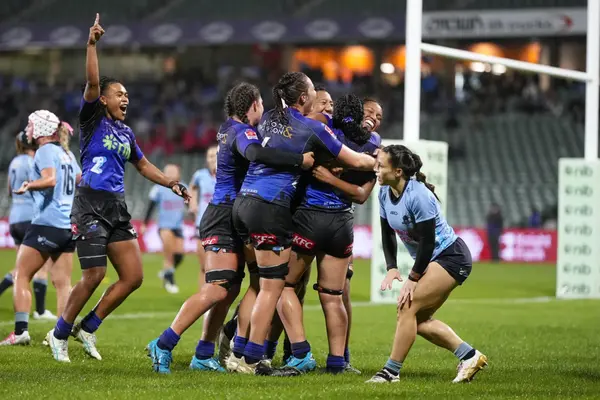
Blues Women celebrate during the Blues Women v Waratahs Women, Women's Super Rugby Champions Final, North Harbour Stadium, Auckland, New Zealand, Thursday, 17 April 2025. (Photo by Blake Armstrong / action press)

In conditions more suited to water polo than rugby, the Blues women delivered a masterclass in wet-weather rugby to overwhelm the NSW Waratahs 36-5 in the inaugural Super Rugby Champions Final at North Harbour Stadium on Thursday night.

Key moments:

10′ – Braxton Sorensen-McGee breaks multiple tackles for opening try (Blues 5-0)
19′ – Elizabith Moimoi powers over from close range after dominant scrum (Blues 12-0)
27′ – Braxton Sorensen-McGee completes first-half double with stunning solo effort (Blues 19-0)
53′ – Portia Woodman-Wickliffe carries defenders over the line (Blues 24-0)
71′ – Cheyenne Tuli-Fale powers through three defenders (Blues 31-0)
74′ – Desiree Miller scores Waratahs’ consolation try from Arabella McKenzie chip (Blues 31-5)
78′ – Krysten Cottrell dives over in the corner to seal comprehensive victory (Blues 36-5)

From the opening whistle, the physical difference between the sides was apparent as Blues lock Maama Vaipulu thundered forward on the game’s first carry, signalling the hosts’ intent. Despite the atrocious conditions with torrential rain and swirling winds courtesy of Cyclone Tam, the Blues persisted with an ambitious approach that showcased the gulf in class between the Super Rugby Aupiki champions and their Super Rugby W counterparts.

The 18-year-old Braxton Sorensen-McGee opened the scoring in the 10th minute with a dazzling solo effort, collecting the ball 40 metres out before stepping her immediate defender and carving back inside to beat two more for a try that belied the treacherous playing surface.

The Blues scrum quickly established dominance, and when they secured a tighthead in the 19th minute, number eight Elizabith Moimoi capitalised, spinning out of a tackle to crash over near the posts. Ruahei Demant converted for a 12-0 lead.

With the deluge intensifying, handling became increasingly problematic for both sides, but the Blues maintained their expansive intent while the Waratahs struggled to exit their territory. Their ambition paid dividends in the 27th minute when Sorensen-McGee scored her second, finishing a flowing counter-attack with a perfectly executed dummy that left the final defender grasping at thin air.

Leading 19-0 at halftime, the Blues showed tactical astuteness by replacing Sorensen-McGee with Patricia Maliepo for the second half – the departing fullback making her final appearance before switching to rugby league with the Warriors.

Maliepo’s tactical kicking proved valuable as the Blues continued to dominate territory and possession. Black Ferns legend Portia Woodman-Wickliffe extended the lead in the 53rd minute, showcasing her renowned power by carrying multiple defenders over the line after a slick shift to the left flank.

The Blues forwards continued to dominate the collisions, with Taufa Bason making several forceful carries that repeatedly breached the Waratahs’ defensive line. Only a questionable obstruction call denied Bason a deserved try of her own in the 56th minute.

The home side’s fifth try came through replacement forward Cheyenne Tuli-Fale, who powered through three defenders from close range in the 71st minute after the Blues had worn down the Waratahs’ resistance with phase after phase of powerful running.

The visitors, to their credit, never surrendered despite being comprehensively outplayed. Their resilience was finally rewarded in the 74th minute when winger Desiree Miller chased down a perfectly weighted chip from flyhalf Arabella McKenzie to score their lone try.

However, the Blues would have the final say, with replacement Krysten Cottrell pouncing on a loose ball following a turnover at the scrum to dive over in the corner and put the exclamation point on a dominant display.

The comprehensive victory underscores the significant gap between the women’s game in New Zealand and Australia, largely attributed to the Black Ferns’ full-time professional programme. While this inaugural Champions Final represents an important milestone for women’s rugby in the region, the result raises questions about the competitive balance of any potential combined competition.

For the Blues, the victory caps a remarkable week, securing their second trophy in just five days after claiming back-to-back Super Rugby Aupiki titles last weekend. Beyond the result, the performances of emerging talents like Sorensen-McGee and Bason offer exciting prospects for New Zealand women’s rugby.

As players from both teams acknowledged after the final whistle, the match represents a significant step forward for women’s rugby in the region. Despite the lopsided scoreline, the historic clash between the respective champions of Super Rugby Aupiki and Super Rugby W has set the foundation for what many hope will evolve into a full trans-Tasman women’s competition in the near future.

“I’m so proud,” Blues captain Maiakawanakaulani Roos told Sky Sport afterwards. “It was cool to play our Tasman sisters. It’s a big step towards growing the game. We are happy to be here and get the win. I don’t think the score reflects how tough the game was.”

“To navigate these conditions and still play with ambition shows the character of this group,” reflected Blues coach Willie Walker. “We’ve worked hard all season, and to crown it with two trophies is special.”

“Well done to the Blues, because they played exceptionally,” Waratahs captain Emily Chancellor told broadcasters post-match. “As you might be able to tell from the way we played, we haven’t had a lot of practice in those sorts of conditions in Australia this season. It was a really difficult game, but it was also really fun.”

“We are so happy to be here and take the W,” Roos added. “We’ve worked hard all season and to have the opportunity to play against our Tasman sisters was really cool. It’s a really big step towards growing the game.”

With the 2025 Women’s Rugby World Cup on the horizon, attention now turns to international duty, with Wallaroos head coach Jo Yapp set to name her first squad of the year next week as preparations intensify for next month’s Test against Fiji and the Pacific Four Series on home soil.

Continue Reading

Trending

Discover more from Rugby News, Results, and Analysis | Rugby is the Game

Subscribe now to keep reading and get access to the full archive.

Continue reading