Connect with us

International

Super Rugby Pacific Round 12 Preview

Published

on

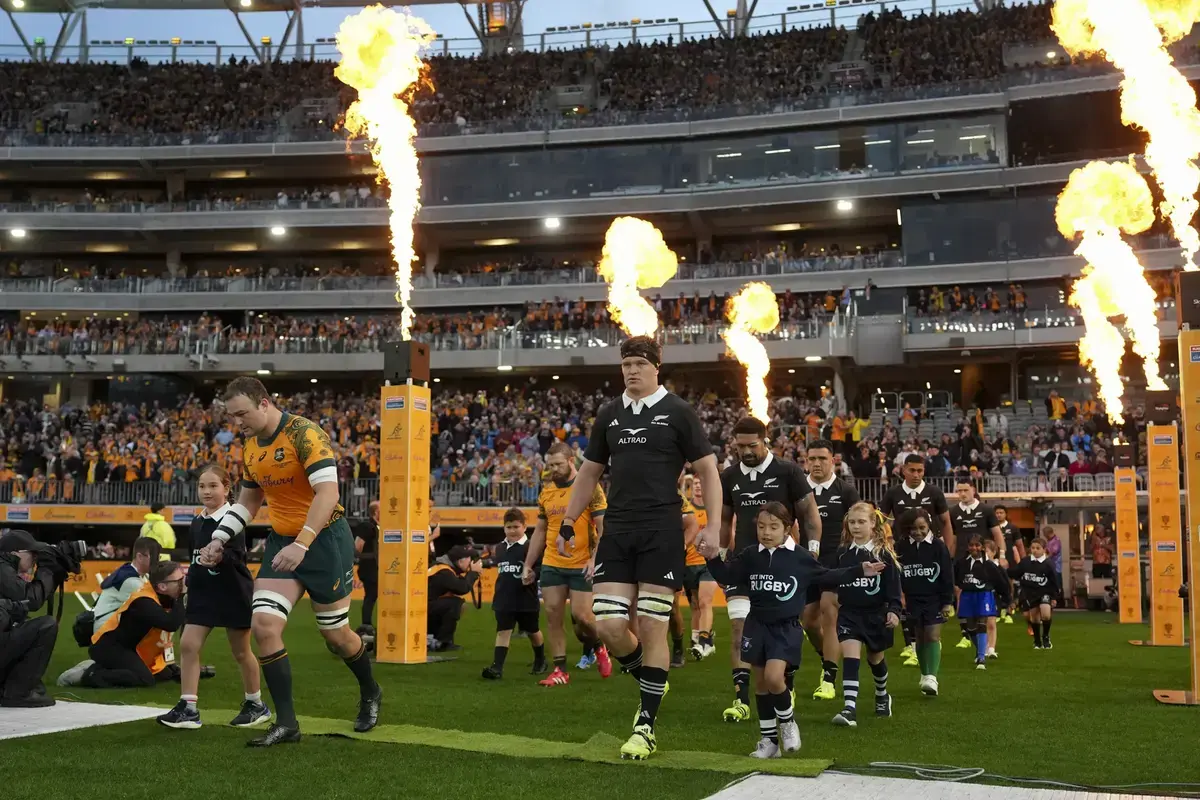
Super Rugby Pacific reaches the business end in Round 12, with several blockbuster clashes and rivalry games on the schedule. With just four rounds remaining until the playoffs, the race for the top eight is heating up. Here’s a look at the matchups.

Moana Pasifika vs. Chiefs

The Chiefs travel to Mt Smart Stadium to face Moana Pasifika on Friday night, looking to consolidate their top-four position. The Chiefs will be without star playmaker Damian McKenzie due to concussion protocols, but welcome back All Blacks hooker Samisoni Taukei’aho and captain Luke Jacobson. Josh Jacomb steps in at flyhalf in place of McKenzie.

Moana Pasifika have made wholesale changes after their 28-17 loss to the Highlanders in Tonga, with coach Tana Umaga naming a new-look side. Only lock Allan Craig and No.8 Lotu Inisi retain their starting spots as the expansion side looks to stay in the playoff hunt.

The Chiefs thrashed Moana Pasifika 68-12 when they met in Hamilton just five weeks ago and have won all four meetings between the sides at an average of 56 points per game. But Moana Pasifika will hope home advantage and the Chiefs’ injury concerns can help spring an upset.

Moana (1-15): Sateki Latu, Sama Malolo (c), Suetena Asomua, Tom Savage, Allan Craig, Miracle Fai’ilagi, Alamanda Motuga, Lotu Inisi, Aisea Halo, D’Angelo Leuila, Nerai Fomai, Lalomilo Lalomilo, Pepesana Patafilo, Nigel Ah Wong, Danny Toala

Reserves: Tomasi Maka, Abraham Pole, Sione Mafileo, Semisi Paea, Irie Papuni, Siaoisi Nginingini, Otumaka Mausia, Kyren Taumoefolau

Chiefs (1-15): Ollie Norris, Samisoni Taukei’aho, Reuben O’Neill, Manaaki Selby-Rickit, Tupou Vaa’i, Simon Parker, Luke Jacobson (c), Wallace Sititi, Xavier Roe, Josh Jacomb, Daniel Rona, Quinn Tupaea, Anton Lienert-Brown, Liam Coombes-Fabling, Etene Nanai Seturo

Reserves: Tyrone Thompson, Jared Proffit, Sione Ahio, Hamilton Burr, Tom Florence, Te Toiroa Tahuriorangi, Rameka Pohipi, Gideon Wrampling

Referee: Damon Murphy

Reds vs. Rebels

The Reds host the Rebels at Suncorp Stadium in a classic Australian derby. The Reds are riding high after their first win in Christchurch in 25 years and have named a settled side. The only changes see Sef Fa’agase start at loosehead prop and the experienced James O’Connor and Tate McDermott return via the bench.

The Rebels have turned to Wallaby Reece Hodge to spark their attack, naming him at fullback as they try to stay in the playoff race. The Melbourne side are boosted by the return from injury of Wallabies Matt To’omua and Jordan Uelese.

This is shaping up as a crucial clash for both sides’ finals hopes. The Reds will start as favourites at home but can ill-afford to be complacent against a desperate Rebels outfit.

Reds (1-15): Sef Fa’agase, Matt Faessler, Jeffery Toomaga-Allen, Ryan Smith, Angus Blyth, Liam Wright (co-c), Fraser McReight, Harry Wilson, Kalani Thomas, Lawson Creighton, Mac Grealy, Hunter Paisami, Josh Flook, Tim Ryan, Jock Campbell

Reserves: Josh Nasser, Peni Ravai, Zane Nonggorr, Connor Vest, John Bryant, Tate McDermott (co-c), James O’Connor, Suliasi Vunivalu

Rebels (1-15): Isaac Kailea, Jordan Uelese, Taniela Tupou, Angelo Smith, Josh Canham, Josh Kemeny, Vaiolini Ekuasi, Rob Leota (c), Ryan Louwrens, Carter Gordon, Darby Lancaster, Nick Jooste, Filipo Daugunu, Lachie Anderson, Andrew Kellaway

Reserves: Alex Mafi, Cabous Eloff, Sam Talakai, Tuaina Taii Tualima, Maciu Nabolakasi, Jack Maunder, Jake Strachan, Glen Vaihu

Referee: Paul Williams

Blues vs. Hurricanes

The match of the round sees the top-of-the-table Hurricanes travel to Eden Park to face the second-placed Blues on Saturday afternoon. Just one competition point separates the two Kiwi heavyweights in what could be a preview of the 2024 final.

The Blues welcome back the elusive Zarn Sullivan at fullback but are without midfield ace Rieko Ioane due to concussion. The Hurricanes have gambled with a 6-2 split on the bench, opting for more forward firepower for the breakdown battle. The move is not without risk, given the Blues’ bench imbalance backfired in their sole loss of the season against the Hurricanes in Round 3.

With both sides stacked with All Blacks, this has all the makings of a classic. The Hurricanes last beat the Blues at Eden Park in 2019 but did knock over the Auckland side 29-21 when they met in Wellington two months ago. Home advantage may prove telling for the Blues, but little will separate the two standout teams of the competition so far.

Blues (1-15): Ofa Tu’ungafasi, Ricky Riccitelli, Marcel Renata, Patrick Tuipulotu (c), Sam Darry, Akira Ioane, Dalton Papali’i, cc, Taufa Funaki, Harry Plummer, Caleb Clarke, Bryce Heem, AJ Lam, Mark Tele’a, Zarn Sullivan

Reserves: Kurt Eklund, Joshua Fusitu’a, Angus Ta’avao, Josh Beehre, Adrian Choat, Sam Nock, Corey Evans, Cole Forbes

Hurricanes (1-15): Xavier Numia, Kianu Kereru-Symes, Tyrel Lomax, Caleb Delany, Isaia Walker-Leawere, Brad Shields (c), Peter Lakai, Brayden Iose, TJ Perenara, Brett Cameron, Kini Naholo, Jordie Barrett, Billy Proctor, Josh Moorby, Ruben Love

Reserves: Raymond Tuputupu, Pouri Rakete-Stones, Pasilio Tosi, Justin Sangster, Devan Flanders, Du’Plessis Kirifi, Richard Judd, Bailyn Sullivan
Referee: James Doleman

Highlanders vs. Crusaders

The Crusaders travel to Dunedin for a must-win South Island derby against the Highlanders. The defending back-to-back champions are languishing in 10th with a 2-8 record and in danger of missing the finals for the first time since 2001.

There is a major boost for the Crusaders, with All Blacks Codie Taylor and Tamaiti Williams named to start in the front row. Veteran hooker Taylor makes his first appearance of the season. At the same time, prop Williams returns from the hamstring injury he suffered in Round 1.

The Highlanders welcome back Ethan de Groot from All Blacks rest to captain the side in place of the injured Billy Harmon. A win for the Highlanders would just about end the Crusaders’ finals hopes and be their first victory over their southern rivals in Dunedin since 2018.

Highlanders (1-15): Ethan de Groot (c), Henry Bell, Jermaine Ainsley, Mitch Dunshea, Fabian Holland, Oliver Haig, Sean Withy, Nikora Broughton, Folau Fakatava, Cameron Millar, Martin Bogodo, Jake Te Hiwi, Tanielu Tele’a, Timoci Tavatavanawai, Jacob Ratumaitavuki-Kneepkens

Reserves: Jack Taylor, Ayden Johnstone, Saula Ma’u, Will Tucker, Will Stodart, James Arscott, Sam Gilbert, Finn Hurley

Crusaders (1-15): Tamaiti Williams, Codie Taylor, Fletcher Newell, Scott Barrett (c), Quinten Strange, Cullen Grace, Corey Kellow, Christian Lio-Willie, Noah Hotham, David Havili, Sevu Reece, Dallas McLeod, Levi Aumua, Chay Fihaki, Johnny McNicholl

Reserves: George Bell, George Bower, Owen Franks, Jamie Hannah, Tom Christie, Mitch Drummond, Rivez Reihana, Macca Springer
Referee: Angus Gardner

Waratahs vs. Brumbies

Embed from Getty Images

The Waratahs will look to keep their slim finals hopes alive when they host the in-form Brumbies at Allianz Stadium. The Tahs have made significant changes to their forward pack and are boosted by the return of Wallabies prop Pone Fa’amausili, who has been granted a loan by the Rebels and slots straight onto the bench.

The Brumbies have made it three wins on the trot and are building nicely towards the playoffs. They have a couple of injury-enforced changes in the front row but are able to call on the experience of Wallabies James Slipper, Caderyn Neville and Lachlan Lonergan from the pine.

The Brumbies have won four of their last five against the Waratahs, including a 40-36 thriller in Canberra earlier this season. The Tahs are on a four-match losing streak and need a victory to stay in touch with the top eight, but the Brumbies should have too much class.

Waratahs (1-15): Hayden Thompson-Stringer, Jay Fonokalafi, Harry Johnson-Holmes, Fergus Lee-Warner, Miles Amatosero, Lachlan Swinton, Charlie Gamble, Jed Holloway, Jake Gordon (c), Will Harrison, Dylan Pietsch, Lalakai Foketi, Joey Walton, Triston Reilly, Mark Nawaqanitawase

Reserves: Ben Sugars, Lewis Ponini, Pone Fa’amausili, Hugh Sinclair, Hunter Ward, Jack Grant, Tane Edmed, Izaia Perese

Brumbies (1-15): Harry Vella, Connal McInerney, Allan Alaalatoa (c), Darcy Swain, Nick Frost, Rob Valetini, Rory Scott, Charlie Cale, Ryan Lonergan, Jack Debreczeni, Ollie Sapsford, Tamati Tua, Len Ikitau, Andy Muirhead, Tom Wright

Reserves: Billy Pollard, James Slipper, Sosefo Kautai, Cadeyrn Neville, Luke Reimer, Harrison Goddard, Declan Meredith, Ben O’Donnell

Referee: Ben O’Keeffe

Western Force vs. Fijian Drua

The Force and Drua round out the Super Round action in Perth on Saturday night, with both sides still holding out hope of an unlikely playoffs berth. The Force welcome back Wallabies Nic White and Izack Rodda in a boost to their chances of snapping a three-match losing run.

The Drua pushed the Brumbies all the way in a 28-20 loss last week and will again be a threat with ball in hand. But their poor away record – just one win from 20 matches on the road in their history – counts against them.

The Force were thumped 56-7 by the Chiefs last week but did beat the Drua 38-15 when they met in Suva earlier this season. They should be too strong at home in this one.

Force (1-15): Marley Pearce, Tom Horton, Santiago Medrano, Jeremy Williams (c), Izack Rodda, Will Harris, Carlo Tizzano, Reed Prinsep, Nic White, Ben Donaldson, Chase Tiatia, Hamish Stewart, Bayley Kuenzle, George Poolman, Kurtley Beale

Reserves: Feleti Kaitu’u, Harry Hoopert, Tiaan Tauakipulu, Lopeti Faifua, Michael Wells, Henry Robertson, Sam Spink, Henry O’Donnell

Drua (1-15): Haereiti Hetet, Tevita Ikanivere, Mesake Doge, Mesake Vocevoce, Isoa Nasilasila, Vilive Miramira, Kitione Salawa, Meli Derenalagi (c), Peni Matawalu, Isaiah Armstrong-Ravula, Taniela Rakuro, Michael Naitokani, Iosefo Masi, Selestino Ravutaumada, Ilaisa Droasese

Reserves: Zuriel Togiatama, Emosi Tuqiri, Samu Tawake, Leone Rotuisolia, Motikiai Murray, Simione Kuruvoli, Kemu Valetini, Epeli Momo

Referee: Angus Mabey

Continue Reading
Click to comment

Leave a Reply

International

Six Nations team drop out of top 10 of Men’s World Rankings

Italy’s winless Nations Championship run sees them fall to 12th in World Rugby Rankings, while New Zealand close the gap on South Africa at the top.

Published

on

Six Nations team drop out of top 10 of Men’s World Rankings
PERTH, AUSTRALIA - JULY 18: Paolo Garbisi of Italy is tackled whilst under pressure from Declan Meredith of the Wallabies during the Nations Championship match between Australia Wallabies and Italy at HBF Park on July 18, 2026 in Perth, Australia. (Photo by Graham Denholm - Nations Championship/Nations Championship via Getty Images)

Italy’s impressive Six Nations campaign, which included a first-ever win over England and a victory against Scotland, has been completely undone after a winless Nations Championship Southern Hemisphere Series saw the Azzurri tumble two places to 12th in the World Rugby Men’s Rankings.

Saturday’s 57–10 defeat to Australia in Perth was the heaviest blow in a bruising three-week stretch that also included losses to Japan and New Zealand. The nine-try hammering cost Italy 1.01 rating points, dropping them to 76.30 and below both Japan and Wales — neither of whom lost ranking points despite their own defeats to higher-ranked France and South Africa respectively.

It marks the lowest Italy have been ranked since September 2023, during the Rugby World Cup in France. Japan, meanwhile, re-enter the world’s top 10 for the first time in three years, while Wales climb one spot to 11th.

All Blacks tighten the screw

The biggest shift at the top of the rankings came from New Zealand’s convincing 40–21 victory over Ireland at Eden Park. The All Blacks collected the maximum available 1.24 rating points, cutting South Africa’s lead at the summit to just 1.68 points.

The Springboks remain number one after their 43–0 demolition of Wales in Durban, but received no ranking points reward due to the significant gap between the two sides before kick-off. With Argentina in Buenos Aires and the Rugby’s Greatest Rivalry series against New Zealand looming, that narrow margin at the top will come under serious pressure in the weeks ahead.

England and Scotland consolidate

England strengthened their grip on fifth place with a hard-fought 31–24 win over Argentina in Santiago del Estero, picking up 0.93 rating points to move to 85.68. Steve Borthwick’s side are now just 1.75 points behind fourth-placed France.

Scotland were rewarded for their 33–17 victory over Fiji at Murrayfield with a 0.69-point gain, cementing sixth place on 84.78 points. France, despite beating Japan 42–15 in Tokyo, gained no ranking points due to the gulf between the two sides.

Nations Cup drama

The World Rugby Nations Cup delivered some remarkable results. Hong Kong China, who will make their Rugby World Cup debut in 2027, produced the headline moment — beating hosts Uruguay 42–40 with a last-gasp long-range penalty. The victory lifted them one place to 23rd, leapfrogging Canada despite their 23–19 win over Zimbabwe.

Romania staged an equally dramatic comeback, overturning a deficit to beat Samoa 38–37 after scoring 24 unanswered points in the final quarter. Romania climb to 21st, one place behind Samoa, who slip to their lowest-ever ranking of 20th.

Georgia and the USA continued to dominate as pool leaders, with Georgia beating Chile 49–22 and the Eagles completing a clean sweep of victories with a 29–22 win over Spain. The USA’s rating moved above 70 points for the first time since November 2024.

The biggest climbers of the week were the Philippines, who jumped nine places to 43rd after winning the Unions Cup 2026 in Thailand.

Updated World Rugby Rankings — Top 15

1. South Africa — 93.96
2. New Zealand — 92.28
3. Ireland — 88.08
4. France — 87.43
5. England — 85.68
6. Scotland — 84.78
7. Argentina — 83.13
8. Australia — 81.61
9. Fiji — 78.00
10. Japan — 76.42 (+1)
11. Wales — 76.38 (+1)
12. Italy — 76.30 (-2)
13. Georgia — 73.94
14. USA — 70.22
15. Portugal — 69.39

See the full World Rugby Rankings

Continue Reading

International

Wallabies, All Blacks confirm Anzac Day Bledisloe Cup tests

Published

on

Wallabies, All Blacks confirm Anzac Day Bledisloe Cup tests
New Zealand Scott Barrett during the All Blacks v Australia, Lipovitan-D Rugby Championship, Bledisloe Cup, Optus Stadium, Perth, Australia, Saturday, 04 October 2025. (Photo by John Cowpland / action press)

The Bledisloe Cup is about to mean more than it ever has. New Zealand Rugby and Rugby Australia have confirmed that the All Blacks and Wallabies will contest Anzac Day test matches in 2027, 2029 and 2031, creating a new trans-Tasman sporting tradition on one of the most sacred dates in both nations’ calendars.

All three fixtures will be played at Suncorp Stadium in Brisbane with the backing of the Queensland Government, marking the first time in the 123-year history of the Bledisloe Cup that the two sides have met on 25 April. The move also restores the Bledisloe to a three-test series for the first time since 2021, adding an early-season fixture to the two matches already played as part of the Rugby Championship later in the year.

A fixture years in the making

The announcement represents the culmination of a campaign first driven by Rugby Australia chief executive Phil Waugh, who has been pushing for an Anzac Day test since 2024. New Zealand Rugby initially resisted the concept, but a change of management at NZR and the appointment of Dave Rennie as All Blacks head coach — a man known to be in favour of the fixture — helped shift the dial.

NZR had sought reciprocity in the arrangement, wary of committing to a deal that would see the Wallabies host two of three Bledisloe fixtures to the All Blacks’ one. However, the organisation ultimately could not mount a viable commercial case for alternating the Anzac Day venue, and Brisbane’s enormous New Zealand expatriate population made Suncorp the natural and only realistic home.

NZR chief executive Steve Lancaster acknowledged the strategic value of the partnership.

“New Zealand and Australia share a special and unique bond built on sporting rivalries, friendship and those men and women who have served our countries in global conflicts, some making the ultimate sacrifice in doing so,” Lancaster said.

“Playing the Bledisloe Cup on Anzac Day creates a unique trans-Tasman sporting occasion that honours our countries’ shared history and cultures, while bringing people together through rugby.

“Rugby Australia is an important partner for us, and a strong game in Australia is good for rugby in New Zealand. Brisbane has long been seen as a home away from home with a large New Zealand population living there and we see this as a huge opportunity to work in partnership with Rugby Australia to grow the game in a key market.”

Honouring shared sacrifice

The significance of the date extends well beyond commercial opportunity. Rugby’s connection to the Anzac story runs deep — ten Wallabies and 13 All Blacks made the ultimate sacrifice during the First World War, according to the Australian War Memorial. Of those, at least five Wallabies and two All Blacks were killed at Gallipoli, where the spirit of Anzac was born.

Waugh invoked the memory of Tom Richards, the Wallabies legend and Gallipoli veteran, in framing the announcement.

“The eternal bond shared between Australia and New Zealand was forged on the first Anzac Day and, 112 years later, our nations will again unite around a sport that, in the immortal words of Tom Richards, provided hope and respite for troops through the ‘dark passages’ of war,” Waugh said.

“The 123-year history of Australia and New Zealand rugby is renowned and revered across the globe and the first ever staging of an Anzac Day Bledisloe Cup Test will, we believe, create a new trans-Tasman sporting tradition that will bring our nations together and reinforce our shared values.”

The men’s fixture follows in the footsteps of the Black Ferns and Wallaroos, who contested an Anzac Day test at Sunshine Coast Stadium earlier this year, offering a proof of concept for the broader initiative.

The fixtures

The three confirmed Anzac Day Bledisloe Cup tests are:

  • Sunday 25 April 2027 – Suncorp Stadium, Brisbane (early afternoon kick-off)
  • Wednesday 25 April 2029 – Suncorp Stadium, Brisbane
  • Friday 25 April 2031 – Suncorp Stadium, Brisbane

Each Anzac Day fixture will form the opening test of a three-match Bledisloe series, with the remaining two tests played during the Rugby Championship — one in New Zealand and one in Australia. In 2028 and 2030, the Bledisloe Cup will remain a two-match series due to Nations Championship commitments.

The inaugural fixture in 2027 will kick off at what organisers describe as a “family-friendly early afternoon time slot,” placing it alongside the AFL and NRL’s Anzac Day blockbusters as a cornerstone of the national sporting calendar.

Queensland’s gain, Super Rugby’s question mark

Queensland has positioned itself as the permanent home of the fixture, with Premier David Crisafulli framing the agreement as part of a broader strategy to establish the state as Australia’s events capital ahead of the 2032 Olympic Games.

“We are bringing the Bledisloe Cup to Queensland, with an historic agreement to lock in Anzac Day tests until 2031,” Crisafulli said. “This is part of our plan to deliver new signature events for Queensland, grow tourism and support Queensland jobs.”

The venue choice carries historical resonance — Queensland hosted the first ever test match between Australia and New Zealand in 1907, more than a century before the Bledisloe Cup itself was established.

The larger question for the rugby landscape concerns the impact on Super Rugby Pacific. With the All Blacks’ 2027 season now beginning in April rather than the traditional July window, the early rounds of the domestic competition will carry an added layer of selection intrigue. Lancaster indicated the concept had been discussed extensively with New Zealand’s Super Rugby clubs.

“The Anzac Day Bledisloe Test adds another key moment during the Super Rugby Pacific season as the early rounds will have the added element of selection intrigue ahead of this match,” Lancaster said. “We’ve worked closely with our clubs to ensure it gives fans another compelling reason to engage with the competition across the season.”

The 2027 Super Rugby Pacific format is expected to be confirmed in the coming weeks, and the Anzac Day fixture will inevitably shape the structure of the competition calendar. Departing Crusaders coach Rob Penney has already voiced his support, saying the club thought it was “a great idea” and that whatever was needed to keep rugby at the forefront of people’s minds should be embraced.

The bigger picture

Lancaster was also keen to highlight the strategic value of an early-season test match in years that carry particular significance on the world rugby calendar.

“We’ve worked with the All Blacks who see value in an early test match in Rugby World Cup and men’s Lions tour years,” he said. “We know the team will embrace the challenge of two matches in Australia and look forward to them playing in front of the thousands of New Zealanders who now call it home, and the many we know will head across the Tasman for the match.”

That the 2027 fixture falls in a Rugby World Cup year — with the tournament to be hosted by Australia — adds an extra dimension. An Anzac Day test in Brisbane just months before the Wallabies host the world will serve as a statement of intent for the host nation and a form guide for both sides.

For the Wallabies, the stakes are clear. Australia has not held the Bledisloe Cup since losing it in 2003, and every additional fixture against the All Blacks represents both an opportunity and a reminder of the mountain still to be climbed. The hope within Rugby Australia will be that the occasion, the venue, and the weight of the date itself might finally provide the spark that shifts the balance of power back across the Tasman.

For the All Blacks, it is a chance to embrace a tradition that rugby league has long made its own. The NRL’s Anzac Day fixtures — particularly the annual clash between the Sydney Roosters and St George Illawarra — are among the most watched events on the Australian sporting calendar. Rugby union’s belated arrival to the party reflects a sport finally willing to compete for attention on the days that matter most.

Ticketing details and further match information will be announced at a later date.

Continue Reading

International

Māori All Blacks storm back to beat Japan XV in Nagoya

Taha Kemara and Xavi Taele score late tries as the Māori All Blacks overturn a 24–7 half-time deficit to beat the Japan XV 38–31 in Nagoya.

Published

on

Māori All Blacks storm back to beat Japan XV in Nagoya
Māori All Blacks Taha Kemara, Māori All Blacks v Japan XV, Lipovitan D Challenge Cup, Paloma Mizuho Stadium, Nagoya, Japan, Friday, 26 June 2026. (Photo by Akito Iwamoto / action press)

The Māori All Blacks produced one of their most dramatic comebacks in recent memory, scoring 24 unanswered points in the final 20 minutes to overturn a 24–7 half-time deficit and defeat the Japan XV 38–31 at a packed and humid Paloma Mizuho Stadium in Nagoya.

Despite leading for 51 minutes and trailing for just seven, the hosts fell short of only their second victory in eight meetings against the Māori All Blacks. Head coach Tamati Ellison’s side had promised an exciting brand of rugby before the match, and while it took time to materialise, the second-half blitz was as thrilling as anything the fixture has produced.

Japan XV seize early control

The Japan XV set the tone from the outset, with their defensive line speed causing immediate problems for the visitors. The Māori All Blacks were determined to keep the ball in hand but found little reward, losing possession through breakdown steals and handling errors in the opening minutes.

It was university standout Ryunosuke Ito who provided the spark for the hosts. The Meiji University fly-half was electric throughout the first half, beating five defenders with three try assists. His first moment of brilliance came in the eighth minute when he spotted space wide on the right flank and slid a perfectly weighted cross-field kick to the touchline. The bounce sat up perfectly for Kazuma Ueda, who gathered and touched down in the corner. Takuro Matsunaga converted from the sideline.

The Māori All Blacks responded through debutant Adam Lennox in the 14th minute. Xavi Taele made a half-break off the scrum 40 metres out and freed his hands for Cole Forbes, who burst through a gap and popped the ball inside for Lennox. The halfback juggled, spun and held on for a memorable first try in the black jersey. Rivez Reihana converted to level the scores at 7–7.

Yellow cards change the complexion

The contest shifted decisively in the 31st minute when captain Bailyn Sullivan was shown yellow for tackling Dylan Riley without the ball after a string of penalties had drawn a warning from referee Sam Grove-White. Just two minutes later, blindside flanker Torian Barnes followed his captain to the sin bin for joining a driving maul from the side, reducing the Māori All Blacks to 13 men for the remainder of the half.

The Japan XV punished the numerical advantage ruthlessly. Captain Mamoru Harada powered over from the back of a lineout drive in the 33rd minute, before the Māori All Blacks’ lineout malfunctioned and the hosts moved the ball quickly to the right for Riley to race through and score. Matsunaga’s sideline conversion made it 19–7.

Ito was brimming with confidence as the half drew to a close. A superb 50/22 from scrumhalf Takuro Hojo put the Japan XV in prime position once more, and another cross-field kick from Ito found the waiting arms of Inoke Burua for one of the easiest tries of his career. The half-time statistics were damning for the visitors: Japan held 65 per cent of territory, enjoyed a 7–2 penalty count in their favour, and made 48 fewer tackles.

The comeback begins

Whatever Ellison said at the break had an immediate effect. The Māori All Blacks emerged with renewed purpose, and Sullivan — back from the bin — made amends in the 49th minute. From a scrum five metres out, Barnes took it off the back and Sullivan sliced through a gap to score. Reihana converted to cut the deficit to 24–14.

The Japan XV struck back through Matsunaga, who received off Riley’s pass and slipped through the defensive line to score in the corner in the 53rd minute. His own conversion from the touchline extended the lead to 31–14, and it appeared the contest was over.

Four tries in 16 minutes

What followed was extraordinary. The Māori All Blacks bench, in particular halfback Sam Nock, injected energy and tempo that the hosts could not contain. In the 64th minute, quick ball from Taele freed debutant Payton Spencer down the wing. Spencer was hauled down just short but Nock picked up and fired infield for TK Howden, who dragged two defenders over the line. Taha Kemara converted to make it 31–21.

Just four minutes later, the visitors produced their most cohesive passage of the match. A trio of offloads carved through the Japan XV defence before Nock darted off the back of a ruck, shrugged off a defender and dotted down. The TMO intervened to check a forward pass in the build-up, but the referee overruled and awarded the try. Kemara converted. The gap was three points.

Tellingly, the Māori All Blacks delivered nine more offloads than the Japan XV across the match, with ten players contributing at least one each as the flair and ingenuity they are renowned for finally surfaced.

In the 75th minute, Kemara made up for an earlier fumble by beating four defenders on a mazy run to the left. He dummied past one, pushed another off, stepped inside the last man and crashed over for the go-ahead score. His conversion drifted wide, leaving the lead at just two points with five minutes remaining.

The frantic finish reached its crescendo in the final minute. The Japan XV attempted to play out from their 22, but replacement prop Pouri Rakete-Stones — who had been immense since coming on — produced a shuddering hit that sent the ball free. Taele, who had been the standout performer all evening with 15 tackles, 13 carries, three offloads and 52 metres gained, swooped on the loose ball and raced away to score in the corner. Kemara’s conversion struck the right upright as the siren sounded, but it mattered little. The comeback was complete.

Ellison’s vision vindicated

Before the match, Ellison had spoken about the identity he wanted his side to embody: “When people watch the Māori All Blacks, they expect us to play with intent. We want to be fast, physical, move the ball, back our skills and play an exciting brand of rugby that reflects who we are.”

The first half was a test of that vision, but the second half was its vindication. Five debutants started the match and each played their part, while the experienced bench — led by Nock, Kemara and Rakete-Stones — proved the difference.

For the Japan XV, there was much to take from the first-half performance. Ito’s display at fly-half was outstanding, Michael Stolberg was a towering presence with 12 lineout catches, and Harada led from the front. Head coach Neal Hatley had spoken before the match about the blend of youth and experience in his squad: “This is a chance for these guys who have been working hard to get an opportunity to play, and we think it’s our best team in terms of winning the game on the weekend.”

The disappointment will be in the second half, where the Japan XV fell off tackles and could not match the pace at which the Māori All Blacks played. The gap between the sides, once a chasm, continues to narrow — but so too does the margin for error when the visitors find their rhythm.

Key moments

8 mins – TRY JAPAN XV: Ryunosuke Ito spotted space out wide and slid a perfectly weighted kick to the right sideline. The bounce sat up for Kazuma Ueda, who gathered and scored in the corner. Takuro Matsunaga converted from the sideline. (7–0)

14 mins – TRY MĀORI ALL BLACKS: Adam Lennox came left off the scrum 40 metres out. Xavi Taele freed his hands for Cole Forbes, who burst through a gap and popped the ball inside for Lennox, who juggled, spun and held on for the try on debut. Rivez Reihana converted. (7–7)

31 mins – YELLOW CARD MĀORI ALL BLACKS: Bailyn Sullivan shown yellow for taking Dylan Riley out without the ball.

33 mins – YELLOW CARD MĀORI ALL BLACKS: Torian Barnes shown yellow for repeated infringement near the goal line. The Māori All Blacks reduced to 13 men.

33 mins – TRY JAPAN XV: The Japan XV drove the lineout maul and Mamoru Harada powered over at the back. Matsunaga missed the conversion. (12–7)

36 mins – TRY JAPAN XV: The Māori All Blacks lost their lineout and the Japan XV went quickly to the right on the 22. Ito took it to the line and fired outside for Dylan Riley, who raced away to score. Matsunaga converted from the sideline. (19–7)

40 mins – TRY JAPAN XV: Ito delivered a perfectly weighted kick through and Inoke Burua touched down. Matsunaga missed the conversion. (24–7)

Half-time: Japan XV 24–7 Māori All Blacks. The Japan XV were superb in the first half, capitalising on two Māori All Blacks yellow cards to score three tries while their opponents were down to 13 men. Ito and Hojo combined superbly in the halves, while Matsunaga was dangerous at the back. The Māori All Blacks managed just one try through debutant Lennox and faced a mountain to climb in the second half.

49 mins – TRY MĀORI ALL BLACKS: The Māori All Blacks opted for the scrum five metres out. Torian Barnes took it off the back and Bailyn Sullivan sliced through a gap to score. Reihana converted. (24–14)

53 mins – TRY JAPAN XV: From the lineout, Ito fired the ball wide to the right. Matsunaga received off Riley’s pass and slipped through the defensive line to score in the corner. Matsunaga converted from the touchline. (31–14)

64 mins – TRY MĀORI ALL BLACKS: Quick ball from Xavi Taele freed Payton Spencer, who was cut down short. Sam Nock picked up and fired infield for TK Howden, who drove over at close range. Taha Kemara converted. (31–21)

68 mins – TRY MĀORI ALL BLACKS: The Māori All Blacks moved the ball at pace inside the 22 on the left before Sam Nock had a dart off the back of the ruck, shrugged off a defender and dotted down. The TMO checked for a forward pass in the build-up but the referee overruled and awarded the try. Kemara converted. (31–28)

75 mins – TRY MĀORI ALL BLACKS: The Māori All Blacks worked it forward on the Japan XV 22 with Pouri Rakete-Stones carrying hard. Kemara ran to the left, dummied past one defender, pushed another off, stepped inside the last man and crashed over. Kemara missed the conversion. (31–33)

80 mins – TRY MĀORI ALL BLACKS: The Japan XV attempted to play out from their 22 but Rakete-Stones disrupted and the ball came loose. Xavi Taele swooped on it and raced away to score in the corner. Kemara’s conversion hit the right upright as the siren sounded. (31–38)

Full-time: Japan XV 31–38 Māori All Blacks


Teams

Japan XV: 15 Takuro Matsunaga, 14 Kazuma Ueda, 13 Dylan Riley, 12 Chisu Lee, 11 Inoke Burua, 10 Ryunosuke Ito, 9 Takuro Hojo, 8 Waisake Raratubua, 7 Tiennan Costley, 6 Kanji Shimokawa, 5 Michael Stolberg, 4 Esei Haangana, 3 Shuhei Takeuchi, 2 Mamoru Harada (C), 1 Takato Okabe.
Replacements: 16 Kenji Sato, 17 Sojiro Otsuka, 18 Izi Sword, 19 Shin Takeuchi, 20 Aseri Masivou, 21 Haruto Watanabe, 22 Sam Greene, 23 Taira Main.

Māori All Blacks: 15 Cole Forbes, 14 Payton Spencer, 13 Bailyn Sullivan (C), 12 Xavi Taele, 11 Reon Paul, 10 Rivez Reihana, 9 Adam Lennox, 8 Torian Barnes, 7 Jahrome Brown, 6 Te Kamaka Howden, 5 Tahlor Cahill, 4 Laghlan McWhannell, 3 Marcel Renata, 2 Tyrone Thompson, 1 Ollie Norris.
Replacements: 16 Jacob Devery, 17 Pouri Rakete-Stones, 18 Benet Kumeroa, 19 Caleb Delany, 20 Nikora Broughton, 21 Sam Nock, 22 Taha Kemara, 23 Kyle Brown.

Match details

Japan XV 31 (Tries: Ueda, Harada, Riley, Burua, Matsunaga; Conversions: Matsunaga 3/5)
Māori All Blacks 38 (Tries: Lennox, Sullivan, Howden, Nock, Kemara, Taele; Conversions: Reihana 2/2, Kemara 2/4)
Half-time: 24–7

Venue: Paloma Mizuho Stadium, Nagoya
Referee: Sam Grove-White (Scotland)

Continue Reading

Trending

Discover more from Rugby News, Results, and Analysis | Rugby is the Game

Subscribe now to keep reading and get access to the full archive.

Continue reading