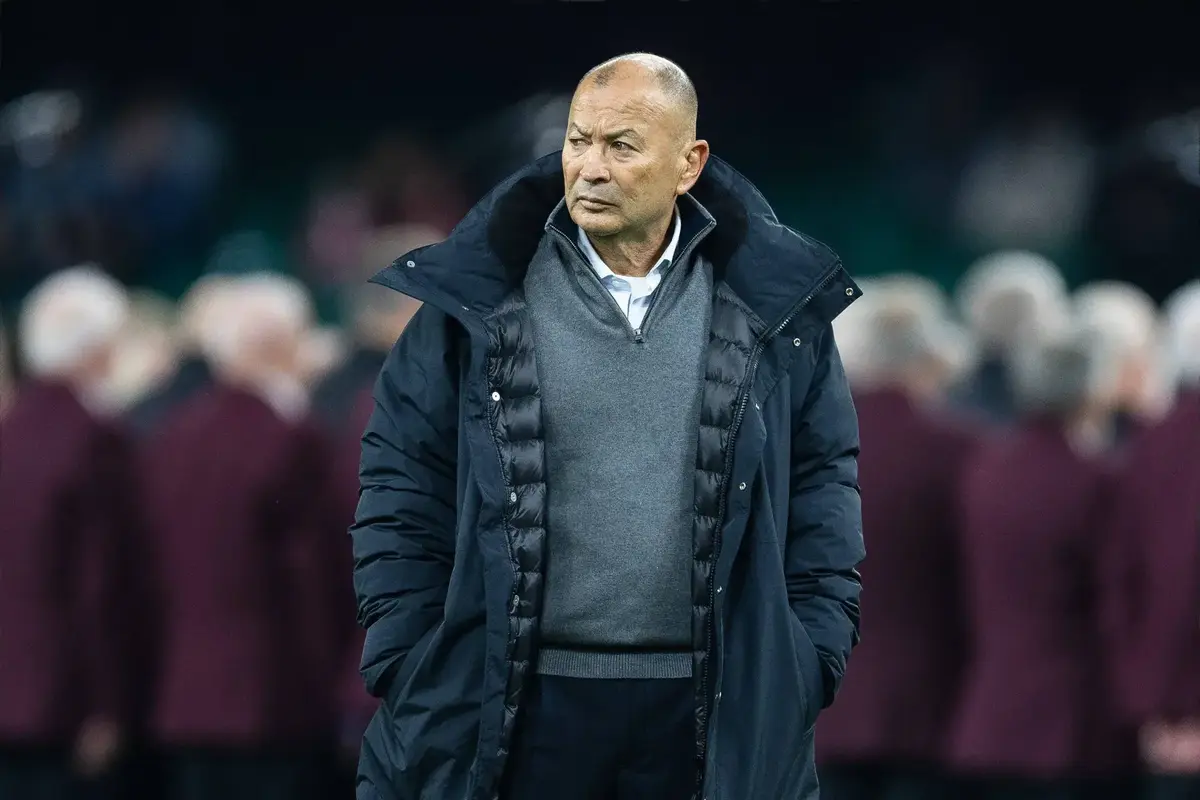
The most dominant force in women’s world rugby has sent an unmistakable message to her rivals: the Red Roses are only just beginning. John Mitchell, the architect of England’s unprecedented success and the man who delivered a long-awaited World Cup triumph on home soil last September, has committed his future to the programme by signing a long-term contract that will extend beyond the 2029 tournament in Australia.
Key developments
- John Mitchell signs long-term contract through the 2029 World Cup cycle in Australia
- England’s record points-scorer Emily Scarratt joins coaching staff as attack and backs coach
- Attack coach Lou Meadows departs after overseeing 215 tries in 28 matches
- Mitchell remains available for potential British and Irish Lions Women’s head coach role
- More than 50,000 tickets already sold for Six Nations opener against Ireland
The announcement, made by England Rugby on Thursday, represents a significant statement of intent from the Rugby Football Union as it seeks to build upon the remarkable achievements of a team that has redefined excellence in the women’s game. Under Mitchell’s stewardship, the Red Roses have not merely dominated; they have established standards that may never be surpassed.
Since the 61-year-old New Zealander took charge in May 2023, England have won 33 consecutive matches—a world-record run that encompasses two Grand Slams, two WXV 1 titles, and that glorious September evening at Twickenham when they dispatched Canada in the World Cup final before 81,885 supporters, the largest crowd ever to witness a women’s rugby match.
Continuity and vision
Mitchell’s extension provides the continuity that elite sporting programmes crave. With the next World Cup scheduled for Australia in 2029, England now possess a coherent four-year plan under the guidance of a coach whose tactical acumen and man-management skills have proven unimpeachable.
“I am pleased to extend my time with the Red Roses,” Mitchell said. “This extension provides continuity across a World Cup cycle and enables the programme to operate with a clear, long-term vision. The past three years have been both challenging and rewarding, delivering success at the highest level while allowing for authenticity of individuals within the Red Roses.”
The former All Blacks head coach, who guided New Zealand through the 2003 World Cup with a win percentage exceeding 80 per cent, spoke of establishing “strong standards, clarity of purpose, greater connections and a culture that wins.” It is difficult to argue with the evidence.
England’s world ranking of 98.09 points represents the highest ever achieved by any side—men’s or women’s—in the history of the game. That statistic alone speaks to the relentless pursuit of excellence that Mitchell has instilled in his charges.
Scarratt steps into the coaches’ box
The contract extension arrives alongside a significant restructuring of the coaching staff. Lou Meadows, the attack coach who joined in the summer of 2023 and oversaw an attack that crossed for 215 tries in 28 matches, will depart with the RFU’s gratitude. In her place steps one of the most decorated players the women’s game has ever produced.
Emily Scarratt, who retired following the World Cup triumph as England’s all-time leading points-scorer with 754 in 119 caps, will assume the role of lead attack and backs coach for the upcoming Six Nations. The 35-year-old’s transition from the pitch to the coaches’ box represents a seamless passing of the torch—though Mitchell will retain overall responsibility for attack, with Scarratt’s appointment understood to be a trial arrangement for the Championship.
The elevation of Scarratt is likely to prove popular among the playing squad. Her tactical intelligence was evident throughout her illustrious career, and those who witnessed her serving as a de facto coach during the World Cup—dispensing wisdom during water breaks—will recognise a natural transition. She continues to work as an assistant coach at PWR club Loughborough Lightning, alongside her media commitments with TNT and her podcast, “The Good, the Scaz and the Rugby.”
Sarah Hunter, another former Red Roses captain who accumulated 141 caps before her retirement in 2023, continues as defence coach, while Louis Deacon remains in charge of the forwards. The coaching ticket represents the most experienced in the world game.
Unfinished business
Mitchell’s words about “unfinished opportunities” and building “hunger in dynasty” reveal a coaching philosophy that refuses to countenance complacency. Having conquered the world, lesser programmes might be forgiven for a moment of reflection. The Red Roses, it seems, have no such intention.
“This emerging group has the opportunity to continue leading our game globally,” Mitchell explained. “By driving higher standards and continually seeking new performance gains, the programme can build on what is already in place and push for new trends. The immediate focus, however, is 2026. There is a strong sense of unfinished opportunities within the group, and that will shape our preparation, training approach, and ongoing drive to raise our floor.”
The phrase “raise our floor” is instructive. Mitchell is not merely concerned with producing peak performances in knockout fixtures; he is intent on ensuring that England’s minimum standard exceeds the maximum of their rivals. When the floor is already at a world-record height, the ambition is formidable indeed.
The road to Bordeaux
England’s immediate objectives are clear. On 11 April, they will host Ireland at Allianz Stadium, Twickenham, in the opening round of the Women’s Six Nations. More than 50,000 tickets have already been sold for an occasion that promises to be the first of many sell-outs as the Red Roses return to action following their World Cup exertions.
The Championship introduces a new format this year, with a “Super Sunday” finale scheduled for 17 May. Should results unfold as anticipated, England will travel to Bordeaux to face France in what many expect to be a Grand Slam decider. The prospect of Mitchell’s side seeking an unprecedented eighth consecutive Six Nations title against Les Bleues in their own backyard provides a tantalising climax to the spring campaign.
Beyond the Six Nations, the new WXV Global Series awaits in the autumn. The competition has merged its top two tiers, freeing England to organise competitive fixtures against elite opposition. The Red Roses are expected to have three home matches and three in North America during September and October, with Canada and New Zealand among their likely opponents.
Lions on the horizon
Mitchell’s commitment to England does not preclude his involvement with the inaugural British and Irish Lions Women’s tour to his native New Zealand in September 2027. The coach has previously expressed his interest in leading the Lions against the All Blacks, and it is understood that the RFU will not stand in his way should he be offered the position.
Such an arrangement would present an intriguing opportunity for a member of the current England coaching staff to step up as interim head coach—Scarratt or Hunter, perhaps, gaining invaluable experience before Mitchell’s return. The Red Roses are expected to dominate the Lions squad, given their status as the world’s pre-eminent team, and a Mitchell-led Lions would carry familiar tactical principles into the Test series.
A legacy beyond silverware
Conor O’Shea, the RFU’s Executive Director of Performance Rugby, emphasised that Mitchell’s impact extends beyond the trophy cabinet. “We are all delighted that Mitch has committed to this next cycle,” O’Shea said. “If anything, he is more driven to see the Red Roses become better versions of themselves.”
O’Shea continued: “He has created a Red Roses culture that has delivered success on the biggest stage, and just as importantly, he is deeply committed to growing the team’s legacy whilst creating something that will last long beyond his coaching role.”
That final phrase carries particular weight. Mitchell is not merely building a team to win matches; he is constructing an infrastructure designed to produce sustained excellence. The pipeline from the under-21 programme—where senior coaches have been heavily involved in recent camps—to the full international side reflects a holistic approach to development.
The next generation
Eleven uncapped players participated in a 47-player senior training camp this month, evidence of Mitchell’s determination to expand England’s pool of elite talent. Among those pushing for Six Nations selection are wing Millie David, number eight Haineala Lutui, and centre Sarah Parry—names that may soon become as familiar as those currently leading the world’s number one side.
The professionalism and success of the senior programme have created a sizeable gap between the elite and the rest, both domestically and internationally. Yet Mitchell’s squad, laden with experience though it may be, retains significant youth. Most of the current group will still be available for the 2029 World Cup, suggesting that this remarkable run of dominance has considerable distance yet to travel.
A dynasty secured
In the aftermath of England’s World Cup triumph, speculation had mounted that Mitchell might view his task as complete. The New Zealander had, after all, delivered the trophy that had eluded his predecessors for eleven years. His name had been linked with Gloucester, who have struggled in the Gallagher Premiership, and with the All Blacks following Scott Robertson’s departure.
Instead, Mitchell has chosen to continue building something extraordinary. His contract extension, coupled with the appointments of Scarratt and the retention of Hunter and Deacon, provides the stability that championship programmes require. The Red Roses enter 2026 not as champions content to rest upon their achievements, but as a team hungry to establish a legacy that will endure for generations.





 New Zealand3 weeks ago
 Six Nations2 weeks ago
 Six Nations2 weeks ago
 Six Nations2 weeks ago
 Super Rugby Pacific2 weeks ago
 Ireland7 days ago
 Six Nations2 weeks ago
 Six Nations2 weeks ago