Six Nations
2026 Guinness Six Nations preview: Ireland v Scotland
Published
24 minutes agoon
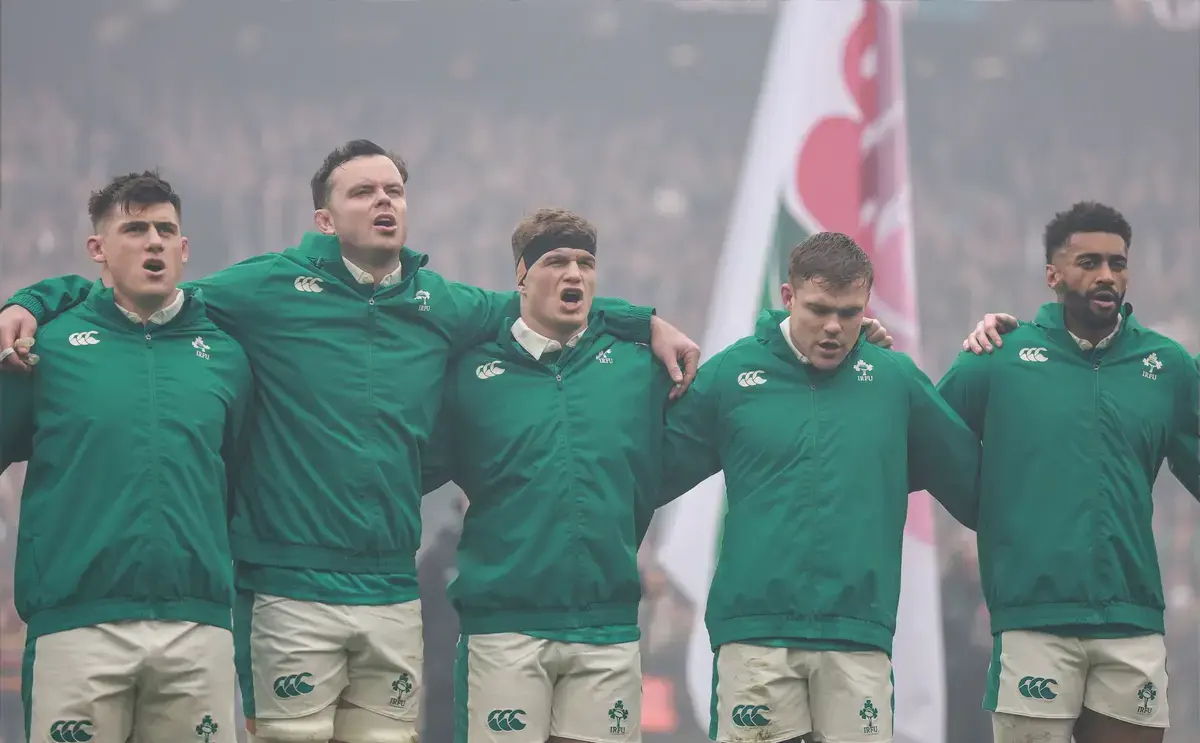
There are Super Saturdays, and then there is this. When Ireland and Scotland collide at a sold-out Aviva Stadium, with the Triple Crown guaranteed to change hands and the championship itself potentially on the line, it will be the most consequential opening fixture of any final Six Nations weekend in living memory. Both teams lost their tournament openers — Ireland humbled 36-14 in Paris, Scotland undone by Italy in a Roman monsoon — yet here they stand, one victory away from silverware and perhaps something even greater.
Key talking points at a glance:
- James Ryan ruled out with calf injury; Joe McCarthy returns to start alongside Tadhg Beirne
- Dan Sheehan, Josh van der Flier and Tommy O’Brien recalled as Farrell makes four changes
- Scotland lose both starting locks — Grant Gilchrist set to break Scott Murray’s record as most-capped Scottish second row
- Ireland seeking 12th consecutive victory over Scotland; last Scottish win in Dublin was 2010
- Darragh Murray in line for Six Nations debut; Bundee Aki available for first time this championship
- Winner claims Triple Crown; both teams retain slim title hopes depending on France v England result
The contrasting narratives could hardly be more pronounced. Ireland demolished England 42-21 at Twickenham before grinding past a resurgent Wales, their championship hopes kept flickering by victories that showcased both their attacking brilliance and their ability to close out tight contests. Scotland, meanwhile, have produced the tournament’s most dramatic redemption arc — bouncing back from that opening defeat with wins over England, Wales and, most spectacularly, a 50-40 demolition of France that sent shockwaves through European rugby.
The psychological challenge for each side is fascinating. Ireland must overcome the weight of favouritism against opponents who have nothing to lose and everything to prove. Scotland must translate the euphoria of Murrayfield into composure in an away environment where they have not tasted victory since 2010. For one team, this afternoon will mark the culmination of years of building; for the other, it will represent another painful reminder of what might have been.
A rivalry with historical heft
One of rugby’s oldest international rivalries, Ireland and Scotland first met in 1875, 151 years before this Saturday’s encounter. Since then, 144 Tests have been contested, with Ireland holding a slender historical advantage: 72 victories to Scotland’s 67, with five draws.
Yet the modern balance of power has shifted decisively in Ireland’s favour. Andy Farrell’s men have won 11 consecutive matches against Scotland dating back to 2017 — a run that spans two World Cups, three Six Nations titles, and Gregor Townsend’s entire tenure as Scotland head coach. Should they prevail on Saturday, it would equal their longest winning streak against Scotland in any iteration of the championship, matching a nine-game run between 1939 and 1954.
At the Aviva Stadium, Ireland’s dominance is absolute. They boast a 100% winning record against Scotland at the redeveloped ground, with the Scots’ last victory on Irish soil coming at Croke Park in 2010 — a 23-20 Six Nations triumph that feels like ancient history given the chasm that has opened between the nations since.
The last meeting between these sides, at Murrayfield in February 2025, saw Ireland prevail 32-18 despite Scotland leading at half-time. It was a familiar pattern: Scotland competitive for periods, Ireland clinical when it mattered. The question is whether Townsend’s men have finally found the consistency to sustain their challenge across 80 minutes.
Farrell’s forward power play
Andy Farrell has responded to the challenge with four changes to his starting XV — a significant reshuffle that prioritises physicality and experience ahead of what he expects to be Scotland’s most ferocious challenge in years.
The most notable change is enforced: James Ryan misses out with a calf injury sustained against Wales, prompting Joe McCarthy’s return to the second row alongside Tadhg Beirne. Ryan had been one of Ireland’s standout performers this championship — their second-leading ball-carrying forward behind captain Caelan Doris and a dominant presence at the lineout. His loss is considerable, though McCarthy’s Lions pedigree and familiarity with Beirne provide reassurance.
“We thought it was just a contusion to his calf and we thought that was going to be fine,” Farrell explained. “Sunday, Monday, he was looking that way, but we tried to get him going, we trained Tuesday and he didn’t even get to start on Tuesday. So that was that. It’s disappointing for James and disappointing for us because he’s been in unbelievable form in this Six Nations.”
The pack sees further reshaping with hooker Dan Sheehan and flanker Josh van der Flier both recalled, having started the record victory over England at Twickenham. Their returns push Rónan Kelleher and Nick Timoney to the bench. The selection suggests Farrell is prioritising the combination that delivered Ireland’s most complete performance of the campaign.
Tommy O’Brien replaces Jacob Stockdale on the left wing — an acknowledgement of O’Brien’s all-action display at Twickenham, where he combined brilliantly with Rob Baloucoune. Stockdale had marked his recall against Wales by scoring Ireland’s opening try, but Farrell has opted for O’Brien’s dynamism in what promises to be a high-tempo affair.
Connacht’s Darragh Murray is poised to make his Six Nations debut off the bench, the 24-year-old having impressed in training throughout the championship. “First and foremost, he is a great rugby player,” Farrell said. “He’s been an unbelievable team-mate in how he’s helped prepare everyone else through this Six Nations. It just shows if you prepare well and keep showing everyone that you belong at this type of level, then people will put their trust in you.”
Bundee Aki returns among the replacements for his first appearance of the tournament following a four-match suspension. His physicality and experience could prove decisive in the final quarter.
Townsend’s enforced reshuffle
Gregor Townsend has been forced into three changes, with the loss of both starting locks from the France victory a significant blow. Gregor Brown and Scott Cummings are ruled out through injury, prompting the inclusion of Max Williamson and Grant Gilchrist in the engine room.
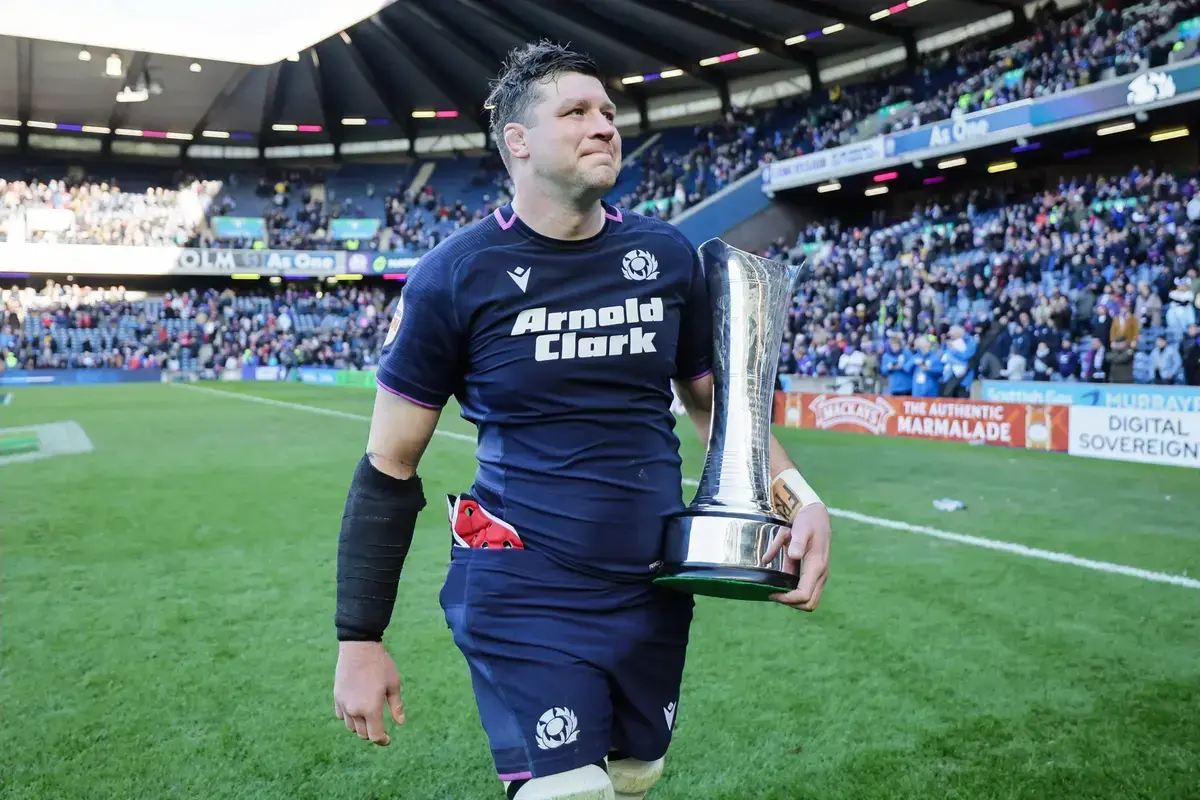
Gilchrist’s selection carries historical significance: the 35-year-old Edinburgh lock is set to win his 88th cap, breaking Scott Murray’s all-time record as Scotland’s most-capped second row. It is a fitting milestone for a player who has been the heartbeat of Scottish rugby through lean years and good, though the circumstances of his promotion — a whirlwind week that included rushing home for the birth of his daughter Maggie — add a personal dimension to an already emotional occasion.
“It was a bit of a crazy week,” Gilchrist revealed. “My wife Chloe ended up going into labour on the Monday night. It changed things up a bit but I was able to get there in plenty of time and everything went amazingly.”
Zander Fagerson returns at tighthead prop, having impressed off the bench against France, with D’Arcy Rae dropping to the replacements. The backline remains unchanged from the Murrayfield triumph, with Kyle Steyn cleared to start despite the deep cut he suffered to his thigh while attempting to prevent Antoine Dupont’s try.
Among the replacements, there are first involvements of 2026 for second row Alex Craig, back row Magnus Bradbury and wing Kyle Rowe — all three providing options for the closing stages.
Key players to watch
Ireland: Stuart McCloskey
The Ulster centre’s late-career renaissance has been one of the feel-good stories of this championship. At 33, McCloskey has finally established himself as Ireland’s first-choice inside centre after years of being overlooked in favour of Bundee Aki and Robbie Henshaw. His ability to punch holes in the gainline and free his hands in contact gives Ireland a point of difference they have lacked in recent seasons. Against Scotland’s rush defence, his power through the middle could prove decisive in creating space for Ireland’s dangerous back three.
Scotland: Kyle Steyn
The Glasgow wing was the standout performer against France, gaining over 100 metres — the only player to reach that mark in Round 4 — while also leading all backs for dominant tackles. He tops the championship for defenders beaten with 21 and has scored three tries across the campaign. His ability to break tackles and offload in contact will be central to Scotland’s attacking ambitions, though he will face a stern examination from Ireland’s disciplined defensive system.
Where the battle will be won
The collision zone: Scotland captain Sione Tuipulotu put it simply during the week: “In Test rugby, you win the collisions, you win the game.” Ireland have led the championship for dominant carries with 91 across four rounds, while their gainline success rate of 50% is significantly better than Scotland’s 39%. However, Scotland’s forwards showed remarkable physicality against France, with Pierre Schoeman, Jack Dempsey and Matt Fagerson all making significant ground. The battle between McCloskey and Tuipulotu in midfield could define the contest.
The breakdown: Ireland have won 28 turnovers this championship — joint-most alongside Italy — while Scotland have conceded just 41, the joint-fewest. Rory Darge leads the tournament with eight turnovers won, six from jackals, while Tadhg Beirne has five. The battle between these breakdown specialists will determine which team can play at their preferred tempo. Scotland’s 100% ruck retention against France was remarkable; Ireland’s counter-rucking will test that efficiency to its limits.
The permutations
The championship standings entering Round 5 present a tantalising scenario. France sit atop the table on 16 points after four bonus-point victories, level with Scotland on points but with a vastly superior points differential (79 to Scotland’s 21). Ireland are third on 14 points, two behind both leaders.
For Ireland, the mathematics are straightforward but demanding: they must beat Scotland, ideally with a bonus point, and then hope England can upset France in Paris. A victory without a bonus point could still be enough if France lose and collect only one bonus point.
Scotland’s path is clearer in one sense — any victory in Dublin would secure the Triple Crown and maintain their title hopes. A bonus-point win combined with an England victory over France would deliver their first championship since 1999. Even if France win, Scotland’s title dreams could survive depending on bonus points.
For both teams, this is about more than championship permutations. Ireland are seeking a fourth Triple Crown in five years — a remarkable achievement that would cement their status as the dominant force in northern hemisphere rugby. Scotland are chasing a first Triple Crown since 1990, a drought that spans an entire generation. The winner will lift silverware regardless of what happens in Paris.
What they said
Caelan Doris (Ireland captain): “There is no second chance here. It’s down to how we start the game, how we get into it. A fast start is going to be important again. I think taking it moment by moment and really attacking the game, understanding that the win is the most important thing.”
Sione Tuipulotu (Scotland captain): “I think that’s more of a pressure for them than us. They don’t want to be the team to let go of their streak or be the team to lose at the Aviva. They deserve the pressure of being the favourites because of what they’ve achieved in the past.”
Andy Farrell (Ireland head coach): “Of course, you would love to dream like that. Obviously, the rest of it is out of our hands, but there is something that’s in our hands. We concentrate on our performance first and foremost of trying to win something that’s pretty special to us, that’s the Triple Crown.”
Gregor Townsend (Scotland head coach): “Those that have been selected know that it is a big opportunity. It’s not a cup final, there’s not just two teams in this championship, but there is an element of that. It’s the last game of the tournament, so we’ll leave everything out there.”
Team news
Ireland: 15. Jamie Osborne (Leinster); 14. Rob Baloucoune (Ulster), 13. Garry Ringrose (Leinster), 12. Stuart McCloskey (Ulster), 11. Tommy O’Brien (Leinster); 10. Jack Crowley (Munster), 9. Jamison Gibson-Park (Leinster); 1. Tom O’Toole (Ulster), 2. Dan Sheehan (Leinster), 3. Tadhg Furlong (Leinster), 4. Joe McCarthy (Leinster), 5. Tadhg Beirne (Munster), 6. Jack Conan (Leinster), 7. Josh van der Flier (Leinster), 8. Caelan Doris (Leinster) (c).
Replacements: 16. Rónan Kelleher (Leinster), 17. Michael Milne (Munster), 18. Finlay Bealham (Connacht), 19. Darragh Murray (Connacht), 20. Nick Timoney (Ulster), 21. Craig Casey (Munster), 22. Ciarán Frawley (Leinster), 23. Bundee Aki (Connacht).
Scotland: 15. Blair Kinghorn (Toulouse); 14. Darcy Graham (Edinburgh), 13. Huw Jones (Glasgow Warriors), 12. Sione Tuipulotu (Glasgow Warriors) (c), 11. Kyle Steyn (Glasgow Warriors); 10. Finn Russell (Bath) (vc), 9. Ben White (Toulon); 1. Pierre Schoeman (Edinburgh), 2. George Turner (Harlequins), 3. Zander Fagerson (Glasgow Warriors), 4. Max Williamson (Glasgow Warriors), 5. Grant Gilchrist (Edinburgh), 6. Matt Fagerson (Glasgow Warriors), 7. Rory Darge (Glasgow Warriors) (vc), 8. Jack Dempsey (Glasgow Warriors).
Replacements: 16. Ewan Ashman (Edinburgh), 17. Rory Sutherland (Glasgow Warriors), 18. D’Arcy Rae (Edinburgh), 19. Alex Craig (Glasgow Warriors), 20. Magnus Bradbury (Edinburgh), 21. George Horne (Glasgow Warriors), 22. Kyle Rowe (Glasgow Warriors), 23. Tom Jordan (Bristol Bears).
Did you know?
- Ireland have won their last 11 consecutive matches against Scotland in all competitions — the longest winning streak by either side since Scotland won 11 in a row between 1882 and 1893
- Scotland have never beaten Ireland during Gregor Townsend’s nine-year tenure as head coach
- Ireland boast a 100% winning record against Scotland at the Aviva Stadium; Scotland’s last win in Dublin was at Croke Park in 2010 (23-20)
- Grant Gilchrist will win his 88th cap, surpassing Scott Murray as Scotland’s most-capped second row
- Scotland have scored 21 tries in their last three matches — more than any team has managed in three consecutive Six Nations games since England in 2001
- Darcy Graham’s 37 Test tries make him Scotland’s all-time leading try scorer, though he has failed to score in his last three Six Nations games against Ireland
- Ireland have conceded fewer than two points per defensive 22 entry (1.9) — the best rate in this year’s championship
- Only three members of Scotland’s matchday 23 — Zander Fagerson, Finn Russell and Huw Jones — have beaten Ireland during their careers
The verdict
Home advantage, the weight of recent history, and Ireland’s superior record in pressure situations all point to a home victory. Farrell’s selection, prioritising the combinations that dismantled England at Twickenham, suggests Ireland will look to impose themselves physically from the outset. McCarthy and Beirne should provide enough lineout security to offset Ryan’s absence, while the return of Sheehan and van der Flier adds dynamism and breakdown intelligence.
Yet Scotland arrive with genuine belief forged in the crucible of Murrayfield. Their performance against France was the best by any team in this tournament — ruthless, relentless, and devastatingly efficient. If they can replicate that intensity in Dublin, they have the attacking firepower to trouble any defence. Finn Russell’s game management, Steyn and Graham’s finishing, and Tuipulotu’s leadership in the collisions could all prove decisive.
The key will be Scotland’s ability to stay in the fight through the middle third of the match. Ireland have consistently ground down opponents in the 50-60 minute window, using their bench strength to pull away. If Scotland can maintain their composure and accuracy through that period, a famous victory is possible. If they wilt under pressure as they have in previous meetings, Ireland will seize their chance.
Expect Ireland to secure victory, though perhaps not with the same comfort their recent record suggests. A 25-22 margin feels about right for a fixture that will be fought ferociously until the final whistle. The Triple Crown will return to Dublin; whether the championship follows depends on events in Paris.
Match Officials
Referee: Luke Pearce (RFU)
Assistant Referees: Angus Gardner (RA), Damian Schneider (UAR)
TMO: Andrew Jackson (RFU)
FPRO: Ian Tempest (RFU)
Kick-off: Saturday, 14 March 2026, 2.10pm GMT | Aviva Stadium, Dublin
Share this:
You may like
-
Ryan ruled out as Ireland make four changes for Scotland clash
-
Scotland make three changes for title showdown with Ireland
-
Uncapped France flanker Matiu handed debut for Le Crunch
-
France flanker Jégou to miss England game after eye gouge ban
-
Wales name unchanged side for Six Nations finale against Italy
-
Ollie Chessum recalled as England seek to avoid worst Six Nations
Six Nations
Ryan ruled out as Ireland make four changes for Scotland clash
Published
2 days agoon
12th March 2026
Andy Farrell has made four changes to his Ireland side for Saturday’s Six Nations finale against Scotland at the Aviva Stadium, recalling three British and Irish Lions to his pack as the hosts seek a fourth Triple Crown in five years. James Ryan has been ruled out with a calf injury, prompting the return of Joe McCarthy to the second row in the most significant of the alterations for the Super Saturday showdown that will also determine whether Ireland can keep alive their slim title hopes.
Key team news:
- James Ryan ruled out with calf injury sustained against Wales
- Joe McCarthy returns to the second row to partner Tadhg Beirne
- Dan Sheehan and Josh van der Flier recalled to the pack
- Tommy O’Brien preferred to Jacob Stockdale on the left wing
- Darragh Murray in line for Six Nations debut off the bench
- Bundee Aki available for first time this championship after completing suspension
Ryan’s absence is a considerable blow for Farrell with the experienced lock having been one of Ireland’s standout performers this campaign. The Leinster second row has been Ireland’s second-leading ball-carrying forward behind captain Caelan Doris and ranks in the championship’s top ten for attacking ruck arrivals. Farrell confirmed the injury proved worse than initially suspected.
Our team for Saturday's showdown in Dublin. pic.twitter.com/coprmUGvgA
— Irish Rugby (@IrishRugby) March 12, 2026
“We thought it was just a contusion to his calf and we thought that was going to be fine,” Farrell explained. “Sunday, Monday, he was looking that way, but we tried to get him going, we trained Tuesday and he didn’t even get to start on Tuesday. So that was that. It’s disappointing for James and disappointing for us because he’s been in unbelievable form in this Six Nations.”
McCarthy’s return alongside Tadhg Beirne should help to bolster a scrum that has consistently struggled, conceding 19 penalties across the opening four rounds. The Leinster lock was instrumental in Ireland’s thumping 42–21 victory over England at Twickenham and his physicality will be crucial against a Scottish pack energised by their stunning 50–40 triumph over France.
The return of hooker Dan Sheehan and flanker Josh van der Flier completes Farrell’s overhaul of the pack from the side that laboured to a 27–17 victory over Wales. Both started the England demolition and their inclusion alongside McCarthy suggests Farrell is placing his faith largely in the side that laid waste to Steve Borthwick’s men at Twickenham three weeks ago. Rónan Kelleher and Nick Timoney drop to the bench.
In the backline, Tommy O’Brien replaces Jacob Stockdale on the left wing. The Leinster man impressed after replacing the injured James Lowe early in the England victory, showing an all-action approach that caught the eye. Stockdale had returned to the side against Wales and marked his recall by scoring Ireland’s opening try, but Farrell has opted for O’Brien’s dynamism in a match that promises to be played at high tempo.
Farrell was effusive in his praise for Scotland’s form while responding to comments made by wing Darcy Graham, who suggested Ireland were “there for the taking” this weekend. “He’s entitled to his opinion, first and foremost,” the Ireland head coach said. “He’s a great lad, Darcy. Obviously I got to know him on the Lions, so it’s how he feels and obviously how the squad feels, and rightly so, in my opinion.”
The Ireland boss emphasised the need to match Scotland’s intensity from last weekend. “They were outstanding last week against France, and we’ve been preparing for another Scottish performance like that. We know that we’ll have to be at our best to beat them, as they’re a side that we’ve always respected.”
Ireland have won the last 11 meetings between the sides stretching back to 2017, and have not lost at home to Scotland since 2010. However, Farrell is taking nothing for granted against opponents who have scored 21 tries in their last three matches. “It is an incredible privilege for the squad to play at home in front of a packed Aviva Stadium with a trophy up for grabs,” he said. “You’ll see two teams who like to attack and we’ll look to implement our game plan to get the performance that we want.”
The remainder of the backline is unchanged from the Wales victory. Jamie Osborne continues at full-back, where he has scored three tries this championship, with Rob Baloucoune on the right wing. Stuart McCloskey and Garry Ringrose start together in midfield for the fifth consecutive match, while Jamison Gibson-Park, who will win his 51st cap, and Jack Crowley continue their half-back partnership.
Tom O’Toole retains the loosehead prop jersey after his switch from the tighthead side showed early signs of success against Wales. Tadhg Furlong, who endured a frustrating night against the Welsh scrum, is retained at tighthead with Finlay Bealham providing cover on the bench. Jack Conan keeps his place at blindside flanker after being named man of the match against Wales, completing a formidable back row alongside van der Flier and captain Doris.
Farrell has again opted for a five-three split on the bench. Connacht’s Darragh Murray is poised to make his Six Nations debut if he comes off the bench, having won his first two Ireland caps against Georgia and Portugal last summer. The 24-year-old Roscommon native has been training with the senior squad throughout the championship and Farrell praised his contribution behind the scenes.
“First and foremost, he is a great rugby player. He’s obviously very young, and he has had a very patient campaign so far,” said Farrell. “He’s been an unbelievable team-mate in how he’s helped prepare everyone else through this Six Nations. It just shows if you prepare well and keep showing everyone that you belong at this type of level, then people will put their trust in you.”
Craig Casey has edged out last week’s debutant Nathan Doak as scrum-half cover, while Ciarán Frawley retains his place among the replacements. Bundee Aki is set to make his first appearance of the tournament after completing a four-match suspension for verbal abuse of a match official. The Connacht centre was available for the Wales match but did not make the matchday 23.
Victory for Ireland would secure the Triple Crown and keep alive their slim title hopes, though they will require England to do them a favour against France in Paris later on Saturday evening. Defeat would end their title challenge and hand Scotland their first Triple Crown since 1990.
“Of course, you would love to dream like that,” Farrell said of a potential title win. “Obviously, the rest of it is out of our hands, but there is something that’s in our hands. We concentrate on our performance first and foremost of trying to win something that’s pretty special to us, that’s the Triple Crown. Over the years, it’s been hard to come by when you’re playing for Ireland, so we’re desperate to make sure that we get across that.”
Ireland starting XV:
15. Jamie Osborne (Leinster, 14 caps)
14. Rob Baloucoune (Ulster, 7 caps)
13. Garry Ringrose (Leinster, 73 caps)
12. Stuart McCloskey (Ulster, 27 caps)
11. Tommy O’Brien (Leinster, 8 caps)
10. Jack Crowley (Munster, 34 caps)
9. Jamison Gibson-Park (Leinster, 50 caps)
1. Tom O’Toole (Ulster, 20 caps)
2. Dan Sheehan (Leinster, 38 caps)
3. Tadhg Furlong (Leinster, 85 caps)
4. Joe McCarthy (Leinster, 23 caps)
5. Tadhg Beirne (Munster, 69 caps)
6. Jack Conan (Leinster, 58 caps)
7. Josh van der Flier (Leinster, 78 caps)
8. Caelan Doris (Leinster, 59 caps) – captain
Replacements:
16. Rónan Kelleher (Leinster, 47 caps)
17. Michael Milne (Munster, 4 caps)
18. Finlay Bealham (Connacht, 56 caps)
19. Darragh Murray (Connacht, 2 caps)
20. Nick Timoney (Ulster, 10 caps)
21. Craig Casey (Munster, 27 caps)
22. Ciarán Frawley (Leinster, 11 caps)
23. Bundee Aki (Connacht, 68 caps)
Match details: Ireland v Scotland, Aviva Stadium, Dublin. Saturday 14 March, 2.10pm GMT.
Share this:
Six Nations
Scotland make three changes for title showdown with Ireland
Published
2 days agoon
12th March 2026
Gregor Townsend has made three changes to his Scotland side for Saturday’s monumental Six Nations showdown with Ireland at the Aviva Stadium, as the Scots prepare for what could be the most significant Test match in a generation. With a first championship title since 1999 tantalisingly within reach, Townsend has been forced into two changes in the second row while making one tactical switch in the front row for the Super Saturday clash that will set the tone for the final day of the 2026 tournament.
Key team news:
- Scott Cummings (calf) and Gregor Brown (hamstring) ruled out, forcing a new second-row pairing
- Grant Gilchrist returns to the starting XV and will break Scott Murray’s record to become Scotland’s most-capped lock
- Max Williamson earns a second chance in the engine room after being dropped for the France match
- Zander Fagerson promoted from the bench in the only tactical change
- Kyle Rowe, Alex Craig and Magnus Bradbury named in the matchday 23 for the first time this championship
- Backline unchanged from the stunning 50–40 victory over France
The injuries to Cummings and Brown represent Scotland’s most significant selection headache of the championship. Cummings in particular has grown into a leadership figure this campaign, marshalling the lineout superbly and providing a ferocious physical presence in the tight exchanges. His calf injury, sustained during last weekend’s thrilling victory over France, is a significant blow for a Scotland side seeking to end an 11-match losing streak against Ireland stretching back to 2017.
Your team to face Ireland in Dublin this weekend 🏴☘️#AsOne | #GuinnessM6N pic.twitter.com/milNin4bPY
— Scottish Rugby (@Scotlandteam) March 12, 2026
Despite the magnitude of the occasion, Townsend insisted his squad have deliberately avoided discussing the championship permutations. “We’ve not talked about that,” the head coach said. “It’s really another opportunity to play. The final opportunity for this group to go out and play. You can see that they’re loving playing together. We see it in training. The togetherness is in that group.”
Townsend was effusive in his praise for last weekend’s victory over France, describing it as close to the best performance from any Scotland team. However, he acknowledged that Saturday will demand a different approach. “The expectations might be there to repeat that performance but what we want to see from it is are they physically ready? They’re fresh,” he said. “We’ve done some contact work yesterday. They’re up for that challenge. You’ve got to adapt, stick together for that 80 minutes and give it everything.”
Gilchrist steps into the starting side for the first time since the opening-round defeat in Rome, having impressed off the bench in victories over Wales and France. The 35-year-old Edinburgh stalwart will win his 88th cap on Saturday, surpassing Scott Murray to become Scotland’s most-capped lock in history. The milestone adds an emotional layer to what is already a momentous occasion, with Gilchrist having served Scotland across three World Cups during a career that began with his debut against France in 2013.
Partnering Gilchrist in the second row is Max Williamson, who receives a show of faith from Townsend after a chastening experience in Cardiff last month. The Glasgow Warriors lock was hauled off early in the win over Wales and did not feature in the matchday 23 against France. His selection ahead of Alex Craig, who has been in fine form for Glasgow in European competition, suggests Townsend values Williamson’s ball-carrying ability for what promises to be a ferociously physical contest.
The only tactical change sees Zander Fagerson start at tighthead prop, with D’Arcy Rae dropping to the bench. Fagerson made an early appearance off the bench against France, replacing Rae just before half-time in what appeared a pre-meditated move to maximise the impact of both props. Starting Fagerson suggests Townsend is prioritising early scrum dominance against an Irish pack that dismantled England at Twickenham last weekend.
Scotland’s backline remains unchanged from the combination that produced seven tries against France in one of the most remarkable attacking displays in the nation’s history. Kyle Steyn, who was stretchered off with a deep gash to his thigh against Les Bleus, has been passed fit to continue his outstanding campaign on the left wing. The Glasgow winger has beaten more defenders than any other player in this year’s championship and leads the tournament for metres gained per carry.
Darcy Graham, whose brace against France took his international try tally to 37 and saw him break the all-time Scottish record, partners Steyn in the back three alongside Blair Kinghorn at full-back. Captain Sione Tuipulotu and Huw Jones form the centre partnership for the fifth consecutive championship match, with Jones also overcoming a minor knock sustained against France.
The half-back pairing of Ben White and Finn Russell has started every match of Scotland’s campaign. Russell, who missed all three conversions in the heartbreaking Calcutta Cup defeat to England in 2025, has since been near-flawless from the tee and produced a masterclass against France with his vision and distribution. The Bath fly-half will win his 94th cap on Saturday.
The back row remains the Glasgow Warriors triumvirate of Matt Fagerson at blindside flanker, vice-captain Rory Darge at openside, and Jack Dempsey at number eight. Dempsey made a surprise return from injury against France and delivered an outstanding performance that vindicated Townsend’s decision to restore him to the starting side.
Townsend has made significant changes to his bench, opting for a five-three split of forwards and backs. Alex Craig and Magnus Bradbury make their first appearances in this championship, providing second-row and back-row cover respectively. Bradbury, whose international opportunities have been limited despite strong form for Edinburgh, offers a muscular carrying option for the closing stages. Kyle Rowe also earns his first involvement of the tournament after an impressive season for Glasgow Warriors.
The remaining replacements are hooker Ewan Ashman, loosehead prop Rory Sutherland, scrum-half George Horne, and the versatile Tom Jordan. Josh Bayliss and Freddy Douglas, who featured against France, miss out on the matchday 23.
Scotland travel to Dublin joint-top of the standings with France on 16 points, though Les Bleus hold a vastly superior points difference. The Scots can win the championship for the first time since 1999 if they secure a bonus-point victory and France fail to beat England in Paris later on Saturday evening. Even without the title, victory would secure a first Triple Crown since the Grand Slam season of 1990.
The challenge could hardly be more daunting. Scotland have not beaten Ireland since 2017 and have not won at Lansdowne Road or the Aviva Stadium since 1998. Andy Farrell’s side demolished England 36–8 in round four and have found their rhythm after a stuttering start to the tournament that saw them lose to France in Dublin.
Scotland starting XV:
15. Blair Kinghorn (Toulouse, 64 caps)
14. Darcy Graham (Edinburgh Rugby, 54 caps)
13. Huw Jones (Glasgow Warriors, 62 caps)
12. Sione Tuipulotu (Glasgow Warriors, 37 caps) – captain
11. Kyle Steyn (Glasgow Warriors, 32 caps)
10. Finn Russell (Bath Rugby, 93 caps) – vice-captain
9. Ben White (Toulon, 35 caps)
1. Pierre Schoeman (Edinburgh Rugby, 48 caps)
2. George Turner (Harlequins, 54 caps)
3. Zander Fagerson (Glasgow Warriors, 80 caps)
4. Max Williamson (Glasgow Warriors, 12 caps)
5. Grant Gilchrist (Edinburgh Rugby, 87 caps)
6. Matt Fagerson (Glasgow Warriors, 63 caps)
7. Rory Darge (Glasgow Warriors, 38 caps) – vice-captain
8. Jack Dempsey (Glasgow Warriors, 38 caps)
Replacements:
16. Ewan Ashman (Edinburgh Rugby, 34 caps)
17. Rory Sutherland (Glasgow Warriors, 47 caps)
18. D’Arcy Rae (Edinburgh Rugby, 6 caps)
19. Alex Craig (Glasgow Warriors, 6 caps)
20. Magnus Bradbury (Edinburgh Rugby, 21 caps)
21. George Horne (Glasgow Warriors, 44 caps)
22. Kyle Rowe (Glasgow Warriors, 16 caps)
23. Tom Jordan (Bristol Bears, 16 caps)
Match details: Ireland v Scotland, Aviva Stadium, Dublin. Saturday 14 March, 2.10pm GMT.
Share this:
Six Nations
Uncapped France flanker Matiu handed debut for Le Crunch
Published
2 days agoon
12th March 2026
Fabien Galthié has handed a debut to Bordeaux Bègles flanker Temo Matiu and restored his trusted Toulouse lock partnership as France bid to secure back-to-back Six Nations titles against England at the Stade de France on Saturday night.
Key team news:
- Temo Matiu earns first cap at openside flanker after Oscar Jégou’s four-match ban for eye-gouging
- Anthony Jelonch ruled out with hamstring strain suffered in training
- Charles Ollivon moves from second row to number eight to cover Jelonch’s absence
- Thibaud Flament and Emmanuel Meafou reunited in all-Toulouse lock partnership
- Pierre-Louis Barassi replaces injured Nicolas Depoortere at outside centre
- Four changes to the side beaten 50-40 by Scotland at Murrayfield
The 24-year-old Matiu, who has impressed for Bordeaux Bègles primarily at number eight this season, will discover international rugby in the most pressurised of circumstances – a Le Crunch showdown that could deliver France their eighth Six Nations title and first back-to-back championships since 2006 and 2007. He replaces Jégou, who was banned for four matches after being found guilty of eye-gouging Scotland hooker Ewan Ashman during last weekend’s dramatic 50-40 defeat at Murrayfield.
🇫🇷💥🏴 La compo de notre #XVdeFrance pour le crunch de samedi !
✨ Rendez-vous au @StadeFrance pour fêter les 𝟏𝟐𝟎 𝐚𝐧𝐬 de cet affrontement légendaire !#FRAANG pic.twitter.com/rovyUTz7pc
— France Rugby (@FranceRugby) March 12, 2026
Galthié has been forced into a significant reshuffle of his back five, with former captain Ollivon moving from lock to number eight after Jelonch suffered a hamstring strain during training this week. The versatile Ollivon, who skippered France before Antoine Dupont assumed the captaincy, will pack down alongside François Cros and the debutant Matiu in a new-look back row.
The enforced changes have allowed Galthié to reunite his preferred second-row partnership of Flament and Meafou, the Toulouse teammates who have started together eight times previously. Both were named among the replacements for the Scotland defeat but have been promoted to the starting XV, with the 23-stone Meafou adding considerable physical presence to a pack that will face an England side bolstered by the inclusion of Ollie Chessum at blindside flanker.
In the backline, the only change sees Barassi return at outside centre in place of Depoortere, who dislocated his shoulder at Murrayfield. The Toulouse centre will partner Yoram Moefana, who retains his place despite a difficult afternoon against Scotland. It marks France’s third different centre partnership of this championship, with Fabien Brau-Boirie having started alongside Émilien Gailleton in the victories over Italy and Wales before a dislocated finger ruled him out.
The remainder of the backline is unchanged, with Dupont and Matthieu Jalibert continuing their half-back partnership and the potent back-three combination of Louis Bielle-Biarrey, Théo Attissogbe and Thomas Ramos retained. Bielle-Biarrey has scored in all four matches of this championship and can extend his remarkable Six Nations record to a perfect ten tries from ten appearances stretching back to last year’s tournament.
Galthié spoke of his determination to focus on the opportunity ahead rather than dwelling on the shock defeat in Edinburgh. “We moved straight on to England,” the head coach said. “In our way of working, we don’t dwell on what has just happened – we concentrate on what’s coming next. What matters to us today is that we have given ourselves the right to play for the win on Saturday. The assessment of the tournament, with its great moments and its more difficult ones, we will do that later.”
The France head coach emphasised the volatile nature of this year’s championship, noting that fortunes can change dramatically from one round to the next. “In this Six Nations, everything can change from one day to the next,” Galthié added. “All six teams have experienced positive periods and more difficult moments. But the essential thing is that we have the opportunity to play for victory on Saturday night. And that is what drives us.”
Despite England’s three consecutive defeats, Galthié paid respect to Steve Borthwick’s side, warning his players not to underestimate the challenge that awaits. “England are a team that performs well, with legitimate ambitions,” he said. “They too experience good times and more difficult ones – they go through what we go through – but they remain formidable. Their results are linked to the difficulty of the competition. They started this tournament on a run of 12 consecutive victories. They have high-quality players, strengths, a strong set-piece, and a clear strategy.”
The head coach concluded by stressing his squad’s focus on the immediate task. “We must respect all our opponents; we don’t always realise how difficult they are,” Galthié said. “We are ambitious, we believe in our team, in our individual strengths. We believe in ourselves. We’re focused on this moment of truth we’ve been waiting for. We’re playing to win the tournament – that’s what drives us. It’s simple.”
France top the Six Nations table on 16 points, level with Scotland but with a significantly superior points difference of +79 compared to the Scots’ +21. Ireland sit two points behind on 14. A bonus-point victory at the Stade de France would guarantee France the title regardless of events in Dublin, where Ireland host Scotland in the opening match of Super Saturday.
The bench contains experienced options, with Joshua Brennan – son of former Ireland and Toulouse flanker Trevor Brennan – in line for his first appearance since the summer tour to New Zealand. Hugo Auradou returns to the replacements having not featured since the opening round victory over Ireland, while Baptiste Serin provides scrum-half cover despite Maxime Lucu’s return to the wider squad.
France have won the last four meetings with England on home soil and will be overwhelming favourites against a side that has lost three consecutive matches and faces the prospect of their worst Six Nations campaign since the tournament expanded to six teams in 2000. However, England were the only team to beat France in last year’s championship, claiming a dramatic late victory at Twickenham that ultimately prevented Les Bleus from completing the Grand Slam.
Starting XV:
15. Thomas Ramos (Stade Toulousain)
14. Théo Attissogbe (RC Toulon)
13. Pierre-Louis Barassi (Stade Toulousain)
12. Yoram Moefana (Union Bordeaux Bègles)
11. Louis Bielle-Biarrey (Union Bordeaux Bègles)
10. Matthieu Jalibert (Union Bordeaux Bègles)
9. Antoine Dupont (Stade Toulousain) – captain
1. Jean-Baptiste Gros (RC Toulon)
2. Julien Marchand (Stade Toulousain)
3. Dorian Aldegheri (Stade Toulousain)
4. Thibaud Flament (Stade Toulousain)
5. Emmanuel Meafou (Stade Toulousain)
6. François Cros (Stade Toulousain)
7. Temo Matiu (Union Bordeaux Bègles)
8. Charles Ollivon (RC Toulon)
Replacements:
16. Peato Mauvaka (Stade Toulousain)
17. Rodrigue Neti (Montpellier Hérault Rugby)
18. Demba Bamba (Olympique Lyonnais)
19. Hugo Auradou (Section Paloise)
20. Mickaël Guillard (Olympique Lyonnais)
21. Joshua Brennan (Stade Toulousain)
22. Baptiste Serin (RC Toulon)
23. Émilien Gailleton (Section Paloise)
Match details: France v England, Stade de France, Paris. Saturday 14 March, 8.10pm GMT.
Share this:
Trending
-
New Zealand1 week agoThe former teacher now tasked with reviving the All Blacks
-
Six Nations1 week agoIreland survive Wales scare to keep Six Nations hopes alive
-
Super Rugby Pacific2 weeks agoCrusaders storm back to claim crucial win over Chiefs in Hamilton
-
International2 weeks agoEngland’s backline injury crisis deepens ahead of Italian job
-
New Zealand1 week agoFormer Wallabies boss wins race to be next All Blacks coach
-
Six Nations5 days agoOscar Jégou cited for alleged eye gouge after Scotland loss
-
Six Nations6 days agoSensational Italy make history with first victory over England
-
Super Rugby Pacific2 weeks agoSuper Rugby Pacific 2026: Round three preview