
Six Nations
2026 Guinness Six Nations preview: France v England

Published
4 days agoon
The 2026 Guinness Six Nations reaches its dramatic conclusion under the Paris lights on Super Saturday, with France hosting England at the Stade de France in a fixture that could crown champions and condemn the vanquished to ignominy. For Fabien Galthié’s side, a bonus-point victory would almost certainly secure a record eighth Six Nations title and their first back-to-back championships since 2006 and 2007. For Steve Borthwick’s England, the stakes are existential — defeat would confirm their worst-ever Six Nations campaign, with just one win from five matches.
Key talking points at a glance:
- Temo Matiu handed France debut at openside flanker after Oscar Jégou’s four-match ban for eye-gouging
- Sam Underhill and Marcus Smith set to win 50th England caps from the bench
- Anthony Jelonch ruled out for France with hamstring strain; Charles Ollivon moves to number eight
- France have won four consecutive home Six Nations matches against England — a fifth would be unprecedented
- Match marks 120-year anniversary of Le Crunch rivalry
- Three teams can still win the title: France lead on points difference from Scotland, with Ireland two points behind
The narratives could hardly be more contrasting. France arrive wounded but dangerous after their shock 50-40 defeat to Scotland at Murrayfield last weekend shattered Grand Slam dreams. England stagger into Paris having lost three consecutive matches — to Scotland, Ireland and, most humiliatingly, Italy for the first time in 32 meetings — their title aspirations reduced to rubble.
The psychological challenge for each team is stark. France must channel the fury of their Edinburgh humiliation into a performance worthy of champions, knowing that anything less than victory could hand the title to rivals. England must somehow summon belief from the wreckage of a campaign that has raised fundamental questions about the direction of Borthwick’s project.
A rivalry with historical heft
Le Crunch, as this fixture is affectionately known, represents one of rugby’s most storied rivalries. Saturday’s meeting marks exactly 120 years since England and France first met in 1906, a milestone the hosts are celebrating with a special light blue retro shirt and an elaborate pre-match ceremony featuring poetry, pyrotechnics and former France international Frédéric Michalak.
England hold a 61-44 advantage in the all-time head-to-head record, with seven draws. Yet the modern balance of power tells a different story. France have won five of the last eight Six Nations meetings, including three consecutive victories before England’s dramatic late win last year. That 26-25 triumph at Twickenham — secured by Elliot Daly’s last-gasp try and Fin Smith’s nerveless conversion — was England’s first over France since 2021 and represented the pinnacle of Borthwick’s tenure.
However, Paris is a different proposition entirely. France have won four consecutive home Six Nations clashes against England, a run dating back to 2018. England’s last victory across La Manche came in 2016, during their Grand Slam-winning campaign under Eddie Jones. Should Les Bleus prevail on Saturday, it would mark an unprecedented fifth straight home victory over England in Six Nations history — a piece of history they will be desperate to write.
Galthié’s enforced reshuffle
Fabien Galthié has been forced into a significant overhaul of his forward pack, with suspension and injury removing two key cogs from his back five. Oscar Jégou’s four-match ban for eye-gouging Scotland hooker Ewan Ashman has created an unexpected vacancy at openside flanker, while Anthony Jelonch suffered a hamstring strain during training this week that rules him out of the title decider.
The France head coach has responded by handing a debut to Temo Matiu, the 24-year-old Bordeaux Bègles back-rower who has impressed primarily at number eight this season. The former Biarritz player will discover international rugby in the most pressurised of circumstances, surrounded by the vastly experienced François Cros and Charles Ollivon in a new-look back row.
Ollivon’s versatility has proved invaluable. The former France captain, who has been deployed at lock throughout this championship, moves to number eight to cover Jelonch’s absence. This allows Galthié to reunite his preferred second-row partnership of Thibaud Flament and Emmanuel Meafou, the Toulouse teammates who have started together eight times previously. The 23-stone Meafou adds considerable physical presence to a pack designed to bully England up front.
In the backline, the only change sees Pierre-Louis Barassi return at outside centre in place of the injured Nicolas Depoortere, who dislocated his shoulder at Murrayfield. The Toulouse centre will partner Yoram Moefana in France’s third different centre partnership of this championship. The potent back three of Louis Bielle-Biarrey, Théo Attissogbe and Thomas Ramos remains intact, with Bielle-Biarrey seeking to extend his remarkable record of scoring in every Six Nations match since the start of last year’s tournament.
“We moved straight on to England,” Galthié said. “We have given ourselves the right to play for victory at the Stade de France. What fires us up is that we’re playing for the title.”
Borthwick’s minimal changes
Steve Borthwick has resisted the temptation to make wholesale changes despite England’s historic defeat to Italy, instead opting for just one alteration to his starting XV. Ollie Chessum, who started the first three rounds in the second row before being dropped to the bench in Rome, returns at blindside flanker in a tactical shift designed to add heft to England’s pack.
The move comes with Tom Curry unavailable after injuring his calf during the warm-up in Rome. Guy Pepper switches to openside flanker, with Sam Underhill dropping to the replacements. Should Underhill take the field, he will join Marcus Smith in reaching the significant milestone of 50 caps — a rare bright spot in an otherwise dismal campaign.
The backline that struggled to convert territorial dominance into points against Italy has been retained in its entirety. Ben Spencer and Fin Smith continue their half-back partnership, Seb Atkinson and Tommy Freeman persist in the centres, and the back three of Cadan Murley, Tom Roebuck and Elliot Daly remains unchanged.
“The England shirt can, at times, weigh heavy,” Borthwick admitted this week. “We’ve been unable to meet the aspirations we set for ourselves. This is one of those games where the senior players really step forward. That’s what I expect them to do this weekend.”
Key players to watch
France: Louis Bielle-Biarrey
The Bordeaux Bègles wing has been the outstanding attacking player of this championship, scoring in all four matches to extend his remarkable Six Nations record to nine consecutive games with a try. At just 21, Bielle-Biarrey combines devastating pace with an instinctive nose for the try line. A tenth consecutive Six Nations try would cement his status as the most prolific finisher in championship history. England’s scramble defence, which has been exposed repeatedly this tournament, will need to be at its sharpest to contain him.
England: Ben Earl
If England are to salvage any pride from this campaign, their number eight must lead from the front. Earl has made 26 more carries than any other player in this year’s Six Nations (79) and leads the championship for metres in contact (145). The Saracens back-rower wins his 50th cap in Paris and has been England’s most consistent performer throughout a torrid tournament. Against France’s powerful pack, his work at the breakdown and ability to punch holes in the gainline will be critical.
Where the battle will be won
Red zone efficiency: The contrast between these sides in the 22-metre zone tells the story of the championship. France boast the best points-per-entry average in the tournament (3.3 points), converting territory into tries with ruthless efficiency. England, by contrast, have managed just 2.0 points per 22 entry — only Italy have been worse. Les Bleus’ ability to finish off attacking positions, combined with England’s struggles to convert pressure into points, could prove decisive.
The set-piece battle: England possess the best lineout success rate in this year’s Six Nations (93.9%), while France boast the championship’s best scrum success rate (90.9%). Crucially, France are the only team to have scored multiple tries directly from scrum possession this tournament. With Meafou and Flament reunited in the engine room, expect Galthié’s side to target the English scrum early and often.
The permutations
The championship standings entering Super Saturday present a three-way battle for the title. France top the table on 16 points, level with Scotland but with a significantly superior points difference (+79 compared to +21). Ireland sit two points behind on 14, keeping their hopes alive after a bonus-point victory over Wales.
For France, a bonus-point win would almost certainly secure the title regardless of events in Dublin, where Ireland host Scotland in the opening match of Super Saturday. They will know exactly what they need to do by the time kick-off arrives. For England, avoiding a fourth consecutive defeat has become the sole objective — failure would confirm their worst Six Nations campaign since Italy joined the tournament in 2000.
What they said
Antoine Dupont (France captain): “We have given ourselves the right to play for victory at the Stade de France. The assessment of the tournament, with its great moments and its more difficult ones, we will do that later. What fires us up is that we’re playing for the title.”
Maro Itoje (England captain): “The last time we played France, they were heavy favourites. I’m sure we were the favourites last week, and I think a lot of people have lost a lot of money at Cheltenham betting on favourites. Being the favourite is neither here nor there.”
Fabien Galthié (France head coach): “England are a team that performs well, with legitimate ambitions. They remain formidable. They have high-quality players, a strong set-piece, and a clear strategy. Their results show how hard this competition is.”
Steve Borthwick (England head coach): “If South Africa are the best side in the world, I think France would be right up there just behind them. This is one of those games where the senior players really step forward. That’s what I expect them to do this weekend.”
Team news
France: 15 Thomas Ramos; 14 Théo Attissogbe, 13 Pierre-Louis Barassi, 12 Yoram Moefana, 11 Louis Bielle-Biarrey; 10 Matthieu Jalibert, 9 Antoine Dupont (c); 1 Jean-Baptiste Gros, 2 Julien Marchand, 3 Dorian Aldegheri, 4 Thibaud Flament, 5 Emmanuel Meafou, 6 François Cros, 7 Temo Matiu, 8 Charles Ollivon.
Replacements: 16 Peato Mauvaka, 17 Rodrigue Neti, 18 Demba Bamba, 19 Hugo Auradou, 20 Mickaël Guillard, 21 Joshua Brennan, 22 Baptiste Serin, 23 Émilien Gailleton.
England: 15 Elliot Daly; 14 Tom Roebuck, 13 Tommy Freeman, 12 Seb Atkinson, 11 Cadan Murley; 10 Fin Smith, 9 Ben Spencer; 1 Ellis Genge, 2 Jamie George, 3 Joe Heyes, 4 Maro Itoje (c), 5 Alex Coles, 6 Ollie Chessum, 7 Guy Pepper, 8 Ben Earl.
Replacements: 16 Luke Cowan-Dickie, 17 Bevan Rodd, 18 Trevor Davison, 19 Chandler Cunningham-South, 20 Sam Underhill, 21 Henry Pollock, 22 Jack van Poortvliet, 23 Marcus Smith.
Did you know?
- France have won four consecutive home Six Nations matches against England — a fifth would be unprecedented in the fixture’s history
- England have not won in Paris since their 2016 Grand Slam campaign under Eddie Jones
- Louis Bielle-Biarrey has scored in all nine of his Six Nations appearances — a perfect record stretching back to the start of last year’s tournament
- Ben Earl has made 26 more carries than any other player in this year’s Six Nations (79) and leads the championship for metres in contact (145)
- A bonus-point win would give France a record eighth Six Nations title, overtaking England (7) as the most successful nation since Italy joined in 2000
- This match marks the 120-year anniversary of the first meeting between France and England in 1906
- Maro Itoje makes his 50th Six Nations appearance — he has missed just four of a possible 53 championship matches since his 2016 debut
- England have never lost four matches in a single Six Nations campaign
The verdict
Despite their shock defeat at Murrayfield, France remain overwhelming favourites — and with good reason. Their attacking firepower, even without the suspended Jégou and injured Jelonch, far exceeds anything England have demonstrated this championship. The reunion of Flament and Meafou in the second row adds the physical presence that was lacking in Edinburgh, while Dupont will be desperate to atone for an uncharacteristically error-strewn performance against Scotland.
England have shown they can compete with France — last year’s dramatic victory at Twickenham proved that. But this is a fundamentally different proposition: a wounded Les Bleus side playing for the championship in front of 80,000 fervent supporters at the Stade de France. Borthwick’s men will surely produce a response after the Italy humiliation, and their set-piece should provide some platform. Yet the gulf in confidence, form and firepower makes a home victory feel inevitable.
Expect France to secure the bonus point and, with it, a record eighth Six Nations crown. A 30-35 point margin feels about right for a fixture that will crown champions and raise profound questions about where English rugby goes from here.
Match Officials
Referee: Nika Amashukeli (Georgia)
Assistant Referees: Andrew Brace (Ireland), Hollie Davidson (Scotland)
TMO: Brett Cronan (Australia)
Kick-off: Saturday 14 March 2026, 8.10pm GMT | Stade de France, Paris
Share this:

You may like
-


Six things we learned from round 5 of the Guinness Six Nations
-


Ramos the hero as France win Six Nations title with last kick
-


Wales end Six Nations drought with emphatic victory over Italy
-


Ireland clinch Triple Crown with clinical dismantling of Scotland
-


2026 Guinness Six Nations preview: Wales v Italy
-


2026 Guinness Six Nations preview: Ireland v Scotland
Six Nations
Six things we learned from round 5 of the Guinness Six Nations
Published
1 day agoon
16th March 2026
Super Saturday 2026 delivered one of the greatest days in Six Nations history. France retained their championship with a last-gasp 48-46 victory over England in a Paris thriller that will be replayed for generations, as Thomas Ramos held his nerve with the final kick to break Irish and English hearts. Earlier in Dublin, Ireland secured their fourth Triple Crown in five years with a commanding 43-21 win over Scotland, while Wales ended 1,099 days of Six Nations misery by beating Italy 31-17 in Cardiff. Louis Bielle-Biarrey scored four tries to take his tournament tally to nine – a new record – while the championship produced 111 tries, the most since Italy joined the competition. England’s seven tries weren’t enough. Ireland’s six tries secured the Triple Crown but not the title. And Wales finally, mercifully, tasted victory again. Here are six things we learned from a finale that had absolutely everything.
France are deserved champions
Forget the script. Tear up the predictions. This wasn’t supposed to happen. England, who had lost four consecutive matches coming into Paris, weren’t meant to score 46 points and seven tries against the defending champions. France weren’t supposed to concede that many points and still win. And yet here we are, trying to process what might just be the greatest Six Nations match ever played. The 48-46 scoreline tells only part of the story of a game that swung violently from one team to the other across 82 breathless minutes. England led 27-17 at half-time despite Ellis Genge’s yellow card and a penalty try for France. They fell behind 38-27 early in the second half as Louis Bielle-Biarrey completed his hat-trick. They stormed back to lead 46-45 with three minutes remaining after Tommy Freeman’s brilliant finish. And then came the final twist. With the clock in the red, Trevor Davison and Maro Itoje were penalised at a ruck, giving Thomas Ramos a long-range penalty from 47 metres to win the championship. The Stade de France held its breath. Ramos, France’s nerveless full-back who had already become his country’s all-time leading points scorer earlier in the tournament, stepped up and bisected the posts. France were champions. England were heartbroken. Ireland, watching in Dublin, saw their title hopes evaporate with that single kick. “We’re very lucky that we have maybe the best kicker around,” said Fabien Galthié afterwards, and nobody could argue. Bielle-Biarrey’s four tries – taking him to nine for the championship, smashing the previous record – showcased France’s attacking brilliance. The 21-year-old now has 29 tries in just 27 Tests, an astonishing strike rate that surpasses even Damian Penaud. But it was Ramos’s composure under ultimate pressure that won the title. France finished with 30 tries across five matches, equalling their own record from 2025, and scored four-try bonus points in four of their five games. Their only defeat came against England at Twickenham in round two, but they bounced back with three consecutive bonus-point victories. This is back-to-back titles for the first time since 2006-07, and France’s eighth championship triumph since 2000 – more than any other nation in that period. “We’re very proud of our performance today and the spirit we showed,” said François Cros. “We had a tough first half where Scotland put us under pressure, but we came through that and in the second half, we were able to unleash our game.” The attacking rugby France have played throughout this tournament has set new standards. They are deserved champions, winners of the greatest Six Nations finale ever witnessed.
England regain pride but is that enough?
Where has this England been? Steve Borthwick’s side scored seven tries in Paris, ran France ragged for long periods, led at half-time despite playing 10 minutes with 14 men, and came within 90 seconds of one of the great Six Nations upsets. And yet they still lost. They still finish fifth in the table with just one win from five matches. They still have suffered their worst championship campaign in 50 years. The 48-46 defeat completes England’s most disappointing Six Nations since 1976, when they last lost four matches in a single campaign. The performance was everything Borthwick had demanded – attacking ambition, forward dominance, clinical finishing from Tom Roebuck, Cadan Murley, Ollie Chessum (twice), Alex Coles, Marcus Smith and Tommy Freeman. But the result tells the real story. England’s discipline, which has plagued them all championship, cost them again. Genge’s yellow card for collapsing a maul on the stroke of half-time, coupled with a penalty try for France, turned a 27-17 lead into 24-27 at the break. France then scored 14 more points while England were down to 14 men. That’s 21 points conceded in that crucial period. “When we keep 15 men on the field we look a very good team,” admitted Borthwick afterwards, and the statistics bear him out. England have received nine yellow cards across five matches – equalling Italy’s unwanted record from 2002 – and have conceded 63 points while a player off the pitch. Borthwick questioned referee Nika Amashukeli’s communication over the penalty advantage before Bielle-Biarrey’s fourth try, insisting “the players on the pitch were told it was a penalty advantage” when it had been changed to a knock-on advantage by the TMO. But complaints about refereeing cannot mask the bigger picture. England have lost to Scotland, Ireland and Italy in this championship. They beat Wales and pushed France to the wire, but consistency remains their biggest problem. “I believe I’m the right man to lead the team forward,” insisted Borthwick when asked about his future, and this performance in Paris – despite the heartbreaking defeat – might just have earned him more time. England showed character, attacking ambition and forward power that had been missing for much of the season. “I truly believe this team is going places,” insisted captain Itoje. “We showed the spirit of this team. In sport, you don’t want to go through the experiences that we went through over the last four games. But I truly believe this team’s going places.” Pride has been restored. The performance in Paris proved England can compete with the world’s best when they get their game right. But is that enough? Fifth place, four defeats, and another summer of questions about Borthwick’s methods suggest not.
Ireland have found their edge
The Fields of Athenry rang around the Aviva Stadium. Caelan Doris lifted the Triple Crown trophy. Six tries, 43 points, a 12th consecutive victory over Scotland. Everything about Ireland’s final-day performance screamed champions. Everything except the result in Paris that mattered most. Andy Farrell’s side did everything asked of them, delivering their best performance of the championship against a Scotland side who arrived in Dublin dreaming of their own title glory. Jamie Osborne’s fourth-minute try – his fourth of the championship – set the tone for a commanding display built on set-piece dominance and ruthless finishing. Dan Sheehan’s maul try, Robert Baloucoune’s searing pace, Darragh Murray’s bonus-point score on his Six Nations debut, and Tommy O’Brien’s late brace sealed a performance that had Farrell “proud as punch.” The statistics were extraordinary: 42.9 minutes of ball-in-play time in a game for the ages, Ireland’s red zone efficiency at 4.7 points per entry, and Stuart McCloskey delivering a fifth consecutive high-quality display that puts him “in the mix for player of the tournament.” “We had a ruthless edge to us in how we defended and converted in the 22,” said Farrell. “That was the story of the game really.” Ireland finish second, three points behind France, their three-year title reign over. The opening-night defeat in Paris – when Farrell publicly questioned his team’s “intent” – proved decisive. But the response has been remarkable. From the wreckage of that 36-14 hammering, Ireland have rebuilt themselves, winning four consecutive matches with increasing conviction. The 42-21 destruction of England at Twickenham was followed by grittier wins over Italy and Wales, before this commanding display against Scotland. Ireland used 35 players across this championship – more than any previous Farrell campaign – and the depth chart has been tested extensively. Tom O’Toole’s remarkable conversion to loosehead prop, where he delivered 20 tackles in 65 minutes against Scotland, was “amazing” according to Farrell. McCloskey’s consistency has been a revelation. Robert Baloucoune was named the tournament’s Rising Player despite being 28 years old. The Triple Crown – Ireland’s 15th, and ninth of the Six Nations era – represents their fourth in five years, a remarkable achievement. “It’s unique as an Irishman to be cheering them on,” Doris had said of supporting England in Paris, and the strangeness of that moment captured everything about Ireland’s championship. The title may have gone to France, but Ireland have rediscovered the edge, the hunger, and the ruthless efficiency that makes them one of world rugby’s most dangerous sides. The 18-month journey to the 2027 World Cup is officially on track.
Same old story for Scotland
Twelve years. Twelve consecutive defeats to Ireland. Twelve times Scotland have travelled to Dublin dreaming of glory, only to return home empty-handed and heartbroken. The 43-21 defeat wasn’t a hammering – Darcy Graham, Finn Russell and Rory Darge all scored tries – but it was comprehensive enough to end any lingering title hopes and expose the familiar failings that have haunted Gregor Townsend’s tenure. Scotland haven’t won in Dublin since 2010, when Dan Parks nailed a touchline penalty at Croke Park to scuttle Ireland’s Triple Crown voyage. They haven’t beaten Ireland anywhere since 2017. And on this evidence, the wait will continue. Ireland dominated the collisions, winning the breakdown battle and establishing set-piece superiority that Scotland couldn’t match. Jamie Osborne, Dan Sheehan and Robert Baloucoune scored in a devastating first 20 minutes that established a 19-7 half-time lead. Scotland fought back in the third quarter – Russell’s brilliant solo try and Rory Darge’s finish bringing them within five points at 26-21 – but Ireland’s response was ruthless. Darragh Murray’s bonus-point try, created by the bench’s immediate impact after Andy Farrell made six changes simultaneously, restored control before Tommy O’Brien’s late brace sealed the win. “Ireland played well – they always seem to play well against us,” said Townsend afterwards, and that admission tells you everything. The statistics told the story: Ireland made 232 tackles to Scotland’s significantly fewer, controlled territory for long periods, and converted their 22-metre entries with clinical efficiency. “We’d close the gap, and then we’d let them back in through mistackles or mistakes off the kick-off. They’re all our doings,” admitted captain Sione Tuipulotu. Scotland’s attacking rugby was often brilliant – that 19-phase move for Graham’s try showcased their ambition – but they couldn’t sustain it for 80 minutes. They finish third in the table with three wins from five, which represents progress from previous campaigns. But Townsend’s record in Dublin now stands at zero wins from 11 attempts, and Scotland’s inability to beat Ireland home or away remains one of rugby’s great puzzles. “I’m proud of how we stepped up in the second half,” said Tuipulotu. “But I’m gutted. We really set our sights on coming here and getting a result, but Ireland were too good today. Ireland are deserved winners today.” Former Scotland prop Peter Wright touched on deeper issues: “Physically we compete against England and France, but for some reason, we cannot against Ireland.” The same old story continues. Scotland can beat anyone on their day – witness that stunning 50-40 victory over France last week – but they cannot beat Ireland anywhere, anytime. Until that changes, title challenges will remain dreams rather than reality.
Welsh fans can dare to dream
The wait is over. After 1,099 days, 15 consecutive Six Nations defeats, and a three-year journey through rugby’s darkest valleys, Wales finally tasted victory again. The 31-17 triumph over Italy wasn’t just a win – it was a cathartic release of three years’ worth of frustration, disappointment and pain. Aaron Wainwright’s two tries, Dewi Lake’s score from a driving maul, and Dan Edwards’s brilliant 16-point haul (including a try and an audacious drop goal) gave Wales a 31-0 lead that had the Principality Stadium shaking with joy. “It’s everything for us,” said captain Lake afterwards, his voice hoarse with emotion, and you believed every word. This was Wales’s first Six Nations home win since February 2022 – 1,491 days ago – when they beat Scotland. It was their first championship victory of any kind since beating Italy in Rome on 11 March 2023. The relief was palpable. “We hope that we have restored some faith in the jersey and into what this group can do,” added Lake, and the performance suggested genuine progress under Steve Tandy’s guidance. The defensive intensity that had been building through narrow defeats to Scotland and Ireland was maintained throughout. The set-piece dominance – three tries from driving lineouts in the first half – showcased growing power and precision. Edwards, who had been dropped after the France game for Sam Costelow, responded with his finest performance in a Wales shirt, darting through a gaping hole for the bonus-point try before landing that stunning drop goal from 40 metres. “You’re probably thinking ‘what are you doing?’ And then he absolutely buries it,” laughed Tandy afterwards. “I am overwhelmed with pride by what this group delivered,” said Tandy, visibly emotional. “I’ve always said it’s never been a question of desire, physicality or work ethic in this group. It’s just getting them to understand how far they can go with the work ethic and physically they’ve got.” Italy fought back with tries from Tommaso Di Bartolomeo, Tommaso Allan and Paolo Garbisi, but Wales held firm, defending with the hunger and hardness that had been missing in those opening hammerings by England and France. They still finish with the wooden spoon – their third consecutive bottom-placed finish. But unlike the whitewashes of previous years, this campaign ended with a win, with pride restored, and with belief returning. “This group has gone through a lot of emotionally tough things recently, whether that is on the field or off it,” reflected Lake, and that context makes this victory all the more significant. Welsh rugby remains in crisis off the field, with the WRU facing an extraordinary general meeting and existential questions about professional structures. But on the field, Tandy has given Wales something to build on. The foundations are there. The forward pack dominated Italy physically. Young players like Eddie James and Ellis Mee have emerged as genuine Test-quality performers. The 1,099-day nightmare is over. Welsh fans can dare to dream again.
A match too far for Italy
Italy arrived in Cardiff seeking to create history. Victories over Scotland and England had put them on the brink of something never achieved before – three wins in a single Six Nations campaign. But the brave Azzurri, who had given everything to shock England seven days earlier, simply had nothing left in the tank. The 31-17 defeat was comprehensive, painful, and perhaps inevitable after the emotional and physical toll of their historic win in Rome. Gonzalo Quesada’s side looked flat from the opening exchanges, making mistakes in defence they hadn’t made all tournament, losing collisions they’d been winning for weeks, and struggling to find the rhythm that had made them such compelling viewing. Wales raced to a 21-0 half-time lead through Wainwright’s brace and Lake’s try, all from dominant set-piece play. By the time Edwards scored early in the second half to make it 31-0, Italy’s dreams were dust. “Their heart and physicality was bigger than ours in the first half,” admitted Quesada afterwards. “We saw a big improvement from Wales against Ireland and we knew they had the opportunity to put everything out there to get victory. It was a big game from Wales and they never gave up.” Italy did fight back with three second-half tries – and had two more ruled out by the TMO – but the damage had been done. The day of recovery advantage Wales enjoyed proved significant, but there were deeper issues at play. “We used many energies in a long tournament,” reflected captain Michele Lamaro. “The meta that hurts most is the one at the start of the second half because it made our hopes of getting back into the match vacillate.” The defeat means Italy finish fourth in the table with two wins from five, equalling their best-ever championship performance but falling short of the unprecedented third victory that would have represented genuine progress. Still, this was a tournament that exceeded expectations. Victories over Scotland and England – particularly that first-ever triumph against the English in Rome – represented seismic moments for Italian rugby. Tommaso Menoncello, Paolo Garbisi and Ange Capuozzo all showed flashes of world-class ability. But consistency remains the challenge. Italy were brilliant against England, poor against Wales, and somewhere in between against everyone else. “We are a good squad, in a true process of growth,” said Quesada. “We must do attention to what we say, to how we communicate: Wales has a beautiful squad, a quality staff, and all matches in the Six Nations are tough.” For Italy, one match too far. But also, a championship that showed how far they’ve come – and how far they still have to go. Sonnet 4.5Claude is AI and can make mistakes. Please double-check responses.
Share this:
Six Nations
Ramos the hero as France win Six Nations title with last kick
Thomas Ramos’s last-gasp penalty clinches back-to-back Six Nations titles for France in a 94-point thriller as Louis Bielle-Biarrey scores four tries.
Share this:
Published
3 days agoon
14th March 2026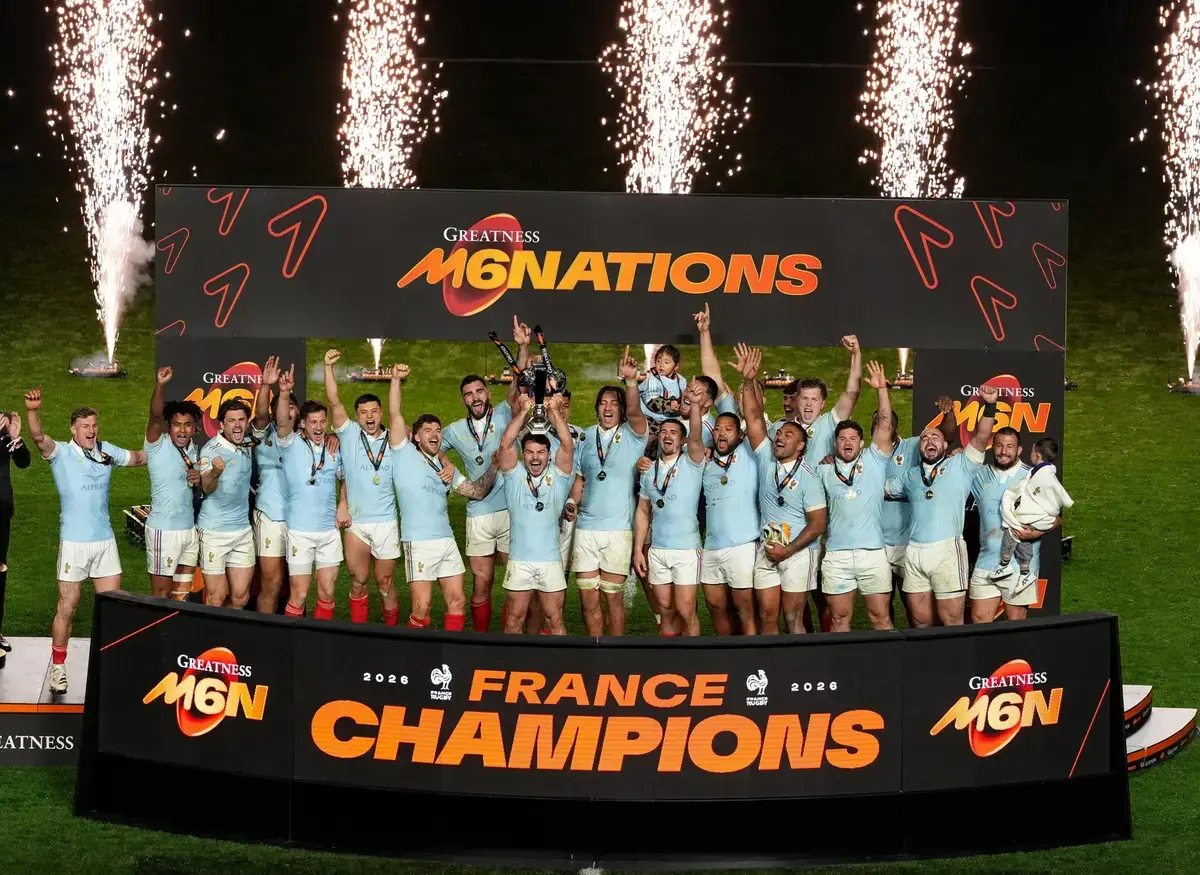
Thomas Ramos drilled a nerveless 50-metre penalty through the Paris night with the clock in the red to secure France back-to-back Six Nations titles in one of the most extraordinary championship deciders ever witnessed. In a match that defied logic and exhausted emotions, England’s heroic comeback fell agonisingly short as Louis Bielle-Biarrey’s four-try masterclass helped Les Bleus edge a 94-point thriller 48–46 at a delirious Stade de France.
The victory, France’s eighth Six Nations title since the tournament expanded in 2000, came at Ireland’s expense after Andy Farrell’s side had earlier beaten Scotland to go top of the table. For England, despite producing their finest performance of a wretched campaign, the defeat extended their losing streak to four matches and confirmed their worst Six Nations finish in history.
Key moments
7 mins – TRY FRANCE: Louis Bielle-Biarrey latches onto Thomas Ramos’s grubber kick to open the scoring after Elliot Daly steps up in defence, allowing the ball to bounce kindly for the French winger. Ramos converts. (France 7–0 England)
10 mins – TRY ENGLAND: Immediate response as slick handling sees the ball move through Fin Smith and Elliot Daly to Tom Roebuck, who finishes well in the corner for his third try of the tournament. F Smith misses the conversion. (France 7–5 England)
13 mins – TRY FRANCE: Matthieu Jalibert’s perfectly weighted grubber kick allows Bielle-Biarrey to collect and score his second. Ramos converts. (France 14–5 England)
18 mins – TRY ENGLAND: Ben Spencer’s grubber kick causes chaos as Théo Attissogbe spills under pressure, allowing Cadan Murley to pounce and score. F Smith misses the conversion. (France 14–10 England)
22 mins – PENALTY FRANCE: Ramos slots from in front of the posts after England are penalised for offside. (France 17–10 England)
26 mins – TRY ENGLAND: Ollie Chessum powers over from close range after England’s 13-man driving maul rumbles 20 metres downfield. F Smith converts. (France 17–17 England)
34 mins – TRY ENGLAND: Chessum’s offload releases Alex Coles to score England’s bonus-point try down the blindside. F Smith’s conversion falls off the tee but he calmly drop-kicks it through the posts. (France 17–24 England)
38 mins – PENALTY ENGLAND: F Smith slots an easy kick in front of the posts. (France 17–27 England)
40+6 mins – PENALTY TRY FRANCE: Ellis Genge is shown a YELLOW CARD for collapsing the maul on the French try line. Penalty try awarded. (France 24–27 England)
Half-time: France 24–27 England. A breathless first half sees England secure a bonus point inside 35 minutes despite trailing early. Ollie Chessum and Ben Spencer outstanding for the visitors, while Bielle-Biarrey’s double keeps France in touch. England will start the second half a man down with Genge in the sin-bin.
42 mins – TRY FRANCE: With England down to 14, France’s attack clicks immediately. Antoine Dupont’s looping pass finds Bielle-Biarrey who dots down in the corner for his hat-trick and France’s bonus point. Ramos converts. (France 31–27 England)
48 mins – TRY FRANCE: Dupont takes a quick tap penalty and fires a pass to Attissogbe who scores in the corner. Ramos converts. (France 38–27 England)
51 mins – TRY ENGLAND: Chessum produces the individual moment of the match, intercepting Jalibert’s pass inside his own half and galloping 55 metres to score his second. F Smith misses the conversion. (France 38–32 England)
57 mins – TRY ENGLAND: Marcus Smith, on for his 50th cap, darts through a gap after sustained pressure and converts his own try to put England back in front. (France 38–39 England)
65 mins – TRY FRANCE: Bielle-Biarrey chases Dupont’s kick over the top, wins the race from 60 metres and scores his fourth try of the match to break his own championship record with nine tries in a single tournament. Ramos converts. (France 45–39 England)
72 mins – YELLOW CARD FRANCE: Demba Bamba shown yellow for driving early at the lineout as French discipline crumbles under sustained English pressure.
77 mins – TRY ENGLAND: With France down to 14, Tommy Freeman picks a perfect line to crash through the French defence and score under the posts. M Smith converts to put England ahead with three minutes remaining. (France 45–46 England)
80+2 mins – PENALTY FRANCE: With the clock in red, France win a penalty near halfway for a high tackle. After Maro Itoje is penalised for a deliberate knock-on attempting to kill the play, Ramos steps up from 50 metres and drills the kick through the posts to win the championship. (France 48–46 England)
Full-time: France 48–46 England
Match report
Where had this England been? The question hung in the Parisian air as Steve Borthwick’s side, unrecognisable from the team that had stumbled to defeats against Scotland, Ireland and Italy, took France apart for long stretches of a contest that will be spoken of in reverent tones for decades.
After an elaborate pre-match ceremony featuring riders on horseback, pyrotechnics and laser projections to mark 120 years of Le Crunch, the two teams served up a spectacle worthy of any era of their storied rivalry. France emerged in a specially designed pale blue jersey commemorating the anniversary – a decision that created something of a kit clash with England’s white shirts but added to the sense of occasion.
The tone was set within seconds. England signalled their intent early when Seb Atkinson grounded the ball from Daly’s bobbling grubber kick in the opening minute, only for the try to be chalked off after a knock-on was spotted in the build-up from Tommy Freeman. It was a reprieve France immediately exploited.
With England’s backline rushing up in defence, tight and narrow, Ramos stabbed a kick through for Bielle-Biarrey to chase. The ball bounced perfectly for the France wing, who stepped Cadan Murley with ease to score and complete his remarkable feat of a try in every championship match for successive Six Nations campaigns. At just 22 years old, the Bordeaux Bègles speedster was already rewriting the record books.
But unlike in previous rounds, where early setbacks had led to collapse, England responded with ferocity and ambition. Attacking down both touchlines with a pace and purpose absent from their earlier performances, they struck back within three minutes. A well-judged grubber kick pinned France back, and when possession was recycled, Fin Smith attacked the line before Elliot Daly swung a long pass wide. Tom Roebuck, on his third start of the tournament, finished expertly in the corner despite the attention of Bielle-Biarrey.
The match had found its rhythm – or rather, its lack of one. Both teams seemed committed to attacking with abandon, defensive solidity sacrificed at the altar of entertainment. Jalibert dropped the ball onto his left foot from a right-hand scrum, and as England again honey-potted towards him, Bielle-Biarrey was over for his second. Two shots, two kills for the French winger.
France targeted Murley again with a kick into the corner, the ball bouncing awkwardly. The Harlequins wing almost lost it to Jalibert, both men having hands on as the ball was grounded. The French thought it was a try; the referee disagreed and play was brought back for a penalty, kicked by Ramos to extend the lead to 17–10.
England’s response demonstrated the character Maro Itoje had demanded in the build-up. Ben Earl and Ellis Genge drove them deep into French territory with powerful carries, before Ben Spencer turned France with a short kick around the fringes. Théo Attissogbe spilled the ball as he hit the deck, and Murley swooped to touch down – a predatory finish that brought Steve Borthwick, in a rare display of emotion, slamming his hand down on his desk in celebration.
For the first time in the championship, England’s pack began to snarl. The decision to recall Ollie Chessum at blindside flanker, adding extra heft in the back row and providing an additional lineout option, paid immediate dividends. England launched two monster mauls, driving France back onto their own try line. After the second drive rumbled 20 metres downfield with 13 players involved, Chessum spotted a gap and crashed over from close range to level the scores at 17–17. A rendition of Swing Low Sweet Chariot went up from the English contingent as Smith’s conversion sailed through. The Stade de France had been stunned into silence.
England’s forwards went mauling again, picking up another penalty advantage. But they didn’t need it. Quick ball saw them attack the short side, a floated wide pass finding Chessum who popped an inside ball to the supporting Alex Coles. The lock trundled over on the blind side for his first international try – England’s fourth of the half, securing the bonus point inside 35 minutes.
What happened next epitomised England’s newfound composure. As Smith lined up the conversion, the ball toppled from the tee. Without hesitation, the young fly-half picked it up and calmly drop-kicked it through the posts. A further penalty made it 27–17. Against all expectation, England led by 10 points with half-time approaching.
Yet the ill-discipline that has plagued England throughout this championship reared its head once more. France advanced down the left touchline, and with a penalty under England’s posts, they took the decision to kick for the corner and flex their own mauling muscles. Referee Nika Amashukeli judged that Genge had illegally collapsed the French maul a metre from the try line, awarding a penalty try and dispatching the prop to the sin-bin. It was England’s ninth card of the campaign – equalling the Six Nations record held by the Italy side that lost every match in 2002. Borthwick was visibly exercised by the decision as his coaching staff headed back to the dressing room.
The start of the second half vindicated his concern. France, sensing blood with England down to 14 men, immediately clicked into gear. Within 90 seconds of the restart, the hosts had carved the visitors open through the middle. Dupont’s looping pass found Bielle-Biarrey, and the winger dotted down in the corner for his hat-trick – and France’s crucial bonus point.
With England still down to 14 and visibly rattled, France pressed their advantage. The hosts won a penalty at the first Genge-less scrum, and from the quick tap, Dupont fired a long pass to Attissogbe, who cruised in on the right wing. Ramos’s conversion made it 38–27. Including the penalty try, France had scored 21 points while England were down to 14 men.
Lesser teams would have folded. Instead, Chessum produced the individual moment of the match. Reading Jalibert’s pass brilliantly, the Leicester flanker intercepted inside his own half and galloped clear with the pace of a back, covering 55 metres before touching down. Instead of turning to score under the posts, he gave it the big celebration and touched down in the corner – a decision that would prove significant when Smith’s conversion drifted wide.
The introduction of Luke Cowan-Dickie and Jack van Poortvliet from the bench brought fresh energy, but it was Marcus Smith, entering for his 50th cap to rapturous applause from the travelling support, who proved transformative. After patient build-up play through multiple phases, the Harlequins playmaker spotted a gap and danced around Demba Bamba before touching down and converting his own try. England led 39–38 with 25 minutes remaining. In Dublin, Irish supporters dared to dream.
But France still had their trump card. The passage that led to Bielle-Biarrey’s fourth try would prove among the most controversial of the match. England believed they had penalty advantage after François Cros slapped down Van Poortvliet’s pass; the players were told as much on the pitch. Smith therefore played loosely, dabbing a kick through the French defence which Ben Earl subsequently knocked on.
What England didn’t know was that the TMO had changed the call to knock-on advantage. When they kicked the ball, they lost that benefit. Ramos and Dupont kept the ball alive, and the French captain launched a huge left-footed kick downfield. From 60 metres out, Bielle-Biarrey chased it down with devastating pace, winning the race to score his fourth try and break his own championship record with nine in a single tournament. Ramos’s conversion made it 45–39.
England refused to yield. Their pressure told as French discipline crumbled, with Bamba sin-binned for driving early at a lineout. Luke Cowan-Dickie was held up over the line when England had acres of space in which to score – a moment of frustration that might have defined lesser teams.
Instead, from the restart, replacement Chandler Cunningham-South trucked the ball up and England built patiently, working wide into the French 22. Then, much like Daly’s match-winning try at Twickenham a year earlier, Freeman ghosted through a gap in the French defence and crashed over under the posts. Marcus Smith’s conversion put England ahead with three minutes remaining. The Stade de France fell into stunned silence.
What followed was pure theatre. Chessum claimed the restart and Van Poortvliet kicked long, but Jalibert summoned one final moment of magic, slicing through the English chase to pin the visitors back deep in their own territory. Under intense pressure, England conceded a penalty for a high tackle – a call conspicuous by the absence of a replay on the big screens. As France advanced into the England half, Itoje, desperate to kill the play, was penalised for a deliberate knock-on. The captain knew immediately what he had done. The championship, the hopes of three nations, now rested on Ramos’s shoulders.
The Stade de France held its breath. From 50 metres out, on the angle, the man widely considered rugby’s greatest kicker stepped up to the tee. The ball sailed through the uprights. France were champions once more.
What they said
France fly-half Matthieu Jalibert captured the emotion: “C’est beaucoup d’émotions, c’est le dénouement parfait. On s’est rendus le match compliqué, chacun a eu ses périodes. À l’entame de la deuxième période, on sentait qu’on avait pris le dessus et il y a eu ce fait de jeu, cette interception qui les remet dans le match. On a baissé d’intensité après, été trop indiscipliné, mais c’est le caractère de cette équipe. And féliciter Tom [Ramos], who has ‘des grosses c…’ as we say in the jargon.”
France head coach Fabien Galthié praised his match-winners: “We’re very, very lucky that we have maybe the best kicker around. And Louis [Bielle-Biarrey] – he’s an unbelievable weapon. His contribution has been unbelievable. I’m short of words to describe him. I’m certain he will be chosen as the best player in the tournament. He’s following in Antoine’s wake.”
England head coach Steve Borthwick could not hide his frustration: “I’m really disappointed for the players and supporters – it was so close to being a special day. We came into the tournament with high aspirations and we’re really disappointed we haven’t been able to meet those targets. I know the supporters are hurting as well. I sense a determination to make sure this hurt makes the team stronger in the future.”
On the officiating, Borthwick added: “I think some of the decisions are debatable. I thought that one against Ellis to give a penalty try – I don’t follow it. I’ll ask for it to be explained to me. The players on the pitch were told it was a penalty advantage. Unfortunately, what happened in the background is the TMO changed it to a knock-on advantage. The players were unaware of it and France go down the other end and score a try. World Rugby needs to look at that kind of situation.”
England captain Maro Itoje remained defiant: “I truly believe this team is going places. We’ve had a tough couple of games, but I think we showed the spirit of this team. In sport, you don’t want to go through the experiences that we went through over the last four games. But we will learn from our experiences and be better for it.”
Records and milestones
The 94 points scored made this the third-highest-scoring Six Nations match in history, behind only England v Italy 2001 (103 points) and Italy v France 2025 (97 points). France’s 30 tries across the championship equalled their own record set last year, while Bielle-Biarrey’s nine tournament tries broke his own record of eight from 2025.
The winger’s four-try haul made him only the second player to achieve the feat in Six Nations history after Chris Ashton in 2011. With 29 tries in just 27 internationals, and 18 in the Six Nations alone, Bielle-Biarrey has surpassed Damian Penaud as France’s all-time leading try scorer in the championship era – despite playing half as many matches.
For France, the victory secured back-to-back titles for the first time since 2006–07, and their eighth Six Nations crown since 2000 – moving them ahead of England’s seven in the same period. Thomas Ramos also became France’s all-time leading points scorer, surpassing Frédéric Michalak.
For England, the defeat confirmed their worst ever Six Nations campaign – one win from five matches, a record-equalling nine cards, and four consecutive losses for the first time in 50 years. Yet their performance in Paris may have saved Borthwick’s job, at least temporarily, ahead of a summer tour to South Africa that could prove decisive for his future.
As confetti rained down on the Stade de France and Antoine Dupont lifted the trophy alongside Gregory Alldritt, France celebrated a title thoroughly deserved despite that near-miss at Twickenham. For Ireland, watching from Dublin, and for England, left in despair on the pitch, this was a night that encapsulated everything magnificent and maddening about rugby’s oldest international championship.
Match details
France: 15 Thomas Ramos, 14 Théo Attissogbe, 13 Pierre-Louis Barassi, 12 Yoram Moefana, 11 Louis Bielle-Biarrey, 10 Matthieu Jalibert, 9 Antoine Dupont (c), 8 Charles Ollivon, 7 Temo Matiu, 6 François Cros, 5 Emmanuel Meafou, 4 Thibaud Flament, 3 Dorian Aldegheri, 2 Julien Marchand, 1 Jean-Baptiste Gros.
Replacements: 16 Peato Mauvaka, 17 Rodrigue Neti, 18 Demba Bamba (yellow card 72), 19 Hugo Auradou, 20 Mickaël Guillard, 21 Joshua Brennan, 22 Baptiste Serin, 23 Émilien Gailleton.
England: 15 Elliot Daly, 14 Tom Roebuck, 13 Tommy Freeman, 12 Seb Atkinson, 11 Cadan Murley, 10 Fin Smith, 9 Ben Spencer, 8 Ben Earl, 7 Guy Pepper, 6 Ollie Chessum, 5 Alex Coles, 4 Maro Itoje (c), 3 Joe Heyes, 2 Jamie George, 1 Ellis Genge (yellow card 40).
Replacements: 16 Luke Cowan-Dickie, 17 Bevan Rodd, 18 Trevor Davison, 19 Chandler Cunningham-South, 20 Sam Underhill, 21 Henry Pollock, 22 Jack van Poortvliet, 23 Marcus Smith.
France 48 (Tries: Bielle-Biarrey 4, Attissogbe, penalty try; Conversions: Ramos 5/6; Penalties: Ramos 2/2)
England 46 (Tries: Roebuck, Murley, Chessum 2, Coles, M Smith, Freeman; Conversions: F Smith 2/5, M Smith 2/2; Penalties: F Smith 1/1)
Half-time: 24–27
Venue: Stade de France, Paris (att: 78,728)
Referee: Nika Amashukeli (Georgia)
Assistant referees: Andrew Brace (Ireland), Hollie Davidson (Scotland)
TMO: Brett Cronan (Australia)
Share this:
Six Nations
Wales end Six Nations drought with emphatic victory over Italy
Wales end 1,099-day Six Nations winless run as Aaron Wainwright scores twice in commanding 31-17 victory over Italy at the Principality Stadium.
Share this:
Published
3 days agoon
14th March 2026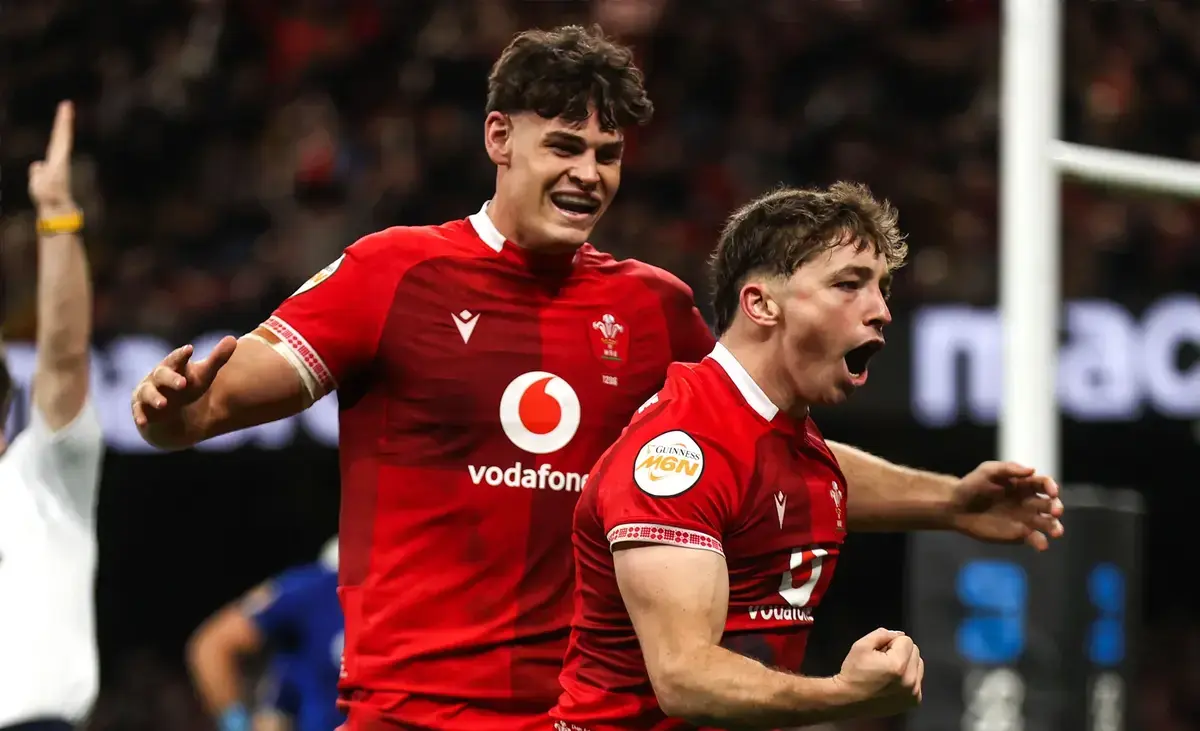
Wales finally ended their agonising 1,099-day Six Nations winless run with a commanding 31-17 bonus-point victory over Italy at the Principality Stadium, Aaron Wainwright scoring twice in a first-half blitz that left the Azzurri shell-shocked and a crowd of nearly 70,000 delirious.
Key moments
11 mins – PENALTY MISSED Italy: Paolo Garbisi pulls his kick wide from 28 metres after Ellis Mee is penalised for offside — a miss that would prove costly as Wales immediately seized control. (Wales 0–0 Italy)
15 mins – TRY Wales: Aaron Wainwright powers through the Italian defence with a barnstorming carry, bouncing off three would-be tacklers before grounding under the posts. Dan Edwards converts. (Wales 7–0 Italy)
26 mins – TRY Wales: Wainwright doubles his tally, peeling off from the back of a driving maul and burrowing low to score in the corner after Wales win a penalty and go for the lineout. Edwards adds a superb touchline conversion. (Wales 14–0 Italy)
30 mins – TRY Wales: A textbook rolling maul from a lineout sees captain Dewi Lake driven over to score at the back after the Wales forwards, joined by several backs, create an unstoppable surge. Edwards converts from wide on the right. (Wales 21–0 Italy)
37 mins: Tomas Francis departs with injury. Archie Griffin replaces at tighthead prop.
Half-time: Wales 21–0 Italy. A dominant first-half display from Wales, who converted all three entries into the Italy 22 into tries. Wainwright outstanding with two scores, while the home pack’s physicality overwhelmed the Azzurri at the breakdown and in the driving maul.
45 mins – TRY Wales: After 13 phases of patient build-up inside the Italian 22, the ball is shifted right to Dan Edwards who identifies a gaping hole and slices through untouched to score. Edwards converts his own try to secure the bonus point. (Wales 28–0 Italy)
48 mins – DROP GOAL Wales: From an Italy goalline dropout, Edwards catches the ball beyond the Italian ten-metre line and calmly slots a confident drop goal from 45 metres. The crowd erupts. (Wales 31–0 Italy)
52 mins – TRY Italy: Italy’s rolling maul finally gains traction as replacement hooker Tommaso Di Bartolomeo is driven over from close range after Federico Ruzza wins clean lineout ball. Archie Griffin is shown a YELLOW CARD for attempting to bring down the maul illegally. Paolo Garbisi converts. (Wales 31–7 Italy)
69 mins – TRY Italy: Tommaso Menoncello makes a trademark break through midfield and offloads to Tommaso Allan, who is initially held up near the right corner. Italy recycle quickly and shift the ball left, where Garbisi finds Allan in space to dive over. Garbisi’s conversion attempt misses. (Wales 31–12 Italy)
73 mins – TRY DISALLOWED Italy: Monty Ioane appears to score in the corner, but Ellis Mee’s covering tackle forces Ioane’s left foot to graze the touchline before grounding. The TMO rules no try after multiple replays.
77 mins – TRY DISALLOWED Italy: Leonardo Marin stretches for the line after a break from the base of a ruck, but James Botham’s outstretched leg prevents a clean grounding. TMO rules knock-on.
80 mins: Aaron Wainwright named player of the match.
80+1 mins – TRY Italy: Consolation score for Italy as Garbisi finishes a short-side raid from a scrum in the Wales 22, taking Lorenzo Cannone’s offload to dot down in the corner. Garbisi misses the conversion. (Wales 31–17 Italy)
Full-time: Wales 31–17 Italy
Match report
For a crowd that has endured the leanest of times in Welsh rugby history, this was a cathartic afternoon in Cardiff. Steve Tandy’s side, so brutally exposed in opening defeats to England and France where they conceded 102 points and 15 tries, delivered the performance their recent progress against Scotland and Ireland had promised. By the 48th minute, they led 31-0 and the contest was over.
Italy, arriving in Wales having beaten England for the first time in their history just seven days earlier, looked like a side that had played their cup final the week before. Gonzalo Quesada’s men struggled to handle the aggression of the home side from the opening whistle, losing collisions at the breakdown and finding their usually reliable lineout under pressure. Their dream of winning three matches in a single Six Nations campaign for the first time was extinguished long before they mounted a late consolation fightback.
The warning signs came early. Garbisi missed a straightforward penalty in the 11th minute after Mee was penalised for offside, and Wales made them pay almost immediately. A huge relieving kick from Louis Rees-Zammit was chased tenaciously by Mee and flanker Alex Mann, forcing scrum-half Alessandro Fusco into an error that handed Wales a turnover. Edwards kicked to the corner, skipper Lake peeled around the back of the lineout and launched Mee in midfield, and from the next phase Tomos Williams picked out the charging Wainwright. The number eight played skittles with three would-be tacklers, bouncing off each before crashing over at the posts. Edwards converted and the Principality Stadium stirred to life.
Wales went to the corner again 11 minutes later after Italy were penalised at the breakdown. This time the driving maul did the damage. Ben Carter won the lineout at the front, Italy contested the throw but were brushed aside as a ferocious Welsh drive rumbled towards the line. Wainwright picked from the base with the maul halted a metre short and burrowed low to force his way over for his second. Edwards’ touchline conversion was nerveless and Wales led 14-0.
The Principality Stadium was rocking now, and Wales were not finished. Another turnover — this time Rhys Carre winning the jackal and celebrating harder than he had after his wonder try against Ireland the previous week — provided field position. Another penalty, another kick to the corner, another driving maul. This time the backs joined the forwards to create an unstoppable surge, and captain Lake plunged over at the back. Edwards converted again. Three entries into the Italy 22, three tries. Clinical, ruthless, professional.
Wales lost tighthead prop Tomas Francis to injury before the break, but that was the only blemish on a remarkable half. They had smashed Italy up front, won the breakdown battle decisively, and been precise in execution. The hosts led 21-0 at the interval and Hymns and Arias rang around the ground with a gusto not heard in Cardiff for years.
Any hope Italy harboured of mounting a second-half comeback evaporated within seven minutes of the restart. Wales worked through 13 phases inside the Italian 22, the heavy artillery of Wainwright, Lake and Carre making hard yards and dragging in defenders. Williams gave the ball quick tempo, and when it was finally shifted right, Edwards spotted a gaping hole in the Italian defensive line and glided through untouched. He dived jubilantly over the line, converted his own try, and Wales had the bonus point.
Then came the moment that encapsulated Edwards’ growing confidence. From an Italy goalline dropout that the visitors had been forced to take, Edwards caught the ball beyond the Italian ten-metre line and calmly dropped a goal from 45 metres. It was audacious, it was brilliant, and it was 31-0. “You’re probably thinking ‘what are you doing?’ And then he absolutely buries it,” Tandy admitted afterwards. The Ospreys fly-half finished with 16 points — his best performance in a Wales shirt by some considerable distance.
Italy finally showed some pride in the final quarter. Di Bartolomeo was driven over from a rolling maul in the 52nd minute after Ruzza won clean lineout ball, with Griffin sin-binned for cynically attempting to collapse the maul. Garbisi converted and the Azzurri had something to cling to.
But Wales’ improved defensive work — so evident in Dublin the previous week, where they had pushed Ireland to the wire — held firm during Griffin’s absence. Carre and Botham made huge hits, Mee and Botham combined to hold up an Italy attacker over the line, and when Menoncello looked certain to score, Josh Adams produced a wonderfully defiant tap tackle to deny him.
Allan eventually crossed in the 69th minute after another break by the dangerous Menoncello, but it was mere consolation. Ioane thought he had scored moments later, only for Mee’s desperate scrambling tackle to force the wing’s foot into touch before grounding — it was so close it required numerous replays, but it was that sort of day for Italy. Marin was also denied by the TMO after Botham’s outstretched leg prevented a clean grounding.
Garbisi did cross in the final act to make it 31-17, finishing a short-side raid after Cannone’s offload, but by then the result had long been secured. The final whistle was greeted with scenes of jubilation rarely witnessed at the Principality Stadium in recent years.
Wales still finish bottom of the table for a third consecutive year, but this felt different. The wooden spoon comes without the whitewash, and the upward trajectory throughout the tournament has been unmistakable. They have found emerging talents in Edwards and centre Eddie James, rediscovered leaders in Lake and Wainwright, and shown a physicality that had been painfully absent in the opening rounds.
For Italy, the dream of their greatest-ever Six Nations fell short at the final hurdle. Two wins against Scotland and England represent genuine progress, but Quesada will know his side were outmuscled and outfought when it mattered most. They finish fourth, their highest placing since 2013, but Cardiff provided a sobering reminder of the work still to be done.
As the final whistle blew and the crowd celebrated, it was hard not to feel this was a day about more than just one result. Welsh rugby remains in turmoil off the field, with governance battles and regional uncertainty continuing to rage. But for one afternoon at least, the Principality Stadium rocked again. Cardiff is singing once more.
What they said
Steve Tandy was emotional afterwards: “It was a massively emotional day. A win in the Six Nations has been a long time coming and I am overwhelmed with pride by what this group delivered. I’ve always said it’s never been a question of desire, physicality or work ethic in this group. It’s just getting them to understand how far they can go. England was a massive lesson for us — we didn’t impose anything of what we wanted to do and panicked with our discipline. Since then the boys have grown every week, have got a bit of confidence and had a bit of cohesion as a team.”
Captain Dewi Lake, who has endured countless difficult post-match interviews, finally had happier reflections: “We hope we have restored some faith in the jersey and into what this group can do. I am overjoyed for the boys because of how hard they have worked. This group has gone through a lot of emotionally tough things recently, on and off the field. The scoreline was similar to half-time against Scotland and to come out and score first, to never give up on the moment, to stay switched on and stay in every play — that shows how we have learned.”
Player of the match Aaron Wainwright, who has been Wales’ standout performer throughout the tournament, struck a measured tone: “When you look at our first 20 minutes against England and France, that really let us down — yellow cards and penalties. Since then our discipline has been on point, we’ve been more accurate with the ball in hand. In the first half today everything fell into place. It’s not ideal to finish bottom of the table, but the growth is there.”
Full-back Louis Rees-Zammit spoke of the culture Tandy has instilled: “It’s unbelievable. We’ve trusted each other, trusted the system and the coaches. It takes time, but credit to the players, we’ve bought into every training session. We’ve got better in every game. We have an amazing culture now.”
Italy head coach Gonzalo Quesada offered no excuses: “Not scoring early when it was 0-0 — with Menoncello’s break and then missing the penalty — conditioned the start of the game. They had great intensity in the first half and that made the difference. We played a real match in the second half but Wales were very strong and deserved the victory. No alibis — Wales did what they needed to do to win today.”
Italy captain Michele Lamaro was frustrated but philosophical: “They were maybe more courageous than us in the first half and that made the difference. We had an opportunity to complete our objective of having the best Six Nations ever for Italy, and we let it slip through some shortcomings. In a few weeks I’ll realise what a great Six Nations we’ve had — beating a great Scotland and an England who came in with twelve high-level wins in 2025 — but today I’m struggling not to be disappointed.”
Match details
Wales 31 (Tries: Wainwright 15, 26, Lake 30, Edwards 45; Conversions: Edwards 4/4; Drop goal: Edwards 48)
Italy 17 (Tries: Di Bartolomeo 52, Allan 69, Garbisi 80+1; Conversions: Garbisi 1/3)
Half-time: 21–0
Wales: 15 Louis Rees-Zammit, 14 Ellis Mee (Murray 78), 13 Eddie James, 12 Joe Hawkins, 11 Josh Adams, 10 Dan Edwards (Evans 68), 9 Tomos Williams (Hardy 78), 1 Rhys Carre (Smith 51), 2 Dewi Lake (capt, Elias 45), 3 Tomas Francis (Griffin 38), 4 Dafydd Jenkins, 5 Ben Carter (Beard 64), 6 Alex Mann (Cracknell 71), 7 James Botham, 8 Aaron Wainwright.
Yellow card: Griffin 52
Italy: 15 Lorenzo Pani (Allan 63), 14 Louis Lynagh, 13 Juan Ignacio Brex (Marin 70), 12 Tommaso Menoncello, 11 Monty Ioane, 10 Paolo Garbisi, 9 Alessandro Fusco (Varney 54), 1 Danilo Fischetti (Spagnolo 45, Fischetti 78), 2 Giacomo Nicotera (Di Bartolomeo 45, Nicotera 62), 3 Muhamed Hasa (Zilocchi 45), 4 Niccolò Cannone (Favretto 70), 5 Federico Ruzza, 6 Michele Lamaro (capt), 7 Manuel Zuliani, 8 Lorenzo Cannone (Odiase 63).
Venue: Principality Stadium, Cardiff
Attendance: 69,775
Referee: Christophe Ridley (RFU)
Assistant referees: Matthew Carley (RFU), Eoghan Cross (IRFU)
TMO: Mike Adamson (SRU)
Bunker: Eric Gauzins (FFR)
Player of the match: Aaron Wainwright (Wales)
Share this:


Trending
-

 New Zealand2 weeks ago
The former teacher now tasked with reviving the All Blacks
-

 Six Nations2 weeks ago
Ireland survive Wales scare to keep Six Nations hopes alive
-

 Super Rugby Pacific3 weeks ago
Crusaders storm back to claim crucial win over Chiefs in Hamilton
-

 International2 weeks ago
England’s backline injury crisis deepens ahead of Italian job
-

 New Zealand2 weeks ago
Former Wallabies boss wins race to be next All Blacks coach
-

 Six Nations1 week ago
Oscar Jégou cited for alleged eye gouge after Scotland loss
-

 Six Nations1 week ago
Sensational Italy make history with first victory over England
-

 Super Rugby Pacific3 weeks ago
Super Rugby Pacific 2026: Round three preview