Six Nations
Six things we learned from round 4 of the Guinness Six Nations
Published
2 hours agoon
Round four of the 2026 Guinness Six Nations delivered one of the most extraordinary weekends in championship history. Scotland’s sensational 50-40 victory over France at Murrayfield has blown the title race wide open, Italy claimed their first-ever win over England in Rome, and Ireland survived a spirited Wales to keep their slim hopes alive. What was billed as France’s coronation became Scotland’s coming-of-age party, while England’s crisis deepened to unprecedented levels with a historic defeat to the Azzurri. The weekend produced 13 tries in Edinburgh alone, heartbreak in Rome, and renewed hope in Dublin. Here are six things we learned from a round that turned the championship completely on its head.
Now or never for Scotland as Dublin showdown looms
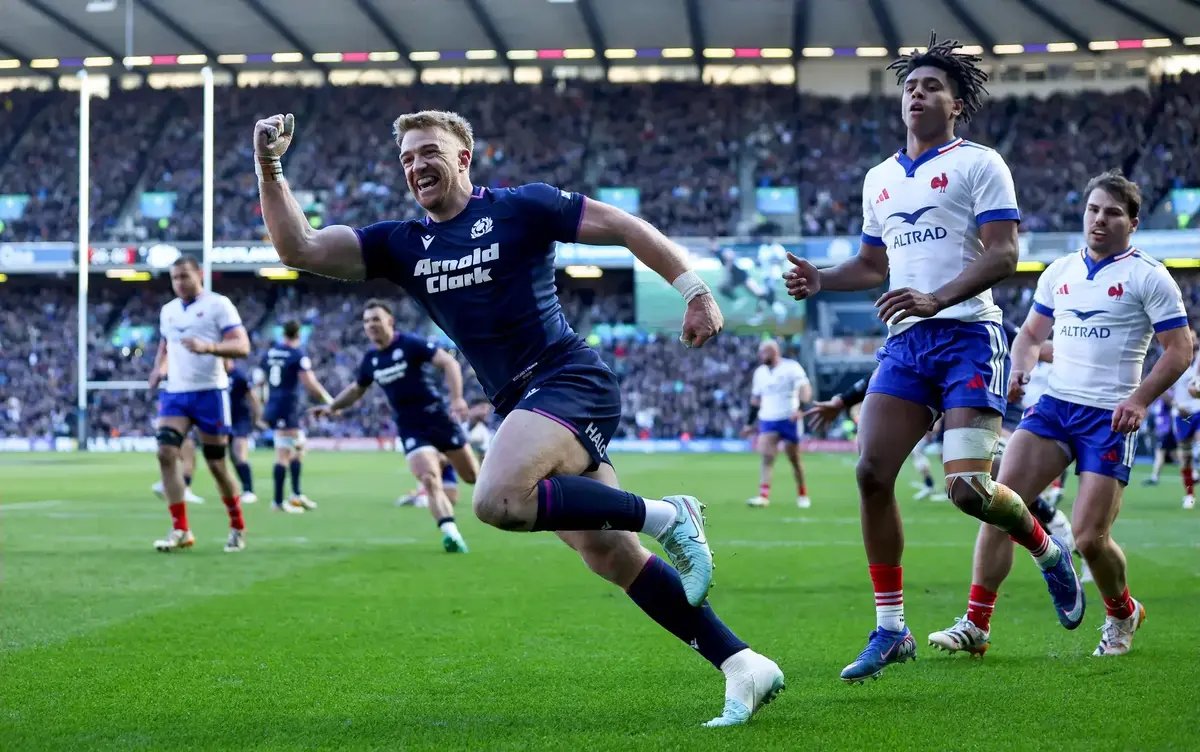
This is it. Scotland’s moment. After years of unfulfilled promise, heartbreaking near-misses and the perpetual burden of “nearly men” status, Gregor Townsend’s side have manufactured the opportunity they’ve craved for a generation. The 50-40 demolition of France – seven tries, a half-century of points against the defending champions – wasn’t just a great performance. It was a statement that Scotland finally possess the mental fortitude to match their undeniable talent. Darcy Graham became Scotland’s all-time leading try scorer with his 36th Test try, Kyle Steyn grabbed two including a devastating interception of an Antoine Dupont howler, and the pack dominated the collisions in a way Scottish forwards simply haven’t done against tier-one opposition. “All I asked is for the group to believe, and we believe now,” said captain Sione Tuipulotu, his voice thick with emotion. The belief is there. The momentum is there. Home advantage for the final weekend is there. But now comes the hard part: Scotland must travel to Dublin and beat Ireland – something they haven’t done under Townsend in 11 attempts – to have any chance of a first Six Nations title. Win with a bonus point and deny France theirs in Paris, and Scotland would be champions. It’s a big ask. Ireland haven’t lost at the Aviva in the Six Nations since 2021. But Scotland have never had a better chance, never had more momentum, never believed more. Graham was emphatic: “Confidence is right up there now; probably the most it’s been. It’d be nice to go to Ireland and get that win.” Now or never. No more excuses. No more near-misses. This is Scotland’s time – if they’re brave enough to seize it.
France’s late tries could prove the difference in a thrilling title race
At 47-14 down with 15 minutes remaining at Murrayfield, France’s championship dreams looked shattered. Their Grand Slam was dead. Their aura of invincibility was in tatters. And their title hopes were hanging by a thread. Then came one of the most important 15 minutes in French Six Nations history. Four tries – through Antoine Dupont, Thomas Ramos (twice) and Oscar Jegou – salvaged a losing bonus point that keeps France top of the table on points difference heading into the final weekend. It looked like damage limitation at the time, a consolation for the travelling support. But that bonus point could yet prove the difference between glory and despair. France now know exactly what they need: beat England with a bonus point in Paris on Saturday night and they’re champions, regardless of what Scotland do earlier in Dublin. Even without the bonus, victory should be enough given their superior points difference. “We are disappointed,” said head coach Fabien Galthié, “but we’re in a race to win the competition. We have a game in Paris. Saturday night at the Stade de France. We know we have to go through this.” The late rally that seemed meaningless as Scottish fans celebrated could yet define France’s season. Louis Bielle-Biarrey’s ninth consecutive Six Nations try-scoring game extended his record, Ramos became France’s all-time leading points scorer, and those late scores kept the dream alive. Had they finished on 47-14, France would need a perfect performance and hope for Scottish help. Instead, they control their own destiny. Sometimes in sport, it’s not about how you start or even how you perform for most of the match – it’s about having the composure and quality to salvage something when all seems lost. France found that quality when it mattered most. Now they must deliver when it matters even more.
England’s crisis is real and Steve Borthwick is running out of time
This isn’t hyperbole. This isn’t media hysteria. England are in genuine crisis, and Steve Borthwick’s position as head coach has become untenable. The 23-18 defeat to Italy at the Stadio Olimpico – England’s first loss to the Azzurri in 33 attempts dating back to 1992 – represents rock bottom for a regime that has lurched from bad to worse over three consecutive defeats. Three successive Six Nations losses. Historic humiliation in Rome. A trip to Paris against a France side playing for the championship still to come. This could finish as England’s worst-ever Six Nations campaign, and it’s hard to see how Borthwick survives such a catastrophic outcome. The manner of defeat was damning. Leading 18-10 with 20 minutes remaining against opponents they’d never lost to, England imploded through sheer indiscipline and poor leadership. Yellow cards for Sam Underhill (high tackle) and captain Maro Itoje (cynical slap-down) reduced them to 13 men at a crucial moment, and Italy struck through Leonardo Marin’s brilliant try created by Monty Ioane and Tommaso Menoncello. “Something is going on behind closed doors,” said Sam Warburton on BBC commentary. “This is not a camp which is all on the same page.” John Barclay was more brutal: “If England end up with one win in the Six Nations, looking at their resources and the players they have, it is almost impossible to perceive how you don’t look at a change [of coach].” Borthwick made nine changes after the Ireland debacle, then lost Tom Curry in the warm-up forcing further reshuffling. Nothing worked. The attack remained ponderous. The decision-making was poor. The discipline was awful. Tommy Freeman and Tom Roebuck scored tries, but they were mere consolations in a performance utterly devoid of cohesion or belief. The RFU issued a vote of confidence – “we remain fully committed to supporting them and the players” – which in sporting terms is the kiss of death. With just one win from four matches and facing France in Paris, England are staring at their worst Six Nations finish in history. The crisis is real, the pressure is mounting, and time is running out for Steve Borthwick.
Sensational Italy are finishing with a flourish
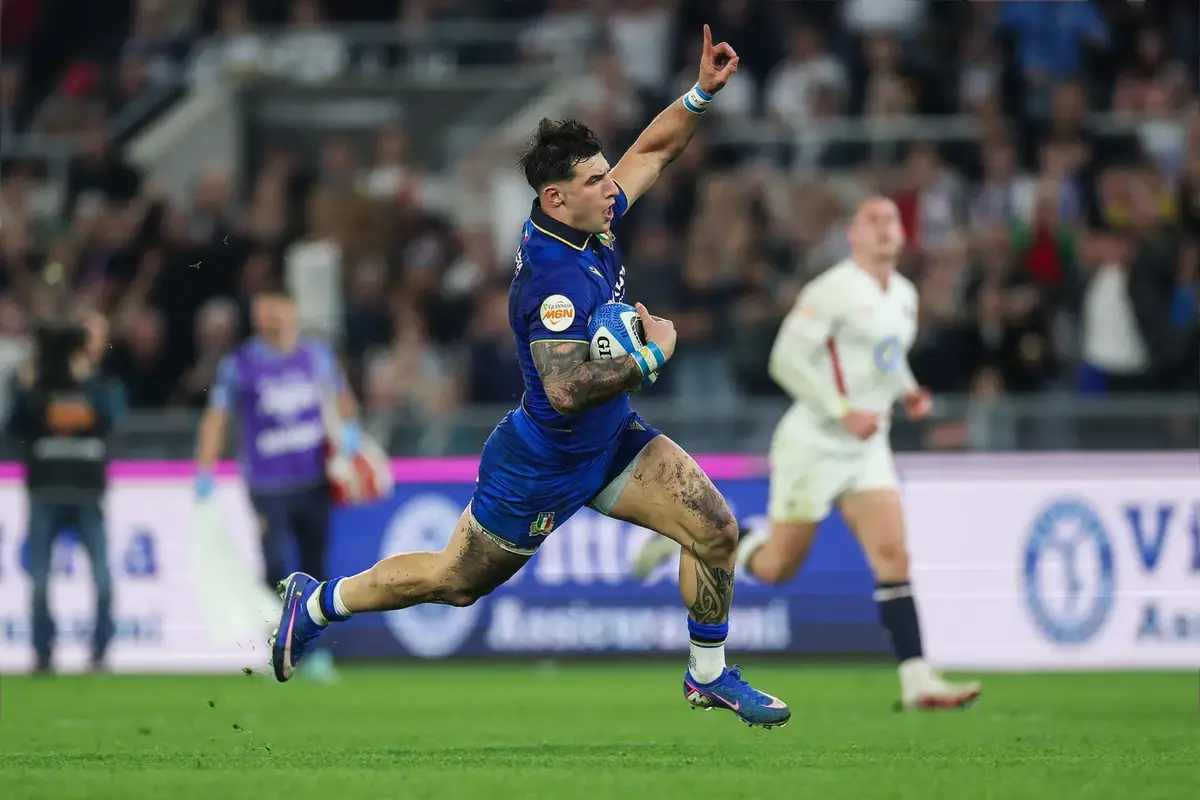
The Stadio Olimpico erupted. Disco lights flashed. Players collapsed to the turf in tears. Italy had done what 32 previous attempts couldn’t – they’d beaten England. The 23-18 victory completes Italy’s full set of Six Nations scalps and caps a remarkable transformation under Gonzalo Quesada that has been two years in the making. This wasn’t a fluke or a smash-and-grab. Italy fully deserved their historic win through ferocious defence (240 tackles made with Alex Mann putting in over 30), smart game management from Paolo Garbisi (five successful kicks from five attempts), and clinical finishing when opportunities arose. Tommaso Menoncello’s first-half try showcased his world-class ability – carving through Joe Heyes and Sam Underhill before rounding Elliot Daly from 40 metres – while the decisive score came from Italy’s most dangerous weapon: their ability to strike from anywhere when space opens up. With England down to 13 men, Garbisi’s cross-field kick found Ioane, whose brilliant offload released Menoncello, who in turn sent replacement Marin racing clear for a try that will be replayed for generations. “We stuck together and said, ‘this is the moment we really have to stick together,'” said captain Michele Lamaro, and that unity has been Italy’s greatest strength this tournament. They opened with a stunning win over Scotland, pushed Ireland desperately close in Dublin, and ran France to the wire in Lille before this crowning moment in Rome. The player of the match award went to Menoncello, who has established himself as one of the championship’s genuine stars and will join Toulouse next season as one of the most coveted centres in world rugby. With a trip to Cardiff to face Wales next weekend, Italy are now targeting a third victory that would represent their greatest-ever Six Nations campaign. Quesada has transformed Italian rugby from perennial whipping boys to legitimate mid-table competitors who can beat anyone on their day. The flourish is real, the momentum is building, and Italian rugby has never looked brighter.
Tandy is making a difference but Wales desperately need a win
Sixteen consecutive Test defeats. Fifteen straight Six Nations losses. The numbers continue to make grim reading for Welsh rugby, yet there were genuine signs of life in Dublin that suggest the corner – so often promised, never quite turned – might finally be approaching. Wales led Ireland 13-10 at half-time after defending ferociously and Rhys Carre scoring an outrageous solo try – the prop shrugging off Robert Baloucoune and dancing 30 metres to score his third try of the tournament. They trailed just 19-17 with a quarter to play after James Botham’s close-range effort, genuinely threatening to cause an upset that would have sent shockwaves through the championship. The improvement under Steve Tandy is undeniable. After opening with a 48-7 hammering by England, Wales have grown into the tournament with narrow defeats to Scotland (26-23) and now Ireland. The defensive intensity is back – they made 240 tackles in Dublin with Dafydd Jenkins, James Botham and Dewi Lake all making 20-plus. Dan Edwards is growing in confidence at fly-half. The scrum held its own against Ireland’s vaunted pack. And crucially, Wales are competing physically again in a way they haven’t for 18 months. “The win is coming, I can feel it, it is just around the corner,” insisted captain Lake afterwards, and watching this performance you could almost believe him. But “almost” doesn’t cut it in international rugby. Moral victories don’t end losing streaks. Wales need an actual win, and they need it desperately. They finish at home against Italy in a match that will define Tandy’s tenure and potentially the future direction of Welsh rugby. Win and they avoid a third consecutive wooden spoon while ending the losing streak that has become a national embarrassment. Lose to an Italy side flying high after beating England, and the crisis deepens to levels that may prove terminal for several careers. The improvement is visible. The fight is back. But until Wales actually win a match – 1,092 days and counting since their last Six Nations victory – all the progress in the world won’t ease the pain of that losing streak. Next Saturday in Cardiff, against an Italy team with history on their minds, is Wales’s moment. They must take it.
Would the real Ireland please stand up?
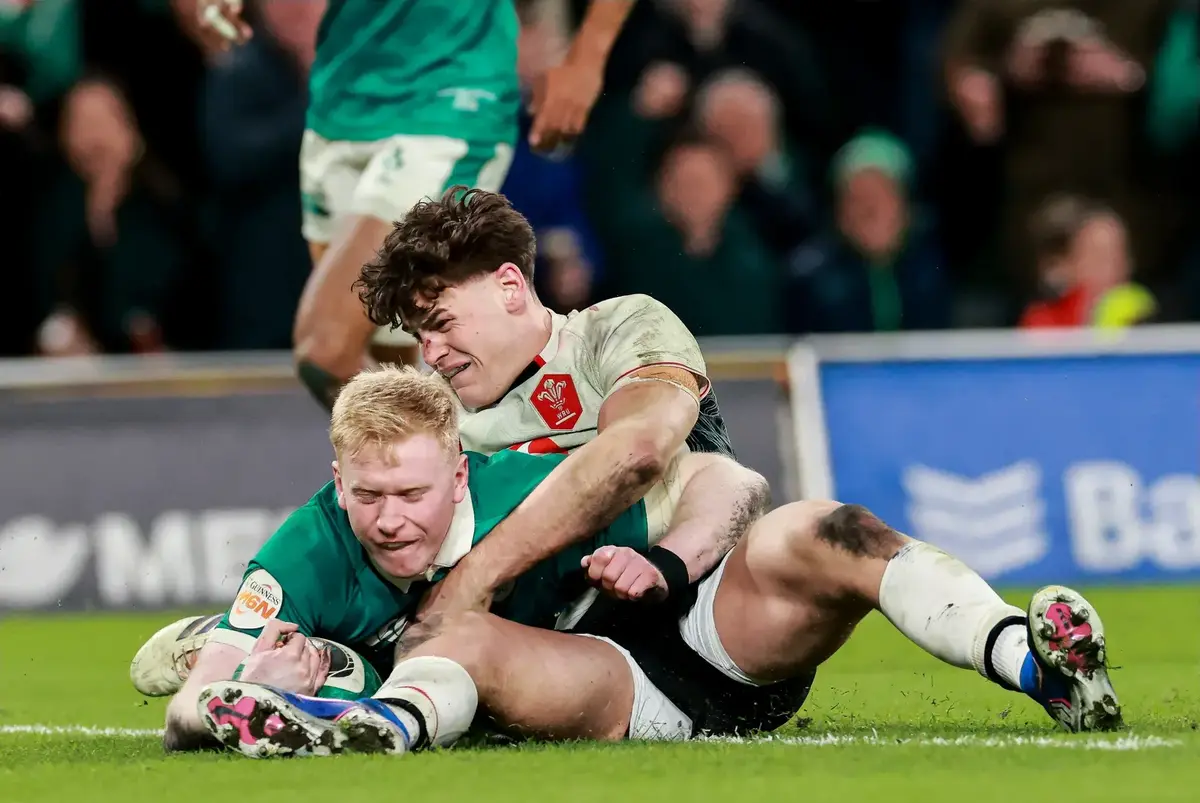
Which Ireland team will show up for the final weekend? The one that demolished England 42-21 at Twickenham with a performance of ruthless precision and clinical finishing? Or the one that laboured past Wales 27-17 in Dublin with an attritional, error-strewn display that looked a world away from championship-winning quality? Andy Farrell’s side kept their slim title hopes mathematically alive with Friday night’s bonus-point victory – Jacob Stockdale scored his first Ireland try since 2021, Jack Crowley darted over cleverly, Jack Conan powered through after earlier being denied by the TMO, and Jamie Osborne secured the crucial fourth try. But this was a far cry from the swagger and dominance Ireland showed in their record away win over England. Wales pushed them to the limit, leading 13-10 at half-time and trailing by just two points with a quarter to play. Ireland’s discipline was poor, their exit strategy wayward, and they looked far too comfortable playing in their own half rather than building scoreboard pressure. “It was pretty scrappy,” admitted captain Caelan Doris, and he wasn’t wrong. The disallowed Jack Conan try in the first half – Tom O’Toole knocked on in the build-up – proved a momentum-killer. Ireland’s scrum continues to struggle despite O’Toole winning an early penalty at loosehead on his first start in that position. And Jack Crowley’s inconsistency from the tee (he missed two conversions from four attempts) remains a concern. The question now is whether Ireland can rediscover their Twickenham form when they host Scotland in a Triple Crown decider that could yet swing the championship. Realistically, Ireland need to win and hope England shock France in Paris – a long shot at best. But after this performance, you wonder whether Ireland have the consistency to beat a Scotland side arriving in Dublin with belief sky-high and everything to play for. “We were resilient,” insisted Farrell afterwards, trying to find positives. But resilience isn’t enough when Scotland can score 50 points against France and Italy can make history by beating England. Ireland have shown they can be brilliant, but they’ve also shown they can be pedestrian. With everything on the line next weekend, they need to find the former and banish the latter. The real Ireland – the one that won back-to-back titles in 2023 and 2024 – needs to stand up. Because this version won’t be good enough against Townsend’s flying Scots.
Next up
Super Saturday on 15 March brings three matches that could all swing the championship. Ireland host Scotland in Dublin (kick-off 2:10pm) in the opening game of the triple-header. Ireland need to win to secure the Triple Crown and maintain faint title hopes, but Scotland have everything to play for – victory would put them top of the table ahead of the evening’s action in Paris and keep their title dreams alive. It’s Scotland’s first chance to win in Ireland in 11 attempts under Gregor Townsend and their biggest game in a generation. The afternoon’s middle fixture sees Wales host Italy in Cardiff (kick-off 4:45pm), with both teams desperate for victory. Wales need to end their 16-match losing streak and avoid a third consecutive wooden spoon, while Italy are chasing a third win that would cap their greatest-ever championship. Based on current form and Italy’s historic victory over England, the Azzurri must start as favourites to claim another famous scalp. The drama then shifts to Paris (kick-off 8:10pm) where France host England in what will almost certainly be a championship decider. Les Bleus need a bonus-point win to guarantee the title regardless of earlier results, but after shipping 50 points in Edinburgh they’ll be nervy. England, meanwhile, are playing for pride and to avoid a one-win campaign that would surely spell the end for Steve Borthwick’s reign. France remain favourites for the title, but after this extraordinary weekend, anything feels possible.
Share this:
You may like
-
Sensational Italy make history with first victory over England
-
Scotland stun France with historic seven-try Murrayfield victory
-
Ireland survive Wales scare to keep Six Nations hopes alive
-
2026 Guinness Six Nations preview: Ireland v Wales
-
2026 Guinness Six Nations preview: Scotland v France
-
Dempsey returns in one of five Scotland changes for France clash
Six Nations
Sensational Italy make history with first victory over England
Italy beat England for the first time in 33 attempts as Leonardo Marin’s late try seals historic 23-18 victory at the Stadio Olimpico.
Share this:
Published
1 day agoon
7th March 2026
Italy secured the most significant result in their Six Nations history, defeating England 23-18 at the Stadio Olimpico to record their first victory over the English in 33 attempts stretching back to 1991.
Key moments
21 mins – PENALTY ITALY: Paolo Garbisi opens the scoring after England are penalised for offside at the lineout. (Italy 3–0 England)
26 mins – TRY ENGLAND: Tommy Freeman finishes in the corner after excellent build-up work from Ben Earl and a slick long pass from Alex Coles. Fin Smith misses the conversion. (Italy 3–5 England)
35 mins – TRY ITALY: Tommaso Menoncello runs a devastating line to burst through England’s midfield defence and sprint 40 metres untouched to score beside the posts. Paolo Garbisi converts. (Italy 10–5 England)
40+2 mins – TRY ENGLAND: Tom Roebuck scores on the stroke of half-time after Fin Smith spots him unmarked on the right wing and delivers a pinpoint cross-field kick. Smith converts. (Italy 10–12 England)
Half-time: Italy 10–12 England. A tight, physical arm-wrestle with England edging territory and possession. Ben Earl outstanding for the visitors, while Menoncello’s individual brilliance gave Italy hope heading into the break.
45 mins – PENALTY ENGLAND: Fin Smith extends England’s lead after Italy are penalised at the scrum. (Italy 10–15 England)
53 mins – YELLOW CARD ITALY: Giacomo Nicotera sin-binned for cynically slapping the ball from Ben Spencer’s hands at a ruck.
54 mins – PENALTY ENGLAND: Fin Smith slots the resulting penalty to give England an eight-point cushion. (Italy 10–18 England)
57 mins – YELLOW CARD ENGLAND: Sam Underhill shown yellow for shoulder-to-head contact on Danilo Fischetti. Paolo Garbisi kicks the resulting penalty. (Italy 13–18 England)
61 mins – PENALTY ITALY: Garbisi lands another penalty via the inside of the post after England concede at the breakdown. (Italy 16–18 England)
64 mins – YELLOW CARD ENGLAND: Maro Itoje sin-binned for cynically slapping the ball from Alessandro Fusco’s hands at the back of a maul. England down to 13 men.
72 mins – TRY ITALY: The decisive moment. Paolo Garbisi’s cross-field kick finds Monty Ioane, who steps past a defender and feeds Tommaso Menoncello. The centre explodes through Elliot Daly’s tackle and has the presence of mind to release Leonardo Marin on the inside, who races away to score under the posts. Garbisi converts. (Italy 23–18 England)
80 mins – PENALTY ITALY: Michele Lamaro wins a crucial turnover after Tommy Freeman is isolated following Ollie Chessum’s break. Alessandro Fusco kicks to touch to seal the historic victory.
Full-time: Italy 23–18 England
Italy secured the most significant result in their Six Nations history, defeating England 23-18 at the Stadio Olimpico to record their first victory over the English in 33 attempts stretching back to 1991.
Leonardo Marin’s 72nd-minute try, brilliantly set up by the outstanding Tommaso Menoncello, completed a remarkable comeback that saw the Azzurri overturn an eight-point deficit in the final quarter. England’s ill-discipline proved fatal as yellow cards to Sam Underhill and captain Maro Itoje left them down to 13 men at the crucial moment, allowing Italy to pounce and etch their names into rugby history.
For Steve Borthwick, whose side have now lost three consecutive Tests, this defeat in Rome represents the nadir of his tenure. The head coach had made a record nine personnel changes following heavy defeats to Scotland and Ireland, but his gamble on a completely reshaped backline backfired spectacularly as England squandered a position of dominance.
The match began inauspiciously for England when Tom Curry limped off during the warm-up with an injury, forcing Sam Underhill into the starting XV and Chandler Cunningham-South onto the bench. It meant Borthwick’s changes now numbered ten from the Ireland defeat — an unprecedented overhaul that spoke to the scale of England’s crisis.
England actually started brightly, winning aerial contests and applying early pressure. Their kicking game, so wayward against Ireland, looked more precise with Fin Smith directing operations. But familiar failings at the breakdown resurfaced as Italy’s Juan Ignacio Brex produced three crucial interventions in the opening quarter, including forcing a turnover penalty that allowed Paolo Garbisi to open the scoring in the 21st minute.
The visitors responded well to going behind. Ben Earl, marking his 50th cap with another tireless display, carried powerfully through the Italian defence before a slick handling move saw Alex Coles deliver a superb long pass to Tommy Freeman, who finished in the corner. Smith missed the conversion, but England led 5-3 and appeared to be building momentum.
Italy’s riposte was devastating. Tommaso Menoncello, who had been a constant threat running hard lines off Alessandro Garbisi’s service, spotted Joe Heyes with his eyes in at a breakdown and exploded through the gap. The 23-year-old centre rounded Elliot Daly with ease and sprinted 40 metres to score one of the tries of the championship. Garbisi’s conversion put Italy 10-5 ahead.
The match swung again on the stroke of half-time through a moment of inspiration from Smith. With England’s forwards clustered on the left after a turnover, the fly-half spotted Tom Roebuck unmarked on the right wing and delivered a pinpoint cross-field kick. Roebuck gathered, stepped inside Monty Ioane, and scored. Smith converted to give England a 12-10 lead that flattered them given Italy’s first-half threat.
England emerged for the second half with renewed purpose and appeared to be taking control. After Italy were penalised at a scrum, Smith extended the lead to 15-10. When Giacomo Nicotera was sin-binned for cynically slapping the ball from Ben Spencer’s hands, Smith kicked another penalty to make it 18-10. At that moment, with a numerical advantage and an eight-point cushion, England looked set to escape Rome with a hard-fought victory.
What followed was a capitulation that will haunt English rugby for years to come.
First, Underhill was shown yellow in the 57th minute for shoulder-to-head contact on Danilo Fischetti, giving Garbisi an opportunity he gratefully accepted. His penalty made it 18-13. Four minutes later, after England conceded at the breakdown, Garbisi landed another kick via the inside of the post to reduce the deficit to just two points.
Then came the decisive moment. Itoje, England’s captain and supposed leader, was sin-binned for cynically slapping the ball from Alessandro Fusco’s hands at the back of a maul. England were down to 13 men, and Italy smelled blood.
Initially, Ben Earl produced a heroic defensive effort to halt an Italian driving maul, almost single-handedly wrestling it into touch. But Italy would not be denied. In the 72nd minute, Garbisi’s cross-field kick found Ioane wide on the left. The wing stepped past a defender and fed Menoncello, who exploded through Daly’s desperate tackle and had the presence of mind to release Marin on the inside. The replacement centre raced away to score under the posts, and Garbisi’s conversion gave Italy a 23-18 lead with eight minutes remaining.
England threw everything at Italy in the closing stages. Ollie Chessum, on from the bench, stole a lineout and made a powerful break that got England into the Italian 22. But with time running out and bodies scrambling, Freeman was isolated and Michele Lamaro, Italy’s inspirational captain, came up with the crucial turnover. Fusco kicked to touch, and the Stadio Olimpico erupted.
“It’s obviously disappointing. It’s on us as players. We have to wear the performance,” said Itoje afterwards. “Teams go through tough periods, and we are going through a tough period now. As captain, I take responsibility for that.”
Borthwick cut a devastated figure: “Credit to Italy. They are a very good side that have developed a long way. We are terribly disappointed. I thought for 60 minutes we were in pretty good control of the game, but two sin-bin incidents and going down to 13 men really hurt us.”
For Italy, this was validation of everything Gonzalo Quesada has built since taking charge two years ago. The Azzurri have now beaten every Six Nations team and move above England in the table with a genuine opportunity to record three championship wins for the first time when they travel to Cardiff next weekend.
Lamaro spoke of the tension before kick-off and the belief that carried his side home: “We felt this game was close, so we were pretty nervous. But during the game we built that confidence. We stuck together for the whole 80 minutes, which was the important thing.”
England now face France in Paris in the final round with their campaign in tatters and serious questions being asked of Borthwick’s future. Three consecutive defeats, including this historic humiliation, have left a team that won 12 matches in a row just months ago looking rudderless and devoid of answers.
Italy 23 (Tries: Menoncello, Marin; Conversions: P Garbisi 2/2; Penalties: P Garbisi 3/3)
England 18 (Tries: Freeman, Roebuck; Conversions: F Smith 1/2; Penalties: F Smith 2/2)
Half-time: 10-12
Yellow cards: Nicotera (Italy, 53), Underhill (England, 57), Itoje (England, 64)
Venue: Stadio Olimpico, Rome
Referee: Luc Ramos (France)
Teams
Italy: 15 Lorenzo Pani, 14 Louis Lynagh, 13 Juan Ignacio Brex, 12 Tommaso Menoncello, 11 Monty Ioane, 10 Paolo Garbisi, 9 Alessandro Garbisi, 8 Lorenzo Cannone, 7 Manuel Zuliani, 6 Michele Lamaro (captain), 5 Andrea Zambonin, 4 Niccolò Cannone, 3 Simone Ferrari, 2 Giacomo Nicotera, 1 Danilo Fischetti.
Replacements: 16 Tommaso Di Bartolomeo, 17 Mirco Spagnolo, 18 Muhamed Hasa, 19 Federico Ruzza, 20 Riccardo Favretto, 21 Alessandro Fusco, 22 Leonardo Marin, 23 Tommaso Allan.
England: 15 Elliot Daly, 14 Tom Roebuck, 13 Tommy Freeman, 12 Seb Atkinson, 11 Cadan Murley, 10 Fin Smith, 9 Ben Spencer, 8 Ben Earl, 7 Sam Underhill, 6 Guy Pepper, 5 Alex Coles, 4 Maro Itoje (captain), 3 Joe Heyes, 2 Jamie George, 1 Ellis Genge.
Replacements: 16 Luke Cowan-Dickie, 17 Bevan Rodd, 18 Trevor Davison, 19 Ollie Chessum, 20 Chandler Cunningham-South, 21 Henry Pollock, 22 Jack van Poortvliet, 23 Marcus Smith.
Note: Tom Curry was injured during the warm-up; Sam Underhill promoted to start with Chandler Cunningham-South added to the bench.
Match details
Italy 23 (Tries: Menoncello, Marin; Conversions: P Garbisi 2/2; Penalties: P Garbisi 3/3)
England 18 (Tries: Freeman, Roebuck; Conversions: F Smith 1/2; Penalties: F Smith 2/2)
Half-time: 10–12
Venue: Stadio Olimpico, Rome
Referee: Luc Ramos (France)
Share this:
Six Nations
Scotland stun France with historic seven-try Murrayfield victory
Scotland produce one of their greatest-ever performances, scoring seven tries to shatter France’s Grand Slam dreams and blow the Six Nations title race wide open.
Share this:
Published
2 days agoon
7th March 2026
Scotland produced one of the most remarkable performances in their Six Nations history, scoring seven tries in a breathtaking 50–40 victory over France at Murrayfield to shatter the visitors’ Grand Slam dreams and blow the championship race wide open.
Fabien Galthié’s side arrived in Edinburgh needing a bonus-point win to clinch the title with a round to spare. They left with their ambitions in tatters, outplayed and outfought by a Scotland team that combined clinical finishing with ferocious defensive intensity to inflict France’s heaviest Six Nations defeat in over a decade.
Kyle Steyn was named player of the match after scoring twice, including a devastating intercept try that epitomised France’s afternoon of frustration. Darcy Graham also crossed twice to move clear as Scotland’s all-time leading try scorer with 37 Test tries, while Pierre Schoeman, Ben White and Tom Jordan completed a scoring spree that had the Murrayfield crowd in raptures.
The atmosphere inside Murrayfield crackled with intensity from the first whistle, with an estimated 15,000 French supporters creating a wall of noise at one end while the home faithful responded in kind. Scotland channelled that energy into a devastating opening salvo.
The tone was set within five minutes when Huw Jones carved through midfield with a trademark half-break, drawing defenders before finding Finn Russell looping around captain Sione Tuipulotu. Russell appeared to fumble momentarily but had the presence of mind to regather and slip the ball to Graham, who burst through a gap between Yoram Moefana and François Cros to touch down. Russell, whose kicking had deserted him in the Calcutta Cup defeat to England, converted with confidence to give Scotland the perfect start.
France responded through their championship weapon, Louis Bielle-Biarrey. In the 18th minute, Antoine Dupont demonstrated his remarkable strength by ripping the ball from Tuipulotu’s grasp in contact deep inside the Scotland 22. The visitors worked it wide left where Matthieu Jalibert’s flat pass found Bielle-Biarrey, who finished in the corner for a remarkable ninth consecutive Six Nations try-scoring match. Thomas Ramos added a superb touchline conversion.
When Théo Attissogbe added a second try just four minutes later, France appeared to be finding their rhythm. Bielle-Biarrey turned provider with a delicate grubber kick into the Scottish in-goal area, and Attissogbe won the footrace comfortably to touch down. Ramos converted again to give France a 14–7 lead that had their travelling supporters in full voice.
But Scotland’s pack, overhauled by Gregor Townsend with an entirely new front row of Schoeman, George Turner and D’Arcy Rae, was winning the crucial collisions. The response came from a beautifully executed training-ground move in the 26th minute. From a lineout deep in French territory, Turner wrapped around the back of a feigned maul before peeling off to pop a perfectly weighted inside pass to Steyn, who hit a devastating angle against the grain. The Glasgow wing scythed past Dupont and dived over in the left corner. Though Russell’s conversion drifted wide, Scotland had restored momentum.
The hosts moved ahead through Schoeman’s close-range try after patient phase play that tested French resolve to breaking point. Scotland went through multiple phases in front of the French line, penalty advantages stacking up as the visitors repeatedly infringed. When Schoeman finally barged over from close range, it was reward for sustained forward dominance. Russell’s conversion and Jalibert’s subsequent sin-binning for repeated team infringements sent Scotland into half-time with a 19–14 lead and a man advantage.
Whatever Townsend said at the break had the desired effect. White spotted a gaping hole at the base of a ruck within four minutes of the restart and snipped over for the bonus-point try. The score came after Tuipulotu had been collared high when he looked well placed to score, with Russell’s accurate kick to the corner setting up another attacking platform. Russell’s conversion stretched the lead to 12 points, but the best was yet to come.
In the 51st minute, Dupont—uncharacteristically rattled throughout—threw an intercept pass straight to Steyn on halfway. Under pressure from White’s harrying presence, the French captain’s pass sailed into the Glasgow wing’s grateful hands, and Steyn raced 50 metres down the left touchline to complete his brace. The roar that greeted Russell’s conversion could be heard across Edinburgh. Scotland led 33–14 and France looked a broken force.
Another French yellow card, this time to replacement Lenni Nouchi for cynically collapsing a maul in the 58th minute, only compounded their misery. Graham capitalised immediately, dancing through the fragmented French defence with the footwork that has made him one of European rugby’s most elusive runners. The ball came out to Blair Kinghorn on the left, who drew French defenders before slipping a pass to Graham, who slalomed over for his second try of the afternoon.
Scotland’s seventh try arrived in the 63rd minute after another Dupont error. The French captain inexplicably threw a forward pass inside his own in-goal area, handing Scotland a five-metre scrum. From the resulting set-piece, Tuipulotu drove it up before finding replacement Tom Jordan, who crashed over at pace near the posts. Russell’s sixth conversion took Scotland to 47–14 with 17 minutes remaining. Murrayfield was witnessing a French capitulation that defied all pre-match narratives.
France’s pride finally stirred in the final quarter. Dupont ended a length-of-field move with a stunning team try in the 66th minute, Attissogbe bursting down the right before exchanging passes with Jalibert and finding his captain in support to score under the posts. But Russell’s 40-metre penalty with three minutes remaining brought up the half-century—the first time Scotland had scored 50 points against France.
The French refused to leave empty-handed, staging a frantic late rally to hunt for a four-try bonus point. Thomas Ramos crossed in the corner in the 74th minute after good work from Baptiste Serin and Moefana, before Oscar Jégou finished in the corner following a lovely exchange with Serin. Josh Bayliss was sin-binned for Scotland, and Ramos raced in unopposed under the posts for his second try with the final play of the match, converting his own score to secure France a crucial losing bonus point that could yet prove decisive in the final standings.
The final score of 50–40 flattered France somewhat—Scotland had led 47–14 and were utterly dominant for 65 minutes—but Galthié will take whatever consolation he can from the four-try bonus point. His side’s Grand Slam dream lies in ruins, though they remain top of the table on points difference heading into next week’s final round.
For Scotland, this was vindication of Townsend’s decision to overhaul his pack and a performance that ranks alongside their finest Six Nations victories. Graham’s tries took him to 37 in Test rugby, moving him clear of Edinburgh teammate Duhan van der Merwe at the top of Scotland’s all-time scoring charts. The injuries to Jones and Steyn—both forced off late on—add concern ahead of the Dublin decider, but nothing could dampen the celebrations at Murrayfield.
“Considering how this tournament started, all I asked was the boys to believe, and we have put it right,” said Scotland captain Tuipulotu. “We have a changing room that believes in each other. It’s an airtight group. We stuck together when times were tough after that first round, and after a tough autumn. I could not be prouder to be the captain of this team.”
Steyn, who required stitches for a nasty leg gash but is expected to be fit for Ireland, reflected on Scotland’s aggressive approach: “We knew we couldn’t come here and try to contain these guys. They’re too good an outfit; you have to fire shots at them and make them work. I’m just so proud of the group to come out like that. It was nuts.”
Graham described the match as “crazy” and one of the most special wins of his career: “A 90-point game, it’s unheard of, especially against France. You know what they’re like, such a big unit, such a quality team. That was such an open game from minute one. Confidence is right up there now, probably the most it’s been. It’s one of the most enjoyable camps, and everybody is loving life.”
France captain Dupont, whose errors proved costly, cut a dejected figure: “It’s a huge disappointment. We came here to win the championship and we were not good enough. Scotland were better than us in every area—the collisions, the discipline, the speed. We have to regroup quickly.”
Thomas Ramos was characteristically blunt in his assessment: “We took a little rugby lesson. We let them have too much ball and we couldn’t stop their momentum. When you concede 50 points, even if you come back at the end, the 50 points are still there.”
The title race is now finely poised. France top the standings on 16 points with Scotland level but behind on points difference. Ireland sit third on 14 points, meaning all three nations can still claim the championship on Super Saturday.
Scotland travel to Dublin needing victory to guarantee the title—a venue where they have not won in 12 attempts. France must beat England in Paris and hope other results fall their way. After this performance, few would bet against Townsend’s men completing a remarkable transformation from opening-round defeat in Rome to championship glory.
“Anything’s possible, for sure,” said Tuipulotu when asked about the trip to the Aviva Stadium. “It makes for an awesome final week, and one that this group is really looking forward to.”
Key moments
5 mins – TRY SCOTLAND: Darcy Graham darts through a gap after Huw Jones breaks through midfield. Finn Russell converts. (Scotland 7–0 France)
18 mins – TRY FRANCE: Antoine Dupont rips the ball from Sione Tuipulotu and the visitors work it wide left, where Louis Bielle-Biarrey dives over in the corner for his ninth consecutive Six Nations try-scoring match. Thomas Ramos converts from the touchline. (Scotland 7–7 France)
22 mins – TRY FRANCE: Bielle-Biarrey delivers a delicate grubber kick for Théo Attissogbe to chase and gather for France’s second. Ramos adds the extras. (Scotland 7–14 France)
26 mins – TRY SCOTLAND: Brilliantly executed lineout move as George Turner breaks around the back of a feigned maul and finds Kyle Steyn running a superb angle back against the grain to score in the left corner. Russell’s conversion misses. (Scotland 12–14 France)
32 mins – TRY SCOTLAND: Patient phase play near the French line sees Pierre Schoeman power over from close range. Russell converts. (Scotland 19–14 France)
32 mins – YELLOW CARD FRANCE: Matthieu Jalibert sin-binned following repeated team infringements.
Half-time: Scotland 19–14 France.
44 mins – TRY SCOTLAND: Ben White spots a gap from the base of a ruck and snipes over for the bonus-point try. Russell converts. (Scotland 26–14 France)
51 mins – TRY SCOTLAND: Antoine Dupont throws an uncharacteristic pass straight to Kyle Steyn, who intercepts on halfway and races clear down the left touchline to complete his brace. Russell converts. (Scotland 33–14 France)
58 mins – YELLOW CARD FRANCE: Lenni Nouchi sin-binned for cynically collapsing a maul.
59 mins – TRY SCOTLAND: Darcy Graham dances through a fragmented French defence for his second try of the afternoon. Russell converts. (Scotland 40–14 France)
63 mins – TRY SCOTLAND: After Dupont throws a forward pass in his own in-goal area, Scotland capitalise from the resulting scrum. Tom Jordan crashes over at pace to complete the rout. Russell converts. (Scotland 47–14 France)
66 mins – TRY FRANCE: France finally respond as Attissogbe bursts down the right before exchanging passes with Jalibert and finding Antoine Dupont in support to score under the posts. Ramos converts. (Scotland 47–21 France)
74 mins – TRY FRANCE: Thomas Ramos finishes in the corner after good work from Baptiste Serin and Yoram Moefana. Conversion missed. (Scotland 47–26 France)
77 mins – PENALTY SCOTLAND: Finn Russell slots from 40 metres to bring up the half-century. (Scotland 50–26 France)
78 mins – YELLOW CARD SCOTLAND: Josh Bayliss sin-binned for a cynical infringement.
79 mins – TRY FRANCE: Oscar Jégou finishes in the corner after a lovely exchange with Serin. Ramos converts. (Scotland 50–33 France)
80 mins – TRY FRANCE: Thomas Ramos races in unopposed under the posts for his second try as France secure a vital four-try bonus point. Ramos converts his own score. (Scotland 50–40 France)
Full-time: Scotland 50–40 France
Teams
Scotland: 15 Blair Kinghorn, 14 Darcy Graham, 13 Huw Jones, 12 Sione Tuipulotu (c), 11 Kyle Steyn, 10 Finn Russell, 9 Ben White, 8 Jack Dempsey, 7 Rory Darge, 6 Matt Fagerson, 5 Scott Cummings, 4 Gregor Brown, 3 D’Arcy Rae, 2 George Turner, 1 Pierre Schoeman.
Replacements: 16 Ewan Ashman, 17 Rory Sutherland, 18 Zander Fagerson, 19 Grant Gilchrist, 20 Freddy Douglas, 21 Josh Bayliss, 22 George Horne, 23 Tom Jordan.
France: 15 Thomas Ramos, 14 Théo Attissogbe, 13 Nicolas Depoortère, 12 Yoram Moefana, 11 Louis Bielle-Biarrey, 10 Matthieu Jalibert, 9 Antoine Dupont (c), 8 Anthony Jelonch, 7 Oscar Jégou, 6 François Cros, 5 Mickaël Guillard, 4 Charles Ollivon, 3 Dorian Aldegheri, 2 Julien Marchand, 1 Jean-Baptiste Gros.
Replacements: 16 Peato Mauvaka, 17 Rodrigue Neti, 18 Demba Bamba, 19 Thibaud Flament, 20 Emmanuel Meafou, 21 Lenni Nouchi, 22 Baptiste Serin, 23 Pierre-Louis Barassi.
Match details
Scotland 50 (Tries: Graham 2, Steyn 2, Schoeman, White, Jordan; Conversions: Russell 6/7; Penalties: Russell 1/1)
France 40 (Tries: Bielle-Biarrey, Attissogbe, Dupont, Ramos 2, Jégou; Conversions: Ramos 5/6)
Half-time: 19–14
Venue: Scottish Gas Murrayfield, Edinburgh
Referee: Angus Gardner (Australia)
Attendance: 67,144
Player of the Match: Kyle Steyn (Scotland)
Share this:
Six Nations
Ireland survive Wales scare to keep Six Nations hopes alive
Ireland secure bonus-point win over Wales as Jack Conan earns Player of the Match in a closer-than-expected Six Nations clash at the Aviva Stadium.
Share this:
Published
3 days agoon
6th March 2026
Ireland secured a hard-fought 27-17 bonus-point victory over Wales at the Aviva Stadium, but were given an almighty fright by a rejuvenated Welsh side who pushed the defending champions to the absolute limit under the Friday night lights.
Key moments
6 mins – TRY IRELAND: Jacob Stockdale ran a superb line off Stuart McCloskey to power through Dan Edwards’ attempted tackle and score under the posts. Jack Crowley converted. (Ireland 7–0 Wales)
11 mins – TRY DISALLOWED IRELAND: Jack Conan powered over from close range after sustained pressure, but the TMO spotted a knock-on from Tom O’Toole at the base of the ruck. Scrum Wales.
17 mins – PENALTY WALES: Dan Edwards slotted from in front of the posts after Ireland were caught offside at the lineout. (Ireland 7–3 Wales)
24 mins: Jamison Gibson-Park departed for a blood injury, bringing Nathan Doak on for his Ireland debut.
37 mins – TRY IRELAND: After relentless pressure on the Welsh line, Jack Crowley dummied and drove over in the corner. Conversion missed. (Ireland 12–3 Wales)
40+2 mins – TRY WALES: Rhys Carre produced the try of the match, dummying past Robert Baloucoune 35 metres out and showing remarkable pace to race away and score. Dan Edwards converted. (Ireland 12–10 Wales)
Half-time: Ireland 12–10 Wales. Ireland dominated possession and territory but had only a two-point lead to show for it after Carre’s stunning score on the stroke of half-time. Wales’ defence had been heroic, with Dewi Lake and Alex Mann particularly impressive at the breakdown.
44 mins – TRY IRELAND: Jack Conan finally got his try after a TMO review for potential obstruction was cleared. Gibson-Park’s quick tap and go created the momentum, with Conan powering over from close range. Crowley converted. (Ireland 19–10 Wales)
56 mins: Wales made a triple substitution in the front row – Ryan Elias, Archie Griffin and Adam Beard all on.
60 mins: Tempers flared at the scrum as Tadhg Furlong and Nicky Smith traded shoves. Ireland made changes with Thomas Clarkson, Joe McCarthy and Josh van der Flier introduced.
63 mins – TRY WALES: James Botham burrowed over from close range after sustained Welsh pressure on the Irish line. The pack had made the hard yards through Archie Griffin and Alex Mann before Botham finished from inches out. Edwards converted. (Ireland 19–17 Wales)
68 mins – YELLOW CARD WALES: Tomos Williams was sin-binned for cynical play at the ruck as Ireland attacked.
68 mins – TRY IRELAND: Jamie Osborne secured the bonus point after slick handling saw Stockdale offload to the full-back who crashed over. Crowley missed the conversion. (Ireland 24–17 Wales)
77 mins – PENALTY IRELAND: Jack Crowley kicked a simple penalty after James Botham was caught offside to make it a two-score game. (Ireland 27–17 Wales)
80 mins: Wales launched one final attack from a lineout in the Irish 22, but Tadhg Beirne produced a crucial steal and Nathan Doak kicked the ball dead to seal victory.
Full-time: Ireland 27–17 Wales
A fortnight on from dismantling England in ruthless fashion at Twickenham, Ireland were prevented from producing another statement performance by a hard-hitting Wales team chasing a first championship win since 2023. While Andy Farrell’s side dominated possession and territory throughout, they found the Welsh defensive line increasingly difficult to penetrate in what became an attritional, collision-heavy contest.
The hosts signalled their intent early, with Stockdale slicing through the Welsh defence in the sixth minute to open the scoring. The Ulster wing ran a superb line off the shoulder of his provincial teammate McCloskey, brushing past Dan Edwards to claim his first Six Nations try since 2020 and his 20th international score overall. It was a moment of vindication for the 29-year-old, who has endured difficult years battling form and injury.
Ireland thought they had extended their lead moments later when Conan powered over after sustained pressure, but the TMO spotted a knock-on from O’Toole earlier in the move. That reprieve galvanised Wales, whose ferocious defence – led by captain Dewi Lake and flanker Alex Mann – repeatedly frustrated the Irish attack. Mann produced a superb interception to alleviate one period of sustained pressure, while Edwards reduced the deficit with a straightforward penalty.
The visitors should have taken the lead midway through the first half when Carre was held up over the line by a combination of McCloskey, Caelan Doris and James Ryan. It required some desperate Irish defence, but Wales were growing in confidence with each collision won.
Ireland’s breakthrough finally came three minutes before the break when Crowley spotted a gap in the tiring white wall and darted over in the corner. The Munster fly-half, who endured an inconsistent night from the tee, pulled his conversion wide to leave the score at 12-3.
What happened next will live long in the memory. With the clock in red and Ireland seemingly set to take a comfortable lead into the break, Carre produced the try of the tournament. Taking a pass from scrum-half Tomos Williams 35 metres out, the loosehead prop feigned a pass to the left before switching direction to blow past Baloucoune, then powered away from the despairing Tadhg Furlong to score a sensational individual try. Edwards’ conversion meant Wales trailed by just two points at the interval, sending the small but vocal Welsh contingent into raptures.
The try made Carre the first Wales prop and only the fifth starting prop in international rugby history to score in three consecutive Tests – a remarkable turnaround for a player deemed not fit enough by previous Wales coaches Wayne Pivac and Warren Gatland.
Ireland responded with renewed urgency after the break, with Conan finally getting his reward four minutes into the second half. Gibson-Park’s quick tap created momentum, and the Leinster back-rower powered over from close range, surviving another TMO review for potential obstruction. Crowley’s conversion pushed the lead to nine points.
Yet Wales refused to yield. Their pack, inspired by the introduction of Nicky Smith – who gave Furlong a torrid time at scrum time – won a succession of penalties to gain a foothold in the Irish 22. The tension escalated when tempers flared between Furlong and Smith, reflecting the high stakes.
The visitors’ persistence was rewarded when Botham burrowed over from close range in the 63rd minute after sustained forward pressure. Edwards’ conversion made it a two-point game at 19-17, and suddenly the Aviva Stadium grew anxious, sensing an upset was within the visitors’ grasp.
However, the experience of the Irish bench eventually settled the nerves. Replacement lock Joe McCarthy, who had been desperate to get on the field, made an immediate impact with a clever grubber kick that provided the territory for Ireland’s bonus-point try. The ball was recycled through several phases before Stockdale produced a crucial offload to find the onrushing Osborne, who crashed over with 12 minutes remaining.
Wales’ task became even more difficult when Williams was sin-binned for cynical play in the build-up to the try. Crowley’s missed conversion – his second poor attempt of the night – kept it a one-score game, but the fly-half made amends with a penalty in the 77th minute to finally seal the victory.
Wales pushed for a losing bonus point in the final moments, but Beirne produced a crucial steal at the ruck, allowing Nathan Doak – who had earlier made his Ireland debut as a blood replacement for Gibson-Park – to kick the ball dead and secure a vital win.
Wales made 240 tackles across the 80 minutes, with Mann leading the way with 28, followed by Dafydd Jenkins (27), Botham (24) and Lake (23). It was perhaps their most complete defensive display of the Steve Tandy era, extending their Six Nations losing streak to 15 matches but offering genuine hope for the future.
Ireland’s slim title hopes now rest on Scotland beating France at Murrayfield on Saturday. Regardless of that result, they will face the Scots in Dublin next weekend with a Triple Crown on the line. For Wales, a trip to the Principality Stadium to face Italy offers the chance to finally end their winless run and avoid a third consecutive wooden spoon.
What they said
Player of the match Jack Conan paid tribute to both sides: “Tonight felt like a proper Test match, and the intensity was unbelievably high. We probably let them off the hook at a few stages, giving them easy access, but I think we did well to stick in it there. Great for Jamo on his 50th cap and Doaky on his first – glad we could make it a special day for those lads.”
Ireland captain Caelan Doris admitted: “It was pretty scrappy, to be honest. We capitalised on one try early on, but there were a few that we didn’t take, and that’s the difference with today and a couple of weeks ago. We didn’t take those early opportunities to get the scoreboard pressure, and the game takes a different narrative as a result. Wales are obviously a hungry team and that showed in how they fought in the first half and again towards the end of the second half.”
Jacob Stockdale reflected on his return to the scoresheet: “It was pretty special for me. It’s been a hard few years and it’s just really nice to get back on the scoresheet again, doing what I love. I think I probably put a bit too much pressure on myself, especially in the France game a few weeks back. Faz was kind of saying to me, ‘relax and just be yourself and do what you do.’ I feel like I did that tonight.”
Ireland head coach Andy Farrell reserved praise for the visitors: “I thought we came up against a rock-solid defence who kept knocking us back and we should have just been a little bit more patient at times. Most of the credit for how that Test match unfolded has to go to Wales because I thought they were outstanding in the way they went about the fight. It was a dogged Test match and that’s how these types of Test matches should be.”
Wales head coach Steve Tandy was proud despite the defeat: “Massive pride in the boys and the shift they put in. The physicality they left out on the field was outstanding. I’m disappointed we didn’t get something from the game for the group because I felt we deserved something by the fight they showed.”
Wales captain Dewi Lake was defiant: “The win is coming, I can feel it, it is just around the corner. The development of the team in the past four weeks has been monumental. We’re always disappointed to lose, but the positives and the way we played is always something to be proud of.”
Rhys Carre on his stunning try: “I saw some space and went as hard as I could and no one caught me.”
Teams
Ireland: 15 Jamie Osborne, 14 Robert Baloucoune, 13 Garry Ringrose, 12 Stuart McCloskey, 11 Jacob Stockdale, 10 Jack Crowley, 9 Jamison Gibson-Park, 8 Caelan Doris (c), 7 Nick Timoney, 6 Jack Conan, 5 Tadhg Beirne, 4 James Ryan, 3 Tadhg Furlong, 2 Rónan Kelleher, 1 Tom O’Toole.
Replacements: 16 Tom Stewart, 17 Michael Milne, 18 Thomas Clarkson, 19 Joe McCarthy, 20 Josh van der Flier, 21 Nathan Doak, 22 Tom Farrell, 23 Ciarán Frawley.
Wales: 15 Louis Rees-Zammit, 14 Ellis Mee, 13 Eddie James, 12 Joe Hawkins, 11 Josh Adams, 10 Dan Edwards, 9 Tomos Williams, 8 Aaron Wainwright, 7 James Botham, 6 Alex Mann, 5 Ben Carter, 4 Dafydd Jenkins, 3 Tomas Francis, 2 Dewi Lake (c), 1 Rhys Carré.
Replacements: 16 Ryan Elias, 17 Nicky Smith, 18 Archie Griffin, 19 Adam Beard, 20 Olly Cracknell, 21 Kieran Hardy, 22 Jarrod Evans, 23 Louie Hennessey.
Match details
Ireland 27 (Tries: Stockdale, Crowley, Conan, Osborne; Conversions: Crowley 2/4; Penalties: Crowley 1/1)
Wales 17 (Tries: Carre, Botham; Conversions: Edwards 2/2; Penalties: Edwards 1/1)
Half-time: 12–10
Venue: Aviva Stadium, Dublin
Referee: Karl Dickson (England)
Player of the Match: Jack Conan (Ireland)
Share this:
Trending
-
New Zealand5 days agoThe former teacher now tasked with reviving the All Blacks
-
Six Nations3 weeks agoCrowley recalled as Ireland axe Prendergast for England showdown
-
Six Nations2 weeks agoIreland reborn as ruthless display blows away rudderless England
-
Super Rugby Pacific1 week agoCrusaders storm back to claim crucial win over Chiefs in Hamilton
-
International1 week agoEngland’s backline injury crisis deepens ahead of Italian job
-
Six Nations3 days agoIreland survive Wales scare to keep Six Nations hopes alive
-
New Zealand5 days agoFormer Wallabies boss wins race to be next All Blacks coach
-
Super Rugby Pacific2 weeks agoCameron injury mars Hurricanes’ emphatic win over Moana Pasifika