Connect with us

Six Nations

Scotland stun France with historic seven-try Murrayfield victory

Scotland produce one of their greatest-ever performances, scoring seven tries to shatter France’s Grand Slam dreams and blow the Six Nations title race wide open.

Published

on

Scotland stun France with historic seven-try Murrayfield victory
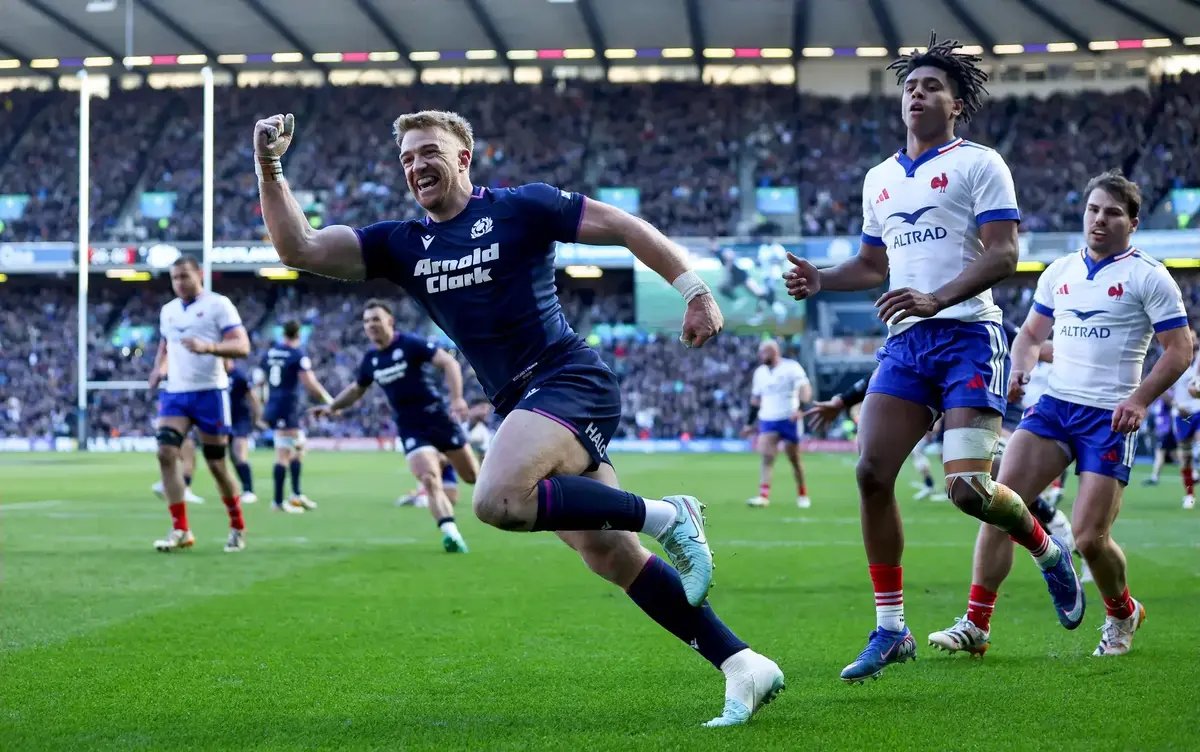
Scotland's Kyle Steyn celebrates after he scores his sides 2nd try of the match during the 2026 Guinness Six Nations Championship Round 4 game between Scotland and France in Scottish Gas Murrayfield, Edinburgh, Scotland, Saturday, March 7, 2026 (Photo by Dan Clohessy / Inpho)

Scotland produced one of the most remarkable performances in their Six Nations history, scoring seven tries in a breathtaking 50–40 victory over France at Murrayfield to shatter the visitors’ Grand Slam dreams and blow the championship race wide open.

Fabien Galthié’s side arrived in Edinburgh needing a bonus-point win to clinch the title with a round to spare. They left with their ambitions in tatters, outplayed and outfought by a Scotland team that combined clinical finishing with ferocious defensive intensity to inflict France’s heaviest Six Nations defeat in over a decade.

Kyle Steyn was named player of the match after scoring twice, including a devastating intercept try that epitomised France’s afternoon of frustration. Darcy Graham also crossed twice to move clear as Scotland’s all-time leading try scorer with 37 Test tries, while Pierre Schoeman, Ben White and Tom Jordan completed a scoring spree that had the Murrayfield crowd in raptures.

The atmosphere inside Murrayfield crackled with intensity from the first whistle, with an estimated 15,000 French supporters creating a wall of noise at one end while the home faithful responded in kind. Scotland channelled that energy into a devastating opening salvo.

The tone was set within five minutes when Huw Jones carved through midfield with a trademark half-break, drawing defenders before finding Finn Russell looping around captain Sione Tuipulotu. Russell appeared to fumble momentarily but had the presence of mind to regather and slip the ball to Graham, who burst through a gap between Yoram Moefana and François Cros to touch down. Russell, whose kicking had deserted him in the Calcutta Cup defeat to England, converted with confidence to give Scotland the perfect start.

France responded through their championship weapon, Louis Bielle-Biarrey. In the 18th minute, Antoine Dupont demonstrated his remarkable strength by ripping the ball from Tuipulotu’s grasp in contact deep inside the Scotland 22. The visitors worked it wide left where Matthieu Jalibert’s flat pass found Bielle-Biarrey, who finished in the corner for a remarkable ninth consecutive Six Nations try-scoring match. Thomas Ramos added a superb touchline conversion.

When Théo Attissogbe added a second try just four minutes later, France appeared to be finding their rhythm. Bielle-Biarrey turned provider with a delicate grubber kick into the Scottish in-goal area, and Attissogbe won the footrace comfortably to touch down. Ramos converted again to give France a 14–7 lead that had their travelling supporters in full voice.

But Scotland’s pack, overhauled by Gregor Townsend with an entirely new front row of Schoeman, George Turner and D’Arcy Rae, was winning the crucial collisions. The response came from a beautifully executed training-ground move in the 26th minute. From a lineout deep in French territory, Turner wrapped around the back of a feigned maul before peeling off to pop a perfectly weighted inside pass to Steyn, who hit a devastating angle against the grain. The Glasgow wing scythed past Dupont and dived over in the left corner. Though Russell’s conversion drifted wide, Scotland had restored momentum.

The hosts moved ahead through Schoeman’s close-range try after patient phase play that tested French resolve to breaking point. Scotland went through multiple phases in front of the French line, penalty advantages stacking up as the visitors repeatedly infringed. When Schoeman finally barged over from close range, it was reward for sustained forward dominance. Russell’s conversion and Jalibert’s subsequent sin-binning for repeated team infringements sent Scotland into half-time with a 19–14 lead and a man advantage.

Whatever Townsend said at the break had the desired effect. White spotted a gaping hole at the base of a ruck within four minutes of the restart and snipped over for the bonus-point try. The score came after Tuipulotu had been collared high when he looked well placed to score, with Russell’s accurate kick to the corner setting up another attacking platform. Russell’s conversion stretched the lead to 12 points, but the best was yet to come.

In the 51st minute, Dupont—uncharacteristically rattled throughout—threw an intercept pass straight to Steyn on halfway. Under pressure from White’s harrying presence, the French captain’s pass sailed into the Glasgow wing’s grateful hands, and Steyn raced 50 metres down the left touchline to complete his brace. The roar that greeted Russell’s conversion could be heard across Edinburgh. Scotland led 33–14 and France looked a broken force.

Another French yellow card, this time to replacement Lenni Nouchi for cynically collapsing a maul in the 58th minute, only compounded their misery. Graham capitalised immediately, dancing through the fragmented French defence with the footwork that has made him one of European rugby’s most elusive runners. The ball came out to Blair Kinghorn on the left, who drew French defenders before slipping a pass to Graham, who slalomed over for his second try of the afternoon.

Scotland’s seventh try arrived in the 63rd minute after another Dupont error. The French captain inexplicably threw a forward pass inside his own in-goal area, handing Scotland a five-metre scrum. From the resulting set-piece, Tuipulotu drove it up before finding replacement Tom Jordan, who crashed over at pace near the posts. Russell’s sixth conversion took Scotland to 47–14 with 17 minutes remaining. Murrayfield was witnessing a French capitulation that defied all pre-match narratives.

France’s pride finally stirred in the final quarter. Dupont ended a length-of-field move with a stunning team try in the 66th minute, Attissogbe bursting down the right before exchanging passes with Jalibert and finding his captain in support to score under the posts. But Russell’s 40-metre penalty with three minutes remaining brought up the half-century—the first time Scotland had scored 50 points against France.

The French refused to leave empty-handed, staging a frantic late rally to hunt for a four-try bonus point. Thomas Ramos crossed in the corner in the 74th minute after good work from Baptiste Serin and Moefana, before Oscar Jégou finished in the corner following a lovely exchange with Serin. Josh Bayliss was sin-binned for Scotland, and Ramos raced in unopposed under the posts for his second try with the final play of the match, converting his own score to secure France a crucial losing bonus point that could yet prove decisive in the final standings.

The final score of 50–40 flattered France somewhat—Scotland had led 47–14 and were utterly dominant for 65 minutes—but Galthié will take whatever consolation he can from the four-try bonus point. His side’s Grand Slam dream lies in ruins, though they remain top of the table on points difference heading into next week’s final round.

For Scotland, this was vindication of Townsend’s decision to overhaul his pack and a performance that ranks alongside their finest Six Nations victories. Graham’s tries took him to 37 in Test rugby, moving him clear of Edinburgh teammate Duhan van der Merwe at the top of Scotland’s all-time scoring charts. The injuries to Jones and Steyn—both forced off late on—add concern ahead of the Dublin decider, but nothing could dampen the celebrations at Murrayfield.

“Considering how this tournament started, all I asked was the boys to believe, and we have put it right,” said Scotland captain Tuipulotu. “We have a changing room that believes in each other. It’s an airtight group. We stuck together when times were tough after that first round, and after a tough autumn. I could not be prouder to be the captain of this team.”

Steyn, who required stitches for a nasty leg gash but is expected to be fit for Ireland, reflected on Scotland’s aggressive approach: “We knew we couldn’t come here and try to contain these guys. They’re too good an outfit; you have to fire shots at them and make them work. I’m just so proud of the group to come out like that. It was nuts.”

Graham described the match as “crazy” and one of the most special wins of his career: “A 90-point game, it’s unheard of, especially against France. You know what they’re like, such a big unit, such a quality team. That was such an open game from minute one. Confidence is right up there now, probably the most it’s been. It’s one of the most enjoyable camps, and everybody is loving life.”

France captain Dupont, whose errors proved costly, cut a dejected figure: “It’s a huge disappointment. We came here to win the championship and we were not good enough. Scotland were better than us in every area—the collisions, the discipline, the speed. We have to regroup quickly.”

Thomas Ramos was characteristically blunt in his assessment: “We took a little rugby lesson. We let them have too much ball and we couldn’t stop their momentum. When you concede 50 points, even if you come back at the end, the 50 points are still there.”

The title race is now finely poised. France top the standings on 16 points with Scotland level but behind on points difference. Ireland sit third on 14 points, meaning all three nations can still claim the championship on Super Saturday.

Scotland travel to Dublin needing victory to guarantee the title—a venue where they have not won in 12 attempts. France must beat England in Paris and hope other results fall their way. After this performance, few would bet against Townsend’s men completing a remarkable transformation from opening-round defeat in Rome to championship glory.

“Anything’s possible, for sure,” said Tuipulotu when asked about the trip to the Aviva Stadium. “It makes for an awesome final week, and one that this group is really looking forward to.”

Key moments

5 mins – TRY SCOTLAND: Darcy Graham darts through a gap after Huw Jones breaks through midfield. Finn Russell converts. (Scotland 7–0 France)

18 mins – TRY FRANCE: Antoine Dupont rips the ball from Sione Tuipulotu and the visitors work it wide left, where Louis Bielle-Biarrey dives over in the corner for his ninth consecutive Six Nations try-scoring match. Thomas Ramos converts from the touchline. (Scotland 7–7 France)

22 mins – TRY FRANCE: Bielle-Biarrey delivers a delicate grubber kick for Théo Attissogbe to chase and gather for France’s second. Ramos adds the extras. (Scotland 7–14 France)

26 mins – TRY SCOTLAND: Brilliantly executed lineout move as George Turner breaks around the back of a feigned maul and finds Kyle Steyn running a superb angle back against the grain to score in the left corner. Russell’s conversion misses. (Scotland 12–14 France)

32 mins – TRY SCOTLAND: Patient phase play near the French line sees Pierre Schoeman power over from close range. Russell converts. (Scotland 19–14 France)

32 mins – YELLOW CARD FRANCE: Matthieu Jalibert sin-binned following repeated team infringements.

Half-time: Scotland 19–14 France.

44 mins – TRY SCOTLAND: Ben White spots a gap from the base of a ruck and snipes over for the bonus-point try. Russell converts. (Scotland 26–14 France)

51 mins – TRY SCOTLAND: Antoine Dupont throws an uncharacteristic pass straight to Kyle Steyn, who intercepts on halfway and races clear down the left touchline to complete his brace. Russell converts. (Scotland 33–14 France)

58 mins – YELLOW CARD FRANCE: Lenni Nouchi sin-binned for cynically collapsing a maul.

59 mins – TRY SCOTLAND: Darcy Graham dances through a fragmented French defence for his second try of the afternoon. Russell converts. (Scotland 40–14 France)

63 mins – TRY SCOTLAND: After Dupont throws a forward pass in his own in-goal area, Scotland capitalise from the resulting scrum. Tom Jordan crashes over at pace to complete the rout. Russell converts. (Scotland 47–14 France)

66 mins – TRY FRANCE: France finally respond as Attissogbe bursts down the right before exchanging passes with Jalibert and finding Antoine Dupont in support to score under the posts. Ramos converts. (Scotland 47–21 France)

74 mins – TRY FRANCE: Thomas Ramos finishes in the corner after good work from Baptiste Serin and Yoram Moefana. Conversion missed. (Scotland 47–26 France)

77 mins – PENALTY SCOTLAND: Finn Russell slots from 40 metres to bring up the half-century. (Scotland 50–26 France)

78 mins – YELLOW CARD SCOTLAND: Josh Bayliss sin-binned for a cynical infringement.

79 mins – TRY FRANCE: Oscar Jégou finishes in the corner after a lovely exchange with Serin. Ramos converts. (Scotland 50–33 France)

80 mins – TRY FRANCE: Thomas Ramos races in unopposed under the posts for his second try as France secure a vital four-try bonus point. Ramos converts his own score. (Scotland 50–40 France)

Full-time: Scotland 50–40 France

Teams

Scotland: 15 Blair Kinghorn, 14 Darcy Graham, 13 Huw Jones, 12 Sione Tuipulotu (c), 11 Kyle Steyn, 10 Finn Russell, 9 Ben White, 8 Jack Dempsey, 7 Rory Darge, 6 Matt Fagerson, 5 Scott Cummings, 4 Gregor Brown, 3 D’Arcy Rae, 2 George Turner, 1 Pierre Schoeman.
Replacements: 16 Ewan Ashman, 17 Rory Sutherland, 18 Zander Fagerson, 19 Grant Gilchrist, 20 Freddy Douglas, 21 Josh Bayliss, 22 George Horne, 23 Tom Jordan.

France: 15 Thomas Ramos, 14 Théo Attissogbe, 13 Nicolas Depoortère, 12 Yoram Moefana, 11 Louis Bielle-Biarrey, 10 Matthieu Jalibert, 9 Antoine Dupont (c), 8 Anthony Jelonch, 7 Oscar Jégou, 6 François Cros, 5 Mickaël Guillard, 4 Charles Ollivon, 3 Dorian Aldegheri, 2 Julien Marchand, 1 Jean-Baptiste Gros.
Replacements: 16 Peato Mauvaka, 17 Rodrigue Neti, 18 Demba Bamba, 19 Thibaud Flament, 20 Emmanuel Meafou, 21 Lenni Nouchi, 22 Baptiste Serin, 23 Pierre-Louis Barassi.

Match details

Scotland 50 (Tries: Graham 2, Steyn 2, Schoeman, White, Jordan; Conversions: Russell 6/7; Penalties: Russell 1/1)
France 40 (Tries: Bielle-Biarrey, Attissogbe, Dupont, Ramos 2, Jégou; Conversions: Ramos 5/6)
Half-time: 19–14

Venue: Scottish Gas Murrayfield, Edinburgh
Referee: Angus Gardner (Australia)
Attendance: 67,144
Player of the Match: Kyle Steyn (Scotland)

Continue Reading
Click to comment

Leave a Reply

Six Nations

Ollie Chessum recalled as England seek to avoid worst Six Nations

Published

on

Ollie Chessum recalled as England seek to avoid worst Six Nations
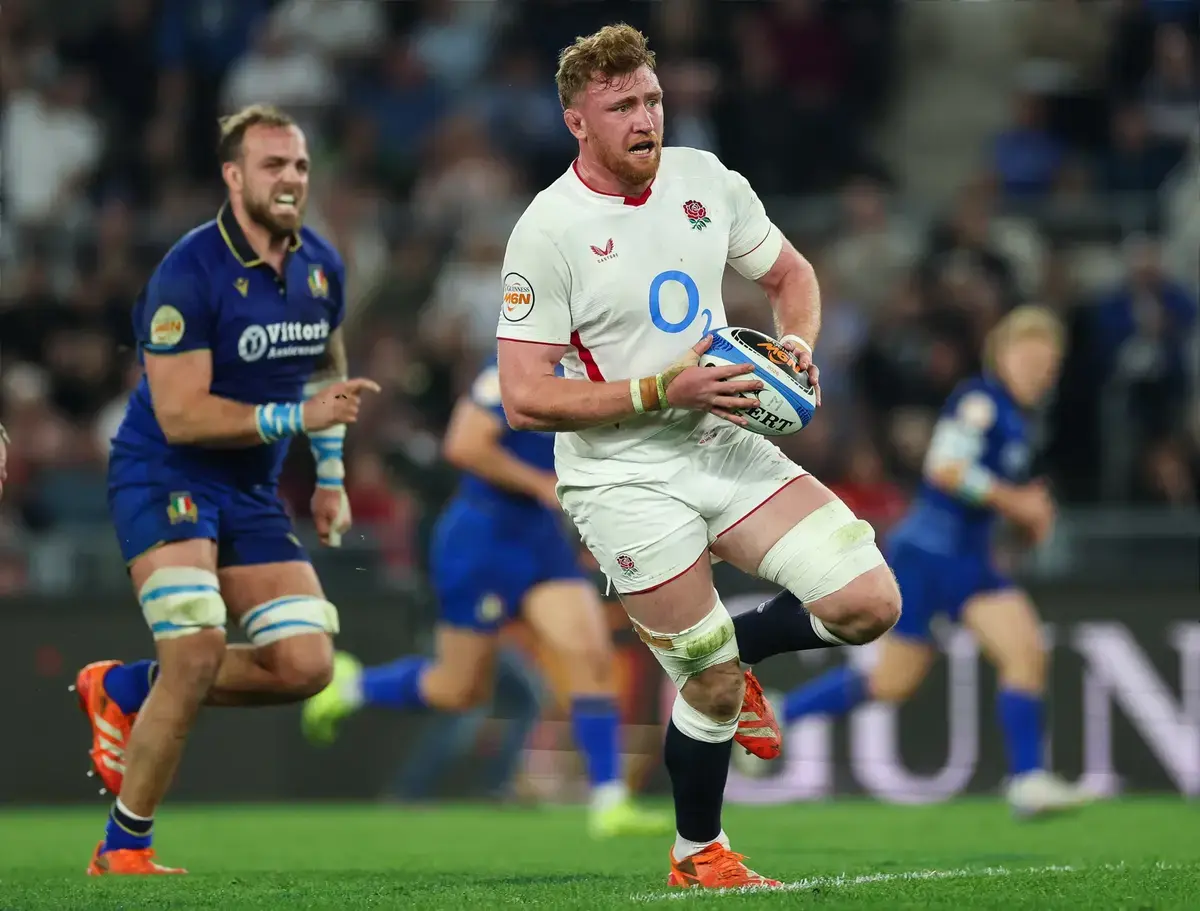
England's Ollie Chessum in action during the 2026 Guinness Six Nations Championship Round 4 game between Italy and England in Stadio Olimpico, Rome, Italy, Saturday, March 7, 2026 (Photo by James Crombie / Inpho)

Steve Borthwick has made just one change to his starting XV for Saturday’s daunting trip to face France in Paris, recalling Ollie Chessum at blindside flanker as England seek to avoid their worst-ever Six Nations campaign.

Key team news:

  • Tom Curry ruled out with calf injury sustained in warm-up before Italy defeat
  • Ollie Chessum moves from second row to blindside flanker in only starting change
  • Guy Pepper switches to openside flanker, with Sam Underhill dropping to bench
  • Underhill and Marcus Smith both in line for 50th caps if they come off the bench
  • Backline unchanged despite historic 23-18 defeat to Italy in Rome
  • England have lost three consecutive matches following opening win over Wales

The Leicester Tigers lock, who started the first three rounds of this championship in the second row before being dropped to the bench for the historic 23-18 defeat to Italy, will wear the number six jersey in a tactical shift designed to add heft and lineout options to England’s pack. His inclusion allows captain Maro Itoje and the improving Alex Coles to continue their second-row partnership while providing additional ball-carrying threat from the back row.

The move comes with Tom Curry unavailable after the Sale Sharks flanker injured his calf during the warm-up in Rome, forcing a last-minute reshuffle that saw Underhill promoted to the starting XV. The Bath openside has now been relegated to the replacements, with Guy Pepper shifting across to the seven jersey. Should Underhill take the field, he will join Marcus Smith in reaching the significant milestone of 50 caps.

Borthwick has otherwise resisted the temptation to make wholesale changes despite England’s third consecutive defeat last weekend, a result that saw Italy beat them for the first time in 32 meetings dating back to 1992. The backline that struggled to convert territorial dominance into points in Rome has been retained in its entirety, with Ben Spencer and Fin Smith continuing their half-back partnership and the centre pairing of Seb Atkinson and Tommy Freeman given another opportunity to develop their combination.

The selection represents a departure from Borthwick’s preferred “three sevens” philosophy in the back row, where he has typically selected smaller, more mobile flankers either side of Ben Earl. By deploying Chessum at blindside, the head coach has prioritised physicality and set-piece security against a French pack that, despite their shock 50-40 defeat to Scotland last weekend, remains one of the most powerful in world rugby.

Borthwick explained the selection, noting that Chessum had impressed after coming off the bench against Italy. The head coach emphasised the need for all three of his experienced locks to be on the field simultaneously given France’s exceptional maul threat and scrum dominance, adding that the make-up of the French pack demanded additional firepower in the tight exchanges.

The head coach also acknowledged the challenging circumstances surrounding England’s campaign, admitting that “the England shirt can, at times, weigh heavy” on his players. Speaking at England’s training base in Verona, Borthwick conceded that the team had been unable to meet the high aspirations they had set for themselves coming into the championship, while insisting he remained focused on delivering against France rather than dwelling on external pressure.

The RFU’s intervention following the Italy defeat has added scrutiny to Borthwick’s position. Chief executive Bill Sweeney issued a statement backing the head coach but demanding improvements, with discussions planned for the coming weeks to address England’s rapid decline. Borthwick called on his senior players to step forward in Paris, highlighting the presence of multiple Lions players and centurions within the squad who must lead by example when the pressure intensifies.

England’s discipline has been a recurring problem throughout this championship, with the team shown eight yellow cards across four matches. Both Underhill and Itoje were sin-binned against Italy, with the resulting numerical disadvantage allowing the Azzurri to score the decisive try through Leonardo Marin. Borthwick identified ill discipline and a failure to convert chances as the primary reasons for England’s collapse, though he stopped short of announcing any major tactical overhaul.

France, despite their humbling in Edinburgh where Scotland produced one of their greatest-ever performances to win 50-40, remain in pole position to retain their title. Fabien Galthié’s side secured a bonus point from the defeat and sit top of the table on 16 points, level with Scotland but with a significantly superior points difference. A victory at the Stade de France would guarantee them a second consecutive championship.

For England, the stakes are different but no less significant. A defeat would confirm their worst Six Nations campaign since the tournament expanded to six teams in 2000, with just one win from five matches. The fixture marks the 120-year anniversary of the England-France rivalry, adding historical weight to an already fraught occasion for Borthwick and his players.

The bench contains considerable experience, with Luke Cowan-Dickie, Chandler Cunningham-South and the versatile Henry Pollock among the replacements. Jack van Poortvliet provides scrum-half cover, while Smith’s presence at 23 offers Borthwick attacking options from the bench should England need to chase the game.

Starting XV:

15. Elliot Daly (Saracens, 75 caps)
14. Tom Roebuck (Sale Sharks, 11 caps)
13. Tommy Freeman (Northampton Saints, 26 caps)
12. Seb Atkinson (Gloucester Rugby, 3 caps)
11. Cadan Murley (Harlequins, 5 caps)
10. Fin Smith (Northampton Saints, 15 caps)
9. Ben Spencer (Bath Rugby, 17 caps)
1. Ellis Genge (Bristol Bears, 79 caps) – vice-captain
2. Jamie George (Saracens, 109 caps) – vice-captain
3. Joe Heyes (Leicester Tigers, 21 caps)
4. Maro Itoje (Saracens, 101 caps) – captain
5. Alex Coles (Northampton Saints, 18 caps)
6. Ollie Chessum (Leicester Tigers, 34 caps)
7. Guy Pepper (Bath Rugby, 11 caps)
8. Ben Earl (Saracens, 50 caps)

Replacements:

16. Luke Cowan-Dickie (Sale Sharks, 57 caps)
17. Bevan Rodd (Sale Sharks, 14 caps)
18. Trevor Davison (Northampton Saints, 7 caps)
19. Chandler Cunningham-South (Harlequins, 21 caps)
20. Sam Underhill (Bath Rugby, 49 caps)
21. Henry Pollock (Northampton Saints, 9 caps)
22. Jack van Poortvliet (Leicester Tigers, 23 caps)
23. Marcus Smith (Harlequins, 49 caps)

Match details: France v England, Stade de France, Paris. Saturday 14 March, 8.10pm GMT.

Continue Reading

Six Nations

2027 Six Nations to begin and end in Dublin with night kick-offs

Published

on

2027 Six Nations to begin and end in Dublin with night kick-offs
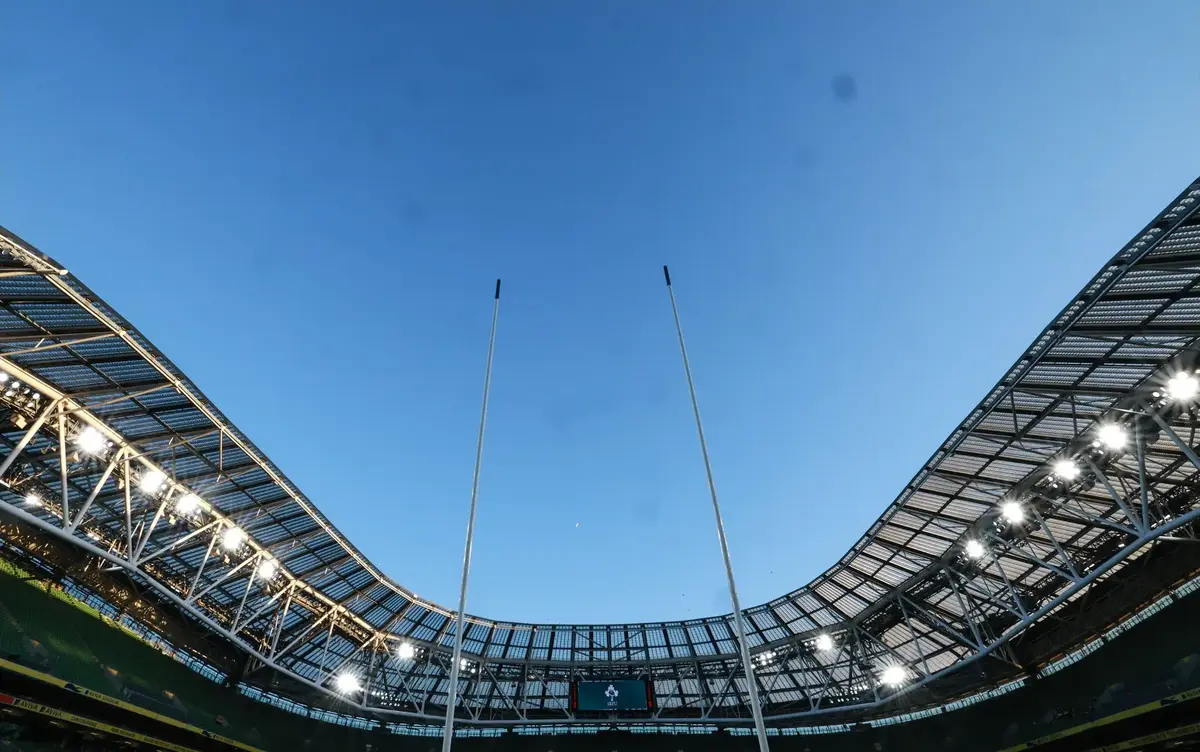
A general view of the Aviva Stadium ahead of the 2026 Guinness Six Nations Championship Round 4 game between Ireland and Wales in the Aviva Stadium, Dublin, Ireland, Friday, March 6, 2026 (Photo by Dan Sheridan / Inpho)

The 2027 Guinness Six Nations will begin and end under the lights in Dublin after tournament organisers confirmed that Ireland will host both the opening and closing fixtures of next year’s championship.

Andy Farrell’s side will welcome old rivals England to the Aviva Stadium on Friday 5 February for an 8.10pm kick-off, marking the first time since 2015 that England have opened their Six Nations campaign on a Friday. The championship will then conclude on Super Saturday with Ireland hosting France in another evening fixture on 13 March, setting up the tantalising prospect of a title decider between the two dominant forces in European rugby.

The fixture release comes on the eve of Super Saturday in the 2026 tournament, with this year’s championship still to be decided. France, Ireland and Scotland all retain title hopes heading into the final weekend, and the scheduling of next year’s finale ensures the possibility of another dramatic conclusion in twelve months’ time.

For England, the schedule presents an immediate examination of their credentials. Following their opening night trip to Dublin, Steve Borthwick’s men will host France at Allianz Stadium on Valentine’s Day in the perennial Le Crunch showdown. The cross-channel rivalry goes beyond the rugby pitch, and the Valentine’s Day date only adds to the occasion.

Scotland will experience their first Friday night Six Nations fixture when they host Ireland at Murrayfield on 5 March in round four. Gregor Townsend’s side open their campaign against Italy at home before travelling to face Wales for the Doddie Weir Cup a week later. They then host France on 21 February in what has become a box-office fixture between two attack-minded sides.

Wales face a demanding start, travelling to Paris to face France in round one before a trip to Edinburgh to take on Scotland on Valentine’s weekend. The return of home fixtures will provide relief, with Ireland visiting Cardiff in round three before the old enemy England arrive at the Principality Stadium in round four. Wales complete their campaign in Rome against Italy on Super Saturday.

Italy continue their development under Gonzalo Quesada, with the Azzurri hosting three of their five fixtures at the Stadio Olimpico. Ireland visit Rome in round two, France arrive in round four, and Wales provide the opposition on the opening day of Super Saturday. Italy’s away trips take them to Edinburgh in round one and to Twickenham in round three.

The traditional Super Saturday format remains intact, with three consecutive matches on 13 March. Italy host Wales at 2.10pm GMT before England and Scotland contest the Calcutta Cup at Allianz Stadium at 4.40pm. The championship will then reach its conclusion with Ireland against France at 8.10pm, ensuring the final weekend has the potential to deliver the drama that has become synonymous with Six Nations finales.

Tournament organisers have confirmed that the championship will again feature just one fallow week, positioned between rounds three and four. A new trophy will also be presented to the 2027 champions after the original was destroyed by fire.

2027 Guinness Six Nations Fixtures:

Round 1 – 5-6 February
Friday 5 February: Ireland v England (8.10pm GMT)
Saturday 6 February: Scotland v Italy (2.10pm GMT), France v Wales (4.40pm GMT)

Round 2 – 13-14 February
Saturday 13 February: Italy v Ireland (2.10pm GMT), Scotland v Wales (4.40pm GMT)
Sunday 14 February: England v France (3.10pm GMT)

Round 3 – 20-21 February
Saturday 20 February: Wales v Ireland (2.10pm GMT), England v Italy (4.40pm GMT)
Sunday 21 February: France v Scotland (3.10pm GMT)

Round 4 – 5-6 March
Friday 5 March: Scotland v Ireland (8.10pm GMT)
Saturday 6 March: Italy v France (2.10pm GMT), Wales v England (4.40pm GMT)

Round 5 – 13 March (Super Saturday)
Saturday 13 March: Italy v Wales (2.10pm GMT), England v Scotland (4.40pm GMT), Ireland v France (8.10pm GMT)

Continue Reading

Six Nations

Oscar Jégou cited for alleged eye gouge after Scotland loss

Published

on

Oscar Jégou cited for alleged eye gouge after Scotland loss
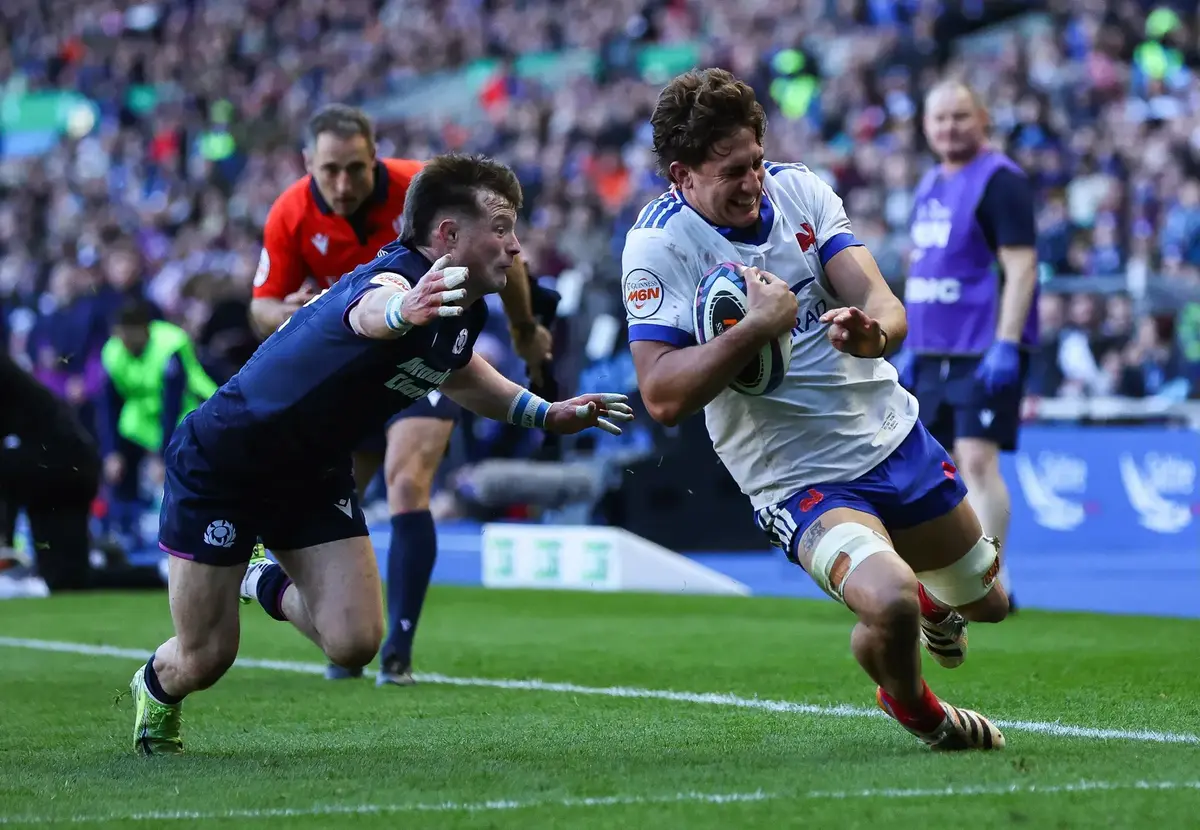
France's Oscar Jegou during the 2026 Guinness Six Nations Championship Round 4 game between Scotland and France in Scottish Gas Murrayfield, Edinburgh, Scotland, Saturday, March 7, 2026 (Photo by Dan Clohessy / Inpho)

France flanker Oscar Jégou will face an independent disciplinary hearing on Tuesday after being cited for an alleged eye gouge during Saturday’s Six Nations defeat to Scotland at Murrayfield.

Television footage appeared to show Jégou’s right hand making contact with the face of Scotland replacement hooker Ewan Ashman during a maul in the second half of the 50–40 thriller. The incident, which occurred before Darcy Graham’s try in the 59th minute, was not spotted by referee Angus Gardner or highlighted by TMO Brett Cronan during the match.

The 22-year-old La Rochelle back-rower has been cited for an act of foul play contrary to World Rugby Law 9.12, which prohibits “contact with the eye or eye area” among other forms of physical abuse.

Jégou’s case will be heard via video conference before an independent Disciplinary Committee comprising Simon Thomas (Chair), Christopher Morgan and John Langford at 9.30am GMT on Tuesday.

Former international referee Nigel Owens, who was part of the BBC’s commentary team for the match, expressed his disappointment that the incident was not dealt with at the time.

“It definitely should have been looked at,” said Owens. “It doesn’t look good to be honest. Looking at that footage, that player is going to be in a bit of trouble. It was quite clear what the actions were.”

Scotland players raised the incident with Gardner during the match, but the referee indicated that processes were in place to deal with such matters.
Former Wales captain Sam Warburton was more emphatic in his assessment, describing it as a “blatant” red card offence. “There is no defence for that,” said the two-time British & Irish Lions captain. “For me that is a straight red and I don’t think there’s any argument against that.”

If found guilty, Jégou faces a substantial ban. World Rugby’s sanction guidelines for intentional contact with the eye area range from 12 weeks at the low end to a maximum of 208 weeks, depending on the severity. South Africa lock Eben Etzebeth received a 12-week suspension in December after being found guilty of an intentional eye gouge on Wales flanker Alex Mann during the Springboks’ 73–0 victory in Cardiff.

The timing of the hearing is significant, coming just four days before France host England at the Stade de France in their final Six Nations fixture. While any ban would not affect Saturday’s match—Jégou having already played his part in the tournament—a lengthy suspension could have serious implications for the remainder of his club season with La Rochelle.

Jégou scored one of France’s four late tries as they secured a crucial losing bonus point at Murrayfield, keeping them top of the Six Nations table on points difference ahead of Scotland.

Continue Reading

Trending

Discover more from Rugby News, Results, and Analysis | Rugby is the Game

Subscribe now to keep reading and get access to the full archive.

Continue reading