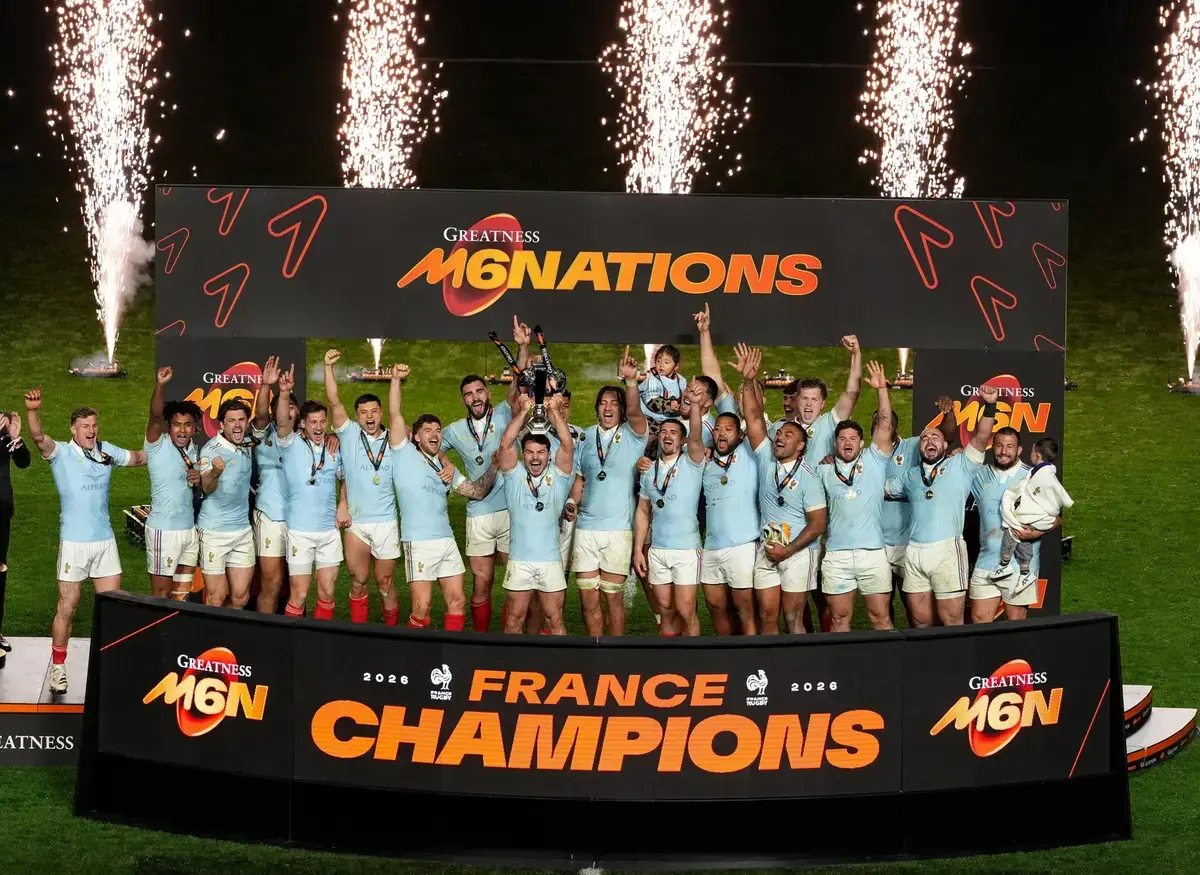
Connect with us

Six Nations

Bundee Aki dropped from Ireland squad for disciplinary reasons

Published

on

Leinster v Connacht Rugby United Rugby Championship Jamison Gibson-Park of Leinster and Bundee Aki of Connacht Rugby during the United Rugby Championship match at the Aviva Stadium, Dublin 03 01 2026. (IMAGO / Focus Images)

Ireland centre Bundee Aki has been dropped from the national squad for disciplinary reasons and will miss at least the Six Nations opener against France, with the Irish Rugby Football Union confirming he did not travel with the squad to their pre-tournament training camp in Portugal.

Key headlines

  • Bundee Aki has been dropped from the Ireland squad and did not travel to Portugal for the pre-tournament training camp.
  • The 68-cap centre faces an independent disciplinary hearing for alleged misconduct towards match officials.
  • Ulster’s uncapped centre Jude Postlethwaite has been called up as Aki’s replacement.
  • The IRFU has confirmed it is conducting a separate internal investigation into the matter.
  • Aki is the third high-profile Ireland international cited in recent seasons for comments to or about match officials.

The 35-year-old, who has won 68 caps for Ireland and toured with the British and Irish Lions on two occasions, faces an independent disciplinary hearing today after a misconduct complaint was made against him following Connacht’s 34-23 United Rugby Championship defeat to Leinster at the Dexcom Stadium in Galway on Saturday.
Ulster’s uncapped centre Jude Postlethwaite has been called into the squad as Aki’s replacement.

IRFU makes statement

The IRFU issued a strongly-worded statement condemning any disrespect shown towards match officials.

“The IRFU can confirm that Bundee Aki has not travelled with the Men’s senior squad to Portugal for disciplinary reasons,” the statement read.
“The IRFU does not tolerate any form of disrespect shown towards match officials and does not condone actions that fall below the standards expected of players representing Irish rugby.

“The IRFU are investigating the matter further internally and no additional comment will be made at this time.”
The decision to drop Aki and issue such a forthright statement represents a significant intervention from Irish rugby’s governing body, underlining their determination to maintain standards of conduct towards officials.

URC disciplinary proceedings

The United Rugby Championship confirmed that Aki will appear before an independent disciplinary committee today in relation to a misconduct complaint made against him under URC disciplinary rules.

“After the Round 10 BKT United Rugby Championship fixture on Saturday, January 24 at Dexcom Stadium, Galway, the player is alleged to have engaged with the match official team on several occasions in a manner which may be deemed to be in breach of the league’s Disciplinary Rules related to Misconduct (including Clause 3.1, 3.2 and 3.3),” the URC statement said.

The independent disciplinary committee will be chaired by Roddy Dunlop KC of Scotland, with Attie Heyns of South Africa and Andrea Caranci of Italy completing the panel.

The incident

Embed from Getty Images

While the full details of what Aki is alleged to have said remain unclear, the Connacht centre could be heard remonstrating with referee Eoghan Cross on multiple occasions during his side’s defeat to Leinster.

Aki came on as a replacement during the match and at the end of an 11-minute spell as a temporary replacement for Cathal Forde, he was involved in exchanges with the referee after being caught in the face by Leinster’s Charlie Tector.

At one point during the match, Cross could be heard warning Connacht captain Cian Prendergast: “If I hear 22 or 23 speaking again, they’re going to be penalised.” The referee subsequently followed through on his warning, penalising Aki for repeatedly confronting him.

Pattern of concerns

Aki is the third high-profile Ireland international to have been cited in recent seasons for comments either to or about match officials, highlighting an ongoing concern about player conduct that head coach Andy Farrell will need to address.

Just over a year ago, Aki’s Connacht team-mate Mack Hansen was banned for three games after making critical comments about the standard of officiating following a defeat to Leinster. Former Ireland captain Johnny Sexton also received a three-game suspension in 2023 for his conduct towards South African referee Jaco Peyper and his fellow officials in the aftermath of Leinster’s Champions Cup final defeat to La Rochelle.

The issue of player discipline was already on Ireland’s agenda heading into the Six Nations, with captain Caelan Doris acknowledging after November’s defeat to South Africa that the team needed to improve in that area. Ireland had James Ryan sent off for 20 minutes and four other players sin-binned during that match against the world champions.

Impact on Ireland’s Six Nations pans

The timing of the incident could hardly be worse for Farrell, with Ireland set to face defending champions France at the Stade de France on Thursday, 5 February. While Ulster’s Stuart McCloskey was already favourite to wear the number 12 shirt against the French, Aki had been expected to feature in the matchday 23, most likely from the bench.

The New Zealand-born centre, who qualified for Ireland through residency in 2017, has been a key figure in Farrell’s setup for several years. He started at inside centre against South Africa in November when McCloskey was injured and also started two of the Lions’ Tests against the Wallabies under Farrell last summer in Australia.

Any ban arising from the disciplinary hearing could sideline Aki for some or all of the Six Nations, depending on its severity. Previous misconduct cases involving Irish players have typically resulted in three-match suspensions.

Postlethwaite gets his chance

The 23-year-old Postlethwaite now has an unexpected opportunity to stake his claim for a place in Farrell’s plans. The Belfast-born centre, who stands at 1.93m (6ft 4in) and weighs 106kg, has been one of the most impressive Irish players at provincial level this season, performing strongly at both inside and outside centre for Ulster.

A product of RBAI (Royal Belfast Academical Institution), Postlethwaite joined Ulster’s academy after school and signed a development contract in February 2022, which was upgraded to a full senior deal a year later. He made his Ulster debut against Cardiff in March 2023 and has since established himself as a regular in Richie Murphy’s side.

Postlethwaite featured three times for Ireland Under-20s in their 2022 Six Nations Grand Slam success and has also represented the Ireland national rugby sevens team in the World Rugby Sevens Series.

Ireland’s remaining centre options in Portugal now include McCloskey, Garry Ringrose, Tom Farrell and Postlethwaite, while Jamie Osborne and Ciarán Frawley can also cover in midfield if required.

Further squad disruption

The Aki situation adds to what has been a turbulent build-up to the Six Nations for Ireland. Last week, the squad lost prop Jack Boyle to a serious leg injury during Leinster’s victory over Connacht, the same match that has now resulted in Aki’s disciplinary issues.

With Andrew Porter and Paddy McCarthy already sidelined, Boyle’s injury left Ireland without their first three loosehead prop options. Twenty-year-old Connacht academy prop Billy Bohan, who had been playing amateur club rugby as recently as November, was called up as a replacement.

Additionally, Munster second row Tom Ahern was replaced by Ulster’s Cormac Izuchukwu due to a neck injury, while winger Robert Baloucoune continues to be assessed after being withdrawn at half-time during Ulster’s defeat to the Scarlets.

Ireland now have four uncapped players in their Six Nations squad: Bohan, Edwin Edogbo, Nathan Doak and Postlethwaite.

Continue Reading
Click to comment

Leave a Reply

Six Nations

France make Six Nations statement with emphatic win over Ireland

Published

on

France make Six Nations statement with emphatic win over Ireland
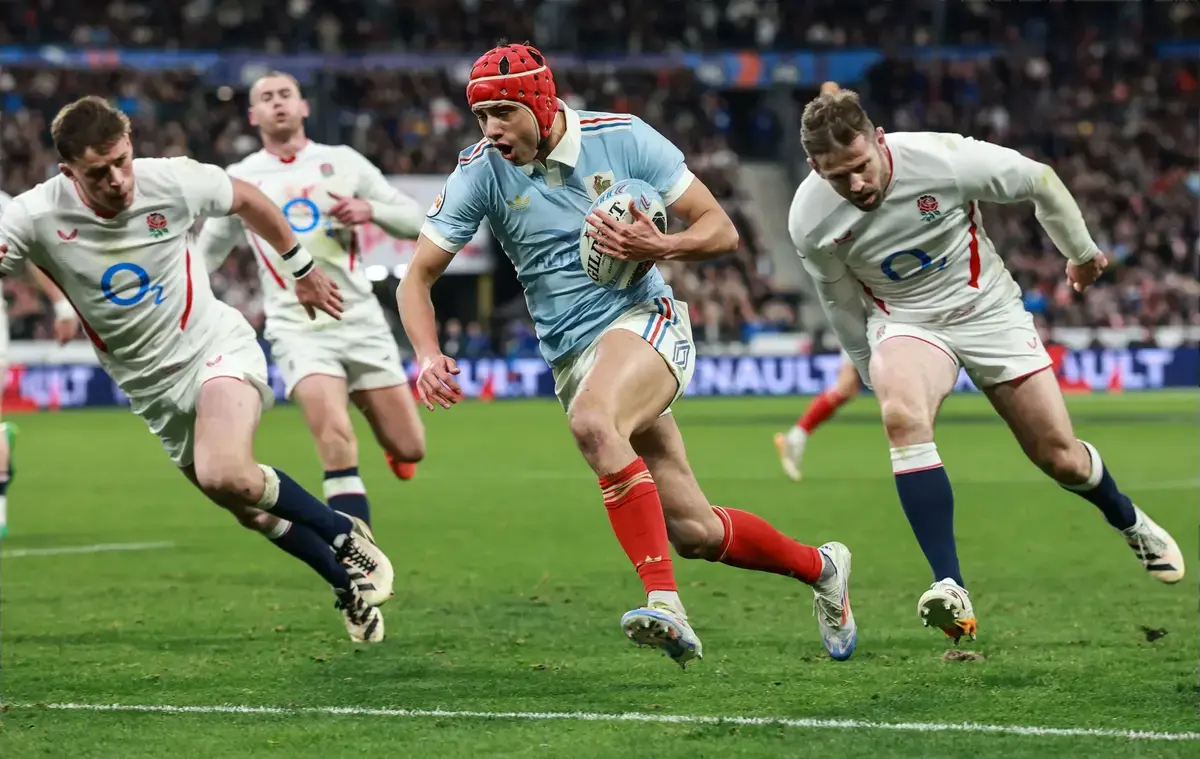
France's Louis Bielle-Biarrey runs in a try during the 2026 Guinness Six Nations Championship Round 1 game between France and Ireland in Stade de France, Paris, France, Thursday, February 5, 2026 (Photo by Dan Sheridan / Inpho)

France announced their intention to retain the Six Nations crown with a devastating first-half performance that left Ireland chasing shadows in the Parisian rain. The defending champions, inspired by the returning Antoine Dupont, raced to a 22-0 half-time lead before eventually running in five tries to secure a bonus-point victory that sends an ominous message to their championship rivals.

The 36-14 scoreline represents France’s largest victory over Ireland since 2010, when Les Bleus triumphed 33-10 in Paris. It also marks Ireland’s heaviest Six Nations defeat in 16 years, extending France’s remarkable home record to eight consecutive Stade de France victories in the championship.

Key moments

2′ – CLOSE CALL FRANCE: Louis Bielle-Biarrey produces electric footwork down the left before executing his trademark chip-and-chase, but Charles Ollivon fumbles with the tryline at his mercy as the ball skids forward off his hands. Ireland survive early warning shot
5′ – 50:22 IRELAND: Jamie Osborne thumps mammoth kick from deep inside his own half — described afterwards as “almost a 22:22” — to earn attacking lineout in French 22, but the opportunity is squandered when Josh van der Flier knocks on attempting to gather Sam Prendergast’s offload
13′ – TRY FRANCE: Louis Bielle-Biarrey opens the scoring with a moment of individual brilliance. After Sam Prendergast volleys the ball soccer-style back into play to prevent a 50:22, quick hands from Yoram Moefana find the wing in a pocket of space on the left touchline where Jamison Gibson-Park has afforded him too much room. Bielle-Biarrey slips through Gibson-Park’s tackle, rides Prendergast’s tap tackle, springs back to his feet and ghosts past Jacob Stockdale on the outside to finish in the corner. Thomas Ramos converts (France 7-0 Ireland)
21′ – POOR IRELAND PASS: Sam Prendergast intercepts Nicolas Depoortère’s pass with the tryline beckoning, but his panicked clearance under pressure forces Tommy O’Brien to dot down in his own in-goal, conceding a five-metre scrum
22′ – TRY FRANCE: Matthieu Jalibert marks his first international appearance since last year’s Six Nations with a well-taken score. From the five-metre scrum, the pack nudges towards the blindside and Antoine Dupont breaks, slipping a simple pass to Jalibert who coasts through a tame tackle attempt from Prendergast to cross. Thomas Ramos conversion strikes the post (France 12-0 Ireland)
28′ – PENALTY FRANCE: Joe McCarthy penalised for a mindless infringement, coming in from the side at the breakdown while France attack inside the Irish 22. Thomas Ramos slots the straightforward kick to extend the lead to 15 points (France 15-0 Ireland)
31′ – IRELAND PRESSURE: Sam Prendergast and Jamie Osborne combine with clever grubber kicks to pin France under their own posts, but Thomas Ramos recovers to clear the danger. Prendergast subsequently penalised for impeding Ramos while chasing the loose ball
34′ – TRY FRANCE: The standout moment of the first half as France produce stunning close-quarters handling. Matthieu Jalibert chips ahead and the ball bounces kindly, allowing him to regather. The ball moves through François Cros to Jean-Baptiste Gros, who finds Mickaël Guillard surging into the line. The Lyon lock’s sumptuous inside offload releases Charles Ollivon to sprint 15 metres and slide over despite Caelan Doris’s despairing tackle. Thomas Ramos converts (France 22-0 Ireland)
Half-time: France 22-0 Ireland
France statistics: 62% possession, 68% territory, zero penalties conceded, 11 of 12 contestable kicks won. Ireland: 19 missed tackles, 0 penalties won.
45′ – SCRUM PENALTY IRELAND: Dorian Aldegheri penalised for losing his footing as Ireland’s makeshift front row earns a rare set-piece success — their first penalty won of the entire match
47′ – TRY FRANCE (BONUS POINT): A piece of rugby artistry secures the bonus point. Antoine Dupont spots space behind the Irish defence and chips over a ruck. Thomas Ramos reacts quickest to the bouncing ball, producing an outrageous volley with the outside of his left boot that perfectly finds Louis Bielle-Biarrey in stride. The wing races in unopposed for his second try — his tenth in six consecutive Six Nations matches, extending a record-breaking sequence. Thomas Ramos converts (France 29-0 Ireland)
50′ – REPLACEMENTS IRELAND: Andy Farrell empties his bench in search of a response, introducing James Ryan, Jack Conan, Nick Timoney and Jack Crowley simultaneously
50′ – FRANCE BENCH ARRIVES: Fabien Galthié deploys his “bomb squad” with wholesale changes — Peato Mauvaka, Rodrigue Neti, Régis Montagne, Hugo Auradou, Emmanuel Meafou and Kalvin Gourgues all enter the fray
56′ – INTERCEPTION CHANCE FRANCE: Sam Prendergast’s loose pass is picked off by Théo Attissogbe who produces a brilliant one-handed offload to Hugo Auradou, but the ball goes forward in the subsequent attack. Ireland survive
59′ – TRY IRELAND: Ireland finally find the breakthrough through their Ulster contingent. Playing with penalty advantage after Tadhg Beirne’s excellent jackal turnover, Sam Prendergast delays his pass to put Stuart McCloskey through a narrow gap. The centre shows awareness to slip an inside ball to his provincial teammate Nick Timoney, who storms through to score under the posts. Sam Prendergast converts to register Ireland’s first points (France 29-7 Ireland)
61′ – DELIBERATE KNOCK-ON FRANCE: Antoine Dupont slaps the ball deliberately from Irish hands near the French 22. Referee Karl Dickson awards only a penalty despite covering defence being questionable — Dupont fortunate to escape a yellow card
62′ – TRY IRELAND: Michael Milne marks his Six Nations debut and his 27th birthday with a try. Sam Prendergast kicks to the corner from the penalty, and after the driving maul is halted, Ireland work through close-range phases with their forwards. Milne burrows over from close range, with the TMO confirming the grounding after a brief check for a possible fumble. Sam Prendergast converts (France 29-14 Ireland)
72′ – IRELAND PRESSURE: Ireland mount sustained attack in French 22, recycling through 17 phases as Doris and Conan drive towards the line, but Emmanuel Meafou produces a crucial turnover on Caelan Doris at the breakdown to end the threat
76′ – FRANCE HELD UP: Nicolas Depoortère is held up over the line by scrambling Irish defence after powering through initial contact. France denied a fifth try
79′ – CONTROVERSIAL MOMENT: James Ryan clatters Matthieu Jalibert after a kick in a late challenge that causes a minor scuffle. The crowd howls but referee Dickson waves play on, deeming Ryan was already committed to the tackle
80+1′ – TRY FRANCE: The final word belongs to the hosts as they finish with a flourish. Baptiste Serin snipes from the base of a ruck to make initial yards before quick hands through Matthieu Jalibert release Théo Attissogbe on the right wing. The Pau winger shows exceptional skill to get his feet around a lunging tackle and score acrobatically in the corner, putting the full stop on France’s dominance. Thomas Ramos converts superbly from the touchline (France 36-14 Ireland)
Full-time: France 36-14 Ireland

Match report

And so they said that Antoine Dupont and Matthieu Jalibert could not play together. Consider that notion most definitively dismissed.

On a night of genuine Gallic excellence, France laid down a Six Nations marker with a display of ambition and attacking skill to rival any produced during the recent restoration of French rugby’s monarchy. Led by their half-backs, the defending champions looked down on a fellow title contender and perhaps exiled them for good, leaving Ireland confronting the grim realities of what feels like a sharp decline.

“With Matthieu, we put ourselves at the service of the collective,” Dupont said afterwards. “We tried to make others play as best we could. I felt very good alongside him and I think it showed.”

The hypothesis had been that Dupont and Jalibert were an ill-matched half-back pairing, two of rugby’s premier talents never managing to find the symbiosis required at Test level. It was a theory backed up by the evidence of the last two times they had started in partnership: the quarter-final defeat to South Africa at the 2023 World Cup and the insouciant display against England last year. This felt like the first time both have truly clicked in the same French side, each bouncing with ideas and invention, with Jalibert accepting of his role as second fiddle.

The Thursday evening kick-off — the first in the Six Nations since France hosted Ireland at Stade Olympique de Colombes in 1948 — was necessitated to avoid clashing with the Winter Olympics opening ceremony in Milan. But the light show inside the Stade de France made it feel like a Friday night in everything but name, and the Marseillaise was sung with just as much gusto. When Dupont emerged from the tunnel for his first international appearance since rupturing his ACL against these same opponents last March, the roar threatened to lift the stadium’s distinctive roof.

Ireland, depleted by a crippling injury list that robbed them of their top three loosehead props plus first-choice tighthead Tadhg Furlong, alongside Hugo Keenan and Mack Hansen, knew they faced an almighty task. Back at the Stade de France for the first time since their agonising World Cup quarter-final exit to New Zealand in 2023, few predicted the comprehensive nature of their dismantling.

The visitors actually began with promise. Jamie Osborne launched what was described as “almost a 22:22” in the fifth minute — a mammoth kick from deep inside his own half to establish attacking position. But when Josh van der Flier fumbled Sam Prendergast’s offload, the tone was set for an evening of Irish frustration. France had been warned.

The first clear warning shot came inside two minutes when Bielle-Biarrey produced his trademark chip-and-chase down the left, only for Ollivon to fumble within touching distance. The wing soon took matters into his own hands.

The opening try arrived through a moment of individual brilliance from last year’s Player of the Championship. Prendergast, attempting to prevent a 50:22, volleyed the ball soccer-style back into play like a lower-league right-back clearing his lines — straight into French hands. Quick hands from Moefana put Bielle-Biarrey into a pocket of space on the left touchline where Gibson-Park had afforded him too much room. The Bordeaux-Bègles speedster slipped through the scrum-half’s tackle, rode Prendergast’s tap tackle, sprang back to his feet and ghosted past Jacob Stockdale to finish. It was outrageous, irresistible rugby — even if there was more than a hint of a forward pass from Depoortère to Moefana in the build-up that went unchecked.

Ireland’s only option was to dig deep and battle like mad for everything. Even that strategy was barely enough as France poured forward again, denied a second try only when Depoortère’s final pass with the line begging ended up in Prendergast’s hands rather than either of the two blue-shirted players outside him. But the fly-half’s wretched toss thereafter kept Ireland under pressure.

The second try showcased the Dupont-Jalibert axis that had prompted such pre-match debate. A five-metre scrum, won after O’Brien was forced to dot down behind his own line following a poor pass from Prendergast, provided the platform. The scrum nudged towards the blindside, Dupont broke and slipped a simple pass to Jalibert, and the fly-half coasted through a tame effort from Prendergast to cross. The mass rush to congratulate the Bordeaux playmaker said much about how his teammates view their number ten, regardless of his previously tepid relationship with head coach Fabien Galthié.

Thomas Ramos extended the lead to 15-0 from the tee after Joe McCarthy’s mindless intervention at the breakdown — the flanker coming in from the side while France attacked inside the Irish 22. There was a brief flicker of light for Ireland just before the half-hour mark when grubber kicks from Osborne and Prendergast pinned France under their own posts, but Ramos recovered to end the danger.

France then produced the standout moment of the half. Jalibert chipped ahead and, though the ball bounced kindly, the close-quarters passing that followed was sublime. The ball moved through François Cros to Jean-Baptiste Gros to Mickaël Guillard — outstanding throughout at lock — whose sumptuous inside offload sent Charles Ollivon sprinting through the final tackle to score from 15 metres. It was forward play of the highest order, and the mass celebration reflected France’s joy at their dominant display.

At 22-0 and with Ireland having missed 19 tackles in 40 minutes, the interval provided merciful respite for Andy Farrell’s shell-shocked side. The statistics painted a brutal picture: France had enjoyed 62% possession, 68% territory, won 11 of 12 contestable kicks, and conceded precisely zero penalties. It was the first time Ireland had been held to zero points in a Six Nations first half since 2020.

The second half began as the first had ended. Dupont spotted space behind Ireland and chipped over the top of a ruck. Ramos got a boot to the bouncing ball and then produced the moment of the match — an outrageous volley with the outside of his left foot that directed the ball perfectly into Bielle-Biarrey’s stride. The winger needed no second invitation, racing in unopposed for his second try and France’s bonus point. It was his tenth try in six consecutive Six Nations matches, extending a record-breaking sequence that sees him become only the second player in history to score in six consecutive championship matches, joining England’s Tommy Freeman.

At 29-0, the spectre of an historic humiliation loomed. France had won the aerial battle comprehensively, vindicating Galthié’s controversial decision to drop the aerially suspect Damian Penaud for Théo Attissogbe.

Yet Ireland, to their credit, finally showed signs of life. Farrell went to his bench en masse, introducing James Ryan, Nick Timoney, Jack Conan and Jack Crowley, and the latter pair made an instant impact. Playing with penalty advantage after Tadhg Beirne’s excellent jackal turnover, Prendergast delayed his pass to find Stuart McCloskey through a narrow gap. The Ulster centre showed awareness to slip an inside ball to his provincial teammate Timoney, who crashed over under the posts to finally register Ireland on the scoreboard.

“The bench made a good impact,” captain Caelan Doris acknowledged afterwards. “There was some good resolve in the second half. But we don’t want to be a team that’s chasing. We left ourselves too big a mountain to climb.”

Three minutes later, Milne — the replacement loosehead celebrating his 27th birthday — powered over from close range following a catch-and-drive to reduce the deficit further. The TMO confirmed the grounding after a brief check, and suddenly at 29-14, Ireland had something resembling a foothold.

France then coughed up penalties as their intensity dropped several gears, allowing Ireland to mount sustained pressure. They were into the French 22, recycling through 17 phases as Doris and Conan drove towards the line. But Emmanuel Meafou, one of France’s fresh-legged replacements, produced a crucial turnover on Doris at the breakdown to end the threat. It was the final punch Ireland threw.

The hosts had the final word as they finished how they had begun. Serin snipped from the base of a ruck, and quick hands through Jalibert released Attissogbe on the right. The Pau winger showed exceptional skill to get his feet around a lunging tackle and score acrobatically in the corner, underlining France’s superiority with the game’s final act. Ramos’ superb conversion from the touchline was fitting punctuation on a thoroughly dominant display.

For Ireland, the post-mortem will be painful. Their defensive statistics made for alarming reading: 35 missed tackles and a 67% completion rate. “Yeah, I don’t need to look at the stats,” Farrell interjected when presented with the numbers. “I watched the game.”

“Not only was it the missed tackles, but the amount of offloads we allowed them to get away through tackles,” Doris reflected. “We targeted dominant tackles because we know how good they can be when they get their hands free, and we allowed them to do that way too much.”

On the positive side, despite missing three looseheads and their first-choice tighthead, Ireland’s scrum held up well, as did the lineout where they won 16 of 17 throws. But despite employing a kicking-based game in the Parisian rain, this met with little reward — Ireland reclaimed only four of the 19 contestable kicks they launched.

Most concerning was the performance of Sam Prendergast, the young fly-half who had earned first crack at the number ten jersey. His hurried clearance led directly to France’s opening try, he panicked under pressure when Ireland were forced to ground the ball for their second, and his pass was intercepted by Attissogbe in the second half. The 22-year-old possesses undoubted talent, but this was not his night.

For France, the future gleams with possibility. Dupont, inevitably, was magnificent — his kicking from both feet, his sniping breaks, his distribution all functioning at the highest level despite 11 months away from Test rugby. Jalibert answered every question about his ability to partner the world’s best player. And the depth provided by a bench featuring Mauvaka, Meafou and the exciting young centre Kalvin Gourgues suggests Galthié’s squad possesses the resources to go all the way.

Ramos, meanwhile, passed a significant milestone. His 11 points on the night took him beyond 500 for France, cementing his status as one of the great fullback-kickers in Les Bleus’ history.

Man of the match Guillard, the 25-year-old Lyon lock who was a revelation throughout, will carry the trophy home with pride. His tireless carries — he topped the count on the night — his superb offloading ability and his relentless workrate epitomised France’s approach.
“Despite difficult conditions, we quickly found each other collectively,” Dupont said. “But beyond that, I think we delivered a very solid performance in the fundamentals. The defence was particularly effective, the set-piece was clean, and our work on the high balls was excellent. There are many positives to take from this match.”

The Solidarity Trophy, awarded for the first time to the winner of this fixture, now resides in French hands. On this evidence, it may stay there for some time yet. With England arriving at the Stade de France on the final weekend, and this performance fresh in the memory, Steve Borthwick now has a very clear idea of the levels his team must reach to deny France back-to-back titles.

Teams

France: Thomas Ramos; Théo Attissogbe, Nicolas Depoortère, Yoram Moefana, Louis Bielle-Biarrey; Matthieu Jalibert, Antoine Dupont (capt); Jean-Baptiste Gros, Julien Marchand, Dorian Aldegheri; Charles Ollivon, Mickaël Guillard; François Cros, Oscar Jégou, Anthony Jelonch.
Replacements: Peato Mauvaka (for Marchand, 50), Rodrigue Neti (for Gros, 50), Régis Montagne (for Aldegheri, 50), Hugo Auradou (for Ollivon, 50), Emmanuel Meafou (for Guillard, 50), Lenni Nouchi (for Cros, 63), Baptiste Serin (for Dupont, 74), Kalvin Gourgues (for Moefana, 50).

Ireland: Jamie Osborne; Tommy O’Brien, Garry Ringrose, Stuart McCloskey, Jacob Stockdale; Sam Prendergast, Jamison Gibson-Park; Jeremy Loughman, Dan Sheehan, Thomas Clarkson; Joe McCarthy, Tadhg Beirne; Cian Prendergast, Josh van der Flier, Caelan Doris (capt).
Replacements: Rónan Kelleher (for Sheehan, 63), Michael Milne (for Loughman, 59), Finlay Bealham (for Clarkson, 59), James Ryan (for McCarthy, 50), Jack Conan (for C. Prendergast, 50), Nick Timoney (for van der Flier, 50), Craig Casey (for Osborne, 73), Jack Crowley (for O’Brien, 50).

What they said

Antoine Dupont (France captain): “Despite difficult conditions, we quickly found each other collectively. I think we delivered a very solid performance in the fundamentals. The defence was particularly effective, our work on the high balls was excellent. With Matthieu, we put ourselves at the service of the collective. We tried to make others play as best we could.”

Caelan Doris (Ireland captain): “Definitely not how we hoped or foresaw the start of our campaign going. We left ourselves too tall a mountain to climb in the first half. We were lacking a bit of bite. Not only was it the missed tackles, but the amount of offloads we allowed them to get away through tackles. We targeted dominant tackles because we know how good they can be when they get their hands free, and we allowed them to do that way too much.”

Andy Farrell (Ireland head coach): “Obviously very disappointed. Something I never thought we’d be saying about this Irish team — we had a bit of a lack of intent in that first half. Missing tackles, winning the scraps on the floor or the fight in the air, it’s just intent. And if that’s lacking you’re not going to win any international game, never mind one in Paris. A hell of a lot of work to do.”

Shaun Edwards (France defence coach): “Very happy. Our attack in the first half was fantastic, we dominated territory and possession. When we are on our attack it’s a joy to watch. Louis Bielle-Biarrey is just getting better and that is because he wants to get better. He is a world-class superstar.”

What’s next

France travel to Cardiff to face Wales on Sunday, 15th February (16:10 GMT), looking to continue their title defence against a side seeking their first Six Nations victory in two years.

Ireland host Italy at the Aviva Stadium on Saturday, 14th February (14:10 GMT), with Farrell’s men desperate to respond following this chastening defeat — their first Six Nations opener loss since 2021.

Man of the Match: Mickaël Guillard (France)

Referee: Karl Dickson (RFU)
Assistant Referees: Angus Gardner (RA), Jordan Way (RA)
TMO: Ian Tempest (RFU)

Continue Reading

Six Nations

Rees-Zammit switches to full-back in Wales side for England clash

Published

on

Rees-Zammit switches to full-back in Wales side for England clash
Wales' Louis Rees-Zammit during the 2025 Quilter Nations Series game between Wales and Argentina in Principality Stadium, Cardiff, Wales, Sunday, November 9, 2025 (Photo by James Crombie / Inpho)

Steve Tandy has named Louis Rees-Zammit at full-back for Wales’s Six Nations opener against England at Allianz Stadium on Saturday, with the Bristol Bears star returning to the championship for the first time since 2023 following his stint in the NFL.

The selection marks only the fourth time in 36 Test appearances that the 25-year-old will start at full-back for his country, replacing Blair Murray who wore the number 15 jersey throughout the autumn campaign. Murray has been dropped from the matchday squad entirely, along with fellow autumn performer Tom Rogers.

Rees-Zammit’s positional switch reflects his impressive form at Bristol, where director of rugby Pat Lam has increasingly deployed him at full-back. “I love it. It allows me to get more touches on the ball in open field, it suits my game,” said Rees-Zammit. “I much prefer it. I think now I’m kind of seen as a 15 that can play on the wing.”

Back three reshuffle

The decision to move Rees-Zammit to full-back appears a tactical response to the aerial bombardment Wales expect from England. Steve Borthwick has predicted Wales will face upwards of 50 contestable kicks, making Rees-Zammit’s size and pace under the high ball a crucial asset.

“Zammo is threatening and if there is a kick that is too long then something can happen, as we have seen for Bristol,” said Tandy. “I am excited by his aerial work as well. As much as he is quick, he is a big man as well.”

Ellis Mee has been rewarded for his fine form with Scarlets, earning a place on the right wing alongside the experienced Josh Adams on the left. The 65-cap Cardiff wing provides crucial experience in a back three that otherwise features just 39 caps between Rees-Zammit and Mee.

Midfield and half-backs

Scarlets centre Eddie James earns his second start for Wales at outside centre, partnering Ben Thomas in midfield. Thomas, who can also provide cover at fly-half, returns to his preferred inside centre position after featuring in various roles during Wales’s difficult 2025 campaign.

The half-back partnership of Tomos Williams and Dan Edwards continues from the autumn, with the Gloucester scrum-half bringing 67 caps of experience to proceedings. Edwards, the Ospreys fly-half with seven caps, will be tasked with directing Wales’s attacking game behind what promises to be a physical battle up front.

Forward selections

Captain Dewi Lake anchors the front row at hooker in the absence of the injured Jac Morgan, who would normally lead the side. The Ospreys hooker is joined by Leicester’s Nicky Smith at loosehead and Bath’s Archie Griffin at tighthead. Griffin made his Wales debut against the same opposition in the 2024 championship.

The second row sees Dafydd Jenkins and Adam Beard combine, bringing 87 caps of collective experience to the engine room. Jenkins, now at Exeter Chiefs, will be key to Wales’s lineout operation against an England pack that boasts formidable aerial prowess.

The back row features a milestone moment for Josh Macleod, who will make his Six Nations debut at openside flanker. The 29-year-old Scarlets captain has endured wretched luck with injuries throughout his career but returns alongside Alex Mann at blindside and Aaron Wainwright at number eight.

“Josh has had some rough luck with injuries, but the way he’s come back, the way he leads, his attention to detail around his week plan, the way he trains, the intensity he brings to everything he does is excellent,” said Tandy. “It’s going to be awesome to see him on the weekend.”

Bench options

Tandy has opted for a 6-2 split on the bench, matching England’s approach and attempting to counter what has been dubbed the “Pom Squad” – the formidable forward reinforcements Steve Borthwick can unleash from the replacements.

The headline name among the replacements is Tomas Francis, who is set to make his first appearance for Wales since the 2023 Rugby World Cup. The experienced Provence tighthead, with 77 caps, is the only member of Wales’s playing squad who has beaten England at Twickenham, having featured in the famous 2015 World Cup victory.

Cardiff hooker Liam Belcher and Saracens loosehead Rhys Carre complete the front-row cover, while Dragons lock Ben Carter and back-rowers Taine Plumtree and Harri Deaves provide the remaining forward depth. Deaves won his first cap against New Zealand last November.

The two backline spots are taken by Kieran Hardy and Mason Grady. The Cardiff utility back Grady is in line to make his first Wales appearance since the 2024 Autumn Nations Series after recovering from injury.

Scale of the challenge

Wales travel to London as overwhelming underdogs, having won just two of their past 23 Tests overall. Their record of 11 successive Six Nations defeats has resulted in consecutive wooden spoons, while they have not won a championship match since beating Italy in Rome in March 2023.

The defeats have included an unprecedented 18-match losing streak and record home losses against England (68-14), Argentina (52-28) and South Africa (73-0). England, by contrast, have won their past 11 matches and are ranked third in the world.

“Outside of it why would people give us a chance, realistically?” Tandy admitted. “You look at the form of both teams, you probably wouldn’t. But ultimately the only thing we are genuinely focusing on is ourselves.”

Off-field challenges

Wales have been preparing for the match against the backdrop of the latest Welsh rugby crisis, with the future of the Ospreys in doubt. Four players in the matchday 23 – Lake, Edwards, Hardy and Deaves – play for the troubled region.

The squad has also been dealt an injury blow off the pitch, with scrum coach Duncan Jones suffering damage to both knees after a “freak” collision with a player during training. The former Wales prop will undergo surgery and miss the opener.

“It’s an absolute freak injury,” said Tandy. “I’m disappointed for Duncan, because I know how much it means to him to coach his country and be around the group.”

The coach’s view

Despite the daunting task ahead, Tandy insisted his players are relishing the challenge of his first Six Nations match in charge.

“Wales v England is always a special game with all the history behind the fixture,” he said. “We know they’re playing some outstanding rugby and they’re in great form. But I know how much it means to our players playing for the nation and representing Wales.

“The way the squad trained this week has been great. I want to see us get out and really attack the game on Saturday and give the best account of ourselves. Opening the Six Nations at Twickenham is historic and it’s something we can’t wait to do.”

Tandy has fond memories of Twickenham from his time as Scotland defence coach, having been part of famous Six Nations victories in 2021 and 2023. “Winning at Twickenham, at such an iconic stadium, is incredible,” he recalled. “It’s an unbelievable experience.”

Wales team to face England
Allianz Stadium, Twickenham | Saturday 7 February | Kick-off 4.40pm

15 Louis Rees-Zammit (Bristol Bears – 35 caps)
14 Ellis Mee (Scarlets – 4 caps)
13. Eddie James (Scarlets – 4 caps)
12 Ben Thomas (Cardiff Rugby – 17 caps)
11 Josh Adams (Cardiff Rugby – 65 caps)
10 Dan Edwards (Ospreys – 7 caps)
9 Tomos Williams (Gloucester Rugby – 67 caps)

1 Nicky Smith (Leicester Tigers – 58 caps)
2 Dewi Lake (Ospreys – 26 caps) captain
3 Archie Griffin (Bath Rugby – 11 caps)
4 Dafydd Jenkins (Exeter Chiefs – 26 caps)
5 Adam Beard (Montpellier – 61 caps)
6 Alex Mann (Cardiff Rugby – 11 caps)
7 Josh Macleod (Scarlets – 4 caps)
8 Aaron Wainwright (Dragons – 62 caps)

Replacements

16 Liam Belcher (Cardiff Rugby – 4 caps)
17 Rhys Carre (Saracens – 23 caps)
18 Tomas Francis (Provence Rugby – 77 caps)
19 Ben Carter (Dragons – 14 caps)
20 Taine Plumtree (Scarlets – 11 caps)
21 Harri Deaves (Ospreys – 1 cap)
22 Kieran Hardy (Ospreys – 28 caps)
23 Mason Grady (Cardiff Rugby – 15 caps)

Continue Reading

Six Nations

2026 Guinness Six Nations preview: France v Ireland

Published

on

2026 Guinness Six Nations preview: France v Ireland
Ireland's Jamison Gibson-Park and Antoine Dupont of France during the 2025 Six Nations Championship Round 4 between Ireland and France in Aviva Stadium, Dublin, Ireland, Saturday, March 8, 2025 (Photo by Ken Sutton / Inpho)

When France host Ireland at the Stade de France on Thursday night, it will mark more than merely the opening fixture of the 2026 Guinness Six Nations. This fixture has evolved into something altogether more significant — a collision between two heavyweights of northern hemisphere rugby, a rivalry that has come to define the modern championship.

The unusual Thursday evening kick-off, necessitated to avoid clashing with the Winter Olympics opening ceremony in Milan, adds an exotic flavour to proceedings. The last time these nations met on a Thursday was in that glorious year of 1948, when Ireland won 13-6 en route to Grand Slam glory. Andy Farrell’s men will be hoping history repeats itself, though the bookmakers installing France as 13-point favourites suggest that may be wishful thinking.

A rivalry forged in fine margins

Few fixtures in the Six Nations era have delivered such consistent drama as France versus Ireland. Across their last ten meetings, the average winning margin has been fewer than seven points, with several encounters decided in dying moments. This is the only Six Nations fixture averaging fewer than ten points difference (8.8 points) — a testament to the competitive balance these nations have struck.

Yet the last two meetings have torn up that script entirely. France’s devastating 42-27 demolition of Ireland in Dublin last March propelled Les Bleus to the championship crown, while Ireland had responded to their World Cup disappointment with their 2024 Marseille thrashing (38-17 to the visitors) by claiming their second consecutive title. The pendulum has swung violently between these sides, and whichever team seizes the initiative on Thursday may well set the tone for the entire championship.

France have dominated the historical ledger — 60 victories to Ireland’s 37 in their 104 meetings since 1909 — but the recent record is evenly split at five wins apiece in the last ten Tests. The Stade de France presents a formidable fortress: Fabien Galthié’s men have won 12 of their last 13 championship matches on this turf, the sole exception being that bizarre added-time capitulation to Scotland in 2021.

The return of the king

There is one story that towers above all others in the build-up to Thursday’s encounter: Antoine Dupont is back.

The Toulouse maestro has not worn the blue jersey since that fateful March afternoon in Dublin, when a collision with Irish defenders left him with a ruptured anterior cruciate ligament. That France still managed to dismantle Ireland 42-27 without their talisman speaks volumes about their squad depth, but Dupont’s return elevates Les Bleus from excellent to potentially unstoppable.

The 29-year-old made his competitive comeback for Toulouse in November, and now reclaims both the number nine shirt and the captain’s armband. His partnership with fly-half Matthieu Jalibert — preferred to the injured Romain Ntamack — represents only their second combination since the 2023 World Cup. If the two struggle to find their rhythm, France possess enough firepower elsewhere. If they click, Ireland could be in for a torrid evening.

“I expect them to use their abilities to combine the strengths around them,” Galthié noted. “That they bring their energy, their talent, their joy at being amongst us — nothing more.”

Ireland’s walking wounded

While France celebrate Dupont’s resurrection, Ireland are firefighting on multiple fronts. Andy Farrell returns to the helm after his British and Irish Lions sabbatical, but the 50-year-old inherits a selection headache that would test the most seasoned pharmacist.

The front row has been decimated. Andrew Porter, Paddy McCarthy and Jack Boyle — Ireland’s top three loosehead options — are all injured, forcing Munster’s Jeremy Loughman into his first Test appearance in two years. The 30-year-old last started for Ireland in November 2022. Tadhg Furlong’s calf injury came too late for him to prove his fitness, leaving Thomas Clarkson to anchor the scrum at tighthead.

Beyond the pack, the absences multiply. Mack Hansen, Hugo Keenan and Robbie Henshaw are all injured. Bundee Aki serves a suspension following a four-match ban for verbally abusing match officials. And in perhaps Farrell’s boldest selection call, James Lowe — a fixture on the left wing since his 2020 debut — has been dropped entirely, with Jacob Stockdale earning his first Six Nations start since the 2021 championship.

The result is an Irish XV with a transitional feel at precisely the wrong moment. As former France coach Philippe Saint-André observed bluntly: “Ireland are not as good as two years ago. You can see it in the Champions Cup.”

Team news

France: Thomas Ramos; Théo Attissogbe, Nicolas Depoortère, Yoram Moefana, Louis Bielle-Biarrey; Matthieu Jalibert, Antoine Dupont (capt); Jean-Baptiste Gros, Julien Marchand, Dorian Aldegheri; Charles Ollivon, Mickaël Guillard; François Cros, Oscar Jégou, Anthony Jelonch.
Replacements: Peato Mauvaka, Rodrigue Neti, Régis Montagne, Hugo Auradou, Emmanuel Meafou, Lenni Nouchi, Baptiste Serin, Kalvin Gourgues.

Ireland: Jamie Osborne; Tommy O’Brien, Garry Ringrose, Stuart McCloskey, Jacob Stockdale; Sam Prendergast, Jamison Gibson-Park; Jeremy Loughman, Dan Sheehan, Thomas Clarkson; Joe McCarthy, Tadhg Beirne; Cian Prendergast, Josh van der Flier, Caelan Doris (capt).
Replacements: Rónan Kelleher, Michael Milne, Finlay Bealham, James Ryan, Jack Conan, Nick Timoney, Craig Casey, Jack Crowley.

Key players to watch

France: Louis Bielle-Biarrey — Last year’s Player of the Championship returns with eight tries from the 2025 tournament, a record-breaking haul that announced him as one of the game’s most devastating finishers. The Bordeaux-Bègles winger possesses electric acceleration and an instinctive nose for the tryline. With Damian Penaud controversially dropped over defensive concerns, Bielle-Biarrey carries the creative burden on the left flank.

Ireland: Tommy O’Brien — In an injury-ravaged backline, the Leinster wing offers a rare source of optimism. His gainline success rate (86%) was the best of any Tier 1 player with 30+ carries in 2025, and his five tries in six Ireland appearances demonstrate a clinical finishing instinct. Against France’s aggressive rush defence, his ability to break the first tackle could prove crucial.

Where the battle will be won

The set-piece: France’s lineout (99% success) and scrum (95% success) were exemplary throughout last year’s championship. Ireland’s makeshift front row will be tested immediately, and any weakness will be ruthlessly exploited. As Saint-André warned: “If you disturb the set-piece of the French team, I think you can win. If you do not, it can be a long night.”

The bench: Both coaches have opted for 6-2 forward splits, signalling their intention to maintain intensity through the final quarter. France’s replacements — including the hulking Emmanuel Meafou and the exciting 20-year-old Kalvin Gourgues — could prove decisive when legs tire on Thursday night.

The fourth quarter: Ireland were outscored 29-7 in the final twenty minutes of last year’s Dublin encounter. France’s ability to unleash their ‘finisher’ forwards in the final quarter has become a trademark under Galthié. If Ireland are to cause an upset, they must find a way to control tempo when fatigue sets in — historically their greatest strength.

Did you know?

  • Ireland’s last win in Paris came in 2018, courtesy of Johnny Sexton’s iconic late drop goal
  • France have won four of the last six meetings between the sides
  • This fixture has produced more tries on average than any other Six Nations pairing since 2015
  • The inaugural Solidarity Trophy will be awarded to Thursday’s winner
  • Dan Sheehan has scored tries against France in both 2024 and 2025 — a record five among forwards in each of the last two championships

The verdict

This feels like a crossroads moment for both nations. France are hunting back-to-back titles for the first time since 2006-07, with genuine Grand Slam aspirations fuelling their ambition. The emotional subplot of Dupont’s return and Uini Atonio’s forced retirement following a heart attack last week will add motivational fire to an already blazing French furnace.

Ireland, meanwhile, must prove that their recent decline represents a temporary dip rather than terminal deterioration. Farrell’s return provides stability, but his depleted resources and the hostile Parisian cauldron stack the odds heavily against his side.

Yet Ireland have confounded expectations before. The Prendergast brothers — Sam at fly-half, Cian at blindside flanker — will start together for the first time in a Test match, adding a fairytale element to proceedings. If the men in green can match France’s physical intensity, disrupt their set-piece, and rediscover the ball-retention that powered their 2023 Grand Slam, they remain capable of causing an upset.

More likely, however, France will flex their considerable muscles and send an ominous message to the rest of Europe. The championship may not be decided on Thursday night, but the trajectory of both nations’ campaigns almost certainly will be.

Match Officials:

Referee: Karl Dickson (RFU)
Assistant Referees: Angus Gardner (RA), Jordan Way (RA)
TMO: Ian Tempest (RFU)

Kick-off: Thursday, 5th February 2026 | Stade de France, Paris

Continue Reading

Trending

Discover more from Rugby News, Results, and Analysis | Rugby is the Game

Subscribe now to keep reading and get access to the full archive.

Continue reading