
Autumn Nations Series
George Ford guides England past All Blacks to claim historic win

Published
3 days agoon
England ended their 13-year wait for a victory over New Zealand at Twickenham with a commanding 33-19 triumph that extended Steve Borthwick’s winning run to 10 consecutive matches and denied the All Blacks a Grand Slam. George Ford orchestrated a masterclass at fly-half, contributing 18 points including two nerveless first-half drop goals that proved pivotal in a contest that swung dramatically in the hosts’ favour after they fell 12 points behind inside the opening quarter.
Key moments:
14′ – TRY NEW ZEALAND: Leicester Fainga’anuku powers over from close range, Beauden Barrett misses conversion (England 0-5 New Zealand)
18′ – TRY NEW ZEALAND: Codie Taylor steps inside Alex Mitchell to score, Beauden Barrett converts (England 0-12 New Zealand)
25′ – TRY ENGLAND: Ollie Lawrence bursts through Leroy Carter and Beauden Barrett, George Ford misses conversion (England 5-12 New Zealand)
38′ – DROP GOAL ENGLAND: George Ford strikes from 28 metres (England 8-12 New Zealand)
40′ – DROP GOAL ENGLAND: George Ford slots second from similar position (England 11-12 New Zealand)
Half-time: England 11-12 New Zealand
42′ – YELLOW CARD NEW ZEALAND: Codie Taylor sent to sin bin for playing ball on ground
43′ – TRY ENGLAND: Sam Underhill crashes over from close range, George Ford converts (England 18-12 New Zealand)
55′ – TRY ENGLAND: Fraser Dingwall glides through untouched after Ollie Lawrence’s short ball, George Ford converts (England 25-12 New Zealand)
64′ – YELLOW CARD ENGLAND: Ben Earl sent to sin bin for side entry at maul
66′ – TRY NEW ZEALAND: Will Jordan scores from Damian McKenzie’s short pass, Damian McKenzie converts (England 25-19 New Zealand)
75′ – PENALTY ENGLAND: George Ford slots penalty from 30 metres (England 28-19 New Zealand)
77′ – TRY ENGLAND: Tom Roebuck scoops up Henry Pollock’s hacked ball to score, George Ford misses conversion (England 33-19 New Zealand)
Full-time: England 33-19 New Zealand
A capacity crowd of 81,953 witnessed England’s ninth victory over New Zealand in their 120-year rivalry, with the hosts’ powerful bench impact – dubbed the “Pom Squad” – proving decisive in the final quarter. The All Blacks arrived seeking to maintain their Grand Slam ambitions following victories over Ireland and Scotland, but were ultimately outmuscled and outsmarted by an England side that refused to buckle despite a difficult opening period and answered every challenge posed by the visitors.
England enjoyed the majority of early territory and signalled their intent by meeting the haka with a V-shaped formation reminiscent of their famous 2019 World Cup semi-final triumph in Yokohama. The hosts rode that emotion to savour momentum in the opening exchanges, but a misfiring lineout prevented them from converting pressure into points. Maro Itoje and Alex Coles found themselves under siege at the set-piece as New Zealand’s towering lock combination of Scott Barrett and Josh Lord wreaked havoc on England’s throw, stealing three lineouts in the first 20 minutes.
Sam Underhill almost created the opening try in the sixth minute when Fraser Dingwall’s clever dummy saw him pierce a gap in midfield. His subsequent offload to Ollie Lawrence looked certain to result in a score, but the pass slipped from his grasp with the tryline beckoning. Alex Coles was later held up over the line in the 23rd minute following excellent scramble defence from Cam Roigard and Billy Proctor after Immanuel Feyi-Waboso had made a barnstorming run down the left touchline. England’s inability to capitalise on their early dominance would prove costly.
The All Blacks’ patience was rewarded in the 13th minute when Scott Barrett disrupted yet another England lineout near the 22-metre line. From the resulting scrum on the right side of the field, New Zealand worked methodically through the phases towards the left touchline. Quinn Tupaea took a direct carry before the ball was moved wide to Leicester Fainga’anuku. Proctor then received possession and powered low towards the corner flag, where he was hauled down agonisingly short of the line. New Zealand recycled quickly and Fainga’anuku, picking from the base of the ruck, burrowed low through the attempted tackles of Sam Underhill and Jamie George to score in the left corner. Beauden Barrett’s conversion attempt from near the touchline drifted wide, leaving New Zealand with a five-point advantage, but the warning signs were ominous for the hosts.
The visitors doubled their lead five minutes later following a moment of individual brilliance from scrum-half Cam Roigard. After England had won a scrum near their own 40-metre line, Roigard spotted vast space in behind the backfield and executed a perfectly weighted box kick from the base that bounced just before going into touch for a 50:22. From the ensuing lineout 18 metres from England’s tryline, New Zealand demonstrated their clinical edge with a superbly executed backs move. The ball was shipped rapidly to Will Jordan, who exploited the space on the outside with his blistering pace. He sliced through the defence down the middle before being ankle-tapped by Freddie Steward five metres from the line.
The recycle was lightning quick, and New Zealand swung the ball back to the opposite corner. Tupaea launched a looping pass towards the left touchline which bounced invitingly into the hands of Codie Taylor. The hooker collected on the run and, with Alex Mitchell rushing across to cover, stepped back inside the scrum-half with a neat jink to crash over in the corner. Barrett made no mistake with the conversion from the touchline, establishing a commanding 12-point cushion after just 18 minutes. At this stage, New Zealand appeared to be delivering a masterclass in clinical finishing, converting both of their forays into England’s 22 into tries.
England desperately needed a response, and it arrived in the 25th minute through a well-worked scrum move that capitalised on their one area of set-piece dominance. With the scrum stable in a central position just inside the All Blacks’ 22, Mitchell broke down the blindside. He fed Ford, who had drifted across to provide an option, and the fly-half delivered a perfectly timed short ball. Lawrence collected and, despite appearing to have little space with Leroy Carter rushing up to meet him, sat down the unfortunate centre with brute force. The Bath midfielder then powered on through Beauden Barrett’s attempted tackle and reached out with an outstretched arm to ground the ball in the left corner. Ford’s conversion attempt from near the touchline drifted wide, but England had clawed their way back into the contest at 5-12.
The hosts continued to build pressure as halftime approached, though they were forced into an early change at full-back. Steward departed for a head injury assessment following contact in the aerial contest, with the smart mouthguard technology flagging the incident. Marcus Smith entered to a roar from the Twickenham crowd and immediately injected pace and vision from the back. England created further opportunities through Smith’s link play and Feyi-Waboso’s electric running down the left edge, but New Zealand’s defence held firm in increasingly desperate circumstances.
Compounding the All Blacks’ difficulties were two crucial errors from Beauden Barrett. The fly-half, clearly seeking to establish field position from penalties, twice failed to find touch when kicking from his own half – on both occasions being too aggressive with his clearances and sending the ball dead. These mistakes handed possession straight back to England and prevented New Zealand from applying sustained pressure on the home side’s defence in the latter stages of the half.
Ford’s influence grew exponentially as the interval neared. In the 38th minute, with England camped on the edge of the New Zealand 22 after multiple phases of forward carries, the fly-half dropped back into the pocket. Mitchell, reading his intentions perfectly, delivered the ball and Ford struck a magnificent drop goal from 28 metres out and just to the left of the posts. The ball sailed cleanly through the uprights to reduce the deficit to four points and lift the spirits of the increasingly vocal home crowd.
Two minutes later, he repeated the trick from almost the identical position in what felt like a carbon copy of the earlier strike. England’s forwards hammered away through Ben Earl and Maro Itoje before working the ball left to Lawrence. Sam Underhill then took a powerful carry 15 metres from the tryline before Mitchell once again fed Ford in the pocket. The Sale Sharks fly-half delivered another nerveless strike, bisecting the posts to bring England within a single point at the interval. The momentum had shifted palpably, with Ford’s composure under pressure reminiscent of his performance against Argentina at the 2023 World Cup in Marseille.
The first 40 minutes had been a study in contrasts – New Zealand ruthlessly clinical when given opportunities, England wasteful despite territorial dominance. Remarkably, the All Blacks had not conceded a single penalty in the opening half, denying England any platform from which to establish field position through Ford’s boot. The lineout remained a concern, with three lost throws disrupting England’s rhythm. Yet Borthwick’s side trailed by just one point, and there was a palpable sense around Twickenham that the tide was turning.
The momentum shifted decisively and controversially in England’s favour immediately after the restart. In the 42nd minute, Marcus Smith attempted to place the ball following a tackle near halfway when Taylor appeared to knock it illegally from his grasp whilst lying on the ground. Referee Andrea Piardi consulted with his officiating team before producing a yellow card for what was deemed a professional foul, though the punishment felt harsh given it was the first penalty New Zealand had conceded in the entire match and occurred in a relatively innocuous area of the pitch.
Ford kicked England deep into the All Blacks 22, and they capitalised ruthlessly on their numerical advantage. The hosts pounded away at the tryline with relentless forward carries, Fin Baxter and Guy Pepper making hard yards. Mitchell then sniped from the base of a ruck and looked to have scored, but was hauled down centimetres short of the line by desperate All Blacks defence. No matter – on the following phase, Underhill powered onto a short ball from Mitchell and crashed over the whitewash between the posts with sheer determination. Ford’s straightforward conversion gave England an 18-12 lead for the first time in the match, and Twickenham erupted.
Adding to New Zealand’s woes, Cam Roigard – one of their most influential performers – left the field at this juncture with an ankle injury. The scrum-half’s absence would prove significant, as replacement Cortez Ratima and the rest of the All Blacks bench struggled to match the impact of their opposite numbers in the closing stages.
The hosts threatened to pull away when Ford appeared to have scored in the 50th minute. After England’s pack demolished the All Blacks scrum with a huge eight-man shove, the ball reached Tom Roebuck from the ensuing lineout. The wing ran a brilliant line to take England towards the 22 before offloading inside to Earl. The ball then ended up in Ford’s hands after appearing to come loose from Earl’s grasp, and the fly-half raced around to score beneath the posts. However, TMO Marius van der Westhuizen intervened to inform Piardi that England had been offside at the lineout. The try was chalked off amid some frustration from the home crowd, who felt the decision was harsh, and New Zealand were handed a reprieve.
It proved only temporary, however, as England extended their advantage in the 55th minute with a beautifully executed first-phase strike move. Ford’s brilliant 50:22 – a perfectly judged diagonal kick that bounced into touch – set up a lineout just 15 metres from the All Blacks tryline. From clean possession at the tail, Mitchell fired a crisp long pass towards Lawrence in the 12 channel. The centre attracted the attention of two defenders – Tupaea and Fainga’anuku – who rushed up expecting him to take contact and recycle. Instead, Lawrence delivered a perfectly timed and weighted short ball to Dingwall on a late angle. The Northampton Saints centre found himself with a gaping hole in front of him and glided through the defensive line untouched, strolling under the posts for one of the simplest tries he will ever score. Ford’s routine conversion made it 25-12, and England appeared to be cruising towards a famous victory.
New Zealand, showing the resilience that has defined their rugby heritage, refused to surrender without a fight. In the 64th minute, the contest took another twist when Earl was sent to the sin bin. The flanker was adjudged to have entered the maul from the side as New Zealand drove towards the tryline, though replays suggested the decision was questionable as Earl appeared to have come through the middle legally. Regardless, referee Piardi produced the yellow card and the All Blacks suddenly had a one-man advantage for the next 10 minutes.
The visitors capitalised immediately on their numerical superiority. From a lineout just five metres out, New Zealand set up their trademark driving maul. The forwards made steady progress before the ball was moved away from the set-piece. Tamaiti Williams and Peter Lakai took carries to suck in England’s depleted defensive line, creating space out wide. Damian McKenzie – introduced from the bench and immediately influential – received quick ball from Ratima and identified an overlap on the left edge. He delivered a short pass to Will Jordan cutting back on a devastating angle, and the full-back glided through the hole created by England’s stretched defence to score his 45th Test try beside the posts. McKenzie’s straightforward conversion brought New Zealand back to within six points at 25-19 with 14 minutes remaining, and suddenly the contest hung in the balance once more.
The final quarter became an absorbing examination of England’s composure and game management. Borthwick had deployed his much-vaunted bench – featuring British & Irish Lions forwards Ellis Genge, Luke Cowan-Dickie, Tom Curry, Will Stuart and the precociously talented young flanker Henry Pollock. This quintet, supplemented by scrum-half Ben Spencer, immediately made their presence felt with aggressive carries and dominant set-piece work. Their impact stood in stark contrast to New Zealand’s replacements, who struggled to impose themselves on the contest.
In the 75th minute, with Earl having returned from his sin-binning, England won a crucial lineout penalty when Wallace Sititi was penalised for illegally jumping across the line and making contact with Curry in the air. Ford was presented with a kickable penalty from 30 metres out and 15 metres in from the right touchline. The fly-half stepped up, and with the composure that had characterised his entire performance, struck the ball cleanly between the uprights. The three points extended England’s lead to 28-19 with five minutes remaining, taking them beyond a converted score and effectively sealing the result.
The game was emphatically sealed in the 77th minute following a moment of brilliance from replacement flanker Pollock. New Zealand’s attack broke down near their own 22-metre line when Sam Darry attempted an ambitious pass out the back that went to ground. Pollock reacted with lightning reflexes, hacking the ball forward off his right boot once, then again off his left as it bounced kindly. Roebuck, displaying excellent anticipation and pace, gathered the ball brilliantly on the run at pace – a difficult skill executed with aplomb – and dived over in the right corner for the sealing try. Ford’s conversion attempt from the touchline drifted wide, but at 33-19 with just three minutes remaining, the result was beyond doubt. Spencer kicked the ball into touch moments later as the clock turned red, sparking jubilant celebrations as Twickenham erupted in a cacophony of noise and emotion.
Ford was deservedly named man of the match for his 18-point haul and tactical mastery throughout the 80 minutes. His two drop goals had changed the complexion of the first half, his conversion kicking was precise, and his game management in the crucial closing stages was exemplary. Alex Mitchell’s kicking game was equally exceptional, with his box kicks and strategic punts repeatedly putting pressure on the All Blacks’ back three. The centre pairing of Lawrence and Dingwall combined superbly, with the former’s powerful carrying and the latter’s intelligent running lines causing constant problems for New Zealand’s midfield defence.
Pollock’s late cameo off the bench, featuring that match-sealing piece of opportunism, demonstrated the depth England now possess across their squad. Ben Earl, despite his controversial sin-binning, set the tone early with several powerful direct carries and was a standout in the loose before Pollock’s impactful late contribution. The pack’s dominance in the scrum, particularly in the second half, provided a platform that New Zealand simply could not match, with the “Pom Squad” living up to their billing.
For New Zealand, the defeat ends their Grand Slam hopes and represents their third loss from 12 Tests under Scott Robertson’s coaching. Roigard’s early exit proved costly, whilst the decision to bench the explosive Sititi in favour of Simon Parker raised eyebrows. The All Blacks’ third-quarter struggles continued – a recurring theme throughout 2025 – with their points differential in that period standing at minus 50 across their 11 Tests this year. They have now conceded 78 points between minutes 41-60 whilst scoring just 28, highlighting a vulnerability that opposition teams have identified and exploited.
The victory represents England’s most significant triumph since the 2019 World Cup semi-final against the same opponents and their first home win over the All Blacks since a famous 38-21 victory in 2012. It confirms that Borthwick’s side, now on a run of 10 consecutive victories, are genuine contenders for rugby’s major honours and no longer mere challengers to the southern hemisphere’s traditional powerhouses. The Hillary Shield returns to English hands for only the second time since its inception in 2008, and as Swing Low, Sweet Chariot echoed around Twickenham long after the final whistle, it was clear this was a result that will resonate for years to come.
Share this:

You may like
-


Hansen hat-trick inspires Ireland to record rout of Wallabies
-


Springboks survive another red card to hold off Italy in Turin
-


Barrett returns as All Blacks name new midfield for England Test
-


Ford returns as England deploy ‘Pom Squad’ for All Blacks clash
-


Ruthless Pumas maul Wales in record win as Tandy era begins
-


Duo that got away haunt Wallabies as Italy clinch win in Udine
Autumn Nations Series
Hansen hat-trick inspires Ireland to record rout of Wallabies
Published
3 days agoon
15th November 2025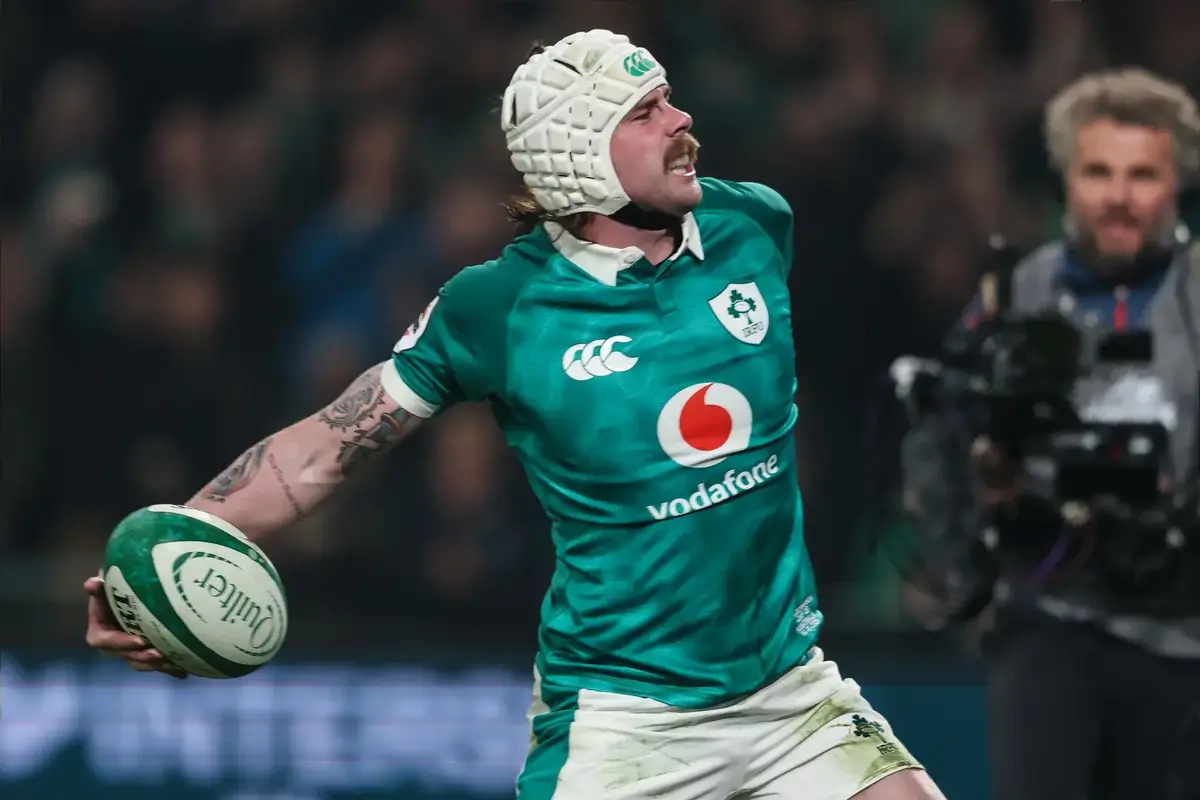
Ireland delivered the emphatic response Andy Farrell demanded, dismantling Australia 46-19 at a sold-out Aviva Stadium to record their biggest ever victory over the Wallabies. Mack Hansen announced his arrival at fullback with a first-half hat-trick on an emotional evening that saw Joe Schmidt return to his former home only to watch his Australian side suffer a comprehensive and at times humiliating defeat.
Key moments
6′ – TRY IRELAND: Mack Hansen strolls over untouched after quick tap penalty, Sam Prendergast converts (Ireland 7-0 Australia)
11′ – TRY IRELAND: Mack Hansen scores second try from Sam Prendergast loop play, Prendergast converts (Ireland 14-0 Australia)
18′ – TRY AUSTRALIA: Len Ikitau powers through Sam Prendergast after sustained pressure, James O’Connor converts (Ireland 14-7 Australia)
28′ – TRY IRELAND: Mack Hansen completes first-half hat-trick after cross-kick from Prendergast, conversion missed (Ireland 19-7 Australia)
28′ – INJURY SUBSTITUTION: Stuart McCloskey forced off injured, replaced by Bundee Aki
40′ – TRY AUSTRALIA: Fraser McReight scores from pick-and-go on half-time, James O’Connor converts (Ireland 19-14 Australia)
Half-time: Ireland 19-14 Australia
56′ – DROP GOAL IRELAND: Sam Prendergast slots drop goal from 35 metres (Ireland 22-14 Australia)
62′ – PENALTY IRELAND: Jack Crowley kicks penalty after scrum dominance (Ireland 25-14 Australia)
70′ – TRY IRELAND: Caelan Doris crashes over after sustained forward pressure, Jack Crowley converts (Ireland 32-14 Australia)
70′ – YELLOW CARD AUSTRALIA: Nick Frost sent to sin bin for high tackle on Thomas Clarkson
74′ – TRY AUSTRALIA: Billy Pollard forces way over from close range, Tane Edmed misses conversion (Ireland 32-19 Australia)
78′ – TRY IRELAND: Ryan Baird powers over after Bundee Aki carry, Jack Crowley converts (Ireland 39-19 Australia)
80′ – TRY IRELAND: Robbie Henshaw finishes cross-field move in corner, Jack Crowley converts from touchline (Ireland 46-19 Australia)
Full-time: Ireland 46-19 Australia
The 27-point winning margin eclipsed Ireland’s previous best of 15 points against Australia, achieved in 1979 and 2006, whilst the 46 points scored surpassed their previous record of 27 set in 1979 and equalled in 2016. After unconvincing performances against New Zealand and Japan had raised questions about this team’s direction, Ireland rediscovered their clinical edge with a display built on a dominant kicking game, set-piece superiority and ruthless finishing.
A big W under Saturday night lights! 😍 pic.twitter.com/E2x77gHqbi
— Irish Rugby (@IrishRugby) November 15, 2025
Sam Prendergast orchestrated proceedings brilliantly at out-half before Jack Crowley added further polish from the bench, whilst Ryan Baird’s lineout mastery – three steals in total – left Australia’s already fragile set-piece in tatters. The Wallabies lost six lineouts on their own throw, a statistic that laid bare their struggles on a wet Dublin evening.
The opening exchanges suggested Ireland meant business. Hansen demonstrated his aerial prowess with an early catch under pressure, whilst Tadhg Beirne made a half-break towards the 22. When Jeremy Williams strayed offside just six minutes in, Jamison Gibson-Park sensed vulnerability in the Australian defensive line and took matters into his own hands.
The scrumhalf’s quick tap caught the visitors napping. He released Lowe on the left edge, and though the wing was stopped metres short by Daugunu, Ireland’s support was exemplary. Through swift recycling and slick hands from McCloskey, the ball found Hansen who had an open boulevard to the tryline. The fullback didn’t have to break stride as he ghosted in beside the posts, touching down untouched to the delight of the 50,000 crowd. Prendergast’s conversion gave Ireland the perfect start.
Five minutes later came a try that showcased Prendergast’s game management and Ireland’s clinical execution. Following excellent kick-chase work from Hansen that forced an Australian knock-on, Ireland were awarded a free-kick at the scrum after an early shove. Prendergast launched a towering spiral bomb that travelled some 80 metres downfield. Jorgensen, under no pressure whatsoever, made an absolute hash of the gathering attempt, spilling the ball as he tried to prevent a 50-22. Ireland had a scrum five metres from the Australian line.
What followed was a masterclass in attacking rugby. Off the stable scrum platform, McCloskey took the initial carry over the gain line before Henshaw acted as the pivot. His flat pass out the back to Prendergast was perfectly weighted, taking out multiple defenders and creating a two-on-one overlap. Prendergast, demonstrating vision and composure, chose Hansen on the inside shoulder, and the fullback cantered through the gaping defensive hole to score his second try in the same spot as his first. Prendergast’s conversion from in front made it 14-0 after just 11 minutes, and the Wallabies looked shell-shocked.
Australia, staring down the barrel of a rout, finally found some traction through the only method that had troubled Ireland’s defence – direct, uncompromising forward play. The immediate impact of John Eales Medallist Len Ikitau was evident as the centre sparked the Australian attack with his powerful running. After Prendergast was penalised for not rolling away, the Wallabies went to the corner and established a strong attacking platform inside the 22.
Through two penalty advantages, they kept the ball narrow with punishing one-out carries from Faessler and Valetini. Jake Gordon’s quick service kept the momentum going as Australia stayed patient, probing for weaknesses. Harry Potter broke through a gap in midfield, sucking in more defenders. The Irish defence scrambled frantically but couldn’t stem the green and gold tide. When Ikitau received the ball 10 metres out, he identified Prendergast as the weak link and simply ran straight through the young out-half’s attempted tackle, diving over beside the posts. O’Connor’s conversion cut the deficit to seven points, offering Schmidt’s men genuine hope.
Ireland’s response was immediate and devastating. After Tommy O’Brien executed a delightful dink kick in behind that forced Jorgensen back towards his own line, Lowe produced a moment of pure physicality, picking up the Australian fullback and carrying him back over the tryline. The resulting five-metre scrum gave Ireland prime attacking position.
The third try, whilst credited to Hansen’s hat-trick, owed as much to good fortune as good management. Off the scrum, McCloskey’s hard carry drew in defenders before Aki – on as a replacement for the injured McCloskey who had limped off after 26 minutes – popped the ball back to Prendergast. With Suaalii bearing down on him, the out-half attempted an ambitious cross-kick towards O’Brien on the right wing. The execution was far from perfect as Prendergast was being tackled, but O’Brien managed to gather before being immediately tackled. As he went to ground, the ball spilled from his grasp, but crucially it rolled backwards. Hansen, following up with typical opportunism, scooped the wet ball off the turf and dived over from five metres. Prendergast’s conversion attempt drifted wide in the deteriorating conditions, but at 19-7 Ireland appeared in complete control.
The final act of a frantic first half, however, belonged to Australia. Having been outplayed in virtually every department, they showed admirable resilience to strike back just before the interval. From a lineout platform, the Wallabies eschewed any attempt at width, instead grinding forward through the guts of the Irish defence. Wilson and Hooper made valuable yardage with powerful carries before McReight spotted a gap on the blindside. The flanker executed a classic pick-and-go, powering through from close range and touching down beside the posts. O’Connor’s simple conversion made it 19-14 at the break – a scoreline that flattered the visitors given Ireland’s territorial and possession dominance, but one that kept them within touching distance.
The second half began as a tactical arm-wrestle, with both sides probing for weaknesses through the aerial battle. The conditions had worsened considerably, with rain sheeting down and making handling treacherous. Ireland’s kicking game, orchestrated by Gibson-Park and Prendergast, proved far more effective. Hansen was imperious under the high ball, claiming catch after catch despite the greasy conditions, whilst Australia’s back three looked increasingly uncertain.
When Daugunu was penalised for taking Prendergast off the ball on 56 minutes, the young out-half showed composure beyond his years. Rather than go for territory with penalty advantage, he dropped back into the pocket and stroked over a drop goal from 35 metres out. The three points extended Ireland’s lead to eight and, crucially, forced Australia to score twice.
The introduction of Andrew Porter at loosehead on 47 minutes proved transformative for Ireland’s scrum. The Leinster prop won a penalty at the first set-piece, allowing Prendergast to find touch just outside the 22. Minutes later, another Porter-won scrum penalty gave replacement out-half Crowley – on for Prendergast on 60 minutes after an outstanding shift – a straightforward kick from in front. His successful penalty made it 25-14, and Australia’s challenge was fading fast.
Ireland thought they had scored on the hour mark when O’Brien crossed in the corner after another Prendergast cross-kick found its target following yet another Jorgensen fumble under the high ball. The Aviva Stadium erupted, but the TMO spotted that Lowe had knocked on in the build-up after the initial Australian spill. No matter – the scrum gave Ireland attacking possession deep in Australian territory.
The decisive score arrived on 70 minutes and began, predictably, with Hansen claiming another Crowley bomb inside the 22. Ireland’s forwards took over, battering away at the Australian line with a series of close-range carries. Porter and Rónan Kelleher, fresh from the bench, made valuable ground before Gibson-Park worked the ball wide to Doris on the left edge. The captain, wearing the number seven shirt, had too much power for the covering defence and crashed over for Ireland’s fourth try. Crowley’s conversion from a wide angle made it 32-14, and the contest was effectively over.
Australia’s misery was compounded when the TMO identified foul play in the build-up to Doris’s try. Nick Frost had attempted a tackle on Thomas Clarkson but made contact with his shoulder to the prop’s head. Referee Karl Dickson brandished a yellow card, reducing the Wallabies to 14 men for the closing stages. The bunker review would later examine whether the card should be upgraded, though at this late stage the punishment length was immaterial.
Billy Pollard offered brief Australian resistance, forcing his way over from close range on 74 minutes after a series of penalties gave the visitors field position. The replacement hooker showed good determination, picking and going from the base of a ruck to dive over in the corner. Tane Edmed’s missed conversion left the score at 32-19, but any hopes of an unlikely comeback were extinguished almost immediately.
Ireland’s fifth try was a deserved reward for Baird’s outstanding performance. Spellbinding play from Craig Casey, on as a replacement for Gibson-Park, helped create the opportunity. After Aki punched a hole in the defence with a powerful carry that took him to within five metres of the line, Baird looped back on the short side and barged through sluggish Australian defenders to touch down on 78 minutes. Crowley’s conversion extended the advantage to 39-19 with two minutes remaining.
The finale was pure poetry. As the clock ticked into the red, Gibson-Park – who had replaced Hansen at fullback in the closing stages whilst Casey took over at scrumhalf – orchestrated a move of breathtaking ambition and execution. Crowley’s initial cross-kick found Kelleher on the right, the replacement hooker showing delicate footwork and dangerous pace as he burst through to advance the Irish attack. After quick recycling, Gibson-Park spotted Henshaw lurking on the left wing and launched a pinpoint cross-field kick that dropped perfectly into the centre’s breadbasket. Henshaw gathered in stride and raced into the corner for Ireland’s sixth try. Crowley completed a perfect evening with a magnificent touchline conversion that bisected the uprights to make the final score 46-19.
The final whistle brought a standing ovation from the capacity crowd, with particular acclaim reserved for Hansen, whose performance in his first Test start at fullback could scarcely have been better. The roar when Peter O’Mahony was spotted in the crowd was one of the loudest of the evening, a reminder of the affection Irish supporters hold for their former captain.
“Happy with how we started. Fast start,” captain Doris said afterwards. “I think they showed their quality with bouncing back in that second quarter. But how we finished off there, very pleasing. I think you could see the joy in how we played, and the support here was unbelievable as well. We obviously watched the football on Thursday, and saw how they played with so much passion and got the crowd involved, and we wanted to bring a bit of that today. I think we got some of it there.”
On Hansen’s performance, Doris added: “Mack has been class all week. Obviously challenging coming in not having been in for the last couple of weeks. Straight into the 15 jersey which is an unfamiliar position for him as well. But top class as you saw. Three tries, took them all nicely, so delighted for him.”
Hansen himself was effusive in his praise for the team effort. “It feels unbelievable, any chance to play in front of this crowd is great,” the Australian-born fullback said. “It’s the pleasure of playing in this team. All I had to do was pick the ball up and run over the line after a load of work from the boys. I wasn’t born here, but this feels like home to me and I love playing for this team. People expect a lot from us, so it’s not good enough to win games, we have to win games well.”
The 27-point margin represents Ireland’s record victory over Australia, eclipsing their previous best winning margins. More importantly, it delivered the statement performance Farrell desperately needed ahead of next week’s daunting visit from world champions South Africa. The Irish lineout, a source of concern in recent weeks, functioned smoothly with Baird exceptional in both attack and defence, whilst Prendergast’s assured display at out-half suggested Ireland may have found their long-term successor to Johnny Sexton. This was Ireland’s best performance since their Six Nations victory in Scotland back in February.
For Schmidt, returning to the scene of so many triumphs during his decorated Ireland tenure from 2013 to 2019, it proved a chastening and emotional experience. His Wallabies side, now with eight defeats in their last 10 matches, were comprehensively outplayed in every facet. The lineout malfunction continued throughout – six lost throws on their own ball proved catastrophic – whilst their attack lacked cohesion and penetration beyond close-range forward rumbles. The visitors struggled to control the high ball as the wet conditions took their toll, and a long season appeared to catch up with them in Dublin. With Schmidt set to hand over to Les Kiss mid-way through 2026, questions will inevitably be asked about Australia’s direction and whether this transitional period has gone according to plan. A daunting trip to Paris next week offers little respite.
Ireland, by contrast, can take immense satisfaction from a performance that combined clinical finishing, tactical nous and physical dominance. The challenge now is to replicate this level against the Springboks, a team unlikely to be as generous in defence as the Wallabies proved on this Dublin night. If Ireland can maintain this intensity and execution, they will fancy their chances of claiming another significant scalp.
Ireland: Hansen (Gibson-Park 72); O’Brien, Henshaw, McCloskey (Aki 28), Lowe; Prendergast (Crowley 60), Gibson-Park (Casey 70); McCarthy (Porter 47), Sheehan (Kelleher 56), Furlong (Clarkson 56), Ryan (C Prendergast 56), Beirne, Baird, Doris (capt), Conan (Timoney 47)
Australia: Jorgensen; Daugunu (Kellaway 58), Suaalii, Ikitau, Potter; O’Connor (Edmed 70), Gordon (Lonergan 70); Bell (Robertson 53), Faessler (Pollard 53), Alaalatoa (Nonggorr 60), Williams (Frost 54), Hooper, Valetini (Tizzano 62), McReight, Wilson (capt)
Referee: Karl Dickson (RFU)
Attendance: 50,000 (capacity)
Share this:
Autumn Nations Series
Jarrod Evans’ last-gasp kick saves Wales from Japan humiliation
Published
3 days agoon
15th November 2025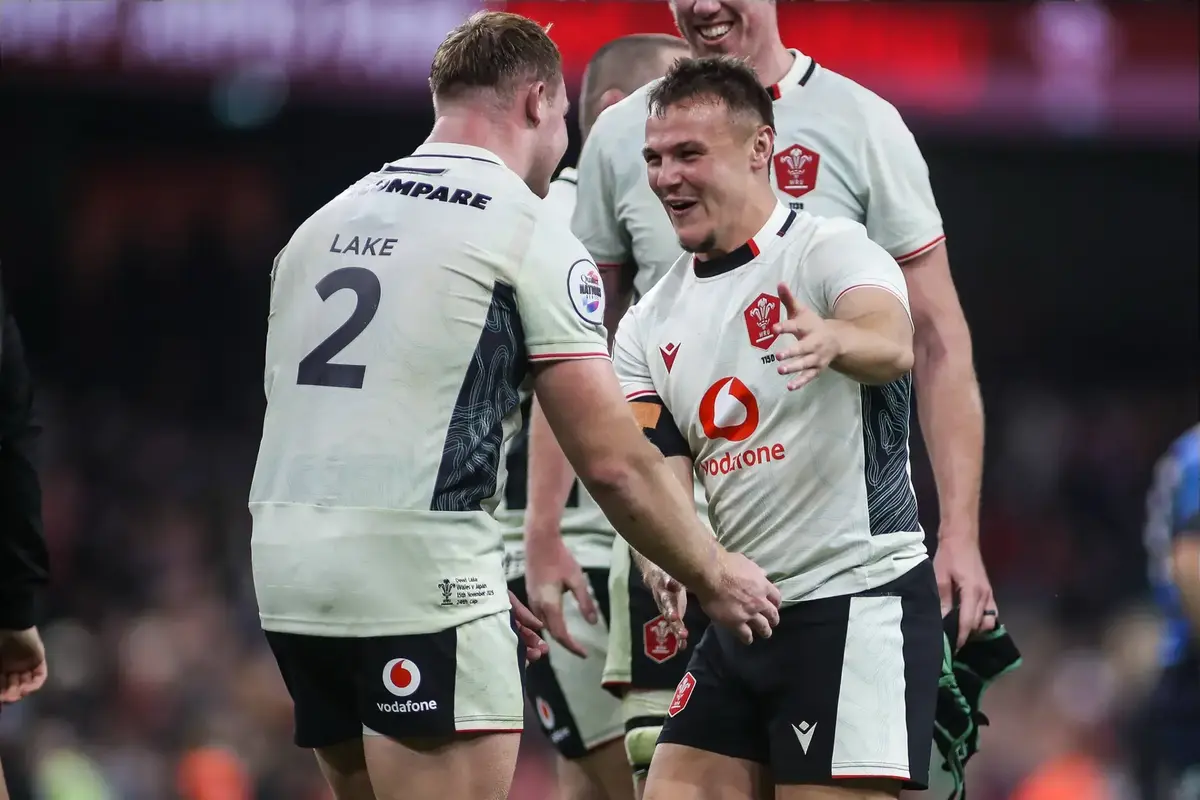
Wales plucked victory from the jaws of defeat as substitute fly-half Jarrod Evans kept his nerve to slot a stoppage-time penalty and secure a 24-23 victory over Japan at the Principality Stadium. The dramatic intervention ended Wales’ 10-match losing streak in Cardiff and delivered head coach Steve Tandy his first win, but the manner of the triumph exposed deep vulnerabilities in a side that remains some distance from genuine competitiveness.
Key moments
5′ – TRY WALES: Dan Edwards dummies through tackles to score, converts his own try (Wales 7-0 Japan)
15′ – TRY JAPAN: Kippei Ishida finishes slick passing move in corner, Seungsin Lee converts (Wales 7-7 Japan)
25′ – YELLOW CARD JAPAN: Epineri Uluiviti sent to sin bin for reckless hit on Alex Mann off the ball
30′ – YELLOW CARD JAPAN: Faulua Makisi sent to sin bin for high tackle on Dan Edwards, Japan down to 13 men
40′ – YELLOW CARD WALES: Josh Adams receives yellow for illegal clear-out, upgraded to 20-minute red card
Half-time: Wales 7-7 Japan
48′ – PENALTY JAPAN: Seungsin Lee kicks penalty (Wales 7-10 Japan)
50′ – TRY WALES: Louis Rees-Zammit crosses in corner after Tomos Williams pass, Dan Edwards converts (Wales 14-10 Japan)
56′ – PENALTY JAPAN: Seungsin Lee kicks penalty (Wales 14-13 Japan)
60′ – TRY JAPAN: Faulua Makisi powers over from close range, Seungsin Lee converts (Wales 14-20 Japan)
63′ – TRY WALES: Nick Tompkins scores moments after entering as replacement, Dan Edwards converts (Wales 21-20 Japan)
66′ – PENALTY JAPAN: Seungsin Lee kicks penalty (Wales 21-23 Japan)
79′ – YELLOW CARD JAPAN: Harry Hockings sent to sin bin for high tackle on Alex Mann
82′ – PENALTY WALES: Jarrod Evans slots stoppage-time penalty (Wales 24-23 Japan)
Full-time: Wales 24-23 Japan
The stakes could scarcely have been higher. With the 2027 World Cup draw looming on 3 December, defeat would have seen Wales drop to 13th in the world rankings and into the third band of teams for the draw. The prospect of facing South Africa and Argentina in the pool stages would have become a genuine possibility. A nation which has reached two World Cup semi-finals in the last four tournaments needed to avoid humiliation against opponents who had never won on Welsh soil.
🚨 𝙎𝙜ô𝙧 𝙏𝙚𝙧𝙛𝙮𝙣𝙤𝙡 | 🏴24-23🇯🇵
Buddugoliaeth @principalitysta ❤️🙌#CymruAmByth | #WALvJPN pic.twitter.com/monJb4ynwO
— Welsh Rugby Union 🏴 (@WelshRugbyUnion) November 15, 2025
Steve Tandy, whose debut ended in a record 52-28 defeat to Argentina, had promised his side would not attempt to match Japan’s breakneck tempo. Those assurances proved hollow as Wales produced a chaotic, error-strewn performance that left the 61,324 crowd fearing the worst until Evans’s late heroics.
Wales signalled their attacking intent after just four minutes, spurning a simple penalty in front of the posts to kick to the corner. It proved an inspired decision. Flanker Aaron Wainwright slipped through the Japanese midfield and after a series of rucks under the posts, the ball was shipped left where Dan Edwards displayed impressive footwork to wriggle through two tackles and score. The Ospreys fly-half added the conversion himself for a 7-0 lead.
The early confidence evaporated almost immediately. Japan, playing with the relentless pace and ambition that has become their trademark under Eddie Jones, began to assert control. Their kicking game was intelligent, their ruck speed breathtaking, and their willingness to move the ball through multiple phases repeatedly unsettled the home defence. Wales attempted to match that tempo rather than impose their own structured gameplan, and the result was a succession of handling errors and misfires at the lineout that repeatedly stalled their momentum.
Japan’s reward came in the 15th minute. After patient phase play, slick handling down the right touchline unlocked the Welsh defence and wing Kippei Ishida finished confidently in the corner. Fly-half Seungsin Lee added a superb conversion from the touchline and the scores were level at 7-7.
What followed was a period of utter chaos that encapsulated Wales’ struggles. First, Japan lock Epineri Uluiviti was shown a yellow card for a reckless late collision on flanker Alex Mann, who was nowhere near the ball. Moments later, number eight Faulua Makisi joined him in the sin bin after a bunker review deemed his high tackle on Edwards worthy of further sanction. Japan were down to 13 men for four crucial minutes.
Wales, incredibly, could not capitalise. Their attack lacked cohesion and composure, the handling remained sloppy, and decision-making proved woeful. Louis Rees-Zammit, making his first start since the 2023 World Cup quarter-final, produced a stunning break from his own 22 with the electrifying pace that made him a star. Yet when the crucial moment arrived, he refused to pass to scrum-half Tomos Williams, who was screaming for the ball in support, and eventually knocked on. Charlie Lawrence’s superb covering tackle had stopped Rees-Zammit just short, but the winger’s failure to look for support summed up Wales’ afternoon.
Wales lost another lineout on the Japanese 22, tight-head Archie Griffin knocked on close to the line, and the visitors somehow emerged from the period down to 13 men without conceding. Even more remarkably, they nearly scored, with Edwards forced to produce a crucial tackle on full-back Yoshitaka Yazaki after he had twisted Blair Murray inside out.
Wales’s frustrations boiled over just before half-time. Josh Adams was shown a yellow card for an illegal clear-out on centre Dylan Riley, tucking his shoulder in dangerously at the ruck. The bunker review upgraded it to a 20-minute red card, meaning Wales would start the second half a man down. Lee’s penalty attempt to give Japan the lead struck the post and wing Tomoki Osada nearly scored from the rebound, but it remained 7-7 at the break. Wales trudged off having squandered a golden opportunity and facing 20 minutes with 14 men.
The second half began disastrously for the hosts as news filtered through that Adams’s yellow had been confirmed as a red. Japan immediately went on the attack, stringing together 13 phases and stressing Wales at every point. The visitors earned a penalty and Lee made no mistake, nudging them ahead 10-7.
Wales made a triple substitution, bringing on props Rhys Carre and Keiron Assiratti along with flanker Taine Plumtree. The changes had immediate impact. Wales won a penalty and again rejected the posts in favour of the corner. After patient build-up, Williams delivered a perfectly weighted long pass to the right touchline where Rees-Zammit gathered and dived acrobatically into the corner for his 15th international try. Edwards added a superb touchline conversion and Wales led 14-10, suddenly more effective with 14 men than they had been with 15.
The game continued its frenetic pattern. Lee kicked a straightforward penalty to reduce the deficit to one point before Japan showed their true quality. After Wales conceded another penalty wide on the left, the visitors kicked to the corner. The lineout was secured and Makisi, who had returned from his earlier sin-binning, powered over from close range with impressive strength. Lee’s conversion gave Japan a 20-14 lead with 20 minutes remaining.
Wales needed inspiration and found it from substitute Nick Tompkins. The Saracens centre had only been on the pitch for barely a minute, replacing Adams and slotting into the midfield with Max Llewellyn moving to the wing. Williams delivered another perfectly timed flat pass and Tompkins exploited a gap in the Japanese defence to score from close range. Edwards’s conversion put Wales back in front at 21-20 with 17 minutes remaining.
The drama was far from over. Wales conceded a penalty almost immediately from the restart and Lee coolly slotted it from in front of the posts to restore Japan’s lead at 23-21. The visitors then had a glorious opportunity to kill the game when they won a lineout five metres from the Welsh line, but somehow lost control of the drive. Eddie Jones’s pained expression in the coaching box told the story.
With time running out, Wales launched one final attack. Mann escaped down the left touchline before being stopped by a thunderous hit from replacement lock Harry Hockings. Referee Matthew Carley consulted the TMO and the tackle was deemed high. Hockings was shown a yellow card and Wales had one last chance.
Evans, who had replaced Edwards just moments earlier, kicked to the corner. The lineout was won, the maul drove forward, and another penalty was awarded just inside the Japanese half. There was no debate about the decision. Evans stepped up and with the weight of a nation on his shoulders, the Harlequins fly-half struck the ball cleanly between the posts. When Carley blew the final whistle moments later, the relief was palpable.
Number eight Olly Cracknell was named man of the match on his first international start at the age of 31, though Japan’s Dylan Riley, Charlie Lawrence and Faulua Makisi had arguably been the game’s outstanding performers. For Wales, the victory ensured they remain 12th in the world rankings ahead of the crucial World Cup draw, but the performance raised serious questions about their competitiveness against elite opposition.
Tandy described himself as “a lucky, lucky man” afterwards, and few would disagree. Wales have won just two of their last 21 Tests, and with New Zealand and South Africa arriving in Cardiff over the next two weekends, this side will need to improve dramatically if they are to avoid further punishment. Resilience may have saved them on this occasion, but against the world’s best, resilience alone will not be enough.
Share this:
Autumn Nations Series
Springboks survive another red card to hold off Italy in Turin
Published
3 days agoon
15th November 2025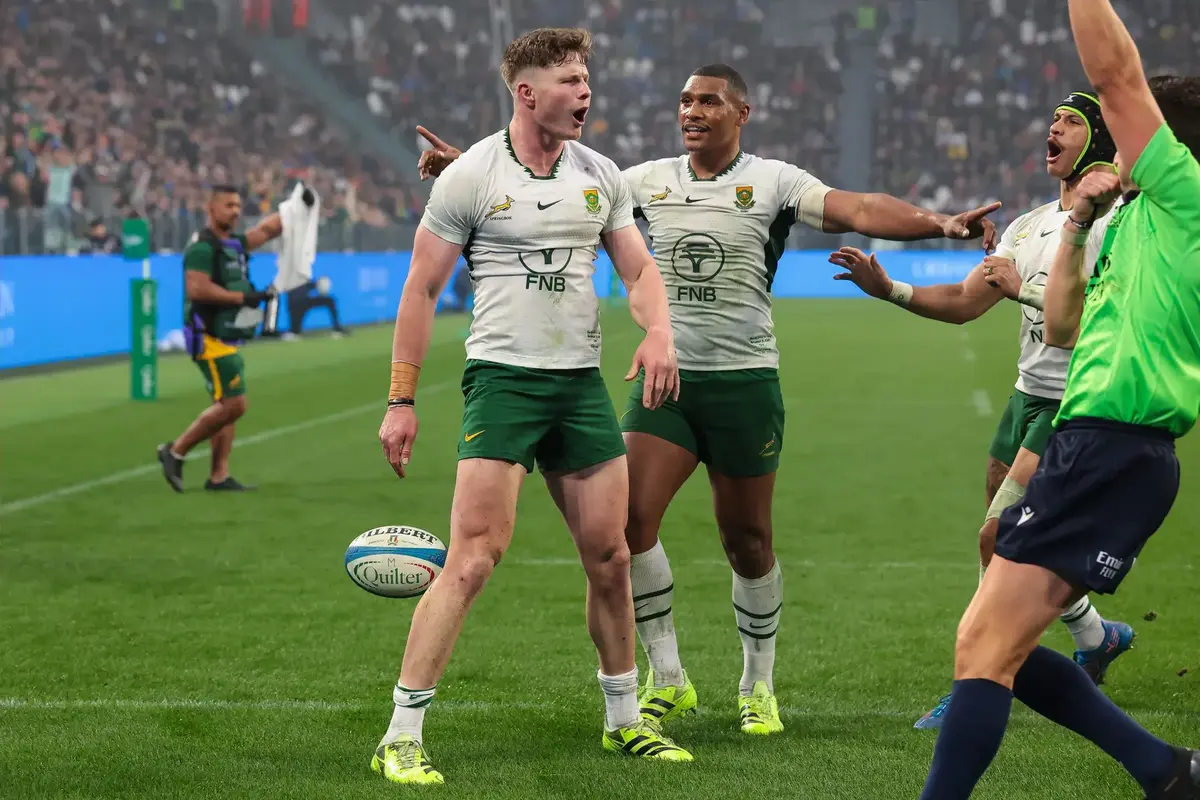
South Africa produced another display of resilience and adaptability as the world champions overcame a second consecutive controversial red card to defeat Italy 32-14 in a rain-soaked Turin encounter that exposed the hosts’ inability to capitalise on golden opportunities.
Key moments:
12′ – RED CARD SOUTH AFRICA: Franco Mostert sent off for high tackle on Paolo Garbisi (Italy 0-0 South Africa)
33′ – PENALTY SOUTH AFRICA: Handre Pollard kicks penalty (Italy 0-3 South Africa)
38′ – PENALTY ITALY: Paolo Garbisi kicks penalty (Italy 3-3 South Africa)
41′ – TRY SOUTH AFRICA: Marco van Staden powers over from close range, Handre Pollard converts (Italy 3-10 South Africa)
Half-time: Italy 3-10 South Africa
43′ – PENALTY ITALY: Paolo Garbisi kicks penalty (Italy 6-10 South Africa)
51′ – YELLOW CARD SOUTH AFRICA: Marco van Staden sent to sin bin for going off his feet
53′ – PENALTY ITALY: Paolo Garbisi kicks penalty (Italy 9-10 South Africa)
55′ – PENALTY SOUTH AFRICA: Handre Pollard kicks penalty (Italy 9-13 South Africa)
57′ – YELLOW CARD ITALY: Lorenzo Cannone sent to sin bin for high tackle on Kwagga Smith
60′ – TRY SOUTH AFRICA: Morne van den Berg snipes over from five-metre scrum, Handre Pollard converts (Italy 9-20 South Africa)
66′ – TRY ITALY: Ange Capuozzo scythes through on brilliant angle, Paolo Garbisi misses conversion (Italy 14-20 South Africa)
74′ – TRY SOUTH AFRICA: Grant Williams finishes after Canan Moodie break, Manie Libbok converts (Italy 14-27 South Africa)
79′ – TRY SOUTH AFRICA: Ethan Hooker gathers Manie Libbok cross-field chip for maiden international try, conversion not taken (Italy 14-32 South Africa)
Full-time: Italy 14-32 South Africa
For the second successive Saturday, the Springboks lost a lock to a permanent red card, this time Franco Mostert in the 12th minute for a tackle deemed illegal on Paolo Garbisi. Yet Rassie Erasmus’s much-changed side, already fielding an experimental lineup with 11 alterations from the victory over France, demonstrated remarkable character to score four tries whilst playing 68 minutes with 14 men and at one stage being reduced to 13.
Italy arrived buoyed by their impressive 26-19 triumph over Australia the previous weekend and sensing a historic opportunity against weakened opposition. The Azzurri started with intent at the Allianz Stadium, Manuel Zuliani immediately showcasing his breakdown prowess by winning a crucial third-minute turnover as the hosts sought to establish territorial dominance.
The opening exchanges belonged entirely to Italy. Monty Ioane carved through midfield in the sixth minute before chipping ahead for Ange Capuozzo to chase, only for Damian Willemse’s exceptional covering to deny the danger. The Italian backline continued probing, with Juan Ignacio Brex and Tommaso Menoncello creating space through intelligent lines of running, but the final execution repeatedly eluded Gonzalo Quesada’s side.
The match’s defining moment arrived in the 12th minute when referee James Doleman reviewed Mostert’s tackle on Garbisi. The lock’s shoulder made contact with the Italian fly-half’s head region, and crucially, the officials determined he had failed to wrap his arms, rendering the tackle illegal from inception. Captain Siya Kolisi appeared genuinely bewildered by the permanent red card, a decision that felt considerably harsher than Lood de Jager’s dismissal against France seven days earlier.
Erasmus immediately sacrificed flanker Ben-Jason Dixon, introducing lock Ruan Nortje to maintain lineout organisation and second-row presence. The coaching staff then made a succession of rapid-fire changes as Italy’s pack began dominating at scrum time, with Danilo Fischetti repeatedly folding back the Springbok front row.
Young prop Zachary Porthen departed after just 19 minutes for Wilco Louw, before Boan Venter followed him four minutes later in favour of Gerhard Steenekamp. The personnel carousel continued when Andre Esterhuizen entered in the 26th minute as a hybrid flanker-centre, with wing Kurt-Lee Arendse the unfortunate casualty. Four changes inside the opening half-hour represented unprecedented disruption to the world champions’ carefully laid plans.
Despite their numerical advantage and scrum ascendancy, Italy struggled desperately to convert pressure into points. Garbisi missed straightforward penalties in the 15th and 26th minutes, whilst promising attacking platforms broke down through poor decision-making. When the fly-half launched an ill-advised cross-kick towards the well-marked Ioane in the 16th minute, Willemse claimed impressively under pressure.
The Springboks barely escaped their own half during the opening 30 minutes, completing 96 per cent of their tackles in a defensive masterclass that kept the hosts scoreless. When South Africa finally entered Italy’s 22, they capitalised ruthlessly. Pollard struck a drop goal in the 32nd minute, only for the TMO to spot a questionable obstruction by Louw in the build-up. As advantage had been playing, Pollard added three points via penalty instead.
Garbisi finally found his range five minutes later following another dominant Italian scrum, levelling the scores at 3-3. The momentum appeared to be shifting towards the Azzurri, but the Springboks demonstrated their clinical edge on the stroke of half-time. From a free kick inside Italy’s 22, a series of pick-and-goes culminated with van Staden bulldozing over beside the left upright. Pollard’s conversion gave South Africa an unlikely 10-3 lead at the interval.
Italy emerged with renewed purpose after the break, Garbisi reducing the deficit to four points within three minutes. The hosts’ best spell followed, with clever kicking from both Garbisi and Louis Lynagh pinning Willemse into touch for a lineout five metres from the Springbok line. Yet again, execution failed them as Zuliani’s pass to Menoncello arrived fractionally late, the centre unable to gather cleanly.
The match reached its critical juncture when van Staden was sin-binned in the 51st minute for cynically going off his feet in the red zone. Garbisi’s penalty made it 10-9, leaving the 13-man Springboks clinging to a single-point advantage. Instead of wilting, the world champions responded immediately. Pollard restored the four-point cushion before Lorenzo Cannone joined van Staden in the bin for an upright tackle on Kwagga Smith, levelling the numbers at 14 apiece.
With numerical parity restored, South Africa seized control emphatically. From a penalty, they opted for a five-metre scrum. The pack marched forward before van den Berg spotted the unguarded blindside, darting right and stretching out despite desperate Italian defence. Pollard’s conversion made it 20-9 with 20 minutes remaining.
Italy refused to surrender. Capuozzo produced individual brilliance in the 66th minute, timing his run perfectly to take Garbisi’s inside ball before accelerating through a narrow gap on an exquisite angle. His pace carried him clear of the Springbok defence, but Garbisi’s missed conversion left the deficit at six points rather than the psychologically crucial four.
Any lingering hopes of an Italian comeback evaporated eight minutes later through a moment of breathtaking quality. Willemse launched a counter-attack from deep, finding Canan Moodie on the left flank. The centre executed a perfectly timed stop-and-go that left Lynagh grasping at air before showing electrifying pace to beat the cover. His intelligent offload found replacement scrumhalf Grant Williams, who raced unopposed to the posts. Libbok’s conversion stretched the lead to 13 points with six minutes remaining.
The final act belonged to Hooker, who claimed Libbok’s pinpoint cross-field chip in the 79th minute, spun back inside the covering defender and dotted down for his maiden international try. The conversion went unattempted as time expired, Libbok having allowed the shot clock to run down in farcical circumstances with bodies flooding onto the field.
Player of the match Willemse deflected praise afterwards. “You’ve got to give it to the team, that’s a full team effort,” the full-back insisted. “Italy are a very all-core team and they showed that tonight. They put us under a lot of pressure on the ball, set-piece, on defence. We knew we had to show character and the boys did that.”
Erasmus cut a conflicted figure post-match, expressing frustration whilst stopping short of criticising officials. “I’m just grateful that we had experienced referees,” he said diplomatically. “What I can say is that it’s sad that our captain had to make that sacrifice in his 100th game and in this game. Losing two locks in two games now for going lower than they can go, it’s tough to understand. We don’t know how to coach guys to go lower, especially for a two-metre-tall guy.”
For Italy, this represented a squandered opportunity that will haunt them. Garbisi’s kicking woes proved decisive, missing four of seven attempts including Capuozzo’s conversion. The fly-half, who boasted a perfect record against Australia, endured a nightmare afternoon with the boot. The Azzurri’s tendency to resort to ineffective grubber kicks when close to the Springbok line highlighted a lack of composure in crucial moments.
The statistics told the story of Italy’s dominance in possession and territory without the cutting edge to match. Capuozzo led all players with 112 metres gained, whilst Zuliani completed 16 tackles and won two turnovers in a heroic individual display. Yet these efforts counted for little against opponents who scored on four of their five meaningful entries into the 22.
For South Africa, this victory maintained their perfect autumn campaign ahead of next Saturday’s crucial encounter with Ireland in Dublin. However, the loss of both de Jager and Mostert to suspension presents Erasmus with a significant selection headache for what promises to be the tour’s defining match. The Springboks’ extraordinary ability to overcome adversity has been tested twice in succession; against Andy Farrell’s Ireland, they will hope to avoid a third consecutive red card drama.
The world champions have now won back-to-back matches despite permanent red cards, underlining their status as rugby’s most mentally resilient side. Yet questions will inevitably persist about tackle technique and officiating consistency as the sport grapples with player welfare concerns. For now, Erasmus can celebrate another demonstration of his squad’s remarkable depth and character under extreme pressure.
Share this:


Trending
-

 Autumn Nations Series2 weeks ago
Pollock the game-changer as four-try England overpower Australia
-

 Autumn Nations Series1 week ago
Fourteen-man Springboks stun France in Paris masterclass
-

 Autumn Nations Series2 weeks ago
Three changes in All Blacks starting side for Scotland Test
-

 Autumn Nations Series2 weeks ago
Carter Gordon named in Wallabies starting lineup for Italy Test
-

 Autumn Nations Series2 weeks ago
Beirne free to face Japan as controversial red card rescinded
-

 Autumn Nations Series2 weeks ago
Late surge powers All Blacks past Ireland in Chicago rematch
-

 Autumn Nations Series1 week ago
Late surge powers sloppy Ireland past Japan in Dublin
-

 Autumn Nations Series3 weeks ago
George Ford gets the nod for England Test opener with Wallabies
