New Zealand
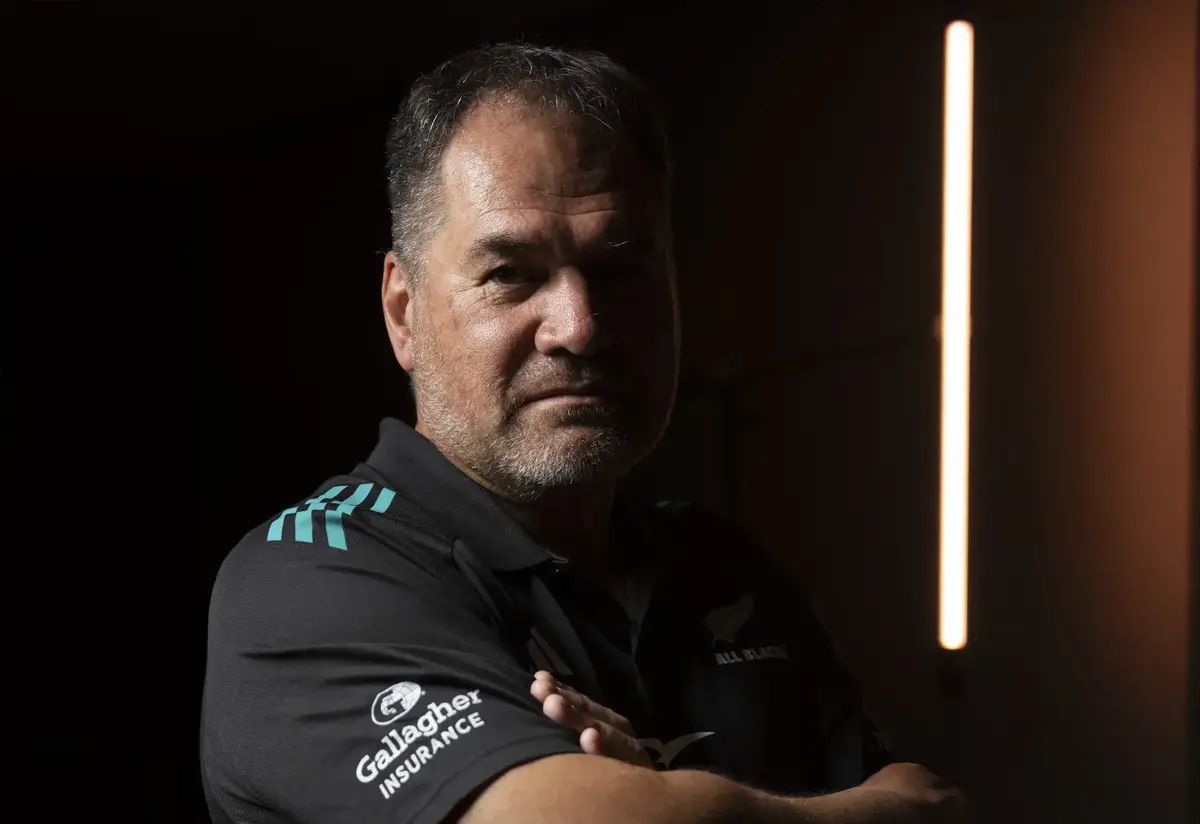
Joseph appointed All Blacks XV head coach for next two years
Published
4 months agoon
Highlanders coach Jamie Joseph has been named head coach of the All Blacks XV for the 2025 and 2026 seasons, marking his return to international rugby after a distinguished eight-year tenure with Japan.
📰 Jamie Joseph has been appointed as the All Blacks XV coach for the 2025 and 2026 seasons.
Jamie Mackintosh, David Hill, and Cory Jane will remain as assistant coaches ahead of three overseas fixtures this November. pic.twitter.com/8oVwPWGekE
— All Blacks (@AllBlacks) September 29, 2025
New Zealand Rugby confirmed the appointment on Tuesday, with Joseph succeeding Clayton McMillan in the role and retaining the existing coaching group of Jamie Mackintosh, David Hill, and Cory Jane ahead of three overseas fixtures in November.
The 55-year-old’s appointment is seen as a clear signal that he remains firmly in New Zealand Rugby’s thinking for the top job, having previously been overlooked for the All Blacks head coach position in favour of Scott Robertson prior to the 2023 Rugby World Cup.
Joseph returned to New Zealand in 2024 to take up a director of rugby role with the Highlanders before returning to the position of head coach for the 2025 Super Rugby Pacific season. Despite the Dunedin-based franchise’s struggles this year, his vast international experience made him the standout candidate for the All Blacks XV position.
“It’s been great coming home to New Zealand after such a long time away, but being part of a team wearing a black jersey will always be special,” Joseph said. “For the players selected it’s an opportunity to represent their country, themselves and their whānau on the world stage.
“My job is to create an environment that challenges the players and prepares them to win on the world stage and put their hands up for higher honours. It’s an exciting schedule that will put the group under pressure and expose them to different playing styles on big stages.”
Joseph’s credentials for the role are exceptional. A 20-Test All Blacks loose forward between 1992 and 1995, he also represented the Māori All Blacks and Japan as a player before retiring in 2001. His coaching career has been nothing short of distinguished, highlighted by 51 Tests as Japan’s head coach between 2016 and 2023, during which he elevated the Brave Blossoms to unprecedented heights in international rugby.
Before his Japan tenure, Joseph led the Highlanders to their maiden Super Rugby title in 2015 after six years at the helm, and guided the Māori All Blacks to five wins from six matches between 2010 and 2012.
Speaking to media, Joseph admitted he had been missing the international arena. “I think it is a real privilege to get involved with this level of rugby again,” he said. “I’m missing that level of rugby to be honest after being involved with the Japanese team for eight years. You miss that level of footy and this is an opportunity to get better.”
NZR Head of Professional Rugby & Performance Chris Lendrum emphasised that Joseph’s vast experience would be invaluable to the All Blacks XV programme, which serves as a vital development pathway for aspiring All Blacks.
“Jamie has coached and played at every level of the game and has a deep understanding, both as a player and coach, of what it takes to prepare players for international rugby and to win on the global stage,” Lendrum said. “He’s a proven leader who knows how to get the best out of his players and build a strong team identity and culture. The All Blacks XV is a vital part of the men’s pathway, and we know Jamie will make his mark on the team and the programme.”
The All Blacks XV will embark on their fourth November tour with three fixtures in England. They will face the Barbarians at Gtech Community Stadium in Brentford on 2 November (kick-off 1.15am NZT, 13:15 GMT), followed by a clash with England A at The Recreational Ground in Bath on 9 November (kick-off 1.15am NZT, 13:15 GMT). A third match on 16 November is yet to be confirmed, though it is understood to be against Georgia.
The squad will be announced on 14 October and assemble on 24 October before departing for England. Players involved in the Bunnings Warehouse NPC final will join the group and travel following that match.
The All Blacks XV has already proven to be an effective launching pad for players aspiring to full international honours, with Fabian Holland, Du’Plessis Kirifi, and Simon Parker among those who have progressed through the programme into the All Blacks.
Highlanders CEO Roger Clark described Joseph’s appointment as “a proud moment for the Highlanders.”
“His legacy here speaks volumes about his leadership and vision,” Clark said. “We know he’ll bring the same passion and excellence to the national setup, and we’re excited to see him shape the future of New Zealand rugby.”
Joseph has made no secret of his ambition to one day coach the All Blacks, and this appointment keeps him squarely in the frame for the top job should Robertson not be reappointed following the 2027 Rugby World Cup. The All Blacks XV role will allow Joseph to work alongside the All Blacks coaching staff in terms of selection whilst putting his own stamp on the development side.
Players throughout New Zealand will now be under no illusion that performing for Joseph could be their ticket to higher honours, whilst the Highlanders stand to benefit indirectly from having a coach so prominently positioned within the national programme.
In 2024, the All Blacks XV recorded victories over Munster and Georgia under McMillan’s guidance, establishing a strong foundation for Joseph to build upon as he returns to the international stage.
Share this:
You may like
-
Scott Robertson sacked as head coach of All Blacks
-
Former All Black signs for Newcastle as England switch looms
-
All Blacks wrap up season with resounding victory over Wales
-
George Ford guides England past All Blacks to claim historic win
-
Barrett returns as All Blacks name new midfield for England Test
-
Ford returns as England deploy ‘Pom Squad’ for All Blacks clash
New Zealand
Scott Robertson sacked as head coach of All Blacks
Published
3 weeks agoon
15th January 2026
In one of the most dramatic developments in All Blacks history, Scott Robertson has been sacked as head coach after just two years in charge, with New Zealand Rugby acting decisively following an internal review that painted a damning picture of the team’s direction and culture.
Key moments
- Scott Robertson dismissed after just two years of four-year contract
- Internal review reveals damning feedback from senior players on coaching environment
- Record 43-10 defeat to South Africa proved watershed moment
- Two assistant coaches departed during Robertson’s tenure
- NZR chairman David Kirk cites lack of “trajectory” towards 2027 World Cup
- Jamie Joseph emerges as frontrunner to replace Robertson
- Decision leaves All Blacks searching for coach ahead of crucial 2026 schedule
The decision, announced on Thursday, sends shockwaves through world rugby and leaves the All Blacks scrambling to find a new leader with only 20 months remaining until the 2027 Rugby World Cup in Australia. For Robertson, the man who arrived with a golden reputation after guiding the Crusaders to seven consecutive Super Rugby titles, it represents a spectacular fall from grace in the job he had campaigned so vocally to secure.
Scott Robertson has departed as Head Coach of the All Blacks. We wish Razor all the best with his next steps.
A process will commence immediately to recruit a new Head Coach. pic.twitter.com/WWDtsox5ed
— All Blacks (@AllBlacks) January 15, 2026
NZR chairman David Kirk, addressing the media in Auckland, was unequivocal about the reasoning behind the brutal decision. “The All Blacks are not on track the way they need to be on track for the 2027 World Cup,” Kirk stated. “I think trajectory is a good word to apply, we just weren’t seeing the trajectory. Fans will probably have shared that… we were falling a bit short of the excellence that we’re looking for, it never really got addressed over the year.”
The timing is particularly striking given the challenges ahead. The All Blacks face one of their most demanding schedules in 2026, including a landmark four-Test series against world champions South Africa in the inaugural Greatest Rivalry tour, as well as Nations Championship fixtures against Ireland, France and Italy at home, followed by a northern tour featuring England, Scotland and Wales.
The cracks begin to show
Robertson’s tenure, which began with much fanfare following the 2023 Rugby World Cup, was marked by increasingly visible fractures both on and off the field. The first significant red flag emerged in August 2024 when assistant coach Leon MacDonald departed halfway through the Rugby Championship, just two months after being unveiled as part of Robertson’s coaching team. Sold publicly as a clash in coaching styles, the move raised eyebrows throughout New Zealand rugby circles.
“As coaches, we have differing views and both agreed it wasn’t working,” Robertson said at the time. However, it was understood MacDonald was unhappy taking a back seat to Scott Hansen, Robertson’s right-hand man from his Crusaders days.
The departure of Jason Holland, the set-piece attack and backs coach, in October compounded concerns about Robertson’s management style. That a coach would leave a coveted All Blacks position less than two years before a World Cup to return to the Hurricanes as an assistant raised serious questions about the environment Robertson had created.
Record defeat proves watershed
If there was a single moment that crystallised the All Blacks’ struggles under Robertson, it came on a miserable September evening in Wellington. The 43-10 demolition by South Africa represented New Zealand’s heaviest-ever defeat, surpassing even the 35-7 loss to the Springboks that had preceded the 2023 World Cup. More damning than the scoreline was the manner of capitulation – the All Blacks showed little fight as the Springboks ran in unanswered tries in the closing stages.
Robertson looked haunted in the aftermath, and whilst the All Blacks would win five of their remaining six tests in 2025, finishing with 10 victories from 13 matches, the lack of progress was glaring. Their attack remained dysfunctional, their structure appeared confused, and the excellence expected of the world’s most storied rugby nation seemed increasingly distant.
The 29-23 defeat to Argentina in Buenos Aires – New Zealand’s first loss to Los Pumas away from home – and the comprehensive 33-19 thrashing by England at Twickenham in November only reinforced the impression of a team drifting. It marked just the ninth time in 120 years of rivalry that England had beaten the All Blacks.
Player discontent emerges
Perhaps most damaging for Robertson were reports of widespread player dissatisfaction that emerged in December following the northern tour. The internal review, led by Kirk, NZR board member and former All Black Keven Mealamu, and former high performance manager Don Tricker, canvassed up to 20 senior players about the coaching set-up, environment and culture.
The feedback, according to sources, was scathing. Reports suggested star back-row forward Ardie Savea, the former captain, was so disillusioned he was exploring options to remain with Japanese club Kobe Steelers or sign for a European club rather than return to the All Blacks under Robertson’s coaching.
However, Kirk was at pains to dismiss suggestions of a player revolt. “There was definitely no revolt,” he insisted. “The players were very measured and thoughtful in their responses. It’s very unfair to say that Ardie somehow led something, not at all. He expressed public opinions. Some of those opinions were not agreed with by other players. Others would have been somewhat aligned with them.”
Kirk confirmed Savea remains contracted until the end of 2027 and is expected to feature in the All Blacks’ future, with the 32-year-old potentially in contention for the captaincy under a new coach.
The haka controversy during the Italy fixture on the northern tour provided another example of the disconnect within the squad. TJ Perenara slipped a message of support for Treaty of Waitangi protests into the traditional war dance, with some players later posing with a Tino Rangatiratanga flag. Whilst Robertson claimed Perenara had discussed the alteration with management, it was understood numerous players and coaches were unaware of the plan, creating tension within the group.
A dignified departure
In his statement, Robertson struck a dignified tone despite the bitter disappointment. “Coaching the All Blacks has been the honour of my life,” the 51-year-old said. “I am incredibly proud of what this team has achieved and of the progress we have made. We have brought through a talented group of young players, strengthened the depth across the squad, and set solid foundations for the years ahead.”
He continued: “Following the end of year review I have taken time to reflect on some of the feedback. My priority has always been the success of the All Blacks and, after discussions with New Zealand Rugby, I believe it is in the best interests of the team for me to step aside. As you can imagine, I am gutted by this outcome. I care deeply about this team.”
Kirk acknowledged Robertson’s broader contribution to New Zealand rugby, noting his passion as both player and coach was evident. “He has continued to put the All Blacks first and we respect that he has done the hard but right thing in agreeing to depart,” Kirk said. “His commitment to and involvement in rugby in New Zealand at every level over a long period is significant. We wish him well for the future.”
The search begins
NZR has confirmed the recruitment process for Robertson’s replacement will commence immediately, with Kirk stating they will “cast the net wide” for what he described as “the greatest rugby coaching role in the world.”
Jamie Joseph has emerged as the clear frontrunner, having been narrowly beaten by Robertson when Ian Foster’s contract was not renewed following the 2023 World Cup. The 56-year-old former All Black played 20 tests for New Zealand and earned plaudits for guiding Japan to their first World Cup quarter-final at the 2019 home tournament. Since 2024, he has been coaching Super Rugby franchise the Highlanders, positioning him well for a step up to the national team.
Former Wallabies coach Dave Rennie is another name being mentioned as a potential candidate, though Kirk insisted there were no preferred options at this stage.
Kirk acknowledged it was “highly likely” the new coach would want to appoint their own assistants, meaning Hansen, Jason Ryan and Tamati Ellison could all follow Robertson out the door. The priority, Kirk stressed, was ensuring the new coaching group had sufficient time to implement their vision before the 2027 tournament.
Historical context and implications
The decision to sack Robertson represents one of the rarest interventions in modern All Blacks history. John Mitchell departed in 2003 after losing the World Cup semi-final to Australia, though he refused to stand down and his contract was simply not renewed. Wayne Smith’s tenure ended similarly in 2001. Since then, Graham Henry, Steve Hansen and Ian Foster all departed at the conclusion of their contracts, with Henry and Hansen immortalised as World Cup-winning coaches.
Foster’s fate provides a particularly stark comparison. Though he endured fierce criticism and won just 69.6 per cent of his 46 tests – a lower win rate than Robertson’s 74 per cent from 27 matches – he was allowed to guide the team to the 2023 World Cup final, where they lost to South Africa by a single point.
The contrast highlights how significantly standards and expectations have shifted. Robertson’s record of 20 wins from 27 tests would be considered exemplary for most international coaches, but for the All Blacks – a team that won back-to-back World Cups in 2011 and 2015 and had claimed 10 of the 12 Rugby Championship titles preceding Robertson’s arrival – anything less than dominance is deemed insufficient.
The 50 per cent win rate against Argentina and 25 per cent against South Africa told a damning story. The Springboks have established themselves as rugby’s pre-eminent force, and the All Blacks’ inability to compete with them consistently represented an existential crisis for New Zealand Rugby.
For Robertson personally, the dismissal marks a tragic denouement to what should have been the pinnacle of his coaching career. Renowned for creating winning cultures and connecting with players at the Crusaders, he appeared tense and burdened from the moment he took the All Blacks job. The free-spirited visionary who had revolutionised Super Rugby struggled under the weight of expectation and the glare of international scrutiny.
The All Blacks have a training camp scheduled for Monday, where players will digest the news and await confirmation of who will lead them forward. Kirk confirmed he had spoken to the leadership group before the announcement, noting their reaction was measured and professional. “Players are players, you get on with it,” Kirk said, drawing on his experience as the halfback who captained New Zealand to their 1987 World Cup triumph. “You want to impress the coach, you want to be seen to be someone contributing.”
As New Zealand Rugby begins its search for Robertson’s successor, the challenge is immense. The new coach must quickly establish authority, unite a fractured squad, implement tactical improvements, and prepare the team for an unprecedented schedule that includes eight matches against South Africa across the Greatest Rivalry series and regular season fixtures.
Most pressingly, they must restore the aura of invincibility that has slipped away as the All Blacks have struggled to match South Africa’s recent dominance. With the 2027 World Cup pool draw potentially setting up a quarter-final against the Springboks, and a pool match against hosts Australia, there is no margin for error.
For now, Scott Robertson’s tenure will be remembered not for the promise it held but for the opportunities missed and the foundations that crumbled. In the unforgiving arena of All Blacks rugby, where excellence is expected and second-best is failure, two years proved too long to wait for a trajectory that never materialised.
Share this:
New Zealand
Five uncapped players named in first All Blacks squad of 2025
Published
8 months agoon
23rd June 2025
All Blacks head coach Scott Robertson has unveiled his first squad of 2025, naming five uncapped players in a 33-strong group for the three-Test Lipovitan-D July Series against France, starting in Dunedin on July 5th.
- Five debutants earn maiden call-ups: Chiefs prop Ollie Norris, Chiefs hooker Brodie McAlister, Highlanders lock Fabian Holland, Hurricanes loose forward Du’Plessis Kirifi, and Highlanders midfielder Timoci Tavatavanawai
- Three players born outside New Zealand included – Norris (Australia), Holland (Netherlands), and Tavatavanawai (Fiji)
- Captain Scott Barrett returns with Ardie Savea and Jordie Barrett as vice-captains
- Samisoni Taukei’aho returns after missing 2024, whilst Quinn Tupaea earns recall after ACL injury
- David Havili misses out despite captaining Crusaders to Super Rugby title, alongside Ethan Blackadder and Dalton Papali’i
- Christian Lio-Willie and Emoni Narawa provide backup for Luke Jacobson and Anton Lienert-Brown
The announcement at Coastal Rugby Club in Taranaki on Monday marked a significant moment for New Zealand rugby, with Robertson balancing continuity from his successful 2024 campaign whilst introducing exciting new talent that has emerged through Super Rugby Pacific.
Your All Blacks selected to represent Aotearoa 🖤 pic.twitter.com/zXnrZ2n94o
— All Blacks (@AllBlacks) June 23, 2025
“Around three-quarters of the players named today were part of our squad for the 2024 Northern Tour, which is important because we want to continue to build on the rugby we were playing at the end of last year,” Robertson said. “We have balanced that with an exciting group of new and returning players who have performed during Super Rugby Pacific.”
The most intriguing selection appears to be Chiefs hooker Brodie McAlister, whose journey from Crusaders benchwarmer to All Blacks squad member epitomises the opportunities available in professional rugby. The 28-year-old sought an early release from his Crusaders contract to pursue regular game time with the Chiefs, capitalising on that opportunity to earn his first All Blacks call-up.
All Blacks assistant coach Jason Ryan said McAlister had earned his spot in the squad after consistently performing well during Super Rugby this year. “He’s really earned the right. He’s been durable, he’s been a consistent performer right from the first game and he’s a good scrummager and adds a lot of power on both sides of the ball,” Ryan said.
The inclusion of three overseas-born players reflects New Zealand rugby’s global reach. Perhaps none is more remarkable than 22-year-old Fabian Holland, who becomes the first Dutch player to earn All Blacks selection. The towering 2.04-metre lock relocated from the Netherlands at age 16 on a rugby scholarship and has rapidly ascended through the ranks, with his seven lineout steals leading all New Zealand locks during Super Rugby Pacific.
“We love him, because he just loves a contest everywhere on the field, whether he’s with the ball or without it, he’s a competitor,” Ryan said of Holland.
Australian-born Ollie Norris represents another compelling story. The 25-year-old prop underwent significant physical transformation after missing All Blacks XV selection last year, adding crucial bulk to his frame whilst maintaining the mobility that stems from his background as a loose forward at school level.
“Ollie is an ex-loose forward so we know he’s going to be quick and he’s going to be fast it was just if he’s going to stick and be a prop then he’s got to have the right body for it so he can be strong in the right places in his core role and I believe he’s done that,” Ryan explained.
Fiji-born Timoci Tavatavanawai completes the international trio, having topped Super Rugby Pacific’s turnover statistics with 26 – an unusual achievement for a midfielder. His transition from wing to second five-eighth under Highlanders coach Jamie Joseph has unlocked new dimensions in his game, making him one of the most compelling selections in the squad.
Perhaps the most popular selection among rugby enthusiasts will be Du’Plessis Kirifi’s maiden call-up. The 28-year-old Hurricanes co-captain has been knocking on the All Blacks door for several years, having first tasted the environment in 2020. Kirifi’s breakthrough season included 23 turnovers won and 220 successful tackles, establishing him as one of New Zealand’s premier fetchers.
“It’s the ultimate story of someone who wants to be an All Black. He has hung in there. It hasn’t been easy for him. He got his first taste of the All Blacks in 2020 but I think with the leadership roles he’s had with Wellington and the Hurricanes, we’ve seen the best of him and he’s ready now,” Ryan said of Kirifi.
The exclusion of David Havili raised eyebrows, particularly given his leadership in guiding the Crusaders to their 15th Super Rugby title. Robertson acknowledged the difficult decision whilst emphasising squad balance. “We learnt last year, this squad will change over the course of time. Dave is playing good footy but we’re going to have a look at this midfield for now,” Robertson said.
Assistant coach Scott Hansen elaborated on the selection philosophy, noting the chosen midfielders were picked due to their size and ability to get over the gain line. “We understand the skills Davey [Havili] has…it’s not so much comparing, it’s just what we need currently,” Hansen said. “We understand the pain that will be there around him not being involved, but we also know that he will fight to get back.”
The absence of loose forwards Ethan Blackadder and Dalton Papali’i reflects Robertson’s faith in his current group, though he hinted that squad composition would evolve throughout the season. Robertson mentioned that Blackadder would likely feature at some stage this year, keeping the door open for omitted players.
Several key players remain unavailable through injury, including hooker Asafo Aumua (hamstring), prop Ofa Tu’ungafasi (neck), and promising loose forward Peter Lakai (knee). However, Robertson expressed optimism about their potential return for the Rugby Championship, with both Aumua and Lakai expected to be sidelined for another 4-6 weeks before potentially returning via NPC matches.
While Robertson was given clearance by New Zealand Rugby to name 35 players for the tests against France, he opted to roll with 33, plus two injury cover players. “We felt like that squad there, over the three test series, is the opportunity to play everyone, that’s our goal. If it happens great….and then we go to 36 for the Rugby Championship when we’re on the road,” Robertson explained.
The squad announcement reflects Robertson’s broader vision for New Zealand rugby. With experienced campaigners like Scott Barrett (80 caps), Beauden Barrett (134 caps), and Ardie Savea (94 caps) providing leadership, the integration of newcomers represents a carefully managed transition.
“Scott’s leadership is hugely valued in this group, and well complimented by Ardie and Jordie. They will play a vital role, along with the wider player leadership group, in supporting the transition of the new players into the environment and imparting their experience to ensure the squad is set up for success,” Robertson said.
The coach’s confidence in his new selections was evident when discussing the five debutants. “For the five uncapped players – Ollie, Brodie, Fabian, Du’Plessis and Timoci – this is a particularly special day. These players have all impressed us with their talent and work ethic and have earned their opportunity to be part of this All Blacks squad. We know that each of these players possesses the ability to make their mark in the black jersey and we look forward to working with them over the coming weeks,” Robertson said.
The welcome return of Samisoni Taukei’aho and Quinn Tupaea adds further intrigue to the squad composition. Both players have endured significant injury setbacks, with Tupaea’s ACL rupture in 2022 curtailing his World Cup ambitions. “These players have both had to work hard following the disappointment of long-term injuries, and have been outstanding during Super Rugby Pacific this year. We are thrilled to be able to welcome them back into the squad,” Robertson said.
Hansen was particularly effusive about Tavatavanawai’s selection, emphasising the selectors’ willingness to back form players. “You look at the influence that he’s having on games. We just have to be brave and say, ‘there you go, son, there goes a jersey, it’s a powerful jersey, go and wear it and be you in it’,” Hansen said.
France will arrive in New Zealand without several key players due to domestic commitments, potentially providing an ideal opportunity for Robertson’s newcomers to make their mark. The three-Test series, spanning Dunedin (July 5), Wellington (July 12), and Hamilton (July 19), will serve as crucial preparation for the Rugby Championship.
With the squad set to assemble in Auckland on 25 June, attention will focus on how quickly the five debutants adapt to the All Blacks environment. Their integration could prove pivotal not just for the France series, but for New Zealand’s broader ambitions throughout 2025.
Share this:
New Zealand
All Blacks and Blues wing confirms departure from New Zealand
Published
10 months agoon
15th April 2025
New Zealand Rugby has suffered a significant blow with the confirmation that star All Blacks winger Mark Tele’a will depart for Japan at the conclusion of the 2025 Super Rugby Pacific season.
Key points:
- Mark Tele’a will join Japanese rugby after the 2025 Super Rugby Pacific season
- The 28-year-old has scored 13 tries in 19 tests for the All Blacks
- Tele’a was named World Rugby’s breakthrough player of the year in 2023
- He is expected to join Toyota Verblitz, coached by former All Blacks mentors Steve Hansen and Ian Foster
- The move will make him ineligible for the 2027 Rugby World Cup in Australia
The powerful Blues finisher, who has become one of the world’s premier wings since his international debut in 2022, announced his decision via social media on Tuesday after weeks of speculation about his future.
“It’s been an amazing ride with so many fantastic memories and amazing people… But after much thought I have decided from next year I will play my rugby in Japan,” Tele’a wrote on Instagram.
“Thanks to fellow players, coaches, administrators and fans for making the past years so special for me, always been grateful and blessed for the journey. But on to the next chapter for myself, much love.”
The Blues can confirm Mark Tele’a will head to Japan next year 💙
A Massey local, Mark has overcome every obstacle imaginable to pursue his dream.
A devastating character on the field, Mark’s presence in the locker room is just as immense
We will celebrate accordingly at the… pic.twitter.com/mPfc4C9hGc
— The Blues (@BluesRugbyTeam) April 14, 2025
While Tele’a did not specify which club he would be joining, multiple reports suggest he is headed to Toyota Verblitz on a lucrative three-year deal that would effectively double his New Zealand salary. The Japanese club is currently led by former All Blacks head coaches Sir Steve Hansen and Ian Foster, potentially setting up a reunion for Tele’a with coaches who helped develop his test career.
The move will end Tele’a’s All Blacks career under New Zealand Rugby’s selection policy, which bars players based overseas from representing the national team. This means the 28-year-old will be unavailable for the 2027 Rugby World Cup in Australia, with his last test appearance potentially coming during this year’s international season.
Chris Lendrum, NZ Rugby’s general manager of professional rugby and performance, confirmed Tele’a would remain available for selection throughout 2025.
“New Zealand Rugby continues to retain a large number of elite players. We are pleased with our current player retention rates which include players through to 2027 or beyond,” Lendrum said.
“In Mark’s case, he is contracted to the NZR for the remainder of 2025 and we look forward to his continued and valued contribution to the teams he represents.”
The All Blacks begin their season with three home tests against France in July, with matches scheduled in Dunedin, Wellington and Hamilton.
Tele’a, who excelled with North Harbour in the NPC before joining the Blues in 2020, has developed into one of rugby’s most elusive runners with deceptive strength in contact. His breakthrough on the international stage came quickly, scoring 13 tries in 19 tests and claiming World Rugby’s breakthrough player of the year award following the 2023 Rugby World Cup, where he started in the final defeat to South Africa.
After a period where he appeared to fall out of favour early in coach Scott Robertson’s tenure, Tele’a had re-established himself as a first-choice wing by the end of 2024, starting four of five tests on the All Blacks’ northern tour.
Murray Williams, the Blues’ general manager, paid tribute to Tele’a’s impact at the Auckland franchise.
“Mark has been an outstanding servant to the Blues jersey. He brings intensity, physicality and flair every time he takes the field, and his growth as both a player and person has been great to watch,” he said.
“While we will miss him, we support this next chapter in his journey and thank him for everything he’s given to the Blues.”
The timing of Tele’a’s departure may be strategic. Rugby analysts have pointed out that wingers often experience significant performance declines in their late 20s and early 30s. All Blacks legends such as Christian Cullen, Jeff Wilson, Joe Rokocoko and Jonah Lomu all finished their international careers by their late 20s.
The departure creates opportunity for several rising talents. Sevu Reece stands to benefit most immediately, while Crusaders wing Chay Fihaki has impressed Robertson after being called into the All Blacks squad as injury cover last season. Former Crusader Leicester Fainga’anuku is returning from France this year and is expected to be eligible from the Rugby Championship onwards.
Other contenders include Chiefs wing Emoni Narawa, who will be eager to add to his two test appearances, while power wingers Kini Naholo and Timoci Tavatavanawai could appeal as replacements to match Tele’a’s physicality. Younger prospects Caleb Tangitau (Highlanders) and Macca Springer (Crusaders) represent longer-term options.
Tele’a becomes the latest in a growing line of All Blacks to take up contracts in Japan’s Rugby League One competition, which offers shorter seasons and substantially higher salaries than domestic New Zealand contracts. He leaves having helped the Blues claim the 2024 Super Rugby title.
The Blues and Tele’a will travel to Christchurch this Friday for a crucial Round 10 Super Rugby Pacific clash against the Crusaders as they seek to improve their current position and secure another playoff berth.
Share this:
Trending
-
Six Nations1 week agoBundee Aki dropped from Ireland squad for disciplinary reasons
-
Six Nations2 weeks agoTwo uncapped players named in Ireland squad for Six Nations
-
Men's Rugby World Cup 20274 days agoMen’s Rugby World Cup 2027 fixture details confirmed
-
Six Nations1 week agoAki handed four-match ban for verbal abuse of match officials
-
Six Nations3 weeks agoTwo uncapped players in Wales squad for Guinness Six Nations
-
Six Nations2 weeks agoGalthié wields the guillotine in French squad for Six Nations
-
Six Nations4 days agoPrendergast brothers to start for Ireland against France
-
Six Nations2 weeks agoInjured Capuozzo misses out on 33-man Italy squad for Six Nations