Connect with us

New Zealand

Five uncapped players named in first All Blacks squad of 2025

Published

on

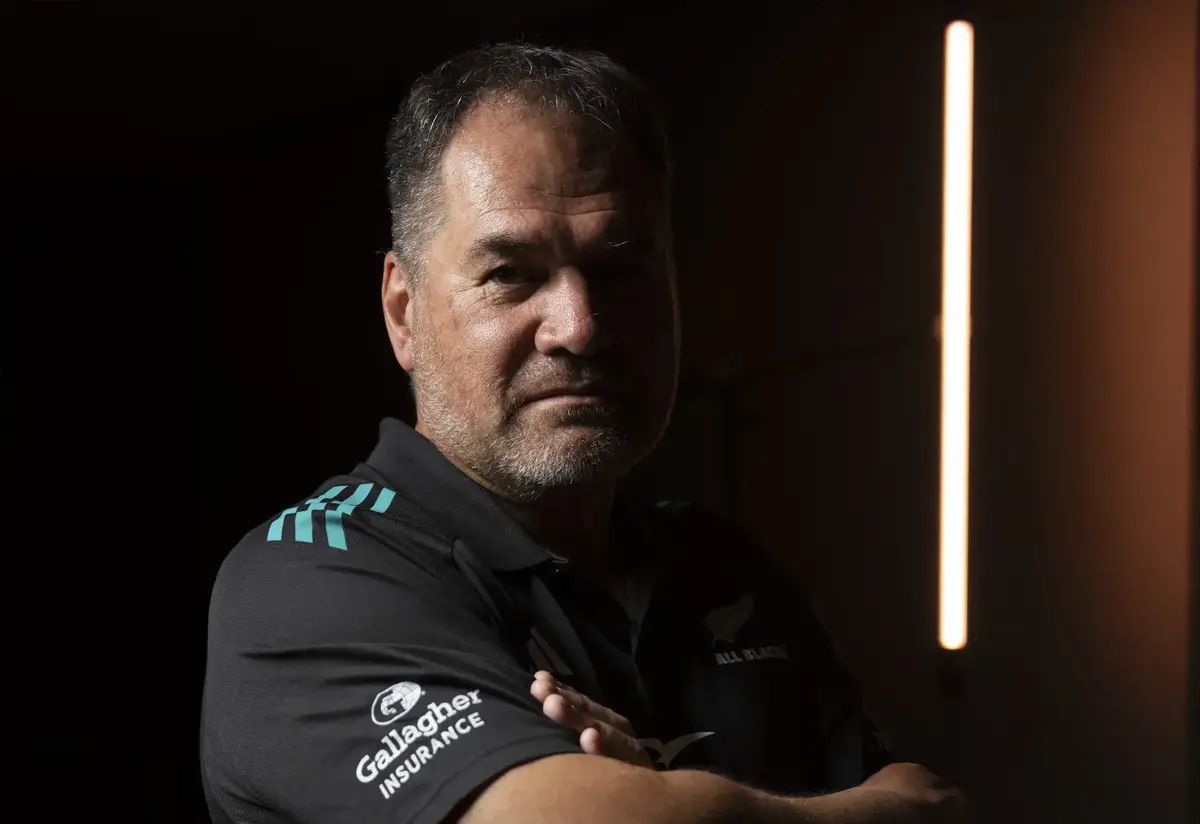
All Blacks coach Scott Robertson speaks to the media during the All Blacks 2025 Squad Announcement, Coastal Rugby Club, Rahotu, Taranaki New Zealand, Monday, 23 June 2025. (Photo by Michael Bradley / action press)

All Blacks head coach Scott Robertson has unveiled his first squad of 2025, naming five uncapped players in a 33-strong group for the three-Test Lipovitan-D July Series against France, starting in Dunedin on July 5th.

  • Five debutants earn maiden call-ups: Chiefs prop Ollie Norris, Chiefs hooker Brodie McAlister, Highlanders lock Fabian Holland, Hurricanes loose forward Du’Plessis Kirifi, and Highlanders midfielder Timoci Tavatavanawai
  • Three players born outside New Zealand included – Norris (Australia), Holland (Netherlands), and Tavatavanawai (Fiji)
  • Captain Scott Barrett returns with Ardie Savea and Jordie Barrett as vice-captains
  • Samisoni Taukei’aho returns after missing 2024, whilst Quinn Tupaea earns recall after ACL injury
  • David Havili misses out despite captaining Crusaders to Super Rugby title, alongside Ethan Blackadder and Dalton Papali’i
  • Christian Lio-Willie and Emoni Narawa provide backup for Luke Jacobson and Anton Lienert-Brown

The announcement at Coastal Rugby Club in Taranaki on Monday marked a significant moment for New Zealand rugby, with Robertson balancing continuity from his successful 2024 campaign whilst introducing exciting new talent that has emerged through Super Rugby Pacific.

“Around three-quarters of the players named today were part of our squad for the 2024 Northern Tour, which is important because we want to continue to build on the rugby we were playing at the end of last year,” Robertson said. “We have balanced that with an exciting group of new and returning players who have performed during Super Rugby Pacific.”

The most intriguing selection appears to be Chiefs hooker Brodie McAlister, whose journey from Crusaders benchwarmer to All Blacks squad member epitomises the opportunities available in professional rugby. The 28-year-old sought an early release from his Crusaders contract to pursue regular game time with the Chiefs, capitalising on that opportunity to earn his first All Blacks call-up.

All Blacks assistant coach Jason Ryan said McAlister had earned his spot in the squad after consistently performing well during Super Rugby this year. “He’s really earned the right. He’s been durable, he’s been a consistent performer right from the first game and he’s a good scrummager and adds a lot of power on both sides of the ball,” Ryan said.

The inclusion of three overseas-born players reflects New Zealand rugby’s global reach. Perhaps none is more remarkable than 22-year-old Fabian Holland, who becomes the first Dutch player to earn All Blacks selection. The towering 2.04-metre lock relocated from the Netherlands at age 16 on a rugby scholarship and has rapidly ascended through the ranks, with his seven lineout steals leading all New Zealand locks during Super Rugby Pacific.

“We love him, because he just loves a contest everywhere on the field, whether he’s with the ball or without it, he’s a competitor,” Ryan said of Holland.

Australian-born Ollie Norris represents another compelling story. The 25-year-old prop underwent significant physical transformation after missing All Blacks XV selection last year, adding crucial bulk to his frame whilst maintaining the mobility that stems from his background as a loose forward at school level.

“Ollie is an ex-loose forward so we know he’s going to be quick and he’s going to be fast it was just if he’s going to stick and be a prop then he’s got to have the right body for it so he can be strong in the right places in his core role and I believe he’s done that,” Ryan explained.

Fiji-born Timoci Tavatavanawai completes the international trio, having topped Super Rugby Pacific’s turnover statistics with 26 – an unusual achievement for a midfielder. His transition from wing to second five-eighth under Highlanders coach Jamie Joseph has unlocked new dimensions in his game, making him one of the most compelling selections in the squad.

Perhaps the most popular selection among rugby enthusiasts will be Du’Plessis Kirifi’s maiden call-up. The 28-year-old Hurricanes co-captain has been knocking on the All Blacks door for several years, having first tasted the environment in 2020. Kirifi’s breakthrough season included 23 turnovers won and 220 successful tackles, establishing him as one of New Zealand’s premier fetchers.

“It’s the ultimate story of someone who wants to be an All Black. He has hung in there. It hasn’t been easy for him. He got his first taste of the All Blacks in 2020 but I think with the leadership roles he’s had with Wellington and the Hurricanes, we’ve seen the best of him and he’s ready now,” Ryan said of Kirifi.

The exclusion of David Havili raised eyebrows, particularly given his leadership in guiding the Crusaders to their 15th Super Rugby title. Robertson acknowledged the difficult decision whilst emphasising squad balance. “We learnt last year, this squad will change over the course of time. Dave is playing good footy but we’re going to have a look at this midfield for now,” Robertson said.

Assistant coach Scott Hansen elaborated on the selection philosophy, noting the chosen midfielders were picked due to their size and ability to get over the gain line. “We understand the skills Davey [Havili] has…it’s not so much comparing, it’s just what we need currently,” Hansen said. “We understand the pain that will be there around him not being involved, but we also know that he will fight to get back.”

The absence of loose forwards Ethan Blackadder and Dalton Papali’i reflects Robertson’s faith in his current group, though he hinted that squad composition would evolve throughout the season. Robertson mentioned that Blackadder would likely feature at some stage this year, keeping the door open for omitted players.

Several key players remain unavailable through injury, including hooker Asafo Aumua (hamstring), prop Ofa Tu’ungafasi (neck), and promising loose forward Peter Lakai (knee). However, Robertson expressed optimism about their potential return for the Rugby Championship, with both Aumua and Lakai expected to be sidelined for another 4-6 weeks before potentially returning via NPC matches.

While Robertson was given clearance by New Zealand Rugby to name 35 players for the tests against France, he opted to roll with 33, plus two injury cover players. “We felt like that squad there, over the three test series, is the opportunity to play everyone, that’s our goal. If it happens great….and then we go to 36 for the Rugby Championship when we’re on the road,” Robertson explained.

The squad announcement reflects Robertson’s broader vision for New Zealand rugby. With experienced campaigners like Scott Barrett (80 caps), Beauden Barrett (134 caps), and Ardie Savea (94 caps) providing leadership, the integration of newcomers represents a carefully managed transition.

“Scott’s leadership is hugely valued in this group, and well complimented by Ardie and Jordie. They will play a vital role, along with the wider player leadership group, in supporting the transition of the new players into the environment and imparting their experience to ensure the squad is set up for success,” Robertson said.

The coach’s confidence in his new selections was evident when discussing the five debutants. “For the five uncapped players – Ollie, Brodie, Fabian, Du’Plessis and Timoci – this is a particularly special day. These players have all impressed us with their talent and work ethic and have earned their opportunity to be part of this All Blacks squad. We know that each of these players possesses the ability to make their mark in the black jersey and we look forward to working with them over the coming weeks,” Robertson said.

The welcome return of Samisoni Taukei’aho and Quinn Tupaea adds further intrigue to the squad composition. Both players have endured significant injury setbacks, with Tupaea’s ACL rupture in 2022 curtailing his World Cup ambitions. “These players have both had to work hard following the disappointment of long-term injuries, and have been outstanding during Super Rugby Pacific this year. We are thrilled to be able to welcome them back into the squad,” Robertson said.

Hansen was particularly effusive about Tavatavanawai’s selection, emphasising the selectors’ willingness to back form players. “You look at the influence that he’s having on games. We just have to be brave and say, ‘there you go, son, there goes a jersey, it’s a powerful jersey, go and wear it and be you in it’,” Hansen said.

France will arrive in New Zealand without several key players due to domestic commitments, potentially providing an ideal opportunity for Robertson’s newcomers to make their mark. The three-Test series, spanning Dunedin (July 5), Wellington (July 12), and Hamilton (July 19), will serve as crucial preparation for the Rugby Championship.

With the squad set to assemble in Auckland on 25 June, attention will focus on how quickly the five debutants adapt to the All Blacks environment. Their integration could prove pivotal not just for the France series, but for New Zealand’s broader ambitions throughout 2025.

Continue Reading
Click to comment

Leave a Reply

New Zealand

Scottish legend confirmed as All Blacks first foreign coach

Published

on

Scottish legend confirmed as All Blacks first foreign coach
British and Irish Lions Training Session 26/5/2009 Mike Blair Mandatory Credit ©INPHO/Dan Sheridan

Dave Rennie has confirmed a sweeping overhaul of the All Blacks coaching staff, bringing in trusted lieutenants from his title-winning past while retaining just one assistant from Scott Robertson’s regime ahead of a pivotal two-year cycle through to the 2027 Rugby World Cup.

  • Mike Blair becomes the first foreign assistant in All Blacks history as attack coach
  • Tana Umaga appointed defence coach, returning to the team he captained to 74 Test caps
  • Neil Barnes named senior assistant coach, reuniting with Rennie after their Chiefs title-winning partnership
  • Jason Ryan the sole survivor from Scott Robertson’s regime, retained as forwards coach
  • Phil Healey appointed head of performance, replacing Nic Gill who has joined NFL’s Baltimore Ravens
  • Tamati Ellison moved to Māori All Blacks head coach for June fixtures against Japan
  • Scott Hansen and Bryn Evans depart the All Blacks set-up

The appointments, announced on Tuesday, see All Blacks great Tana Umaga return to the environment where he earned 74 Test caps as defence coach, while long-time Rennie collaborator Neil Barnes takes on the senior assistant role. Jason Ryan remains as forwards coach — the sole survivor from Robertson’s tenure — while Scotsman Mike Blair arrives as attack coach, becoming the first foreign assistant in All Blacks history.

Read: Former Wallabies boss Rennie wins race to be next All Blacks coach

The changes mark a decisive break from the Robertson era, with Scott Hansen, Tamati Ellison and Bryn Evans all departing the All Blacks coaching group. NZR interim CEO Steve Lancaster paid tribute to the outgoing coaches while confirming Ellison would be retained within the wider New Zealand Rugby system.

“I want to pay tribute to the service that Scott Hansen, Tamati Ellison and Bryn Evans have given to the black jersey,” Lancaster said. “They have each made important contributions to the team and I know they have all got a lot more to give as world-class coaches. The way they have conducted themselves throughout is testament to the outstanding professionals and good people they all are.”

Umaga returns with ‘immense mana’

The appointment of Umaga carries significant weight both symbolically and practically. The 52-year-old was the first All Blacks captain of Pasifika heritage, leading the side in 21 Tests from 2004 to 2005 with an 18-win record. He famously introduced the Kapa o Pango haka during his captaincy.

Umaga’s connection with Rennie dates back to the early 2000s, when he was a player under Rennie at Wellington during their NPC title-winning campaign in 2000 and subsequently at the Hurricanes. His coaching career has since taken him to Toulon in France, Counties Manukau — where he won the Championship Division and the province’s first Ranfurly Shield — the Blues and most recently Moana Pasifika.

He has also served as defence coach for Manu Samoa since 2021 and was assistant coach for the First Nations & Pasifika Invitational XV against the British & Irish Lions in 2025.

“Just to be in the conversation — to have a role with the All Blacks again is pretty big,” Umaga said. “I’ve got to make sure that I do well with Moana Pasifika and respect the time that I’ve got here. I’ll apply the same things I learned when I was an All Black in terms of ‘am I going to leave Moana in a better place?’ I’m here until the end of the season and we’ve still got things we want to achieve before then.”

Umaga will join the All Blacks at the conclusion of Moana Pasifika’s Super Rugby Pacific campaign.

Barnes brings lineout expertise and title-winning pedigree

Neil Barnes joins as senior assistant coach, reuniting with Rennie after their partnership delivered back-to-back Super Rugby titles with the Chiefs in 2012 and 2013. Barnes brings expertise in lineout work and forwards coaching, having spent time on the international scene with Canada, Fiji and Italy before assuming charge of Taranaki in the NPC.

Under Barnes, Taranaki produced an unbeaten season in 2021 to claim the NPC title, followed by a second title in 2023. He re-signed with Taranaki for the 2026 season in January, making his departure bittersweet.

“I’m under no illusions at the size of the challenge, and the responsibility and pressure that comes with it,” Barnes said. “Along with the buzz of making it to All Blacks level, comes a level of sadness that I can’t carry on coaching the Yarrows Taranaki Bulls and trying every day to make our province proud. I consider myself very fortunate to have been allowed the privilege of coaching our province over this period, a task I’ve given my all to, and hopefully leaving in a position of strength.”

Barnes shot to wider prominence during Netflix’s Six Nations: Full Contact documentary, where his unfiltered approach — featuring a stream of colourful language — saw him described as the “breakout star” during his time as Italy’s assistant coach.

Ryan retained for continuity

Jason Ryan is now in his fourth year with the All Blacks, having been first appointed to the coaching team under Ian Foster in 2022. He was reportedly “hand-picked” by players at the time and has since served under both Foster and Robertson, playing a key role in guiding the team to the 2023 Rugby World Cup Final.

Ryan’s background includes more than 180 senior games for Christchurch club Sydenham before moving into coaching. He helped Canterbury to three NPC titles in four years as assistant coach before enjoying similar success at the Crusaders, winning the Super Rugby title in each of his six seasons there.

“I’m incredibly honoured to be reappointed to the All Blacks coaching team,” Ryan said. “I’ve really appreciated the support and trust from Renns, the players, management and NZR. There’s a clear sense of purpose around this group and I’m excited to keep contributing, growing, and helping the team push toward its goals.”

Blair makes history as foreign assistant

Mike Blair becomes the first foreign assistant coach in All Blacks history. The former Scotland captain and British & Irish Lion is Scotland’s most capped halfback of all time and was a World Player of the Year nominee during his playing career.

Blair turned to coaching with Glasgow Warriors in 2016, where he worked as an assistant under Rennie and helped the club to Pro14 semi-finals and the Grand Final in 2018 and 2019, as well as Champions Cup quarter-finals in 2017 and 2019. He was recruited into the Scotland national side in 2016 as a skills and attack coach before taking his first head coach role at Edinburgh, where he had previously amassed 169 caps as a player.

He is currently attack coach under Rennie at the Kobelco Kobe Steelers and will complete the Japan Rugby League One season before moving to New Zealand, subject to the granting of a work visa.

Blair will bring what Rennie described as an “innovative approach and attention to detail” to the All Blacks’ attack — an area that struggled under Robertson’s tenure.

Healey replaces Gill as head of performance

Phil Healey has been appointed head of performance, replacing the long-serving Nic Gill, who departed for the NFL’s Baltimore Ravens after more than 240 Tests with the All Blacks.

Healey has worked extensively with Rennie, including at the Chiefs during their back-to-back title wins in 2012 and 2013, at Glasgow Warriors, and currently at the Kobe Steelers. He also worked with the Blues during their Super Rugby Trans-Tasman title in 2021 and was part of the All Blacks XV management for the 2022 Northern Tour.

“As a Kiwi working in high performance sport, there is no greater honour than joining the All Blacks,” Healey said. “I look forward to contributing to an environment that constantly strives for excellence by supporting the players and management to perform at their best.”

Ellison takes Māori All Blacks role

Tamati Ellison, who departs the All Blacks coaching group, has been appointed Māori All Blacks head coach for the Lipovitan D Challenge Cup in June, where they will face a Japan XV at Paloma Mizuho Stadium in Nagoya.

Ellison, a former New Zealand Māori co-captain, was All Black #1099 and brings deep understanding of the pride and legacy associated with the team.

“I’m grateful for the opportunity to lead my people,” Ellison said. “This team means everything to our whānau, and I’ll give it my all. I’d also like to congratulate the new All Blacks coaching group and look forward to working with and supporting them in my new role.”

Rennie’s trusted team takes shape

The appointments reflect Rennie’s stated intention to surround himself with coaches he knows and trusts. Barnes, Blair and Healey have all worked extensively with the new head coach, while Umaga’s connection dates back to Rennie’s early coaching career in Wellington.

“This is a very experienced and highly skilled coaching team,” Rennie said. “Each of these men has a track record of getting the best out of the players and teams they coach, and they are each hugely motivated to get stuck in and deliver the same success with the All Blacks.

“Neil provides outstanding leadership and strategic support; Jase has proven himself as one of the best forwards coaches in the game; Tana brings immense mana and defensive insight; and Mike will bring his innovative approach and attention to detail to our attack. I know this group will challenge and support both me and our players to bring the best out of us all.”

Rennie acknowledged the professionalism of the outgoing coaches: “This has been a thorough appointment process that included conversations with each of the former All Blacks assistant coaches. I want to acknowledge those men, who have all contributed so positively and professionally to this process and to the legacy of the All Blacks. They are each excellent coaches in their own right, who I know will go on to achieve further success in their careers.”

The coaching group will assemble ahead of the All Blacks’ July home series against France, Italy and Ireland as part of the inaugural Nations Championship.

The All Blacks face France, Italy and Ireland in July before embarking on the four-Test “Rugby’s Greatest Rivalry” tour against South Africa.

Continue Reading

New Zealand

The former teacher now tasked with reviving the All Blacks

Published

on

The former teacher now tasked with reviving the All Blacks
Dave Rennie, new All Blacks Head Coach, Auckland, New Zealand, Wednesday, 04 March 2026. (Photo by NZR / action press)

When New Zealand Rugby announced Dave Rennie as the 28th All Blacks head coach on Wednesday, it marked the culmination of a 25-year coaching journey that began not in professional rugby, but in the classrooms of an Upper Hutt intermediate school.

Key points:

  • Born in Upper Hutt on 22 November 1963, Rennie is of Cook Islands descent through his mother
  • A trained school teacher who transitioned to coaching after a shoulder injury ended his playing career at 27
  • Led the Chiefs to back-to-back Super Rugby titles (2012-13) and the New Zealand U20s to three consecutive Junior World Championships (2008-10)
  • Coached the Wallabies from 2020 to 2023 with a 38 per cent win rate before being replaced by Eddie Jones
  • Known for a direct, breakdown-focused style of rugby described as “high-skill, high-speed mixed with brutality”

Rennie, 62, becomes the first All Blacks head coach with Pasifika heritage — his mother, Ngametua, hails from Titikaveka in Rarotonga — and takes charge of a team in turmoil following the dramatic sacking of Scott Robertson in January. But the man now tasked with restoring the All Blacks to their former glory has always been something of an unconventional figure in the coaching ranks.

Read: Former Wallabies boss Rennie wins race to be next All Blacks coach

From classroom to coaching box

David Noel Rennie was born in Upper Hutt on 22 November 1963 and educated at Heretaunga College. He played his club rugby for Upper Hutt RFC and represented Wellington as a centre, making 58 appearances for the province and winning the NPC title in 1986. In 1990, his Cook Islands heritage saw him selected for a non-test match for a Cook Islands XV — his only international playing appearance.

A recurring shoulder injury forced Rennie to retire from playing at just 27, and he turned to teaching, taking up a position at an intermediate school in Upper Hutt working with 12 and 13-year-olds. It’s a background that shaped his coaching philosophy.

“Teaching, coaching, it’s the same thing,” Rennie once observed. “The children are somewhat larger.”

He began coaching at Upper Hutt RFC while continuing to teach, before Graham Mourie invited him to join the Wellington Lions as assistant coach in 1999. When Mourie moved to concentrate on the Hurricanes, Rennie stepped up as head coach in 2000 — and promptly led Wellington to their first NPC title since 1986, the year he had won it as a player.

That Wellington side was stacked with All Blacks talent: Jonah Lomu, Christian Cullen, Tana Umaga, Jerry Collins and Rodney So’oialo among them. But critics who suggested anyone could have coached such a squad overlooked the fact they beat an equally talented Canterbury side to lift the trophy.

Building from the ground up

After three seasons with Wellington, Rennie moved to the Hurricanes as Under-23 head coach before becoming an assistant coach. He also worked with the New Zealand international academy before taking charge of the Manawatu Turbos in 2006.

The Manawatu role was emblematic of Rennie’s willingness to take on rebuilding projects. The Turbos were perennial strugglers in the NPC, operating with limited resources. His first season yielded no wins from nine matches. Progress was slow — just two wins in 2007, one in 2008 — but Rennie persisted, focusing on player development and foundational skills.

By 2011, the patience had paid off: Manawatu reached the NPC Championship final, a remarkable achievement for a province of their size.

The golden era: Under-20s and Chiefs

It was during his time at Manawatu that Rennie received the appointment that would transform his reputation. In 2008, he was handed the New Zealand Under-20s — and proceeded to deliver three consecutive Junior World Championships from 2008 to 2010.

The players who came through that system read like a who’s who of the next generation of All Blacks: Aaron Smith, Sam Whitelock, Julian Savea. Rennie’s ability to develop young talent into world-class performers was firmly established.

In 2012, he was given the Chiefs — a franchise that had never won Super Rugby — and delivered an inaugural title in his debut season. In doing so, Rennie became the first first-year Super Rugby head coach to win the competition. The 2012 final itself proved eventful: as Rennie guided the Chiefs to a 37-6 demolition of the Sharks, his house was robbed.

The following year, the Chiefs went back-to-back, beating the Brumbies to retain the title. The squad included Aaron Cruden, Brodie Retallick, Liam Messam and Sam Cane — players who would form the backbone of All Blacks teams for years to come. Rennie spent six seasons with the Chiefs in total, reaching the finals in each.

Scotland and the Wallabies

In 2017, Rennie made the move to Scotland to coach Glasgow Warriors, replacing Gregor Townsend. He guided the Warriors to the Pro14 semi-finals in his first season and the final in 2018-19 — played before a record crowd at Celtic Park — though they fell to Leinster. He continued to develop young talent, particularly fly-half Finn Russell.


In November 2019, Rugby Australia announced Rennie would replace Michael Cheika as Wallabies head coach — a role he took up in 2020. His tenure with Australia yielded mixed results. The Wallabies won the Rugby Championship in 2021, but overall Rennie finished with a 38 per cent win rate, the lowest of any Wallabies coach with a minimum of 30 tests.

Australia’s 2022 tour included a historic first loss to Italy. In January 2023, Rugby Australia replaced Rennie with Eddie Jones — a decision that would prove disastrous when Jones departed in October following a pool-stage exit at the Rugby World Cup. Rennie, vindicated in some eyes, moved to Japan to coach the Kobelco Kobe Steelers.

The coaching philosophy

Those who have worked with Rennie describe him as “hard-nosed, doesn’t tolerate fools, is astute and has a deep rugby intelligence.” Former All Black James Parsons recently broke down Rennie’s coaching style on the Aotearoa Rugby Pod, noting his unrelenting commitment to breakdown dominance.

“Dave Rennie is all about the breakdown, both sides of the ball,” Parsons explained. “Defensively, all about the breakdown. Attacking-wise, all about the breakdown. Low offloads, low turnover count; ‘I’m going through you’ is Dave Rennie’s attitude.”

Rennie himself has described his approach as “high-skill, high-speed type of game hopefully mixed with some rugby smarts and a bit of brutality.” During his time at the Chiefs, players spoke of a concept called “napalm” — the brutal ruck-clearing that characterised their style.

His teams have historically achieved near 70 per cent gain-line success rates, though critics point to high penalty counts that can result when the aggressive breakdown approach goes wrong.

The challenge ahead

At 62, Rennie is older than any All Blacks head coach in recent memory, and his two-year contract through to the 2027 Rugby World Cup offers limited time to implement change. His immediate challenge is formidable: the inaugural Nations Championship, a July home series against France, Italy and Ireland, and a four-Test “Rugby’s Greatest Rivalry” tour against the Springboks.

The All Blacks Rennie inherits are in disarray following Robertson’s tenure, which featured a record defeat to South Africa, a first loss to Argentina in Buenos Aires, and reported rifts within the playing group. Notably, star flanker Ardie Savea — one of the key figures said to have provided unfavourable feedback on Robertson — is currently playing under Rennie at Kobe.

Whether Rennie can draw on his experience of rebuilding programmes at Wellington, Manawatu, the Chiefs and Glasgow to restore the All Blacks remains to be seen. But few coaches in world rugby have demonstrated such consistent ability to develop talent and create winning cultures — even if his Wallabies tenure ended in disappointment.

“Coaching the All Blacks is an incredible honour,” Rennie said upon his appointment. “I’m really clear on the way I want the All Blacks to play.”

For New Zealand rugby, the hope is that clarity translates into silverware.

Continue Reading

New Zealand

Former Wallabies boss wins race to be next All Blacks coach

Published

on

Former Wallabies boss wins race to be next All Blacks coach
Dave Rennie (Steelers), MAY 24, 2025 - Rugby : 2024-25 Japan Rugby League One Play-off Tournament Semi-final match between TOSHIBA Brave Lupus Tokyo 31-3 KOBELCO Kobe Steelers at Prince Chichibu Memorial Stadium in Tokyo, Japan. (IMAGO / AFLOSPORT)

New Zealand Rugby has turned to Dave Rennie to lead the All Blacks, appointing the 62-year-old as head coach through to the 2027 Rugby World Cup in Australia.

Key points
  • Dave Rennie appointed All Blacks head coach through to the 2027 Rugby World Cup
  • The 62-year-old becomes the first head coach with Pasifika heritage in All Blacks history
  • Rennie replaces Scott Robertson, who was sacked in January after less than two years in charge
  • Former Wallabies coach beat Jamie Joseph in a two-man race for the role
  • Will complete Japan commitments before taking charge ahead of July Tests against France, Italy and Ireland

The appointment, announced on Wednesday, brings to an end a near-50-day search that followed the dramatic sacking of Scott Robertson in mid-January. Rennie beat Jamie Joseph in what became a two-man race for arguably the most scrutinised coaching role in world rugby.

Rennie, who is of Cook Islands descent through his mother from Titikaveka, Rarotonga, becomes the first All Blacks head coach with Pasifika heritage — a historic milestone, though one that arrives amid considerable turbulence within New Zealand Rugby.

“Coaching the All Blacks is an incredible honour,” Rennie said. “I’m extremely proud to have been entrusted with this role and understand the expectations that come with it.”

Questions over the appointment

While Rennie’s credentials within New Zealand rugby are substantial — back-to-back Super Rugby titles with the Chiefs in 2012 and 2013, three consecutive Junior World Championships with the Under-20s — his more recent record invites scrutiny.

His tenure as Wallabies coach from 2020 to 2023 yielded mixed results. Australia won just 40 per cent of their matches under his guidance and failed to trouble New Zealand or South Africa consistently in the Rugby Championship. He departed with Australian rugby in a state of flux, his contract not renewed after a disappointing 2023 Rugby World Cup campaign that saw the Wallabies exit at the group stage.

The decision to appoint a coach who struggled to turn around one southern hemisphere giant to now rescue another raises legitimate questions. At 62, Rennie is also older than any All Blacks head coach in recent memory, and his two-year contract offers limited runway to implement meaningful change before the World Cup.

NZR Chair David Kirk defended the process, calling it the most thorough the organisation has undertaken for an All Blacks head coach.

“Dave understands what it means to coach the All Blacks and play a style of rugby that reflects who we are as New Zealanders,” Kirk said. “He has a deep understanding of rugby in New Zealand and the role the All Blacks play in shaping our national identity and bringing communities together.”

A team in crisis?

Rennie inherits an All Blacks side in disarray. Robertson’s dismissal after just 18 months — following a tenure marked by inconsistent performances and reported rifts within the playing group — represents one of the most dramatic interventions in New Zealand rugby history. The fact that NZR moved so decisively suggests problems ran deeper than results alone.

The new head coach faces an immediate and formidable challenge. The inaugural Nations Championship looms, as does a home series in July against France, Italy and Ireland — three of the northern hemisphere’s most competitive sides. Ireland, in particular, have had the measure of the All Blacks in recent years, winning three of their last four encounters.

Rennie will honour his commitments with Kobelco Kobe Steelers in Japan before returning to New Zealand ahead of those July fixtures, leaving him limited preparation time with his new squad. NZR has indicated it will work with Rennie to confirm the wider coaching team in coming weeks — a process that will be closely watched given the reported dysfunction under Robertson’s tenure.

The Wallabies factor

Rennie’s appointment carries an intriguing subplot. His intimate knowledge of Australian rugby — its systems, its players, its vulnerabilities — could prove valuable with a World Cup on Australian soil in 2027. Equally, his inability to achieve consistent success with the Wallabies may concern those who wonder whether he can extract more from New Zealand’s playing stocks.

“I’m really clear on the way I want the All Blacks to play,” Rennie said. “We have a lot of talent here and we will be working extremely hard to make the country proud.”

Talent has never been New Zealand’s problem. The All Blacks remain stacked with world-class players across virtually every position. The question is whether Rennie — a coach whose last major assignment ended in disappointment — can harness that talent more effectively than his predecessors.

What lies ahead

Kirk acknowledged the significance of the road ahead: “The All Blacks are set for a challenging and exciting two seasons ahead and it’s critical we followed a thorough process to find the right head coach.”

Yet some will question whether NZR’s “thorough process” has delivered the bold appointment the situation demanded. Joe Schmidt, the mastermind behind Ireland’s recent dominance, was reportedly unavailable. Vern Cotter, Andy Farrell, and other high-profile names were apparently not pursued or not interested.

In the end, New Zealand has turned to a familiar face — a coach with deep roots in the country’s rugby system but whose recent track record suggests the task ahead is anything but straightforward. Rennie has two years to prove the doubters wrong, with a World Cup on enemy soil as the ultimate test.

For New Zealand rugby, desperate for stability after years of underperformance against the sport’s elite, the appointment is a calculated gamble. Whether it pays off will determine not just Rennie’s legacy, but the trajectory of the All Blacks for a generation.

Dave Rennie will take charge of the All Blacks ahead of their July home series against France, Italy and Ireland.

Continue Reading

Trending

Discover more from Rugby News, Results, and Analysis | Rugby is the Game

Subscribe now to keep reading and get access to the full archive.

Continue reading