Connect with us

International

Italy bounces back with dominant win over Tonga

Published

on

The Italian national rugby team rebounded emphatically from their shock defeat to Samoa, securing a commanding 36-14 victory over Tonga in Nuku’alofa on Friday. This win, part of their 2024 Summer Tour, showcased Italy’s strength in the scrum and ability to exploit space with their backline.

Coach Gonzalo Quesada’s side, still smarting from their 33-25 loss to Samoa the previous week, came out with renewed focus and determination. The Azzurri weathered Tonga’s initial onslaught before asserting their dominance, particularly in the set-pieces.

Italy’s first try came in the 18th minute when winger Jacopo Trulla finished off a flowing passing move, evading two tacklers to cross the line. Fly-half Paolo Garbisi, who would end the day with a 14-point haul, missed the conversion but later added a penalty to extend Italy’s lead.

The visitors’ superiority in the scrum became increasingly evident as the match progressed. This dominance led to their second try, scored by Monty Ioane after a series of powerful scrums near the Tongan line. Garbisi’s conversion gave Italy a comfortable 15-0 lead at halftime.

Embed from Getty Images

Tonga showed signs of life early in the second half when No. 8 Viliami Taulani scored from close range. However, Italy quickly reasserted control, with captain Michele Lamaro crossing for their third try, which Garbisi converted for a 22-7 lead.

The Garbisi brothers then combined to put the game beyond doubt. Scrum-half Alessandro Garbisi, who had replaced Martin Page-Relo, spotted a gap in the Tongan defence and darted over for Italy’s fourth try. Paolo Garbisi added the extras to extend the lead to 29-7.

Tonga managed a late consolation try through Fetuli Paea, but Italy had the final say. Their scrum dominance led to a series of penalties against the Tongan front row, culminating in a yellow card for replacement prop Tau Koloamatangi and a penalty try awarded to Italy, sealing the 36-14 victory.

This win was particularly significant for Italy, coming off the disappointing loss to Samoa and featuring several new faces in the squad. Debutant Matt Gallagher, who had impressed against Samoa, retained his place in the starting XV, while Ross Vintcent made a notable impact off the bench.

Coach Quesada expressed satisfaction with his team’s performance, particularly praising their set-piece dominance and improved game management. “We learned from our mistakes in Samoa and showed great character today,” Quesada said in the post-match press conference. “Our scrum was outstanding, and we were much more clinical in attack.”

The victory cements Italy’s position in the top ten of the World Rankings and sets them up nicely for their final tour match against Japan in Sapporo on July 21. For Tonga, who will host Spain next weekend, this match highlighted areas for improvement as they continue their preparations for future competitions.

Continue Reading
Click to comment

Leave a Reply

International

Wallabies to host Ireland in Canberra before Rugby World Cup

Published

on

Wallabies to host Ireland in Canberra before Rugby World Cup
Ireland’s Mack Hansen scores his sides third try of the match during the 2025 Quilter Nations Series game between Ireland and Australia in Aviva Stadium, Dublin, Ireland, Saturday, November 15, 2025 (Photo by Andrew Conan / Inpho)

Australia will face Ireland in a blockbuster Rugby World Cup warm-up fixture at GIO Stadium Canberra on 18 September 2027, with the match marking the first time the two nations have met in the Australian capital.

Rugby Australia confirmed the historic clash on Monday, scheduling the encounter just 13 days before the hosts open their World Cup campaign against Hong Kong China in Perth. The fixture represents a significant consolation for Canberra, which was notably absent from the seven host venues announced for the 2027 tournament earlier this year.

Australia have not played a Test in Canberra since defeating Argentina 45–20 in September 2017, while the September 2027 clash will be Ireland’s first ever Test match in the city. The Wallabies boast a perfect record at the venue, winning all five Tests played at GIO Stadium since 1998.

The announcement means Australia will now play seven Test matches before the World Cup begins — a significant increase from the five matches they played in preparation for the 2023 tournament in France. With a full Rugby Championship campaign also scheduled for 2027, the hosts face a demanding build-up to their home tournament.

Familiar ground for Ireland’s Canberra contingent

The fixture will carry added intrigue given Ireland’s strong connection to Canberra. Former ACT Brumbies wing Mack Hansen, who made his name at GIO Stadium before becoming one of Ireland’s most dangerous attacking threats, could return to his former home ground alongside fellow Canberra product Finlay Bealham.

Injured Wallabies fullback Tom Wright, a Brumbies stalwart who knows GIO Stadium intimately, relished the prospect of facing his former teammate.

“It’ll be good to see Mac back. He’s had a pretty arsy run of injuries in the last sort of 12 months or so,” Wright told reporters. “We obviously saw him come out for the Lions, but hobbling around on one foot, the poor bugger, so if we get to lace up against him, I know a lot of the guys, in particular from the Brums training room, enjoy that challenge. There’s plenty of chat from him so if we get the chance, we might try and shut that from him.”

Wright sees the Ireland fixture as the ideal launchpad for Australia’s World Cup campaign.

“You always want to play against the best and for a number of years now, for a long time really, they’ve always been in that top echelon of sides,” he said.

“With Joe [Schmidt] coming from there into our system, you’re seeing the fruits that we’ve been able to take from him and even just seeing some of the way that they play, you can see the system that he instilled there. If we’re able to leapfrog off that game here at GIO, that’ll be super exciting for the squad that goes into the World Cup.”

Final tune-up for both nations

For Ireland, the fixture offers a valuable hit-out against the tournament hosts in unfamiliar conditions. Andy Farrell’s side, currently ranked third in the world, will be among the favourites to challenge defending champions South Africa when the tournament begins.

The match forms part of what promises to be an intriguing pre-tournament period for both nations. Ireland will arrive in Australia with their own World Cup ambitions, having come agonisingly close to reaching the 2023 final before their quarter-final defeat to New Zealand in Paris.

Rugby Australia chief executive Phil Waugh highlighted Canberra’s rugby heritage in announcing the fixture.

“The ACT is one of the world’s great rugby nurseries and we are extremely pleased to be taking two huge Test matches to GIO Stadium Canberra in 2026 and 2027,” Waugh said.

“The rugby community in Canberra is deeply passionate and holds a great appreciation for international touring teams, as we witnessed last year when the biggest GIO Stadium Canberra rugby crowd in 20 years packed the venue for the Brumbies’ thrilling match against the British & Irish Lions.

“The Wallabies are looking forward to playing their first Test match at GIO Stadium Canberra in ten years — and their first ever against Ireland in Canberra — as both teams finalise their preparations for the eagerly-anticipated home Rugby World Cup.”

Tournament context

Australia’s World Cup campaign begins against Hong Kong China at Perth’s Optus Stadium on 1 October 2027, followed by a blockbuster pool match against New Zealand in Sydney on 9 October — the first time the trans-Tasman rivals have met in the group stages of a World Cup. The Wallabies complete their Pool A campaign against Chile in Brisbane on 16 October.

The expanded 24-team tournament, featuring a new round of 16 knockout stage, runs through to the final at Sydney’s Accor Stadium on 13 November.

Ireland’s pool fixtures are yet to be confirmed in full, but Andy Farrell’s side will arrive in Australia among the leading contenders after dominating the Six Nations in recent seasons.

The September warm-up in Canberra offers both nations a final opportunity to sharpen their preparations before the tournament proper — and for Ireland’s Canberra alumni, a chance to return to familiar surroundings under very different circumstances.

Tickets for the fixture will be released at a later date, with hospitality packages now available.

Continue Reading

International

Cruel blow for Baloucoune as Ireland star out for three months

Published

on

Cruel blow for Baloucoune as Ireland star out for three months
Ireland’s Robert Baloucoune scores their third try during the 2026 Guinness Six Nations Championship Round 5 game between Ireland and Scotland in the Aviva Stadium, Dublin, Ireland, Saturday, March 14, 2026 (Photo by Ken Sutton / Inpho)

Just days after being crowned the Six Nations Rising Star, Ulster’s Robert Baloucoune has been ruled out for approximately three months after sustaining an elbow injury in Ireland’s Triple Crown-clinching victory over Scotland.

Key points:

  • Baloucoune requires surgery on elbow injury sustained against Scotland
  • 28-year-old scored three tries in four Six Nations matches
  • Named BKT Rising Star of the 2026 Championship
  • Likely to miss remainder of Ulster’s URC and Challenge Cup campaigns
  • Should be available for Ireland’s Nations Championship fixtures in July
  • Ulster facing backline injury crisis ahead of Connacht clash

The 28-year-old, who emerged as one of the standout performers in this year’s Championship, will undergo surgery on the elbow problem picked up during the closing stages of Ireland’s 43-21 win at the Aviva Stadium last Saturday. Baloucoune departed the match with 15 minutes remaining and Ulster confirmed the news in a brief statement on social media.

The timing could scarcely be worse for the Enniskillen native, whose remarkable resurgence this season had captured the imagination of Irish rugby supporters. Baloucoune scored three tries in four matches during the Six Nations, playing a key role in Ireland’s Triple Crown success after being recalled to Andy Farrell’s squad following a lengthy absence from the international scene.

Farrell always knew Baloucoune was a rare talent, first calling him into the Ireland squad as a development player for the 2020 Six Nations when he was a 22-year-old on an Ulster development contract. Yet injuries repeatedly derailed his progress at international level. He made his try-scoring Ireland debut against the USA in June 2021, added a second cap against Argentina the following November, and another two caps in November 2022 before falling out of favour and, largely due to injuries, out of sight.

Just a year ago, he was making his return for Ulster after 11 months out with a hamstring injury. He suffered a fresh hamstring setback after scoring in Ulster’s comeback win over the Stormers last March, when he was replaced after 47 minutes. An ankle injury then hampered his start to this season, but he has been in excellent form since making his return in October.

The winger’s transformation has been remarkable. A stunning hat-trick for Ulster against the Lions in October kick-started his season and he added braces in his next two games, for Ireland XV against Spain and against Benetton in the URC. Across all matches this season he has a strike rate of 11 tries in 12 games.

“To be honest, I was surprised at being in camp, so I will just take every chance that I get,” Baloucoune said ahead of this year’s Championship.

When asked whether he thought the Ireland ship had sailed, he admitted: “To be honest, yeah, probably. When you’re not playing, it still seems pretty far away. You know, it had been a while and playing for Ulster was even looking a bit dreadful.”

Yet when his opportunity came against Italy in Round 2, Baloucoune seized it with both hands. His ability to find work off the ball, finish scoring chances out wide, and his reliability under intense pressure in defence made him the Six Nations Rising Star award’s standout candidate.

The irony of winning a “rising star” award at 28 wasn’t lost on him. “Yeah, the award was a bit of a shock, to be honest; 28 and getting the rising star – I’m getting slagged for it already. But I’m grateful for it and at least people are seeing what I’ve put out there.”

He added: “It’s probably something I wouldn’t have thought would happen. I’m 28, I’m pretty old to be getting the Rising Star award. But hopefully I can show people that there’s always a chance to put your best foot forward, and when you get the chance to take the opportunity.”

Baloucoune nearly missed out on a rugby career altogether. He was considering universities in London and Nottingham, with a plan to study Sports Management. “I was meant to be going to uni and probably leaving Ulster,” he recalled. “That would have probably been the end of my rugby.”

Then came a call from Ireland Sevens coach James Topping. It proved to be a pivotal moment in Baloucoune’s life as he took up the invitation to play sevens, quickly showed his class, and was soon part of the Ulster set-up.

“So I’m just grateful for the opportunities that everyone’s kind of helped me along the way, even since school, where I didn’t really know the rules of rugby.”

His impact in this Six Nations, after his injury troubles of recent years, was extraordinary. The Ulster wing came into Farrell’s team for the Round 2 win against Italy and quickly made himself a key figure. “It’s been an unbelievable experience,” he said. “The group’s been massive. It feels like a once-in-a-lifetime kind of experience for me because I wasn’t expecting it when I came in.”

The injury is a further blow to Ulster head coach Richie Murphy, who has been hit with a number of injuries to his backline ahead of Friday’s crucial interpro against Connacht. James Hume and David Shanahan both sustained concussions in last week’s win against Edinburgh and are following return-to-play protocols, while centre Jude Postlethwaite and out-half Jake Flannery will be sidelined for a number of weeks with respective hand and shoulder injuries.

The province could also be without versatile Irish international forward Cormac Izuchukwu, who is also following return-to-play protocols for concussion, while Harry Sheridan will miss at least two games due to suspension following his red card for a dangerous tackle against Edinburgh.

The three-month layoff leaves the pacy winger with a slim chance of featuring again this season for the province, with the URC final set to take place on Saturday, 20 June, if Ulster get there. Ulster currently sit third in the standings, meaning a push for the final remains possible, but Baloucoune would be in a race against time to be fit.

However, Baloucoune should still be available for selection for Ireland on their summer trip to Australia and New Zealand, if required. A more realistic target for the Enniskillen man would be to make Ireland’s three matches in the Nations Championship during the summer, when they take on Australia, Japan and New Zealand. The first of those matches is against the Wallabies in Sydney on 4 July.

It is a desperately unfortunate turn of events for a player who had spoken of his determination to kick on after such an impressive spring campaign. “Hopefully it’s now an upward trajectory and I’ll try to push on from there,” he had said just days ago.

“I had a big pre-season with Ulster, did a lot of stuff with the Irish physio, trying to get my hamstrings sorted and doing a lot of sprint work and stuff like that. That’s kind of made me a bit more robust and I’m probably the fittest that I’ve been in my whole life.”

For now, the focus turns to recovery. With next year’s Rugby World Cup on the horizon, both Ulster and Ireland will be hoping “The Cat” – as teammates have nicknamed him for his laid-back demeanour and ability to land on his feet – can return to the form that made him one of the stories of the 2026 Six Nations.

Continue Reading

International

It’s a joke’: Jones blasts World Rugby failure to shape the game

Published

on

It’s a joke’: Jones blasts World Rugby failure to shape the game
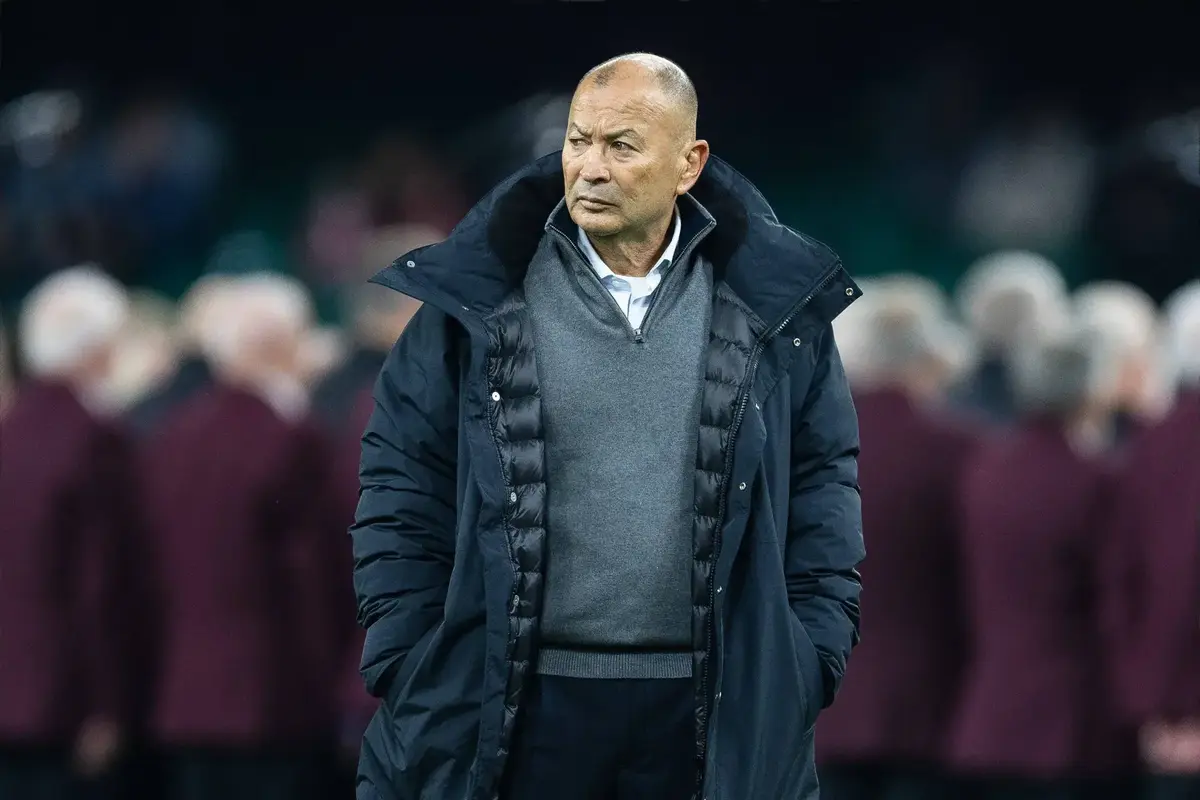
Wales v Japan Autumn Internationals 15 11 2025. Head Coach Eddie Jones of Japan during the warm up before the Quilter Nations Series match between Wales and Japan at Principality Stadium, Cardiff, Wales on 15 November 2025. (IMAGO / Pro Sports Images)

Two of rugby’s most experienced coaches have delivered a scathing verdict on World Rugby’s annual Shape of the Game summit, with Eddie Jones and Ewen McKenzie questioning the governing body’s capacity to make decisions and warning that the sport risks falling behind its rivals as a result.

The Shape of the Game is World Rugby’s annual gathering of global rugby leaders — union and competition chief executives, players, coaches, referees and commercial experts — convened to consider the laws, officiating philosophy and future direction of the sport. This year’s edition arrived amid unusual levels of pre-summit noise. Reports had circulated that Australia and New Zealand were pushing proposals to further depower the scrum, while France and South Africa had reportedly aligned in opposition. Rassie Erasmus had devoted a three-part podcast series on his Rassie+ platform to making the public case for protecting the scrum and maul as genuine contests. The expectation of a significant showdown drew considerable attention — only for World Rugby to emerge with a statement confirming no changes to the laws and a pivot towards fan experience and commercial presentation.

World Rugby Chair Brett Robinson said: “The feedback from around the world is that the game on the field is broadly in a positive place. The message this week is to focus on better explaining, selling and celebrating our sport in what is an ever more competitive environment.

Speaking on the latest episode of Rugby Unity, recorded in the immediate aftermath of this week’s London summit, Jones was unsparing. “If you watch rugby and you think it’s in good health, then you’re probably looking at the wrong things,” he said. World Rugby’s official statement declared that “the on-field product is in a strong, positive place” and confirmed there would be no changes to the laws of the game — a conclusion that Jones attributed entirely to the structural dysfunction of the meeting itself.

“There were 200 people. 200. It’s a joke. It’s a joke,” he said. “The game needs to get sorted out. We can all see that. But because they had so many people in the room, they couldn’t come to a decision on anything. So they all hold hands at the end, have a gin and tonic and say it’s all good.”

McKenzie was equally dismissive of the process, noting that the summit’s central conclusion — a pivot towards commercial and fan-experience priorities — fell outside World Rugby’s core purpose entirely. “The fact that they just flipped it across to commercial and fan stuff, that’s not even their charter,” he said. “They should be talking about the actual specifics of the game and can we make it better.” His verdict on the statement itself was equally terse: “You could have probably written that and saved the 200 flights and the 200 hotel rooms. The game’s in good shape. Of course they’re going to say that — otherwise they look like they’re doing a bad job.”

The frustration from both men is rooted not in abstract disappointment but in a clear sense of what concrete problems remain unaddressed. McKenzie argued that years of regulatory intervention have stripped the scrum of its technical identity, turning what was once a genuine contest of skill and craft into a simple power confrontation managed by the referee. “Back in the day, the contest was between the front rows. The hooker had to strike for the ball, the loose head had to keep the scrum up, the tight end trying to take it as low as possible,” he said. “All of those things have been taken out of the game. All of those front row activities. There was actual skill and strength and position.” Today, McKenzie argued, those individual craft elements have been regulated out of existence in the name of safety and referee control: “All the skills have been taken out of it. It’s just a straight pushing contest controlled by the referee.”

That analysis sits uncomfortably alongside a summit communiqué that described the on-field product as broadly positive and called for better marketing of the existing game rather than any review of what the existing game actually is. It is also relevant context for the running pre-summit debate about proposals — ultimately shelved — to further depower the scrum in some competitions. Both Jones and McKenzie had, in last week’s preview episode, rejected any such move outright. The summit’s “no changes” verdict was therefore welcomed on that narrow front, but neither man was prepared to treat inaction as a success.

The deeper critique from both coaches concerned governance structure rather than individual intent. Pembroke noted that the RFU has recently begun its own reform process, voting to reduce its National Council from 62 members to 44 by 2029 and stripping it of the power to pass regulation. McKenzie drew the obvious parallel. “Other sports just have a commission and they just make decisions and get on with it,” he said. “No business with shareholders runs like rugby union does, which is probably why we’re broke.” Jones agreed, identifying the June meeting of World Rugby’s 53-member council as the next crucial moment: “They’ve got to vote themselves out of business. They have to.” His summary of why they likely won’t was characteristically blunt: “Turkeys don’t vote for Christmas.”

McKenzie also raised the absence of meaningful transparency around the summit itself, questioning why the presentations could not have been broadcast publicly — particularly given that World Rugby’s own stated priority is now fan engagement. “Open the windows, let the light in,” he said, noting that the fan representative body United Rugby Fans, run by Mark Philpot, had not been invited to a summit ostensibly focused on the fan experience.

The pair’s conclusion was that, with the 2027 Rugby World Cup now 18 months away, the window for meaningful structural reform before the game’s flagship tournament has effectively closed. “It’s gone,” Jones said flatly. “They can’t move fast enough to do anything now prior to the World Cup. So we’ll just wait and see. And I’m sure we’ll be talking come World Cup time about problems in the game that could have been resolved now.”

McKenzie’s closing thought distilled the frustration neatly. “I’m more interested in getting more 15-on-15 time. That’s all I’m saying. The rest of it is subtle, and a lot of the laws are already there — it’s just a question of whether they want to enforce them.”

Eddie Jones and Ewen McKenzie were speaking on Rugby Unity, available on Apple Podcasts, Spotify and YouTube.

Continue Reading

Trending

Discover more from Rugby News, Results, and Analysis | Rugby is the Game

Subscribe now to keep reading and get access to the full archive.

Continue reading