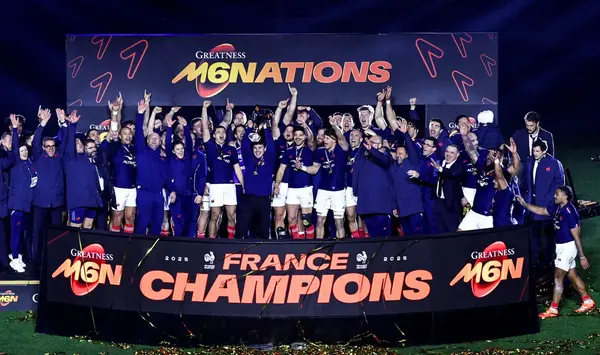
The 2025 Guinness Six Nations delivered another enthralling championship with France claiming their first title since 2022, holding off a resurgent England who finished with an emphatic performance in Cardiff. From record-breaking try-scorers to tactical innovations and stunning comebacks, this year’s tournament provided memorable moments and important insights into the state of Northern Hemisphere rugby.
- France have the perfect blend of power and panache with record-breaking attack
- England’s evolution gathers impressive momentum under Borthwick
- Ireland’s golden generation faces necessary transition after key retirements
- Scotland’s perennial promise remains unfulfilled despite individual brilliance
- Welsh rugby reaches historic low point with second consecutive wooden spoon
- Italy show progress but discipline remains their Achilles heel in tight matches
France have the perfect blend of power and panache
Fabien Galthié’s charges demonstrated why they remain rugby’s most potent attacking force. Setting a new Six Nations record with 30 tries across their five matches, France showcased their devastating ability to combine brutal forward dominance with sublime backline play.
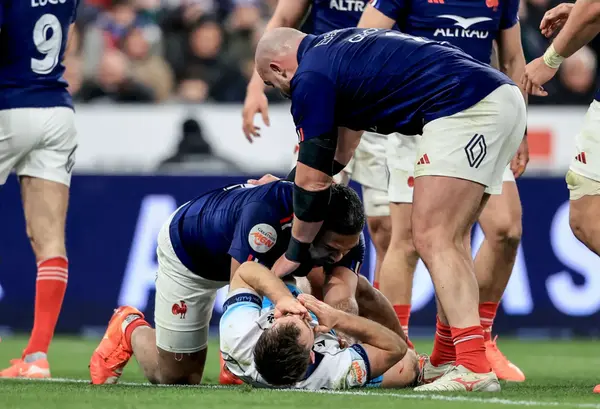
The controversial “Le Bomb Squad” – a 7-1 split on the bench borrowed from South Africa’s playbook – proved decisive in crucial moments, especially in their 42-27 demolition of Ireland in Dublin. Even without talismanic captain Antoine Dupont, who suffered a season-ending knee injury in that match, France maintained their momentum with Maxime Lucu stepping in admirably.
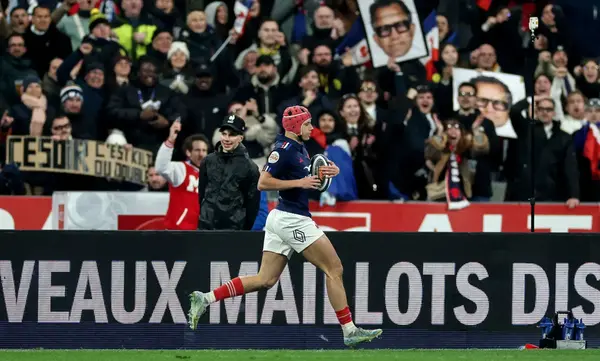
Louis Bielle-Biarrey emerged as the tournament’s breakout star, scoring a record-breaking eight tries, while the forward pack dominated collisions throughout. Thomas Ramos orchestrated proceedings expertly, breaking Frédéric Michalak’s record to become France’s all-time leading points scorer.
Despite their Grand Slam hopes being derailed by England at Twickenham, the clinical nature of France’s performances against Wales, Italy, Ireland and Scotland underlined their status as the championship’s deserved winners and established them as genuine World Cup contenders for 2027.
England’s evolution gathers impressive momentum
Steve Borthwick’s England finished with a flourish, running in ten tries against Wales in Cardiff to record their biggest-ever win at the Principality Stadium. Their 68-14 demolition job capped a tournament that showed genuine progression in England’s attacking game.
What stood out was England’s adaptability. In tight encounters against France and Scotland, they displayed tremendous resilience and tactical flexibility to secure narrow victories. Then, when opportunities arose against Italy and Wales, they demonstrated the ambition and cutting edge that fans have long demanded.
The Curry twins, Tom and Ben, were outstanding throughout, dominating the breakdown and contributing significantly to England leading the tournament in turnovers won (36). Tommy Freeman scored in every round, while debutants like Henry Pollock and Tom Roebuck grabbed their opportunities with both hands.
England’s bench proved decisive on multiple occasions, reflecting Borthwick’s growing trust in his squad depth. After several years of tactical uncertainty, England have established a clear identity built around a balanced approach that combines pragmatism with attacking intent.
Ireland’s golden generation faces necessary transition
For defending champions Ireland, a third-place finish represents a disappointing return from a campaign that began with high hopes of an unprecedented third consecutive championship. The manner of their heavy defeat to France in Dublin exposed limitations in their power game and signalled the end of an era.
The retirement of centurions Peter O’Mahony, Cian Healy and Conor Murray after the final match against Italy marked the beginning of a transition period. With eight of their starting XV against France aged 30 or older, Ireland must now focus on developing the next generation.
Young fly-half Sam Prendergast showed promise in his first tournament, but Ireland’s previously clockwork attack appeared disjointed in Rome and against France. Their famed cohesion – built on provincial connections at Leinster – wasn’t enough to overcome the power deficit against the championship’s top sides.
Questions will be asked about whether Ireland have left this transition too late, with the 2027 World Cup looming on the horizon. However, with talents like Dan Sheehan (who scored a hat-trick against Italy) and Hugo Keenan established, the foundations remain strong for Andy Farrell to build upon when he returns from British & Irish Lions duty.
Scotland’s perennial promise remains unfulfilled
Scotland once again flattered to deceive, finishing fourth with victories only over Italy and Wales. Despite boasting what many consider their most talented backline in the modern era, Gregor Townsend’s side lacked the consistency and cutting edge to challenge the championship’s elite.
Huw Jones’s hat-trick heroics against Italy highlighted Scotland’s attacking potential, but defensive frailties and a lack of forward dominance ultimately proved their undoing. Blair Kinghorn topped the championship statistics for carries (86), line breaks (9) and offloads (13), yet Scotland couldn’t convert these individual brilliance into collective success.
The absence of captain Sione Tuipulotu through injury proved significant, particularly in their agonising 16-15 defeat to England at Twickenham where Finn Russell’s missed conversion proved crucial. Scotland’s promising performances in patches – like their first-half showing against France in Paris – only heightened the frustration at their inability to maintain that level throughout full matches.
After another campaign of unrealised potential, Townsend faces questions about whether he can take this talented group further, having led Scotland since 2017 with relatively modest returns from their undoubted individual quality.
Italy show progress but discipline remains their Achilles heel
Italy finished fifth, avoiding the wooden spoon for the second consecutive year, but their tournament followed a familiar pattern of promising performances undermined by critical lapses in discipline. Their historic 22-15 victory over Wales in Rome – their first home win against the Welsh since 2007 – was the high point of a campaign that showcased both their growth and persistent shortcomings.
The Azzurri’s midfield partnership of Tommaso Menoncello and Juan Ignacio Brex was arguably the championship’s finest, with Menoncello making seven carries for 98 metres against Ireland while Brex added 13 carries for 86 metres in the same match. Ange Capuozzo remained a constant threat from fullback, while Paolo Garbisi demonstrated his quality at fly-half.
However, Italy’s improvement was severely hampered by their disciplinary issues. Against Ireland alone, they received a yellow card for Michele Lamaro’s cynical slap-down, a red card for Ross Vintcent’s high tackle, and another yellow in the closing minutes for Giacomo Nicotera. Coach Gonzalo Quesada will be frustrated by these needless penalties that consistently released pressure on opposition teams.
The match against Ireland exemplified their tournament as a whole – competitive enough to push the defending champions to the limit but ultimately undermining themselves through ill-discipline. Despite losing three forwards to injury within the first 30 minutes, they remained in contention until the final whistle before falling 22-17.
With improved set-piece stability and the emergence of exciting talents like Paolo Garbisi and Sebastian Negri, Italy have the foundations for further growth. However, until they address their persistent discipline problems, they will struggle to translate promising performances into more consistent results against the championship’s elite teams.
Welsh rugby reaches another historic low point
Wales endured a tournament to forget, suffering their second consecutive wooden spoon and extending their losing streak to 17 consecutive Test matches – the worst run by any tier-one nation in the professional era. The 68-14 defeat to England in Cardiff represented their heaviest Six Nations loss ever.
The mid-tournament departure of Warren Gatland after the defeat to Italy highlighted the crisis engulfing Welsh rugby. Interim coach Matt Sherratt injected some fight, particularly evident in the narrow 27-18 loss to Ireland, but couldn’t prevent the record defeat in the final round.
Fundamental issues plague Welsh rugby beyond the national team. The player base has been decimated by financial troubles in the regional game, with former captain Sam Warburton suggesting Welsh rugby needs to reduce from four to three professional teams to concentrate its talent pool.
Captain Jac Morgan battled valiantly throughout, but Wales lacked the firepower to compete with the championship’s stronger teams. The squad’s inexperience was exposed repeatedly, with Wales conceding 169 points across their five matches – their worst defensive record in the Six Nations era.
Any coach taking over permanently faces an enormous rebuilding job requiring patience and structural changes throughout Welsh rugby. The days of Wales contending for championships appear some way off.




 Men's Rugby World Cup 20273 weeks ago
 United Rugby Championship3 days ago
 Champions Cup2 weeks ago
 United Rugby Championship3 days ago
 Champions Cup2 weeks ago
 Champions Cup1 week ago
 Champions Cup6 days ago
 United Rugby Championship2 days ago