Connect with us

International

Autumn Rugby Internationals fixtures revealed

Published

on

The fixtures for the 2024 Autumn Nations Series have been confirmed. This sets the stage for 21 high-profile international rugby matches in November, with the Six Nations teams from the Northern Hemisphere hosting opponents from the Southern Hemisphere.

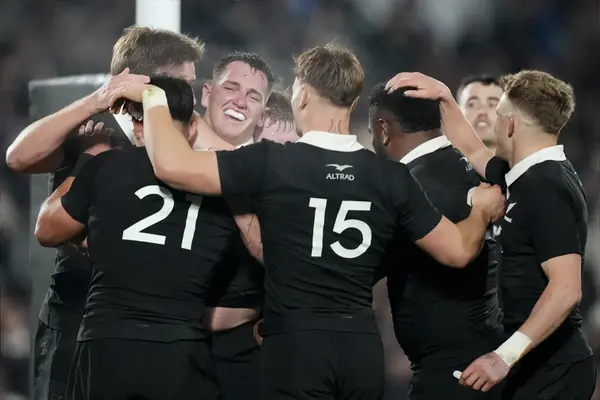
The series kicks off on November 2nd with old rivals England and New Zealand clashing at Twickenham.

For Irish fans, the Aviva Stadium will be the epicentre of excitement, with Andy Farrell’s side welcoming New Zealand on November 8th before hosting Argentina a week later on November 15th. Fiji will visit Dublin on November 23rd ahead of Ireland’s massive 150th-anniversary challenge match against Australia on November 30th to close out their series.

Welsh supporters can look forward to Principality Stadium hosting three crunch ties. Wales start their campaign against Fiji on November 10th, seeking revenge after a Rugby World Cup 2023 loss. They then take on Australia on November 17th before a monumental 25th-anniversary clash against world champions South Africa on November 23rd, marking 25 years since Wales’ first-ever win over the Springboks.

Other key fixtures include France hosting the All Blacks on November 16th, a repeat of last year’s Rugby World Cup opener, and France taking on Argentina on November 22nd.

For rugby viewers in the UK and Ireland, TNT Sports and discovery+ will be showing every single Autumn Nations Series fixture live in their first year as a broadcast partner.

“This year’s Autumn Nations Series promises an unbelievable experience for fans worldwide to enjoy the best of international rugby,” said Six Nations Rugby CEO Tom Harrison. “Welcoming TNT Sports underlines our commitment to delivering the best possible fan experience.”

TF1 will cover the France matches in France, while beIN SPORT will show all others. Italian viewers can tune in on Sky Italia, with further worldwide broadcast details to be announced.

The 2024 Autumn Nations Series features long-standing rivalries and mouth-watering matchups between Northern and Southern Hemisphere heavyweights.

Continue Reading
Click to comment

Leave a Reply

International

Rugby’s major unions unite to ban players in rebel R360 league

Published

on

Rugby’s major unions unite to ban players in rebel R360 league
Cheltenham Festival 2025 Gold Cup Day Mike Tindall former Rugby player arrives ahead of Cheltenham Festival 2025 Gold Cup Day at Cheltenham Racecourse, Cheltenham, United Kingdom, 14th March 2025 (Photo by Gareth Evans News Images)

Rugby union’s most powerful nations have dealt a potentially fatal blow to the proposed R360 breakaway competition, issuing an unprecedented joint statement declaring that any player who joins the rebel league will be barred from international selection.

In a rare show of unity, the unions of England, Ireland, Scotland, France, Italy, New Zealand, Australia and South Africa have come together to warn players to exercise “extreme caution” before signing with the franchise competition fronted by 2003 World Cup winner Mike Tindall.

The statement, released on Tuesday evening, represents the most significant coordinated action by rugby’s governing bodies in the professional era and threatens to undermine R360’s entire business model, which had promised players they could combine participation in the new league with their international careers.

“As a group of national rugby unions, we are urging extreme caution for players and support staff considering joining the proposed R360 competition,” the statement read. “We all welcome new investment and innovation in rugby, and support ideas that can help the game evolve and reach new audiences, but any new competition must strengthen the sport as a whole, not fragment or weaken it.”

The unions were scathing in their assessment of R360’s plans, claiming the competition “appears designed to generate profits and return them to a very small elite, potentially hollowing out the investment that national unions and existing leagues make in community rugby, player development and participation pathways.”

Concerns over player welfare and transparency

Central to the unions’ opposition is R360’s alleged failure to engage meaningfully with rugby’s established structures. The statement highlighted a litany of unanswered questions surrounding the competition’s operational framework.

“R360 has given us no indication as to how it plans to manage player welfare, how players would fulfil their aspirations of representing their countries, and how the competition would coexist with the international and domestic calendars so painstakingly negotiated in recent years for both our men’s and women’s games,” the unions declared.

The lack of transparency extends to R360’s business model itself, with the statement noting: “Those behind the proposed competition have not engaged with or met all unions to explain and better understand their business and operating model.”

The Welsh Rugby Union, while not a formal signatory due to ongoing consultation over the future structure of professional rugby in Wales, expressed support for the statement and reserved the right not to select R360 players for international duty. Argentina were the only major Rugby Championship nation not to sign, though their stance remains unclear.

R360’s ambitious vision

The R360 competition, which stands for “Rugby 360 degrees,” is planning to launch in October 2026 with eight men’s franchises and four women’s teams competing in a condensed season format across major cities worldwide, including London, Cape Town, Dubai, Miami, Boston, Tokyo and Lisbon.

Organisers claim to have secured pre-contract agreements with close to 200 male players and have reportedly made lucrative offers to stars from England’s World Cup-winning Red Roses squad. The competition promises top players contracts worth up to £1.5 million annually for a maximum of 17 matches per season – significantly fewer than the 25-30 fixtures elite players currently face.

The league has also approached high-profile rugby league players from Australia’s NRL, with Brisbane Broncos prop Payne Haas reportedly seeking offers of at least $3 million per season. Other NRL targets are believed to include Ryan Papenhuyzen, Cameron Munster and Zac Lomax.

Battle lines drawn

R360 responded swiftly to the unions’ statement, framing their position as player-centric and progressive. “Our philosophy is clear – if players want to play for their country, they should have that opportunity. Why would the unions stand in their way?” an R360 spokesperson said.

The organisation insisted that player welfare was “one of the key reasons for creating our global series, which will greatly reduce player load and capture the attention of a new generation of fans globally.”
R360 also claimed to want “to work collaboratively as part of the global rugby calendar,” stating that the series was “designed with bespoke schedules for men’s and women’s teams” and that contracts would include release clauses for international matches.

“It’s not always easy to embrace new opportunities but, as we’ve seen throughout history, it’s essential for any sport to grow,” the R360 statement added. “So many players love what R360 can do for them and the game.”
The organisation said it had submitted more than 120 pages of documentation to World Rugby outlining detailed plans on competition regulations, player welfare measures and anti-doping policy, and confirmed it would seek World Rugby Council sanctioning next summer as planned.
Echoes of rugby league’s Super League split

The standoff evokes memories of rugby league’s devastating Super League war in 1997, which split the sport and created lasting divisions. More recently, golf’s LIV tour, backed by Saudi Arabian investment, has created similar fault lines in that sport.

The International Rugby Players Association had already urged caution last week, telling members to seek legal advice before signing any contracts with R360, noting that “detailed information about the competition remains outstanding and the competition does not currently have World Rugby regulatory approval.”

The unions’ statement emphasised the existential threat they believe R360 poses to rugby’s ecosystem: “International rugby and our major competitions remain the financial and cultural engine that sustains every level of the game – from grassroots participation to elite performance. Undermining that ecosystem could be enormously harmful to the health of our sport.”

High stakes for players

The selection ban places players in an extraordinarily difficult position, particularly those approaching the 2027 Rugby World Cup in Australia. While R360’s financial packages are undeniably attractive – especially for women players whose RFU contracts are currently capped at around £50,000 annually – the prospect of sacrificing international careers just a year before a home World Cup for Australia-based players, or any World Cup for others, represents a significant deterrent.

The Rugby Football Union has made clear that its existing selection policy – which requires England men’s players to be contracted to Premiership clubs – will now extend to women players as well, reflecting its £15 million annual investment in building sustainability in the professional women’s game.

However, R360 may find more willing recruits among fringe international players, those whose Test careers are winding down, or stars from nations not included in the ban, such as Argentina, Fiji, Tonga, Georgia and Samoa.

New Zealand Rugby confirmed it was not aware of any All Blacks or Black Ferns who have signed agreements with R360, though the organisation’s documentation, seen by media outlets, suggests players are willing to sign “whether we are sanctioned or not and whether they will be selected for international rugby or not.”

An uncertain future

Whether R360 can proceed without World Rugby sanctioning and with the world’s best players effectively unavailable remains to be seen. The competition would need to compensate players far more generously to persuade them to abandon international ambitions, which could strain the financial model. Host cities may also reconsider their involvement if the product cannot deliver the star power initially promised.

For now, rugby union’s establishment has drawn a clear line in the sand. In an era often characterised by fractious relationships between unions, leagues and player bodies, this coordinated response represents an unusually unified front. Whether it proves sufficient to derail R360’s ambitious plans entirely, or merely forces the competition to target a different tier of player, will become clearer in the coming months as the proposed October 2026 launch date approaches.

Continue Reading

International

All Blacks survive French scare to sweep July series in Hamilton

Published

on

All Blacks survive French scare to sweep July series in Hamilton
New Zealand Brodie McAlister during the All Blacks v France Lipovitan-D July Series, FMG Stadium, Hamilton, New Zealand, Saturday, 19 July 2025. (Photo by Blake Armstrong / action press)

The All Blacks completed a 3-0 series sweep against France with a hard-fought 29-19 victory at FMG Stadium Waikato, but not before Les Bleus delivered their most spirited performance of the tour. In a match that ebbed and flowed dramatically, France led for 59 minutes before the hosts finally seized control in the final quarter.

Key moments:

9′ – Nolann Le Garrec darts short side from lineout maul to score; converts own try (0-7)
20′ – Nolann Le Garrec penalty after Anton Lienert-Brown fails to release (0-10)
22′ – Will Jordan wins race to Cortez Ratima’s box kick to score near posts; Damian McKenzie converts (7-10)
24′ – Antoine Hastoy drop goal from 18 metres out directly in front (7-13)
31′ – Damian McKenzie penalty reduces deficit after ruck infringement (10-13)
34′ – Nolann Le Garrec penalty extends lead from 22 metres (10-16)
37′ – Nolann Le Garrec penalty from 43 metres after Mickaël Guillard turnover (10-19)
40+3′ – Anton Lienert-Brown crashes through two tackles near posts; McKenzie converts (17-19)
59′ – Du’Plessis Kirifi scoops up loose ball after Sevu Reece strips Léo Barré; McKenzie misses conversion (22-19)
77′ – Brodie McAlister slides over on debut after Jordie Barrett break; McKenzie converts (29-19)

Scott Robertson’s heavily rotated side faced their sternest examination yet from a French team that arrived in Hamilton with genuine belief they could spoil the party.

With 10 changes from the previous week’s lineup, compounded by late withdrawals of Rieko Ioane (hamstring) and Luke Jacobson before kick-off, the All Blacks struggled to find their rhythm early on as France’s superior chemistry and organisation paid immediate dividends. Du’Plessis Kirifi was promoted to start at openside flanker for his first test start, with Ardie Savea shifting to number eight and Christian Lio-Willie added to the bench.

The visitors struck first after the All Blacks struggled with their lineout execution, Samisoni Taukei’aho’s wayward throw sailing over the back of the lineout and into Pierre Bourgarit’s grateful hands. France immediately shifted the ball wide to Théo Attissogbé and Léo Barré, who probed the All Blacks’ defensive line before earning a penalty near the 22. Opting for the corner rather than three points, Les Bleus set up a driving maul that initially appeared well-controlled by the home forwards. However, as Patrick Tuipulotu and Fabian Holland committed defenders to stopping the rolling maul, Le Garrec spotted the unmarked blindside channel. The scrum-half’s quick thinking and sharp acceleration caught the All Blacks completely off-guard as he scooped the ball from the back of the ruck, sold a dummy to Attissogbé, and slipped through unopposed to score in the corner. His touchline conversion from the right edge sailed between the posts with room to spare, capping a perfect opening gambit.

Le Garrec continued to torment the hosts with his tactical kicking, extending France’s advantage to 10-0 after 20 minutes with a penalty from directly in front following Ardie Savea’s ill-judged chip kick from his own 22 that gifted France possession and territory. The 23-year-old was proving that whilst he may not be Antoine Dupont, he possessed the nous and skill to trouble even the world’s top side.

The All Blacks finally responded when Cortez Ratima produced a moment of magic with a perfectly weighted box kick that caught France’s defence napping. The scrum-half had spotted Barré positioned too deep in the French backfield, and his pinpoint kick over the rushing defenders sat up invitingly just inside the 22. Will Jordan, reading the play with predatory instincts honed through 44 previous test appearances, won the race to the bouncing ball ahead of the covering French defenders. The winger’s pace and positioning allowed him to gather cleanly before diving over near the posts, with Damian McKenzie’s routine conversion reducing the deficit to 10-7.

Jordan’s try marked his 43rd in test rugby and came at a crucial psychological moment, just as France threatened to establish commanding control. The score line may have suggested otherwise, but the All Blacks were being outplayed in every facet at this stage, making Jordan’s intervention all the more vital.

France refused to be cowed, however, and Antoine Hastoy extended their lead with a composed drop goal that caught everyone inside FMG Stadium off guard. After France had worked their way into the All Blacks’ 22 through a series of patient phases, the La Rochelle first-five found himself momentarily isolated with options limited. Rather than force a pass or risk a turnover, Hastoy took two quick steps to his right to create space and slotted a nerveless drop goal from 18 metres, slightly left of the posts. The crowd’s boos only seemed to energise the French side, who were clearly executing a well-rehearsed game plan designed to frustrate their hosts and accumulate points at every opportunity.

Hastoy’s quick thinking and execution under pressure contrasted sharply with the All Blacks’ tendency to over-complicate possession in the opening quarter. The French first-five was outshining both McKenzie and Ruben Love in the tactical kicking exchanges that were becoming the defining feature of the contest.

As the first half wore on, the pattern became increasingly clear: France were winning the tactical battle through superior discipline and game management, whilst the All Blacks relied on individual moments of brilliance. The 24,162-strong Hamilton crowd grew restless as their side struggled to find rhythm, with audible groans greeting another handling error or missed lineout throw from Taukei’aho.

McKenzie’s penalty reduced the deficit to three points after a French ruck infringement, providing temporary relief for the increasingly anxious home supporters. However, Le Garrec immediately restored France’s buffer with two more successful penalties – the first from the right touchline after the All Blacks were caught offside, and the second from an extraordinary 43 metres after Guillard’s breakdown theft near halfway had left Robertson visibly frustrated in the coaching box.

The French game plan was working to perfection, with Hastoy’s territorial kicking and Le Garrec’s tactical nous keeping the All Blacks pinned in their own half for long periods. Gabin Villière’s kick chase was particularly effective, with the Toulon winger’s enthusiasm and pace putting constant pressure on Love’s positioning under the high ball.

The crucial moment came in the dying minutes of the first half when the All Blacks finally showed attacking fluency through a backline move involving McKenzie and Lienert-Brown. The sequence began with Sevu Reece making good ground down the right flank before the ball was worked back infield. Will Jordan then threw what appeared to be a blatant forward pass to Finau, a transgression so obvious that French supporters were already appealing to referee Angus Gardner. However, the officials missed the infringement entirely, allowing play to continue as the All Blacks built phases with renewed confidence.

McKenzie eventually received the ball in space and fed Lienert-Brown, who had timed his run to perfection. The centre brushed off Gaël Fickou’s desperate tackle attempt before powering through Barré’s last-ditch effort to crash over just left of the posts. McKenzie’s conversion was never in doubt, and whilst the French players remonstrated with the officials about the earlier forward pass, the damage was done. France’s lead had been cut to 19-17 with the clock showing 40 minutes plus three, but more importantly, momentum had clearly shifted toward the hosts.

The second half became a war of attrition, with France’s heroic defence repeatedly denying the All Blacks at the try line in what became a masterclass in goal-line defence. Samipeni Finau was first to be thwarted, held up over the line by a desperate Pierre Bochaton tackle as the All Blacks hammered away from close range. Ardie Savea followed suit, stopped just short after a trademark surge from the back of a ruck, with French forwards swarming over the breakdown to prevent the grounding.

Later, Dalton Papali’i thought he had broken French hearts when he powered toward the line from five metres out, but again the visitors’ defensive line held firm. The French pack, marshalled by the impressive Mickaël Guillard, made crucial interventions at the breakdown throughout the contest, with the number eight’s jackaling technique causing constant problems for the All Blacks’ ball presentation.

The pattern of French resistance continued for the opening 18 minutes of the second half, with Les Bleus throwing everything into their defensive efforts. Alexandre Fischer made 21 tackles in the first half alone, whilst Pierre Bourgarit and the recalled Guillard repeatedly frustrated All Blacks attacks with their breakdown work and line speed.

The breakthrough finally came in the 59th minute when Du’Plessis Kirifi capitalised on a chaotic sequence near the French line that would prove to be the turning point of the match. The All Blacks had been probing for weaknesses when McKenzie spotted space behind the French defensive line and produced a perfectly weighted grubber kick that skipped twice before reaching the in-goal area. Léo Barré, under intense pressure from the chasing Sevu Reece, attempted to gather the bouncing ball but spilled it as the All Blacks winger arrived at full pace.

In the ensuing scramble, Reece managed to strip the ball from Barré’s grasp, and it rolled loose just metres from the French try line. Kirifi, who had followed up the kick with the determination that had earned him this unexpected start, was perfectly positioned to scoop up the loose ball. The flanker’s dive for the line was unopposed, giving him his maiden test try in just his second appearance in an All Blacks jersey. McKenzie’s attempted conversion from the left touchline drifted wide of the far post, but the All Blacks had finally taken the lead at 22-19 with 20 minutes remaining.

Relief soon turned to panic when France threatened an immediate response through replacement Killian Tixeront, who broke clear down the left touchline after gathering a chip kick from Le Garrec. The French substitute had clear space ahead of him and looked certain to score before Jordie Barrett produced a match-saving tackle, dragging Gailleton into touch just five metres from the All Blacks’ line.

The decisive blow came with three minutes remaining in a sequence that perfectly illustrated why Barrett remains indispensable to this All Blacks side. The veteran playmaker, introduced as a second-half substitute for Quinn Tupaea, received the ball 25 metres from the French line with defenders converging. Rather than panic, Barrett stepped back off his left foot, brushed off the attempted tackle from a tiring French forward, and accelerated through the gap with the kind of pace that belied his 88 test caps.

As French defenders scrambled to cover, Barrett held his nerve and timing to perfection, drawing in the last defender before slipping a short pass to Brodie McAlister. The debutant hooker, who had endured a difficult introduction to test rugby with three wayward lineout throws, suddenly found himself with a clear run to the line. Rather than risk being caught from behind, McAlister committed to his dive five metres out and slid across the turf to score just left of the posts.

McKenzie’s conversion sealed a 29-19 victory, but it was Barrett’s game-changing intervention that had made the difference. The veteran playmaker brought the direction and composure that had been lacking in the All Blacks’ performance, picking apart a tiring French midfield with surgical precision when it mattered most.

For France, this was undoubtedly their most complete performance of the tour, built on foundations that had been missing in their previous two defeats. Captain Gaël Fickou provided the leadership and physicality that had been absent in previous tests, making crucial interventions in both attack and defence whilst marshalling his younger teammates through the intense periods of All Blacks pressure.

Le Garrec’s flawless goal-kicking record kept his side in contention throughout the first half, with the scrum-half landing all four of his attempts including two from challenging positions. His tactical kicking game was equally impressive, consistently finding touch to relieve pressure and varying his box kick lengths to keep the All Blacks guessing. The pack, bolstered by the return of Mickaël Guillard and the impressive Alexandre Fischer, matched the All Blacks physically and provided an excellent platform.

Antoine Hastoy outshone both opposing playmakers in his first test start, controlling the kicking duel that France used to their advantage throughout the opening 40 minutes. The La Rochelle first-five’s decision-making under pressure was outstanding, knowing when to attack the line and when to employ his boot to build territory. His drop goal from 18 metres was the culmination of patient build-up play that forced the All Blacks into repeated defensive sets.

The defeat will sting for Fabien Galthié’s men, who came agonisingly close to salvaging something from what had threatened to become a chastening tour. Their defensive effort was heroic, but ultimately they lacked the firepower to convert pressure into points when it mattered most, being held scoreless for more than 40 minutes in the second half.

For the All Blacks, this series provided valuable lessons about squad depth and combinations. Whilst the result was never seriously in doubt across the three tests, performances like this highlighted the drop-off between their first-choice players and the next tier. The backline moves were clunky throughout, with the ball hitting the deck on multiple occasions as combinations battled to gel. Samipeni Finau was a standout figure in his first start of the series from blindside flanker, whilst Ruben Love impressed in his debut at fullback despite facing intense aerial bombardment. However, the absence of incumbents like Codie Taylor and Cam Roigard was clearly felt.

Robertson will be particularly pleased with the emergence of players like Kirifi and McAlister, both of whom enhanced their test credentials, though McAlister’s lineout throwing will need attention before the Rugby Championship. The coach will also be satisfied with how his side responded to adversity, showing championship mentality when France threatened an upset.

As both sides now turn their attention to upcoming challenges – the All Blacks to the Rugby Championship beginning in Argentina on August 17, and France to their domestic preparations – this match served as a reminder that test rugby remains unforgiving at the highest level. The All Blacks may have secured their whitewash and claimed the Dave Gallaher Trophy for the first time since 2018, but France proved they remain a force to be reckoned with when firing on all cylinders.

Continue Reading

International

Late Van Poortvliet try edges England to series win over Pumas

Published

on

Late Van Poortvliet try edges England to series win over Pumas
England XV v France XV, London, UK - 21 June 2025 Jack van Poortvliet of England XV during the match between England XV and France XV at Allianz Stadium, Twickenham, London on 21 June 2025. (IMAGO / PPAUK)

England claimed a memorable 22-17 victory over Argentina in San Juan to secure a 2-0 series triumph, with substitute Jack van Poortvliet scoring a dramatic winner with just minutes remaining. The result represents a remarkable achievement for Steve Borthwick’s depleted squad, missing 14 players through Lions duty and injury, against a Pumas side that had recently defeated the Lions.

Key moments:

4′ – Seb Atkinson scores after brilliant Ford cross-kick, Ford converts (0-7)
8′ – Santiago Carreras penalty (3-7)
20′ – Ben Curry yellow card for high tackle
26′ – Lucio Cinti finishes brilliant Benítez Cruz break, Carreras converts (10-7)
33′ – Freddie Steward scores after patient build-up, Ford converts (10-14)
40′ – Ignacio Mendy pounces on Steward error, Carreras converts (17-14)
53′ – George Ford penalty levels scores (17-17)
59′ – Pablo Matera sin-binned for cynical play
79′ – Jack van Poortvliet scores winner from Guy Pepper break, Ford misses conversion (17-22)

Captain George Ford orchestrated proceedings brilliantly throughout, his tactical kicking and game management proving decisive in a pulsating encounter that remained deadlocked at 17-17 until the final moments. The Leicester fly-half produced a moment of class early on with a perfectly weighted cross-field kick that exposed Argentina’s defensive positioning. Tom Roebuck climbed highest to secure possession on the right wing with excellent aerial skills, the ball moving swiftly through Luke Northmore’s reliable hands before finding the 23-year-old Atkinson, who finished with composure beyond his years to dive over for his first international try on just his second cap. Ford’s conversion from in front of the posts was routine, giving England the perfect start.

Argentina’s response emphasised the attacking flair that has made them such a formidable force in recent years. Santiago Carreras opened their account with a superbly struck penalty from long range, his accuracy making him such a reliable goal-kicker. However, it was the Pumas’ second try that truly captured their ability to conjure magic from chaos. Scrum-half Simón Benítez Cruz found himself with a loose ball in heavy traffic, but rather than clear hastily, he juggled the ball past Tom Willis and Sam Underhill with remarkable skill. His perfectly-timed break created space for the supporting Lucio Cinti, who used pace and power to finish a move that epitomised Argentina’s unpredictable attacking threat. Carreras made no mistake with the conversion to give Argentina their first lead.

England’s immediate response revealed their own tactical sophistication and patience in attack. Rather than forcing the issue, they built pressure through multiple phases, stretching Argentina’s defensive line across the field. Will Muir’s powerful carries down the left wing drew defenders before England worked the ball back inside through their forwards. With Argentina’s defence caught short on the right flank, Freddie Steward found himself in acres of space to waltz over unopposed. Ford’s conversion from a difficult angle near the touchline underlined his technical excellence, maintaining his perfect record with the boot to restore England’s advantage.

The first half’s dramatic conclusion proved a pivotal moment that underscored both teams’ contrasting fortunes. Carreras launched a testing kick behind England’s defensive line, the ball taking a cruel bounce off the goalpost that completely wrong-footed the usually reliable Steward. With bright South American sunshine complicating the full-back’s vision, the ball sat up perfectly for the rapidly arriving Ignacio Mendy, who gratefully accepted the gift to touch down. Carreras added the extras to give Argentina a crucial 17-14 half-time advantage.

The second period became a war of attrition, with England’s territorial dominance failing to translate into scoreboard pressure. Despite making 585 metres compared to Argentina’s 280 in the second half, England found themselves repeatedly frustrated by outstanding Pumas defence. The statistics told the story of England’s dominance – they spent vast periods camped in Argentine territory but struggled to find the killer blow against a defensive wall marshalled brilliantly by the experienced Pablo Matera and Julián Montoya.

Argentina’s discipline problems, which had been a recurring theme throughout the series, resurfaced as the pressure mounted. Ford’s 53rd-minute penalty brought England level at 17-17, but it was merely punishment for another in a long list of Argentine infringements. The home side conceded 12 penalties to England’s five, a statistic that ultimately proved decisive in such a tight contest.

The match’s defining moment arrived when Matera’s experience worked against him. With England threatening just metres from the Argentine line, the veteran flanker made a calculated decision to kill the ball illegally, earning a yellow card that left his side short-handed for the crucial final quarter. Even with a numerical advantage, England found Argentina’s defensive resolve unbreakable, with the Pumas displaying tremendous heart to repel wave after wave of white shirts.

With both sides visibly tiring after an intense 75 minutes and the prospect of a drawn series looming, inspiration came from England’s bench. Guy Pepper, who had impressed since his introduction, spotted a rare gap on the blindside as Argentina’s defence finally exhibited signs of fatigue. The replacement flanker charged through a hole that appeared for mere seconds, eating up valuable metres before producing awareness beyond his experience level. His perfectly-weighted inside pass found fellow substitute van Poortvliet arriving at pace, the scrum-half diving over from close range to spark wild celebrations among the England support. Ford’s conversion attempt from out wide drifted to the right of the posts, but the five points proved sufficient for a famous victory.

“We found a way in the end,” said captain Ford afterwards. “We had a lot of opportunities in the 22 but couldn’t get over the line. I’m proud of the boys. I like our fight, our togetherness, how much we care for each other. There was some great stuff, we should have scored more tries but the attitude of the group is excellent.”
Argentina captain Julián Montoya was refreshingly honest in defeat, acknowledging his side’s shortcomings. “We were not good enough, we have to be honest with ourselves. I am sorry we couldn’t get the win, we gave away too many penalties.”

The victory carries significant implications for both nations’ rugby futures. England’s series triumph, achieved with what was essentially a second-string team featuring several uncapped players, suggests remarkable depth in their playing ranks ahead of the 2027 World Cup cycle. The emergence of talents like Atkinson, combined with the impact made by bench players such as Pepper and van Poortvliet, provides genuine optimism about English rugby’s direction under Borthwick’s stewardship.

For Argentina, the defeat represents a concerning slide down the world rankings from fifth to seventh place. This drop could have serious implications for World Cup seeding, with November’s rankings determining pool allocations for the 2027 tournament. Felipe Contepomi’s side will need to arrest this decline quickly, particularly given the strength evident among other southern hemisphere nations.

The contrast in squad depth became apparent in the final quarter, where England’s replacements proved decisive while Argentina’s bench struggled to match the impact of their starting XV. Players like Pepper and van Poortvliet illustrated the quality that exists throughout English rugby, whilst Argentina’s reliance on their established stars was exposed when fatigue set in.

England’s tactical approach throughout the series, emphasising territorial control and patient build-up play, validated Borthwick’s methods against a side that had recently defeated the Lions. Ford’s game management proved particularly crucial, his kicking from hand consistently putting Argentina under pressure whilst his goal-kicking maintained scoreboard pressure at vital moments.

Argentina will need to regroup quickly, with their next challenge coming against Uruguay in Salta before the Rugby Championship begins. The domestic competition will provide an opportunity to rebuild confidence, but questions remain about their ability to compete consistently against the world’s elite without addressing their discipline issues.

England continue their summer programme with a fixture against the USA in Washington, carrying momentum from a series victory that few predicted when they departed without their Lions contingent.

Continue Reading

Trending

Discover more from Rugby News, Results, and Analysis | Rugby is the Game

Subscribe now to keep reading and get access to the full archive.

Continue reading